Apocalypse Discs – Stuart Millson

STUART MILLSON

Quarterly Review Music Editor

If I find myself on a desert island, or living in a nuclear bunker, or in a cave in Wales (the latter will have its own generator, so that my collection of CDs and records can be played!) I would like to take the following recordings:

Violin Concerto, Elgar

To remind me of fresh air and sunshine, and to stir the soul (as it such a yearning, surging piece of music, especially in the last movement). It’s probably Elgar’s greatest work, and I believe it to be the greatest Violin Concerto ever written.

A recording of the Prologue to Powell and Pressburger’s 1944 film, A Canterbury Tale

The perfect 1940s diction of actor, Esmond Knight, draws you into the story – as if he is personally telling you a great secret; he actually delivers Chaucer’s prologue, as a camera scans across a map of mediaeval England – with all the main points of the pilgrims’ journey from Winchester, through to Surrey and on to Rochester, Chilham and Canterbury.

Church Motets, Bruckner

They make you feel very close to your maker, or at least to the spiritual life. I would like them to be on a CD set with the Symphony No. 8 – a work of cosmic power, as dazzling and glorious as Beethoven’s Ninth.

Fifth Symphony, Nielsen

A masterful modern symphony, a sense of Sibelius meeting Shostakovich. The beautiful woodwind theme and warm string tune which opens the section leading to the apocalyptic disarray and terrifying side-drum passage stirs me deeply.

Symphony No. 2, Rachmaninov

A great journey in music – the scherzo movement, with its hurrying themes and a sense of the night, but with bright lights in the sky (a Van Gogh or Chagall scene almost), brings back personal memories of 25 years ago – old places, old hopes.

The remains of Uriconium, a formerly important Roman town in Shropshire

On Wenlock Edge, Vaughan Williams

A piece that is almost too hard for me to listen to! Too many emotions and memories associated with “Bredon Hill” – or places like it. Again, very personal.

Goldberg Variations, J. S. Bach

Perfect music, the very meaning of life. Such pathos, and brilliance. Before the final aria, there is a magnificent passage – about three minutes – which expresses a sense of huge triumph, without being triumphant. The brilliance of Bach… a genius.

Thomas Linley the Younger

The Tempest, Thomas Linley the Younger

“Arise, ye spirits of the storm…” Linley was a truly great composer, he found the essence of The Tempest, and turned it into music. The opening passage has an intensity, a loneliness and drama which, in my view, makes it one of the finest pieces of the 18th century. Perfect desert island music, in that it reinforces the sense of what has happened to you!

Cello Sonata, Debussy

A stoicism and melancholy, an integrity and intensity of feeling. An autumnal landscape – I see Debussy surveying his beloved France, the soul of the country still present after the Great War. Debussy is France, as far as I am concerned.

The Auden section of A Spring Symphony, Benjamin Britten

English romanticism through a modernist prism – like an English landscape by Paul Nash. There is a mediaeval feel to the opening of this movement (“Out on the lawn I lie in bed”) which reminds me of Elizabethan church music – and then a lovely warm orchestral sigh, with woodwind suggesting birds and Nature. I have developed a strong attachment to Suffolk over the last few years, and all the beauty of the county – coast and country – can be found in this music. A magnificent musical experience – so unusual, unexpected, so intricate, utterly beautiful. A sad thing that so many people will go through life, never experiencing this astonishing few minutes of music.


Posted in QR Home | Tagged , , , , , , , , , , , , , , , | Leave a comment

Apocalypse Discs – Stephen M. Borthwick

STEPHEN M. BORTHWICK

Catholic writer

In regards to my musical tastes, I have to agree that it is almost impossible to narrow a list to ten. For myself, though, there are constants in my musical tastes – I have a great love of the baroque, especially Bach, and likewise would not shrink from calling myself a dedicated Wagnerian. I am not above making the claim that this sort of music continues into today in the form of some of the better film soundtracks, and have been especially impressed with the work of Howard Shore and Philip Glass (on film; the latter’s other work is questionable and a little banal, rather like Hans Zimmer).

However, my tastes do not begin and end with the so-called “classical” genre: I have another equally pretentious devotion to progressive rock, especially the work of Robert Fripp and Greg Lake, though if I had to name a single artist that stood out for consistent quality, I’d pick Jethro Tull – or, better, Ian Anderson, since he’s been pretty much the only constant member from 1967 to the present, and is the chief wordsmith.

The snobbishness does not stop there, however! I also am a great fan of post-punk artists like Joy Division as well as Krautrock groups like Amon Düül, Neu!, and, of course, Kraftwerk. Some vulgarity does creep into my collection, starting with Led Zeppelin and Black Sabbath, and I do enjoy some more avant-garde forms of heavy metal, especially black metal groups like Burzum, Bathory, and Summoning. I draw the line at lo-fi and no-fi hardcore and punk, and generally disdain all forms of popular music, especially rap, hip-hop, and what might be termed the “dance” or “house’ music phenomenon. There are some popular songs and groups which I do enjoy, especially the recent “indie-rock” and “folk-rock” phenomena – bands such as Mumford and Sons and Of Monsters and Men stand out in this regard. I think this is likely rooted in my immersion in Irish folk music as a lad. In terms of broader musical taste, those things which tend towards the darker and more melancholic dominate my list – I would not say that tempo necessarily has so much to do with my choices, though, as mood. I would make an effort to order these in terms of quality, but I think that task too great for me. SMB 21st March 2013

Overture to Tannhäuser und der Sängerkrieg auf Wartburg (WWV 70), composed by W. Richard Wagner, 1845. As performed by Berlin Staatskapelle Orchestra, conducted by Daniel Barenboim

What I might regard as a piece of “perfect music”, in that it has no real discordance, no departure from emotive beauty from the very beginning until the very end – it is a perfect musical expression of longing, struggle, penitence, and reconciliation.

Kyrie Eleison from the Mass in B Minor (BWV 232), composed by Johann Sebastian Bach, 1733. As performed by the Collegium Vocale, conducted by Philippe Herreweghe

The Kyrie Eleison is by and far the most powerful version of this hymn I have ever heard – it is a cry to heaven for mercy and contains in it both the fear and contrition of the penitent as well as the discordance of their sins, summoning the dies irae perfectly. It is perhaps the most perfect expression of the sentiment of that prayer that is possible.

Ночь на лысой горе (Night on the Bare Mountain), composed by Modest Mussorgsky, 1867. As performed by National Symphony Orchestra of Ukraine, conducted by Theodore Kuchar

Mussorgsky’s Night on the Bare Mountain is familiar to many of us, I would venture, because of its adaptation in Walt Disney’s Fantasia, where it is set to the rise of Czernobog — not far from the original picture painted by the tone poem of a Witches’ Sabbath and the Satanic Mass. The perfectly sinister quality of this piece makes it one of the most expressive I’ve heard, ranging from a sort of rising darkness to imitations of cackles from Hell, it is a truly stirring work.

Endless Enigma Suite (“The Endless Enigma” Parts 1 & 2 & “Fugue”) from the album Trilogy, composed by Keith Emerson and Greg Lake, 1972. Performed by Emerson, Lake, and Palmer, produced by Greg Lake

The Endless Enigma Suite was a difficult choice because it has to contend with “Lucky Man” from Emerson, Lake, and Palmer as well as its own title-track “Trilogy”. Nevertheless, the existential crisis of the piece and progression from a nihilistic solipsism to achievement of meaning has all of the qualities of a concept album like Nine Inch Nails’ Downward Spiral in a much more concise (and less vulgar) package.

“Thick as a Brick” from the album Thick as a Brick, composed by Ian Anderson, 1972. Performed by Jethro Tull, produced by Ian Anderson

I appreciate “Thick as a Brick” because it is at once a perfect piece of progressive rock, and a great concept album, as well as one of the best parodies of the genre in existence. It can be at once the sort of artwork that only an elite can appreciate and also mock and deride that same sort of snobbery and pretentiousness — it is the track that represents progressive rock laughing at itself.

The Duke of Egmont, for Beethoven a symbol of resistance against oppression

Overture to “Egmont” (Op. 17), composed by Ludwig van Beethoven, 1787. As performed by Zurich Tonhalle Orchestra, conducted by David Zinman

There are few pieces of music as heroic as the overture to “Egmont“; one feels in it a real building up of a storm– it is a fitting tribute to Goethe’s work, and indeed to Goethe himself, representing as it does the perfect musical expression of German Romanticism I think possible. It has the natural theme of a building storm, the theme of the individual before the wild and ruthless nature, and the feeling of grand triumph in self-realisation – I can at once see Friedrich’s Wanderer above the Sea Fog as well as hear Körner’s hymn to the Coalition: “Das Volk steht auf, der Sturm bricht los!”

“The Battle of Pelennor Fields” from The Lord of the Rings, the Complete Recordings: Return of the King, composed by Howard Shore, 2007.  As performed by London Philharmonic Orchestra, conducted by Howard Shore

The heroism of Egmont is, however, a sort of individual heroism, a truly uplifting piece. “The Battle of Pelennor Fields”  is a different kind of heroic work: it captures not triumph, but determination and desperation. If one recalls the scene in the film, the music echoes the Templar mentality of the Rohirrin who ride “for ruin, and the world’s end” – one thinks of the admiration once had for the Light Brigade. It captures perfectly the sort of virile determination of war, the reckless disregard for one’s physical life when it is in the scales against one’s spirit.

Piano Sonata No. 14 in C-sharp minor “Quasi una fantasia” (Op. 27), composed by Beethoven, 1801. As performed by Wilhelm Kempff

The Moonlight Sonata, is another truly perfect musical work, and perhaps Beethoven’s most haunting and other-worldly piece. It is properly called “like a fantasy”, and mixes a sort of melancholia with a ineffable feeling of contentment. It is almost, in this regard, as much a stoic piece as it is a thoroughly romantic piece – which makes it something of a paradoxical piece to say the least.

“Twentieth Century Man” from the album Muswell Hillbillies, composed by Ray Davies, 1971. As performed by The Kinks, produced by Ray Davies
OR
“Kashmir” from the album Physical Graffiti, composed by John Bonham, Jimmy Page, and Robert Plant, 1975. As performed by Led Zeppelin, produced by Jimmy Page

Given two popular songs, “Kashmir” and “Twentieth Century Man”, it is impossible to choose: Kashmir captures the barren wastes of the desert, of the great wilderness – I think of Lawrence of Arabia when I hear it. Twentieth Century Man, on the other hand, is just too perfect an expression of the Conservative dilemma to leave off the list; it is an expression of self-identity for me personally just as much as Kashmir is a sort of existential song. I could do without one or the other, I suppose, but one of the two would have to be on my list.

Prelude to Te Deum (H. 146), composed by Marc-Antoine Charpentier, 1688/1689. As performed by Les Arts Florissants, conducted by William Christie

Finally, Charpentier’s Prelude to Te Deum is an answer to all of what I hear and feel in Wagner and Bach above — it is the triumph of the King, the great harmony of man and God, and of human hierarchy with Divine Hierarchy that summons up those feelings of love of and pride in the traditions of our ancestors, of constancy and of continuity; as a traditionalist, it is a piece that makes my heart sing – both for the musical qualities inherent to it as well as its historical context.


Posted in QR Home | Tagged , , , , , , , , , , , , , , , , , , , , | Leave a comment

Apocalypse Discs – John Kersey

JOHN KERSEY

Historian, musician and educationalist

www.johnkersey.org

As a musician, I face the prospect of having to save a limited number of works from certain apocalypse with a certain degree of trepidation. The difficulty is always that any selection is by nature impermanent, since music is perhaps the most responsive of the arts to one’s emotional state, and thus any change in personal equilibrium is likely to prompt a need for fresh aural inspiration. Nevertheless, the choice I make at present is of key works that have lived with me to the extent that I feel they have become a part of my way of seeing the world, and thus they can at least form something of a personal credo as far as those values – both musical and in a wider context – I would wish to see promulgated are concerned.

The chief object of art is, to my mind, a search for the expression of truth and beauty, and this theme runs through the selection I have made. There is some emphasis upon those composers who espoused a Traditionalist vision and set themselves against prevailing fashions in music, often at great personal cost. Their work is united by this artistic honesty and integrity, and perhaps their example also presents us with a microcosm of the resistance their art made to the apocalypse that came to dominate the avant-garde of their time, which sought to divorce itself from the dialectic of tonality. Although some works will doubtless be unfamiliar, there is no search for deliberate obscurity here, but rather a conscious immersion in a particular compositional thread that is effectively that of Romanticism and its extensions, and the quest for its most distinctive exponents, some of whose music deserves wider currency than it has hitherto enjoyed. JK, 25th March 2013

Lyra Angelica, William Alwyn (1905-85)

Alwyn was a polyglot, poet, artist, composer and sometime flautist with the London Symphony Orchestra. His compositions include many film scores, five symphonies (of which the last is entitled Hydriotaphia or Urn Burial) and this extraordinary harp concerto, which in my view is undoubtedly the greatest music written for the instrument. The first half of his working life was spent in London, teaching and serving on committees and boards. The second was spent in Suffolk, overlooking the Blyth estuary and writing music, poems and painting. One of his poems, Daphne, expresses his artistic credo,

Beauty is my reason for existence,

My day, my night, my all-in-all.

Faithless, I should cease to write.

http://www.youtube.com/watch?v=TooYPQtVUik&list=PLYAT_hEhVbG8b3cPPChfB8-nSU7wtKd-E

Concerto for solo piano, Charles-Valentin Alkan (1813-88)

Alkan was one of the greatest pianists of his stellar generation and a highly original and accomplished composer. In his early career, he was a friend of Liszt and Chopin, but in 1848 he was passed over for the position of head of piano at the Paris Conservatoire in favour of one of his pupils, and he seems never to have recovered from this blow, retreating into isolation. His concerto for solo piano, though a highly substantial work, is in fact part of one that is still larger, his twelve studies in all the minor keys, op. 39. Here it is given an outstanding performance by supervirtuoso Marc-Andre Hamelin.

http://www.youtube.com/watch?v=OQz5tWzVQiA

Arnold Bax

Spring Fire, Sir Arnold Bax (1883-1953)

Bax was the most Celtic of composers, encapsulating in his style the Ireland of myth and legend and evoking a distant past that also drew extensively upon Norse influences. As part of the Rathgar Circle that developed around the poet, artist and mystic AE (G.W. Russell) he adopted the pseudonym Dermot O’Byrne and published a number of poems and short stories that reflected an increasing involvement with Irish nationalism. Spring Fire is a relatively early work, inspired by Swinburne. Its extreme technical difficulty prevented any performance in Bax’s lifetime. For several years the only surviving score was believed to have been lost in a fire in 1964, but later another was discovered. The world it evokes is pagan and fantastic, and he wrote of it, “It is as though the whole of nature participated in the careless and restless riot of youth and sunlight.”

http://www.youtube.com/watch?v=AV5oHECmSg4

Geirr Tveitt

Sun God Symphony, Geirr Tveitt (1908-81)

An Odinist and Traditionalist, Tveitt was part of the circle of Hans S. Jacobsen in Oslo in the 1930s, but he remained aloof from political action and did not join the Nasjional Samling. The ballet Baldur’s Dreams is the apex of his Neo-Heathen worldview, being first performed in 1938 to great acclaim. After the war, his beliefs led to his complete ostracism from the Norwegian arts establishment, and the problems were compounded when, in 1970, his house burned to the ground, taking with it about 80% of his compositions, and leaving his last years bereft and embittered. The Sun God Symphony is therefore a posthumous reconstruction of three pictures from Baldur’s Dreams, and shows the extraordinary power and energy of Tveitt’s compositional imagination.

http://www.youtube.com/watch?v=Kws0g4Dfvco

Piano Concerto, op. 39, Ferruccio Benvenuto Busoni (1866-1924)

In its intellectual and humane distinction, subtle innovation and adherence to the Apollonian ideal, Busoni’s music is unparalleled. A master pianist, his Piano Concerto – in five movements, and with a male chorus singing a setting of Oehlenschlaeger’s Aladdin in the last – is an extraordinary achievement. This live performance by Peter Donohoe at the Proms remains one of the finest accounts of the work.

http://www.youtube.com/watch?v=FH60TO4egW0

Cello Concerto, Gerald Finzi (1901-56)

This work, the composer’s last, sums up his compositional achievement. It has become commonplace to say that Finzi’s music “sounds English” in that it evokes a particular combination of landscape and character. Certainly it is that, but its distinction is much greater, in that this is music of nobility, imagination, integrity and drama, suffused with a melancholic yet lyrical temperament.

http://www.youtube.com/watch?v=Bj_U1BntjPo

Symphony no. 1 “Gothic”, Havergal Brian (1876-1972)

A monumental work from an extraordinary man from whom music poured in torrents even when there was no-one interested in performing or listening to it. Brian did not “fit in” with the musical establishment; working-class, self-taught, and entirely dedicated to his own artistic standards. The more I come to know him and his output, the more I admire him. This work is huge, uncompromising and intellectually of the highest order. Richard Strauss described it as “magnificent”.

https://www.youtube.com/watch?v=CgUmpSWB-fc&list=PL9DF86B95A0102369

Trio in Three Movements, York Bowen (1884-1961)

Although widely respected as a pianist during his lifetime, and once described by Saint-Saens as “the finest of English composers”, Bowen’s works lay largely unpublished and unperformed until after his death. His individual style is felt at its best in this ambitious and effective piano trio.

https://www.youtube.com/watch?v=Tc3eniV0kQc

Hymnus paradisi, Herbert Howells (1892-1983)

This work was written in response to the death of the composer’s son from polio, aged nine, and requires no commentary. It is quite simply among the finest works of the English choral tradition.

http://www.youtube.com/watch?v=at-yv-BQAeA


Rued Langgard

Som Lynet er Kristi Genkomst (As Lightning Cometh Christ Again)

Rued Langgaard (1893-1952)

It is perhaps appropriate that one should close a selection of Apocalypse Discs with one of the very few depictions of the Second Coming in music. Rued Langgaard, a reactionary genius, composed in a style that ensured his treatment with utter disdain by the prevailing Danish musical establishment; his resulting isolation gave rise to a series of extraordinary compositions that is only now coming to be heard and appreciated. His music ranges from the visionary and prophetic to the bizarre and aphoristic. This short organ work develops in the manner of a ritual, fixating eventually upon its opening phrase, before rising in ecstasy amid the repeated gestures. A short pause leads to an increasing sense of expectation and the cataclysmic final chord that marks the moment of apparition.

http://www.youtube.com/watch?v=1ECKf__IJf4

Posted in QR Home | Tagged , , , , , , , , , , | Leave a comment

Apocalypse Discs – Leslie Jones

LESLIE JONES

Quarterly Review Deputy Editor

Here are ten musical items in search of a desert island – hopefully, an island with WiFi! In no particular order…

Franz Liszt

Les Préludes, Franz Liszt

Music from this stirring and bombastic symphonic poem was reportedly chosen by Hitler for his anticipated triumphal entry into Moscow. See/listen to the performance conducted by Valery Gergiev at an outdoor concert given in Vienna in 2011. In the video there are several shots of the Vienna Opera House which the Führer frequented as a callow youth and swirling cloud sequences reminiscent of the opening of Leni Riefenstahl’s notorious film Triumph of the Will.

www.youtube.com/watch?v=xnITC-IkPVg

Parsifal, Richard Wagner

A film by Hans-Jürgen Syberberg of Richard Wagner’s transcendent opera. But we await with impatience a recording of the Met’s production broadcast recently by Radio 3 and conducted by Daniel Gatti, with Jonas Kaufmann as Parsifal – éblouissant.

Oedipus Rex, Stravinsky

With a text by Jean Cocteau based on Sophocles’ drama and translated into Latin by Jean Daniélou. This performance was conducted by Seiji Ozawa in 1993 at the Saito Kinen Festival, Matsumoto, Japan, with the Saito Kinen Orchestra. It features Jessye Norman as Jocasta and Ian Langridge as Oedipus. Something of an acquired taste perhaps, given that the libretto is in Latin and the narration is in Japanese! Visually and aurally, this is a stunningly effective mélange of kabuki and classical opera. In the opening sequence, Oedipus is seen dangling from a rope like a fish on a hook. The narrator observes that even before his birth the Gods had set a trap for him.

www.youtube.com/watch?v=locLCN33zkg

The Dream of Gerontius, Edward Elgar

In 1958, Sir John Barbirolli conducted a performance of Part 1 for Pope Pius X11 at Castel Gandolfo. The Pope reportedly told him, “My son, that is a sublime masterpiece”. He was right.

CD, EMI classics with the Hallé Orchestra conducted by Sir John Barbirolli, with Richard Lewis (tenor) as Gerontius, Dame Janet Baker (mezzo-soprano) as The Angel, and Kim Borg (bass) as The Angel of the Agony. CZS 5 73579 2

Symphony in C, George Bizet

This is a scintillating piece of music and an extraordinary achievement, given that Bizet was only 17 (a student at the Paris Conservatoire) when he composed it. The work was never performed during his lifetime.

Moscow TV orchestra conducted by Pavel Sorokin

www.youtube.com/watch?v=djmN5S9fM9Q

Island of Lost Souls, Blondie

With lyrics by Chris Stein and Deborah Harry and a characteristically compelling vocal performance by Debbie. A goodly sound, as the late unlamented Jimmy Savile used to say.

Verse 1 –

In Babylon

On the boulevard of broken dreams

My will power at the lowest ebb

Oh what can I do?

Oh buccaneer

Can ya help me put my truck in gear?

Can ya take me far away from here?

Save my soul from sin?

http://www.youtube.com/watch?v=N7gqErYW0K0

All Together Now, The Farm

From the album Spartacus (1991). This is a brilliant production sound. The album title indicates the group’s somewhat passé left-wing politics. Ditto the song’s poignant anti-war lyric. Verse one and the chorus reference the so-called Christmas truce in 1914 when German and British soldiers on the Western front exchanged presents in “no man’s land”. Verse four is presumably a critical comment about the Falklands War (a just war if ever there was one, in this writer’s judgement).

Verse 1 –

Remember boy that your forefathers died

Lost in millions for a country’s pride

But they never mention the trenches of Belgium

When they stopped fighting and they were one

Chorus –

All together now

All together now

All together now

In no man’s land, together

Verse 4 –

The same old story again

All those tears shed in vain

Nothing learned and nothing gained

Only hope remains

I have personal reasons for choosing this particular item. My maternal grandfather Horace Simmons fought in the Great War. He was gassed and he lost four of his brothers, one of whom was underage. He never spoke about his wartime experiences.

http://www.youtube.com/watch?v=1CpSWpc8XS4

Marietta’s Lute Song, Erich Wolfgang Korngold

From his opera Die tote Stadt. Erich Korngold was the second son of the Viennese music critic Julius Korngold. Fellow music critic Michael White recalls how after a seemingly successful piano recital, Erich’s father complained that he had played too slowly but his mother complained that he had played too fast! Such was the weight of expectations placed upon this child prodigy so much admired by Mahler and who subsequently composed film scores for Hollywood.

The evergreen Elizabeth Schwarzkopf performs Glück, das mir verblieb at –

http://www.youtube.com/watch?v=ZoGQd1dsAlw

Ace of Spades, Motorhead

I only ever met Motörhead’s inimitable lead singer Lemmy once. He was throwing up into a rubbish bin outside a pub. This track should be savoured at several decibels beyond the threshold of human endurance. No sleep ‘til Hammersmith, to quote the title of their first live album.

http://www.youtube.com/watch?v=1iwC2QljLn4

Nacht und Träume, Franz Schubert

An exquisitely plangent Lied. The memorable last two lines of the song translate as

Return, holy night!

Fair dreams, return!

One of the finest recent performances was by Waltraud Meier (soprano). For some reason this is no longer available on the web. This version by Dietrich Fischer-Dieskau (baritone) and Gerald Moore (piano) is one of many other recordings.

http://www.youtube.com/watch?v=uGAxAM5p0Qs


Posted in QR Home | Tagged , , , , , , , , , , , , , , , | Leave a comment

Apocalypse Discs – Derek Turner

DEREK TURNER

Quarterly Review Editor

I like all kinds of music, and my tastes are always changing. These kinds of lists are always mere snapshots, and as soon as you decide on a list of ten you think of piece number eleven, twelve and so on. The ten tracks below are in no particular order. My tastes are sadly middlebrow, and I tend to like things I can sing along to or play on guitar. I dislike the kind of snobbishness that detests popular music because it is popular. That having been said, pop music seems to date very quickly. If I had to name genres whose disappearance in a social melt-down I could view with equanimity, I would single out jazz, rock and roll, rap, Northern soul, Motown, Christian rock, and the majority of “easy listening”, from 1970s stalwarts like James Last and Cliff Richard to more modern muzak merchants like Michael Bublé.

I find all kinds of folk music interesting, and much of it hugely enjoyable. You don’t have to be Malian to love Malian music, or Portuguese to find fado inexpressibly moving, but it is sometimes difficult to get under the skin of something very alien. Just last week, I tried hard to enjoy some Balinese tunes, but I only lasted as long as I did out of a strict sense of duty. I generally prefer baroque to Romantic, but of course there are always exceptions (see below). I have a weakness for slow over fast songs, a reflection possibly of some innate melancholia. DT, 18th March 2013

Wondrous Machine, Henry Purcell

This is the first Purcell tune I ever heard, when I turned on Radio 3 by chance one afternoon in the early 1990s, and I was moved almost to tears (very unusual for me) by its superbly controlled melody and the stateliness of the lyric

http://www.youtube.com/watch?v=zr4Zb5MX4w8

Funeral Music for Queen Mary, Henry Purcell

The most plangent piece of music I know. Purcell wrote this for the funeral of Queen Mary, and it was first played at her funeral in March 1695. The state funeral’s route from Banqueting House in Whitehall to Westminster Abbey was apparently fully lined with black material, and the combination of sable pomp and this music must have had a searing effect. To add to the mournfulness of the music, it was next played at Purcell’s own funeral, just eight months later

http://www.youtube.com/watch?v=xWRcx9LHBJU

Bachelorette, Bjork

The Icelandic singer is one of the most original of contemporary musicians, and this tune is one of her most satisfying and expansive. When I hear it, I imagine myself in medieval Iceland early on a summer’s morning, watching a bright-eyed blackbird foraging beside a stream in some dew-soaked glade

http://www.youtube.com/watch?v=cJNOOBOyn20

Dance of the Furies, Christoph Willibald Gluck

From his influential 1762 opera Orpheus and Eurydice. Christopher Hogwood and the Academy of Ancient Music render it with compelling verve and brazen flourishes that sound like the Wild Hunt. Baroque music at its most thrilling

http://www.youtube.com/watch?v=Ee5CJVeVKek

White Winter Hymnal, Fleet Foxes

The Fleet Foxes come from Seattle, and there is a hippyish West Coast quality to their music, which is strongly influenced by English folk. This song is full of the muffled softness of snow

http://www.youtube.com/watch?v=DrQRS40OKNE

Stirb Nicht Vor Mir (“Don’t Die Before I Do”), Rammstein

The German band is best known for driving rock anthems like Feuer Frei, but this is the only one of their songs one can sing along with. The splicing of concert footage with scenes from Nosferatu makes for a Gothick feast

http://www.youtube.com/watch?v=IB8gVc4xij0

Shallow Brown, traditional West Indian song

Full of the power and sweep of the sea, a plaint as uplifting as the best gospel music. This melody, like many others, was saved for posterity by the indefatigable Percy Grainger

http://www.youtube.com/watch?v=nL5G9C59Iao

Songs of the Auvergne, Joseph Canteloube

Canteloube’s uniformly beautiful orchestration of folk songs gathered in the Auvergne, many based on traditional call-and-respond songs between shepherds (and shepherdesses) hailing each other from hilltops. Too Arcadian for words. This is the song known as Bailiou

http://www.youtube.com/watch?v=iHb_5kjtFXg

Ma Vlast (Die Moldau movement), Bedrich Smetana

Smetana’s noble form of nationalism puts to shame today’s more demotic manifestations, which appear to revolve around sports. The whole symphony is beautiful, but perhaps this movement evokes most powerfully the haunted landscape of Middle Europe. It has a sense of great rivers and walled medieval cities

http://www.youtube.com/watch?v=h3_EsIKarl8

Two Ravens, traditional British song

Alfred Deller’s version of this is the best, but is apparently not available on-line. I have accordingly linked to one by Steeleye Span. This is variously described as a traditional English and a traditional Scottish tune, so take your ethnic choice! As with many folk songs, there is a piquant contrast between the delicacy of the tune, and the horror of the lyric – in this case, two ravens considering dining on “a knight, slain under his shield”. The details of the dissection are gruesome – “Ye’ll sit on his white hause-bane, / And I’ll pike out his bonny blue een; / Wi ae lock o his gowden hair / We’ll theek our nest when it grows bare”

http://www.youtube.com/watch?v=HLxlrFtltLk


Posted in QR Home | Tagged , , , , , , , , , , , | Leave a comment

“Harbours hitherto unseen” – the charm of Constantine Cavafy

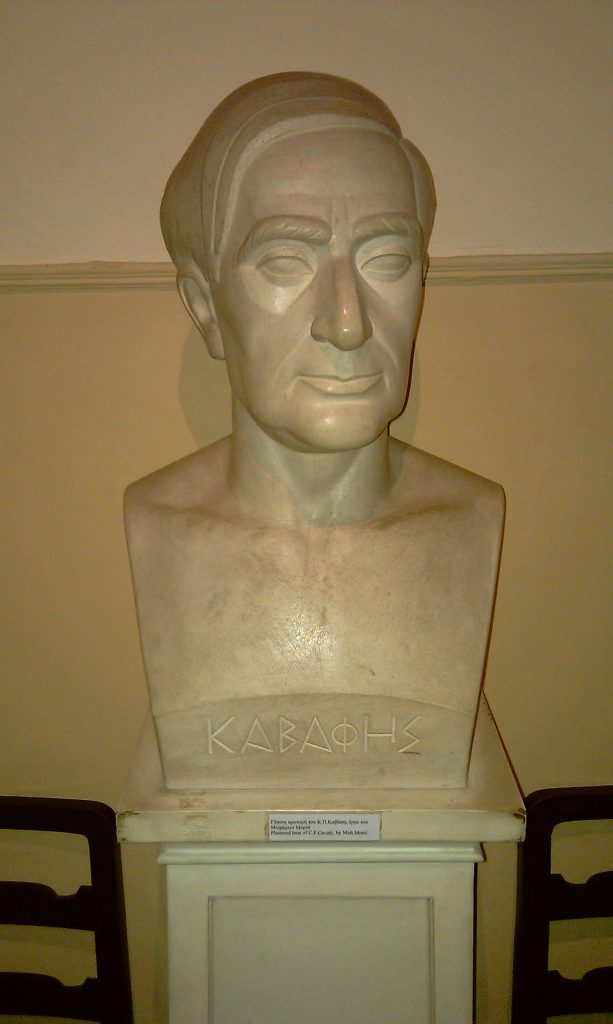
Cavafy bust

“Harbours hitherto unseen” –

the charm of Constantine Cavafy

DEMETRIS DEMOPOULOS reviews a lavish tribute to the great Greek poet

Shades of Love: Photographs Inspired by the Poems of C. P. Cavafy

Dimitris Yeros, Insight Editions, Athens, 2012, hardback, 168pps., 60 Euros

C. P. Cavafy is widely considered the most distinguished Greek poet of the twentieth century. He was born in 1863 in Alexandria, Egypt, where his Greek parents had settled in the mid-1850s. He lived in England (in Liverpool, where his family had business ties) for much of his adolescence, and developed both a command of the English language and a preference for the writings of Shakespeare and Wilde. During his lifetime Cavafy was an obscure poet, living in seclusion and publishing very little. A short collection of his poetry was privately printed in the early 1900s and reprinted with new verse a few years later, but that was the extent of his published poetry. Instead, Cavafy chose to circulate his verse among friends.

Many of his poems are highly personal, and he also wrote many explicitly erotic poems. His work is both a glorification of the human body and its pleasures, and elegiac of love and death. Cavafy was also an avid student of history, particularly of the Hellenistic age, and so in his poems there is a plethora of references to events from this period. His language and his manner were his own inventions, reflecting both his temperament and his vast knowledge of the ancient civilisation.

For those who are unfamiliar with his oeuvre, it might be useful to give examples of two of his best-known poems, starting with “Ithaca” (all poems translated by David Connolly):

As you set out for Ithaca,

Hope that the journey is a long one,

Full of adventures, full of learning.

Of the Laestrygonians and Cyclopes,

Of wrathful Poseidon have no fear,

You’ll never meet such like on your journey,

If your thoughts remain lofty, if noble sentiments

Grip your body and spirit. You’ll never encounter raging Poseidon,

Laestrygonians and Cyclopes, unless you bear them in your soul,

Unless your soul sets them before you.

Hope that the journey is a long one.

That the summer morns be many when with what delight, what joy

You enter harbours hitherto unseen; that you stop in the Phoenician markets

And acquire fine merchandise, nacre and coral, amber and ebony,

And all kinds of heady perfumes as you can; that you visit many Egyptian cities,

To learn and learn from the erudite.

Always keep Ithaca in mind.

To arrive there is your destination.

But in no way rush the voyage. Better for it to last many years; and for you

To berth on the isle an old man, rich with all you gained on the journey,

Without expecting Ithaca to give you riches. Ithaca gave you the wonderful

Voyage. Without her you would not have begun the journey. Yet she has nothing more to give you.

“And though you may find her wanting, Ithaca has not deceived you.

Wise as you’ve become, with such experience, you’ll have already understood what these Ithacas mean.

Another perennial favourite is “Thermopylae”:

Honour to those who in their lives resolved to defend some Thermopylae.

Never wavering from duty; just and forthright in all their deeds,

But with pity and compassion too; generous whenever rich, and when

Poor, still generous in smaller ways, still helping all they can; always speaking the truth, yet without hatred for those who lie.

And still more honour is their due, when they foresee (and many do foresee)

That Ephialtes will eventually appear, and the Medes will, in the end, get through.

Dimitris Yeros is a renowned painter and innovative artist. His photographs have been shown in many exhibitions in Greece and abroad, mainly in the USA. In his latest book, he presents selected Cavafy poems that have been elegantly Englished by David Connolly of the Aristotle University of Thessaloniki, paired with an image that complements that poem. There are nearly seventy photographic illustrations using a mixture of models and fellow members of the artistic community. The overall effect is one of great visual richness.

Edward Albee, one of the most important contemporary American dramatists (best known for Who’s Afraid of Virginia Woolf?, The Zoo Story, The Sandbox, and The American Dream) has written the foreword and the introduction is by American poet and arts reviewer John Wood. Albee writes:

I remember I began reading Cavafy when I was quite young – when all the juices which sprang from his poetry were within me as well. I read him in translation, of course, and, first, in imperfect readings; then as the equivalencies improved, in better versions of the original. In whatever readings, I found his poetry so vivid, so personal, so beautiful, so powerful that I was aware of being in the presence of a great poet, one whose concerns echoed mine and whose mastery was thrilling.

Most of the poems are enhanced with photographs of nude handsome young men where they play with the theme of desire and memory. Homoeroticism, intrigue, humour, hedonism and despair are everywhere in the book. However, among Yeros’s models are prominent members of the artistic community such as Jeff Koons, Gabriel Garcia Marquez, Gore Vidal, Tom Wesselmann and Clive Barker, Olympia Dukakis, Carlos Fuentes and Naquib Mahfuz. These notable names come from Yeros’s idea to use “people from the world of letters and the arts…who knew and admired Cavafy’s poetry”.

The translated poems are each set at the centre of a huge white page and accompanied by full page illustrations. David Connolly has made worthy efforts to translate in a way that is both distinctive and artistic. Cavafy’s use of the Greek language was rather bizarre and he has a reputation of being difficult to translate.

Inside the book there are many fine combinations of poems and photos. On page 60 is “The souls of old men” –

In their aged, wasted bodies dwell the souls of old men.

How pitiful the poor things are and how weary of the wretched life they lead.

How they tremble lest they lose it and how they cherish it

These confounded and contradictory souls – so tragicomical – that dwell

In their aged, ravaged hides.

The poem is accompanied by a characteristic photo of five old men at Pamfila (Lesbos Island) full of wrinkles, staring compassionately into the lens.

In another example (p. 118), “Supplication” describes the prayer of a sailor’s mother to the Virgin Mary for the safe return of her son. However,

The sea took a sailor to its depths. —

Unaware, his mother goes and lights a long candle to the Holy Virgin

for his swift return and for fair weather – and always she has her ear

to the wind. But while she prays and supplicates, the icon listens grave and

sorrowful, knowing the son she awaits is not coming back.

To accompany the poem, Yeros has chosen the Oscar-winning actress Olympa Dukakis in typical Mediterranean costume, complete with black kerchief, holding a long candle while her face wears a sorrowful expression.

One of my favourite poems is “Che Fece…Il Gran Rifiuto” (“for some people there comes a day when they are obliged to say either Yes or No”).

For some people there comes a day

when they are obliged to say either Yes or No.

It is immediately clear who has the Yes ready within, and saying it goes

far beyond to honour and conviction.

Refusing, the other has no regrets. If asked again,

he would still say no. And yet he is beset by that no – the right one – throughout his life.

Cavafy has borrowed the phrase from Dante’s Divine Comedy. The precise phrase is “Colui Che fece per viltate il gran rifiuto” (“the refusal to life that is worthy of eternal damnation” – an allusion to Celestine who became Pope in 1294 and abdicated five months later, saying “the great No”). Dante sees this as an act of cowardice, but Cavafy sees it as honourable. Yeros has chosen an enigmatic illustration of the late Gore Vidal, one of the “Popes” of American literature, as accompaniment.

Cavafy himself divided his poetry into three thematic areas: historical, philosophical and sensual, with the hedonistic as a sub-category of the sensual. Although the sensual theme is dominant in Yeros’s book, the reader will find much value in the other two areas of Cavafy’s poetry, the historical and the philosophical. Perhaps we should consider this book as a first step into Cavafy’s mythical world. As he wrote in “First Step” in 1910:

Even though you stand on the first step, you still ought to be proud and happy. To have come so far is no small matter; to have done so much is great glory.

DEMETRIS DEMOPOULOS writes from Athens

Posted in QR Home | Tagged , , , , , , , | Leave a comment

Gabriele D’Annunzio – flame of the former future

Gabriele D’Annunzio –

flame of the former future

STODDARD MARTIN remembers the extravagant life and dangerous times of one of Italy’s literary giants

When living in lascivious pleasure in post-Napoleonic Italy, Byron wrote to his publisher, “Scribbling is a disease I wish myself cured of”. Within a few years he famously died in the cause of Greek independence, and for a century after writers regularly chafed at the bonds of their profession, wishing to transform themselves into men of action.

A leap out of art and into history usually involved adopting a messianic cause, which if frustrated could produce antinomian outbursts, even crime. W. B. Yeats, who dreamed of glory and dabbled in Irish revolution and later fascism, spotted the danger – “Did that play of mine send out / Certain men the English shot?” (1)

Nonetheless he was among the host of literary men of the early 20th century who found inspiration in their Italian contemporary Gabriele D’Annunzio. Henry James, George Moore, James Joyce, D. H. Lawrence, Marcel Proust and Ernest Hemingway all admired his prose. Ezra Pound perhaps came closest to him in morphing literary prominence into political activism. In Pound’s case, failure of the cause led to disaster. In D’Annunzio’s, at least in his lifetime, it produced even greater celebrity.

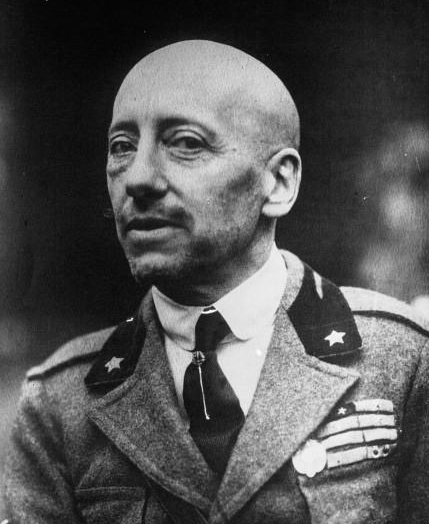
Gabriele D’Annunzio, 1922

Named for an archangel and seen by some as a devil, he appears to have been born under a lucky star. His father, a licentious man and skilful networker, was mayor of Pescara in the backward province of Abruzzi; his mother, like Lawrence’s, was of more refined stock. The child was doted on, educated above his station and subsidized through his first literary efforts, which rendered him into a Wunderkind as poet by age twenty. Adept at networking too and striking-looking, if small, he set about climbing the social and literary ladders of Rome via shrewd love-affairs and journalistic alliances. Newly unified Italy needed geniuses and patriotic Gabriele perfectly combined the persona of coming young man with respect for an older order of rank. Parisian decadence, Dostoyevsky, Nietzsche, Wagner and other artistic fads of the fin-de-siècle were mixed easily by him into a specifically Italian penchant for beauty and tradition. Turning to novel-writing, he became by age thirty one of the leading literary names of the age. A very public affair with the actress Eleanora Duse vaulted him by the turn of the century into world celebrity.

He wrote gargantuan plays for his mistress, though on one occasion infuriated her by offering the lead to her rival Sarah Bernhardt, whom he may also have bedded. His reputation was such that he felt at ease in spurning collaboration with Puccini, whom he saw as not high-brow enough to do his work justice. Published simultaneously in French and in Italian, he became a figure to envy in the then citadel of the arts and relocated to France in 1910 to escape debts he had racked up in a notoriously extravagant Italian lifestyle.

In the salons of Paris he was lionized by the Count of Montesquiou, once inspiration for Huysmans’ Des Esseintes and shortly for Proust’s Baron Charlus. Debussy was allowed to set music to his Martyrdom of St Sebastian and Ida Rubenstein to play the lead. Cross-dressers and lesbians appealed to his increasingly jaded sexual taste, and along with Rubenstein the American painter Romaine Brooks joined the list of his lovers. In the monde they moved in, the chief slander a woman could suffer was to be said not to have had a liaison with D’Annunzio.

All this Lucy Hughes-Hallett catalogues with eyes on stilts. She is fascinated to uncover what this bald little man in goatee did with and to women to attract them in droves. Delving into the wealth of letters he left, which his lovers failed to destroy, she details the foods and fabrics, the flowers and scents, the acts and afterglows which attended clandestine post-midnights and cinq-à-septs. Cunning in seduction, D’Annunzio was also blithe in discarding what he was done with; thus a trail of children and ex-paramours was left in his wake as he set out on the greater adventure of his career: to persuade Italy to fight on the side of its Latin sibling in World War I and to demand a larger share of the spoils than Allies were willing to give at Versailles. Having promised his country all that it wanted to abandon the Triple Alliance, France and Britain reneged under cover of Wilson’s Fourteen Points. D’Annunzio, who had been instrumental in engineering Italy’s volte-face and became its lead propagandist during a fight in which 600,000 of his countrymen died, was not surprisingly outraged.

He had preached war as the crucible out of which glory was forged and blood as a libation needed to fertilize the soil of the expanding new nation. He himself lost an eye in one of many exploits in modern chariots of battle: the airplane and motorized attack-boat. Gutsy as a diminutive Napoleon, he became a hero for millions, his rhetoric fanning their war-cries, his commitment to fight on for territories ‘unredeemed’ rallying a continued bellicosity.

When he staged a coup in the sub-Istrian port of Fiume as a bulwark against what he saw as the trumped-up southern Slav kingdom, demobbed soldiers and unemployed thugs flocked to his call. Over them and others enraged at the ‘unfair’ peace and pusillanimity of official leaders, he ruled as a quite benign dictator. Promulgating his own post-democratic political charter, he presided for a year over a festival of art, sex, drugs, expressionistic glamour and larceny before the ‘eunuchs’ of Rome, under pressure from the West, forced him to step down.

On this episode Hughes-Hallett focuses her most excited attention, and indeed for a time D’Annunzio’s experiment in Fiume dazzled the world. His mesmeric speeches, the mass adulation they evoked, the trooping of Arditi and other young irregulars through piazzas impressed women and men alike. Here was chutzpah incarnate, Nietzschean exuberance rather than the threat of proletarian excess that Lenin and Trotsky were fomenting in Russia or Bela Kuhn and Kurt Eisner closer to home. D’Annunzio was no enemy to Western civilization tout court, rather its prospective defender, an antidote to its torpor – or so many thought. Others noted the jack-booted edge to the performance. Mussolini, who slyly did not get involved, wrote in tepid support from his editor’s desk at Il Popolo. D’Annunzio had become far and away the most charismatic political figure in Italy: he could neither be opposed nor be fully adhered to by a younger man with rival ambitions.

D’Annunzio might have spread his revolt from Fiume back into and down the national peninsula. In the post-Versailles atmosphere discontent was so rife that action against the men of Rome was propitious. But D’Annunzio dithered. Hughes-Hallett shows how at crucial moments he would slip away to luxuriate in his bath, thence to a long crépuscule of aesthetic delights – he had his own string quartet to serenade him – entertaining the de rigueur mistress or two amid the overlord’s gaudy display of banners and trinkets. Perhaps he was just too old by the time for action – 60 to Mussolini’s 40. In any case, despite professions that he would die for Fiume, he let himself to be pensioned off to Lago di Garda, where he spent the final seventeen years of his life making a private Xanadu out of a lakeside villa once owned by the art-historian Heinrich Thode, husband of Cosima Wagner’s daughter Daniela, complete with a piano whose ivories had been tinkled by her womanizing celebrity grandfather Franz Liszt. (2)

D’Annunzio remained a figure of notoriety through these last years. Mussolini feared his political intervention and did everything possible to keep him shut up in his shrine, eventually dubbed ‘Vittoriale’, a word intimating the role its inhabitant had played in victory over Austro-Hungary and as “phraser of the dialectic of fascism” (3). Major differences might have set him against the Duce, not least the Latin racism which inclined him forever against the ‘Teuton’ and Slav; Hughes-Hallett, however, rejects a notion that he may have been murdered by a German agent out of fear of his opposition to the Berlin-Rome Axis; she attributes his fatal heart attack to his own abuse of cocaine and penchant for orgy even at age 74. Shades of Silvio Berlusconi may spring to mind, “bunga bunga” being a demotic version of what went in the Vittoriale’s warren of dark-draperied rooms. Berlusconi, however, has only outrageous eccentricity in common with his arguable precursor, for D’Annunzio was until the end a serious or at least self-conscious artist.

Hemingway revered Notturno and owed inspiration to it. Proust subsumed the inwardness, self-analysis and narrative abundance of L’Innocente and Il Fuoco, a title which Hughes-Hallett renders as Fire, though Hemingway and others of the epoch would have read it as The Flame. The latter indicates dominion of La Duse over the novel, but Hughes-Hallett may prefer the 1960s tinge to her version. This hovers behind her account of long-haired bad boys roaming the streets of Fiume, of hot nights of fornication in alleys or on wharf sides – young masculinist fun that prostitutes and slumming patrician ladies abetted. Hughes-Hallett views this with indulgence, as did its true begetter. Her dictator of Fiume might be sibling to the “wickedest man in the world”, the equally bald Aleister Crowley, practising his “sex magick” in a commune in another port town at the far end of Italy. Licentiousness was abroad and D’Annunzio a fount of it. Demonstrably his example incited other Anglo writers to preach it during their sojourns in Italy of the time – Lawrence in ‘Sun’, Pound in his ‘Circe’ cantos.

Hughes-Hallett’s enthusiasm for this aspect of her subject encourages her on occasion to make explicit parallels between the carnival that was Fiume and the ‘new age’ of the 1960s. On BBC3’s Private Passions, aired to coincide with the book’s launch, she identified herself as of a generation which grew up when Eros was defined by the Rolling Stones, choosing as her one non-classical inclusion Mick Jagger’s seductive if provocatively misogynistic “Under My Thumb”. No sentimentality here, rather challenge; effrontery. Hughes-Hallett’s treatment of the D’Annunzio phenomenon in this way has a likeness to her friend Ann Wroe’s ‘biography’ of the applicable archetype in her recent Orpheus, which interrupts serious discussion to notice a rock busker in the London tube and paints the inceptor of music as a spirit of dark shades, a lover of all, yet above all of himself, with a sinister streak such to make it seem apt that he should have been ripped apart by inflamed maenads in the end.

The sado-masochistic element in D’Annunzio’s work coloured his exploits as much as his décor and arguably assisted his courage. The awful side of it affected the imagination of great Italian artists to come after – in film, Pasolini in Salò, a town within sight of the Vittoriale, and Visconti in The Damned as elsewhere. But post-Fascist Italy and post-war cultural judgement sought to downgrade this once titanic figure, a re-rating Hughes-Hallett partly seeks to correct, though she fails to provide enough space to his serious work. A page or two each for L’Innocente and Il Fuoco seems derisory in a book whose main text runs to 650 pages. These are major works, as Henry James knew when he broke off writing his own most D’Annunzian novel (4), set partly in a Fuoco-like Venice, to dictate an extended essay on the Italian for Quarterly Review. (5).

The paucity of Hughes-Hallett’s treatment makes one wonder if she did much more than speed-read what are now considered unfashionable texts. In the genre of trade biography, name authors tend to favour sensation and eschew any whiff of the academic. Editors concerned with sales encourage this, and writers whose day job may be principally journalism fear if not loathe experts who can take them to task over this fact or that. Some mix of such motives may be what prompted Hughes-Hallett, her editor or both to confine references to summaries of what sources she read for each chapter. These ‘notes’ are prefaced by an invitation to those wishing exact citation to contact the author via the publisher’s website. I wonder how many have done so and, if so, have been responded to to their satisfaction, and how quickly. The tactic seems designed to chill scholars hot on the trail of origins of myths which inevitably grow up around a figure of D’Annunzio’s charisma. The approach could encourage a loose tale-teller to legerdemain, if not outright dishonesty, and in this respect, as in its tightness of narrative, John Woodhouse’s 1998 OUP biography Gabriele D’Annunzio: Defiant Archangel shows a steadier hand. In any case, it has a better title.

‘Pike’ refers to a quip made by D’Annunzio’s onetime friend the writer Romain Rolland, whose politics became pacifist at the same time the Italian’s became militaristic. The fish in question is a predator that lurks in wait for its prey; D’Annunzio, said Rolland, ever lurked in wait for ideas – in style, in content – fresh models to swallow and vomit back as his own. Well, great writers steal, they don’t borrow, T. S. Eliot famously said; moreover, D’Annunzio was as sinned against as sinning in this – Lawrence, Joyce, Proust, Hemingway on the one hand to Nietzsche, Dostoyevsky, Huysmans and Wilde on the other. Had D’Annunzio’s politics not disgusted Rolland, the epithet might have not been applied, and the fact that Hughes-Hallett uses it only once or twice in her introductory pages suggests that it may be an afterthought, encouraged perhaps by editorial concern that her book not appear too much in thrall to what post-Fascism has deemed a rebarbative subject. One is reminded, however, of the blithe coda tacked onto the end of Don Giovanni, which fails utterly to efface a dominant impression of what went before: the awesome spectacle of a libertine to whom daring is all and the consequence of being pulled down into flame faced with a roar not a whimper.

The Pike, in short, is not about D’Annunzio being a ‘pike’, it is about him being a dangerous exemplar of genius. His courage, allied to sensuality in extremis, is what attracts the author and gives her text a narrative drive and flavour far beyond what the less affected Woodhouse conveys. An Italian commentator said of D’Annunzio’s most youthful novel that you could sense an excess of semen about it; Hughes-Hallett adds a sense of the ‘orgasmo’ with which women responded to this ‘seminal’ figure of a modern Italianità. The book is prurient and would be less if it were not, for the erotic within the aesthetic is essential to what Italians called dannunzianismo. The sanguinary is here too, and towards it Hughes-Hallett’s moral compass is spot on. D’Annunzio’s war-mongering – “Morire non è basta” (6) – was appalling, the results terrifying. He too of course suffered – impaired vision, headaches, hallucinations – and his emphasis on remembrance of the dead in the elegiac Notturno as in the Vittoriale itself is impressive. But no part of Hughes-Hallett’s book is more moving than her account of the ghastly, unnecessary carnage that went on on the Isonzo and the Piave from 1916 to 1918.

Her descriptions of war have a Goya-esque grandeur to them. Add them to Hemingway’s in A Farewell to Arms and you begin to understand modern Italy with a profundity that elbows aside the blithe jokes about Berlusconi or Grillo that are common currency today. For this alone Hughes-Hallett’s book is worth reading. Alongside Amanda Foreman’s treatment of the carnage of the American civil war in her recent A World on Fire, it makes one wonder if a new age is at hand for history written by women – an age in which the matter of blood and destruction wreaked by men is weighed up and grieved over, yet with fine objectivity, by the sex that largely did not participate in it. Here may be a writerly equivalent to the advent of Hilary Clinton, Susan Rice and “Oestrogen Power” into the arena of war-making policy (7). Let us hope women do better. Certainly it is hard to imagine D’Annunzio’s Nietzschean cries for Dionysian glory in death issuing from the lips of the greater or sometimes lesser beauties he spent so much of the rest of his time longing with purple vehemence to kiss.

Dr. STODDARD MARTIN is a journalist and the author of numerous books on 19th and 20th century thinkers

THE PIKE: Gabriele D’Annunzio, Poet, Seducer & Preacher of War. Lucy Hughes-Hallett, Fourth Estate, £25

NOTES

1. The Man and the Echo

2. Liszt, Cosima and Wagner all figure at crucial moments in D’Annunzio’s largest novel Il Fuoco

3. Hemingway’s tag, in Across the River and into the Trees. See my essay in Quarterly Review (Summer 2011)

4. The Wings of the Dove, published in 1902, two years after Il Fuoco. Influence of D’Annunzio may also appear in The Golden Bowl, not least in the character of Prince Amerigo, published in 1904

5. “Gabriele D’Annunzio, 1902” appeared in QR in April 1904. The editor of Penguin Classics book of James’s literary criticism omitted this major essay on the grounds that “D’Annunzio is so little read nowadays”

6. As Hemingway quotes, again in Across the River and into the Trees. See Note 2 above

7. I am obliged to Ilana Mercer’s essay ‘Libya: a war of the womb’ in QR (Spring 2011 ) on this point


Posted in QR Home | Tagged , , , , , , , , , , , | Leave a comment

Nordic romanticism, Australian exuberance and lieder

Nordic romanticism by Svendsen, Australian exuberance from Grainger – and lieder by Arlen

STUART MILLSON enjoys a mixed-bag of CD releases

Chandos Records, based at Colchester, Essex, is one of the most impressive names in the independent recording industry. When I first bought records made by this company (in the early 1980s) I was stunned by the depth and reality of what emanated from my loudspeakers; and by the off-the-beaten-track repertoire which the Chandos producers favoured. Orchestral music (The Children of Lir) by Sir Hamilton Harty, the Fourth Symphony by Bax, Ireland’s Legend and Piano Concerto set the tone, Chandos becoming the natural digital successor to Lyrita’s LP catalogue for rare British music. Only recently I was revisiting my Chandos records of Elgar’s symphonies, conducted by the late Bryden Thomson – the record pressings as good as the subsequent CD transfers. So when your resident reviewer received a new batch of CD issues from those Colchester-based connoisseurs, my delight could not be contained! And it is not simply a matter of Chandos recording quality standing out as a distinguished leader in the field: the quality of the packaging, the choice of cover photograph, typography, booklet, programme notes, and photographs of the artists all make for a richly rewarding experience. A Chandos CD or record is something to treasure.

The first disc to go into the CD player was the third volume in the series devoted to the Norwegian romantic, Johan Svendsen (1840-1911) – with a Bergen Philharmonic Orchestra (now a real name in European music-making) on tip-top form in the Norsk Kunstnerkarneval (Norwegian Artists’ Carnival), Op. 14. With the great and eclectic Estonian, Neeme Jarvi, conducting, this seven-minute showpiece, dating from 1874, uses Norwegian folkish melodies to symbolise the Mountain King’s daughter, who is to marry “Prince Carnival’ – the Prince being a symbol of the “warm-blooded south”. If you know Dvorak’s Carnival Overture, or Mussorgsky’s Sorochinsky Fair, or the lyrical, pure-at-heart, village-gathering melodies of Grieg (Svendsen’s more famous musical compatriot), you will immediately like this Norwegian Artists’ (and Norwegian artist’s!) orchestral jaunt. The three-movement Violin Concerto, Op. 6, played by Marianne Thorsen, and the muscular Symphony No. 1, Op. 4, are the most substantial works on the disc: elegant, tuneful, noble European romantic music (Svendsen lived in Paris, Leipzig and Bayreuth, and so absorbed the great continental trends of the time). Yet Svendsen was also drawn to the loneliness of Iceland, and in the summer of 1867, embarked upon a trek to this fascinating land – the result being To islandske Melodier (the two Icelandic Melodies) for strings. The music has great simplicity; clean, cold, air from the far North, and the voice of old sagas rising from the music, like steam from the rocky landscape or a sea-mist drifting across a fishing village. Well done to Chandos for publishing the marvellous portrait of the intrepid composer, just before his Icelandic journey, dressed up in the clothing of what looks like a North Atlantic explorer, whaler, or fisherman.

Percy Grainger

I wonder if Svendsen knew the name of Percy Grainger? Grainger (1882-1961) certainly knew Grieg, and despite being associated (Grainger, that is) with Irish jigs, drunken reels, Colonial Songs and Gumsucker’s Marches from his native Australia (with the odd English Country Garden thrown in for good measure), was fond of the surroundings, folk-songs and customs of the Nordic world. How fitting, therefore, that the new Chandos Grainger disc contains the mysterious, The Wrath of Odin – the only part of a projected King Olaf saga, and the story of a mysterious stranger who delights an assembled company of ale-drinking Norsemen, but – as the dawn breaks – disappears into thin air. Grainger was one of music’s true eccentrics: leaping over pianos at recitals; hurling tennis-balls across the roof of Delius’s house – and charging through the front-door and hallway, in order to catch the ball as it bounced off the roof on the other side!; collecting and incorporating the ethno-musicology of the whole world into surreal compositions; and, in 1917, being photographed in the uniform of an American trooper and bandsman – with his long-suffering mother, Rose.

The distinguished British conductor, Sir Andrew Davis, presides over this kaleidoscope of a collection, with the Melbourne Symphony Orchestra and Chorus – an ensemble about which we hear very little. On the strength of this recording, they are first-rate, and certainly attuned to the spirit of Grainger, delivering a Kipling setting, Danny Deever; a Marching Song of Democracy (inspired by the visionary writing of Walt Whitman, and a statue of George Washington); a gallant knight and dragon-menacer, Sir Eglamore (with plenty of “Fa, la, lanky down dilly”!); and a punch-up on the Scottish Borders – The Lads of Wamphray. My only (ever-so-slight) criticism of this disc, is that the acoustic of the Hamer Hall, Melbourne, is a little hard and dry, perhaps. Clear and well-played – of course – but somehow I felt that a warmer acoustic might have helped matters. Despite this, a surprising, rare and delightful collection.

Walter Arlen, photographed in 1942

Finally, and in a complete change of mood, the lieder of Walter Arlen (born 1920) takes the listener on a spiritual journey through Songs of Love and Yearning, Sonnets to Orpheus, Sonnets of Shakespeare, and the soul of The Poet in Exile. An exile himself, Arlen escaped from the fearful, barbed-wire state of annexed Austria in 1938, for the freedom of the United States. However, an uprooting of any kind, especially for a man as sensitive as Arlen, can cause profound depression, and in his early days in Chicago – deprived of the use of a piano – the young composer began to fall into ill-health.

But listening to the beautiful songs on this two-CD set on the exquisite Gramola label, one would think that Arlen’s world had been one of endless beauty and reflection. It is a tribute to the human spirit that a man can overcome the horrors and sorrows of this world, to produce music of this kind. But Arlen is difficult to pin down. In some songs, there is a hint, a shadow of Gustav Mahler – that absolute romantic who brought wayfarers, Rhine-legends, misty mountainsides and nocturnal forest-glades into songs and symphonies. Yet in other parts of the recording, one could almost be listening to English song – to Britten, or Quilter. A melancholic feel is there, and that indefinable 20th Century lyricism that seems to give pain and pleasure in equal part. Arlen is well served by performers Rebecca Nelsen (soprano), Christian Immler (baritone), and Danny Driver, piano. All in all, a wonderful discovery.

Stuart Millson is the QR’s Music Editor

Svendsen, orchestral works, Bergen Philharmonic Orchestra/Jarvi. CHAN 10766

Grainger, works for Large Chorus and Orchestra/Melbourne SO & Chorus, and Sydney Chamber Choir/Sir Andrew Davis. CHSA 5121

Arlen, Es geht wohl anders – Things turn out differently/Nelsen/Immler/Driver. Gramola 98946/47


Posted in QR Home | Tagged , , , , , , | 1 Comment

False gods by Fergus Downie

False gods

FERGUS DOWNIE remembers Soviet attempts to replace Christianity with “scientific” materialism

“God is dead. God remains dead. And we have killed him. Yet his shadow still looms. Is not the greatness of this deed too great for us? Must we ourselves not become gods simply to appear worthy of it?”
—Nietzsche, The Gay Science

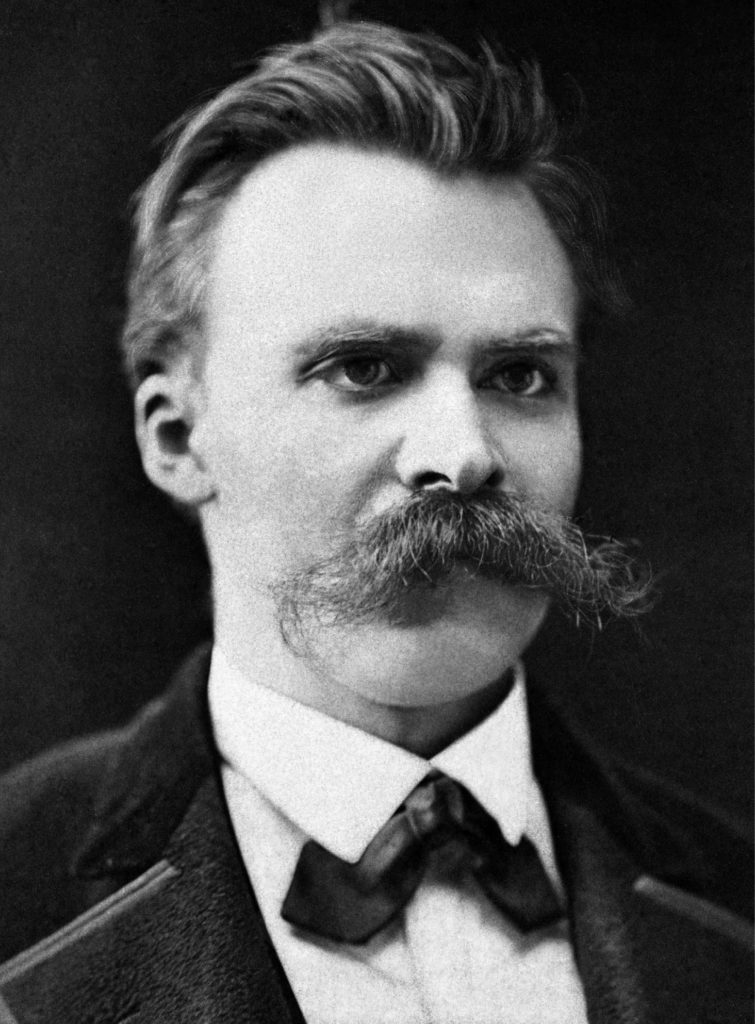
Nietzsche

Communism, as the late Ernest Gellner noted, had no Vendée and scarcely any bunker to speak of. Most social orders in their darkest hour can usually call upon diehards whose faith shines brightest when others falter. This after all is one of the hallmarks of faith; the more difficult it is to maintain the more it defines the individual – but the collapsing Soviet Union could not even generate rumours of Werewolves. The 1991 counter-coup was a feeble affair and lacked the willingness to spill blood which for the Bolshevik pioneers was a signature of their faith in the Red utopia; killing on such an epic scale must surely herald something.

Thus passed the most ambitious experiment in God-building in the modern age. The origins of this peculiarly modern obsession lie in the troubled reflections of a morbid philosopher. Nietzsche was haunted by the banishment of meaning from the world, and brooded over the fate that was its inevitable corollary – a progressive disintegration of a culture which had nurtured great ambitions and select individuals. Man was the esteeming animal and whilst the objects of his reverence were in no sense true they were nonetheless precursors of great deeds. Religion had historically given men the ability to impose values on the world but now the death of God was depriving modern men of this capacity for decisive acts. It should be clear from this, that Nietzsche would have made a poor bedfellow amongst the new atheists, whose tone of infantile iconoclasm is largely absent in his work.

Despite his notorious and much misinterpreted denunciations of “slave morality”, Nietzsche never doubted that the Old Testament faith had been indispensable to an embattled nation fighting for its survival and he was not beyond some backhanded complements to the creed’s founders. Why not make a virtue of the slave morality of the weak and saddle the strong with this millstone, and how poorly did the Last Man with his jaded diffidence compare with men like Moses chiseling out a table of values by a supreme act of will? As Nietzsche noted, there were other tables of values that could have been chosen, “a thousand and one” mutters Zarathustra, but these ones created a people and gave them an inner purpose which a desiccated positivism was driving out.

Nietzsche’s vision exercised great hold over the social sciences – Max Weber’s theory of the bureaucratization of social life is a gloomy sociological footnote to it, but its influence on avant garde artists and writers was even greater, and if for the most part they were dismissive of the metaphysics of God they were awed by the aesthetic. Religion may have been fraudulent but it was beautiful. The Bolshevik Commissar for Culture Anton Lunasharsky and the famous writer Maxim Gorky recognized this more acutely than most, and their forlorn attempt to recreate August Comte’s Religion of Humanity in the USSR was born of a recognition of Marxism-Leninism’s feeble spiritual grip.

Nietzsche anticipated such projects; the attempt to appropriate the catharsis of religion without its central beliefs was all around him. He termed this distinctly postmodern phenomenon ‘Carlylism’ after the gloomy post-Calvinist Scotsman who lost his faith and spent his life searching for another. He lost God but after the Franco-Prussian War found “the master race”. Fanatics, as Nietzsche sardonically noted, are picturesque.

The atheist attempt to create a Godless religion was a supreme example of the kind of circular false cleverness to which intellectuals are prone. Trying to resolve the tension between a transcendental deity and dialectical materialism, Lunasharsky opted to deify matter. It never quite touched the sides, and Lenin was no fan. The overt paraphernalia of God building was put on ice until the cynicism of the 60s led to a fleeting renaissance. Yet God building was always more than the half-baked secular rites of passage built into the Soviet calendar. Marxism was always a faith, and it broke precisely because it was so ambitiously totalitarian.

Anatoly Lunacharsky

The problem was noted by Gellner – human beings are not constituted for the kind of permanent spiritual mobilisation which puritan faiths require – when enthusiasm wanes they require a profane bolt hole into which they can escape. Catholicism, with all its pagan concessions, is built around this insight – but a faith which sacralises the profane – the world of material production – is bound to falter. The myth of the heroic world-historical proletariat was never likely to survive the drink-sodden cynicism of a collective farm, and when the faith of a Stakhanov wanes where does it go for nourishment?

For Lunasharsky the answer was simple and it may even have convinced him:

“You must love and deify matter above everything else, [love and deify] the corporal nature or the life of your body as the primary cause of things, as existence without a beginning or end, which has been and forever will be.”

Desperate stuff. The aim was to make men Gods but the effect was simply to drag the sublime through the dust. Faith in these circumstances tends to break rather than bend. As Goldman has noted in How Civilisations Die this may be the central contradiction of Islamism. Iran for example is experiencing the collapsing birth rates, drug addiction and pervasive anomie which heralded the Soviet Union’s collapse. Too much sacredness can make a man choke.

FERGUS DOWNIE writes from London

Posted in QR Home | Tagged , , , , , | Leave a comment

‘Multiculturalism’ – uses and abuses of a modern cliche


‘Multiculturalism’ –

uses and abuses of a modern cliché

A.R. KNEEN deconstructs a much misunderstood term
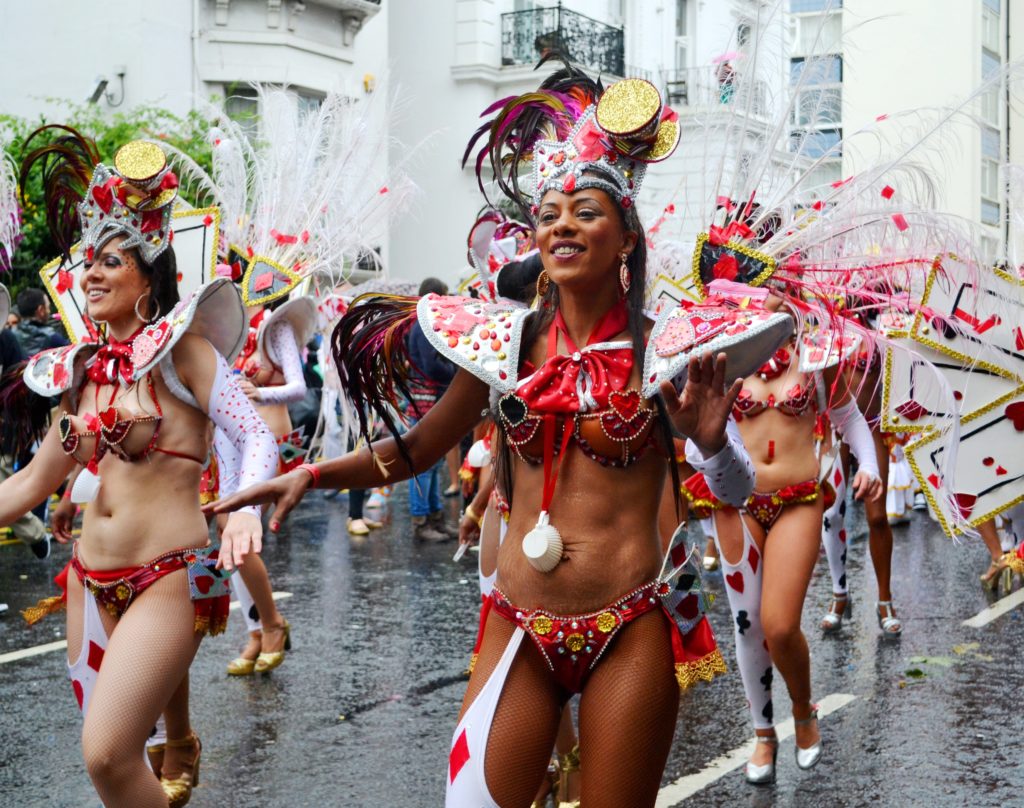
Notting Hill Carnival 2014

We are all familiar with the term ‘multiculturalism’. This word[i] is used by many, including by those with power, authority and expertise – such as politicians, educators, judges and journalists. It is a term frequently imbued with positive emotions and imagery. ‘Multiculturalism’ is so desirable to some that it is held as an aim – this reportedly included the British government[ii]. In Canada ‘multiculturalism’ is the law, as legislation has been enacted to preserve and enhance it[iii]. The BBC allegedly ‘believes in it and promotes it’[iv]. International bodies (such as the United Nations) use the term, sometimes referring to occasions in which ‘multiculturalism’ is not sufficiently promoted[v]. In many contexts being opposed to ‘multiculturalism’ can be held against people[vi]. Judges use the term in court[vii] – and in a positive manner, sometimes referring to it as a ‘value’[viii]. In fact, some people consider ‘multiculturalism’ so positive[ix] that they stand on the streets with signs stating ‘celebrate multiculturalism’[x], and there are even monuments constructed to it[xi].

The term is used in discourse on immigration and immigration-related phenomena and has been used to discuss, justify, mandate, celebrate and explain massive changes in millions of people’s lives. But what does it actually mean?

The meaning of ‘multiculturalism’ from a rational perspective will now be investigated. From such a perspective, the meaning of a term is its definition. A term is a symbol that signifies a phenomenon, and that phenomenon is described by the definition of the term. Hence, to examine the meaning of ‘multiculturalism’ from a rational perspective one must analyse its definition.

There are many ways of discovering the definition of a term: checking dictionaries and glossaries, reading the relevant literature, examining the definitions as given by public figures; etc. When these exercises are performed one finds that there are many different definitions of ‘multiculturalism’[xii]. The author has analysed these definitions alongside those given in interviews[xiii] – interviews conducted by the author with MPs, parliamentary candidates, local councillors, various government officials[xiv] and members of the public[xv].

The seven elements of multiculturalism

This analysis shows there to be seven main elements of the definitions that are available – plus the descriptive definition[xvi].

1.       All groups practising their own culture

2.       All the same

3.       Celebration of diversity

4.       Everyone living happily together

5.       Equality

6.       ‘Anti-racism’

7.       Cultural relativism

These elements are found to be given either alone or in combination[xvii]. These headings group similar definitional elements together[xviii]. This list covers the most frequently found elements but other definitions and definitional elements exist; for example Lord Parekh[xix] notes that the term is used in two senses which he term: the ‘relativist’ definition (Element Seven); and also what he refers to as the ‘interactive, dialogical or pluralist’ one[xx] – Parekh summarises this definition by stating that ‘[multiculturalism] is basically a celebration and philosophical justification of multicultural society’ (Parekh, 2007, page 131, ibid). Hence, this list is non-exhaustive but largely covers the currently[xxi] most frequently found definitional elements.

Of course, the fact of multiple meanings in itself is problematic from a rational perspective, but it will also be shown below that each of these seven meanings is problematic in itself and/or in the context of descriptive ‘multiculturalism’.

Element One – Can all groups really ‘do their own thing’?

This definition[xxii] was the most frequently given definition during interviews with the public[xxiii] [xxiv]. However, the idea of all cultures practising their own culture within one space is not possible to achieve in practice[xxv].

The features of a culture can be conceptualized as being described by ‘rules’ (explicit or implicit)[xxvi]. Such ‘rules’ might be in the form of laws, religious or otherwise in nature – others are informal and of the form of habits or traditions[xxvii]. Only one set of such ‘rules’ can describe a culture which means that if there is a difference (s) between any such sets, then all rule-sets cannot describe the culture of an area. This presents the one set of rules dilemma.

To demonstrate this logical fact with a hypothetical example, one could imagine a city inhabited by an indigenous group who paint their buildings pink. An immigrant group who live in blue-painted cities moves in[xxviii]. The view of the city cannot be simultaneously all pink and all blue – someone’s culture is altered in this respect (if not everyone’s)[xxix].

This can also pertain to all the ways in which culture can be described and/or classified. A group of people does not remain the same when there are other people there – the appearance might be different, the atmosphere different, etc. Many believe that aspects of culture that are not directly people-based are related to the people, and hence a different make-up of people alters these other aspects of culture[xxx]. Although the topic of race is controversial and causes much fear, to many it is this aspect of culture to which the term ‘multiculturalism’ primarily refers[xxxi][xxxii]

This dilemma can also be seen in relation to the rules of governance, presenting such an area with the one set of rules governance dilemma[xxxiii]. This pertains to any rule of governance (proscriptive or prescriptive), e.g. may women drive on the roads or not?

Although the idea of all groups practising their own cultures within one geographical space is unachievable, it is sometimes found that groups separate and, to a large extent, practise their own cultures within separate areas (of a city or a country, etc.[xxxiv]). However, such separation in close proximity is frequently problematic. Why would a government facilitate such a separation? Is this not in itself creating problems – and ultimately viewable as giving away parts of one’s territory?

Even in cases in which the splitting of tangible space occurs to a significant extent, there are still areas of tangible space that are shared, e.g. government administration buildings, hospitals, educational buildings, etc.[xxxv]. Even were all such buildings to be separate, there would still be some shared areas such as public roads, train stations, airports, etc.[xxxvi] Again, the impossibility of any area of tangible space being representative of all cultures is present. For example, what sounds are to be heard across public roads? Is the Muslim call to prayer to be heard[xxxvii]? Are women to be allowed on such roads at night[xxxviii]?

A parallel issue is found in relation to shared intangible space[xxxix]. The Danish cartoon affair illustrated that the media (occupying intangible public space) can only be described and governed by one set of rules. The media either published the cartoons or not. Either way, some groups did not have their cultural beliefs followed. Various government decisions and actions, such as foreign policy, can also be viewed as occupying intangible public space – as can certain symbols and figureheads of a country[xl].

Hence, Element One describes a situation that cannot be achieved: ‘multiculturalism’, defined as ‘all groups practising their own culture’, is simply inconsistent with mass immigration[xli]. When groups share space, then the preservation of one culture occurs at the expense of another[xlii] – and in some cases aspects of all relevant cultures will be lost – meaning that the rationale of preservation of culture is invalid[xliii].

It is hence not rational to use this element to define the term ‘multiculturalism’[xliv] – this is true whether the term is used as a political aim/policy, a value, a description, or otherwise.

Element Two – Are we really ‘all the same’?

Element Two states that ‘we are all the same’. This is found to form a constituent part of many definitions of the term ‘multiculturalism’, either implicitly or explicitly. Sometimes a general sameness is stated, (e.g. ‘everyone’s the same’) and sometimes a more specific form of sameness is claimed, (e.g. ‘we all want the same thing’)[xlv].

But the idea that we are all the same is simply untrue – both in respect of individuals and in respect of groups[xlvi]. This element is also inconsistent with other elements, e.g. Element One implies difference[xlvii]. The discourse on this topic shows many inconsistencies in relation to the idea of sameness. For example, the claim that ‘race does not exist’ is refuted by the numerous references to race – these include the very fact of distinguishing people by race, (e.g. for statistics whether these are used for quotas or otherwise[xlviii]).

To define such a term with an untruth is problematic[xlix]. It is also problematic to use various tautologies such as ‘people are all people’ to define a policy, aim, etc.[l] – and these are sometimes used rhetorically to disingenuously obscure differences and other phenomena[li].

Hence, this element is untrue and it is problematic to use it to define the term ‘multiculturalism’[lii].

Element Three – Celebration – or over-compensation?

Element Three can be found in many definitions of the term ‘multiculturalism’, e.g. in dictionaries[liii]. Not only is this element present in the definitions, but also in the general culture[liv] and the literature – including government reports[lv].

Element Three – celebration of diversity – does not describe general reality. Diversity (as brought by immigration[lvi]) in fact tends to make people less happy and, despite frequent claims to the contrary, tends to bring many harms the people or society experiencing it. Studies show diversity causes people to be less trusting, less willing to sacrifice for others, less secure, less mentally healthy, and is also associated with lower levels of social capital[lvii].

Diversity is a factor that brings tensions – these detrimental to people[lviii]. Such tensions are expressed in various forms of rivalry and inter-group problems – including many issues in Britain’s diverse schools[lix]. In certain contexts such diversity leads to civil unrest (as in Britain in 2001[lx], etc.) and even civil war[lxi].

Diversity is inconsistent with various other definition of ‘multiculturalism’, e.g. that we are all the same (Element Two), that culture is preserved (Element One[lxii]), etc. Also, various phenomena that are considered as desirable by many are problematic to achieve with diversity – such as solidarity/fraternity and some forms of ‘equality’[lxiii], (e.g. before the law[lxiv]).

It would be inconsistent to celebrate all diversity (this could involve celebrating uniformity if practised by a group), and amoral by definition. This would also entail celebrating any practice known to man – including child sacrifice, slavery, rape, etc.[lxv] (see Press, 2007, page 17[lxvi]).

In an inversionist manner, the diversity of immigration tends towards uniformity – and this is hence inconsistent (in the context of immigration[lxvii]). This contradiction has prompted some[lxviii] to say that ‘multiculturalism’ is ‘the anti-thesis’ of what is presented as meaning, thereby making it a form of Orwellian ‘doublethink’. This tendency to uniformity is incidentally noted by Chomsky, who views globalization as tending to reduce people to “interchangeable cogs”, without differences of race or culture[lxix].

Not everyone celebrates diversity – e.g. one senior lecturer at SPRU, Sussex University, rejects celebrating diversity (see Hasan, 2010[lxx], e.g. page 245) preferring instead ‘creolisation’.

Hence, such ‘celebration’ is inconsistent, immoral, rarely found in real life[lxxi], irrational in light of the problems it brings[lxxii] – and also the diversity brought by immigration tends to uniformity. These facts present problems, from a rational perspective, in using this element to define the term ‘multiculturalism’.

Element Four – Is everyone happy together?

Element Four was given in definitions in the form of ‘happily’[lxxiii], and sometimes in other forms that used adjectives that had similar positive effect[lxxiv] – such as ‘peacefully’ or ‘harmoniously’. Element Four can be seen in some experts’ definitions of ‘multiculturalism’ – in which the term is defined as diverse groups ‘happily coexisting’, etc. Element Four is also found in some of the glossary and dictionary definitions[lxxv].

However, in the real world it is found that diverse people[lxxvi] do not generally live together happily – and this is hence untrue as a description. As documented by Taylor[lxxvii] with numerous real-life examples, people generally prefer to separate and will do so when feasible[lxxviii]. There is significant segregation in Britain – this is noted by many commentators[lxxix]. When people are mixed together, this tends to decrease happiness and many other measures of well-being (as noted above). Different groups living together increases the chances of civil disorder or even war (also noted above).

Most people do not in fact believe that ‘everyone lives happily together’; quite the contrary[lxxx]. The desire to ‘live amongst one’s own kind’ is reported to and by governments[lxxxi] around the world[lxxxii]. All ‘cohesion teams’[lxxxiii] and other lavishly-funded bodies admit, albeit by implication, that such mixing is potentially problematic. German Chancellor Angela Merkel reportedly noted:

“Of course the tendency had been to say, ‘let’s adopt the multicultural concept and live happily side by side, and be happy to be living with each other’. But this concept has failed, and failed utterly”[lxxxiv]

Some believe that the problems that arise from ethnic diversity are best resolved by the achievement of homogeneity[lxxxv] through intermarriage[lxxxvi] (hence refuting Element Four[lxxxvii]) – one frequently hears calls for all races to end/mix into one ‘coffee-coloured race’ as a proposed end to conflict/tension/problems. There are a number of influential people in politics, academia and the media who explicitly call for miscegenation as a solution, (e.g. Podhoretz ibid).

But if the problems of mixing ethnic/racial groups within one country are so severe and intractable that the best solution involves the ending of the relevant groups[lxxxviii] (or at least the indigenous group[lxxxix]), this calls into question both the attainability and the descriptive accuracy[xc] of this idea of  ‘everyone living happily together’.

Hence, this element is neither a rational description nor an easily achievable political policy. The moral justification in attempting to achieve this situation[xci] is not clear in light of the harms caused[xcii] – especially if this involves destruction of groups[xciii] (culture and/or people[xciv]).

Element Five – Unequal Equality

‘Equality’ is also a nebulous-power-word and hence should not be used in rational discourse – including not being used to define another term.

If used in the sense of equal quantities or identical nature, etc. the term ‘equality’ possesses high referentiality[xcv]. However, when used in the social or political context there are many definitions found[xcvi] – some of which are incompatible with one another.

For example, two of the various forms of ‘equality’ are those of equality of process (such as equal opportunity) and equality of outcome/result. If groups differ on the relevant criterion (a), then equal opportunities will produce unequal outcomes – and equal outcomes can only be achieved by unequal process (sometimes inversionistly referred to as ‘equal opportunities’). These two forms of ‘equality’ are hence not both achievable – so how can one be ‘for equality’? To what is one referring?[xcvii]

Even when taken separately the various forms of ‘equality’ can be problematic. For example, if one is referring to ‘equality’ as a moral, then in some of its forms this would be strange; equality of wealth[xcviii] can tend towards increases in poverty, unhappiness, despotism, massive power differences[xcix], etc.[c] If ‘equality’ is taken to mean all people/groups are the same, then this is simply untrue[ci]. Ontological equality might or might not be true – but even if it is true then this tautology[cii] would not make sense as a definition of ‘multiculturalism’.

In the context of ‘multiculturalism’ there are specific problems in respect to ‘equality’ – including the inherent inequality of fraternity between groups and the inequalities of condition[ciii] between indigenous and immigrant groups. Immigration can be viewed as a form of inequality – the desires of immigrants overriding those of indigenous people.

Hence, whether the term ‘equality’ is being used as a moral/value[civ] or as a political policy/aim, one needs to be precise about in what sense it is being used. Once a definition with high referentiality has been specified, then one would need to know if this outcome is attainable and, if so, at what cost (financial and/or otherwise). If ‘equality’ is being used as a description, then it would also need a clear definition – and in some cases this can never be true. This term is hence inadequate from a rational perspective, and should not be used to define another term.

Element Six – ‘Anti-Racism’

‘Racism’ is another nebulous-power-word[cv]. It exerts massive influence over people, yet[cvi] the term has numerous definitions, and is inadequate from a rational perspective[cvii]. Although this term was used by respondents as an element to define ‘multiculturalism’[cviii], many people could not define ‘racism’[cix]. According to the McPherson Report[cx], a ‘racist’ incident is one so perceived – which is a definition possessing low referentiality. The lack of referentiality makes, amongst other things, many ‘anti-racist’ activities, (e.g. International Conferences[cxi]) and policies problematic[cxii].

The many multiple definitions[cxiii] of this term given include: hatred[cxiv]; mistreatment; stereotyping; prejudice; discrimination; preference; superiority; intolerance; ‘inequality’; ignorance; and yet others – and many include the idea that ‘racism’ is genocidal and/or murderous. All of these definitions are problematic either per se[cxv] and/or in the context of ‘multiculturalism’[cxvi] and/or in the context of their usage[cxvii]

Amongst the numerous inconsistencies in relation to ‘multiculturalism’ the following one is particularly striking: if discrimination is the noting of difference[cxviii] (and hence ‘racism’), then many definitions of ‘multiculturalism’ explicitly or implicitly note[cxix] such difference[cxx]. There are many striking others, such as if ‘racism’ is ‘mistreatment’, then have indigenous people not been mistreated by ‘multiculturalism’[cxxi] – hence rendering it ‘racist’ and also ‘anti-racist’[cxxii] (if so defined)?

It is difficult to know where to begin in an analysis of this term[cxxiii]. The nebulous nature of this term enables the associated meanings of genocide and murder[cxxiv] to be implied when any of the definitional elements might be relevant, e.g. if a small child asks an innocuous question such as ‘why are they dark?’ anger, panic, action and ‘racism’ accusations can ensue[cxxv]. This term clearly illustrates the power of nebulous-power-words and also the manner in which their influence is contingent upon their characteristics[cxxvi]. Were a single high referentiality definition to be used[cxxvii], then the power would be diminished and the manipulative nature of the term more easily exposed[cxxviii].

As a nebulous-power-word, then, this term is not adequate to define another term.

Element Seven – It’s All Relative

The original meaning of ‘cultural relativism’ referred to the idea that a culture can only be understood on its own terms [cxxix]. This would either be true or false, and hence in either case makes no sense to use this definition to define ‘multiculturalism’ [cxxx]. In the context of descriptive ‘multiculturalism’ this would, if true, be problematic – for example, how is public space to be governed?

However, the phrase ‘cultural relativism’ is frequently used to refer to other, related, ideas/beliefs, e.g. the idea that all cultures are of equal value. But if one has any criteria of judgement [cxxxi], then this is false.

Moral equivalence is another common interpretation – however, to the extent that this can be achieved, this is inherently amoral and also is likely to be harmful to the relevant people[cxxxii].

Sometimes ‘cultural relativism’ is used to refer to the Culture Cult[cxxxiii] – holding that all cultures are of equal worth, are to be preserved, and assimilation is evil. Were one to genuinely believe these tenets, then this would be incompatible with descriptive ‘multiculturalism’. If this phrase is used to refer to the idea of accommodating immigrant cultures, then this overlaps with the idea of subjugation of indigenous culture – which is hence not ‘equal’[cxxxiv], inconsistent[cxxxv] and morally questionable[cxxxvi].

Hence, this group of definitions presents problems whether this definition is used as a description, an aim, a moral or a political policy.

Descriptive ‘multiculturalism’

All seven definitional elements are hence problematic[cxxxvii]. However, there is a definition of ‘multiculturalism’ that is not problematic in these ways: that of defining the term descriptively – referring to an area that is racially/ethnically mixed. Such a mixture can only occur by movement of people: in Britain this refers to the results of immigration[cxxxviii]. Hence, this term denotes the results of a political policy (s).

Although not problematic as a definition per se, this definition does present various problems. For example, it is inconsistent with many other definitions of the term ‘multiculturalism’ (see above)[cxxxix]. Also, if a replacement exercise is performed this definition does not always make sense. For example, if the term ‘multiculturalism’ is the existence of racial/ethnic mixture, then how can it be the ‘justification’ or ‘celebration’ of this mixture, (e.g. see Parekh ibid)? Or, as one academic is quoted as saying:

“There is no really serious alternative to multiculturalism as a means to deal with[cxl] our cultural diversity.”[cxli]

But how can it be the solution to diversity if it is the diversity? In these contexts the term must be defined in a different manner – but what?

Another set of problems presents itself when we ask why ‘multiculturalism’ is generally portrayed as positive. In Britain the majority of people want immigration to be reduced, if not reversed – and immigration has presented many problems for British people[cxlii]. Immigration is frequently spoken of, and justified, in terms of revenge against the Brits for perceived past misdemeanours, (e.g. ‘payback time’)[cxliii]. So why should ‘multiculturalism’ be represented in a positive manner? Recently, some have spoken out against ‘multiculturalism’[cxliv] – but what are they speaking out against exactly? Immigration? The lack of assimilation? Or is this merely an acknowledgment of the falsity of Elements Three and Four, etc.? Using nebulous-power-words obscures, amongst other things, what people really mean.

Even if one examines the results of immigration from a theoretical perspective it is difficult to see why it would be positively represented. Immigration can produce only one of two outcomes: there is either one homogenous group; or there is diversity[cxlv].

As noted above, such diversity is problematic in many ways[cxlvi]; these problems justifying the existence of a ‘race relations industry’ (etc.[cxlvii]) to manage/contain/reduce the problems. Not only are there many direct harms caused by diversity, but many indirect harms are presented[cxlviii]. For example, a country can be easier to govern because of ‘divide and rule’ policies[cxlix]; some hold such diverse countries require authoritarian rule[cl] to manage the diversity and associated problems – these problems acting as a distraction from more positive endeavours[cli]. A government might add to these harms by implementing forms of ‘moral relativism’, various ‘equality’ measures, suppression of truth and dissent, etc. in attempts to ‘manage the diversity’. Of course, diversity presents many other drawbacks, including the inescapable fact of destruction of culture[clii].

Thus, diversity is problematic. The only other alternative is that of homogenisation. This result clearly cannot be achieved without loss of culture and most groups generally do not wish to lose their cultures[cliii]. Full homogenisation includes homogenisation of people; and if homogenisation occurs in all other ways this will follow. Hence, homogenisation presents the result of loss – loss of culture and loss of existence as a people[cliv].

Some influential people, as already noted, explicitly desire ‘miscegenation’ and the ‘merging of the races’ as a solution to the problems of diversity, (e.g. see Podhoretz[clv]). Others are less explicit. Liberal Democrat Sandy Walkington is reported[clvi] to have stated that in 200 years we will all be coffee-coloured, and that he has “no problem with that”. Of course any politician, academic, journalist, etc. recommending mixing is, albeit not explicitly, facilitating this result[clvii].

The fact that the only two possibilities both involve harm presents the dilemma of cultural contact – a dilemma because the only two choices are both harmful[clviii].

The social representation perspective

We have seen that the term ‘multiculturalism’ is problematic from a rational perspective. However, a social representation perspective on meaning can show, inter alia, what the term might mean to those who experience[clix] it.

A social representation perspective takes a different view on meaning: instead of merely the direct correspondence of term to phenomenon, the social representation perspective acknowledges various social factors incorporated in meaning[clx].

In some cases an image replaces a concept – lending it impermeability to reason[clxi]. Images can actually be what is signified by a term, rather than a real object or concept – as discussed by social representation theorists:

“The second stage, in which the image is wholly assimilated and what is perceived replaces what is conceived, is the logical outcome of this state of affairs. […] images become the elements of reality rather than elements of thought. […] When this takes place, images no longer occupy that peculiar position somewhere between words which are supposed to have significance and real objects to which only we can give significance, but they exist as objects, they are what is signified.”

(Moscovici, 2000, page 51[clxii])

‘Multiculturalism’ is frequently represented by a visual image of diverse happy people[clxiii] – such images associating positive emotion with ‘multiculturalism’, this set in bipolar oppositional form to ‘racism’[clxiv]. Here is a typical example.

Although the seven elements are all problematic from a rational perspective, such an image can ‘make sense’ of these irrationalities by fitting them into an organised structure of thought – the elements describe the image in some ways and hence the image ‘makes sense’ of them and one ‘understands’[clxv]. However, amongst other things[clxvi], many issues are thus obscured.

Of course, as an abstract image this does not represent reality: if one contextualises this image in space, time and reality it becomes problematic. For example, in whose country is this happy scene set? What language do they use to sing? In some cultures the children would be arrested during the happy sing-song[clxvii]. Contextualising the scene in time would present various contradictions such as what happens immediately after the sing-song? What food is served[clxviii]? Do all the children split up and go to their respective separate areas? Is the vision of ‘equality’ sustainable in the real world? In the long term if there were to be such ‘equal’ happy mixing, then the variations in features and skin tones, etc. would not be preserved.

From a social representation perspective one can identify various ‘voices’ that contribute to constructing social meaning. Four main such voices can be identified in respect of the term ‘multiculturalism’[clxix]. For some individuals, these ‘voices’ can represent a large part of their identity[clxx].

The first such voice is the ‘abstract’, de-contextualizing the representation and imbuing it with the impression of intellectuality, authority, expertise, etc. This voice gives the impression of rationality to the term and gives it a social force[clxxi]. People do not wish to appear intellectually incompetent and assume that if this term were not a proper term, then surely all these experts would not be using it – and judges would not be using it in court[clxxii]?

The second voice is that of the ‘nice’ people. It is just not ‘nice’ to query this, or to be ‘racist’, etc. Such ‘nice’ people are found throughout the Western world and prioritise being viewed as ‘nice’[clxxiii]. However, what is the definition of ‘nice’?[clxxiv]. If it means smiling, being compliant, pleasing others, etc. then one wonders whom they please, and at whose expense[clxxv]? In the context of ‘multiculturalism’, many problems are fundamentally a clash of desires. Also, is it ‘nice’ to destroy someone’s culture – to cause widespread mistreatment – perhaps to ultimately cause the extinction of a group?[clxxvi] The self-serving nature of this voice is obvious, (e.g. appeasement, self-advancement/enrichment/protection, self-indulgence[clxxvii], etc.[clxxviii]).

A third voice is that of the ‘angry’. The rage of this group provides a strong motivation not to cross them. Although purporting to be acting against hate, in fact hatred is the main motivating force for this group[clxxix]. Utopian thinking is, ironically, an expression of hatred. Attempts to achieve utopian visions require destruction and control – and these are desired by many utopians[clxxx]. In fact, it is chiefly a desire to destroy and control that underlies such positioning – however often peace, ‘equality’, love and defending ‘victims’ from ‘oppressors’ may be claimed as motivations.

The fourth voice is that of some immigrants[clxxxi]. Inversionistly this voice claims victimhood and uses ‘multiculturalism’ to justify satisfaction of their desires. Of course, these voices all act in concert with one another and this can clearly be seen in relation to this voice acting with the ‘nice’ and ‘angry’ voices – do you want to be mean to those poor victimised immigrants? This voice presents motivations of shame and guilt, especially to white people who are sometimes taught to feel guilty[clxxxii]. However, there is an element of threat presented by this voice too. There is an inversionist nature to who is actually being harmed and victimised.

A fifth ‘voice’ could be added – that of ‘the crowd’[clxxxiii], those swayed by the power of the term. Who wants to be viewed as stupid, not ‘nice’, or picking on those already victimised? Who wants to be attacked by the enraged? People know it is safer to behave accordingly (and more beneficial[clxxxiv]). However meaningless nebulous-power-words may be, people understand their forces (fear, guilt, pride, etc.) and take aversive action. For example, when the crowd sees someone attacked[clxxxv] for being ‘racist’ this causes fear and people recoil respectively – people who possibly cannot[clxxxvi] even define the term.

‘Multiculturalism’ as talisman and taboo

We have seen that the term ‘multiculturalism’ does not meet the requirements of a properly rational term and should hence not be used in rational discourse. There are multiple meanings, many inherently problematic in themselves, and also these are frequently mutually inconsistent.

The use of nebulous-power-words enables reality to be obscured, inhibits truth and rational thought[clxxxvii], and facilitates the operation of emotional and social forces. The power of these terms is contingent upon the very nature of this type of word.

By using such a form of term in relation to social and political phenomena people have been confused and manipulated[clxxxviii]. Power has been exercised in an insidious manner, and this being a more total form of control over people than some previously labelled as totalitarian[clxxxix] – although originating outside, this power can control from within. The nebulous-power-words ‘multiculturalism’, ‘racism’ and ‘equality’ have been used[cxc] to facilitate social and political control in relation to race and immigration.

The truth is simultaneously very simple and very difficult – the multicultural Emperor is starkly naked, but although many have noticed, still too few care to mention it.

Dr. A. R. KNEEN is an academic

NOTES


[i] And its derivatives such as ‘multicultural’, e.g. while Prime Minister, Tony Blair held that we should ‘continue celebrating’ multicultural Britain – as reported by BBC News 8th December 2006 http://news.bbc.co.uk/1/hi/uk_politics/6219626.stm

[ii] E.g. one Labour MP reported to the author that ‘multiculturalism’ was an aim and an important value of his Government. Also see: it is claimed by a former government adviser, Andrew Neather, that Labour deliberately implemented mass immigration with an aim of “creating a multicultural society”, (e.g. see: Daily Telegraph, 23rd October 2009)

[iii] E.g. see the 1985 Canadian Multiculturalism Act which commences with the declaration that the Act is for the ‘preservation and enhancement of multiculturalism in Canada.’ (Canadian Multiculturalism Act R.S.C., 1985, c. 24 (4th Supp.)). Also see R. v. Keegstra judgment

[iv] E.g. as claimed by Jeff Randall to have been stated to him by a BBC senior executive. E.g. see: Daily Mail 26th October 2006

http://www.dailymail.co.uk/news/article-411846/We-biased-admit-stars-BBC-News.html

[v] E.g. see: Human Rights Council, United Nations General Assembly, Draft Report of the Working Group on the Universal Periodic Review. Geneva, 21st May – 4th June 2012 (page 14, section 100) – this particular Report actually states “state multiculturalism”.

Some organisations are otherwise discussed as ‘promoting ‘multiculturalism’’, e.g. see Daily Mail 4th December 2012

http://www.dailymail.co.uk/news/article-2242804/Rap-music-fan-shouted-n—black-man-CLEARED-racism-magistrates-accept-using-street-slang.html (this article also provides interesting examples of use of the nebulous-power-word ‘racism’ – and in a legal context)

[vi] This is found to occur in direct and indirect means. For example, some people suffer serious consequences if they are even associated with groups and/or others who are not held to support ‘multiculturalism’ sufficiently. Also see the Rotherham foster case in which Thacker is quoted as stating that ‘UKIP has very clear statements on ending multiculturalism…’, e.g. as quoted in the Guardian 24th November 2012

http://www.guardian.co.uk/politics/2012/nov/24/ukip-foster-parents-children-removed-social-workers

[vii] This has occurred in Britain and elsewhere, and has been found during both civil and criminal cases

[viii] E.g. see R. v. Keegstra judgment

[xi] Sculptor Perilli’s monument to ‘multiculturalism’ is inscribed with the words it is a ‘tribute to multiculturalism’, e.g. see http://spacingtoronto.ca/2009/03/20/monument-to-multiculturalism/

[xii] And these definitions are of many types of phenomena, e.g. ‘multiculturalism’ is defined sometimes as policy, sometimes as value, a description, etc.

[xiii] It should be noted that when asked many could not define the term at all

[xiv] Home Office employees, local government officers, etc.

[xv] These interviews were conducted across the country in many towns and cities including: London, Cambridge, Salford, Oldham, Burnley, Bradford, Accrington, Dewsbury, etc.

[xvi] This definition underpins all the definitions but is less frequently given as a definition – see later.

[xvii] For example, a definition might hold that ‘multiculturalism’ means: ‘a celebration of diversity with no racism, everyone practising their own culture together’. This particular example would contain three of the elements listed (Elements Three, Six and One) – and implies the descriptive definition

[xviii] It would not be feasible to analyse each variant separately, and neither would this add much to the arguments presented here

[xix] E.g. Parekh, B. (2007) in Identity, Ethnic Diversity and Community Cohesion Edited by Margaret Wetherell, Michelynn Laflèche and Robert Berkeley. Sage Publications: London

[xx] According to this definition, ‘multiculturalism’ means, inter alia, that all cultures can benefit from dialogue with others, and through this dialogue the hegemony of the dominant culture is challenged. One of the main policy concerns of ‘multiculturalism’, under this definition, is that of enabling different communities to feel ‘valued and respected’. As can be seen, this second definition overlaps somewhat with the seven elements enumerated and hence shares their problems.

[xxi] Definitions of terms can vary across time – this particularly true in relation to nebulous-power-words. In this sense the research presented here provides a snapshot of current and recent reality.

[xxii] Or ‘definitional element’ – take as read throughout

[xxiii] A typical response to a request to define the term being ‘it means everyone practising their own culture, all cultures doing their own thing’

[xxiv] Sometimes this element is given in the form of ‘preservation of culture’, and appears to be an implied definition of the term as according to the Canadian legislation that states it aims to preserve and enhance the multicultural heritage of Canadians (ibid). This element is also frequently found in glossaries and dictionaries, for example some defining the term ‘multiculturalism’ as the ‘preservation of cultures within one society’. The idea of preservation of culture also is often found to be used as a moral argument.

[xxv] And if some groups are given priority over other groups, then this raises issues of ‘equality’ etc. and hence various inconsistencies. This choice of whom to favour also raises various moral issues.

[xxvi] E.g. ‘all buildings are painted pink’

[xxvii] E.g. it could be conceptualised as a ‘rule’ that everyone paints their homes pink – this could be a ‘rule’ even though there is no such explicit prescription; nor prohibition on using other colours of paint (legal, religious or otherwise)

[xxviii] For simplicity in this example only one variable and only two groups will be used – but of course this can be extended to any number of either or both.

[xxix] It could be that the city would be part blue and part pink – and/or any other colour (s). It is not impossible that no buildings will be pink or blue. There are numerous possibilities, e.g. perhaps as a compromise everyone uses purple paint, or it is agreed that only yellow and green are to be used, or everyone just uses any colours and the city looks like a rainbow, or the blue-painters force or persuade everyone to use blue, etc. However, in any imaginable scenario the city will not be all pink and all blue (see Orwell’s blackwhite).

There are various means by which indigenous and/or immigrant cultures can alter, e.g. by the will of the people concerned, by orders from Government, by force from either group, etc.

Examples in the real world are numerous and include matters such as flags and British symbols being banned, and of course Christmas celebrations being inhibited.

E.g. see: http://www.thisiswiltshire.co.uk/news/2288512.motorist_told_flag_could_be_racist/

http://www.dailymail.co.uk/news/article-1386558/Tower-Hamlets-Taliban-Death-threats-women-gays-attacked-streets.html

http://www.telegraph.co.uk/news/religion/8550178/Muslim-fanatic-fined-100-for-gay-free-zone-stickers.html

http://www.christian.org.uk/news/posters-declare-sharia-zone-in-east-london/

http://news.sky.com/story/1042295/police-in-muslim-vigilantes-victim-appeal

http://www.dailymail.co.uk/news/article-2263905/Muslim-patrol-Hooded-vigilantes-walking-streets-London-telling-women-cover-taking-alcohol-hands-revellers-behave-Islamic-way.html

By whatever processes changes occur, if there are any alterations in indigenous and/or immigrant cultures, then this is not all cultures practising their own cultures. And, as noted above, even in cases in which all groups maintain their own cultures (to the extent this is possible, e.g. some pink and some blue houses), culture in that location has been altered by the very fact of this occurring (the city-scape looks different, e.g. is no longer all pink). The idea of ‘everyone doing their own thing’ is incoherent in relation to preservation of cultures – if everyone does their own thing, then this is not the preservation of culture – and hence the resultant culture is not one of everyone doing their own thing (in the sense of the resultant culture being any of the original cultures). Subjective judgments as to what constitutes an improvement or not are irrelevant to the logical fact that preservation of all cultures in one space at one time is not possible to achieve.

[xxx] Also see Kemp, A. (2009) The Lie of Apartheid – and Other True Stories from Southern Africa. Ostara Publications: United States of America

[xxxi] For example, the strongly ‘anti-racist’ Channel Four News programme uses the term to refer to the racial appearance of the people in an area in cases such as Jon Snow asking the Justice Minister just how ‘multicultural’ Oslo actually is, noting that he had been observing the people in Oslo over recent days and had seen that they are ‘very white’.

[xxxii] By switching the referent the term ‘multiculturalism’ tends to confuse people.

[xxxiii] A subset of the one set of rules dilemma

[xxxiv] This is found in many areas in Britain. However, some believe that these areas are thus ‘monocultural’ and not ‘multicultural’, e.g. see Daily Mail 16th November 2012

http://www.dailymail.co.uk/news/article-2233958/One-Fat-Lady-race-row-Muslim-ghetto-jibe-The-Islamic-area-Leicester-frightened-says-TV-chef.html

[xxxv] The one set of rules dilemma is illustrated by many real life examples. As with all examples given in this essay, even were an example shown to be falsely reported this would not detract from the argument presented here – these are merely illustrations of a logical point – a point that remains true whether any particular illustration is accurate or not.

Examples include matters such as: the alleged banning of representations of piglet from a council office in the Midlands, e.g. see: Mark Steyn, Daily Telegraph, 3rd October 2005.

http://www.telegraph.co.uk/comment/personal-view/3620128/Making-a-pigs-ear-of-defending-democracy.html

Or the case of a mother reportedly told not to breastfeed in a ‘multicultural’ local government building in Oldham, e.g. see Daily Mail, 14th July 2011.  http://www.dailymail.co.uk/news/article-2014222/Breast-feeding-mother-told-leave-council-headquarters-offend-Muslim-visitors.html

Also see: http://menmedia.co.uk/manchestereveningnews/news/s/1435753_mums-in-flashmob-protest-over-breastfeeding-ban-at-oldham-town-hall

And: the Vice Chancellor of a London university reportedly considering dividing the areas into those with and those without alcohol, e.g. see: Daily Mail, 12th April 2012 http://www.dailymail.co.uk/news/article-2128788/London-university-considers-stopping-sale-immoral-alcohol-campus-offends-Muslim-students.html

[xxxvi] And were all of these totally separate, then one might wonder why such a situation has been created. If such total separation ere required, then this, inter alia, questions the wisdom of bringing in immigrants in the first place.

[xxxvii] This is an issue of disagreement in Britain, e.g. see:

http://www.telegraph.co.uk/news/uknews/1575506/Loudspeaker-plan-re-ignites-call-to-prayer-row.html

Sometimes these issues are discussed in relation to threat to culture (‘way of life’), e.g.

http://hitchensblog.mailonsunday.co.uk/2007/12/so-much-for-our.html

Divergences in opinion regarding this issue have also been found in countries other than Britain, e.g. see:

http://www.israelnationalnews.com/News/News.aspx/149955#.T946xLVfGHw

http://www.independent.co.uk/news/world/middle-east/netanyahu-backs-law-to-ban-loudspeakers-at-mosques-across-israel-6276173.html

[xxxix] Which will be shared even if there is extensive geographic separation in relation to tangible space

[xl] For example – what language does the Queen speak and what does she wear?

[xli] One could imagine the hypothetical term ‘mixarationism’ being used by painters to describe the process of putting two or more water-based paints into one vessel and mixing them. No rational problems there. However, if mixarationism were also to be used to refer to the preservation of the discrete colours, then this is internally inconsistent: ‘multiculturalism’ defined as Element One is inconsistent with immigration

[xlii] In relation to the differences between them. Take as read that depending upon the actual differences (and the interactions) the level to which this will be noticed and/or will be consequential varies.

[xliii] This phenomenon can be viewed as form of zero-sum game, but not an exact zero-sum game with losses exactly balancing gains. However, the idea of ‘zero-sum game’ can be useful to conceptualise the idea of loss of culture when space is shared

[xliv] In the context of mass immigration (see descriptive ‘multiculturalism’ below) – of course, were the term so defined used to refer to separation, then this could be rational

[xlv] Not only is this element found in definitions of ‘multiculturalism’, but it is also associated with immigration-related discourse more generally. Sameness is sometimes suggested by the claim that ‘race does not exist’. Some children are already taught that there is no such thing as race (and others call for this to happen). Also see http://www.dailymail.co.uk/news/article-2146334/The-Jungle-Book-Britain-nation-passive-racists-says-John-Barnes-blames-classic-authors-bigotry.html

It is also sometimes claimed that one should admit external differences, but teach that despite these differences, we are ‘all the same inside’. E.g. see Yahoo, 2nd December 2011

http://uk.lifestyle.yahoo.com/how-to-teach-your-children-about-racism.html

There are various books and teaching materials that use this phrase, most of which are aimed at children. E.g. see

http://www.amazon.com/Are-All-Same-Inside-Anniversary/dp/0971823243/ref=pd_sim_sbs_b_1

(However, these phrases are also found in various teaching materials for adults – such as those used in employment ‘equality and diversity’ courses.)

Many people remember being taught this as children.

E.g. see London’s Biggest Conversation on radio 97.3 FM.

http://www.lbc.co.uk/are-all-races-the-same-on-the-inside-8356

[xlvi] In this context such groups distinguished by race, culture, ethnicity, immigration status, heritage, religion, etc. And of course, take as read that some groups (and subgroups) do not differ on some criteria. Also take as read that the notion of ‘subgroups’ is dependent upon the main group heading used, etc.

[xlvii] And Element Three celebrates it. Other inconsistencies are found, (e.g. in relation to various forms of Element Five, etc.)

[xlviii] E.g. in discourse on racial statistics for jobs (and the rationales for such) what are these people talking about if race does not exist? And how do they determine membership in these categories if race does not exist, e.g. who is ‘black’ if there is no such thing as race? Such discourse can be seen widely, e.g. Guardian 27th January 2013 http://www.guardian.co.uk/uk/2013/jan/27/law-police-diversity

[xlix] E.g. if this is used as an aim or policy, then this is inherently dishonest

[l] Sometimes such tautologies are slipped into discourse as a form of argument, but a tautology alone is inadequate as an argument

[li] ‘We are all mammals’ – so why can tigers not vote or go to university?

[lii] E.g. if this is a policy, description, etc. this is problematic

[liii] E.g. the Business Dictionary defines ‘multiculturalism’ as celebrating diversity (by promoting recognition of differences).

http://www.businessdictionary.com/definition/multiculturalism.html

Such definitions are interesting in a number of ways – one of which is that they acknowledge difference – which could be viewed as inconsistent with Element Two (and variants of Elements Five and Six).

[lv] E.g. after the 2001 riots, racial ‘tensions’ being the main underlying cause, many reports used this phrase such as the Oldham Independent Review (2001) and the Community Cohesion Report (2001)

[lvi] This term is used in this paper to refer to the diversity brought by immigration. Other forms of diversity generally are not celebrated – and are not relevant to the definition of ‘multiculturalism’. In fact, in another example of inconsistency, many other forms of diversity are strongly condemned by those celebrating the diversity of immigration, (e.g. such people frequently call for the arrest/punishment of those with different beliefs and ideas – unless those with different beliefs are immigrants).

[lvii] For example: Putnam studies the reductions in social capital (see Putnam, 2007, “Diversity and Community in the Twenty First Century”. Scandinavian Political Studies, 30 (2), 137-174); the reduction in willingness to sacrifice for others is discussed by David Goodhart, (e.g. see Prospect Magazine, 2004 and ibid); general levels of trust reduce with diversity (also see for further reading: Salter, F. K., Ed., 2002, Risky Transactions. Trust, Kinship, and Ethnicity. Oxford and New York, Berghahn).  Also for further reading on related health issues see, e.g.: Stafford, M., Becares, L. and Nazroo, J. ‘Objective and Perceived Ethnic Density and Health: Findings From a United Kingdom General Population Survey’, American Journal Epidemiol (2009) 170 (4):484-493.doi: 10.1093/aje/kwp160; and http://uk.reuters.com/article/idUKTRE58352X20090904)

[lviii] These tensions are detrimental to people in themselves. Also, the specific matters that cause concern provoke anxiety and this anxiety is detrimental even if the specific events feared do not occur,  e.g. even if the fears of civil war prove to be unfounded the anxiety is harmful in itself.

[lix] Such phenomena allegedly leading the suicide of a 9-year old boy whom it is claimed was bullied for being white (while at a ‘very diverse’ school in Birmingham) – e.g. as reported by The Sun newspaper 24th February 2013

http://www.thesun.co.uk/sol/homepage/news/4809890/BOY-thought-to-be-one-of-Britains-youngest-suicides-found-dead-after-months-of-jibes-says-family.html

also: http://in2eastafrica.net/family-of-schoolboy-9-who-was-found-hanged-at-home-claim-he-was-hounded-to-his-death-by-asian-bullies-for-being-white/

Diversity in schools has presented widespread problems, e.g. see Henry Webster case as in Daily Mail 30th October 2009

http://www.dailymail.co.uk/news/article-1223938/The-classroom-apartheid-teachers-frightened-discipline-thuggish-minority-Asian-pupils-fear-branded-racist.html

These problems are not confined to Britain, e.g. see across Europe and the USA:

Frankfurter Allgemeine 21st July 2010

http://www.faz.net/aktuell/feuilleton/medien/2.1756/kulturkampf-im-klassenzimmer-was-gehst-du-zu-den-deutschen-11008254.html

Osloby 23rd March 2011

http://www.osloby.no/nyheter/-Det-er-vanskelig–a-vare-etnisk-norsk-her-5114671.html

Daily Mail 15th February 2013

http://www.dailymail.co.uk/news/article-2278928/Minnesota-high-school-placed-lockdown-cafeteria-food-fight-turned-huge-brawl-racial-tensions-black-Muslim-students.html

Neither are such problems confined to schools – there are found to occur in neighbourhoods, universities, work-places, etc.

[lx] Riots were experienced in many towns and cities in 2001 including: Oldham, Bradford, Burnley, etc.

[lxi] Many predict more civil disorder, and possibly even civil war, for Britain – this is widespread amongst the population and is even occasionally suggested by public figures, e.g. Paul Weston believes that civil unrest and even possibly civil war could occur by 2030;

http://www.youtube.com/watch?v=wjvFhGH2eyo

Also see: Daily Mail 13th March 2010

http://www.dailymail.co.uk/news/article-1257613/The-politician-guts-speak-immigration-Frank-Field-reveals-candid-opinion-future-Britain.html

[lxii] This also falls under some definitions of Element Seven (see below)

[lxiii] This issue presents another area of inconsistencies, (e.g. with Element Five)

[lxiv] E.g. it is frequently found that people will judge according to group membership. This was clearly illustrated in relation to the reactions to the O. J. Simpson case.  For some analysis of relevant variables see for example: Murray, C. B., Kaiser, R. and Taylor, S. (1997), The O. J. Simpson Verdict: Predictors of Beliefs about Innocence or Guilt. Journal of Social Issues, 53: 455–475. doi: 10.1111/j.1540-4560.1997.tb02122.

In legal matters, jury selection is frequently difficult for such reasons, and in South Africa ‘racial politics’ has caused the jury system to be abandoned. Such phenomena are clearly problematic not only for equality before the law, but in many other contexts. For relevant social psychological research see for example: For example: Tajfel, M. (1972) “Experiments in a Vacuum”, The Context of Social Psychology, eds. J. Israel and H. Tajfel. Academic Press: London; Tajfel, M. (1981) Human Groups and Social Categories: Studies in Social Psychology. Cambridge University Press; Tajfel, H. (1982) Social Identity and Intergroup Relations. Cambridge University Press. Also see: Sherif, M. (1966) In Common Predicament: The Social Psychology of Inter-Group Conflict. Houghton-Mifflin: Boston.

[lxv] These practices, and others, are still found around the world today – even human sacrifice persists in some areas

E.g. see Daily Telegraph, 6th January 2010. Available at:

http://www.telegraph.co.uk/news/worldnews/africaandindianocean/uganda/6944292/Human-sacrifices-on-the-rise-in-Uganda-as-witch-doctors-admit-to-rituals.html

The body of a child found in the Thames is believed by some to be the victim of a sacrifice – see http://www.independent.co.uk/news/uk/crime/torso-in-thames-was-ritual-sacrifice-671690.html

[lxvi] Press, J. K. (2007) Culturalism. Social Books: New York

[lxvii] Take as read throughout

[lxviii] E.g. see: “The Rivkin Project: How Globalism Uses Multiculturalism to Subvert Sovereign Nations”, Dr. K R Bolton Foreign Policy Journal, 12 March 2011.

[lxix] Also see: Noam Chomsky (2002) Understanding Power: The Indispensable Chomsky, New York: The New York Press

[lxx] Hasan, R. (2010) Multiculturalism. Some Inconvenient Truths. Politicos: UK.

[lxxi] Although common amongst politicians, journalists and academics

[lxxii] This of course assuming that such problems would not be desired

[lxxiii] E.g. ‘it’s all races living together happily’

[lxxiv] As noted above, these elements group similar definitions together

[lxxv] For example, the Combat Poverty Agency of Ireland defines ‘multiculturalism’ as diverse groups co-existing in harmony within one country.

On 1 May 2010 the Social Inclusion Division became part of the Department of Community, Equality and Gaeltacht Affairs. From 1 May 2011 the division moved to the Department of Social Protection http://www.cpa.ie/index.html

http://www.cpa.ie/povertyinireland/glossary.htm#M

and The Free Dictionary thesaurus defines ‘multiculturalism’ with reference to such peaceful and equitable co-existence

http://www.thefreedictionary.com/multiculturalism

[lxxvi] In this context of different racial/ethnic groups

[lxxvii] Taylor, J. (2011) White Identity. Racial Consciousness in the 21st Century. New Century Foundation: USA

[lxxviii] As within such diverse contexts, (e.g. tend to live separately within cities, tend to separate within and between diverse educational establishments) – and if there are not strong incentives otherwise. One personal account of some relevant experiences is given here: Telegraph 29th January 2013

http://www.telegraph.co.uk/news/uknews/immigration/9831912/I-feel-like-a-stranger-where-I-live.html

[lxxix] E.g. the head of the Equalities and Human Rights Commission, Trevor Phillips, has stated that Britain is “sleepwalking” into segregation – see BBC News 22nd September 2005

http://news.bbc.co.uk/1/hi/uk/4270010.stm

Ted Cantle referred to communities living “parallel lives” in his Report after the 2001 riots (page 9)- The ‘Cantle Report’ – Community Cohesion: a Report of the Independent Review Team. Chaired by Ted Cantle. Published: January 2001. Source: Home Office.

http://resources.cohesioninstitute.org.uk/Publications/Documents/Document/Default.aspx?recordId=96

Headmaster Levin speaks of his alarm at the level of segregation. See Telegraph 4th October, 2011

http://www.telegraph.co.uk/education/educationnews/8806977/London-being-turned-into-apartheid-era-Johannesburg-says-head.html

Also see: Daily Mail 27th January 2013

http://www.dailymail.co.uk/news/article-2269058/British-families-self-segregate-whites-abandon-urban-areas-countryside.html

Or Daily Mail 21st February 2013

http://www.dailymail.co.uk/news/article-2281941/600-000-decade-white-flight-London-White-Britons-minority-capital.html

[lxxx] Taylor cites a study conducted by the Institute of Governmental Studies at Berkeley, reporting that the majority of the four major racial groups in California surveyed (blacks, whites, Hispanics and Asians) agreed with the statement that ‘people are happier when segregated’ (see Taylor, 2011, page 41, ibid). As some say: ‘what could be more obvious?’, e.g. see:  John Derbyshire, Taki’s Magazine, 29th March 2012

http://takimag.com/article/multiculturalism_when_will_the_sleeper_wake_john_derbyshire/print#axzz1renP285Y

[lxxxi] For example, the British Government Home Office Report commissioned after the 2001 riots noted that the main cause for the segregation found in Oldham was the preferences of groups “to live with their own kind” (Oldham Independent Review, 2001, page 9, ibid).

[lxxxii] Which hence makes it implausible for them to deny that they know this – and hence makes some of their statements and policies difficult to understand.

[lxxxiii] ‘Cohesion’ is a term worthy of some debate. Sometimes this term is used as a code-word for there not being open inter-group conflict, civil war or riots. Also, has anyone wondered why we would need such ‘cohesion’ teams/departments, etc. were the result of happy co-existence a likely outcome?

[lxxxv] Such authors present a challenge to the ‘celebration of diversity’ (Element Three) as well as to Element Four

[lxxxvi] Or mixed race relationships without actual marriage (take as read throughout)

[lxxxvii] This refutation is respect to this element reflecting real life (actual and/or potential)

[lxxxviii] As a people and/or a culture, etc.

[lxxxix] The immigrants might have other members of their own group remaining in their home country – existing and practising their own culture

[xc] This also presents a moral problem in respect to the implementation of immigration – and/or ‘multiculturalism’ as used in its descriptive sense (see below)

[xci] In one shared space

[xcii] E.g. see above – the increased unhappiness, increased chances of disorder, the costs (financial and otherwise) of trying to ‘manage’ this situation, etc.

[xciii] The only other likely alternative appearing to be that of separate groups at ‘tension’ with one another and other inherent problems (see the dilemma of cultural contact discussed later)

[xciv] Such destruction would also be contradictory to various other elements defining ‘multiculturalism’ – such as the celebration of diversity

[xcv] Yet untrue in many contexts and hence irrational to so state in these contexts

[xcvi] There are many ways in which this term is used, including: equality of treatment (equality of opportunity, equality before the law, etc.); equality of outcome (including equality of wealth and equality of representation); the claim that ‘we are all the same’; ontological equality; equality of rights; equality of recognition, and yet others. Turner identifies four commonly used types of ‘equality’: ontological equality, equality of opportunity, equality of condition, and equality of outcome/result (Turner, B. S. (1986) Equality. Tavistock Publications Limited: London, UK )

[xcvii] This example illustrating a possible consequence of using a nebulous-power-word

[xcviii] As a form of equality of outcome/result

[xcix] Amongst other things presenting inconsistency, (unequal levels of power)

[c] See for example: David Stove (2011), What’s Wrong with Benevolence. Happiness, Private Property and the Limits of Enlightenment. Encounter Books: New York. Also see the classics: Hayek, F. A. (2001) The Road to Serfdom. Routledge: London (first published in 1944); and Mises, L. (1981) Socialism. An Economic and Sociological Analysis. Liberty Fund: Indianapolis, USA.

[ci] And is also inconsistent with various other definitions of the term ‘multiculturalism’ – e.g. Element Three implies (and celebrates) difference (‘diversity’)

[cii] E.g. ‘all men are equal’ as Jefferson claimed. Interestingly, although Jefferson held this, he also held that the differences between blacks and whites meant that they should be separate.

[ciii] Including breaches of ‘indigenous rights’ (‘rights’ is a tricky concept – see forthcoming book), e.g. see: United Nations Declaration on the Rights of Indigenous People.

Adopted by General Assembly Resolution 61/295 on 13 September 2007:

http://www.un.org/News/Press/docs/2007/ga10612.doc.htm

http://www.un.org/esa/socdev/unpfii/en/drip.html

[civ] For example, the Canadian judgement cited above explicitly states that equality (and ‘multiculturalism’) is a value – which form of equality is a value? At the expense of which other (s) form (s)? At what other costs? Why? To what exactly does this judgement refer?

[cv] However, it differs from the nebulous-power-word ‘multiculturalism’ in a number of ways – including that fact that these two terms hold opposite emotional affect (‘racism’ negative and ‘multiculturalism’ positive), and that the term ‘racism’ is much stronger and more powerful than ‘multiculturalism’.

[cvi] Or rather contingent upon!

[cvii] And yet is used by politicians, journalists, educators and even judges in courts of law.

Also see BBC News: 4th April 2006 http://news.bbc.co.uk/1/hi/england/cumbria/4877412.stm

30th March 2012 http://www.bbc.co.uk/news/uk-wales-17562016

11th May 2011 http://www.bbc.co.uk/news/uk-scotland-glasgow-west-13361478

‘Anti-racism’ is supported and heavily funded, e.g.  http://www.thisissouthwales.co.uk/pound-45k-grant-combat-racism/story-17285717-detail/story.html

[cviii] In the sense of ‘multiculturalism’ being ‘anti-racist’ or combatting ‘racism’, etc., e.g. ‘‘multiculturalism’ is an anti-racist ideology’, or ‘‘multiculturalism’ means there is not ‘racism’, it’s against ‘racism’, etc.

[cix] This includes some who used the term to define ‘multiculturalism’ and/or in discourse in general.

[cx] The Stephen Lawrence Inquiry. Report Of An Inquiry. By Sir William Macpherson Of Cluny. Advised by Tom Cook, The Right Reverend Dr John Sentamu, and Dr Richard Stone. Presented to Parliament by the Secretary of State for the Home Department by Command of Her Majesty. February 1999. Also see Dennis, N., Erdos, G., Al-Shahi, A. (2000) Racist Murder and Pressure Group Politics: the McPherson Report and the Police. Civitas. The Institute for the Study of Civil Society: London, England

[cxi] E.g. United Nations Durban Anti-Racism Conferences http://www.un.org/durbanreview2009/

[cxii] And other problematic areas exist including in relation to those whom are praised for ‘anti-racism’ activities – what exactly are they praised for? http://www.dailymail.co.uk/news/article-2268301/Doreen-Lawrence-receives-honorary-doctorate-praising-tireless-campaign-racism-inequality.html

[cxiii] And, of course, multiple meanings in itself denotes low referentiality.

[cxiv] Of a racial group (s) – take as read throughout in relation to all these definitional elements of ‘racism’

[cxv] E.g. how can ‘tolerance’ be held as moral in itself? This is inherently amoral. ‘Equality’ is  nebulous-power-word itself. Etc.

[cxvi] E.g. under some definitions of ‘multiculturalism’, stereotyping is inherent. Also, it could be viewed that ‘multiculturalism’ (under some of its definitions) grants superiority of immigrants over indigenous people. Etc.

[cxvii] E.g. an advertisement that featured a white family was discussed by many as being ‘racist’ – under which definition could such a Christmas advertisement be ‘racist’? E.g. see Wave, 23rd November 2011.  http://wave.wavemetrix.com/content/john-lewis-christmas-ad-reveals-hostility-youtube-and-brand-love-facebook-00855

Also, many such usages are not applied consistently to all racial groups, which would be ‘racist’ under some definitions of the term and hence, amongst other things, inconsistent. E.g. see http://unfaircampaign.org/press-room/releases/

Fox Insider 20th February 2013 http://foxnewsinsider.com/2013/02/20/debate-un-fair-campaign-releases-controversial-anti-racism-psa-featuring-white-people-with-writing-on-faces/

Differential (or ‘racist’) application in this area is not uncommon, e.g. one could have a black association, (e.g. for police officers or otherwise), but a white one would likely be labelled as ‘racist’.

[cxviii] Which is how it is frequently defined

[cxix] Williams rejects ‘colour-blindness’ as being ‘racism’ – and recommends that people move from colour-blindness to ‘multiculturalism’ which she holds is an ideology that, inter alia, acknowledges, highlights, and celebrates ethnoracial differences. Monica Williams, PhD., Psychology Today, 27th December 2011. See http://www.psychologytoday.com/blog/colorblind/201112/colorblind-ideology-is-form-racism

[cxx] Which would render ‘multiculturalism’ as inconsistent in that it would be both ‘racist’ and ‘anti-racist’ (according to the relevant definitions, e.g. if ‘racism’ is defined as discrimination and ‘multiculturalism’ is defined as ‘anti-racist’)

[cxxi] Under some if its definitions, including in its descriptive sense

[cxxii] And hence internally inconsistent

[cxxiii] Further analysis and discussion is available at: Kneen, A. (2012) ‘Multiculturalism’: The Uses and Abuses of a Cliché. Washington Summit Publishers: USA

[cxxiv] Although these were not frequently given as the main definition of the term ‘racism’ in sources such as dictionaries, they were frequently given in the definitions as elements by people and are also found to be strongly associated in the surrounding discourse. These ideas are also frequently found in the discourse surrounding the term ‘multiculturalism’ in which ‘multiculturalism’ is held as being in opposition or contrast to such violence and genocide, e.g. see Perilli discussing ‘multiculturalism’ as being opposed to genocide and violence http://spacing.ca/toronto/2009/03/20/monument-to-multiculturalism/

[cxxv] Children are accused of ‘racism’ (and occasionally arrested) for such innocuous remarks and questions, e.g. see: Melanie Phillips Daily Mail 12th February 2012

http://www.dailymail.co.uk/debate/article-2103556/Seven-year-old-Elliott-Dearlove-branded-bigot-earth-come-this.html

[cxxvi] As opposed to the ‘power of word’s being because of the force of explaining truth and/or rational debate (with high referentiality terms), etc.

[cxxvii] Of course, with his term being so powerful at present the old associations of meaning would adhere for many, and this could not be conducted immediately for all of those who are currently controlled by this term.

[cxxviii] Other issues would become more transparent also, including unwarranted attributions, etc. For example, were the term to be solely defined as ‘hatred’, then were a small child to ask an innocent question this would not so readily be associated hate, nor with evil and genocide. Also, which social and political policies were more aptly labelled as being motivated by and/or facilitating hatred (or genocide) might more easily be seen.

[cxxix] E.g. see: Franz Boas 1887 “Museums of Ethnology and Their Classification” Science 9: 589

It is thought that although frequently attributed to Boas, he possibly did not actually use the term “cultural relativism.” It is claimed that the first use of the term was in the journal American Anthropologist in 1948, after Boas’ death in 1942. However, it is claimed that the term was used as a result of the ideas of Boas

[cxxx] I.e. that would mean that the term was either defined with a  falsehood or as a tautology

[cxxxi] And who does not? Holding this as a value would in itself contradict the idea of the holder having no values anyway.

[cxxxiii] See: Sandall, R. (2001) The Culture Cult: On Designer Tribalism and Other Essays. Westview Press: Oxford. Some define ‘multiculturalism’ as the Culture Cult, e.g. also see Dutton, E. (2012) Culture Shock and Multiculturalism. Reclaiming a Useful Model from the Religious Realm. Cambridge Scholars Publishing, UK.

[cxxxiv] This could fall under some definitions of ‘racism’ (hence presenting, amongst other things, further inconsistencies)

[cxxxv] E.g. inconsistent with many ‘multiculturalism’ definitions – including those variants of Element Seven that hold all cultures are of equal value, one of which is the Culture Cult (also see Element One above).

[cxxxvi] Also one wonders why a government would want to implement this against its own people – or why they (or anyone) would celebrate this?

[cxxxvii] Either per se and/or in the context of mass immigration

[cxxxviii] In some contexts this could be migration if no national borders were crossed, but in Britain this is only caused by the results of immigration. In some cases this could be caused by amalgamation of areas/countries into one. However, for tangible space to be shared there must still be movement of people. In these cases, even if there were not such movement, intangible space would be problematic in some contexts (see Element One).

[cxxxix] Some definitions of the term actually specify that it is a political policy, but such definitions usually do not state it is merely the results of the policy of immigration. For example, one dictionary defines ‘multiculturalism’ as: ‘ the policy of accommodating any number of distinct cultures within one society without prejudice or discrimination’ (Chambers Concise Dictionary, 1991. Cambridge, UK) which defines the term as a policy, but not merely as the policy of immigration (and/or its results)

[cxl] The idea that ‘diversity’ needs to be dealt with implies it is problematic – but what about Element Three? Is this potential for problems not inconsistent with its celebration?

[cxlii] Of course, as with all relevant alterations, the exact problems are dependent upon the qualitative and quantitative measures. Not all immigrants are the same, and different numbers present different issues. Also see Daily Mail 22nd April 2010: http://www.dailymail.co.uk/news/election/article-1264963/Migrant-citys-help-Anguished-letter-Brown-Cameron-reveals-devastating-toll-immigration.html

http://www.dailymail.co.uk/news/article-398232/Secret-report-warns-migration-meltdown-Britain.html

[cxliii] This idea of immigration as vengeance is frequently found to be stated during debates with pro-immigration speakers. Also see: Browne, A. (2005) Do We Need Mass Immigration? (second edition) Civitas: London

[cxliv] For example, there are reports of various politicians bemoaning ‘multiculturalism’ (reportedly including David Cameron) – in these cases it is not clear exactly how they are defining the term, and also in some cases one needs to be careful with translations, (e.g. with some of the foreign speakers).

[cxlv] One could perhaps believe that the term ‘multiculturalism’ refers to the state of not being homogenised. This would present a rational definition of the term – however, this is not a definition that is found in the dictionaries, interviews, literature, etc. Were the term to now become so defined, then the dilemma of cultural contact, amongst other things, might become more apparent to many.

[cxlvi] E.g. reductions in fraternity, lower social capital, more unhappiness, etc.

[cxlvii] E.g. also the many ‘multiculturalism’ academics, etc.

[cxlviii] And of course some such harms could be viewed as both, e.g. the lack of solidarity could be viewed as harm in itself, and also as causing other indirect harms. Also see David Goodhart Guardian 24th February 2004:

http://www.guardian.co.uk/politics/2004/feb/24/race.eu

[cxlix] E.g. see Steinlight, S. October 2001 Report: The Jewish Stake in America’s Changing Demography, Center for Immigration Studies

[cli] Hence possibly reducing useful productivity, creativity, political challenge and improvement, etc.

[clii] See Element One above – even if there is ‘preservation of culture’ to whatever extent is possible, there has to be some alteration (s) in at least some one’s culture. At the very least a homogenous group is no longer so.

[cliii] A fact shown in reality, and also assumed by Element One

[cliv] This labelled as ‘genocide’ by some. Of course, the exact definition of the term ‘genocide’ is relevant, but many definitions do not require there to be physical violence, merely the reduction in numbers of a group (some requiring intent). For example, one type of action that qualifies as genocide according to the definition as given by the United Nations is: the act of deliberately inflicting on the group conditions of life calculated to bring about its physical destruction in whole or in part, with intent to destroy, in whole or in part, a national, ethnical, racial or religious group (see Article 2). Under this definition not only does the political policy of mass immigration possibly qualify as a genocidal act (intent-dependent), but many of the academics, media, politicians and other experts appear to probably be guilty of ‘complicity in genocide’ (an international crime under Article 3). The Convention on the Prevention and Punishment of the Crime of Genocide was adopted by Resolution 260 (III) A of the United Nations General Assembly on 9 December 1948. This can be viewed online at various sites, including that of the UN. Under other definitions of genocide only the destruction (in whole or part) is relevant – not the intent etc.

[clv] E.g. see: Podhoretz, N. (1963) My Negro Problem and Ours. New York: American Jewish Committee. Norman Podhoretz was Editor-in-Chief of Commentary (1965-1995), advisor to the U.S. Information Agency (1981-1987) and Senior Fellow at the Hudson Institute (1995-2003). George W. Bush awarded him the Presidential Medal of Freedom in 2004 and he was Senior Foreign Policy Advisor to Rudy Giuliani in 2008 (amongst many other accomplishments and acknowledgements)

[clvii] And this is true whatever the nomenclature used, e.g. ‘assimilation’, ‘creolisation’, ‘integration’, ‘métissage’, ‘homogenisation’, ‘absorption’, etc. Of course, the plethora of terms in this context (and those frequently having unclear meanings), is another factor that tends to confuse and obscure. Some discuss various social and political polices as being genocidal, (although the label used is not the most important factor here) e.g. the assimilation of Australians is so discussed by some. Former Australian Prime Minister (1975-1983), Malcolm Fraser, has allegedly claimed that if the purpose of a political policy is the total absorption of one group into another, and hence its disappearance, then the political policy(s) in question should be considered as genocide, e.g. see The Age 7th July, 1997. Also see: Geoffrey Robertson in the Guardian 14th February 2008 http://www.guardian.co.uk/commentisfree/2008/feb/14/australia

[clviii] It is felt by most people that these two choices are both harmful. However, some celebrate the loss of existence of a race of people and/or the loss of the not directly people-based aspects of culture of a group. E.g. see:  BadEagle.com, 16th June 2009 at: http://www.badeagle.com/2009/06/16/the-hated-white-race/

[clix] Experiencing a term includes hearing it, reading it, knowing it, etc.

[clx] E.g. see: Marková, I. (2003) Dialogicality and Social Representations. The Dynamics of Mind. Cambridge University Press, Cambridge

[clxi] Herbert Marcuse discusses the manner in which images can replace concepts, e.g. see Marcuse, H. (1964) One-Dimensional Man. Boston: Beacon Press

[clxii] Moscovici, S. (2000) Social Representations: Explorations in Social Psychology. Translated by G. Duveen. Polity Press, Cambridge University

[clxiii] Such images are widespread in western culture. typified by the Hilltop Coca-Cola advertisement, e.g. see http://www.coca-cola.co.uk/about-us/coca-cola-corporate-blog/ted-ryan-id-like-to-buy-the-world-a-coke.html. For example, one furniture company used a similar idea in a 2012 advertisement see: http://www.youtube.com/watch?v=a3ODfJdVrNE and they state they believe in ‘celebrating the diversity’ and ‘equality for all’, etc.. Also see for example:

https://evbdn.eventbrite.com/s3-s3/eventlogos/17343303/diversityposter.jpg

These images are frequently associated with the relevant mantras/elements, e.g. see: http://www.diannesdaycare.com/

http://www.decaturclassical.org/wiki/doku.php etc.

Martin Luther King’s famous “I Have a Dream” speech also drew on such imagery.

[clxiv] Parallel to the social representation of gender being constituted by ‘boy/girl’ figurative nucleus, e.g. see: See Duveen, G. and Lloyd, B. (1990), Social Representations and the Development of Knowledge. Cambridge University Press, Cambridge. Such dichotomies are characteristic of propaganda, e.g. see:  Moscovici, S. (2008) Psychoanalysis. Its Image and Its Public. Translated by D. Macey. Edited with an introduction by G. Duveen.  Polity Press, Cambridge

[clxv] This social representation is dominant in both frequency and effect and is of the type termed by Moscovici as a “hegemonic” representation – see Moscovici, S. (1988) Notes Towards a Description of Social Representations. European Journal of Social Psychology, 18. 211-259

[clxvi] The malleable nature of reality, perception dependent upon how it is described is discussed by some, e.g. see: Scruton, R. (2006) A Political Philosophy. London: Continuum

[clxvii] Some cultures do not allow such mixing of the genders, or even singing at all.

[clxviii] Are ham sandwiches allowed? With shandy? And who serves the food – which people and speaking which language (s)? For disparities in representation in certain activities see for example: Gellner, E. (1983) Nations and Nationalism. Blackwell Publishers, Oxford: United Kingdom

[clxix] These four all largely inversionist in their identity claims

[clxx] The identity function of social representations is discussed by social representation theorists such as Dr Gerard Duveen, e.g. see Moscovici, 2000 ibid. These could be viewed as identities in the sense of narratives available and in relation to which an individual will position himself

[clxxi] Also see: Sowell, T. (2009) Intellectuals and Society. Basic Books, Perseus Books Group: New York

[clxxii] Not only do judges and others working in law, (e.g. CPS, police, etc.)  use the nebulous-power-word ‘multiculturalism’, but also the nebulous-power-word ‘racism’, e.g. see: BBC News, 30th March 2012: http://www.bbc.co.uk/news/uk-wales-17562016

[clxxiii] Also see: Anthony, A. (2008) The Fallout. How a Guilty Liberal Lost His Innocence. Vintage Books: London; Bawer, B. (2006) While Europe Slept: How Radical Islam is Destroying the West From Within. Doubleday, Random House: New York (especially pages 64-5).

[clxxiv] These issues illustrate that such ‘niceness’ is not necessarily admirable, honourable or moral, etc. In these senses, ‘nice’ can be not nice (!) – and hence this identity narrative has an inversionist nature

[clxxv] Financial and otherwise

[clxxvi] Other behaviours that might be classed as ‘not nice’ can be witnessed in the treatment by the ‘nicers’ of those deemed to be ‘racist’

[clxxvii] Including feelings of moral superiority

[clxxix] Also see: Glazov, J. (2009) United in Hate. The Left’s Romance with Tyranny and Terror. Los Angeles, CA: WND Books; Rossiter, L. H. (2006) The Liberal Mind: The Psychological Causes of Political Madness. Free World Books, LLC, St. Charles, IL: United States of America

[clxxx] Also see: Scruton, R. (2010) The Uses of Pessimism and the Dangers of False Hope. Atlantic Books: UK.

[clxxxi] This is not to claim that all immigrants draw on this voice

[clxxxii] Also see: Steele, S. (2008) A Bound Man. Free Press: New York

[clxxxiii] There is much research on conformity factors per se, e.g. see: Asch, S. E. (1951) “Effects of Group Pressure Upon the Modification and Distortion of Judgement”. In H. Guetzkow (Ed.) Groups, Leadership and Men. Carnegie: Pittsburgh; Asch, S. E. (1955) “Opinions and Social Pressure”. Scientific American, 193(5), 31-35; Asch, S. E. (1956) “Studies of Independence and Conformity. A Minority of One Against Unanimous Majority”. Psychological Monographs, 70

[clxxxiv] E.g. more profitable (career-wise, etc.)

[clxxxv] The attacks found to occur in this context are not only physical attacks on people and property, but are found to occur by other means – including verbal, financial and legalistic attacks, etc.

[clxxxvi] This phenomenon was found to be widespread during the author’s research, and can be seen in everyday life: even though they act in such a manner as not to be accused of ‘racism’ and they might tell you that they are not ‘racist’, if one asks them for a definition of the term many people cannot give one (also true for ‘multiculturalism’, but the emotion is of course reversed and less strong).

[clxxxvii] Hence the high level of inversionism that is associated with these terms – clear high referentiality definitions would inhibit inversionism

[clxxxviii] ‘How we bought it’. Also see: Kupelian, D. (2005) The Marketing of Evil. How Radicals, Elitists, and Pseudo-Experts Sell Us Corruption Disguised as Freedom. WND Books, Washington, D.C.: USA (especially pages 99-103)

[clxxxix] The manner in which new methods have achieved almost total control is discussed by many authors. A number of people refer to recent socio-political environments as a new form of totalitarianism. Also see: H. Colebatch The Australian 21st April 2009:

http://www.theaustralian.com.au/opinion/thought-police-muscle-up-in-britain/story-e6frg6zo-1225700363959

Huntford, R.  (1971) The New Totalitarians. New York: Stein and Day Publishers

Boot, A. (2006) How The West Was Lost, London: I. B. Tauris Publishers

[cxc] Nebulous-power-words are useful tools, but will only be useful as long as they are useful (!). In some cases a nebulous-power-word might no longer be useful in the sense that its function has been achieved and it is hence not necessary any more – e.g. such a term might be used to stall, control, distract, confuse, etc. while certain objectives are achieved. In other circumstances, a nebulous-power-word might be no longer useful in the sense of it not being able to fulfil its function any more. This could occur because of one or more of many possible reasons – such as the term being exposed, certain real events occurring, or the emotional power failing, etc. When a nebulous-power-word is no longer useful it might be discarded/ignored and/or critiqued and/or have its meaning (emotional and/or otherwise) switched; etc. In some circumstances a replacement might be more useful. It could be the case that the nebulous-power-word ‘multiculturalism’ will soon be replaced by another problematic term such as ‘interculturalism’. Whatever terms are used to discuss significant social and political issues, people should require high referentiality definitions – such clear terminology would reduce the chances of obfuscation, inversionism, manipulation and control (amongst other matters).

Posted in QR Home | Tagged , , , , , , , , | 2 Comments