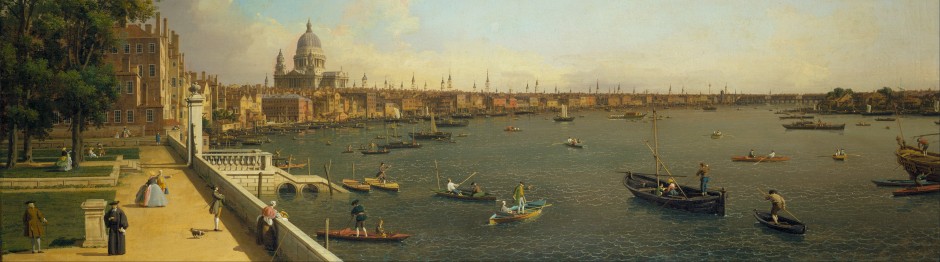

Chaos, George Frederick Watts
Canaille Play with Madness
Ilana Mercer reports from “occupied” Seattle
On June 9, I tweeted out the following:
“Seattle’s East Precinct has fallen, as Police Chief Carmen Best orders Seattle Police to evacuate. The occupiers, aka the ‘peaceful protesters,’ declare victory. ‘They’ve given us the precinct,’ they boast. Not even in South Africa.”
A mere day on, and the City of Seattle is de facto occupied territory, fallen to the “peaceful protesters”—the same counterculture media darlings who’ve been sacking cities across America. The rabble—Black Lives Matter sympathizers, which, as police arrest records show is almost entirely local—was further roused by Seattle City Council member Kshama Sawant, formerly of Mumbai. Most reprehensibly, Pied Piper Sawant led the “peace makers” to occupy City Hall in downtown Seattle, on Tuesday, June 10.
The altercation between Council Member Sawant and Seattle Mayor Jenny Durkan gives new meaning to the “broad” sweep of ideas in this dysfunctional city. Sawant, a socialist, called on Mayor Durkan, a progressive, to resign over abuse of power (what power?) and systemic racism (a meaningless abstraction). This, as the city was being sacked.
Surrender Monkeys
As of this writing, the Seattle Police has surrendered without a fight. Seven blocks of downtown Seattle, renamed the “Capitol Hill Autonomous Zone” (CHAZ), have been appropriated by the Peaceful Ones, with the imprimatur of the mayor and her police chief (Carmen Best aforementioned). Now loosed on the public, these buccaneering entrepreneurs are reported to have set up checkpoints to shake down residents who imagine they may come and go. Not in this satrapy. On the positive side, Seattle now has that shithole-country vibrancy. Continue reading







Watson’s World
Coal Mining, 18th Century, Léonard Defrance
Watson’s World
Bill Hartley mines an archive
John Watson was a colliery viewer working in the Northumberland coalfield in the middle of the 18thcentury. His journals, written from 1750-55, came into the possession of the Mining Institute in Newcastle but beyond this nothing is known of the man. Watson didn’t always stick to a dry record of mining operations and as a result we get some insight into life in mid-18th century Northumberland.
There was no such thing as a mining engineer in those days and the way Watson worked suggested he had learnt his trade as an estate surveyor; someone who looked after the business of an agricultural property. Mining and agriculture were closely connected, with coal being another resource to be exploited. Back then an intelligent boy might be talent spotted and perhaps with the assistance of a benefactor, gain a place at one of the small grammar schools in the county. Such schools had no interest in providing a classical education. The emphasis was on mathematics. Classroom learning was augmented by practical experience outdoors, where boys would hone their skills by measuring and surveying the surrounding fields. Continue reading →
Share this:
Like this: