
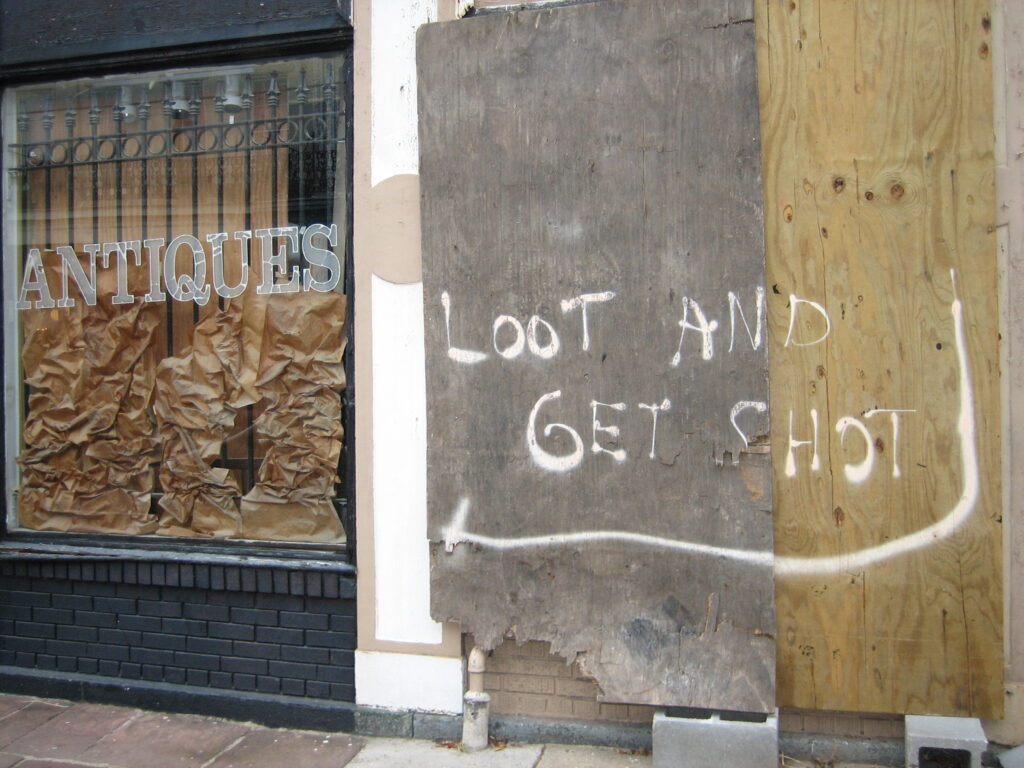
Antiques Loot and Get Shot. (Wikimedia Commons)
Law and Order Unites Main Street
by Ilana Mercer
The book In Defense of Looting: A Riotous History of Uncivil Action has become emblematic of the times we’re living through. Its “thesis” is that looting is “joyous” and can produce “community cohesion.” Shortly before the mad-hatter media became hip to the socially redeeming aspects of looting, I briefly blogged, on August 28, about In Defense of Looting not imagining it would become such a hit.
The reason for this early mention was the Economist. The news magazine -read religiously – had dignified author Vicky Osterweil’s argument for criminality, calling it “a live debate,” which is good English for, “We need to have a conversation.” These usually smart people wrote:
A few radical activists, including some associated with Black Lives Matter in Chicago, argued that looting can be legitimate. One woman, protesting at a police station that held arrested looters, called it a form of ‘reparations’ for white oppression.
Vicky Osterweil, author of In Defense of Looting: A Riotous History of Uncivil Action, published this month, sets out the same argument at book length. Looting by the poor, black or otherwise repressed is a radical tactic that brings welcome change, in her view. Peaceful civil-rights demonstrations are too easily ignored, whereas ‘riots and looting are more effective at attracting attention to a cause.’ The shared experience of looting can also be ‘joyous,’ produce ‘community cohesion,’ count as a small act of ‘direct redistribution of wealth’ and, she reckons, does little harm to those who have insurance. She thinks it also leads people to question high levels of inequality. Continue reading





Float Like a Butterfly, Sting Like a Bee
Ilana Mercer, on the first Presidential Debate
The first presidential debate, on Tuesday 29, was the first bit of fun we’ve had in a while. True, President Donald J. Trump failed to air his theory about that “big fat shot in the ass” Joe Biden likely got from his handlers, to allow the Democratic candidate to nimbly prance onto the debate stage and, “for two hours,” be “better than ever before.”
But, like Muhammad Ali, the heavyweight boxing legend, POTUS floated like a butterfly and stung like a bee. A masculine force at full tilt, Mr. Trump provided plenty of energy and entertainment as he blattered Joe Biden, while being funny in the process.
“If you didn’t enjoy that debate, you are a soy-boy, beta cuck,” a fun-loving fella tweeted out. Soy-boy Shapiro was having none of the fun stuff. Glum and sanctimonious, Ben tweeted out: “I literally have no idea who won this debate. I just know we all lost.” Deep, man. The self-styled philosopher-king’s funereal pronouncement received the benefit of a Michelle Malkin reenacted. Don’t miss that hilarity, 3:40 minutes into her post-debate podcast. In letting out a collective primal groan that was music to MAGA ears, Ben-Shap was joined by every liberal and Never Trumpster on the left-wing game reserve. Continue reading →
Share this:
Like this: