Parsifal, Munich Opera Festival

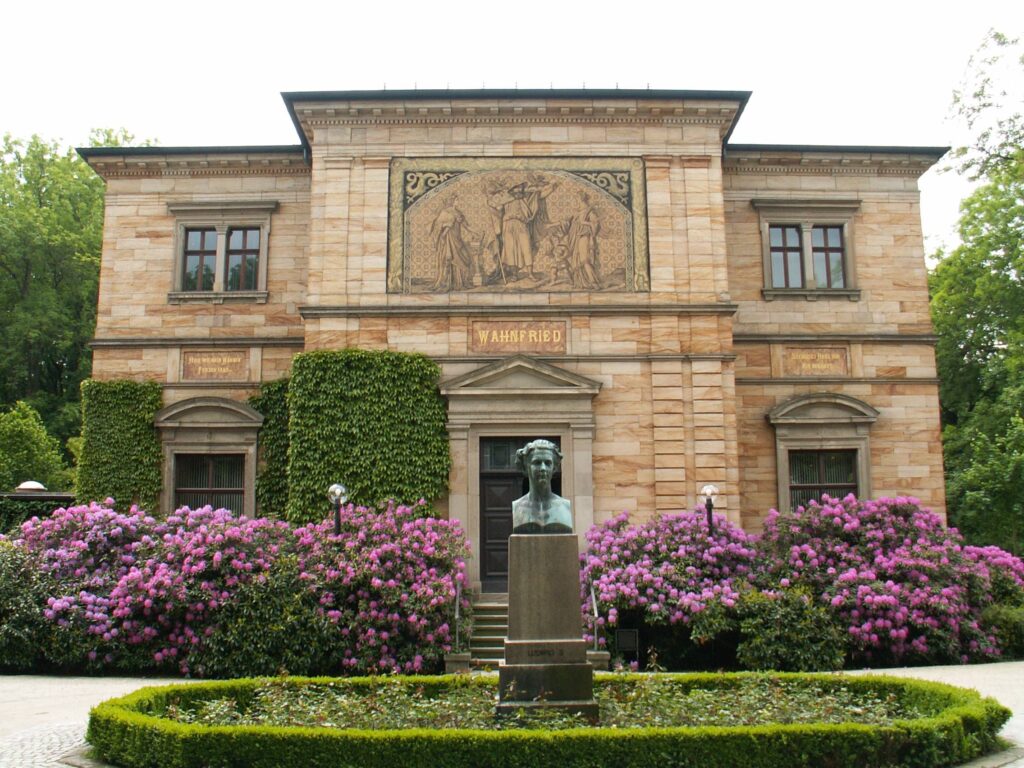
Parsifal, by Rogelio de Egusquiza

Parsifal, Munich Opera Festival

Richard Wagner’s Parsifal, Bayerischen Staatsoper, München, Germany, directed by Pierre Audi, sets by Georg Baselitz; Bayerischen Staatsorchester conducted by Kirill Petrenko, Tuesday, 31 July, 2018; reviewed by TONY COOPER

In Pierre Audi’s strange but compelling production of Parsifal, the Great Hall of Montsalvat Castle – the home of the Knights of the Holy Grail – has drifted away from its original setting. It is now a strongly-built, wooden-constructed building located in the Holy Forest of the Knights of the Grail, with members of the Brotherhood attired in dark monastic robes as opposed to the tough leather or chain-mail shirt and embroidered tunic favoured by medieval knights. Parsifal closed the Munich Opera Festival on a high note and was conducted by Kirill Petrenko, artistic director of Bayerischen Staatsoper and the new chief conductor of the Berlin Phiharmoniker.

At the opera’s première at Bayreuth in 1882, the set was conservative, based on a traditional German wooden-beamed roof supported by four heavy-duty stone columns. But with Audi, the incoming general director of the Aix-en-Provence Festival, you can expect to be challenged – and he duly obliged. Continue reading

Posted in Cultural Matters, QR Home | Tagged , , , , , , | Leave a comment

Talking Pictures

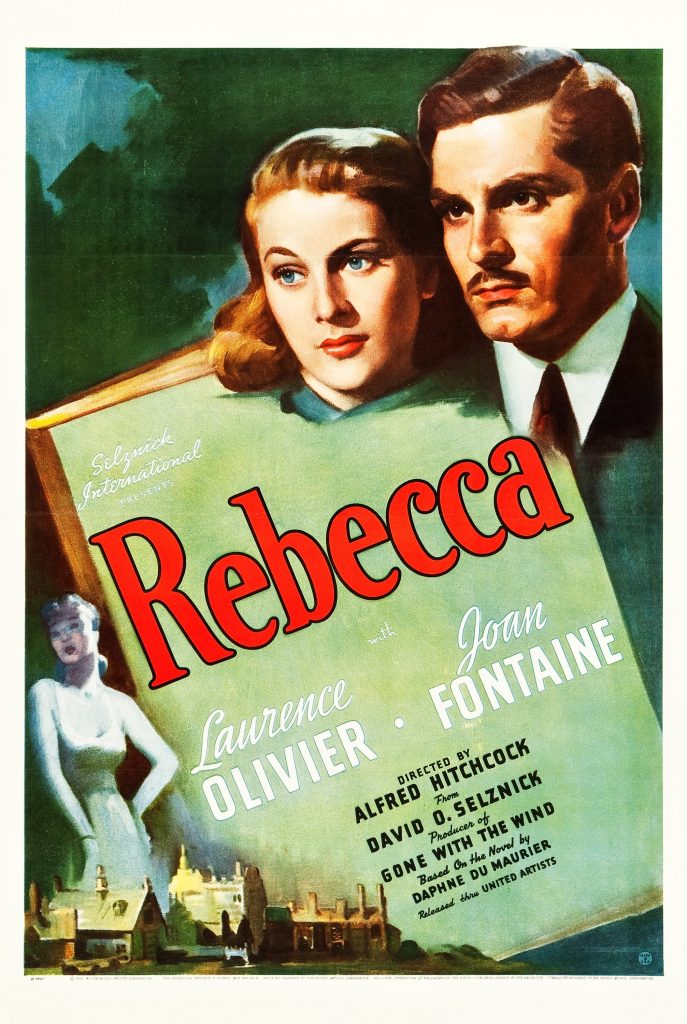
Rebecca (1939 poster)

Talking Pictures

by Bill Hartley

Anyone in search of tedious game shows, threadbare repeats and sales of junk jewellery is well catered for on British television. The sheer number of channels is bewildering and difficult to navigate. More means worse but persistence can pay off and for those willing to work their way through the wilderness of multiple channels there is one gem to be found.

‘The past is another country they do things differently there’: the quotation might well have been written for the Talking Pictures channel (Freeview 81), which has been in operation for three years. Welcome to a world close in time yet which shows how enormously life in this country (and indeed in the United States) has changed. Everyday life, manners, opinions and prejudices are perfectly preserved on film. In an era of on demand television and encouragement to binge on box sets, this channel takes us back to an era when cinema dominated and television was the new upstart. Continue reading

Posted in Cultural Matters, Current Affairs and Comment, QR Home | Tagged , , , , , , | 13 Comments

ENDNOTES, August 2018

Sir Granville Bantock

ENDNOTES, August 2018

In this edition: a flourish, from Sir Granville Bantock on the Somm label; piano sonatas by Beethoven, and Elgar’s Second Symphony, from Chandos Records, reviewed by STUART MILLSON

Sir Granville Bantock (1868-1946) was a noted composer, conductor and teacher in his day. He established an orchestra at the once-fashionable resort of New Brighton on the North-West coast of England, and presided over a new musical curriculum at the Midland Institute and at Birmingham University. He made many atmospheric arrangements of Tudor and old English tunes; wrote a Tchaikovsky-like Russian suite, alive with colour and local flavour; and penned Pagan and Hebridean symphonies. New from Somm Records comes a CD devoted to Bantock’s equally vivid piano music: Saul, Twelve Pieces– and best of all (and in the outdoor spirit of the Hebridean Symphony), Two Scottish Pieces. Played by the ever-sensitive and rare-repertoire enthusiast, Maria Marchant, the north-of-the-border scenes are delightful pieces of tone-painting, yet infused and animated by an authentic sense of Caledonian traditional music: TheHills of Glenorchy– a quickstep, that nevertheless conveys a sense of longing; and The Brobers of Brechin– a reel (possibly dedicated to whisky and good cheer), with a magnificent, mountain-torrent of an ending, resoundingly performed by Marchant. With a fine portrait of Bantock on the CD cover and a graceful, detailed recording quality, this is one edition which enthusiasts of rare British music will take to their hearts. Continue reading

Posted in Cultural Matters, ENDNOTES:Music, QR Home | Tagged , , , , , | 1 Comment

Fair is Foul and Foul is Fair


Fair is Foul and Foul is Fair

by Ilana Mercer

Once upon a time there were two politicians. One had the power to give media and political elites goosebumps. Still does. The other causes the same dogs to raise their hackles. The first is Barack Hussein Obama; the second Vladimir Putin.

The same gilded elites who choose our villains and victims for us have decided that the Russian is the worst person in the world. BHO, the media consider one of the greatest men in the world.

Obama leveled Libya and lynched its leader. Our overlords were unconcerned. They knew with certainty that Obama was destroying lives irreparably out of the goodness of his heart. Continue reading

Posted in Current Affairs and Comment, QR Home | Tagged , , , | Leave a comment

Practising Grant’s Philosophy

George Parkin Grant

Practising Grant’s Philosophy

by Mark Wegierski

2018 marks the centenary of the birth of George Parkin Grant. Thirty years since his passing, he remains Canada’s most prominent traditionalist philosopher. But is there still a place for Grantian-type traditionalism in current-day Canada? First of all, it should be remembered that Grant’s conception of conservatism is very remote from what is its more common definition today, as a predominantly tax- and budget-cutting ideology [Editorial note, see ‘In Memoriam, George Parkin Grant, 1918-1988’, QR, July 9, 2018]. Despite his impassioned writing, Grant did not offer much hope for someone wishing to be active in the social, political, and cultural arena. Perhaps a quietistic self-cultivation is the only path available for a traditionalist today. However, this is surely problematic for a philosophy that emphasizes public engagement and civic-mindedness. Continue reading

Posted in Current Affairs and Comment, QR Home | Tagged , , , | Leave a comment

White Men, Republicans and Other Scum

Ilana Mercer

White Men, Republicans and Other Scum

by Ilana Mercer

According to psychologists and psephologists, women are “abandoning the Republican Party” and voting for progressive policies because “they care about reproductive rights.”

Get it?  Women “care.” What do they care about? “Rights.”

The implication, at least, is that “the gender gap in American politics” is related to something women possess in greater abundance than men: virtue.

Put bluntly, women believe they have a right to have their uteruses suctioned at society’s expense. For this, they are portrayed favorably by those citing these proclivities.

Whereas women are depicted as voting from a place of virtue, men are described by the same cognoscenti as “sticking with the Republicans” for reasons less righteous. Continue reading

Posted in Current Affairs and Comment, QR Home | Tagged , , , , , | 2 Comments

Poetry and Politics in ‘Catherland’

Willa Cather, 1912

Poetry and Politics in ‘Catherland’

by Darrell Sutton

Although the middle States of America are not a hidden province, they are less familiar to people whose travels to the USA are restricted, more often than not, to sightseer visits to coastal cities. What follows offers a peephole into a rural world, districts in the vicinity of Red Cloud, in which the celebrated writer Willa Cather (1873-1947) spent some time during her youth.

Miss Cather is well known for her writings about frontier life. The 1913 novel O Pioneers is hailed a classic. Her story was made into a movie of the same name in 1992, starring Jessica Lange. It was only the first of her trilogy of books on the Great Plains. The Song of the Lark (1915) and My Ántonia (1918) soon followed. Her poems receive less attention today than they should because fewer literary critics in the academy understand the rural sites of which she wrote.

Of other genres of writing, like poetry, Cather engaged in it only sporadically. She did not need to compose verse: she had secured her fame on other literary grounds. But her poem Prairie Spring is deserving of notice. Not many poems capture in non-rhythmic verse the crop growing atmosphere of rural American in general, or South-central Nebraska and North-Central Kansas in particular. It educes, as few other poems can, responses that crave a rustic milieu for their expression. Here is a sampling: Continue reading

Posted in Cultural Matters, Current Affairs and Comment, QR Home | Tagged , , , | Leave a comment

Seven Deadly Spins

D’après Maurice Quentin de La Tour, Portrait de Voltaire

Seven Deadly Spins

Seven Types of Atheism, John Gray, Allen Lane, 2018, hb, £17.99, reviewed by STODDARD MARTIN

The well-known English philosopher and academic John Gray offers a tour d’horizon of the idea of atheism. For those who have trod this territory before, his book is an engaging review. For those who have not, it may provide a useful primer. Taking his title from William Empson’s famous Seven Types of Ambiguity, Gray tilts his first lance at what he dubs ‘the tedious re-run of a Victorian squabble between science and religion’ which he sees at the core of ‘the God debate’ of recent decades. His adversaries presumably include such celebrated opponents of religion as Richard Dawkins, Anthony Grayling and Christopher Hitchens, though none is named. Gray himself is no proponent of Judaeo-Christian tradition.

He locates a ‘19th century orthodoxy of humanism’ in the work of Comte, Saint-Simon and John Stuart Mill and traces its descent to our times via Bertrand Russell. This doctrine he depicts as a substitute for a God who failed. For those whose faith in it is based on the nostrums of science, he points out: ‘science can only be a tool the human animal has invented to deal with a world it cannot fully understand.’ For those whose faith owes more to Platonic ideals, he reproves: ‘The human mind is programmed for survival, not truth.’ For those who, like Hegel and Marx, find in history a meliorative dynamic, he argues that in fact human progress constitutes no more than a cyclical or haphazard sequence of moral ups and downs.  

Continue reading

Posted in Book Reviews, Current Affairs and Comment, QR Home | Tagged , , , , , , | 1 Comment

Brexit – the Battle for Britain

The Battle of Britain

Brexit – the Battle for Britain

by Stuart Millson

Despite enormous opposition from unreconciled pro-Remain MPs, Dominic Grieve, Anna Soubry from the Conservative benches and practically every Labour MP – save for principled, free-thinkers such as Frank Field and Kate Hoey – the Prime Minister succeeded in steering the EU Withdrawal legislation through the House of Commons, sidestepping along the way a brazen attempt by the Lords to paralyse the Bill. With Parliamentary ratification of the Referendum result and the all-important withdrawal date of the 29thMarch 2019 enshrined in statute (a clause which Remainiac campaigners had worked hard to expunge from the final Act), Britain is now set to end 40 depressing years of provincial status within the European super state.

A year-and-a-half ago, Remainist litigants, led by investment manager Gina Miller, attempted to thwart the Government’s Brexit strategy by bringing a case to the High Court – which argued that only Parliament could possibly authorise our EU withdrawal. After a subsequent Supreme Court hearing (its judges, incidentally, unable to pass a unanimous verdict), the Government was instructed to take the matter to Parliament. Continue reading

Posted in Current Affairs and Comment, QR Home | Tagged , , | Leave a comment

The English Civil War

King Charles I (1600-49), Studio of Sir Anthony van Dyck

 The English Civil War

by Mark Wegierski

PART ONE

The English Civil War of 1642-1648 and its aftermath, the so-called Glorious Revolution of 1688, constitutes one of the defining experiences of the cultural identity that can be termed Anglo-Americanism. The English Civil War is really the first great modern revolution and it set the pattern for subsequent revolutionary upheavals in the entire Anglo-American cultural sphere, and especially in America itself.

As in the American Civil War, with which it offers many parallels, the forces in this conflict were unevenly matched, because of the economic predominance of the Northern and Parliamentary sides, respectively. The Royalists, centered in the rural hinterlands of the country, with virtually no navy, and poor sources of munitions and supply, fought a losing war against the increasingly powerful forces paid for by the enormous resources of London and other trading-centers. The panache of the Cavaliers was no match for the iron drill and discipline of Cromwell’s New Model Army. The sense of the historical inevitability of Cromwell’s victory has a profoundly tragic dimension. Continue reading

Posted in Current Affairs and Comment, QR Home | Tagged , , , | 3 Comments