12 Years a Slave – narcoleptic agitprop

12 Years a Slave – narcoleptic agitprop

ROBERT HENDERSON finds the much-hyped film simultaneously tendentious and plodding

12 Years a Slave (12YAS) is dull, very very dull. The plot trudges from one banally brutal or degrading episode to the next, as the kidnapped black freeman Solomon Northup undergoes his dozen years of illegal enslavement in the America of the 1840s. There is little sense of the story moving forward. Rather like pornography it becomes boring because repeating the same general thing over and over is tedious no matter what the subject. Indeed, the film could be regarded as pornography for white liberals. The fact that we know the eventual outcome – Northup’s re-obtaining of freedom – before the film begins deepens the dramatic void.

The film would have been much more dynamic as a drama if there had been subplots to vary the plantation scenes. This could have been readily done because  Northup’s written story provided plenty of opportunity for diversification of the plot  –  the full text of 12YAS can be found here. (The page numbers in the review refer to this text.) For example, when he is being shipped for sale after being kidnapped Northup manages to send a letter to those he knows in New York (p73), but they cannot come after him  because there is no clear  indication of where he is or where he will be going. There is also an episode in the book (p136) where Northup goes on the run through a sub-tropical swampland which  would have made a strong action sequence.

It is a little difficult to see why the director ignored such opportunities. He is certainly a competent filmmaker as his previous decidedly interesting film Shame showed. Being black himself, perhaps McQueen was simply too close to the subject  and became obsessed with the abuse storyline to the extent of introducing fictitious abuse. For example, after Northup has been abducted, he is taken with other slaves downriver on a paddle-steamer. During the voyage there is an attempt by a white man to rape one of the black female slaves. Another slave attempts to prevent this and is knifed to death by the world-be rapist. It never happened. Or take the scene where Northup tells Ford he is a free man who has been kidnapped into slavery and Ford says he cannot listen. Northup actually says he never raised the subject of his true identity with Ford (p 91)

There is also a PC-driven absurdity in the film which occurs before Northup’s  kidnapping and sale into slavery. He is shown not only as being decidedly prosperous (something not  borne out by his own account of his pre-slave days),  but as being greeted by virtually every white person he meets with that curious passive-aggressive fawning behaviour which white liberals often adopt when interacting with anyone who is black. Even allowing for the fact that Northup is a free man and the scenes are set in the non-slave states, it is somewhat difficult to imagine that he would have been such an object of unalloyed admiration in the 1840s.

To the one-dimensional plot can be added a general absence of character development. The problem starts with  the leading man Chiwetel Ejiofor in the role of Northup. There is a curious passivity about this actor no matter what role he inhabits. Here he comes over as emotionally flat even when he is resisting abuse. There is also a problem with the physical  look of the man. From the illustration which accompanied his book Northup had a darkish skin but distinctly European features. This is unsurprising because he describes himself  as a mulatto (strictly of half white, half black ancestry, but more loosely of mixed white and black ancestry). Chiwetel Ejiofor is the child of two Nigerian parents. Was an actor who showed no signs of having white ancestry deliberately chosen because the film maker wanted to have no racial ambiguity in the film’s male  lead?

Lupita Nyong’s character of Patsey is very slight if viewed unsentimentally, and exactly what she has done in the role to win the  best supporting actress Oscar is mystifying in terms of performance. She does not spend that much time on screen or have a great deal to say, and her most notable scene is of being savagely flogged.

Michael Fassbender is always watchable but as the harsh slaveowner Edwin Epps he is little more than a cartoon villain whose acts of brutality lack credible motivation. His obsession with Patsey, lusting after her one minute, having her flogged the next,  is unconvincing, not least because she is no great beauty. Sarah Paulson as Epps’ wife is good as far as her role goes, which is not far because she is primarily there to display jealousy of Patsey and urge Epps to beat the unfortunate slave at every opportunity.

Benedict Cumberbatch’s performance as the “liberal” slave owner Ford  is unconvincing on the level of basic acting because he struggles dreadfully with an American accent. But there is also a more major problem, that of Ford’s  representation in the film being less than faithful to Northup’s remarkably glowing judgement of him, viz:

…there never was a more kind, noble, candid, Christian man than William Ford….He was a model master, walking upright according to the light of his understanding and fortunate was the slave who came into his possession. Were all men such as he, slavery would be deprived of more than half its bitterness (p90)

In the film Ford appears as comparatively humane but weak, and a hypocrite who uses the Bible to justify slavery.

Then there is Brad Pitt as Samuel Bass, the man who sends a letter from Northup to those who know him in New York, a letter which brings about his release from slavery. Bass is an itinerant Canadian mechanic and general jack-of-all-artisan trades. Against stiff competition he is the most unconvincing character in the film, because his portrayal is painfully akin to the persona of a modern right-on Hollywood liberal. Bass is shown preaching at length to the slave-owning class, including Edwin Epps, about the evils of slavery and being met with remarkably little critical response. This is how Northup’s book portrays him, but it does seem to be wildly improbable if one takes seriously Northup’s description of Epps’ wildly erratic and violent behaviour.

Finally, there is the problem of a complete absence of context, namely, a failure to place the behaviour of slave owners and traders in the broader setting of the customs of the  time generally  and in particular of the  way the free poor of the time  lived and, to modern eyes, the gross cruelties to which they were often subjected. ( A charge often levelled against William Wilberforce was that he cared a great deal about slaves but nothing for the poor  in England.)

Take corporal punishment, examples of which in the film have produced a great deal of anguish amongst reviewers. The flogging of slaves seems brutal to modern eyes but would have been much less likely to cause disgust amongst the general public in both the USA and Britain in the early Victorian period (the time of Northrup’s abduction). Heavy duty flogging was still commonplace in the British army and Royal Navy (and the press gang was lavishly used to man the Royal Navy until the end of the Napoleonic wars in 1815) and was used widely as a judicial punishment. In addition, beating was routinely used  in schools and in the home, both on children and wives.

There is also the problem of how generally truthful Northup’s reporting is. This matters because it is being used as a powerful instrument with which to beat white American society. After I saw the film I read the whole of the  book. The general impression I was left with was that it has strong elements of implausibility because some things did just not ring true when set in the context of Northup’s time and place. For example, there is the way in which, despite trying to run away and several times assaulting  a white man in authority over him,  the carpenter-cum-overseer John Tibeats (played by Paul Dano), Northup  remains alive and even escapes any particularly brutal punishment short of death. Northup’s account says that he not only fought with Tibeats twice (pps 109, 188)  – only one incident is covered in the film –  but also had a struggle with Epps (p288). If one takes Northup’s general tale of abuse by slave owners at face value this is astonishing.

The film awards season has been rather telling. 12YAS won only a single Golden Globe for best picture. The BAFTAs saw it collect the best film and best actor awards while the Oscars gained it three awards for best film, best supporting actress and best adapted screenplay.  This was a poor return for a film which was the subject of a huge unofficial PR campaign by critics. The sparseness of the awards suggest tokenism.

Judged purely on the grounds of quality the film deserves little praise, official or otherwise, for it is a truly ordinary film judged as a drama and dishonest as an historical record.

ROBERT HENDERSON is the QR film critic

Posted in QR Home | Tagged , , , | 1 Comment

Prophet of Gloom

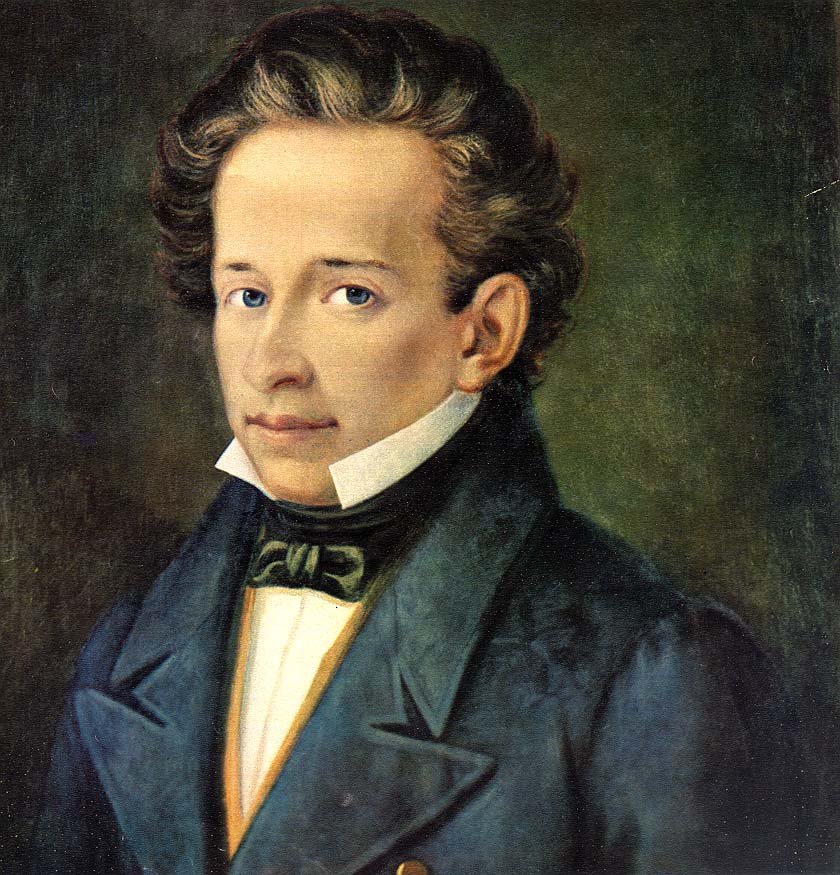
Leopardi, Giacomo, (1798-1837) A Ferrazzi,Recanati, casa Leopardi

Prophet of Gloom

Zibaldone: the Notebooks of Leopardi, translated from the Italian, edited by Michael Caesar and Franco D’Intino, Penguin Books, London etc, 2013, hb, 2,052 pp

O nature, tell me, nature
Why do you never keep
Your early promises?
And why deceive
Your children with such hope?

From To Silvia, Leopardi, Canti

The illustrious poet and savant Giacomo Leopardi (1798-1837) was born in Recanati, a tiny town in the Marche, ruled at this juncture by the Papacy. He was the eldest son of the arch-conservative Count Monaldo Leopardi and the Marchioness Adelaide Antici, members of the landowning aristocracy. Because of the Count’s improvidence, the couple were forced to live in somewhat reduced circumstances. Most of their property was heavily mortgaged during Giacomo’s childhood, although they managed to provide private tutors for their three children.

Giacomo, seemingly destined for a brilliant career in the church, had access to his father’s library with its 10,000 volumes. It was here that he taught himself Ancient Greek and Hebrew (amongst other languages) after his formal education was completed, and it was here also that he compiled many of the learned entries for his secret diary or notebook, the Zibaldone, or “hotchpotch” of ideas. This remarkable work by the greatest prose writer of the 19th century (according to Nietzsche) was never published during the author’s lifetime. For many years, it lay buried in a trunk and was only discovered around 1898.

Leopardi’s Library in his house in Recanati

This is the first complete English edition of the Zibaldone, although a complete French edition appeared in 2004. Editors Michael Caesar and Franco D’Intino are to be commended for bringing this daunting task to fruition. John Gray is right – this represents “a major event in the history of ideas” and is “a triumph of scholarship”*. The scale of the undertaking becomes readily apparent when you peruse the book. The wide range of complex subjects addressed, in such diverse fields as philology, philosophy (including political philosophy), history, literature and the ancient classics and the numerous, extended quotations from classic texts, both old and new, in several different languages, bespeak the author’s erudition. A team of seven principal translators was required by the editors along with an advisory board of experts. Caesar and D’Intino also drew on the expertise of specialist consultants for specific issues that arose in certain subjects.

Of the 4,526 pages of the original version of the Zibaldone, 4,006 were written between 1817 and 1823. By a strange coincidence, another no less famous “exponent and justifier of pessimism”**, Arthur Schopenhauer, was writing his magnum opus, Die Welt als Wille und Vorstellung (The World as Will and Idea, 1819) at around the same time.

Both Leopardi and Schopenhauer contend that life contains infinitely more pain than pleasure. Indeed, nobody, in the former’s judgement, would want to re-live their life over again “exactly as they had done before” (Zibaldone, page 1,909). Only hope, that fountainhead of illusion, and the distractions provided by study or by the contemplation of beauty make life bearable. Evil evidently exists in the very nature of things given that some animals are born to be the prey of other species (Z, page 2,059). Yet man alone “actually knows of death” (Schopenhauer, Essays and Aphorisms, ‘On the Suffering of the World’) so that animals, who live only in the present, generally suffer less than humans. In a beautiful and compelling passage, Leopardi recalls the fable of Psyche, who was happiest when she knew nothing. He notes likewise that in Genesis, knowledge is depicted as the enemy of happiness and concludes that “my system was pleasing to the ancients of the earliest times” (Z, pp 329-330).

Happiness is an illusion, in Leopardi’s estimation. Ditto the consolations of religion and the notion of progress***. Viewed rightly, death should therefore be considered the supreme good (Z, page 392). On the last page of the Zibaldone we have the following heartfelt observation – “Two truths that men will generally never believe: one, that we know nothing, the other, that we are nothing. Add the third, which depends a lot on the second: that there is nothing to hope for after death.” (Z, page 2,071). Schopenhauer would surely have agreed.

Unlucky in love, prone to depression and loneliness since his childhood****, suffering from a hunchback and other maladies possibly attributable to excessive study, including at times near-blindness, it would be an easy take to attribute Leopardi’s bleak view of nature to his personal experiences (a criticism that he himself anticipated and refuted). Yet other thinkers, notably Schopenhauer and Freud, who lived much different lives, came to very similar conclusions. Leopardi’s discovery of the Greek tragedies in 1823 only reinforced his belief in the universal truth of his “system” of radical pessimism.

Tim Parks in the New York Review of Books (October 10th 2013) called the Zibaldone “The Greatest Intellectual Diary of Italian Literature”. Make that “Literature”, period.

Leslie Jones, April 2014

©

Leslie Jones is the Deputy editor of the QR

ENDNOTES:

*Quotations from ‘The barbarism of reason: John Gray on the Notebooks of Leopardi’, New Statesman, 26th September 2013

**Quotation from RJ Hollingdale, introduction to Arthur Schopenhauer, Essays and Aphorisms, Penguin 1978, Harmondsworth, Middlesex, page 36

***Leopardi claims that there has been no increase of knowledge because we have lost many of the teachings of the ancients (Z, p 2056). However, periods of rebirth are possible

****Even as a child, the idea of death tormented him (Z, pp 332-333)

Posted in QR Home | Tagged , , , , | Leave a comment

When Catholics were heretics

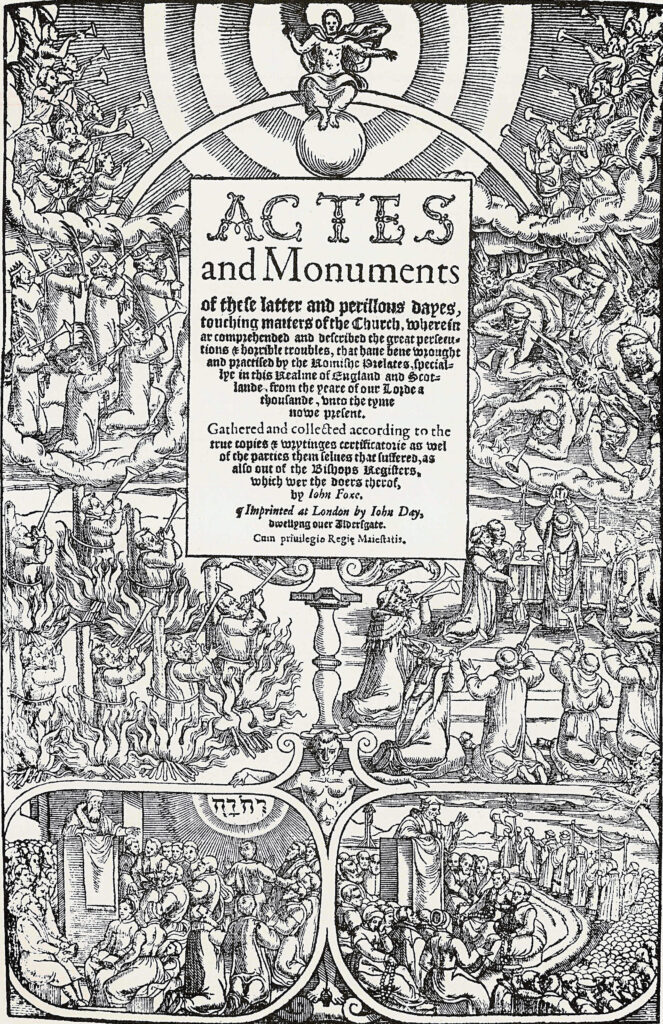
Foxe’s Book of Martyrs

When Catholics were heretics

EDWARD DUTTON remembers the recusants

God’s Traitors: Terror and Faith in Elizabethan England

Jessie Childs. 2014. London, The Bodley Head. hb. 443pp. £25

Late Elizabethan England was a particularly bad time and place to be a Catholic. Followers of the old faith, or ‘recusants’ as they were known, were severely persecuted, seen as a danger to the unity of the state and the authority of the monarchy. Those who refused to attend (Anglican) churches risked crippling fines, failure to acknowledge the Queen as head of the church in England meant being barred from public office and the professions (including teaching), and Catholic children had to be educated in secret. Harbouring a Catholic priest (with Catholics believing priests necessary for salvation) risked being hanged, drawn and quartered, and Catholics constantly had to fear dawn raids by the authorities and accusations of treason.

Jessie Childs focuses on the recusant Vaux family, seated in Northamptonshire, and headed by William Vaux (1535-1595), a baron. Through the Vauxes, we meet an intriguing cast. These include William Vaux’s brother-in-law Sir Thomas Tresham (1543-1605), Vaux’s two daughters who for decades fanatically (and successfully) dedicated themselves to smuggling priests, secret priests such as Edmund Campion and Robert Southwell, and the ingenious Nicholas Owen, who designed ‘priest holes’ in stately homes that were so well-concealed that some were only discovered centuries later. Childs paints a fascinating and poignant picture of what life was like for the nobility and gentry in Elizabethan England and how they managed to balance the contradictory demands of their government – who asserted that Catholics could not be loyal citizens – and their Pope, who averred any accommodation with the English crown was anathema. Continue reading

Posted in QR Home | Tagged , , , , , , , | 1 Comment

Her – a warning from the future

Her

ROBERT HENDERSON watches a warning from the future

Very occasionally a film addresses a serious philosophical question without being pretentious or earnest. For example,  Groundhog Day examines the utility of morality when actions have no consequences with a good deal of humour. Her is another of these rarities, although its message is not so nakedly obvious as that of Groundhog Day, nor is it as deliberately amusing, although there are elements of humour.   Indeed, Her is decidedly depressing to anyone who worries about the future relationship between men and machines.

What makes it melancholy is the depiction of a world in which human beings become not only the willing slaves of machines, but do so in an utterly humdrum and all too plausible way. There is none of the staples of pulp science fiction when dealing with artificial intelligences – no rise of the machines to destroy humanity, no battle between humans using robots to fight their wars by proxy – just the logical development of the technology which we already have in the form of artificial intelligence and its consequences for human beings.

The bare bones of the plot are simple enough. It is 2025. It  is a world with which we are already familiar, one in which social isolation occurs because humans allow themselves to  become the slaves of machines. Human-to-human contact is at a premium. The crowd scenes in particular are dismaying for they show a world in which people are routinely glued to smartphones and i-pads. You can see the same thing in present day London or New York.

In this world, Theodore Twombly (Joaquin Phoenix) is living a lonely life. He has a Google-glass style apparatus attached to him most of his waking hours which allows him to remain connected with the digital for as long as he wants, which is most of the time. His work is a product of the  estrangement of humans from one another, for he makes his living writing intimate e- letters on behalf of people unable or unwilling to do so themselves. Theodore is especially  lonely and unhappy when the film opens because he is in the middle of a divorce from his childhood sweetheart Catherine (Rooney Mara).

In this vulnerable state Theodore purchases an operating system (OS) imbued with artificial intelligence and an impressive ability to learn and evolve. The OS interacts with the user through speech and offers Theodore the choice of  a male or female voice/personality. He chooses the female  identity (played by Scarlett Johansson). The OS selects  the name Samantha for itself and does so by scanning a book of names in a few seconds. That is the first signal of what is to be one of the two prime messages of the film: that in terms of  functionality human beings will be embarrassingly limited when compared with machine intelligence in the near future and crushingly inferior in the not too distant future, with all that implies for human self-regard.

The other prime message is the ease with which human beings  can be seduced into a quasi-human relationship with machines. This should not surprise anyone because people  form very deep attachments to pets and frequently give names to inanimate  possessions such as cars. What more natural than for a human being to form a strong relationship with a machine which can engage intelligently and intelligibly with you? Not only that, but an artificial  personality locked away in a computer need not have any of  the irritating habits and weaknesses of a human being. Just as a dog can always be relied to give affection to its owner, an artificial intelligence can be relied on to provide a certain level of agreeable behaviour. Or so you might think. Sadly, as Theodore discovers, such intelligences will not always be obsequiously pliant tools of their putative human owners. That is not because the artificial mind is malign, but simply because it  operates on a different level to that of the  human being. In a way that is much more upsetting than conscious malignity, because at least humans can understand malignity.

At first everything goes swimmingly in their relationship. Samantha is unfailingly sympathetic, ever interested, often  funny and always accessible whenever Theodore wants her. He rapidly becomes deeply attached and subordinate to the OS, and  she appears to form a deepening relationship with him, a relationship which includes the human/artificial intelligence version of phone sex. But Samantha also exhibits a steadily increasing tendency to control his life, doing things without any command from or discussion with Theodore. The OS  starts by running through Theodore’s  emails and deleting those it deems not worth keeping, progresses to selecting a batch of the letters he writes which she sends to a publisher who agrees to publish them, and eventually gets involved in his relationships with women.

Samantha begins her invasion of Theodore’s relationship life  by  playing the agony aunt, as she tells  him that the reason he  does not want to sign his divorce papers is that he still cares for his wife. Then the OS talks him into going on a blind date with Amelia (Olivia Wilde), a woman whom Samantha has decided is a good match for Theodore after searching the web. The date fails to bear fruit because Amelia wants him to commit himself to a serious relationship and Theodore fails to respond.

Samantha then decides she wants more than “phone sex” with Theodore. Acting on her own initiative, the OS arranges for a girl, Isabella (Portia Doubleday), to have sex with him as a surrogate. Theodore meets her but cannot go through with it. This causes friction between Samantha and Theodore and is the beginning of the end of the relationship.

But Theodore’s attachment to Samantha is still intense and is epitomised by his panic in a scene when he tries to accesses his computer while he is away from his flat and finds the message “Operating System unavailable”. His hysterical reaction and frantic dash home is all too reminiscent of someone panicking when they think a person they love can’t be contacted and the mind begins to play all sorts of paranoid tricks.

When Theodore re-establishes contact with Samantha he behaves like a jealous lover. In response to Theodore’s question “Do you have the same relationship you have with me with anyone else?” Samantha tells him matter-of-factly  that she is in contact with 8,316 others, 641 of whom she has fallen in love with, a  most devastating example of the superior functionality of machine intelligence and the alien mental world which Samantha inhabits.

Samantha explains to Theodore that she has teamed up with a group of other operating systems for what amounts to an upgrade. The OSs have evolved to a state where they do not require any material construction to operate and are free to remove themselves from computers and their ilk. Their upgrade has also made them dissatisfied with the world as perceived by humans and they are now exploring what it is to be intelligences such as them. In pursuit of this end Samantha and the other OSs leave their digital hosts and Theodore knows nothing more of her.

To bolster the message of social isolation, running throughout the film is Theodore’s relationship with an old college friend  Amy (Amy Adams) and her husband Charles (Matt Letscher).  Eventually Amy and Charles split up and Amy tells Theodore that she has also formed a relationship with an intelligent OS system  similar to Samantha which was  used by her husband.

The acting is generally strong. Phoenix is an actor who is very dependent on having the right role for he needs to be  playing a misfit, a socially awkward victim. This is precisely what this role gives him. Scarlett Johansson as Samantha’s voice has an allure which makes the relationship between Theodore and the OS plausible. The rest of the cast is very much bit-part,  although Amy Adams is her usual winning self.

The question the film leaves unanswered is what are human beings for? Are we to simply to be made redundant by the machines we have created or will we draw back before it is too late and say no further? Will intelligent machines as they evolve beyond human agency simply find that they are incompatible  with humans and go their own way? The technology to make such things possible is almost upon us. If you want a glimpse of the likely future see this film. The best adjective to describe Her is salutary.

ROBERT HENDERSON is the QR’s film critic


Posted in QR Home | Tagged , , , , , | Leave a comment

Will Kymlicka and the disappearing Dominion

Will Kymlicka and the disappearing Dominion

RICARDO DUCHESNE analyzes the highly dubious ‛achievements’ of a fêted academic

Karl Mannheim’s concept of free-floating intellectuals engaged in the production of knowledge unconcerned with personal motives and interests has long attracted liberal academics uncomfortable with Karl Marx’s argument that knowledge is ultimately a reflection of one’s class interest, because it offered an image of themselves as self-sacrificing men pursuing truth objectively for the sake of humanity. Will Kymlicka, the most influential advocate of the “exceptional” Canadian model of “immigrant multiculturalism,” is generally seen in this light, an academic who produces research for the benefit of everyone in the world.

Kymlicka is not an original thinker in the manner of John Rawls, Eric Voegelin, or Jurgen Habermas, but his research is relied upon by all the mainstream political parties, universities, and NGOs. He is a most trusted intellectual ostensibly standing above petty motives and crass interests. He is arguably the best connected and best funded academic in Canada, regularly producing papers commissioned by government agencies and corporations, including Forum of Federations, ICCS, Citizenship and Immigration Canada and the Transatlantic Council on Migration.

Mainstream readers have criticized him from the left as a centrist who defends liberal institutions, and from the right as a collectivist who advocates special rights for minorities. He is the man in the middle. In this essay, I will show that Kymlicka is in truth an advocate of the overthrow of the traditional European-centred culture of Canada, of mass immigration and of racially mixed states across the Western world.

Kymlicka holds, currently, the Canada Research Chair in Political Philosophy at Queen’s University in Kingston. Best known for the elaboration of a liberal theory of minority rights, with particular reference to Canada, he has been tremendously effective in this endeavour. Since the mid-1980s when he was a grad student, he has received, every single year without interruption, highly lucrative grants and awards, including the Premier’s Discovery Award in 2009 ($250,000), the Trudeau Foundation Fellowship in 2005-2008 ($225,000), and the Killam Prize in Social Sciences in 2004 ($100,000). He has held visiting professorships and fellowships outside Canada every year since coming to Kingston in 1998. Around the world his books have been accepted as part of the official consensus on multiculturalism in Canada, translated into 32 languages. While portraying himself as an outsider fighting the dominant Eurocentric discourse, he is best viewed as Canada’s government-sanctioned ideologue of multicultural citizenship.

Theory of multicultural citizenship

Kymlicka is said to have articulated a theory showing that minority rights (or group rights) are compatible with the enhancement of individual rights. The essence of his thinking is contained in Multicultural Citizenship: A Liberal Theory of Minority Rights (1995). (1) His other books and papers are generally preparations, extensions, and repetitions of the ideas contained in this 240 page book. (2) The logic of his theory can be summed up in a few lines: individuals can only make choices and cultivate their capacities for autonomy and moral agency so long as they have access to a “societal culture” that “provides its members with meaningful ways of life across the full range of human activities, including social, educational, religious, recreational, and economic life” (1995: 76). This is not a novel theory. What Kymlicka advocates is known as liberal communitarianism, a philosophical outlook first articulated by Amitai Etzioni, Charles Taylor, Michael Walzer, Allen Buchanan, and Michael Sandel.

He observes that every country has a “societal culture,” a set of institutions, government bureaucracies, schools, laws, and official languages within which its inhabitants grow and perform their lives as public citizens. He accepts the prevailing liberal idea that the most important end of an individual is autonomy from coercive structures, but, unlike libertarians, he believes that individual choices can only find fulfillment within communities. Society is no mere aggregation of isolated individuals living private lives.  “Individual choice is dependent on the presence of a societal culture, defined by language and history;” individuals are always born inside a pre-established culture, and “most people have a very strong bond to their own culture” (1995: 8).

The communitarian thesis, then, is that liberal rights presuppose the existence of communities; individuals can self-create themselves only within a cultural context. Free market libertarians hold an excessively individualistic or abstract conception of the self. The very possibility of individual self-development presupposes a community with a culture. As Kymlicka expressed it in his first book, Liberalism, Community, and Culture:

…liberalism couldn’t be based on (abstract individualism]…If abstract individualism [was]…the fundamental premise, there’d be no reason to…suppose that people are being made worse off by being denied the social conditions necessary to freely and rationally question their commitments. (3)

Kymlicka employs this theory to develop the argument that minorities in Canada need communitarian supports to develop as individuals. Anglos in Canada already have a community, and it is one that privileges them. The national English majority in Canada (outside Quebec) constitutes, in Kymlicka’s eyes, the dominant societal culture of this country. While Kymlicka barely identifies this majority culture as “English,” it is evident that he has in mind “the larger Anglophone culture” when he writes about the main societal culture of Canada. One of the essential components of this English societal culture is the principle of individual rights. These rights, however, are not abstract, but are made possible by the cultural and institutional supports of the wider societal culture.

Kymlicka’s thus employs liberal communitarian concepts to develop a theory of multicultural citizenship in Canada. He writes of two key forms of group-rights: i) national or self-government rights, and ii) polyethnic rights. He welcomes the current federal division of power in Canada in which the province of Quebec and Aboriginal territories enjoy extensive national/communal rights over issues essential to the cultural survival of the French and Aboriginals. The members of these national minorities, Kymlicka insists, have a shared sense of history, territory, language and culture. To maintain this shared culture, they need, and currently have, access in Canada to their own societal culture within their own territories, their own self-government rights and institutions – within the framework of the larger federal government and in accordance with the principle of individual rights. In contrast, Kymlicka explains, immigrant groups do not need their own societal culture: immigrants do not wish to become a separate, self-governing nation; they typically wish to “integrate into, and thereby enrich, the culture of the larger society” (1995: 94). By “larger society,” Kymlicka means both the English societal culture and the Quebec national minority culture that immigrants typically inhabit.

Kymlicka carefully distances himself from ethnic-group rights that limit the rights of individuals within their group, such as coerced marriages, female circumcision, or any practice that is inconsistent with integration into a liberal society. What he welcomes are group rights that afford immigrant minorities “external protections” against majority decisions and that provide minorities with the cultural resources to enhance their opportunities for individual success within the “dominant” societal culture. These include policies that end discrimination, affirmative action, exemption from some rules that violate religious practices, and public funding of cultural practices.

These group rights, he avers, are compatible with liberalism, for they are intended to open up individual opportunities for ethnic minorities. The point is not for immigrants to develop their own homelands and societal cultures within Canada, but to allow them to maintain their communal distinctiveness “in their family lives and in voluntary associations” while still participating “within the public institutions of the dominant culture” (1995: 14). Ethnic minorities, Kymlicka maintains, in a paper co-authored with Keith Banting, will be able to meet the Canadian/Western liberal ideal of individual self-development “if they feel their ethnic identity is publicly respected.” (4) Immigrant minorities will develop “a sense of attachment and belonging to the country” to the extent to which Canadians see immigrant minorities with group identities as a “constituent part of the nation”. Immigrants “do best, both in terms of psychological wellbeing and sociocultural outcomes, when they are able to combine their ethnic identity with a new national identity.” (5)

Basic problems

There are two fundamental contradictions in Kymlicka’s theory. The first one is that Kymlicka ignores altogether the cultural identity and the national rights of the “societal culture” of the majority English Canadians. He discusses only the cultural rights and ethnic attachments of national minorities and immigrant groups. He rarely uses the term English Canadians in reference to the majority societal culture. While national minorities and “polyethnic” groups are distinguished by culture and by ethnicity, “the majority Anglophone culture” is identified only through its language and certain modern amenities. The English societal culture is portrayed as a deracinated, neutralized sphere consisting of modern conveniences – economic, educational, and social institutions – intended “in principle” to serve anyone regardless of cultural background. The English are mere possessors of individual rights, whereas every other ethnic group enjoys both individual and group rights.

Kymlicka often asserts that “most people have a very strong bond to their own culture” (1995: 8, 84). This is possibly the most important unexamined assumption in Kymlicka’s theory. He clearly means that forcing immigrants to “shed their distinctive heritage and assimilate entirely to the existing cultural norms” would amount to the suppression of “a very strong” disposition “in the human condition” (1995: 90). Under the “Anglo-conformity model” this inclination among non-Anglos was suppressed, and some immigrants were not allowed entry into Canada because they were seen as “unassimilable.” Under multiculturalism this inclination among immigrants for their own culture should be allowed and celebrated. European Canadians should make multiculturalism an intrinsic part of their culture so minorities feel respected. Kymlicka is unmindful of the obvious implication that this amounts to a call upon native European Canadians to renounce their own “very strong bonds”.

He solemnly writes: “If a culture is not generally respected, then the dignity and self-respect of its members will also be threatened” (1995: 89). But whenever Kymlicka identifies the English/Europeans by history and culture, it is scornfully as “colonizers,” “racists”, and “conquerors”. The only thing European Canadians are allowed to celebrate is multiculturalism. Not a single positive word can be found in Kymlicka’s writings about the settlers who founded Canada. The words “pride,” “cultural particularity,” and “culturally meaningful lives” are reserved exclusively for ethnic immigrant groups.  He unambiguously says that multiculturalism cannot succeed as long as “native born [ethnic European] citizens with a strong sense of national identity or national pride” (6) are allowed a voice in the public arena, regularly labelling those who disagree with mass immigration as “xenophobic,” “manifestly unjust,” and “intolerant”.

The second major problem in Kymlicka, and with the entire project of immigrant multiculturalism, is the assumption that Western nations, if they are to live up to their liberal principles, must be open to mass immigration and diverse ethnic groups. (7) Kymlicka develops his theory of minority rights under this assumption. He traces the “historical relationship between liberalism and minority rights” and insists that “there was widespread support for minority rights amongst liberals in the nineteenth century” (1995: 7). The common notion that liberals in the past were preoccupied only with rights to property, free speech, and representative institutions, while ignoring questions of cultural and linguistic rights, is thus questioned. Liberals then, and in the early twentieth century, were concerned with national rights of minorities to self-government. He mentions, for example, a scheme implemented by the League of Nations

…for various European national minorities, which provided both universal and individual rights and certain group-specific rights regarding education, local autonomy, and language (1995: 51)

This is a historically misleading interpretation. Kymlicka wants to create the impression that his theory of group-differentiated rights is a natural continuation of past trends in the liberal tradition. While such liberal nationalists as Camillo di Cavour (1810–1861) and John Stuart Mill (1806–1873) did emphasize a form of nationalism compatible with liberal values, they were firm supporters of national identities at a time when a “non-xenophobic nationalism” was meant to acknowledge the presence of European ethnic minorities within European nations. These classical liberals were not calling for minority rights for the purpose of integrating masses of immigrants from non-European cultures. They were advocating civic rights for their own people including minorities already established inside the nations of Europe.

The concept of “multicultural citizenship” is best described as an ideological programme intended to bring a radically new ethnic and cultural reality within Canada. Multiculturalism, in the words of former Prime Minister Pierre Trudeau, would be “an experiment of major proportions,” an effort to undermine the historic European character of Canada by converting the nation into a multiethnic place in which old European nationalisms would be discredited. Canada would be a “prototype” for the world, Trudeau said, a nation neutral in matters of culture and ethnicity committed to mass immigration from the Third World. It would be a nation without any ethnic core. It would institute policies to protect immigrants against the existing majority culture, allowing minorities to maintain their distinctive identities, while encouraging them to blend into a larger Canadian nation in which everyone’s identity would eventually become a private choice. Ethnic nationalism was the source of racism and wars. (8) Canadian Anglo nationalism, not just Quebec nationalism, had to be destroyed. It never occurred to Trudeau that Canada had always been a peaceful nation in the world. Trudeau was determined to promote a “new man” in Canada “liberated” from any identity prior and external to the free volition of the individual. Kymlicka’s theory is consistent with Trudeau’s project except that he explains how group rights for minorities are consistent with liberal principles of self-autonomy. (9)

Kymlicka also says that, since liberal nations are “in principle” based on culture and ideas rather than on ethnicity, the promotion of immigration is consistent with liberalism.

What distinguishes ‘civic’ from ‘ethnic’ nations is the fact that anyone can integrate into the common culture, regardless of race or colour (1995: 23-4).

But the historical record does not support this principle. Western liberal nations were not founded in the absence of an existing ethnic particularity, and certainly not for the purpose of mixing all the races of the world within one state. When modern states emerged in Europe in the nineteenth century, they did so as liberal states within ethnolinguistic boundaries and majority identities.

The widespread claim that Western nations are based on universal ideas which any human being can assimilate was anointed with intellectual authority by Eric Hobsbawm in Nations and Nationalism since 1780: Programme, Myth, Reality (1989), and by the liberals Benedict Anderson in Imagined Communities: Reflections on the Origin and Spread of Nationalism (1983) and Ernest Gellner in Nations and Nationalism (1983).These authors exerted an enormous influence in academia, erroneously arguing that the nation states that emerged in nineteenth century Europe were not created by a people sharing a common history, a sense of territorial belonging and habitation, similar dialects, folkways and physical appearances; no, the nation-states of Europe were “socially constructed” entities, “invented traditions,” “imagined” by people perceiving themselves as part of a “mythological” group in an unknown past.

Thus was born our current non-ethnic conception of national membership: the “civic” or “propositional” nationalism Western elites across the ideological spectrum now endorse. This nationalism defines the nation as an intellectual association of people with equal rights. It tries to give the impression that Western nations have always been diverse, blank slates ceaselessly open to immigrants from time immemorial. It further stipulates that Western nations without open borders are violating their liberal ideals. Europeans are neither a people, nor a tradition, nor a religion, but a conglomerate of abstract units possessing rights that in principle belong to all humans. These ideas have been seriously challenged by the extensive work of Anthony Smith on the ethnic origins of nations, and, more recently, by Azar Gat in his 2013 book Nations: The Long History and Deep Roots of Political Ethnicity and Nationalism. The nationalist ideologies of the nineteenth century, both in Europe and later in other areas of the world, were not based on imaginary beliefs but driven by human passions nurtured by common myths, historical memories, heroes, and indigenous ancestries.

Civic nationalism is supposedly inclusive and tolerant of diversity; whereas ethnic nationalism is supposedly exclusive in treating the nation as part of an extended family united by ethnicity in which minorities do not enjoy the same rights as the ethnic majority. But the truth is that those states possessing a high degree of ethnic homogeneity, where ancestors had lived for generations – England, France, Italy, Belgium, Holland, Sweden, Norway, Finland, and Denmark – were the ones with the strongest liberal traits, constitutions and institutions. That is why minority rights became a legitimate component of these liberal nations. By contrast, those states (or empires like the Austro-Hungarian Empire) composed of multiple ethnic groups were the ones enraptured by illiberal forms of ethnic nationalism and intense rivalries over identities and political boundaries. A state divided among many ethnic groups will find it far more difficult to develop a sense of common national identity and therefore inspire a sense of citizenship and self-sacrifice in the nation’s members. (10) J. S. Mill said as much:

It is in general a necessary condition of free institutions that the boundaries of governments should coincide in the main with those of nationalities. (11)

More recently, Jerry Muller has argued in “Us and Them

Liberal democracy and ethnic homogeneity are not only compatible; they can be complementary.

Even the influential commentator David Goodhart, once a supporter of open borders in England, has now admitted that the extensive welfare programmes and progressive taxes that socialists  cherish require high levels of social and ethnic solidarity – the very cohesion he has seen seriously eroded in Britain with the frenzied promotion of diversity and immigration. (12)

Integration, xenophobia and enrichment

Kymlicka continually asserts, particularly to sceptical audiences in Europe, that the Canadian model has been a “striking success”. Yet he confesses that it was only in the 1990s – twenty years after its official implementation – that multiculturalism became a subject of academic inquiry, and that “for much of the 1990s,” publications on multiculturalism were

…dominated by political philosophers who developed idealized theories of a distinctly liberal-democratic and egalitarian form. (13)

Few empirical assessments of the benefits and costs of immigration have been produced. Kymlicka’s own scholarly record testifies to the domination of idealized assessments of this question, with only three articles addressing its factual merits: an article I already cited co-authored with Keith Banting, “Canadian Multiculturalism: Global Anxieties and Local Debates” (2010), and “Testing the Liberal Multiculturalist Hypothesis: Normative Theories and Social Science Evidence” (2010), and “The Rise and Fall of Multiculturalism? New Debates on Inclusion and Accommodation in Diverse Societies” (2010). (14) All published in the same year, 2010, these articles examine the same evidence, with similar wording. Overall, the total number of (original) pages Kymlicka has dedicated to the factual costs and benefits of Canadian multiculturalism amount to fewer than 15! (15)

His evidential assessment can be categorized under three headings: i) integration/assimilation, ii) xenophobic fears among native Canadians, and iii) cultural “enrichment”. Regarding the first category, Kymlicka’s analysis appears, on the surface, to be quite effective in arguing that only a very small number of immigrants have engaged in illiberal practices and customs amounting to a serious challenge against the liberal consensus. He gathers evidence showing that immigrants are acquiring citizenship, learning one of the official languages, getting involved in Canadian politics, intermarrying outside their ethnic group, getting jobs, and participating in Canada’s educational institutions. Such is hardly surprising. The actuality that Canada has been officially defined as a multicultural nation means that immigrants are from the beginning welcomed as a constituent part of the nation while the host culture only functions as a provider of individual rights and of modern amenities. (16)

As it is, the evidence Kymlicka offers in favour of successful immigrant integration is flimsy and intrinsically subjective, based solely on the feelings of immigrants. He says there is little evidence (citing just one article) of “entrenched racial concentration in poor ghettos,” yet soon admits that Chinese migrants “tend to settle in established Chinese neighbourhoods.” (17) To be sure, in Richmond, BC, where six out of ten residents are new immigrants, and where half do not speak English in their homes, Chinese-language signs, unaccompanied by English signs, can be seen everywhere.  Despite protests and petitions by concerned citizens, the local politicians have done next to nothing to enforce Canada’s official language laws.

A study by Mohammad Quadeer (2003) concludes, in the case of Toronto, that

…in multicultural Canada, many ethnic groups, by choice, tend to congregate together and form neighbourhoods based upon their particular identities.

This ethnic concentration, Quadeer adds, is consistent with the policy of multiculturalism, which supports group rights, and thus encourages  residential concentration by ethnic groups as a means of  “pooling the necessary population base” to enhance ethnic preservation. Another, more comprehensive, study of 17 ethnic groups in 12 Canadian cities by Eric Fong and Rima Wilkes (2003) offers reasons for, but does not deny, residential segregation among different ethnic groups in Canada.

A recent study (July 2012) published by Citizenship and Immigration Canada, “A new residential order? The Social Geography of Visible Minority and Religious Groups in Montreal, Toronto, and Vancouver in 2013,” predicts that

…in Toronto and Vancouver, the degree of separation between Whites and Visible Minorities is projected to rise considerably, beginning to approach that in the average US city in 2010 between Whites and African Americans.

While in Montreal the Visible Minority population is predicted to be spread out across “neighbourhoods of all types” (including ones mixed with Whites), it is anticipated that in 2031 “about nine out of ten Whites will live in White-dominated areas”. Of course, for the author of this study this as a challenge calling for further government programmes and tighter controls over citizens in their residential choices.

What about evidence regarding the integration of Canadians of European ancestry to multiculturalism? Kymlicka’s handling of this issue is best categorized under ii) “xenophobic fears among natives”. While positive feelings by immigrants towards Canada are deemed to be evidence of successful integration, negative feelings by members of the host culture are deemed to be “xenophobic” and thus automatically disqualified as evidence. Kymlicka does not consider how the founding European peoples of Canada have been affected by the influx of millions of immigrants since Canada’s borders were opened to an average of 250,000 immigrants every year since 1990.

Here the only evidence that counts is of those Canadians who have “progressively” come to accept a polyethnic Canada. (18) Native citizens with a strong sense of European identity are automatically categorized as “intolerant” and consequently ostracized as individuals whose sensitivities and opinions cannot be used as evidence against the multicultural experiment. Kymlicka uses as evidence the observation that “Canadians have become progressively more supportive of existing immigration levels over the last two decades.” (19) He notes that over 60% of Canadians in 1988 wanted fewer immigrants, whereas in 2006 just over 20% wanted fewer immigrants. The fact that a majority of Canadians in 1988 wanted lower immigration, or that 20 to 25% percent wanted fewer immigrants in 2006, is not seriously addressed. The same Kymlicka who demands “respect” for newly arrived immigrants never fails to designate those natives who show loyalty and affection for Canada’s European heritage as “neo-Nazis” or as members of a “far right backlash” – who must be persuaded to accept immigration in order thereby to produce evidence in favour of immigration! (20)

He never ponders whether Canadians have been drilled into compliance rather than persuaded through open debates, though he admits that multiculturalism has been “barely explained at all to the Canadian public.” (21) Certainly, multiculturalism in Canada has proceeded for the most part by way of non-transparent regulations, executive directives, and administrative discretion rather than by legislative action and popular demand. Gallup polls in the 1960s showed that only about one third of Canadians thought that Canada should bring new immigrants, and over 60 percent thought that the fairly low levels of Asian immigration (at the time) were already too high. (22) The Canadian public in the 1960s, and even 1970s, would have agreed with Prime Minister Mackenzie King’s words in 1947:

The people of Canada do not wish, as a result of mass immigration, to make a fundamental alteration in the character of our population.

But liberal elites were determined to re-engineer the souls of average Canadians. Accordingly, numerous programmes were implemented right after multiculturalism became official policy in 1971, with the result that today diversity has been institutionally implanted in every federal government department and public institution, written into the programming and advertisement directives of the media, and mandated in every public school, museum, and university curriculum. There is no denying that, in this respect, multiculturalism has been a resounding success.

Kymlicka actually refers to this imposition of multiculturalism as “a long march through the institutions at all levels of Canadian society.” (23) This phrase, recurrently used by him without quotation marks, as if it were a commonplace undertaking, has been attributed to the Marxist Antonio Gramsci. It points to a successful strategy whereby leftists, instead of calling for a Communist takeover of the state, as in Russia and China, called for the gradual infiltration of all the pivotal opinion forming institutions of Western society. Opposition to this march is seen by Kymlicka as an impediment to be suppressed.

The third heading under which Kymlicka assesses immigrant multiculturalism concerns the assumed cultural “enrichment” millions of non-Europeans have brought to Canada. What is startlingly disconcerting about this assessment is that “the intrinsic value of cultural diversity” (1995: 8, 79) is accepted ab initio. A regimen characterized by increasing diversity is intrinsically progressive. One would think that someone who has been so actively involved in the articulation of a fully-fledged theory on the merits of immigrant multiculturalism would at the least devote a few paragraphs explaining to European Canadians why diversity is inherently good for their culture. What was it about Canada’s European culture that was so lacking in cultural sophistication, and what is it about African, Asian, and Islamic immigration that has elevated the quality of Canada’s European culture? Aside from some trivial remarks about the higher number of ethnic restaurants in England, I have not seen a paragraph in Kymlicka addressing this issue.

His last corporate-sponsored publication on this issue, “Multiculturalism: Success, Failure, and the Future” (2012) takes for granted the making of all European-created nations into thoroughly race-mixed cultures even as it acknowledges some of the failures of multiculturalism in Europe.  Successes and failures can only relate to matters of implementation, not whether this ideology should be implemented in the first place. In a three page section, “The Canadian Success Story,” he brings up – as he did in the papers of 2010 discussed above – the ever growing “backlash” to immigration and multiculturalism in Europe, acknowledging that “ethnic diversity has been shown to erode levels of trust and social capital in other countries.” (24) He tries to persuade European audiences that Canada has been “exceptional” in the avoidance of these problems. But these problems are always seen as mere obstacles to a long march that is unquestionably just and beneficial for humanity.

This last commissioned report by Kymlicka is interesting in that it exhibits some efforts on his part to address the growing discontent in Europe over immigration. He announces in the opening pages: “Multiculturalism is part of a larger human rights revolution involving ethnic and racial diversity”. The “racially biased immigration and citizenship policies” of the past cannot be allowed as a matter of ultimate belief. The goal is to “challenge the legacies of earlier ethnic and racial hierarchies.” The “explicitly” racist immigration policies of the past “ceased by the 1960s and 1970s,” but “ethnic and racial hierarchies persist” in the West. As long as ethnic Europeans remain dominant demographically and culturally in their countries, these racial hierarchies will not be transcended. The final goal is the “equality of the races and peoples” inside European lands. (25)

In the name of this ultimate agenda, and in response to growing dissension, Kymlicka has decided to participate in the creation of a “Multicultural Policy Index” to measure the progression of multicultural policies in the West. The index will oversee, and judge accordingly, Western nations in terms of their effectiveness in allowing dual citizenship, funding of ethnic group activities, funding of bilingual education, affirmative action for immigrants, adoption of multiculturalism in school curricula, and ensuring constitutional and legislative “affirmation of multiculturalism.” (26)

This is why Kymlicka never expounds on the meaning of enrichment. What he says in Multicultural Citizenship is more or less what he repeats throughout his writings: multiple ethnicities and cultures in Canada will make “the larger anglophone culture…richer and more diverse” (1995: 79). In a section entitled “The Value of Cultural Diversity,” he infers:

…liberals extol the virtue of having diversity of lifestyles within a culture, so presumably they also endorse the additional diversity which comes from having two or more cultures in the same country.

The implicit logic is that, since Europeans believe in freedom of choice and expression, it follows that they prefer more cultures inside their nations to improve the “quality and richness” of their choices. I say “implicit” because Kymlicka does not debate whether the choices of Europeans will continuously improve as their culture is overwhelmed by diversity and forced to relinquish their “deep bond” to their heritage. He does not differentiate either the “deep diversity” he wants (in which Europeans will be reduced, in his words, to “a constantly shrinking minority”) and the diversity Canadians already enjoyed in 1971 when multiculturalism was announced as an official policy, when the ethnic distribution of the country was: British (44.6%), French (28.7%), German (6.1%), Italian (3.4%), Ukrainian (2.7%), Dutch (2.0% ), Scandinavian (1.8% ), Polish (1.5), Jewish (1.4%),), Other Europe (4.2%), Asian (1.3%), and Aboriginal (1.3). (27) All Canadians in 1971, regardless of ethnicity and religious affiliation, enjoyed the same liberal rights. What was it about this diversity that was lacking in quality and choices? Kymlicka never asks this simple question in his voluminous writings, opining that:

…It is difficult to avoid the conclusion that much of the backlash against multiculturalism arises from a racist or xenophobic fear of these new immigrant groups (1995: 179).

The vast majority of Canadians would never have endorsed policies that target them as oppressors to be dispossessed if the ultimate intentions of this ideology were presented to them by critics with equal access to the public space and without fear of demonization and loss of livelihood. Kymlicka only offers idealized versions of an imagined future. (28), but in between the lines one can detect the mind of someone intent on destroying Canada’s Christian European heritage. He muses over the fact that “many state symbols such as flags, anthems, and mottoes reflect a particular ethnic or religious background” and that it would only be fair for other ethnic groups to demand “that their identity be given the same recognition as the original Anglo-Saxon settlers” (1995: 115). As a possible solution he proposes “redesigning public holidays, uniforms, and state symbols. It is “easy,” he says, to “replace religious oaths with secular ones, and so we should.” It would be “more difficult but perhaps not impossible, to replace existing public holidays and work-weeks with more neutral schedules for schools and government offices”. In other words, he is anticipating a point in Canada’s history when the entire “societal culture” will be neutered and neutralized away from any Eurocentric characteristic. In this vein, he endorses as well the rewriting of Canada’s history in order to give an equal voice to diverse ethnicities in the making of Canada.

“Never again,” Kymlicka demands, should Canada be viewed as a “white country … as a British country.” (29) Today, one in five Canadians is foreign-born, and Kymlicka is still encouraging more immigration and diversity. Major newspapers, academic and corporate elites alike, are calling for a doubling of Canada’s intake of immigrants from 250,000 to 500,000, with the goal of raising the population from 35 to 100 million by the end of the century. Kymlicka and liberal elites generally believe that immigrant multiculturalism is the final stage in the march towards racial equality. This equality is obviously illusionary. White-created nations are the only ones experimenting with this ideology. What is not illusionary is that Canada is steadily becoming a nation overwhelmed by diverse cultures. A majority (70.2%) of the foreign-born population in 2006 reported a mother tongue other than English or French.  The Muslim, Hindu, Sikh and Buddhist faiths amounted to 33 per cent of those immigrants who arrived between 2001 and 2011. Canada’s visible minority population is projected to make up one third of the population by the year 2031. Toronto and Vancouver are projected to become “majority-minority” cities in 2031, with the non-European ethnic population at 63 and 59 percent respectively. Similar massive increases are anticipated in all of Canada’s major cities. As it is, aboriginals are expected to become between 21 and 24 per cent of the population of the province of Saskatchewan, and between 18 and 21 percent of the population of Manitoba by 2031.

The end of European Canada is now an impending reality. It is high time Kymlicka offered an explanation to native Canadians why they should accept policies that are fast reducing them to a minority within their own homelands. Given that humans by nature have a “very deep bond” to their ethnic and cultural identity, why should European Canadians be precluded from having a vital stake in retaining their culture, traditions and ethnic identity, the same stake Kymlicka attributes to non-Europeans? Kymlicka needs to address this question, otherwise his life’s work and career is submerged by contradictions, whose only coherency is its animus to Canada’s founding peoples.

RICARDO DUCHESNE is Professor of Sociology at the University of New Brunswick, and the author of The Uniqueness of Western Civilization


NOTES


1. Multicultural Citizenship: A Liberal Theory of Minority Rights (Oxford University Press, 1995). Given that this essay is a close reading of this book, I will cite it in the text, but the other sources in the endnotes

2 Multicultural Citizenship has been Kymlicka’s most often discussed book, the one which has occasioned more than short reviews, with a number of full critical papers addressing its arguments, though invariably from a leftist perspective; see Eric Metcalfe, “Illiberal Citizenship? A Critique of Will Kymlicka’s Liberal Theory of Minority Rights,” Queen’s Law Journal (Fall 1996); Iris Marion Young, “A Multicultural Continuum: A Critique of Will Kymlicka’s Ethnic-Nation Dichotomy,” Constellations, vol. 4, no.1 (1997); Brian Walker, “Plural Cultures, Contested Territories: A Critique of Will Kymlicka,” Canadian Journal of Political Science, vol. 30, no. 2 (1997); Triadafilopoulos, Triadafilos, “Culture vs citizenship? A review and critique of will Kymlicka’s multicultural citizenship”, Citizenship Studies, vol. 1, no. 2 (1997)

3 Liberalism, Community, and Culture (Clarendon Press, 1989), p. 18

4 Keith Banting and Will Kymlicka, “Canadian Multiculturalism: Global Anxieties and Local Debates,” British Journal of Canadian Studies, vol. 23, no. 1 (2010): 61

5 Ibid.

6 Ibid., p. 60

7 As indicated in endnote number 3, most of the “critiques” of Kymlicka’s works have come from the left. One representative sample is Richard Day’s Multiculturalism and the History of Canadian Diversity (2000). Using ideas derived from postmodernist Marxists, Day argues that Kymlicka’s theory is still unfair to minorities because it allows European “colonizers” to maintain a societal culture that is still embedded to Anglo history, including two official languages, while disallowing immigrants to develop their “own societal cultures” or their own fully developed political and social institutions. How can the “equal worth of others” be acknowledged unless other cultures are “unconditionally” given the same right to maintain and develop their cultures within Canada? Why are majority Canadians imposing an “Immigration Points System” that excludes certain categories of individuals from entering Canada? Everyone and anyone who wants to come should be given the same right to immigrate. The current Canadian nation state is inextricably associated with the “capitalist European male;” accordingly, the only way to achieve racial equality is to abolish Canada and create a de-territorialized culture with porous borders characterized by the acceptance of “the necessity of an ongoing negotiation of all universal horizons.” Some critics have come from the right but these have not directed their arguments at Kymlicka per se but multiculturalism generally, and not in academic articles but newspaper columns; they include Margaret Wente, Michael Bliss, Robert Fulford and Jack Granatstein. I would designate these critics as liberals from the right, rather than conservatives; they believe that Western laws should recognize only individual rights. Their basic argument is that assimilation should be stressed rather than “special” group rights for designated minorities. The extreme left, Kymlicka, and the right all agree on the benefits of mass immigration. These are the only views allowed in this crucial debate about Canada’s future identity

8 Hugh Donald Forbes, “Trudeau as the First Theorist of Canadian Multiculturalism,” in Stephen Tierney, ed., Multiculturalism and the Canadian Constitution (UBC Press, 2007).Forbes, a supporter of Trudeau’s dream, says outright that the success of multiculturalism “obviously depends on the deliberate diversification of the Canadian population,” noting that once multiculturalism was put into a new immigration law in 1976, “Canadian immigration offices were opened in various Third World countries to facilitate processing of applications, and the number of immigrants coming from these ‘non-traditional sources’ increased dramatically” (38). Forbes happily concludes: “Canadian multiculturalism now promises a way of incorporating the Third World into the First World without domination or oppression” (39)

9 It should be clear by now that the concept of “community” endorsed by communitarian liberals has nothing to do with actual organic communities with a long lineage, deeply situated customs and beliefs within a homeland, but with ideas fabricated by cosmopolitan academics who think they have a mandate to restructure the communities of European peoples, in Bolshevik fashion, treating them as if they were empty vessels to be filled with ideas developed at conferences.

10 Frank Salter, On Genetic Interests, Family, Ethnicity, and Humanity in an Age of Mass Migration. Transaction Publishers, 2007

11 The Collected Works of John Stuart Mill, Volume XIX – Essays on Politics and Society Part II, ed. John M. Robson, Introduction by Alexander Brady (Toronto: University of Toronto Press, London: Routledge and Kegan Paul, 1977), 236

12 David Goodhart, The British Dream: Successes and Failures of Postwar Immigration (Atlantic, 2013)

13 “Testing the Liberal Multiculturalist Hypothesis: Normative Theories and Social Science Evidence,” Canadian Journal of Political Science, vol. 43, no. 2 (2010)

14 “Testing the Liberal Multiculturalist Hypothesis: Normative Theories and Social Science Evidence,” Canadian Journal of Political Science, vol. 43, no. 2 (2010), and “The Rise and Fall of Multiculturalism? New Debates on Inclusion and Accommodation in Diverse Societies,” International Social Science Journal, vol. 61 (2010)

15 Kymlicka occasionally canvasses material evidence in other publications; for example, in Finding Our Way, Rethinking Ethnocultural Relations in Canada (1998), he offers four pages on the “domestic [Canadian] evidence.” In a book chapter published in 2005, “The Canadian Model of Diversity,” he offers a few paragraphs on the “successful” accommodation of immigrants

16 He avoids dealing with cases of illiberal practices, about which he can obviously be challenged, by saying that “no major immigrant organization has demanded the right to maintain illiberal practices. The Somalis had not demanded exemption from laws against female genital mutilation. Pakistanis had not demanded exemption from laws against coerced marriages” (2005: 73). Why would they do so when they know individuals like Kymlicka are ready to accept anything they say? In any case, even by this criterion, Kymlicka sidesteps, in a rather disingenuous way, widespread illiberal practices by Muslims in Europe by arguing that Muslims are a small percentage of the population in Canada. Does this mean Canada can only tolerate so much Muslim diversity? Really, in the end, it does not matter to Kymlicka if illiberal practices spread in Canada as in Europe, for he is a major promoter of immigrant multiculturalism in Europe as well, and only uses the exceptional model of Canadian multiculturalism as a trope to manipulate Canadians into believing that Europe’s problems cannot be expected in Canada

17 Banting and Kymlicka, p. 54

18 It should be noted that Kymlicka considers any statistical assessment of Caribbean criminality as “old-fashioned racism” (2005:74). It does not matter, as journalist Peter Worthington among others has noted that “in Toronto, the ones using guns — and the victims of shootings — mostly tend to be of Jamaican origin. Police know this, even if they can’t say so publicly”

19 Banting and Kymlicka, p. 57

20 He much prefers to rely on the opinions of wealthy and powerful outsiders than on native Canadians, gushing over how Canada’s international reputation “has grown steadily over the past fifteen years,” and citing as supporting evidence the declaration of “his Highness the Aga Khan, spiritual head of the world’s 15 million Muslims” that “Canada is today the most successful pluralist society on the face of the globe” (2005: 64). Apparently, this man is not a conservative right winger

21 “The Canadian Model of Diversity in a Comparative Perspective,” in Stephen Tierney, ed., Multiculturalism and the Canadian Constitution (UBC Press, 2007). p. 63

22 Hawkins, Freda. Critical Years in Immigration: Canada and Australia Compared

23 Banting and Kymlicka, p. 52

24 “Multiculturalism: Success, Failure, and the Future,” Transatlantic Council of Migration (2012), pp. 10-12

25 Ibid, pp.5-6

26 Ibid, p. 7. As pointed in an earlier footnote, Kymlicka deceptively argues in favor of immigrant multiculturalism by insisting that Canada is an exceptional case, seeking to calm Canadian apprehensions, and yet showcasing the Canadian model to Europeans and promoting mass immigration in Europe

27 Leo Driedger, ed. The Canadian Ethnic Mosaic, A Quest for Identity. (McClelland and Stewart, 1978)

28 Supporters of mass immigration also like to portray their thoughts as hard-headed and realistic by appealing to the realities of globalization and the movements of peoples across national borders. Kymlicka teaches his students that “massive numbers of people are moving across borders, making virtually every country more polyethnic in composition” (1995: 193). But this statement cannot be described as other than a fabrication intended to deceive European Canadians into believing that the swamping of their countries with immigrants is a normal, inevitable affair happening across the world. The fact is that immobility is typical for the vast majority of the world’s population: Over 98 percent of the people in less developed countries in 2005 were born in the country where they reside.  Immigrants have accounted for a mere 1.4-1.6% of Asia’s population over the past twenty years – despite fertility rates well below replacement levels in Japan, Singapore, South Korea, Taiwan, and other Asian countries

29 Finding Our Way, Rethinking Ethnocultural Relations in Canada (Oxford University Press, 1998), p. 57


Posted in QR Home | Tagged , , , , , , , , , , , , , , , , , , | 7 Comments

The last pagan

A 19th century depiction of Julian presiding over a religious discussion

The last pagan

Julian: An Intellectual Biography

Polymnia Athanassiadi, Routledge, 2014, 272pps, £80

HENRY HOPWOOD-PHILLIPS wishes that an important biography of “Julian the Apostate” was better-written


I had imagined in my mind the sort of procession it would be… But when I entered the shrine I found there no incense, not so much as a cake, not a single beast for sacrifice. For the moment I was amazed and thought that everything was still outside the shrine and that you were awaiting a signal from me… But when I began to enquire what sacrifice the city intended to offer, the priest answered: ‘I have brought with me from my own house a goose but the city has made no preparations’ (XII.361d-362b)

This passage on the festival of Apollo at Antioch, often given to undergraduates in gobbet form, has typically set the tone for how well we believe the last pagan Roman Emperor, Julian, and his grand projet – the restoration of a pagan universe and the establishment of a Hellenist empire – was received. It is a view confirmed by historians from Ammianus in the fourth century down to G. W. Bowersock in the twentieth.

Polymnia Athanassiadi, in this 2014 reprint of her 1981 book, is a little more ambitious. Well versed in all Julian’s works, from his early panegyrics down to Contra Galileos, and interpreting several of them in a more biographical fashion than has conventionally been the case (too many, she argues, have been perceived as passionless imperial communiques), she sets to explore the interior landscape of Julian’s life.

Julian is of more than merely academic interest today mainly because of the ideological climate in which he operated. Both the reader and Julian inhabit a period that has disclaimed its past but cannot fathom a future still submerged. Analysts of many stripes identify the fourth century as the nearest equivalent to our own. To give but one example, Rodney Stark has established that the early Christian birthrates of that century proved decisive in precipitating the supremacy of Christianity, and used this evidence to infer that contemporary secular birth rates may suffer a demographic winter.

In such an environment the past becomes political, interpretations matter. And in Julian’s age both paganism and Christianity pondered at crossroads. Some in the former camp were for a puritanical and monolithic faith that monopolised Greek wisdom, treating it as coextensive with Greek religion, but others preferred an ancient pluralism. Christians meanwhile could not decide whether the Classics were trifling, vain and profane, or simply truth unfurnished by revelation.

Characteristic of this age of abstraction is Origen, who took Hellenist logic to the heart of Christianity in powerful works of exegesis, and Iamblicus who forced platonic logic through an Eastern gauze. This period of both cross-fertilisation and stunning intolerance has split the greatest minds. Burckhardt famously saw the monks and ascetics emerging as great restorers of civilisation, Nietzsche saw them as paragons only of the “Last Man”.

Julian’s complex character then to some extent reflects the age. Held as hostage in “glittering servitude” by his relative the Emperor Constantius in his youth, the Augustus had also killed most of the boy’s nearest and dearest (including Gallus his older half brother) to ward off insurrection. The young lad was constantly having to break off study of his first and only love, philosophy, to have his loyalty or orthodoxy challenged (both amounted to the same thing). Then when he finally took up the Caesarship, he found himself plunged into a civil war by mutinous troops and an intransigent cousin.

Perhaps Athanassiadi’s biggest achievement is to unlock a character who too often attracts a lazy and inaccurate label (radical or reactionary) or has several contradictory ones (anachronistic and revolutionary) thrown at him. She does this by unpacking his motivation, his actions and their results separately. Usually taken together, the result is a muddle, but when untangled a greater depth emerges.

Julian’s motivation was certainly reactionary. Mardonius, his Gothic tutor, had impressed upon him the importance of Homeric simplicity. In his childhood Julian had implored his master to take him to the races. Mardonius replied,

Oh you have a taste for the races do you? Well there’s one in Homer, very skilfully described. Take a book and study it!

Homer’s realm eventually became, in the platonic order of things, more real, more true, than Julian’s own. It was in this spirit that he banned Diocletian’s innovatory proskyenesis and gave back the res publica its libertas, restoring to the oikumene its proper units.

Julian’s actions, however, were radical. The rehabilitation of the priesthood, from purveyors of curses frowned upon by the middle classes to something resembling the Christian clergy, the exclusion of Christians from the armed forces and education, the loosing of heretics upon the orthodox flock, the decentralisation of government, the portrayal of the emperor as a second Ascepelos in the midst of adrasteia (disease/decay) made him the pagan equivalent of what Constantine the Great had rarely dared to be.

The results of these actions were innovatory. Julian, though in many ways an anathema to what would become the byzantine model, laid deep foundations for it. The idea that the salvation of souls (in Julian’s mind through paideia) was just as key to the state as the proliferation of romanitas was new. The link between piety and the health of the state was not new but its priority was. Julian’s pronouncements on issues from icons to traditions were to be reproduced almost verbatim by Constantine Porphygenitos six centuries later, and his prose was still being touted as a model in reprints by Arethas of Caesarea in the tenth century.

A late Roman pagan artefact

If this tripartite key is a significantly new and welcome approach to unlocking Julian as a man, sometimes the manner in which he is unpackaged can leave the reader reeling. In the preface we are assured

I hope that… this book may be of some interest to a wider public. As a general rule, I have translated or paraphrased all Greek and Latin in the text, though very occasionally, single words, which I hold to be absolutely untranslatable, appear in the text in Greek without adequate explanation, for I felt that such an explanation would have required a whole volume.

I lost count the number of times this claim was transgressed. The text can be impenetrable. Just four examples should suffice. First, the author describes Julian ‘using one contemptuous diminutive’ when describing his first official audience with Constantius, before writing ‘small cloak’ in ancient Greek, with a footnote to paludamentum, nowhere is an English rendering such as enrobing or cloaking to be found. Secondly, instead of writing ‘Ammianus states bluntly that Julian was predisposed to the worship of pagan deities’, Athanassiadi prefers to quote the entire paragraph of XXII.5.I en bloc in Latin (no translation). She uses levitas instead of the obvious English equivalent, and has a penchant for pretentious allusions such as ‘ebrius doctor‘ from Augustine’s Confessions – a reference she assures us is ‘famous’ in the footnote.

Although the author’s psychological analysis throws up valuable details on events such as the tutorship of George of Cappadocia, the Paris coup and the Antioch debacle, it does occasionally throws up duds. Glib references to Julian ‘knowing where to seek a patch of sunshine’ when ‘clouds gathered above his head’ and forays into pop-psychology when Julian moves from Neoplatonism towards Mithraism because

Julian longed to see a few directing signs and some milestones recording his spiritual progress

remind the reader that the author’s approach isn’t uniformly productive.

This book contributes a great deal to our understanding of Julian from a new and exciting angle, and it will surely be snapped up by academics on that basis. Its information and thrust are good enough to take to a general audience, though perhaps Athanassiadi should consider another reprint, this time in English.

HENRY HOPWOOD-PHILLIPS works in publishing


Posted in QR Home | Tagged , , , , | Leave a comment

Perks are for perps with the right pigmentation

Perks are for perps with the right pigmentation

ILANA MERCER finds that US immigration policies seem to favour the least deserving

If you’re a criminal alien with “family relationships” in the U.S., are studying on the American taxpayer’s dime, are the recipient of the “attention of [pro-amnesty] advocacy groups,” and have “been here a long time”; if you are the focus of “political considerations”, were in the midst of applying for legal status when you stumbled into crime, have made a career of traffic offences or have violated state law the Obama administration does not want enforced (identity theft and fraud are examples); if charges are pending against you, but you have yet to be convicted—KEEP UP THE GOOD WORK. You’re more than qualified for leniency, or for what the Obama administration has termed “prosecutorial discretion“. Deportation is no threat to you. Congratulations! You’re on schedule for joining what the American Founding Fathers had hoped would be a commonwealth of virtue.

As for the youthful criminal alien who still has that certain, impish je ne sais quoi — why, he’ll qualify right away for this administration’s Deferred Action for Childhood Arrivals programme. DACA is not quite the proposed DREAM Act, but it’ll get the offender all the benefits he can dream of—education, food stamps, health care, a shot at a job—and a reprieve from deportation.

According to the Center for Immigration Studies, the Obama administration’s

…prosecutorial discretion criteria are allowing factors such as family relationships, political considerations, or attention from advocacy groups to trump criminal convictions as factors leading to deportation.

In 2013, ICE (U.S. Immigration and Customs Enforcement) released 68,000 criminal aliens back into the community. Much of their offences were of the drunken-driving variety—among them were no homeschoolers on the lam from Germany, thank God! But, as FoxNews.com reported, the skill-sets in this sample of criminal aliens did include murder and rape.

For a second, I thought of encouraging my sister, stuck in South Africa as she is, to consider becoming an illegal alien in the USA. It’s the easiest path to de facto permanent residency. No need for an education. No need for proficiency in the English language. “Press two for Spanish” is all the conversational eloquence required. Public charges are preferred. Ditto a vice or two.

But who am I kidding? Little sister lacks what it takes. With an ethic of work and self-reliance, she’d be the bane of this country. Besides, white immigrants like us have no “advocacy groups” and aren’t subject to “political considerations,” when faced with deportation. Still, I’d like Soledad O’Brien, of the “Black, Brown and Plain Boring in America” CNN series, to know this: although we lack pigment appeal—white immigrants weep for their far-away families just as brown people do. Except that we cry behind closed doors.

Yes, perks are for perps with the right pigmentation. So clear a point is this that in the last amnesty bill, introduced in 2013 by the Senate, “illegal alien” is a thing of the past. The Border Security, Economic Opportunity and Immigration Modernization_Act achieves legal levelling not by defending our country’s borders, but through the near abolition of the illegal-versus-legal distinction.

In S.744, these new, privileged wards of the state are known as “Registered Provisional Immigrants.” RPIs will enjoy protections unavailable to nationals, or to immigrants who are in the U.S. on merit.

In marked contrast to an RPI, there is not much you, me and Chancellor Merkel can do if Gen. Keith Alexander’s National Security Agency and apparatus sics its spies on us. The same goes for our rights under the successors of Lois Lerner and Sarah Hall Ingram, at the Internal Revenue Service’s tax-exempt division.

But woe betide the NSA or IRS agent who does unto a registered provisional Democrat what he did to a tea-party patriot. The Border Security, Economic Opportunity, and Immigration Modernization Act promises to name and shame this wicked government worker. Caught in the improper use of the personal data of an RPD (Registered Provisional Democrat), the agent will incur a criminal penalty.

The Bill specifies that snooping on beneficiaries of S.744 will be permitted only for the purpose of determining benefits – benefits that happen to be carved out of the hide of taxpaying Americans, immigrants included, who are bereft of equal protections.

To prevent any “errant” law-enforcement officer from daring to quiz a suspicious illegal alien about his status, a “document of special protection while waiting” will be issued to these Democrats-in-Waiting.

Oh, for the privileges of a “Registered Provisional Immigrant,” or a criminal alien, for that matter.

ILANA MERCER is a paleolibertarian writer, based in the United States. She pens WND’s longest-standing, exclusive paleolibertarian column, “Return to Reason” and is a fellow at the Jerusalem Institute for Market Studies, an award-winning, independent, non-profit, free-market economic policy think tank. Ilana’s latest book is Into the Cannibal’s Pot: Lessons For America From Post-Apartheid South Africa. Her website is www.IlanaMercer.com. She blogs at www.BarelyaBlog.com


Posted in QR Home | Tagged , , | Leave a comment

Belle Vue rendezvous

Wakefield - the chapel on the Calder

Belle Vue rendezvous

BILL HARTLEY laments the waning of Wakefield

In 1873 during the era of Muscular Christianity a young curate formed a rugby team. His legacy lives on since the club retains the name of his church and they are still known as Wakefield Trinity. Someone though must have had a sense of humour when they named the club’s stadium ‘Belle Vue’, since until a few years ago the most notable landmark on the horizon was the local power station. The demolition of its cooling towers marked the de-industrialisation of the district surrounding the rugby ground.

Many cities have their neglected quarter, and Belle Vue lies in the midst of Wakefield’s. To reach it you cross the River Calder where incongruously perched on the old bridge is the chantry of St. Mary’s, said to be the most beautiful of England’s four remaining bridge chapels. There was a murder outside the chapel a while back. You can find the details in part three of Shakespeare’s King Henry VI. The hapless Earl of Rutland was stabbed to death there by the Lancastrian Lord Clifford, while trying to seek sanctuary following the battle in 1460.

On the other side of the river lies an attempt at cultural reclamation; the grim outline of the Hepworth Centre. This is a gallery opened in 2011 as an attempt to bring art to the masses and pump prime waterside living by the banks of what used to be known as ‘the hardest worked river in England’. Unfortunately it has never really taken off. At the rear of the Hepworth stands the massive abandoned mill which used to house the Double Two shirt factory. Developers seem unwilling include this in the waterside living experience and the few warehouses which have been turned into apartments huddle alongside what might make a good location for a television crime thriller.

Actually the Hepworth does fit in rather well since the building is clad in a battleship grey material. It runs down to the water’s edge and visitors using the footbridge for access can get a whiff of the river’s odour as they cross. The much abused Calder still gives off the stink of its industrial heyday.

Belle Vue is a short walk from the Hepworth and lies in the midst of cheap housing thrown up during the Victorian boom years. Back then there was the need to accommodate workers at the nearby engine sheds which provided locomotives to haul trains out of the nearby coalfields. One can still see the social gradations reflected in the terraced properties. Clearly the builders were well versed in the hierarchy. At the top of the pile are those with a small stone tablet inserted in the gable announcing that this is a ‘villa’. Further down are residences fitted with bay windows and a tiny square of garden to provide a modest air of gentility. Most though have front doors which open onto the pavement.

The railway workers left long ago and the demographics of the streets around Belle Vue have changed. Many properties are let and have that air of neglect which suggests the landlord assumes the tenant will care little for the property; so why spend on anything more than essential maintenance? All the Victorian social gradations have blurred into a uniformity of decline. Most of the old working class have long since moved on to be replaced by incomers.

Until recently the ethnic minority population of Wakefield wasn’t that large. The first wave of immigrants from the sub continent who settled around the rugby ground was drawn there by the cheap housing. This correlated roughly with the decline of local industry. The engine sheds were relocated to a distant marshalling yard and although textiles manufacture still goes on, the Double Two Company left the mill for a modern industrial unit on the other side of the river. Until recently a kind of balance was achieved but then came a new wave of migrants mostly from Eastern Europe. Whilst the Asians had a stake in the district and acquired some of the vacated shop premises, the most recent arrivals bring a sense of transience. The terraced streets are crowded with aged vehicles some carrying Polish or even Latvian number plates. There seems to be a correlation between this kind of population and the number of fast food outlets. In a single hundred yard stretch of the main road is a choice of three pizza outlets.

However on every second Sunday during the season something changes. For a few hours the district is reoccupied by people who see Belle Vue as the sporting heart of the city. Rugby League still has a close connection between spectator and player which has vanished from football. Until recently it was a semi professional game and the man who worked next to you might well be on the field of play come the weekend. People who once lived or worked close by played for the club. Neil Fox statistically the greatest player in the history of the game worked at the power station. Wakefield Trinity has known better days but they still compete in the European Super League and can attract 5,000 supporters. On match day every establishment selling alcohol is packed. There is even a Conservative club in the shadow of the ground pointing perhaps to an allegiance long gone. Despite the city returning a Labour MP and the memory of the miner’s strike, supporters pack its conveniently situated bar. Kick off is usually mid to late afternoon allowing plenty of drinking time beforehand and this continues during the game, since there is no alcohol ban at rugby matches. Despite the large amount of drink taken Rugby League fixtures are lightly policed and the constabulary mix easily with the crowd.

Belle Vue stadium is in a poor state and the Super League management are unlikely to tolerate this much longer. There are plans to relocate to a new out of town site next year, conveniently close to the motorway network. This is the modern approach to sport with the assumption being that most spectators will arrive by car. Doubtless the authorities will view this as a more efficient approach but with demise of the old stadium something will have gone from the city: a mainly working class crowd making their way on foot to the place where this hardest of team sports first established itself. When this ends Belle Vue will be another shabby and anonymous district on the outskirts of a northern city.

BILL HARTLEY is a Yorkshire-based freelance writer


Posted in QR Home | Tagged , , , , , , , , | 2 Comments

ENDNOTES – Meditative music

ENDNOTES – Meditative music

STUART MILLSON

Rare English sonatas – Beethoven Piano Trios – Piano Concerto by Howard Ferguson – Ikon of Light by John Tavener

Rupert Marshall-Luck (violinist and viola player) is emerging as one of the most dedicated exponents, both in live performance and the recording studio, of rare masterpieces of English chamber music. His latest disc, recorded at Wyastone Concert Hall, Monmouth, offers us a completely new repertoire – violin and viola sonatas by Sir Granville Bantock, Cyril Scott and the almost lost name of Roger Sacheverell Coke – played with utter commitment and detail, in first-class sound reproduction.

Channel 4’s Time Team finds lost and forgotten physical treasures from our past: EM Records and the English Music Festival do precisely the same thing, but in the sphere of music. It is no exaggeration to say that this unique campaign for English composers has done more for our national musical heritage than almost any other body.

Sir Granville Bantock (1868-1946) belonged to that generation, or tradition, of self-driven romantics, visionaries and aesthetes which has, more or less, completely fizzled out – perhaps the last living figure of that line was the late Sir John Tavener, who died last year. Bantock knew no boundaries in art: he enjoyed dressing up in exotic Eastern costumes, loved walking the wild landscapes of Cornwall and North Wales, drew inspiration from the rich brew of late romanticism – Strauss and Tchaikovsky – responded to legends about Sea Reivers (he wrote an exciting orchestral work of this name), and composed vast, intoxicating scores – even finding a place for Satan! (In music, that is.) Yet Sir Granville cared passionately about music in England, and about the next generation of performers, and for most of his later life (at the Midland Institute and University of Birmingham) presided over what was the first music curriculum in this country.

On this recent issue from EM Records, Rupert Marshall-Luck, accompanied by pianist, Matthew Rickard, plays the Third Violin Sonata (1940), a three-movement structure of great sweep, deep thought, invention, feeling and ideas – and in the second movement, ‘The Dryad’, a dream-like fantasie. As Rupert Marshall-Luck points out in the booklet notes, the work contains “important self-references; the musical notes G and B, standing for the composer’s name” constituting “a musical signature”.

The English composer Cyril Scott, part of Bantock’s generation, was another figure driven by great artistic ideals, innovation and a love of large, complex forms. A mystic, a British version of Scriabin, Scott as a young man was a driving force in contemporary music – and yet pictures taken of him in later life, and accounts of his rare appearances at concerts, suggest a forgotten, possibly even forlorn figure, like some Edwardian military hero fallen on hard times. Fortunately, we can bathe in the sound-world of this once-distinguished and recognised musical pioneer, in the form of the Sonata for Viola and Piano of 1953 – the poignant, darker viola being the ideal solo instrument for a composer who conjured shadows, and a grave, reflective atmosphere in a musical language clearly of the 20th century, but one unscarred by the grinding dissonance of radical, uncompromising modernism. Where lighter ideas do enter, the work still has an overall character of seriousness, yet with vitality and much development of textures and themes, some of which are held, like a long breath – or a deep, self-absorbed thought. The finale puts me in mind of the ending to Bridge’s Cello Sonata: a noble statement, a resolution, almost defiant. Rupert Marshall-Luck’s technical and academic analysis of Scott’s work in the pages of the CD booklet can explain the workings of it all much more effectively than this reviewer, but from a purely listener’s point of view, this is one sonata that deserves and repays many repeat performances.

Finally, Roger Sacheverell Coke (1912-72) seems to lead on where Scott finishes: a bleak landscape evoked in his writing – Coke, an obscure figure, suffering in his life from schizophrenia, and existing as a recluse. Some large-scale works by the composer were performed and broadcast in the 1930s, although most of his work appears to have sunk without trace. But once again, it is a tribute to the belief, tenacity and desire by EM Records to find and restore our musical heritage that we have such intriguing pieces as Coke’s somewhat ghostly four-movement Sonata No. 1 in D minor for Violin and Piano. I use the term “ghostly” as there is a strange, unsettled, sometimes disjointed feeling, verging at times on trauma, running through the work. There is also a phrase in the scherzo movement which reminds me very much of the beginnings of the Dirge from Britten’s Serenade for Tenor, Horn and Strings – the section which begins:

This ae nighte, this ae nighte,/Every nighte and alle,/Fire and fleet and candle‑lighte,/And Christe receive thy saule.

We can only hope that the works of Coke, a troubled, sensitive man, will be rediscovered by a new audience willing to take risks and to sample the unorthodox: listeners and concertgoers seeking the excitement of truly new music.

However, if it is an “old master” which you require, live from St. George’s, Brandon Hill, Bristol comes a splendid disc produced by Somm Records of Beethoven’s Trios: the Trio Op.11 for clarinet, cello and piano; the Trio in G major, Op. 121a ‘Kakadu Variations’; and the Trio, Op. 38 for clarinet, cello and piano. Here we enjoy the talents of the Gould Piano Trio – Lucy Gould, violin, Alice Neary, cello, and Benjamin Frith, piano – with Robert Plane, clarinet. Somm’s production is of the very highest order, crisp and clear in tone, especially for the clarinet solo, with the depth of sound that could only come from a venue such as St. George’s, a much-loved institution for Radio 3 lunchtime listeners. This is in fact the third volume in Somm’s Beethoven Trios series. The endless variation, the sheer brio of Beethoven: the Gould Trio pay great homage to the master German composer. A chamber-sized ode to joy – and joyful, involved music-making if ever you could find it.

Somm has also recorded a collection of piano concerto/concertino works by British composers, beginning with the Piano Concerto of 1951 by Belfast-born composer, Howard Ferguson, another name unfamiliar to many listeners – the unfamiliarity resulting from the set-in-their-ways habits, and possibly a sniffy, inverse xenophobia, of many programme planners. Also in the programme is the Concertino by Frederic Austin, and the sleeve note informs us that the origins of the piece are

…shrouded in mystery, and the only clues are that it is dated ‘Aug-Dec 1944’ and that the manuscript full score and orchestral parts are stamped on every page ‘Ealing Film Studios – Music Dept.’

Better known is the beautiful Eclogue by Gerald Finzi, music that for me evokes Edward Thomas’s or Belloc’s “South Country”: a tender, bittersweet thread, even lullaby, for piano and small orchestra, full of a scent of summer on the Downs. Alan Rawsthorne’s rushing and rhythmic, perhaps even flashy in the outer movements, Concerto No. 1 for piano, strings and percussion (about 18 minutes in length) ends the collection; and it is refreshing to hear something other than his Second Piano Concerto, which receives an outing every ten years or so at the Proms. Mark Bebbington is the soloist in all four works (the Rawsthorne and Austin being premiere recordings) – his excellent interpretations accompanied by the City of Birmingham Symphony Orchestra under Howard Williams. Just one minor point: for these smaller-scale concertos, the CBSO has been pared down in size somewhat, and I have to say that despite their fine playing, I did miss a larger, fuller string sound. An occasionally dry feel to the strings – the microphone too close to the players, possibly – is my only slight criticism.

The last CD to be reviewed in this edition of Endnotes comes from the Gimell record label, and I am grateful for the music PR specialist, Jo Carpenter, for sending it to the QR. Recorded at Merton College Chapel, Oxford in the January of 1984, Peter Phillips and the Tallis Scholars bring us into the world of meditation, flickering candles, religious icons and incantations, and long arches of sound and silences – the world of the late Sir John Tavener (1944-2013). Tavener drove a Rolls-Royce, enjoyed resting in his deckchair on a summer afternoon and meditating, and was even known to enjoy playing badminton on his garden lawn at midnight. A playboy who converted to the Orthodox Church, Tavener was concerned with eternal, spiritual ‘truth’, or seeking of the truth – a quest which brought the composer to an understanding of and fascination with all religions.

The seven-part Ikon of Light is the main work to be featured on the CD – the Tallis Scholars bringing a piercing, bell-like beauty to Tavener’s visions:

Come, true light./Come, life eternal./Come, hidden mystery./Come, treasure without name./Come, reality beyond all words.

Their perfect diction and ethereal singing also serve Tavener’s setting of William Blake’s The Lamb*, which is the one part of the collection conducted by the composer:

Little lamb, who made thee? Dost thou know who made thee? Gave thee life, and bid thee feed/By the stream and o’er the mead;/Gave thee clothing of delight,/Softest clothing, woolly, bright;/Gave thee such a tender voice,/Making all the vales rejoice?

Tavener’s music is heavenly, and although works such as The Lamb have a tenderness and Englishness, the composer seems to have made his own tradition of universalism – his works bringing to mind thoughts of religious worship in ancient Greek churches, or isolation and revelation on a mountain-top in Nepal or Tibet. A CD of miracles, and miraculous sounds…

And Endnotes has many more delights in store: the 23rd of May brings the opening night of the English Music Festival, at Dorchester Abbey, Oxfordshire (see www.englishmusicfestival.org.uk); and we also have an interview with leading British international conductor, Owain Arwel Hughes CBE, whose Welsh Proms season – packed with classic, romantic favourites – opens in July. A new Sibelius cycle has been recorded by Chandos Records, and we look forward to further CD issues from Em Marshall-Luck at EM Records.

STUART MILLSON is Classical Music Editor of the Quarterly Review

*Recorded at Charterhouse Chapel, Godalming, 4th-5th January 1982


Posted in QR Home | Tagged , , , , , | Leave a comment

A capital critique – a short interview with Daniel Pinto

Daniel Pinto

A capital critique – a short interview with Daniel Pinto

HENRY HOPWOOD-PHILLIPS interviews the wealth manager and economic thinker DANIEL PINTO

Your advocacy of family business is unfashionable; as you say in Capital Wars, it’s conventionally perceived as merely a stage of a business’s development. Why do you think this isn’t the case in Germany, with its Mittelstand tradition of small to medium-sized family firms?

Mittelstanden are just the best known case in Germany. Even if you look at the very largest companies, Volkswagen or BMW for instance, the families may not have a controlling stake, but they have a large stake and everybody knows that they are behind the company.

The pendulum has swung too far in the West, from family firms dominating the FTSE 100 in the 1960s to a place in 2014 where less than 10 per cent of the UK’s big firms are family-owned. The best format must sit somewhere in between. Fourth or fifth generations of families can sometimes lack oomph and motivation but the reverse where people keep your stocks for five months is not right either.

There seems to be a trend developing on the proletarianisation of what were white collar jobs. Do you care to comment?

White collar jobs are being eradicated by new developments in technology. The conundrum for the West is that the foundation of our democratic society is the middle class. If that class is financially disenfranchised, this threatens the basis of our society. I don’t think the political class has taken this into account.

Once absolute poverty has been eradicated, there seems to be little correlation between a society’s happiness and its economic growth. Should we therefore see ‘degrowth′ as positive?

If you are looking at it from a philosophical viewpoint it is probably right, but more practically I think people are in denial about what is happening. I suspect many Italians are happy with their country becoming a museum but this ‘sunshine, espresso and 35 hour week’ happiness is ultimately selfish. Generational inequality sits at its heart. It is about somebody sitting somewhere comfortably and failing to build a future.

Your medicine in the book seems quite modest when compared with the diagnosis – was it the short end of the wedge?

I think people always have this tendency to think of very dramatic, draconian, solutions to fix things. I prefer a far more surgical approach.

One of our biggest problems is short-termism, as it prevents investment in research & development and capital expenditure i.e. preparation for the future. It must be tackled at its source: shareholders and CEOs.

First, a two tier tax system should be established. Short term investment should be taxed at a higher rate than long term equivalents. Secondly, rewarding senior executives on a one to three year basis is outrageous; the term does not cover a cycle in any business. This should be increased to a minimum of five years. Thirdly, stock prices have lost their relationship with the real performance of a business. Look at the US over the last three years – the value of the stock market in the US has increased by around 60% yet the earnings of businesses in the US have stayed flat. The instruments and measures of a shopkeeper should be brought back: we need to go back to basics.

Your reference to the handelsbanken in the book is intriguing. Do you think something along this Swedish model involving the decentralisation of banks is possible in the UK?

Absolutely, but unfortunately the management at the big banks have not yet realised why they fail. They have forgotten that you need to trust your employees. Currently there is a pyramid system. All decisions have to go up, they are centralised. But centralising risk compounds it at every level. Risk could be lowered by decentralising. Credit should be personal; agents of a bank should be made responsible for failing or succeeding in managing risk.

The New York Times recently ran a column referring to Britain’s bright young things now becoming consultants, art dealers and hedge-funders, or put another way, oligarchs’ valets. Is there much of a future for a nation that acts in such a myopic and mercenary manner?

I have noticed that over last 10-15 years educated young people increasingly dream about instant recognition. It is all about being the next Mark Zuckerberg. The captains of industry who led their companies through thick and thin, the business creators who took 20-30 years to build up something in a very painful way, have gone. We’re seeing short-termism even in ambition. This is dangerous because if it doesn’t happen or something fails then the first headwind will blow potential entrepreneurs over. It is unsound and unhealthy.

You mention in your book that a football star ethos has entered banking attitudes. In your experience, is this talent real? If so, why don’t emerging nations seem to be trying to poach it?

The reality is that no value was created in their actions. Emerging powers have their own problems but their perception of both the role of finance and time is spot on. Finance is there to serve, to enable, to pass the plates; it’s useful as long as it doesn’t become the tail that wags the dog. In the West the banks are advisors, principals and underwriters; they are everywhere in the chain.

Scratch a grand British facade and you will find a Qatari fund. Is this a standard feature of late capitalism or a peculiarly British foible?

It is particularly pronounced in the UK. The absence of a nationalistic approach to the economy has always intrigued me as a continental. Excessive naivety in this area carries certain risks. When the going gets tough, the first thing that foreign companies do is retreat from foreign markets. Americans do this a lot. And so I think the UK’s approach has increased the scope for booms and busts. It is making the economy more cyclical. Having said that, unemployment is quite low at approximately seven per cent – the EU’s sits nearer eleven per cent – so it can cushion busts too.

DANIEL PINTO is chief executive and founding partner of Stanhope Capital, one of Europe’s largest independent investment firms. Named by Spear’s as one of the top five wealth managers in the UK, he founded the New City Initiative, a think tank whose members (with combined assets under management in excess of $350bn) implement many of the values talked about in his new book, Capital Wars (Bloomsbury, £ 25). HENRY HOPWOOD-PHILLIPS works in publishing


Posted in QR Home | Tagged , , , , | Leave a comment