ENDNOTES, 21st August 2015

Juanjo Mena and the BBC Philharmonic Photo by Chris Christodoulou

Juanjo Mena and the BBC Philharmonic
Photo by Chris Christodoulou

ENDNOTES, 21st August 2015

Five important 20th-century works at the Proms

The 121st season of Henry Wood Promenade concerts continues its onward stride, with large audiences attracted almost every night by that potent combination of innovation, presentation of the great classics, and appearances by many outstanding artists from Britain and abroad – not to mention the unique atmosphere of the Royal Albert Hall (an atmosphere enhanced by the time-honoured rituals of Promming and the Promenaders). The Quarterly Review has been in attendance at two significant Proms this month: the BBC Philharmonic’s visit from Manchester, at which the ensemble under conductor, Juanjo Mena, performed Messiaen’s massive and mystical Turangalila Symphony, written during 1946 and 48 (and revised as recently as 1990 – two years before the composer’s death); and a rendition by the BBC Symphony Orchestra under Sibelius specialist, Osmo Vanska, of that composer’s last three completed symphonies – 5, 6 and 7. (An eighth symphony was sketched out by the great Finnish musical magus, but was apparently destroyed by his own hand.) Firstly, the Messiaen, played at a Prom on the 13th August.

Olivier Messiaen was a French composer who seemed to belong to no particular school or ethos, save for his own intense affiliation to his Catholic beliefs, and desire to celebrate the divine spirit – and the spirit of Nature (especially bird-song and birds), which represented for him a sense of the free soul, or as music-writer Malcolm Hayes put it: “The resurrected soul in flight”. The Turangalila Symphony is heavily influenced by Eastern mysticism, and by Sanskrit in particular – the name ‘Turangalila’ meaning: Time (Turanga) and Play or Love (Lila). There is also a nod to the ancient Tristan legend – the work having several sections which share a sensuous unity with some themes and ideas in Wagner: Tristan, of course, but also the enchanted flower garden in the second act of his Grail opera, Parsifal.

Steven Osborne Photo by Chris Christodoulou

Steven Osborne
Photo by Chris Christodoulou

Messiaen’s symphony consists of ten movements, and he employs a massive array of percussion, which suggests Gamelan music, and a definite – but not syrupy or false –orientalism. A piano soloist is also required (in this Proms performance, Steven Osborne) and the player of a most unusual device, the ondes martenot – an electronic musical instrument, operated by a keyboard player (Valerie Hartmann-Claverie), which produces a futuristic array of mainly high-pitched waves; an owl-like woooo sound which strongly conjures a sense of floating in space, or levitating into a vast unknown realm. In the movement – the fifth – entitled Joie du sang des etoiles (Joy of the Blood of the Stars), the combination of all the forces on stage leads to a monumental peroration of unbridled power, as if Wagner, Scriabin’s Poem of Ecstasy, and Mahler’s Seventh Symphony have all been harnessed together and unleashed into a new age.

The following movement, ‘Garden of the Sleep of Love’, attains an almost narcotic quality; as if night and dreams are actually manifesting themselves – like a mist, haze, or rolling fog filling the hall. The work may have some meandering moments, but the more one listens to Messiaen, the more the listener can grasp a sense of gathering energy; of strength being stored and saved for movement No. 10 – ‘Final’. Here, the augmented BBC Philharmonic played with titanic power and beautifully-shaped eloquence, Juanjo Mena emerging as a very fine conducting talent, handling enormous quantities of musical electricity and vitality. Little wonder that he is now in demand as a major international artist. But I honestly doubt if the brass and percussion of either the Berlin Philharmonic (with which Mena will soon make his debut) or Royal Concertgebouw* orchestras could have matched the BBC Philharmonic that night.

The programme began, again in Eastern mood, with the Three Mantras by an English composer, sometimes described as a maverick, John Foulds (1880-1939) – a man who was truly ahead of his time. A British Messiaen, perhaps, but most definitely the original developer of “world music”, Foulds sought a fusion of East and West, and even went to India in search of this nirvana – organising along the way the musical forces of Indian radio. Foulds is, perhaps, best known for his international cry for peace after the Great War, A World Requiem, and for a moving, intricate and richly-coloured evocation of our native land, an “impression of time and place” entitled, April-England.

Yet the Three Mantras are very much of another time and place, and are all that remains, or so it seems, of a large-scale Hindu-inspired opera planned by this ambitious figure. The three orchestral tone-paintings convey primal energy and – with the appearance of a chorus of women’s voices (from the London Symphony Chorus) – a sense of seduction, magic and (like Neptune from Holst’s The Planets) a gentle summoning into another world.

Northern lights

On Monday 17th August it was the turn of the BBC Symphony Orchestra, often described as the backbone of the Proms, and the ensemble which acts as the Corporation’s international flagship orchestra (notwithstanding the great leaps and bounds made by their Manchester-based colleagues of the Philharmonic, who also have a worldwide profile). Founded in 1930 by Sir Adrian Boult, the BBC SO has always been at the vanguard of 20th-century music, and it worth remembering that it was Sir Henry Wood in the early days of the Proms who championed many of the then “new” composers, such as Sibelius, Rachmaninov and Debussy. Sibelius’s symphonies stand like great statues in music; islands, perhaps, all with very different characters, but forming an archipelago – suffused by all the drama and majesty of Northern landscapes and folklore which (even if not entirely programmatic) slip into the music.

The Fifth began the symphonic saga – the Finnish maestro, Osmo Vanska, directing a clear, impassioned performance. Yet he revealed and delighted in the detail of the work, such as the stark, knotted, almost atonal bassoon writing halfway through the complicated first movement, and other woodwind passages which are often obscured by the glow of more romantically-inclined performances – now sharp and dancing in “clear air”. The Fifth Symphony comes from the years of the First World War, begun in 1915 and revised the following year, and again in 1919. There is occasionally gloom, sometimes claustrophobia, and a cold nobility about the music; and much attention is always drawn to the great flowing, arching theme which is said to evoke swans in flight – Sibelius, like Messiaen, finding huge spiritual joy in the sight of birds on the wing. But the work succeeds in creating a deep sense of affirmation and resolution; the last minutes of the first movement, and the final movement, rushing forward in thrilling, forthright motion.

The horn section of the BBC Symphony Orchestra produced a powerful sound – a feeling of sunlight or clouds moving across great peaks; with orchestra leader, Stephen Bryant, and his large violin contingent playing with a silvery, tense and tender tone.

And an ethereal string tone is certainly needed for the Sixth Symphony, a work which has little of the elemental drive of its predecessor, but instead a more concentrated chamber-like drama; fleeting, elusive ideas which belong very much to the style of the composer’s music for a production of The Tempest, which comes from the same general period, the early to mid-1920s. The initial stages of the first movement suggest a yearning, but give way to a more vigorous, serious-toned and confident, onward-flowing passage. Dance-like motifs in the third movement, marked Poco vivace, bring relief and lightness into play, before we meet a solemn, sad theme in the finale.

The Seventh Symphony from 1924 is the summation of Sibelius’s life: a work that is neither grim, nor self-torturing or indulgently introspective, but emerges as the eloquent last will and testament of a bard – happy to follow the course of destiny and of Nature, and to share his emotions freely and easily with us all. The piece is barely over 20 minutes in length, and yet manages to express (what seem like) much lengthier ideas. The tone-poem, The Oceanides, from ten years earlier, might sit very effectively in a concert with the Seventh Symphony – both works achieving an emotional impact far beyond the usual Mahlerian timescales which we often feel “make” for a fulfilling, all-encompassing symphonic piece.

The Seventh ends abruptly, and seems to be the logical consequence of the journey through the Fifth and Sixth: a neat chapter ending, with nothing too overstated or rehashed, or missed out. For Osmo Vanska, his fellow countryman Sibelius is possibly the ultimate challenge for a recording artist and interpreter, the conductor making many CDs of his work (including the original version of the Fifth – a surprising contrast to what we know as Symphony No. 5). In the 17th August Prom, he showed us why a conductor is needed; how vital it is to control or accentuate the pulse of the music. Vanska’s conducting enthralled the Proms audience, making this a very significant evening, and one that will be remembered for many years to come.

Stuart Millson is the Classical Music Editor of The Quarterly Review

* Messiaen’s Turangalila Symphony can be enjoyed on a first-class CD from Decca, performed by the Royal Concertgebouw Orchestra, Amsterdam, conducted by Riccardo Chailly.

The Proms performances of the Messiaen and Sibelius will be available via the BBC Radio 3 website until the middle of September. (Please see the website for exact details: www.bbc.co.uk/radio3)


Posted in ENDNOTES:Music, QR Home | Tagged , , , , , , | Leave a comment

Acton Lane Remembered

Acton Lane Remembered

Bill Hartley speaks truth to power

The Green Revolution in Britain is sustained by coal. Last year the country imported over 41,000,000 tonnes. The Port of Tyne that used to ship the stuff out has never been busier bringing it in: coals to Newcastle and much of this goes into our power stations.

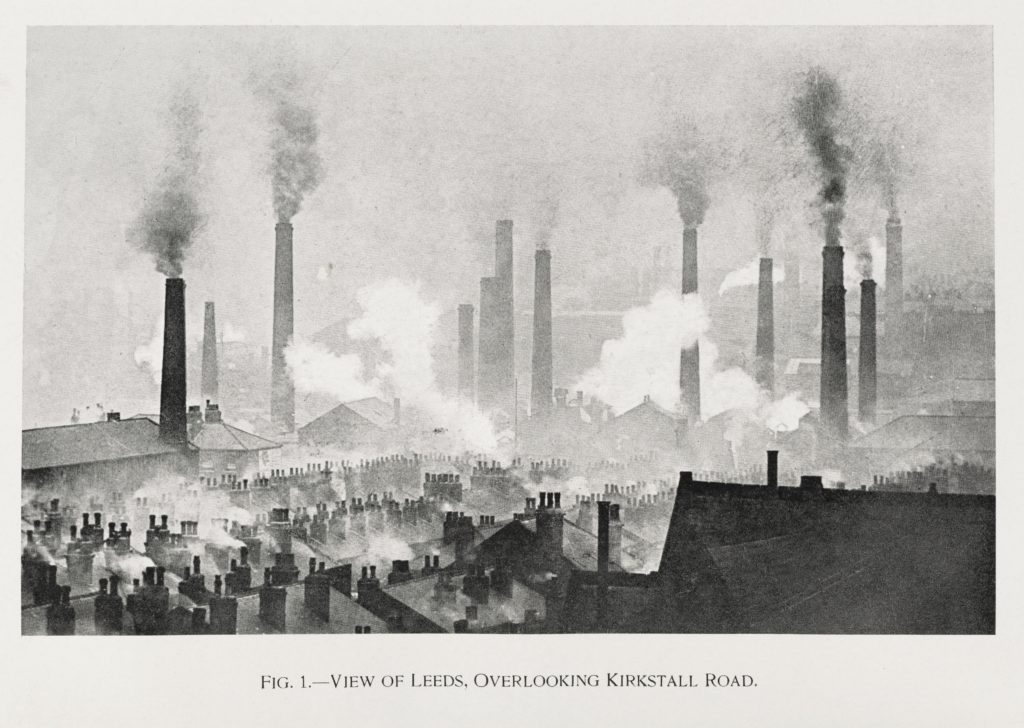
The late Keith Waterhouse once described his home town of Leeds as the ‘city of dreaming cooling towers’. Leeds Power Station was said to be the filthiest in the country and wind in the wrong direction could ruin a line of washing. Back then electricity generation was local. Any reasonably sized town or city had cooling towers on the horizon. Today the power station is mostly remote: confined to the flatlands of Yorkshire or housed in those sinister coastal buildings where the fuel source is nuclear.

View over Leeds, smoking chimneys
Credit: Wellcome Library, London. Wellcome Images images@wellcome.ac.uk
Julius B. Cohen Published: 1912.

In the 1970s the network was still a nationalised industry and the Central Electricity Generating Board (CEGB) had a couple of stations left working in London. Battersea was the best known but out in NW10 near the old Guinness Brewery at Park Royal was Acton Lane. This was a site dating back to the 1890s and the dawn of electricity generating.

The station had been a source of wonder when it opened in the early 1950s. Engineers came from all over Europe to marvel at the mighty turbines with a combined output of 150 mega watts and wondered if they would remain secured to the floor. By the early seventies though, Acton Lane was on its last legs. Technology had moved on and a station of enormous capacity back in the fifties had become a minnow. Acton Lane was now reduced to a back up role and curiously this meant it was a more hard worked station than those remote giants which now generate most of our electricity. The way to run such huge stations economically is to keep them on base load generating round the clock and shutting down only for essential maintenance. In contrast the workers at Acton Lane might expect to shut down and start up on a daily basis when the national grid needed extra power. And it wasn’t a push button operation. The conductors of this particular orchestra were the turbine drivers, the elite of generating staff. They controlled a workforce on three levels and due to the deafening roar communication was via sign language. Down in the basement were the humble plant attendants whose job it was to control the water supply. They roamed a level the size of a football field amidst a jungle of pipes leading to huge pumps that required regular inspection and lubrication. During those final years the pipe work was poorly maintained and an attendant might be obscured in dense clouds of drifting steam. His attention was attracted from the mezzanine above by striking the metal railings with a spanner. Essentially the turbine driver was signalling to report progress on raising revolutions. Were he to get it wrong then instead of superheated steam, water would enter the turbines and the effect on the blades would resemble a paddle steamer going down the Mississippi.

The turbine driver also managed the efforts of the men who ensured the boilers were kept fed. A conveyor belt of coal crushed to fine powder was fed into the furnaces and calories blasted from it with an induced draught. They were no mere factory boilers but monsters nearly ninety feet high. Climb vertiginous ladders to the top of these things and you entered a world where the air shimmered. Riyadh at noon would have seemed cool by comparison. It was an eerie place seldom visited. Beneath the catwalk, boilers literally groaned with the pent up pressure designed to turn water into superheated steam. Viewed from this vantage point it was easy to appreciate the alchemy of coal, fire and water, contained then harnessed by heavy engineering and transformed into electricity.

The process of going ‘on load’ could last for most of an eight hour shift until the control room signalled that the power had been accepted onto the grid. Then with the deafening roar of turbines making conversation impossible the order might come through to start the process of shutting down. It was difficult to imagine that anything worthwhile had been achieved but that was the role of Acton Lane in its dying days: topping up the grid, just in case the big stations were unable to fulfil the nation’s requirements.

The men who did this work had mostly begun their employment when the station opened. Like the plant they were reaching the end of their working lives. This was a breed of Londoner now all but extinct. They had been through the war, some as members of the Auxiliary Fire Service during the blitz. Others had seen service overseas and all had been glad to find work at the new power station. Back then London was still a place of manufacturing and this particular corner of the capital looked no different to any northern city. The Park Royal brewery was eventually to go however and with it most other industries. Acton Lane as their one time power source was just holding on.

During a stand down phase that could last for days at a time, only a handful of people were required to keep the plant ticking over. Everything slipped into slow motion: the bare minimum of coal being fed into the furnaces. The CEGB had an agreement with the unions whereby the workforce could be deployed on any duties during such periods. Several jobs might need to be done. For example if the flow of water from the nearby Grand Union Canal essential for cooling the feed pumps became reduced, then the reason was a blockage and workers were required to go out in a boat to investigate. Doubtless Health and Safety would these days have something to say about two men in a flimsy boat using rakes to recover a sodden mattress or occasionally something rather more ghastly.

A more sought after role was in the coal yard. Connected to the London- Birmingham main line Acton Lane got its fuel the old fashioned way and hauled it to the station using the last working steam locomotive in the capital. Little Barford as it was named can still be found chugging away on the North Norfolk Railway. It gave power station workers the occasional chance to play on their own railway for a day, learning how to uncouple coal wagons using a shunter’s hook. Get that wrong and a back sprain was the likely outcome.

The cooling towers of Acton Lane were one of the last landmarks of industrial North London. Unlike Battersea where the design meant there was a desire to save the building, nothing of the station remains following closure in the early eighties. The generating hall did live on for a few years though. You may even have seen it. The interior of the space freighter in Alien was in fact Acton Lane as was the Anvil Chemical works in the first Batman picture.

We hear much talk these days of renewable energy such as wind power. Renewables though can be unreliable and coal is still needed when those windmills are standing idle. Because a thermal power station cannot be switched on and off as required, coal has to be burned around the clock to make alternative energy sources possible. Like Acton Lane the traditional power station is still the back up.

BILL HARTLEY is a freelance writer from Yorkshire

Posted in Current Affairs and Comment, QR Home | Tagged , , , | 2 Comments

Polish Canadians, Searching for a Voice

Polish Ancestry in the USA and Canada

Polish Canadians, Searching for a Voice 

Mark Wegierski describes an attenuated sub-culture

Today in Canada, there are no journalists on any major newspaper, and very few comparatively well-known authors of books of English-language literary fiction, genre fiction, or works of social, political, or cultural commentary, who belong to the Polish-Canadian community. Until a few years ago, a person well-acquainted with this community could probably only think of Eva Stachniak and Irene Tomaszewski, and perhaps K. G. E. (Chuck) Konkel (author of two, police-procedural-type novels, set in non-Polish locales – Hong Kong and Mexico).

However, in the last few years, a number of new authors have emerged – Andrew J. Borkowski, author of the short story collection, Copernicus Avenue, which won the 2012 Toronto Book Award; Aga Maksimowska, whose book Giant was nominated for the 2013 Toronto Book Award; Jowita Bydlowska, author of Drunk Mom; and Ania Szado, author of Beginning of Was, and Studio St-Ex (about Antoine St. Exupery). Of these new authors, the books of Borkowski and Maksimowska and, to a lesser extent, Szado’s first novel, are the only ones that appear to have major Polish and Polish-Canadian content. However, Maksimowska’s novel has elements of some current-day “politically-correct” stereotypes about Poles, something that Borkowski, also, does not entirely avoid.

The endeavours of Professor Tamara Trojanowska in the Polish Language and Literature program at the University of Toronto have been felicitous (such as organizing a major international conference on Polish themes at the University of Toronto in February 2006). On the other hand, Professor Piotr Wrobel, who currently holds the Chair of Polish History at the University of Toronto, is considered by some to be rather cool towards the Polish-Canadian community and its core concerns. Continue reading

Posted in Cultural Matters, Current Affairs and Comment | Tagged , , , , | 1 Comment

Trump, the Party Pooper

Donald Trump

Donald Trump

Trump, the Party Pooper

Ilana Mercer descants on the difference between political and economic power

Working people warm to Donald Trump. He appeals to a good segment of real Americans. The circle jerk of power brokers that is American media, however, lacks the depth and understanding to grasp the fellow-feeling Trump engenders in his fans.

THE MEDIA STRUMPETS

Amid sneers about Trump’s “crazy, entertaining, simplistic talk,” the none-too bright Joan Walsh, Salon editor-in-chief, proclaimed (MSNBC): “I look at those people and I feel sad. That is really such a low common denominator. They’re all Republicans … they really don’t have a firm grasp on reality.”

For failing to foresee Trump’s staying power, smarmy Michael Smerconish (CNN) scolded himself adoringly. He was what “Mr. Trump would call ‘a loser.’” Smerconish’s admission was a way of copping to his superiority. From such vertiginous intellectual heights, Smerconish was incapable of fathoming the atavistic instincts elicited by the candidate. Nevertheless, the broadcaster “quadrupled down.” The country would be delivered from Donald by Mexican drug lord El Chapo, who’d scare Trump away.

Campbell Brown, another banal bloviator, ventured that Trump resonates with a fringe and was fast approaching a time when he would, like Herman Cain and Michele Bachmann, “max-out the craziness” quotient.

Trump supporters were simply enamored of his vibe, said a dismissive Ellis Henican.

As derisive, another Fox News commentator spoke about the “meat and potatoes” for which Trump cheerleaders hanker. I suspect he meant “red meat.”

National Journal’s Ronald Brownstein divined his own taxonomy of the Republican Beast: the “upscale Republicans and the blue-collar Republicans.” The group of toothless rube-hicks Brownstein places in Trump’s camp.

Pollster Frank Luntz provides his own brand of asphyxiating agitprop: the little people want to elect someone they’d have a beer with.

A British late night anchor—a CNN hire!—offered this non sequitur: Trump painting himself as anti-establishment and, at the same time, owning hotels: this was a contradiction. In the mind of this asinine liberal, only a Smelly Rally like “Occupy Wall Street” instantiates the stuff of rebellion and individualism. (Never mind that the Occupy Crowds were walking ads for the bounty business provides. The clothes they wore, the devices they used to transmit their sub-intelligent message; the food they bought cheaply at the corner stand to sustain their efforts—these were all produced, or brought to market by the invisible hand of the despised John Galts and the derided working people.)

I know not what exactly the oracular Krauthammer said to anger Trump, but it was worth it: “Charles Krauthammer is a totally overrated person … I’ve never met him … He’s a totally overrated guy, doesn’t know what he’s doing. He was totally in favor of the war in Iraq. He wanted to go into Iraq and he wanted to stay there forever. These are totally overrated people.”

Even media mogul Rupert Murdoch moved in on Trump, calling him an embarrassment to his friends and to the country.

Inadvertently, one media strumpet came close to coming clean about the serial failures of analysis among her kind. Wonkette, or Wonkette Emerita, aka Ana Marie Cox, spoke of “the superfluousness of the media’s predictions and its inability to perform the service of making sense of events.” Like Smerconish, Cox is hoping against hope that the little people are having fun at her expense and “are in some way in on the joke” that is Trump.

POLITICAL POWER versus ECONOMIC POWER

To understand why his campaign has legs, it is necessary to grasp the difference between The Donald and The Career Politician. Why so? Because although his supporters can ill articulate these differences, they live them and feel them viscerally. Their reaction to Mr. Trump is informed by a sense of Trump the private citizen, the businessman, the anti-politician. As such, they grasp that Trump’s reality, incentives and motives sharply diverge from those of the professional politician. His reasons for doing what he’s doing are different.

Differently put: a successful politician and a successful businessman represent two solitudes, never the twain shall meet—except when the capitalist must curry favor with the politician so as to further his business interests, a reality brought about by corrupt politics. Trump’s donations to both parties fit a pattern forced by the regulatory state, whereby, in order to keep doing business, business is compelled to buy-off politicians.

“What, then, is the difference between economic power and political power?”

Capitalism.org supplies a succinct reply: “The difference between political and economic power is the difference between plunder and production, between punishment and reward, between destruction and trade. Plunder, punishment, and destruction belong to the political realm; production, reward, and trade belong to the economic realm.”

By definition, a professional politician is opportunistic and parasitic. For his survival, he must feed off his hosts. To convince the host to let him hook on and drain his lifeblood, the political hookworm must persuade enough of them to believe his deception. The energies of this political confidence trickster are thus focused on gaining voter confidence by promising what will never be delivered and what is impossible to deliver.

The methods of politics, encapsulated in the title of broadcaster Mark Levin’s latest book, are deceit and plunder, in that order. (And no, Mr. Levin, electing a conservative will not transform this modus operandi.) The machinery of politics is coercion and force. If elected, a politician gains power over those who did not support him as well as over those who supported him. Once in power, and backed by police power, he revels in the right to legislate and regulate vast areas in the lives of people.

Conversely, to succeed, a man in the private economy must deliver on his promises. If he doesn’t fulfill his promises, he loses his shirt. He goes belly up.

Whereas success in politics depends on intellectual deceit and economic plunder; success in the private economy indicates that an individual has delivered on his promises: he has provided goods and services people want, built buildings and resorts they inhabit and frequent, provided his investors with a return on their investment.

And he has done so using the peaceful, voluntary means of free-market capitalism. He has not passed an individual mandate to compel any and all to patronize his buildings, businesses or buy his products.

Flawed though he most certainly is—Donald Trump belongs to the category of Americans who wield economic power.

Trump has had moral and business failings aplenty. He has taken risks for which he has paid with his capital and good name. (He certainly owes recompense to the Scottish farmers of Aberdeenshire, whose lives he upended with his development.) Not given to the contemplative life, Trump is a pragmatist. He has waded into some very polluted waters. But he swims. He doesn’t drown.

To that people relate.

RAPING REALITY WITH POLITICAL THEORY

For his credibility, the politician cloaks himself in the raiment of political theory, cobbled up by liberal academics. Theory that controverts reality is his stock-in-trade. And so the politician, Democrat and Republican, will conjure “ideas”—delusional ideation really—that flout reason, the nature of man, and the natural laws of justice and economics. People, however, are smart. They sense the discrepancy between contrived political theory and reality; between conceptual frameworks that do not reflect reality, but rape it.

Examples:

The macroeconomics parroted by Democrats and Republicans dictate that economic recessions and depressions must be cured by increasing the availability of easy credit so that more spending can take place. People know this is bogus. They know they cannot “deficit” spend themselves into prosperity. Why, then, would the “country” manage to disregard the immutable laws of economics?

From the safety and comfort of rarefied zip codes, open-border theorists tutor the little people in the positive economic effects of, say, high population density on productivity and economic growth. But regular folks don’t have to travel to Cairo or Karachi to discover that this urban theory is an urban myth.

The same sort of thing happens in the hearts and minds of ordinary working men and women when Trump says Crimea is Europe’s problem. Yes, let a regional power like Germany police that neighborhood.

Or, when Trump reveals that he pays as little tax as he can. “I hate what our country does with our taxes.” A noble sentiment, because true.

Libertarian theorist Wendy McElroy explains why certain verities are second-nature: “The more basic the political issue or principle, the more likely it is to be understood by most people and to appeal to their interests.”

For example, despite pronouncements from up high that “the common man should not be allowed to judge the law” because he lacks intellectual sophistication, “the trial by jury lauded by Lysander Spooner was meant to place community opinion as a safeguard between the individual and the State. As Spooner explained, ‘The trial by jury is a trial by the country – that is, by the people – as distinguished from a trial by the government … The object … is to guard against every species of oppression by the government.’”

PARTY POOPER

That Trump is no “GOP loyalist” hardly disqualifies him from representing the Republican base, which the GOP habitually misrepresents. Given the GOP’s record; a failure to swear fealty to the Republican Party is an award-worthy failing.

On the topic of awards, James Webb, the decorated Marine who served as Ronald Reagan’s secretary of the navy is no GOP loyalist, either. Webb, indisputably the last salt-of-the-earth Democrat, is considering a bid for president as a … Democrat.

Trump would do well to triangulate à la Bill Clinton, and place the talented Mr. Webb on the Trump ticket. Then, make immigration a central theme in the campaign, advance a principled, major, pro-black policy by speaking to the legalization or decriminalizing of drug use and sale—and Trump will have secured the vote of blacks, white southern Democrats and other Reagan Democrats. Like no other, drug legalization is a proxy black issue, worthy of the endorsement of the “Black Lives Matter” movement.

A ticket sporting two Alpha Males, moreover, is likely to infuriate the Alpha females of media (including those with the Y chromosome).

NOBLESSE OBLIGE

In an interview with NBC, Trump explained the difference between the politicians running and a businessman like himself: He has a lot to lose. They have nothing to lose.

As a longtime observer and analyst writing in opposition to the state and the political process, I find the specter of the anti-politician—the rugged, unrefined, cowboy individualist—fascinating, certainly worthy of tracking, and quintessentially American.

Among America’s great industrialists and capitalists there has always been a long history of noblesse oblige the notion that wealth, power and prestige carry responsibilities. Public service to the American Founders meant that men put their own fortunes and sacred honor on the line. Their lives too.

Ilana Mercer is a paleolibertarian writer, based in the U.S.  She pens WND’s longest-standing, exclusive paleolibertarian column, “Return to Reason.” She is a fellow at the Jerusalem Institute for Market Studies. Her latest book is “Into the Cannibal’s Pot: Lessons For America From Post-Apartheid South Africa.” Her website is www.IlanaMercer.com.  She blogs at  www.barelyablog.com   Follow her on Twitter:  https://twitter.com/IlanaMercer “Friend” her on Facebook: https://www.facebook.com/ilanamercer.libertarian


Posted in Current Affairs and Comment, QR Home | Tagged , , , | Leave a comment

Women, in Black and in White

Women, in Black and in White

Nina Ansary presents a feminist perspective on recent Iranian history

Extract from ‘Jewels of  Allah: the Untold Story of Women in Iran’ (pages 58-64), by Dr Nina Ansary, Revela Press, Los Angeles, California, 2015

LITERACY ADVOCATES

Included in the Shah’s White Revolution package were free and compulsory education for children of all ages and the establishment of the Literacy, Health, and Reconstruction Development Corps, whose mission was to improve the quality of life throughout the provinces, raise productivity, eradicate illiteracy, and facilitate the transition from an outdated system to a market economy. The Literacy Corps (Sepah-e Danesh), designed to combat rampant illiteracy in rural areas, was composed of male urban middle class high school graduates who were given the option of serving as instructors in lieu of a two-year mandatory military service. The corpsmen’s various duties were not limited to instruction, and they included health and hygiene instruction as well as large-scale development projects throughout the provinces.

Established in 1968, and also part of the White Revolution, Women’s Social Services (Khadamat-e Ejtemai-ye Zanan) led to the formation of the Female Literacy Corps. Similar to the roles performed by their male counterparts, young urban women were recruited to advise and instruct the rural female population. They wore European-style military uniforms, reinforcing a westernized outlook. Continue reading

Posted in Current Affairs and Comment, QR Home | Tagged , , , , , | Leave a comment

Hold the Heart

President Vladimir Putin

 Hold the Heart

Gregory Slysz considers the causes of Russo-Western antagonism

Introduction

‘The direct consequences of a war with Russia,’ wrote the British weekly The Economist, ‘we look upon with no apprehension, at least under existing circumstances. It may be costly; it may be troublesome; if Russia be obstinate when defeated it may be longer than we expect; but we cannot pretend to entertain the smallest doubt of the triumphant success of the allied arms both on sea and land’. [1] The belligerence of The Economist is unmistaken. A little more surprising, however, to anyone who considers events in 1945 or 1917 as harbouring the roots of Russo-Western antagonism is that this editorial was written on 25 March,1854, in the middle of the Crimean War. 161 years on, and the tone and language from the same publication has changed little. Writing on the current Ukrainian conflict, it noted that ‘Mr Putin sets himself up as a patriot, but he is a threat—to international norms, to his neighbours and to the Russians themselves, who are intoxicated by his hysterical brand of anti-Western propaganda. The world needs to face the danger Mr. Putin poses. If it does not stand up to him today, worse will follow’. [2]

The intention here is not to present a digest of Western scary stories that seek to brand Russia and its leader as a threat to world peace. Rather, it is to challenge the common perception of the causes and nature of Russo-West relations that are stoked by incessant propaganda campaigns waged by Western governments in collaboration with ‘embedded’ media sources. For evidence of this one needs to look no further than to the revelation in 2014 by Udo Ulfkotte, a former editor of Frankfurter Allgemeine Zeitung, in his best-selling book, Gekaufte Journalisten (Bought journalism), that stories in the German press are essentially planted at the request of the CIA. [3] A year later Tom Harper of the British Sunday Times admitted in an CNN interview in June 2015 [4] that his front page investigation published in the paper a few days earlier on the effects on British spies in Russia and China of the Snowden revelations, [5] contained nothing but ‘the position of the British government at the moment’. His confession merely confirmed a trend of collaboration between the media and respective governments that appears to be on the rise. Continue reading

Posted in Current Affairs and Comment, QR Home | Tagged , , , , | 3 Comments

Intelligence Matters

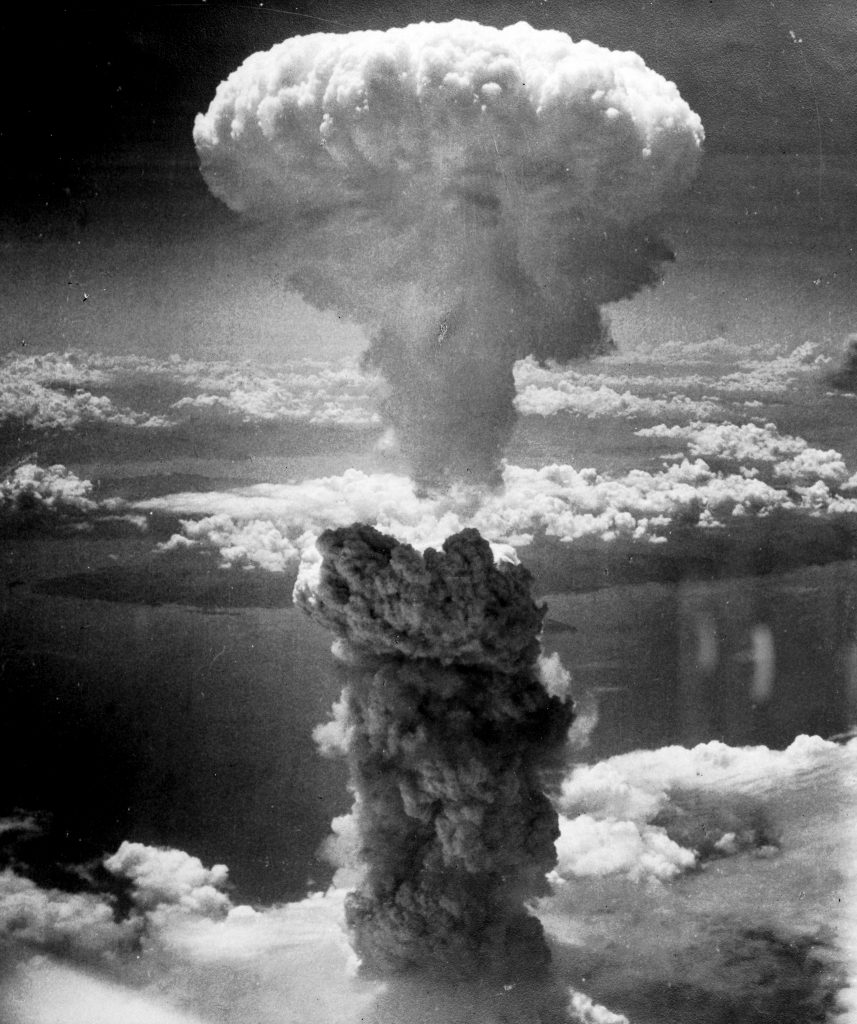
Mushroom Cloud after Atom Bomb explodes over Nagasaki

Intelligence Matters

Charmian Brinson & Richard Dove, A Matter of Intelligence: MI5 and the Surveillance of Anti-Nazi Refugees 1933-50 (2014) Manchester University Press, Manchester, 2015, Notes, Name Index, pp. 239, ISBN 978 0 7190 9079 0. Reviewed by Dr Frank Ellis

Frank Ellis underlines the threat that Communism formerly posed to Britain

The authors’ justification for writing this book is that surveillance of anti-Nazi refugees has more or less been ignored in the official histories of MI5. The reasons for this neglect, according to Brinson and Dove, are that whereas MI5 generally had a highly successful war against the Germans – one thinks of its success in rounding up German agents infiltrated by the Abwehr and the stunning achievements of the Double Cross Committee – MI5 surveillance of German and Austrian refugees failed to pick up some serious threats to British and Allied security. Specifically, MI5 failed to uncover the treachery of Klaus Fuchs until after he had passed on details of the Manhattan Project to his Soviet handlers in Britain and the USA. Female communist spies – Edith Tudor-Hart (codename Edith), Margaret Mynatt (codename Bianca) and Ursula Kuczynski (codename Sonya) – escaped retribution.

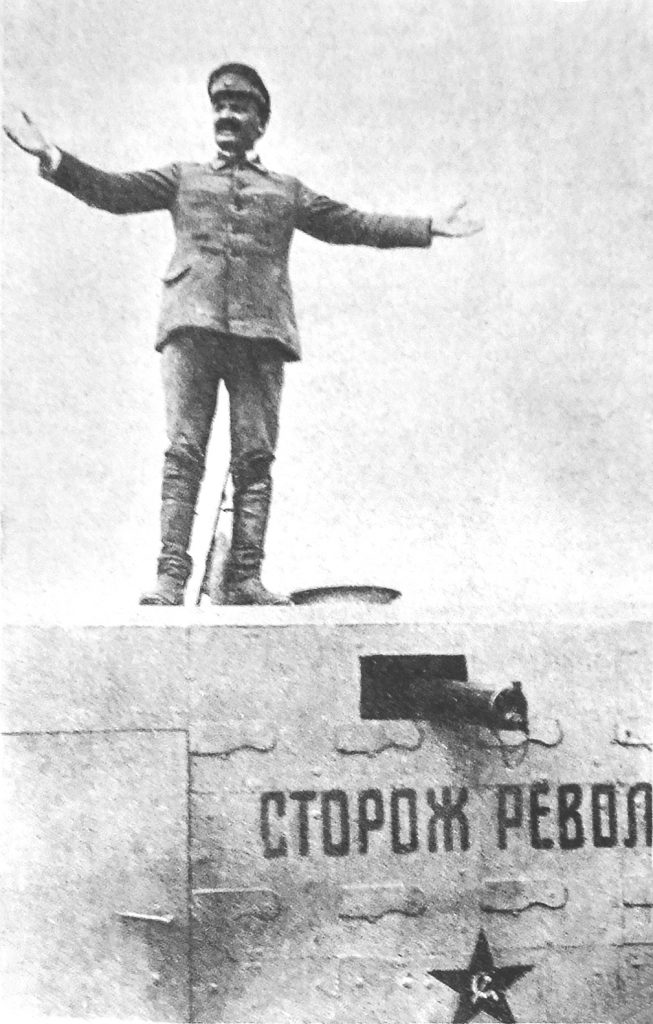
Brinson and Dove are probably right to assert that MI5 tended to underestimate Edith et al because they were women and because they had all acquired British citizenship by marriage. Edith Suschitzky was born in Vienna. In 1933 she married a one Alexander Tudor-Hart; in 1938, she was implicated in the Woolwich Arsenal spy plot. Margaret Mynatt was also born in Vienna. Her mother was Austrian-Jewish and her father British. She arrived in Britain in 1934. Possessing a British passport, she could travel and was an important courier for the Comintern (Communist International). To quote Brinson and Dove: ‘Her work as a courier involved her in flying regularly to the Soviet Union and carrying money from there to fellow couriers elsewhere in Europe for Communist parties declared illegal within their own countries’.[i] Ursula Kuczynski, the sister of another communist agent, Jürgen Kuczynski, acquired the married name of Beurton from a one Len Beurton. Beurton’s ideological allegiances can be divined from the fact that he called himself Leon and that Ursula Kuczynski and he were married on 23rd February 1940. During the Soviet era the 23rd February was earmarked as Soviet Armed Forces Day and Leon Trotsky played a major role in their founding. Given her husband’s infatuation with Trotsky – in Soviet mythology, Antichrist – and that such associations, however tenuous, with such an enemy of the people could prove fatal during the Stalin period, Kuczynski (Sonya) is lucky that she was not recalled to Moscow and shot.

Leon Trotsky Armoured Train, 1920

Kuczynski (Sonya) was, in fact, a star Soviet agent and the all-important link between Fuchs and Moscow in England. While working on the Tube Alloys Project, the cover for work on a British atomic bomb, Fuchs would meet Kuczynski (Sonya) – he called her ‘the girl from Banbury’ – and pass on information, which she then enciphered and transmitted via radio to Moscow, or so she claimed. In her memoir, Sonya’s Report (1991) Kuczynski (Sonya) maintains that she just set up the aerials of her radio between two cottages, one of which she was renting, and started transmitting her report to Moscow. Her account is not entirely convincing. In war time Britain private radio transmissions were forbidden. Unauthorised transmissions, especially those in Morse code and figure cipher, would very quickly have come to the attention of MI5. Regular transmission from the same site would have made the work of triangulation that much easier. At a time when the only transmissions permitted were those of British official agencies, unauthorised transmissions would have been intercepted. Even if the encryption was too powerful to be broken, call signs, time of transmission and the full encrypted text would have been recorded. One can take it for granted that the written record of any transmissions intercepted on behalf of MI5 during the war would have been retained. Perhaps Brinson and Dove should consider a request to MI5/GCHQ for access.

Although Brinson and Dove are concerned with the fate of anti-Nazi refugees in Britain, they do not seem fully to appreciate that refugees espousing left, and extreme-left, totalitarian ideologies may well be anti-Nazi but that this does not automatically translate into pro-British sympathies. Let us be clear. These people sought refuge in Britain because continental Europe was becoming too dangerous. Indeed, the authors note that to begin with the favoured destination was France and only later Britain. Communism and the influx of refugees many of whom with communist allegiances undoubtedly posed a direct threat to British security since Soviet agencies would use – and did use – the entry of refugees as a cover for the infiltration of its agents.

Brinson and Dove make much of the fact that MI5 was obsessed with the threat posed by communism. Typically, they place Red menace between inverted commas thereby implying that MI5 was somehow wrong to have seen any severe danger from communism. Events fully justify the MI5 approach. In 1927 the offices of the Soviet Trade Delegation were raided by the police acting on MI5 information. This was the so-called ARCOS raid and it confirmed the threat posed by the Soviet Union and communism to Britain. The MI5 assessment that the Soviet Union and communism were the main enemies prompted Guy Liddell, a senior MI5 officer, to visit Germany in 1933. There he met Rudolf Diels (incorrectly cited as “Diehls” by Brinson and Dove) at the time when Abteilung Ia of the Berlin Police headquarters was being reorganised into the Gestapa (das Geheime Staatspolizeiamt) not the Gestapo (die Geheime Staatspolizei), as claimed by Brinson and Dove, with Diels as its first head. According to Brinson and Dove the Nazis tried to justify their suppression of the German Communist Party (KPD) with the claim that they had prevented a seizure of power. I am not aware of any planned KPD-inspired uprising in Germany in 1933. However, the Brinson and Dove claim that any such uprising was implausible is wholly inconsistent with Lenin’s endless calls for world revolution, the communist insurgency in Germany after World War One and on-going Soviet attempts to foment one, no different, indeed, from Soviet subversion being carried out by the Soviet Trade Delegation in London in the 1920s.

Together with their brown rivals, German communists made common cause against the Weimar Republic so making it that much easier for Hitler to gain power. Brinson and Dove do not seem to grasp the nature of communism and see no grotesque contradiction in describing Wilhelm Koenen, a German communist who had been denied entry to Britain in 1932, as a ‘communist parliamentarian’.[ii] As a revolutionary party fully committed to subversion, red terror and the destruction of any parliamentary democracy, the KPD and its activists deserve no sympathy when they were arbitrarily arrested, incarcerated and shot. Terror and revolutionary violence were the tools of their trade. Now they got a taste of their own medicine. Brinson and Dove also fail to make a clear distinction between Fascism and National Socialism. Fascism was a propaganda construct used by the Comintern and designed to lump all enemies of the Soviet Union together as Fascists.

Peace time surveillance of German and Austrian aliens was complicated by the simple fact that these people were more or less free to move about and thus to engage in activity that was harmful to Britain. The numbers are worth noting. By September 1939 some 78,000 refugees were living in Britain. Brinson and Dove speculate that of this total about 6,000-8,000 could be estimated to have been political refugees.[iii] Given the growing demands on MI5 time and resources effective surveillance was always likely to be a problem. However, with the outbreak of war in September 1939 and the change in their status – German and Austrian aliens were now “enemy aliens” – internment would have been a highly effective solution.

The MI5 position was that all enemy aliens should be interned. On this matter Brinson and Dove cite an extract from Guy Liddell’s diary: ‘My personal feeling is that enemy aliens should be interned and they should be called on to show cause why they should be released. From an MI5 point of view, it would be far preferable to have them put away’.[iv] Brinson and Dove reject Liddell’s proposal. Thus: ‘All German and Austrian refugees should therefore – so MI5 believed – be interned and required to demonstrate their loyalty to the British cause: that is they should be assumed guilty until proven innocent’.[v] I suggest that Brinson and Dove misconstrue what Liddell was advocating. The obvious point here is that these Germans and Austrians are, in time of war, “enemy aliens”. There is no obvious reason why these people should be permitted the benefit of any doubt. Internment is therefore fully justified. Further, in view of the fact that these people are enemy aliens it is entirely reasonable that the burden of demonstrating to the satisfaction of the British security services that they posed no threat, not necessarily any loyalty to the British cause, falls on them. The internment of enemy aliens makes it much harder for spies among them to engage in espionage, since it disrupts agent networks and enormously simplifies the task of surveillance. In times of a dire national emergency such as that which confronted Britain in 1940 it was, or should have been, an essential measure.

MI5 penetration of communist organisations confirmed not merely the hostile intent towards Britain and the West but also provides very revealing insights into attitudes towards the Soviet Union and the war in general. For example, Hans Beermann, a Jewish refugee, who was an MI5 informer in The Free German Movement (FGM), reported back on reactions to Soviet-Polish plans for Germany’s post-war borders which had been announced in January 1944. René Robert Kuczynski, father of Jürgen and Ursula Kuczynski, and the chairman of the FGM, made an astonishing attack on Soviet policy which had it been made in exile in the Soviet Union and inevitably picked up by the NKVD would have led to his arrest. Thus: ‘the Russian plans for the future of Eastern Germany represented the same kind of barbarism that the Nazis practised. If Germans were to be put under the Poles he could only advise them to stick to the Nazis, for their lot would be far worse with the Poles than with the Nazis’.[vi]

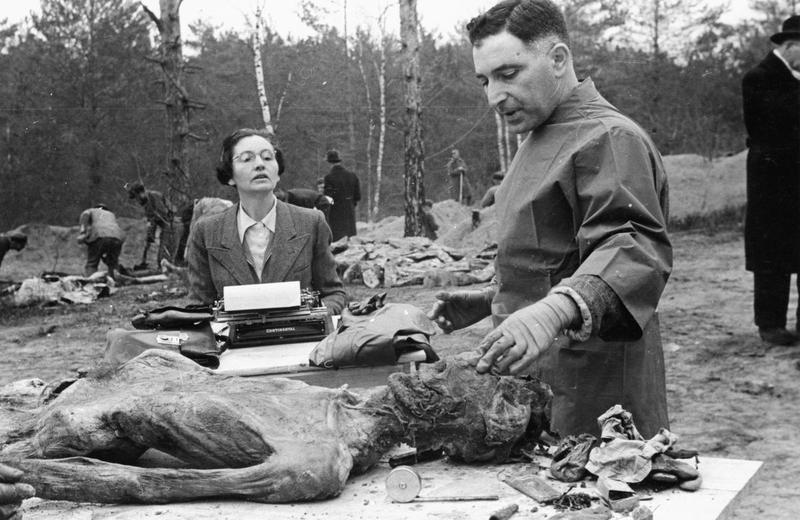
Kuczynski senior’s scathing condemnation of Soviet policy highlights a whole series of omissions in A Matter of Intelligence. Even though factionalism and failing to adhere to the policies ordered by Moscow were serious ideological crimes, disputes among Austrian and German communists arising from Soviet policies and the general course of the war were far more likely in British exile. During the period of the Non-Aggression Pact (August 1939 – June 1941) the ideologically correct line was that this was an imperialist war and that the German bombing of London was no more than the British imperialists deserved. Are we to believe that German and Austrian communists in Britain did not argue among themselves about the merits of the Pact and the correctness of the Moscow line? How did communist refugees react to Stalin’s demands that the Western Allies open a Second Front in 1942 when there was no chance of success? Later in the war, in April 1943, a major rift occurred between the Anglo-Americans and the Polish government-in-exile after the discovery of the mass grave of Polish prisoners of war at Katyn. Despite vociferous Soviet denials of responsibility for this war crime – denials which persisted until the collapse of the Soviet Empire in 1991 – only fanatical communists and sympathizers in Britain accepted the Kremlin claim that the mass murders had been carried out by the Gestapo. That the discovery of these mass graves and strong evidence – even then – for Soviet responsibility did not provoke bitter arguments among communists adhering to the Moscow line and those of a more sceptical disposition strikes yours truly as utterly implausible. Non-communists might well have given Goebbels the benefit of the doubt. Any such divisions among the exiles would have been monitored and evaluated very carefully by MI5 since those dissenting from the Moscow line would have been earmarked as potential informers. Yet none of this seems to have made its way back to MI5 via its informers or is there evidence of these arguments and dissent in the files examined by Brinson and Dove but which for reasons unclear they have decided to pass over? If they have neglected any such material, why is this?

Katyn Massacre Victim, 1940

One aspect of British operations against communist agents and British traitors is the leniency with which they were treated when caught. Klaus Fuchs escaped the death penalty, Blunt received a royal pardon instead of the long drop, Cairncross was allowed to scuttle away, and when Ursula Kuczynski visited Britain to promote her book she was not arrested. Likewise, when Melita Norwood’s treachery was exposed in 1999 she was briefly the centre of media attention before disappearing from the radar screen. Incidentally, Norwood’s GRU codename was Tina which is appropriate since tina is the Russian word for slime or mire. Soviet handlers want the information but they are not obliged to like the individuals supplying it.

In the conclusion of this book Brinson and Dove tell us that they have taken cognizance of Eric Hobsbawm’s advice ‘ “that it is the business of historians to remember what others forget” ’[vii], unaware of, or indifferent to, it seems, Hobsbawm’s well documented playing down of communist crimes, including genocide. Hobsbawm is the last person to instruct others on the need to remember the forgotten bits. In any case, it is not that communist war crimes and genocide have been forgotten. Unlike the crimes of National Socialism there is still a great reluctance to face up to the enormity of communist crimes. The inapposite citation of Hobsbawm to one side, MI5 surveillance of refugees and enemy aliens, above all the communists, is an important part of MI5’s history and overall Brinson and Dove have made a good beginning. There is much more to come. In their follow-up study the authors should be aware that the KGB, Komitet gosudarstvennoi bezopasnosti, was not formed until 1954 and so no KGB officer could have played a part in contacting Engelbert Broda, another major source of information on the Manhattan Project, in 1943. The main Soviet intelligence agencies from the mid 1930s until the 1953 reforms were the NKVD, NKGB, GRU and SMERSH. One final point: a book of this kind requires a proper and detailed subject index. A name index alone is not enough.

ENDNOTES
[i] A Matter of Intelligence, p.85
[ii] A Matter of Intelligence, p.174
[iii] A Matter of Intelligence, p.91
[iv] A Matter of Intelligence, p.103
[v] A Matter of Intelligence, p.103
[vi] A Matter of Intelligence, p.163
[vii] A Matter of Intelligence, p.232

© Frank Ellis 2015

Frank Ellis is an historian and the author of The Stalingrad Cauldron: Inside the Encirclement and Destruction of the 6th Army (2013)

Posted in Book Reviews, QR Home | Tagged , , , , , , | Leave a comment

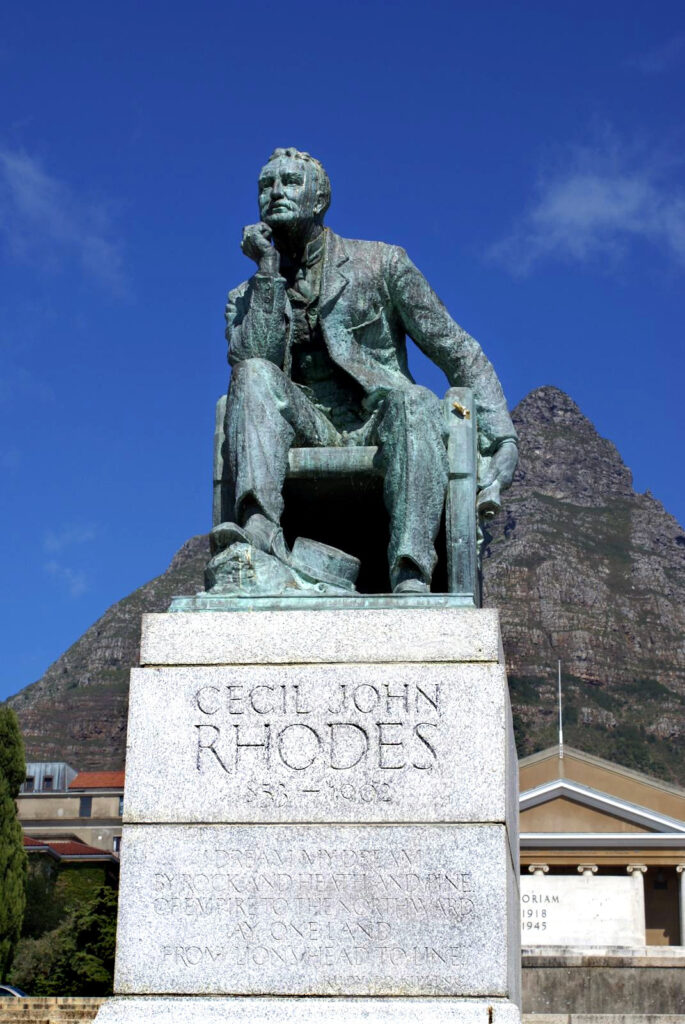
Rhodes Must Stand

UCT Cape Town, Statue of Rhodes

Rhodes Must Stand

Arthur St Hugh defends a visionary Englishman

Earlier this year a statue to Cecil Rhodes was removed from the University of Cape Town on the grounds that it was ‘offensive to blacks’. One might ask why it was that the Afrikaners never found it offensive and had it removed when South Africa became independent, as after all Rhodes, more than anyone, was responsible for the ending of the independence of their Boer republics in a bloody war of imperial conquest. Perhaps the Afrikaners considered that Rhodes should be recognised for bringing into existence something that was actually greater than what had existed previously? Or perhaps the Afrikaners considered that the values Rhodes upheld – liberalism, parliamentary democracy, magna carta and the rule of law – were applicable to themselves, that they were indeed ‘universal values’ as David Cameron and the Conservative Party view them.

It is perfectly legitimate to question whether it was right for the imperialist Rhodes to seek to forge a federal union with liberal ‘universal values’ in southern Africa. Perhaps separate states with different values might have been just as right; and perhaps that is what will emerge in due course.

But Rhodes has been reconceived as ‘apartheid’s founding father’ rather than as effectively the founding father of South Africa. Clearly the current ruling race in South Africa does not wish to be reminded of the ancestry of the state they now possess. Rhodesia’s name was changed because it did not wish to be reminded of the creator of the state they had acquired; the statue of Rhodes in Salisbury has been gone for many years, and likewise the values that Rhodes upheld have long since been obliterated and replaced by the values of Mugabe. Continue reading

Posted in Current Affairs and Comment, QR Home | Tagged , , | 1 Comment

“Hanoi” John McCain

Senator McCain Salute Nov 2017

“Hanoi” John McCain

Ilana Mercer separates the man from the myth

“It’s the beginning of the end for Donald Trump.” “It disqualifies him as a presidential candidate.” “This is the end of his run.” So crowed the political operatives looking to take down Mr. Trump, and by so doing, protect the political status quo and ease themselves into positions of greater power. The egos in the anchor’s chair and the pundits opposite chimed in: “He’ll make the more serious candidates look more serious,” predicted the next Michael Oakeshott, S. E. Cupp.

The Donald is in the dock for desecrating one of the political establishment’s most sacred cows: Sen. John McCain. Speaking at a forum in Iowa, the popular presidential hopeful said these sagacious things about the Republican from Arizona:

“[McCain’s] not a war hero. He is a war hero because he was captured. I like people that weren’t captured, okay?” (On the same occasion, Trump ventured that he was not particularly for the Vietnam War, a position that should endear him to principled libertarians.)

Not only does Donald Trump not owe Sen. McCain an apology; McCain likely owes mea culpa to Trump—and to the very many Vietnam veterans and their families whom he is alleged to have betrayed.

Yes, the heroic prisoner-of-war pedigree upon which McCain has established his career and credibility is probably a myth.

For our purposes, the story begins with Sydney Schanberg, back in the days before American journalism became a circle jerk of power brokers.

Mr. Schanberg is one of “America’s most eminent journalists.” “For his accounts of the fall of Cambodia to the Khmer Rouge in 1975,” Schanberg “was awarded the Pulitzer Prize for international reporting ‘at great risk.’ He is also the recipient of many other awards–including two George Polk awards, two Overseas Press Club awards and the Sigma Delta Chi prize for distinguished journalism.” Schanberg’s byline at The Nation magazine further reveals that:

“The 1984 movie, The Killing Fields [watch it!], which won several Academy Awards, was based on his book ‘The Death and Life of Dith Pran’–a memoir of his experiences covering the war in Cambodia for the New York Times and of his relationship with his Cambodian colleague, Dith Pran.”

Schanberg is also the author of a “remarkable 8,000-word exposé”: “McCain and the POW Cover-Up.” Here follow the opening paragraphs. They provide a précis of the forensic evidence collected by Schanberg against McCain as ally of Vietnam War POWs and men missing in action:

“John McCain, who has risen to political prominence on his image as a Vietnam POW war hero, has, inexplicably, worked very hard to hide from the public stunning information about American prisoners in Vietnam who, unlike him, didn’t return home. Throughout his Senate career, McCain has quietly sponsored and pushed into federal law a set of prohibitions that keep the most revealing information about these men buried as classified documents. Thus the war hero people would logically imagine to be a determined crusader for the interests of POWs and their families became instead the strange champion of hiding the evidence and closing the books. …

“… The sum of the secrets McCain has sought to hide is not small. There exists a telling mass of official documents, radio intercepts, witness depositions, satellite photos of rescue symbols that pilots were trained to use, electronic messages from the ground containing the individual code numbers given to airmen, a rescue mission by a Special Forces unit that was aborted twice by Washington and even sworn testimony by two defense secretaries that “men were left behind.” This imposing body of evidence suggests that a large number–probably hundreds–of the US prisoners held in Vietnam were not returned when the peace treaty was signed in January 1973 and Hanoi released 591 men, among them Navy combat pilot John S. McCain.”

“The Pentagon had been withholding significant information from POW families for years. What’s more, the Pentagon’s POW/MIA operation had been publicly shamed by internal whistleblowers and POW families for holding back documents as part of a policy of “debunking” POW intelligence even when the information was obviously credible. The pressure from the families and Vietnam veterans finally produced the creation, in late 1991, of a Senate “Select Committee on POW/MIA Affairs.” The chair was John Kerry, but McCain, as a POW, was its most pivotal member. In the end, the committee became part of the debunking machine. …”

The tale that has more twists than a serpent’s tail would be incomplete without mentioning another newsman, Ron Unz. First in his capacity as publisher of The American Conservative (July 1, 2010 cover story), and currently as editor-in-chief of The Unz Review—Mr. Unz has kept Schanberg’s voluminously sourced and criminally underexposed exposé alive in the alternative (intelligent) media.

Schanberg’s own journalistic and military man’s instincts were first piqued when “military officers [he] knew from that conflict began coming to [him] with maps and POW sightings and depositions by Vietnamese witnesses.”

Having served “in the Army in Germany during the Cold War and witnessing combat firsthand as a reporter in India and Indochina,” Schanberg had “great respect for those who fight for their country.” To my mind,” he explained, “we dishonored U.S. troops when our government failed to bring them home from Vietnam after the 591 others were released—and then claimed they didn’t exist. And politicians dishonor themselves when they pay lip service to the bravery and sacrifice of soldiers only to leave untold numbers behind, rationalizing to themselves that it’s merely one of the unfortunate costs of war.”

The man is clearly not an intemperate sort. Some would say that to knowingly leave servicemen behind in the service of political ambition is treason.

Despite his position “as one of the highest-ranking editors at the New York Times,” Schanberg was forced to unmask Hanoi John, on September 18, 2008, in The Nation magazine. He recounts: “I took the data to the appropriate desks [at the New York Times] and suggested it was material worth pursuing. There were no takers.”

In the war-hero department, McCain is manifestly more beloved by the bien pensant elites than his “Democratic counterpart,” Vietnam Medal of Honor recipient Democrat Bob Kerrey. While not a “single mention of McCain’s role in burying information about POWs” is to be found in the annals of the NYT; the paper of record—“a compliment [rightly] used these days as a cudgel”—took upon itself to expose (in its magazine) Bob Kerrey for having “ordered his men to massacre over a dozen innocent Vietnamese civilians—women, children, and infants,” in February of 1969.

McMussolini’s more recent record of devastation is an organic extension of his mythologized past:

“John McCain the politician,” wrote Trump in a USA Today editorial, “has made America less safe, sent our brave soldiers into wrong-headed foreign adventures, covered up for President Obama with the VA scandal and has spent most of his time in the Senate pushing amnesty. He would rather protect the Iraqi border than Arizona’s.”

Were Donald to dig deeper, he’d discover that McCain as champion of prisoners-of-war and men missing-in-action is as dubious as “John McCain the politician.”

Ilana Mercer is a paleolibertarian writer, based in the U.S.  She pens WND’s longest-standing, exclusive paleolibertarian column, “Return to Reason.” She is a fellow at the Jerusalem Institute for Market Studies. Her latest book is “Into the Cannibal’s Pot: Lessons For America From Post-Apartheid South Africa.” Her website is www.IlanaMercer.com.  She blogs at  www.barelyablog.com   Follow her on Twitter:  https://twitter.com/IlanaMercer “Friend” her on Facebook: https://www.facebook.com/ilanamercer.libertarian

Posted in Current Affairs and Comment, QR Home | Tagged , , , | 3 Comments

ENDNOTES, July 24th 2015

BBC-forces-assembled-for-Prom-1-CR-BBC-Chris-Christodoulou

BBC forces assembled for Prom-1-CR BBC Chris Christodoulou

ENDNOTES, July 24th 2015

First Night of the Proms

Stuart Millson attends a much loved event

As a young 19-year-old Promenader, I can remember the sense of expectation that I and others felt in the Arena queue for the First Night of the 1984 Proms. After Vaughan Williams’s A London Symphony and Sea Pictures by Elgar (sung by the great Dame Janet Baker), the Chief Conductor of the BBC Symphony Orchestra, Sir John Pritchard, steered his large-scale choral and instrumental forces through Walton’s oratorio, Belshazzar’s Feast. Making my way to the Royal Albert Hall for the 2015 opening concert, I found that – at the age of 50 – none of my enthusiasm for this work, and indeed for the Proms, had in any way been diminished by the passage of time. Walton’s music, too, is highly durable: this lavish choral work from the 1930s (possibly the composer’s greatest decade) sounding mint-fresh and utterly compelling in its telling of the fall of Babylon – not one part of the score seeming in any way dated or “of its time”. Belshazzar’s Feast will always be modern music.

It is quite true: I had come to the First Night chiefly to hear Walton’s thrilling music, although the BBC programme planners had compiled a stimulating, contrasting evening – with Nielsen’s Maskarade Overture as its energetic curtain-raiser; and a new work of many rhythms and layers by accessible contemporary composer, Gary Carpenter, to follow. A Mozart Piano Concerto (No. 20 – played with true grace and subtle, classical colouring by Lars Vogt) also appeared; and a somewhat rare Sibelius suite, inspired by the story of Belshazzar.

The Proms this year is celebrating the 150th anniversary of Dane, Carl Nielsen (1865-1931), and for those who haven’t yet bought the BBC Proms Guide, do so. The publication contains a highly informative piece on the composer’s life – his journey to Britain, on which he met the founder-conductor of the Proms, Sir Henry Wood; and much additional background on Danish identity and philosophy. The Art Editor of the Guide also deserves huge praise for the choice of an enchanting 1930s’ travel-poster illustration which accompanies the article: a haze of sunshine over a lowland landscape – the single word – Nielsen – appearing where “Visit Denmark” probably appeared.

Under the baton of the BBC Symphony Orchestra’s present Chief Conductor, the Finnish maestro, Sakari Oramo, Maskarade from Nielsen’s 1906, Holberg-inspired operatic masterpiece galloped along in fizzing style: the players enjoying its jaunty, almost comic quality – and yet seizing upon the pulse of serious energy which runs through nearly every work by this composer; a figure who grasped and embodied both “absolute” music in all its extremity and fury, and the folk-music of old-remembered places from his youth. The Maskarade overture has several wonderful moments: an abrupt, almost rasping oompah outburst (with two cymbal clashes for good measure), and a whirligig descent into a full-throttle finale – the whole orchestra, unstoppable and breathless.

Contemporary British composer, Gary Carpenter (b. 1951) is an interesting figure – a musician who set out in the 1960s learning composition at the Royal College of Music, and serving on such projects as the 1973 film (set on a sinister Pagan Scottish island), The Wicker Man. Film buffs and enthusiasts for cult music may remember the “sound” of this film: its weird processions of clashing brass, and seemingly innocent folkish fiddle-playing, all adding a strange sense of approaching doom. This time, Gary Carpenter has been inspired by the work of artist, Max Ernst: a wall of iron (but actually made of cork) from 1924 which hangs in a gallery in Liverpool. The opening of this piece – Dadaville – reminded me of the Dawn interlude from Britten’s Peter Grimes, but from this brief serenity arose a score which assembled and toyed with many stronger, more abstract sounds (the orchestration included a saxophone) – ending with a bang of actual pyrotechnics from above the orchestra.

Prom-1.-Modern-British-composer-Gary-Carpenter.-CR_BBC-Chris-Christodoulou

Prom 1.Modern British composer Gary Carpenter. CR BBC Chris Christodoulou

Over the years, the Proms has made something of a tradition of including such pieces (by composers such as Simon Bainbridge, Thomas Adès et al): instantaneous, interesting, technically brilliant, and not entirely without tonality, but works that seem to this reviewer to be clever exercises, rather than music which is destined to endure because it has either a story or a great heart. However, I found myself enjoying Dadaville, and I warmed to Gary Carpenter when he was interviewed on Radio 3 (his serious yet down-to-earth character, and easy-going way of explaining his style and motivation making for a very enjoyable broadcast).

The inclusion of Mozart’s Piano Concerto No. 20, well known for its second movement (a gentle, delicate, wistful bone-china tune from an 18th-century drawing room, rather than a concert hall) brought a classical calm to the middle of the concert – Lars Vogt clearly relishing his chance to perform with the BBC Symphony Orchestra (he kept leaning towards the front-desk violins and interacting with the players); and warming at the same time to the closeness of the large promenade audience, all of whom seemed to be in a state of complete concentration. Perhaps, though, it might have been better to have included a slightly more robust, purposeful concerto for this programme, as the watery classicism of this delightful D minor piece just managed (again – a very personal view) to lessen the flow, and interrupt “the sense” of the evening; my mind wandering just a little. Usually, you might not find Mozart and Walton in the same concert, but the Proms being what it is, juxtapositions can sometimes work out well – and there was no doubting Lars Vogt’s brilliance.

Sibelius is well known for his symphonies (which will be played later in the season); for his Finlandia and En Saga. Yet there is a body of smaller-scale pieces – King Christian ll, incidental music to The Tempest, and a suite, Belshazzar’s Feast, which bring out a further meditative, lyricist side to a composer, often seen as representing great rocks, ice-flows and dark forests. An oriental colouring melts the Finnish ice for a quarter-of-an-hour: Sibelius’s ‘Belshazzar’ giving us a soft introductory march, some strongly-coloured, almost exotic writing for woodwind, and a gentle Valse Triste-style waltz at the work’s conclusion.

Having set the scene in ancient Babylon, the Prom moved to its overwhelming conclusion: the massed forces of the BBC National Chorus of Wales, the BBC Symphony Chorus and Singers, and the BBC Symphony Orchestra – augmented by two off-stage brass bands, and the great Royal Albert Hall organ – bringing to the packed hall the full force of Walton’s masterpiece. And yet, the riotous impact of this extravagant composition is only felt at certain places – the work beginning in a tense, subdued half-light; the deep, slow rumble of violas, cellos, double-basses, and the massed-chorus (in soft tones) evoking “the waters of Babylon”, and in the line, “yea we wept and hanged our harps upon the willows…” summoning a sense of tragedy. The solo baritone, Christopher Maltman, produced a deep, sonorous tone; projecting his voice – with perfect diction – to the whole hall – a contribution which added a theatrical, operatic drama to the evening. One of his most important lines –

If I forget thee, O Jerusalem, Let my right hand forget her cunning. If I do not remember thee, Let my tongue cleave to the roof of my mouth. Yea, if I prefer not Jerusalem above my chief joy…”

– was delivered with an intensity I have seldom heard, building one of the first great climactic moments of the work.

Sakari Oramo also opted for a slightly slower tempo than is customary with performances of Belshazzar’s Feast (which often tend to race forward, gaining not power, but a feeling of congestion) – the result of which was the opening up of much grander vistas for the huge choir which spanned the entire “back” of the hall. The score “breathed” and unfolded, enabling everyone to savour every instrumental colour – even the thundering, vibrating and rumbling of the Royal Albert Hall organ, which was like a pillar of sound from ancient Babylon. The complicated exertions and build-ups – such as “Praise ye the gods” – were delivered with tremendous force and unanimity; a great feat for such a massive, spread-out array and battery of musical instruments and voices.

A sense of calm, cathedral-like, Elgarian visionary Englishness changes the mood of the work, close to the end:

“While the Kings of the Earth lament, And the merchants of the Earth Weep, wail and rend their raiment. They cry, Alas, Alas, that great city…”

Soon, a small section of choir members are on their own, in a passage reminiscent of the composer’s Masefield setting, Where does the uttered music go? However, timpani thumps out a new quick-stepping idea, and the whole ensemble moves into jubilant action again, as “Babylon the great” falls. Five abrupt orchestral utterances then unleash the last great roar from the BBC Symphony Orchestra; with brass almost floating upon an immense organ chord.

All that was left for the audience to do was to cheer.

But I hope readers will bear with me, with this last (sentimental) indulgence… As I left Queen Victoria and Prince Albert’s hall that evening, it was difficult not to feel pride: pride in our musical tradition, in the musicians whose work we had enjoyed, and in the British Broadcasting Corporation which has run and championed the Proms since 1927.

Prom-1-Sakari-Oramo-conducts-the-BBC-SO.-Picture-CR-BBC-Chris-Christodoulou

Prom 1 Sakari Oramo conducts the BBC SO. Picture CR BBC Chris Christodoulou

STUART MILLSON is the Classical Music Editor of The Quarterly Review


Posted in ENDNOTES:Music, QR Home | Tagged , , , , , , | 1 Comment