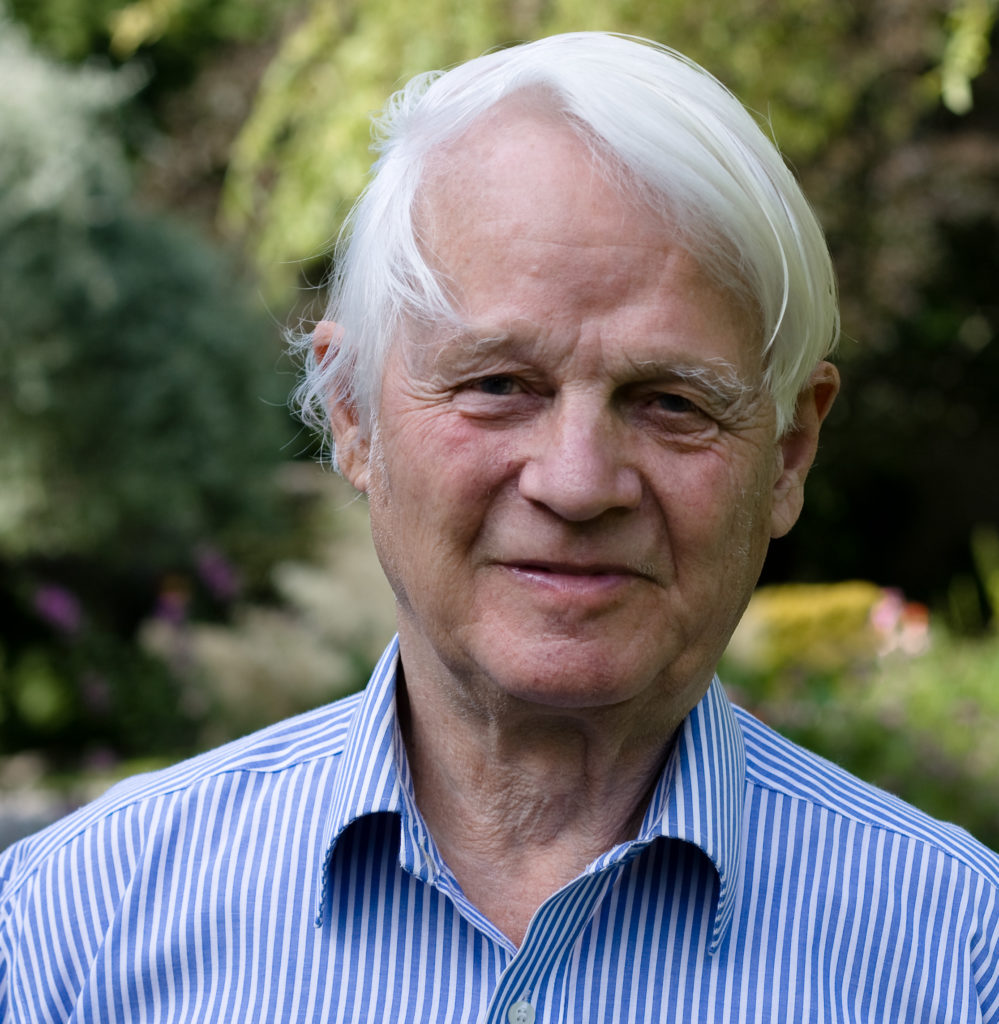
Richard Lynn, Professor Emeritus of Psychology, University of Ulster
Race, Evolution and Intelligence
Paul Dachslager reviews Richard Lynn’s chef-d’oeuvre
Race Differences in Intelligence: An Evolutionary Analysis, Richard Lynn, second revised edition, 2015, Washington Summit Publishers, Athens, GA, reviewed by Dr Paul Dachslager
This second, revised edition of Richard Lynn’s definitive compilation of racial IQs, first published in 2006, gives many more studies now reaching approximately 500. His principal results are summarised as follows; North-east Asians, IQ 105; Northern and Central Europeans, IQ 100; South Europeans (Balkans, Sicily), IQ 92-96; Arctic peoples, IQ 91; New Zealand Maoris, IQ 90; American Hispanics, IQ 89; Native Americans, IQ 86; Pacific Islanders, IQ 85; South Asians (Turkey, Middle East, Indian Sub-content, IQ 84-90; North Africans, IQ 84; Sub-Saharan Africans, IQ 71; Australian Aborigines, IQ 62; Pygmies, IQ 57; Bushmen, IQ 55.
Lynn points out that these are averages and that there is a wide range of IQs in these populations. For instance, although the average IQ in India is estimated as 82, in the population of around one billion there are a large number of people with high IQs, many of whom now work in the United Kingdom and the United States.
In the second half of the book, Lynn considers the causes of the evolution of these IQ differences during the last 60,000 or so years. His ‘cold winters theory’ proposes that when early peoples migrated from equatorial east Africa into the more northern latitudes of North Africa, South Asia, Europe and Northeast Asia, they encountered more challenging and demanding environments which required greater intelligence to survive. During the cold winters, they had to hunt large animals for food, build fires and shelters and make clothes to keep warm. The colder the winter temperatures and the more northerly the environment, the higher the IQs that perforce evolved. In support of this hypothesis, he notes that the peoples with the highest IQs typically inhabit regions with low winter temperatures, in the more northerly latitudes of Europe and Northeast Asia. He infers also that as early peoples migrated from the warm south into the colder north, their brain size increased to accommodate higher IQs, so that today the average brain size ranges from 1,283 cc in Sub-Saharan Africans to 1,369 cc in Europeans to 1,416 cc in Northeast Asians.
Lynn’s compilation of racial differences in IQs forms the basis of his study with the late Professor Tatu Vanhanen, presented in their book Intelligence: A Unifying Construct for the Social Sciences (2012). They maintained therein that national differences in intelligence explain much of the national differences in educational and cultural achievements and economic development. These several studies represent a major advance in our understanding of many contemporary problems, notably the ongoing mass migration from the poor south to the rich north.
Dr Paul Dachslager is the author of Human Sin or Social Sin: Evolutionary Psychology, Plato and the Christian Logic of Sociology, 2016
Like this:
Like Loading...






Mass Immigration and its Critics
The Jack Pine, by Tom Thompson
Mass Immigration and its Critics
The Effects of Mass Immigration on Canadian Living Standards and Society, edited by Herbert Grubel, Vancouver, Fraser Institute, 2009, CAN$19.95, xxvi + 236 pp., ISBN 978-0-88975-246-7, reviewed by Mark Wegierski, to commemorate the Sesquicentennial of Canadian Confederation
The Fraser Institute (fraserinstitute.org) is one of the very few right-leaning think-tanks in Canada. This is in marked contrast to the United States, where think-tanks that espouse moderate conservatism proliferate. Nevertheless, in more recent years, the Fraser Institute has, in a few cases, moved beyond a strictly free-market and purely economic focus, and into the areas of social and cultural policy. This book, which had also been available in its entirety in PDF on the Fraser Institute website, is one of the first major studies to consider the issue of mass immigration.
Pages v-xii give brief biographies of the authors, which show that they all have serious accomplishments. On pages xv-xxvi, Herbert Grubel (a former professor of economics at Simon Fraser University, and Reform Party M.P. from 1993-1997, as well as Reform’s Finance Critic from 1995-1997), gives a pithy précis of the book. Continue reading →
Share this:
Like this: