An Amicable Divorce

An Amicable Divorce

Stuart Millson gets the Government’s Brexit strategy

Speaking last week on the Today programme, Health Secretary Jeremy Hunt gave an upbeat assessment of the Prime Minister’s Brexit strategy. He cited both her Article 50 letter to EU President Donald Tusk, and her speech last March on her vision of a sovereign Britain closely aligned to its former EU partners. That such a view came from Jeremy Hunt was encouraging, as this former ally of David Cameron campaigned for Britain to stay a member of the Brussels club, and even called – just after the June 2016 referendum – for a second vote, but on the final terms of our exit, not a re-run of the initial referendum itself.

On 28th January, the former Northern Ireland Secretary Theresa Villiers warned that the Government’s negotiating strategy – which has attracted criticism from Brexiteers – is in danger of creating a situation whereby Britain leaves the EU in all but name, but remains, to all intents and purposes, a participant with special status. She has a point. After all, we now know that despite the return of the old British passport, Britain may well be subject to the jurisdiction of the European Court for longer than was supposed – although the period will be (or so we are told) up to nine years. Just how extensive will the exit be? Continue reading

Posted in QR Home | Tagged , , | 9 Comments

This Sporting Life

This Sporting Life, 1963, Cinéma de rien

This Sporting Life

Bill Hartley recalls a once vibrant sub-culture

The death last year of author and playwright David Storey saw one of the last ‘Angry Young Men’ leave the stage. Storey was born in Wakefield in 1933 and may have been among the first beneficiaries of the 1944 Education Act, arguably one of the few pieces of government legislation that really did change the lives of working class people for the better. It took Storey, a miner’s son from a Wakefield council estate on to Queen Elizabeth Grammar School and then to the Slade School of Fine Art. As a consequence, Storey was an author who could do a cover illustration for his work as in his 1976 novel Saville, an edition of which carried an abstract but still recognisable view of his home town. Rather unusually, Storey funded his time as a student by playing Rugby League. It is perhaps an indication of how reasonable railway fares were back in the early fifties that Storey could travel from London to Leeds to play rugby and still be in pocket. It must have also taken some nerve, an art student now living ‘down south’ getting changed for a game in a dressing room full of coal miners. Continue reading

Posted in Cultural Matters, QR Home | Tagged , , , , | Leave a comment

ENDNOTES, February 2018

Peter Seabourne

ENDNOTES, February 2018

In this edition: On the blue shore of silence, the music of Peter Seabourne;  Echoes of Land and Sea, from Somm Records; Copland, An Outdoor Overture, from the BBC Philharmonic, reviewed by STUART MILLSON.

 Anna Fedorova recital, reviewed by LESLIE JONES

Born in 1960, and subsequently a student of Professor Robin Holloway, the composer Peter Seabourne has dedicated his musical career to the pursuit of accessible music, with works that are not necessarily tonal or easy. He declines to follow trends or to compromise.

Speaking to the composer at the beginning of this year, after having spent a week playing a considerable number of his recordings on the contemporary Italian and European Sheva label, I gained the impression that Peter Seabourne has undertaken a long journey in music – producing in his gargantuan Steps piano sequence a body of work that dwarfs Bach’s Well-Tempered Clavier, Chopin’s Etudes and Shostakovich’s 24 Preludes and Fugues. I know of no other contemporary composer who has assembled such an organic, constantly progressing, seemingly unstoppable collection of music. Continue reading

Posted in ENDNOTES:Music, QR Home | Tagged , , , | Leave a comment

The Doctors’ Plot

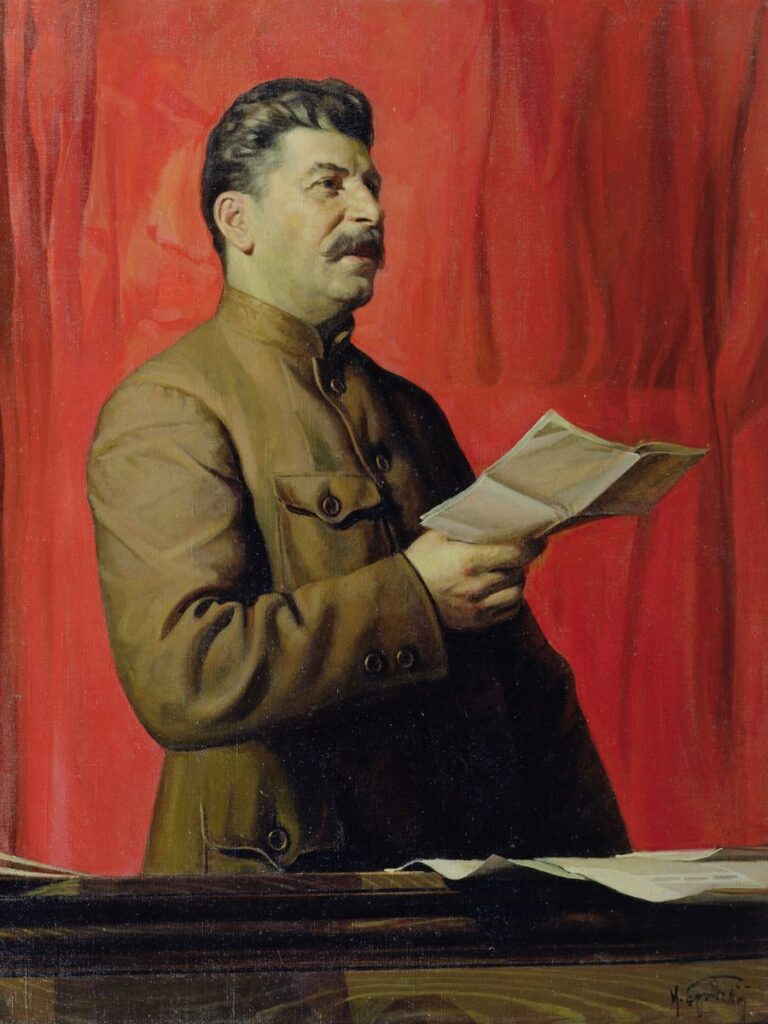
Isaak Brodsky, Stalin

The Doctors’ Plot

Editorial Note: A commentary on “The Death of Stalin”, by DAVID ASHTON

Screen and stage “entertainment”, such as “The Crown” or “Darkest Hour”, use either fictional reconstruction to highlight truthful themes from history, or falsify the facts for political propaganda and other questionable purposes.

Stalin said that the death of one person is a tragedy, whereas the death of millions is a statistic. But do we know how, why or exactly when he died, or an approximate total of fatalities from his purges, gulags and wars?

Both Josef Stalin and Julius Streicher met their end in proximity to the Purim festival, which celebrates the execution of an ancient tyrant who attempted the original “Holocaust”. Some have suggested that the killer in the Kremlin was removed to prevent plans for another one. Continue reading

Posted in Current Affairs and Comment, QR Home | Tagged , , | 3 Comments

The Death of Stalin

Lavrentiy Beria with Joseph Stalin and Stalin’s daughter, Svetlana

The Death of Stalin

A film directed by Armando Iannucci, based on the comic book Death of Stalin, by Fabien Nury and Thierry Robin, reviewed by ROBERT HENDERSON

Main Cast 

Jeffrey Tambor as Georgy Malenkov – Deputy General Secretary
Steve Buscemi as Nikita Khrushchev – General Secretary of the Central Committee of the Communist Party of the Soviet Union
Olga Kurylenko as Maria Yudina – pianist whose family has fallen foul of the Soviet regime
Michael Palin as Vyacheslav Molotov – Foreign Minister
Simon Russell Beale as Lavrentiy Beria – NKVD head
Paddy Considine as Comrade Andreyev – the head of the radio station
Andrea Riseborough as Svetlana Stalina – Stalin’s daughter
Rupert Friend as Vasily Stalin – Stalin’s son
Jason Isaacs as Marshall Georgy Zhukov – the leader of the Red Army
Adrian Mcloughlin as Joseph Stalin
Paul Whitehouse as Anastas Mikoyan – Vice-Premier of the Council of Ministers
Paul Chahidi as Nikolai Bulganin – deputy premier and minister of defence
Dermot Crowley as Lazar Kaganovich – Minister of Labour

Running time, 107 minutes

If an entire society can become a lunatic asylum, Stalin’s Russia was surely that society. Imagine a world in which the present is at the forefront of your mind all the time. No one is safe. The most slavish devotion to the party line and to Comrade Stalin does not guarantee your safety for the party line might change from day to day or an informer tell a lie about you or simply recount an unguarded remark that you made. If a person says as little as possible, that might be taken as a sign that they are secretly disloyal; if they make a great display of loyalty it could be interpreted as a subterfuge to disguise their revisionist or worse their counter-revolutionary, true self. Being a senior member of the Party does not make someone safe. Few senior Bolsheviks from the revolutionary days died in old age. It was a madhouse in which rationality and consistency were dangerous traits. Arthur Koestler’s novel Darkness at Noon captures the general atmosphere of the time and place. Continue reading

Posted in Film Reviews, QR Home | Tagged , , , , , , | 1 Comment

The Colliery Guardian

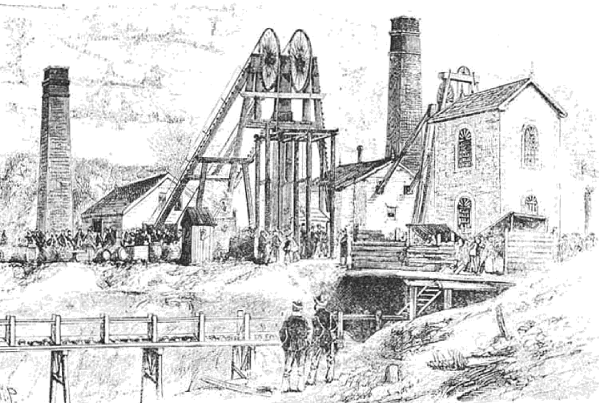
Pendleton Colliery, Illustrated London News 1877

The Colliery Guardian

Bill Hartley mines a copious archive

The Colliery Guardian was founded in 1858 and closed in 1994. By then, it had shrunk to a rather thin monthly publication in a magazine format. Its reduction in size reflected the decline of the British coal industry following the miners’ strike. As the name implies though, the Guardian was once a newspaper and during the 19th century it appeared weekly, reflecting in its pages the size, importance and confidence of the coal industry and the closely allied iron trades, both at home and overseas. Copies of each year’s editions may be found in large heavyweight volumes bound (more like armoured) in leather to contain the many pages of this former broadsheet publication.

The papers’ correspondents home and abroad reported the triumphs and disasters of the coal industry, together with details of new inventions and innovations. British engineers were everywhere in those days and reports flowed in from across the Atlantic, remote corners of the Russian Empire, India and Australia: any part of the globe where coal was mined or might be was covered. This was a world of heavy engineering and every edition of the Guardian was filled with advertisements. Britain truly was workshop of the world. Many towns had an iron foundry and anyone wishing to equip a colliery railway could order locomotives and a fleet of wagons from half a dozen sources to be found in the paper. Other ephemera connected with coal mining covered everything from wheelbarrows to winding machinery. That said, the Guardian was no mere trade paper. If an editorial policy existed then it might have been, ‘anything of interest to our readers’. A dip into its pages at any point throughout the nineteenth century unearths a huge range of news and information; a treasure trove of Victoriana. Continue reading

Posted in Current Affairs and Comment, QR Home | Tagged , , | 2 Comments

Falstaff

 Falstaff

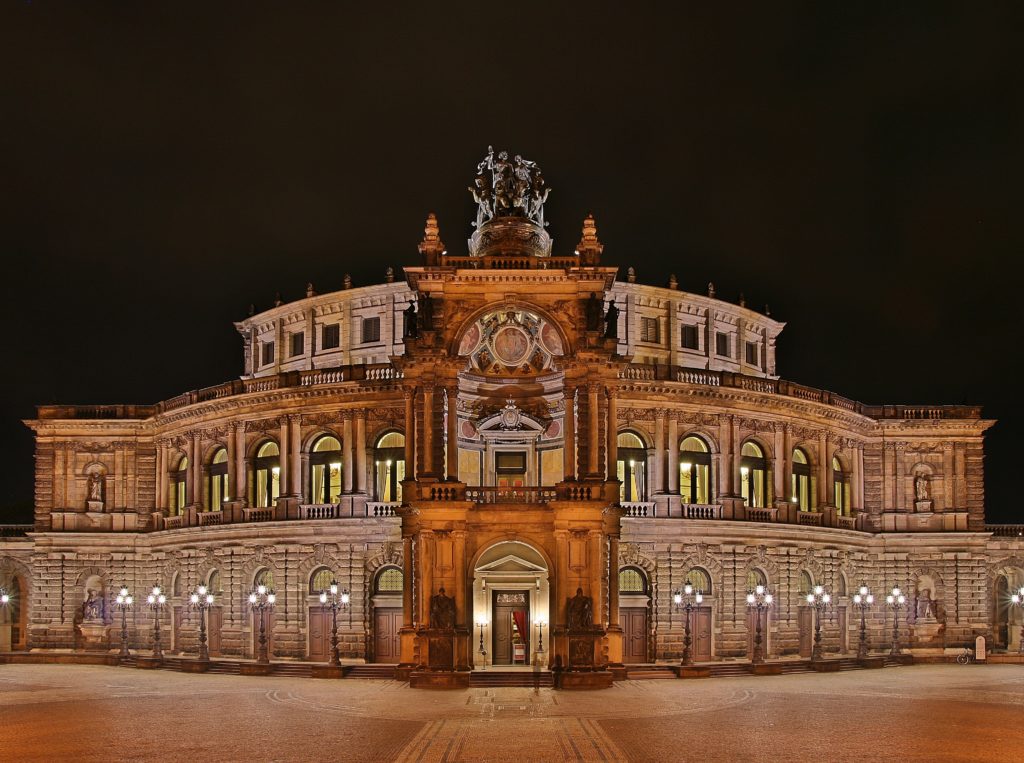
Falstaff, music composed by Verdi, libretto by Arrigo Boito, Opera Vlaanderen, Antwerpen, Belgium, December 31st 2017, directed by Christoph Waltz, conducted by Tomáš Netopil, reviewed by TONY COOPER

With a libretto by Arrigo Boito based on Shakespeare’s The Merry Wives of Windsor and scenes from Henry IV (parts I & II), Falstaff – which received its première in February 1893 at La Scala, Milan – was the last of Verdi’s 28 operas and written as he was approaching the ripe old age of 80. It was also his second comedy and, indeed, his third work based on a Shakespeare play, following that of Macbeth and Otello.

A somewhat insubstantial plot revolves round the thwarted and farcical efforts of the well-loved fat old knight of Windsor, Sir John Falstaff, to seduce two married women to gain access to their husbands’ wealth.

This work is now part of the operatic repertoire worldwide but this was not always the case. Although the prospect of a new opera from Verdi generated great interest in Italy and around the world, Falstaff did not prove to be as popular as earlier works in the composer’s canon. After the initial performances in Italy, it fell into neglect until championed by Arturo Toscanini who insisted on its revival at La Scala and the New York Met in the late 19th and early 20th century. Many felt that the opera suffered from a lack of full-blooded melodies so much loved in Verdi’s previous operas, a view strongly contested by Toscanini. But conductors of the generation after him championed the work, including that famed trio – Herbert von Karajan, Leonard Bernstein and Georg Solti. Continue reading

Posted in Cultural Matters, QR Home | Tagged , , , , | 2 Comments

Recessional

The Great War; a Cavalry officer negotiates a mined road

 Recessional

Lo, all our pomp of yesterday 
Is one with Nineveh and Tyre!
                                         (Kipling)

For Stuart Millson, loss and decline inform Elgar’s music

The biographer Jerrold Northrop Moore remarks that if Elgar had died in his early thirties, his name today would only live on in specialist books about English music – his few, mainly choral works being given the occasional outing at provincial festivals. Elgar was 39 when his Norse saga, King Olaf, was written for a festival in North Staffordshire. His masterpiece, the Enigma Variations, championed by the great Wagnerian Hans Richter, would come three years later, in 1899.

Fortunately, Elgar lived a long life, drawing inspiration from many sources: the lanes and hills of Worcestershire, Herefordshire – and, in his Introduction & Allegro for strings, the coast of West Wales – and thirteen years later, the woodland and local legends of Sussex, in the Piano Quintet. Continue reading

Posted in Cultural Matters, QR Home | Tagged , , , | Leave a comment

Third Parties in Canada

Color Field, Mark Rothko, No 61 (Rust and Blue), 1953

Third Parties in Canada

Seasonal fare for anoraks, courtesy of MARK WEGIERSKI

“Third parties” are an endlessly fascinating topic of study. The notion arises in polities characterized by “first-past-the-post” voting systems, where there are usually only two major parties. Polities characterized by proportional representation (PR) voting systems tend to have a multiplicity of parties. Particular popular attention – although scant electoral support — is given to “third parties” in the U.S. – where the “two-party” system is so strongly entrenched. Since the 1850s, with the rise of the Republican Party, there have been two main parties in the U.S. – although both of them have undergone tremendous permutations. Since that time, there has never been  a “third party” in U.S. politics which achieved the electoral breakthroughs that a considerable number of “third parties” have been able to do in Canada. Indeed, these “third parties” are sometimes not easily categorized as conventionally conservative or liberal. For example, the candidacies of both Ralph Nader (Green Party), and Pat Buchanan (Reform Party) in the 2000 U.S. Presidential election, had elements that were neither conventionally conservative, nor conventionally liberal. “Third parties” often amount to a salutary “shaking-up” of the political system – actually making it more truly populist. Continue reading

Posted in Current Affairs and Comment, QR Home | Tagged , , , , , | Leave a comment

No Secular Heavens Here

The Three Fates

No Secular Heavens Here

Manilius’ Astronomica and the Poetics of 4. 1-11, by Darrell Sutton

Lucretius (99BC-55BC) penned an atheistic poem entitled De Rerum Natura (DRN). Its Latin text contains poetry of a high order. In the world of DRN, natural solutions seem more acceptable than any scheme of divine causation. Manilius’ Astronomica is a rival text to the DRN and may have been composed in order to offer a stylistic answer to the dilemma ancient Romans faced about human autonomy. Such as it is, Manilius’ poem is a focus of growing investigation. Students are drawn to it for a variety of reasons. Its poetry preserves evidence of common Graeco-Roman trends in the conception of celestial objects during the first century of the Common Era. Indeed, the text consists of several statements with eastern origins.

This essay is arranged in three sections. First, there is a brief conspectus of the context in which the poem was written and of what is known of Manilius. Second, a few comments are supplied on select verses regarding Manilius’ belief about the divine descent of wisdom and its dissemination through the display of celestial bodies. And third, a thorough study of the poetics of the text at 4.1-11. Continue reading

Posted in Cultural Matters, QR Home | Tagged , , , | 1 Comment