
The Sick Man of Europe

Charge of the Light Brigade

The Sick Man of Europe

By Stuart Millson, moonlighting again

Engulfed by 220,000 Covid-19 infections and with a death toll to date of 32,000 souls, the United Kingdom has, in the current pandemic, truly become the “sick man of Europe” – the evocative phrase used in the 19th-century to describe the crumbling Ottoman Empire. Second only to the United States in its rate of infection and overtaking the former viral epicentres of Italy and Spain, Britain’s ability to deal with the virulent virus now sweeping the world has been, at best, ineffective. Despite the magnificent efforts of the National Health Service – not to mention the work of the British Army in building a temporary hospital in just nine days – our country’s response has been found wanting.

Despite the examples before us of countries such as New Zealand and Taiwan, which had the foresight to immediately close their airports, thereby preventing the circulation of the disease and its possible circulation back to countries not yet infected, the United Kingdom – with the agreement of its scientists and public health officials – allowed its runways to remain open. Only now, a month after the disease was given time to embed itself, has the Government finally decided to apply quarantine rules to airport travellers – a classic example of shutting the gate after the horse has bolted. [Editorial note; travellers quarantined accordingly will be trusted to isolate themselves!] Continue reading

Posted in Current Affairs and Comment, QR Home | Tagged , , , | 11 Comments

Cannibal Lecture

Cannibal Lecture

Ilana Mercer on reparations

Apartheid and the Atlantic slave trade have generated an endless, media-generated pretense of remorse, especially in America and Great Britain. Spectacle aside, the real motive is to define, and therefore control, the past by reading it as an aspect of present political aims. “[R]itual apologies,” argues Jeremy Black, author of “The Slave Trade,” “are moves in a political game that relies on “fatuous arguments about ‘closure’ [and] ‘resolution,’” but fails to reach closure, since the purpose of such policies is to keep the imagined wounds suppurating.

Plainly put, racial-grievance politics are levelled, in general, by Africans who were never enslaved or who were not born into apartheid, against Europeans who did not enslave or segregate them. Only in the West could such a vicarious cult of self-flagellation thrive. As I wrote in my book, Into the Cannibal’s Pot: Lessons for America From Post-Apartheid South Africa, “White South Africans are told to give up ancestral lands they are alleged to have stolen. Should not the relatives of cannibals who gobbled up their black brethren be held to the same standards?”

Part of the problem is our ignorance of Southern African history. There was bitter blood on Bantu lands well before white settlers arrived. The Bantu were not indigenous to South Africa. They migrated there out of central Africa and, like the European settlers, used their military might to displace Hottentots, Bushmen and one another through internecine warfare. Continue reading

Posted in Current Affairs and Comment, QR Home | Tagged , , , , , , | Leave a comment

ENDNOTES, May 2020

Endnotes, May 2020

In this edition: Bruckner’s Second Symphony, by Stuart Millson

Anton Bruckner (1824-96), organist, Wagnerphile and symphonist, has come to represent the pure, almost naive spirit of late-romanticism. From his earliest days in the Catholic church, to the splendid heights of his last two great achievements – the mighty Eighth and (unfinished) Ninth Symphonies – the composer was always outside the metropolitan tides and ways of music. Uncomfortable in fashionable Vienna and other Austro-German capitals, he was prone to bring a plate of cakes to the conductor’s door – to thank him for a great performance.

Commonly described as “cathedrals in music”, his symphonies bring together great moments – episodes where light streams through a stained-glass window, or breathless phrases which echo fragments of church music, or (at a particular point in the Fifth Symphony, for example) a passing phrase reminiscent of an idea in Mozart’s Requiem. In the Eighth Symphony’s scherzo, we have a headlong rush into Alpine meadows and byways, as Bruckner embraces the almost pagan, life-loving spirit of “Deutsche Michel” – the legendary, Teutonic equivalent of an English yeoman. And in the Seventh Symphony, generally considered his most radiant, there is (again in the scherzo movement) a definite undercurrent of tension, almost a sinister pace that seems to give the music a thrilling, dangerous edge. Continue reading

Posted in Cultural Matters, Current Affairs and Comment, ENDNOTES:Music, QR Home | Tagged , , , | 1 Comment

Walmart, with Missiles

Abandoned Packard automobile factory, Detroit

Walmart, with Missiles

Ilana Mercer, in hollowed out America

On March 31, the number of Americans dead from Coronavirus stood at 3,900! A mere month on, at the time of writing, 63,801 Americans have perished. American deaths by Covid account for a fourth of the world’s, including those in the undeveloped world. To ignore this Third-World-like specter is to dismiss the dead and the dying. It’s tantamount to Cancel Culture!

China sucks. But if the United States must rely on the Chinese government to keep its citizens safe, then what kind of a micky-mouse country is it? If the American people can be convinced by their government to saddle a foreign power with the responsibility for their existential welfare—what kind of people are we?

China didn’t force the traitors of the American economy to shift crucial production lines to its country and strand Americans without surgical and N-95 masks and medication; homegrown turncoats made that decision, all by their lonesome. Decades ago, the political, corporate and industrial leaders of the West chose to enmesh the fate of their pliable people with that of the vigorous, voracious Chinese. Continue reading

Posted in Current Affairs and Comment, QR Home | Tagged , , , , | 1 Comment

Kiel Bill

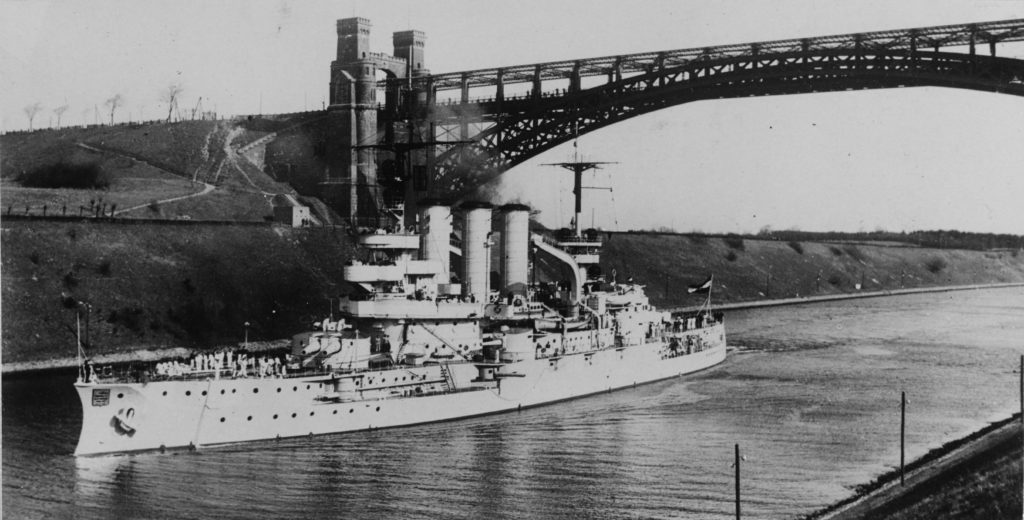
German battleship Hessen transiting the Kiel Canal

Kiel Bill

William Hartley, alone on a wide wide sea

The Kiel Canal isn’t popular with ship’s crews, even though it cuts out a long haul around the Jutland Peninsula when entering the Baltic. A German pilot and helmsman come on board to take charge of the ship and during transit no routine maintenance work such as painting or welding is allowed, due to the proximity of houses. This means the crew are on duty but largely idle during the twelve hour passage. Ships proceed at a stately pace, sometimes being overtaken by cyclists on the adjacent path and occasionally it becomes necessary to heave to and let a larger vessel pass. The MV Kristin Schepers is less than 10,000 tonnes which may seem substantial but she is a minnow compared to the huge bulk carriers which get right of way. Up on the bridge with the Germans doing the work, we use our elevated position to look in the windows of canal side towns.

The ship is German owned but Cyprus flagged and most of the officers are Russian. Down in the mess, mealtime entertainment is non stop Russian TV which seems to consist largely of Mr Putin’s activities and occasionally his hapless looking Prime Minister Mikhail Mishustin. It can be as many as five very steep flights of stairs to descend to the mess deck for meals. Function shapes form on the modern freighter and all non-cargo related space is squeezed into a tall narrow structure, where the crew eat and sleep. At the top, overlooking our load of containers, is the bridge. Continue reading

Posted in Current Affairs and Comment, QR Home | Tagged , , | Leave a comment

Lockdown: a Libertarian Perspective

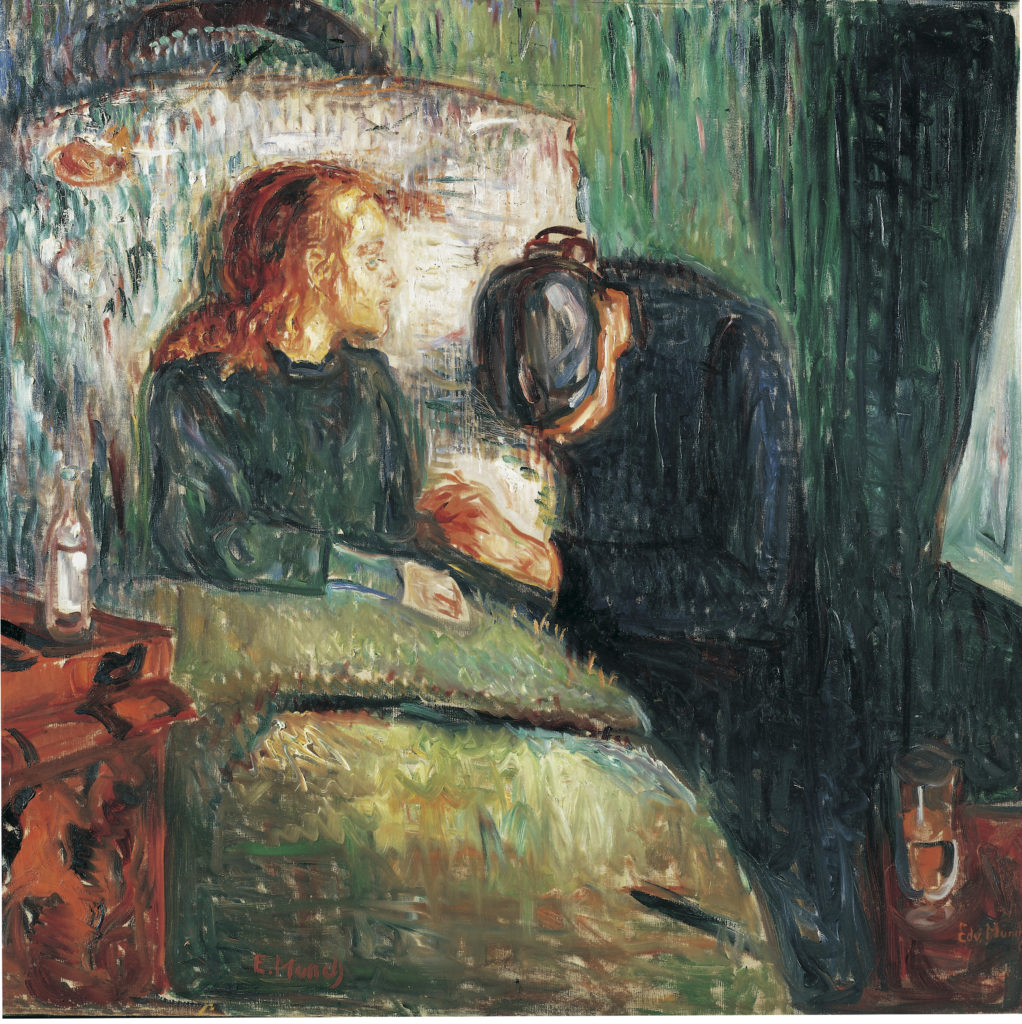
The Sick Child, Edvard Munch

Lockdown: a Libertarian Perspective

by Ilana Mercer

The other day I was running up a mountain. Two people were walking down it. I quickly crossed over, so as not to expirate over them. To my surprise, they thanked me profusely. I’m healthy; they looked fit. Distancing may not have been necessary in this case. Yet, in this simple act of conscious distancing, in the epochal age of a terrifying, communicable disease—my neighbors and I had come closer than ever before. Fear gave way to fellow feeling.

Having lived in both the developed and underdeveloped world, I have always associated social distancing with civility and civilization. Cultures that honor personal boundaries always seemed better than cultures which didn’t. Ditto people who kept a respectful distance: they have more merit than those who get in your face.

Which is why the wish expressed by so many freedom-loving protesters to violate the personal space of others is vexing and why comments such as the following are anathema: “Your ‘health’ does not supersede my right.” “Give me liberty or give me COVID-19.” “I am not required to descend into poverty for you.” Continue reading

Posted in Current Affairs and Comment, QR Home | Tagged , , , | 2 Comments

Philosopher on Fire

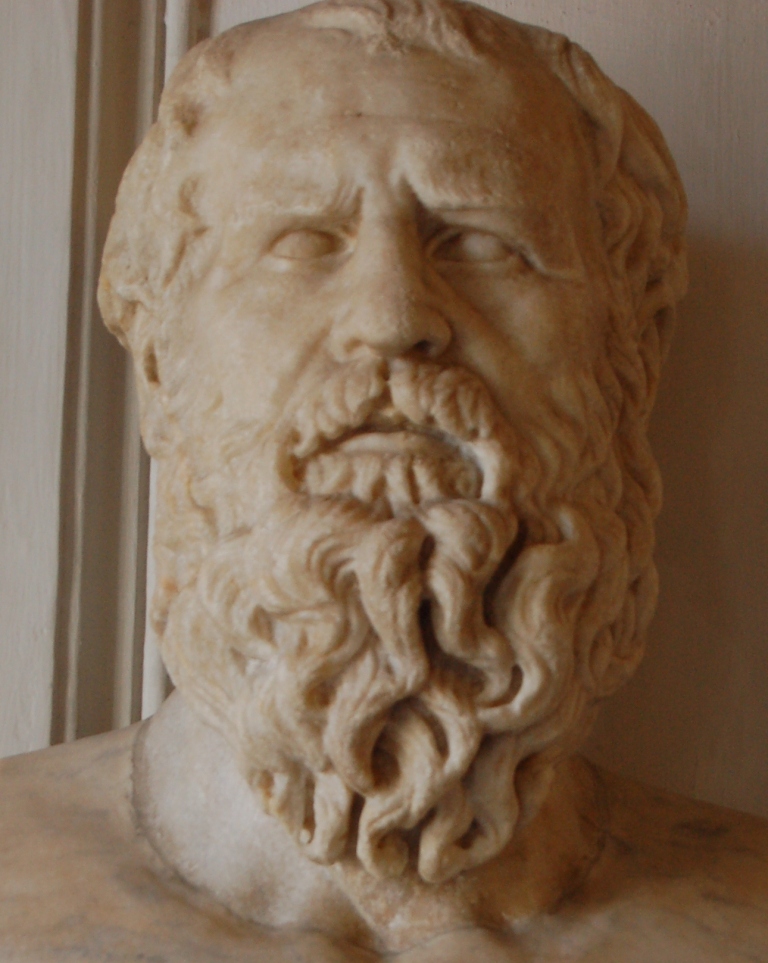
Heraclitus

Philosopher on Fire 

Darrell Sutton considers Heraclitus 

Diogenes Laertius is a popular and reliable source for Heraclitus’ life: cf. Lives and Opinions, Book ix 1. Heraclitus, a native of Ephesus, lived around 500 BC. Too little is known of his life to conjecture with any specificity, but he was supposedly of good birth. However, Aristotle and Cicero both refer to philosophical statements of his as “obscure”. It was believed by some that he never completed a number of literary works because he allegedly suffered from melancholy. So he is mentioned as “the weeping philosopher”. The few remains that we possess of Heraclitus’ original compositions are succinct fragments. Since New Testament documents are tapestries of ancient ideas and proverbial wisdom, in this short note we defer to one snippet left by this pre-Socratic scholar. Patristic theologians sought to refute many of Heraclitus’ linguistic innovations, particularly the “logos” concept. Therefore a lively interpretation of his views may be helpful in situating one specific Greek image contained in the Greek New Testament. The following notes consider the logic of the sentence comprising fragment 55 and its transmutation in the first letter of the Apostle John.

ὅσων ὄψις ἀκοὴ μάθησις, ταῦτα ἐγὼ προτιμέω
“such things like sight, hearing, experiential learning, these I esteem highly.”

Some prefatory remarks are necessary before proceeding to a discussion of the above text. Ancient inscriptions, when legible, are useful for overcoming impediments which hinder the understanding of antiquity. The distant past throws up enough problems on its own. Trying to comprehend what a writer meant when only a fragmentary sentence is available might encourage debate but it tends to breed controversy. Still, even if what the writer intended to say is forever lost to posterity, the usage of a phrase or system of words may turn up afterward. Continue reading

Posted in Book Reviews, Cultural Matters, QR Home | Tagged , , | Leave a comment

Clapped-out

Alder Hey Memorial Tablet

Clapped-out

A.R. Kneen, on ‘our’ NHS 

Truth matters. So, too, does freedom, privacy, independence and human rights. But truth arguably matters above all of these. NHS workers, including doctors and nurses, work for money. They get paid to do a job. This should not be considered a controversial statement. Arguably, a proportion of NHS workers get over-paid relative to their ability and performance levels. And some do not provide a good service to patients.

In all fields of paid employment, we find people who do a good job, people who do not. For example, certain people think that all police are terrible. That is not true. Some police are bad, and the over-exercise, if not abuse of power by police officers has been recently demonstrated. However, most police officers do a fine job. Likewise, there are Catholics who believe that all priests are beneficent and do nothing but good for the people they serve. This is not actually true. A number of priests have molested children, and are evil. One could go through all forms of employment and find average performance, good performance, poor performance, and excellent performance. This is true of solicitors, builders, dentists, hairdressers, soldiers, teachers, scientists etc. It also pertains to those who work in the NHS. Continue reading

Posted in Current Affairs and Comment, QR Home | Tagged , , , , | 1 Comment

Labour, blasé about Britain

The Coronation of Queen Victoria 1839, John Martin

Labour, blasé about Britain

Stephen Michael MacLean

No one is immune to coronavirus, not even royalty. Clarence House recently announced that Prince Charles had tested positive and was “self-isolating” in Scotland. Queen Elizabeth, meanwhile, was carrying out her official duties at Windsor Castle. As the royals follow the rest of British society in coping with the “new normal,” one is reminded of Queen Elizabeth the Queen Mother’s statement, after Buckingham Palace was damaged during the blitz in World War II. “Now we can look the East End in the face,” she said.

Such moments have endeared the monarchy to Britons. The Crown sits at the pinnacle of parliamentary democracy. Brexit support was energised by the same motivations: independence and self-government. These are conservative principles, and so it is not surprising that Tories were in the Brexit vanguard. Nor should it be forgotten that Nigel Farage and the UK Independence Party kept the faith when many in the Conservative Party lost theirs.

Recent polling by YouGov confirms Brexit’s patriotic appeal. It also reveals just how out of sync with Brexit are the majority of Labour Party supporters: 48% are ashamed of the last 300 years of British history, compared to 29% who are proud. However, more than half of Britons in general, 53%, take pride in their British heritage. Continue reading

Posted in Current Affairs and Comment, QR Home | Tagged , , , , , | Leave a comment

Covidiocy

Mount Carmel Fire, Waco Siege

Covidiocy

Ilana Mercer on coronavirus conspiracy theories

Government is bad enough. There is no need to explain its workings using conjecture and fantasy. The facts about it suffice. In particular, imputing garden variety government evils to conspiracies is based on the following faulty premise: government generally does what is good for us. So, whenever we think it is failing in its mission, we should look beyond the facts for something sinister.

As if the state’s natural quest for expanded power were not enough to explain the events! Why, for example, would you need to search for the “real reason” behind an unjust, unscrupulous war, unless you honestly believed government would generally never prosecute such a war? History belies this delusion. Even when government prosecutes a just war, it finds ways to turn it into an unjust war by prolonging it. After all, a protracted crisis demands more taxpayer funds. Cui bono? Continue reading

Posted in Current Affairs and Comment, QR Home | Tagged , , , | 2 Comments