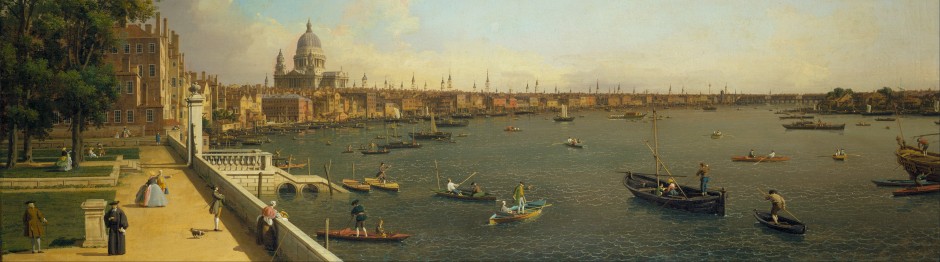

Romney Marsh Landscape and Cloudscape, by Stuart Millson
ENDNOTES, 27th July 2016
In this edition: Three summer festivals – JAM on Romney Marsh * Mussorgsky’s Boris Godunov at the BBC Proms * Brass, Welsh voices and the Royal Philharmonic at St. David’s Hall, Cardiff
The lonely, low-lying landscape of Romney Marsh in Kent lends itself to a certain type of English music, and on Thursday 14th July The QR was present at the fine old mediaeval church of St. Nicholas, New Romney for a concert of Elgar, Peter Warlock, Vaughan Williams, Britten and the contemporary composer, Paul Mealor (b. 1975). Part of the JAM Festival (an acronym which stands for John Armitage Memorial) this concert, given by the London Mozart Players and the Mousai Singers conducted by Daniel Cook, attracted a large audience – clearly keen to hear the nationally – and internationally-acclaimed LMP and a world premiere Festival commission, Paul Mealor’s intense, reflective, yet uplifting choral-orchestral, The Shadows of War. A mass, dedicated to the memory of those who perished at the Somme a century ago (and dedicated to the Festival’s Edward Armitage and to Welsh conductor, Owain Arwel Hughes), the composer sets both the traditional liturgy and the words of poet, Dr. Grahame Davies. Continue reading


The Problem of Hegemony
The Problem of Hegemony
Gerry Dorrian on The New European
“What first attracted you to the millionaire Paul Daniels?” Debbie McGhee, the magician’s wife, was famously asked by Mrs Merton, as played by the late Caroline Aherne. So famously, in fact, that her reply, “he wasn’t a millionaire when I met him,” has all but faded from public memory. But this is what leading statements do: they prompt the mind to form conclusions under the logical radar and are therefore immune to fact-based objections.
Shortly after the EU referendum, a new title appeared in newsagents, branding itself as “the new pop-up paper for the 48%”, this being the share of those who chose to Remain. The 48% are composed of a diverse range of people, just like the 52%. Continue reading →
Share this:
Like this: