Parsifal, Reloaded

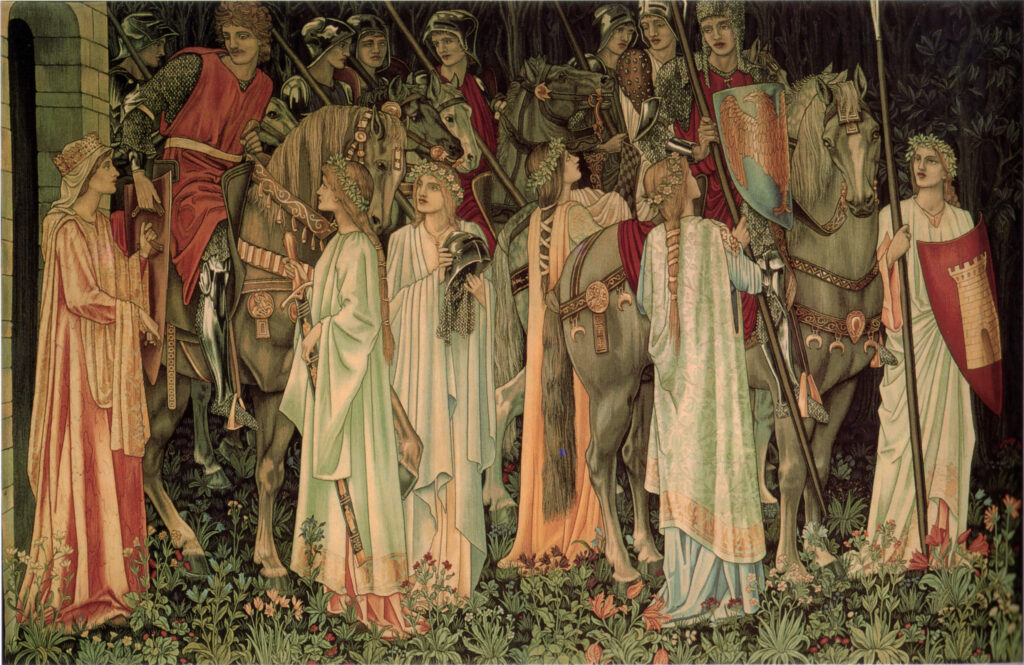
Holy Grail Tapestry, Edward Burn-Jones, credit Wikipedia

Parsifal, Reloaded

Parsifal, Bayreuth Festival, Germany, 21st August 2017, director Uwe Eric Laufenberg, conducted by Hartmut Haenchen, reviewed by Tony Cooper

Parsifal, Wagner’s farewell to the world, was completed in January 1882 and was first seen in that year. This production by German director, Uwe Eric Laufenberg (Intendant des Hessischen Staatstheaters, Wiesbaden) marks its tenth outing at Bayreuth since its première.

The philosophical ideas of the libretto fuse Christianity and Buddhism but the trappings of Wolfram von Eschenbach’s 13th-century poem – focusing on the Arthurian hero Parzival and his long quest for the Holy Grail – are essentially Christian based.

The composer maintained that Parsifal was not an opera but ‘ein Bühnenweihfestspiel’ (a festival play for the consecration of the stage) thereby underlying the work’s religious overtones. At the end of act one, accordingly, we witness Amfortas, wearing a crown of thorns and covered only by a loin-cloth, re-enacting the Crucifixion with members of the Brotherhood (now seen as a community of Christian monks) gathered around him receiving Holy Communion. Amfortas was movingly portrayed by the talented American bass-baritone, Ryan McKinny.

However, Herr Laufenberg, working in partnership with dramaturg Richard Lorber, turned the production upside down by re-locating Montsalvat – the revered castle of the knights of the Holy Grail in medieval Spain – to territory in northern Iraq held by Islamic State, where Christianity is under threat. A bomb-scarred and badly-damaged church provided the setting for the first act but its sanctuary lamp – commonly used in Christian and Jewish centres of worship – remained, surprisingly, intact. The monks go about their daily business of serving the needs of the homeless, with families of mixed faiths sleeping on field hospital-type canvas beds as befitting a refugee camp, under the tight surveillance of armed soldiers. Dominating their prison-type space was a huge circular basin used as a healing bath for Amfortas. Continue reading

Posted in Cultural Matters, QR Home | Tagged , , , | 2 Comments

Contention City

3.10 to Yuma

Contention City

Bill Hartley, in a mythic landscape

In Tombstone, none of the locals knew precisely where Contention City was. They’d all heard of it but even the otherwise helpful ladies at the information office were at a loss. In the sweltering heat of an Arizonan summer we set off to find the place. The general rule in Arizona would seem to be if it still has rooftops then it goes on the map, which is how we ended up at Fairbank marked as a settlement but in fact deserted. Fairbank, it turned out, was an old mining camp which had been preserved; the schoolhouse and some other buildings were there, dating from the late nineteenth century. We found a man cutting the grass who wasn’t much better informed than the people in Tombstone. He pointed us northwards but that was all the directions we received, plus advice to carry more water. Continue reading

Posted in Cultural Matters, Current Affairs and Comment, QR Home | Tagged , , , | Leave a comment

Wisdom of the Ancient Greeks

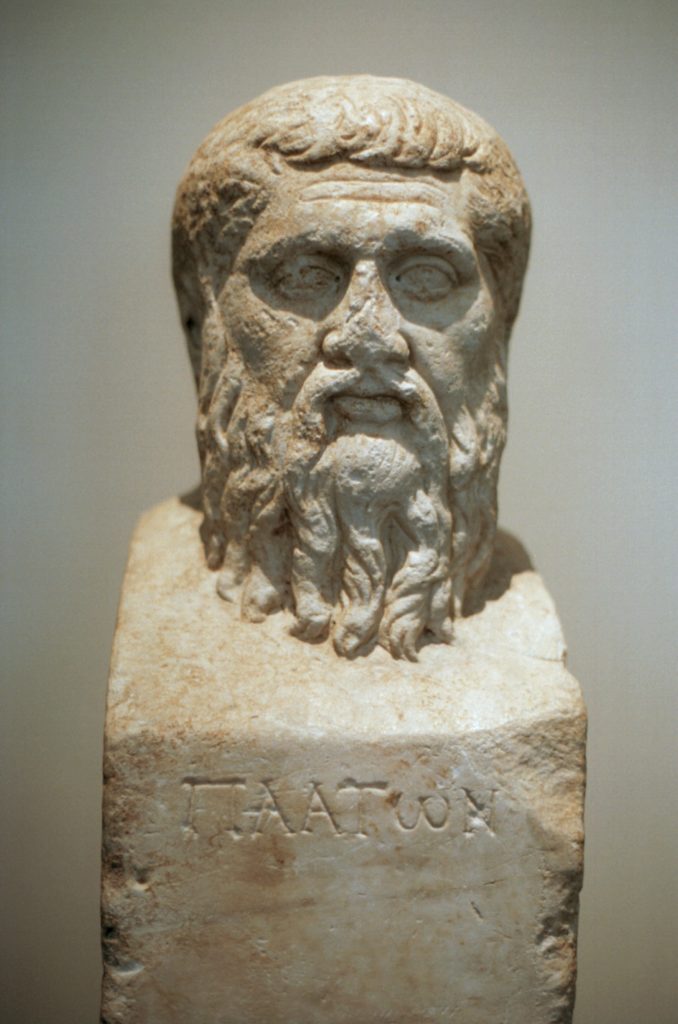
Herm of Plato

Wisdom of the Ancient Greeks

André Laks, Glen W. Most, Early Greek Philosophy, vols. I-IX, Loeb Classical Library, Harvard Press (2016)

The subject of philosophy is often labeled ‘The Great Conversation’, an on-going dialogue linking contemporary wisdom-seekers with the sages of the remote past. A number of books have been written on this topic. A few single-volume offerings of the last 75 years are of note: for example, B. Russell, A History of Western Philosophy (1945), G. Clark, Thales to Dewey (1957), A. Kenny, A New History of Western Philosophy (2010). Approaches to antiquity vary. Not all philosophers will agree today on what their objectives should be. But whatever research is done, it implies a study of the progress, and transmission, of knowledge.

Essentially this exchange of ideas entails a search for meaning(s). In ancient times this consisted of resolving issues related to any number of matters: i.e. arrangements in the heavens above, order in the earthly spheres below and debates on the internal nature of mankind and on his [or her] relations to external things. To the degree that philosophy’s earliest development is traceable, the distinction between theology and philosophy was small: either of them might have been a sub-division of the other. Continue reading

Posted in Book Reviews, QR Home | Tagged , , , , | 1 Comment

Bayreuth, Meistersinger

Bayreuth, Meistersinger

Die Meistersinger von Nürnberg, Bayreuth Festival, Germany, August 19th 2017, director Barrie Kosky, conducted by Philippe Jordan, reviewed by Tony Cooper

Barrie Kosky – artistic director of Komische Oper Berlin – was born in Melbourne in the late 1960s, the grandson of Jewish emigrants from Europe. He describes himself as a ‘gay Jewish kangaroo’. This innovative, flamboyant and wonderfully-quirky character will go down in history as the first Jewish director to hold court in Bayreuth Festival’s illustrious 141-year-old history. And also as the first person outside of the Wagner family to direct Die Meistersinger at Bayreuth.

Appointing Kosky is a big gesture by Katharina Wagner, the artistic director of the Bayreuth Festival, and the daughter of Wolfgang Wagner and the great-granddaughter of Richard Wagner. For it acknowleges Wagner’s anti-Semitism and her family’s association with Adolf Hitler. In the revamped exhibition, housed in the newly-restored Villa Wahnfried, where Wagner lived with his wife Cosima and their children from 1874 to 1882, the Third Reich, likewise, finds its place. Continue reading

Posted in QR Home | Tagged , , , , | Leave a comment

The Reluctant Saint

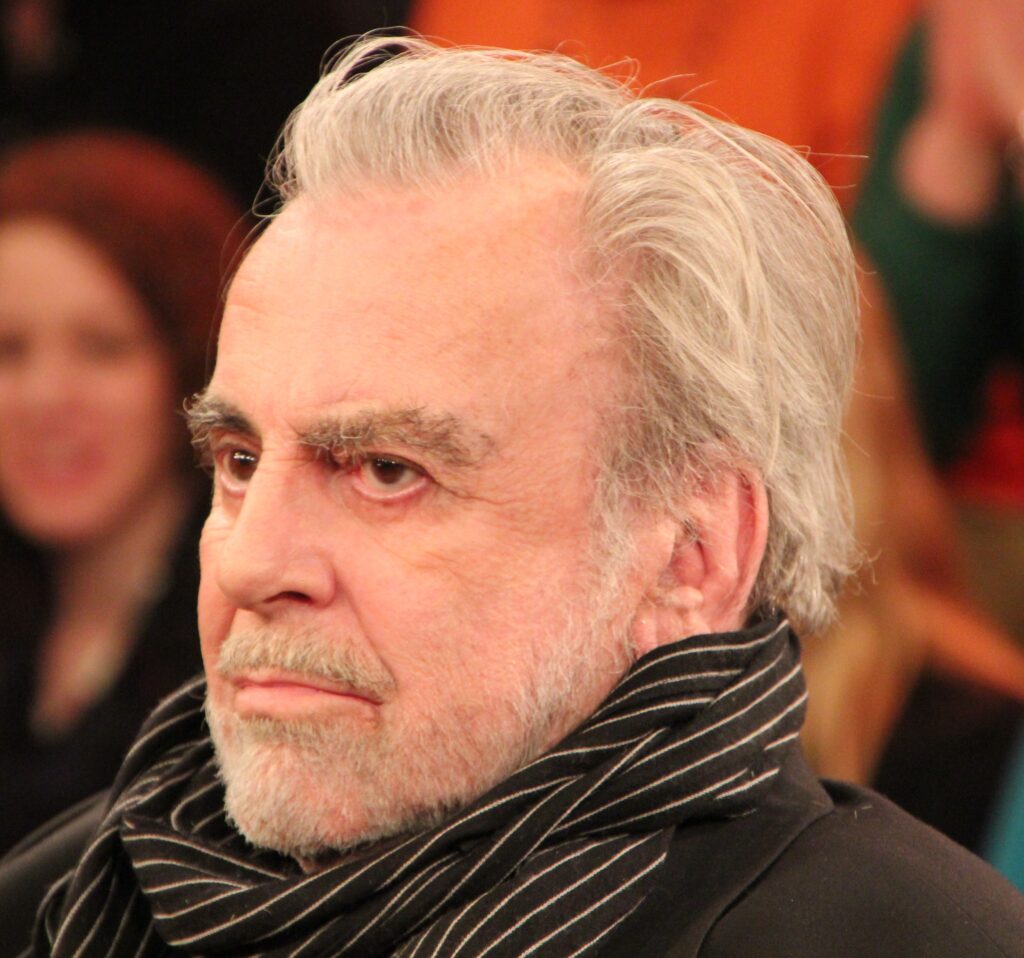
Maximilian Schell

The Reluctant Saint

 Film directed by Edward Dmytrk, reviewed by Thomas O Meehan 

A few days ago watching Turner Classic Movies I caught the film The Reluctant Saint (1962). It was strikingly like the religious films of my youth in its poor production values. I was struck though by the competent acting. Could this be the only well-made Catholic religious film in existence?

As TCM is notorious for shamelessly showing the same “Classic” movies over and over seeing something new there is always an occasion. Intrigued, I continued watching. Several actors were clearly professional and familiar from European film. Then Recardo Montalban appeared! What was afoot here?

The next recognizable actor seemed even more out of place; it was a young Maximilian Schell. He portrayed a simpleminded Franciscan novitiate, Saint Joseph of Cupertino.

Now I am no actor but it seems to me that an intelligent and accomplished man like Schell might have his work cut out convincingly playing a fool, especially a holy one. It was at this point that the late Jerry Lewis’s contribution came to mind. Schell was clearly using Lewis’s portraits of idiots as a kind of template on which to hang his performance. Schell’s simpleton monk is a fully formed human, unlike the grotesque characters of Lewis. Never the less, tiny mannerisms seemed familiar enough for me to see Lewis’s raw mud transformed into Schell’s three dimensional sculpture of a saint.

The Reluctant Saint was directed by Edward Dmytryk in 1962. A box office failure, it is well worth viewing today as a semiprecious tessera in the mosaic of film history. The Reluctant Saint was directed by a former Communist, yet it tells at face value the story of Saint Joseph actually levitating. You don’t see that every day. Another treat is Akim Tamiroff portraying a deeply sympathetic and humane Catholic Bishop. Montalban even gets to depict a somewhat admirable Inquisitor. And of course there is Schell’s portrait of a holy fool who is as puzzled as the viewer is at the miraculous.

THOMAS O MEEHAN is a freelance writer and a former government Senior Research Analyst and Inspector. He lives in Bucks County PA and he blogs at OdysseusontheRocks.co.uk


Posted in Cultural Matters, Film Reviews, QR Home | Tagged , , , , | Leave a comment

Bearer of the Flame

Bearer of the Flame

Ernest Hemingway: A Biography, Mary V Dearborn, Knopf, 738 pp., $35;
Ernest Hemingway: A New Life, James M Hutchisson, Pennsylvania State University Press, 292 pp., $37.95. Reviewed by STODDARD MARTIN

PART ONE

1961 saw two great events in the cultural history of the American male: the inauguration of John F Kennedy and the suicide of Ernest Hemingway. Precisely between this pair of events, my family moved from suburban Philadelphia to a California beach town. I was twelve. The popular song of the day was ‘The New Frontier’, by the Kingston Trio. From back East to out West was a transit from books and the indoors to the sea and a cult of the body. My beach town was in thrall to surfers, sailors, sports-fishermen and aficionados of bull-fights across the Mexican border 30 miles away. It was populated by transplants from Texas, Kansas City and the Upper Midwest whose forbears had made fortunes as oilmen, bankers and industrialists. The wives were heiresses, the husbands veterans of World War II, mostly naval or marine officers who had seen duty in the Pacific. All had grown up in an era shadowed by Prohibition; all were hard drinkers, many adulterers. The ones not clipping coupons had cushy jobs in what President Eisenhower in his farewell address had branded ‘the military-industrial establishment’.

Continue reading

Posted in Book Reviews, Cultural Matters, QR Home | Tagged , , , , | 2 Comments

Churchill

Churchill in Quebec, February 1944

Churchill

Cast:
Brian Cox as Winston Churchill
Miranda Richardson as Clementine Churchill
John Slattery as Dwight D. Eisenhower
James Purefoy as King George VI
Julian Wadham as General Bernard Montgomery
Danny Webb as Field Marshall Alan Brooke
Jonathan Aris as Air Chief Marshall Trafford Leigh-Mallory
George Anton as Admiral Sir Bertram Ramsay
Steven Cree as Group Captain James Stag, a Royal Air Force meteorologist
Angela Costello as Kay Summersby chauffeur and later as personal secretary to Dwight D. Eisenhower
Richard Durden as Jan Smuts, South African general turned politician
Ella Purnell as Helen Garrett (Churchill’s secretary)
Script by Alex von Tunzelmann

Director:  Jonathan Teplitzky

Film reviewed by ROBERT HENDERSON

This was a disappointing film in terms of its general theatrical quality which veers towards the melodramatic, but even more because it is a travesty of Churchill’s character. That fine actor Brian Cox might have been made for the role of Churchill and with a script which reflected Churchill’s personality, opinions and behaviour accurately I have no doubt that he would have produced a great depiction of the man. But here he is bound by a script which makes Churchill seem like a tempestuous child, and a child who more often than not could be side-lined and insulted to his face despite being Prime Minister in the midst of a most terrible and threatening war. It is difficult to think of any scene involving characters with power and influence which shows him as being the dominant character. For example, he does not chair the meetings with Eisenhower and the other military men. In real life he did.

The film is set in the four days before D-Day and the execution of Operation Overlord, the invasion of  Normandy. Churchill  is portrayed as being pathologically anxious that the  invasion should not be another  bloodbath like Gallipoli in the Great War, a failure for which Churchill has been held wholly or largely responsible. As a consequence, the film has him interminably prevaricating over the D-Day landings and after the decision is made to invade Churchill is shown praying for unfavourable weather to stop the operation: “Please, please, please let it pour tomorrow. Let the heavens open and a deluge burst forth such as has never been seen in the English Channel. Let the sea churn into peaks and troughs and tidal waves!”

That passage encapsulates the tone of the film. Churchill is not seen as being either in command or as a figure of authority but as a man frightened for his reputation and perhaps his soul. So strong a part of the film was the obsession with the failure at Gallipoli I could not help wondering if this was in part a consequence of having an Australian director, Jonathan Teplitzky. Australians are frequently more than a little angry about Gallipoli even today and blame the British for the loss of Australian lives there. Film scripts are not sacrosanct and it would be interesting to know if the subject of Gallipoli loomed as large in the initial script as it did in the film.

The historian Andrew Roberts has unreservedly slated the film for its many inaccuracies relating to Churchill’s state of mind leading up to the Normandy landings, viz: “The only problem with the movie–written by the historian Alex von Tunzelmann – is that it gets absolutely everything wrong. Never in the course of movie-making have so many specious errors been made in so long a film by so few writers.” Roberts attacks the film on the grounds that it wrongly shows Churchill as dithering over D-Day, being seriously at odds with his wife, at war with the generals and bullying his staff.

To the lack of historical accuracy about events and Churchill’s state of mind can be added the portrayal of his physical state. Churchill in real life was far from the physically lumbering man obese to the point of physical handicap that was depicted in the film. He played polo into his fifties and rode to hounds into his seventies  (in 1944 he was seventy). This physical misrepresentation feeds into the picture the film painted of Churchill being a man who by that stage of the war was a spent force and a positive hindrance to its successful prosecution.

The depiction of Churchill’s relationship with the military is also improbable. He is shown displaying a chronic fault of Hitler, namely, playing at being a military mastermind by suggesting different strategies such as decoy operations to mislead the Germans. There is also some startling and incongruous language involving the military, with Montgomery calling Churchill a ‘bastard’ to his face and casting aspersions on his commitment to the Normandy landings by accusing him of ‘doubt, dithering and treachery’. The PM later describes Montgomery (not in his presence) as a ‘Puffed-up little s**t.’ It all seems unlikely, not least because it implies that the military not the politicians were the real government of the UK at that time.

Indeed, there is a striking absence of other British politicians in the film or of any civilians in positions of authority and influence. For example, Churchill’s leading scientific advisor Frederick Lindemann had a very close relationship with him and the two met often during the war. It is somewhat odd that he did not appear at all because apart from his value as a scientific advisor Llindemann had a real friendship with Churchill and at a time of great stress it is probable that Churchill would have welcomed having him around.

Then there is Churchill’s relationship with his wife Clemmie. She is quite ready to criticise Churchill, as when she scolds him for his drinking and apologises for his behaviour towards his staff. At one point she even slaps him. There is far too much agonising from Clemmie about how Winston has neglected her and about how her life has been unfulfilling. Churchill is shown playing up to this, saying at one point, ‘I would understand if you left me. I’d leave me if I could.’

Even if there was any historical evidence for this behaviour, would the Prime Minister’s wife have exhibited it just before D-Day? However, the evidence for such behaviour is simply lacking. This element of the film seems suspiciously like an anachronistic feminist implant designed to show that in 1944, men behaved “badly”, that is, displayed politically incorrect behaviour and that women spiritedly rebelled against such treatment. The fact that scriptwriter Alex von Tunzelmann is a Guardian columnist may be indicative here. It would be very interesting to see if she could justify her script in terms of historical accuracy.

Is this film worth seeing? Probably not for as a pure piece of drama it fails. The action flits from scene to scene in a stilted fashion which robs the film of cohesion and leaves the impression that each scene is being ticked off as having covered a particular issue. Nor, apart from Churchill and his wife, is there much character development for although the film has a substantial number of historically important characters, little time is allotted to each. These supporting characters are, as one can more or less take for granted in a film manned by British actors, adroitly executed in as far as their limited roles allow. Within the confines of this constraint, Julian Wadham’s Montgomery stood out.

That should be equivalent to saying don’t waste your money. However, Churchill is one of those films which has an importance beyond its qualities as a film. Its effect is to turn Churchill from a war hero into an irresolute, fearful incompetent. In fact, the misrepresentation of Churchill is so complete that it qualifies as character assassination. The danger is that it will colour the public’s view of the man. Consequently, see it so that you can afterwards refute its view of Churchill. In short, it should be seen for its faults not its virtues.

Robert Henderson is QR’s film critic

Posted in Cultural Matters, Film Reviews, QR Home | Tagged , , , , , | 1 Comment

Dunkirk

British and French troops at Dunkirk

Dunkirk

Cast:
Fionn Whitehead as Tommy, a British Army private
Tom Glynn-Carney as Peter, Mr Dawson’s son
Mark Rylance as Mr Dawson, a mariner and Peter’s father
Jack Lowden as Pilot Officer Collins, a Royal Air Force Spitfire pilot
Harry Styles as Alex, a private in the Argyll and Sutherland Highlanders
Aneurin Barnard as “Gibson”, a French soldier masquerading as a British Army private
James D’Arcy as Colonel Winnant
Barry Keoghan as George, a young man who helps to crew Dawson’s boat
Kenneth Branagh as Commander Bolton the pier-master during the evacuation
Cillian Murphy as a frightened soldier
Tom Hardy as Farrier, a Royal Air Force Spitfire pilot
Michael Caine appears in a spoken cameo role as Fortis Leader

Director Christopher Nolan

Film reviewed by ROBERT HENDERSON

The year is 1940. The British Expeditionary Force (BEF) has been sent to Europe to help repel the Germans. This fails and the BEF eventually make their way to Dunkirk, a French port six miles from the Belgian border. Here they wait, more in hope than expectation, to be evacuated back to Britain. But against the odds, between 27th May and 4th June, over 300,000 British, colonial and French troops were evacuated, most by Royal Navy (RN) ships but some by civilian boats, many very small, crewed by a mixture of RN personnel and civilians. (Small boats were useful because they could get near enough to shore for soldiers to wade out to them. Larger boats had to either wait offshore to have soldiers ferried to them or they used a form of jetty called a mole to take people on board.)

The Germans did not press forward into Dunkirk with their army as might have been expected. Instead they attacked using planes and submarines. Why they took this course is unclear but it was sanctioned by Hitler. It may have been that Goering persuaded Hitler to allow the Luftwaffe to gain the kudos of finishing off the British forces. It might have been that Hitler believed that once the British forces were out of continental Europe, they would never come back. It could have been caution on the part of Hitler and his generals. Whatever the reason, during the week the evacuation lasted the troops on Dunkirk beach were subject to bombing and British vessels engaged in the evacuation were bombed and torpedoed. That is the bare bones of Dunkirk.

The brutal reality of war has often not been represented honestly or convincingly in films, but the graphic opening scenes of Saving Private Ryan arguably changed that and most war films since have been much more unsparing of the audience’s squeamishness.   Indeed, modern film makers have taken to heart the American civil war general William Sherman’s remark “War is hell” and created hell on the screen. Christopher Nolan does so here. Consequently, the film scores very well when it comes to the military action, giving a convincing depiction of the multiplicity of ways of dying in action and the sheer violence and randomness of the killing and wounding. The effect is to give a nihilistic quality to many of the scenes. Whether someone lives or dies has no particular reason.

The aerial battles between Spitfires providing cover to the men on the beach with German fighters are particularly compelling, perhaps because such warfare has the shape of single combat and the manoeuvres of planes flying fast but not at supersonic speed while attacking with machine guns rather than missiles has an intimacy that the blind destruction of men on the ground absolutely lacks. The Spitfire pilot had to get close to his target and fire his guns in sustained bursts.

All of this makes for a complicated story to tell. To address this fact Nolan has decided on an impressionistic style rather than a straightforward chronological narrative. He does this by dividing the film into three separate sections entitled land, sea and air.

The quick flitting from one piece of action to another in the film does not give great opportunity for character development but Mark Rylance as Mr Dawson, the civilian skipper of a small boat, knits together the progress of the sea story as a representative of the “small ships”.

James D’Arcy as Colonel Winnant and Kenneth Branagh as Commander Bolton the pier-master during the evacuation represent the experience of senior officers, while Fionn Whitehead as Tommy and Harry Styles as Alex give a backbone to the experience of the private soldier. Spitfire pilots Jack Lowden as Pilot Officer Collins and Tom Hardy as Farrier do the same for the air action.

Rylance oozes calmness under fire and brings what he always does to the screen, an intensely sympathetic personality, while Hardy is coolness personified, with a courage which is anything but showy. He is a man who is brave whilst doing what he does out of a sense of duty.

The one character that I found unconvincing was that of Cillian Murphy, who plays a frightened soldier whose nerve has gone after having been in a ship which was torpedoed. The Dawsons pick him up on the way to France and the soldier in a state of panic tries without success to get Dawson to turn about and head for England. Somehow he never managed to make his mental anguish seem anything other than histrionic.

The film has its historical inaccuracies and omissions. Next to nothing is made of the French army’s resistance which hindered the German advance on Dunkirk and the considerable damage that occurred in Dunkirk is absent. But neither is the British rear-guard action to allow most of the BEF to reach Dunkirk and be rescued. The idea of the film is to show the British experience at Dunkirk and in the English Channel rather than try to give the complete picture of the action around Dunkirk and indeed within Britain itself, where the families of both the stranded BEF men and of those who had sailed their small boat like the fictitious Mr Dawson might have been included in the story.

Whether the viewer finds the limited scope of the film satisfying or not, it is nonetheless a legitimate dramatic device to concentrate on the direct experience of those on the beach and the British forces by sea and air which facilitated the remarkable evacuation of some 190,000 British and 120,000 French soldiers. If the film had taken in the French and German warfare relating to Dunkirk or the behaviour of the relatives and friends of the servicemen trapped in Dunkirk it would have been an entirely different film.

Dunkirk has its limitation as a coherent drama but taken as a whole is an invigorating and exciting production. It gives a vivid idea of the immediacy and multiplicity of danger which war brings and the sheer helplessness of humans caught in its coils. That is reason enough to see it. But there is also another reason. The World Wars left their mark long after they were over and not just in terms of the dead and wounded. It left its mark on the survivors. I was born in 1947. The war loomed very large in my childhood and even my early adult years. One regularly met ordinary people who had done extraordinary things: landing on the beaches on D Day; serving on the convoys to Russia; flying Spitfires and Hurricanes in the Battle of Britain or flying sortie after sortie with Bomber Command. The result was a toughness in people generally but particularly in those who had seen action, which is lacking today. It is a film which will speak especially to people who remember what the war and its aftermath was like.

Robert Henderson is QR’s film critic

Posted in Cultural Matters, Film Reviews, QR Home | Tagged , , | 1 Comment

Wensleydale Heifer

The Wensleydale Heifer

Em Marshall-Luck enjoys fine food in North Yorkshire

The Wensleydale Heifer is an outstanding hotel, bar and seafood restaurant nestling in the village of West Witton under the benevolent, albeit looming gaze of Penn Hill. There are various sections to the establishment – smart bars; snugs; more informal lounge type of areas; and the restaurant itself. This has tables dressed properly in white linen with real roses in very tall and elegant vases, colourful display plates, elegant tall wine and water glasses, and appropriate cutlery. A sheep theme runs through the whole establishment (slightly oddly, given its name; but perhaps not quite so incongruous when one bears in mind the fact that Wensleydale is known for its sheep) with rather kitsch model sheep on the mantelpieces and suchlike. Continue reading

Posted in EpiQR, QR Home | Tagged , , | Leave a comment

Oakeshott’s World View

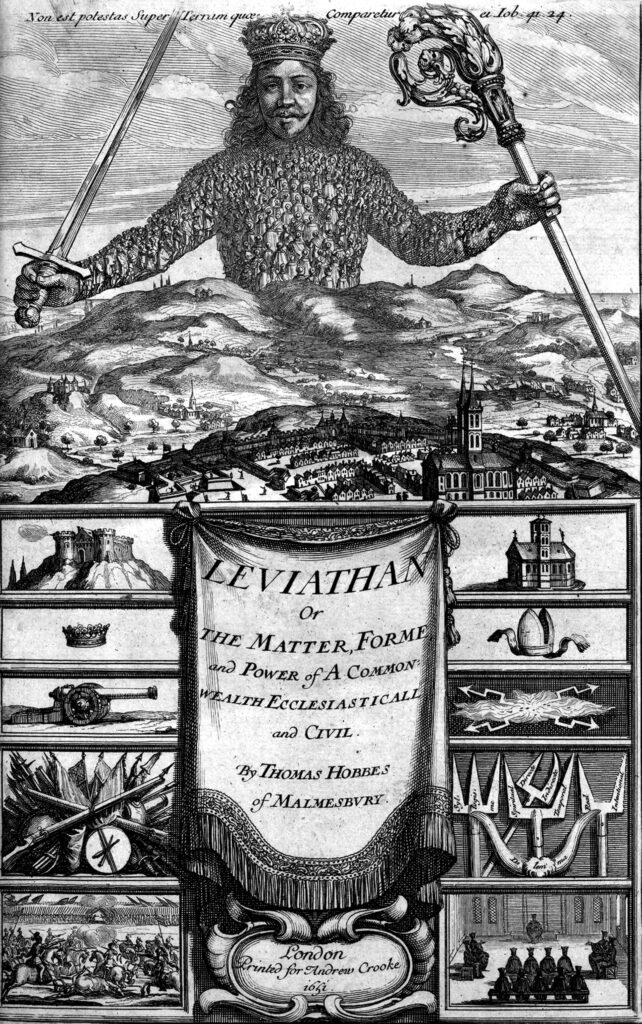
Leviathan by Thomas Hobbes, credit Wikipedia

Oakeshott’s World View

Noel O’Sullivan (ed.), The Place of Michael Oakeshott in Contemporary Western and Non-Western Thought, Imprint Academic, 2017; £19.95; pbk; 197 pages, reviewed in three parts by ALLAN POND

[This collection includes some of the papers given at the 2015 conference of the Michael Oakeshott Association held at Hull University plus some papers not presented to the conference but on the same theme of the conference which also lends its title to the book.]

Part One

The past twenty years has seen an upsurge in scholarly interest in Oakeshott’s work much of it inspired by the Oakeshott Association and its dissemination by the publishers of this book. The editor in his introduction notes that Oakeshott himself, if still with us, might be surprised by this upsurge in the influence of his writings since while alive he was relatively unknown outside a highly specialist audience of academic philosophers and (some) historians. Indeed the very year he died (1990) a fellow philosopher reviewing one of the first full length studies of Oakeshott’s political theory to have appeared, Paul Franco’s The Political Philosophy of Michael Oakeshott in the TLS, opined It is surprising that the work of Michael Oakeshott is not more widely read these days, since much of what he wrote in the 1940s and 50s is curiously in keeping with the spirit of our times” (Waldron, 1990) Continue reading

Posted in Book Reviews, Current Affairs and Comment, QR Home | Tagged , , , , | Leave a comment