Whither Ukraine?

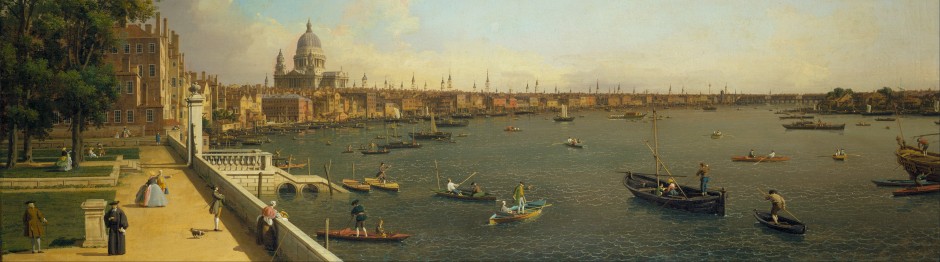
Mountain Foros Church near Yalta (Ukraine)

Whither Ukraine?

THE FOURTH REPUBLIC: Why Europe Needs Ukraine and Why Ukraine Needs Europe, Borys Lozhkin, Kyiv: Novyj Druk, 2016, reviewed by Stoddard Martin

It is a principle nearly unarguable in the capitalist West that the ‘shock therapy’ delivered by Leszek Balcerowicz to the Polish economy in the early 1990s resulted in the great success story among the transformations that followed the end of the Cold War. Mass privatisation after the fall of Marxism eradicated a command economy, Soviet style. Horrendous recession and epoch-making devaluation eventually led to the uplands of status as a ‘tiger economy’. With backsliding prevented by joining NATO in 1998 and the EU in 2004, Poland continued its new dawn of growth through the world financial crisis of 2008-9 and beyond.

In the signal instance of that country, the word ‘oligarch’ was scarcely bandied around and ‘a sunny place for shady people’ rarely cited as the ultimate destination of capital from a nation’s efforts. While Les paradis fiscaux became the playpens of plutocratic Russians, building houses and fixing toilets in the West rendered Poles fêted and hated as plucky mains d’oeuvre, and a goodly portion of what they were able to scrabble together was remitted back to the homeland. The story has been decidedly more mixed for the neighbour that Poland shares with its colossal Slavic sibling to the east and over which the two have grappled for centuries.

Continue reading

Posted in Book Reviews, Current Affairs and Comment, QR Home | Tagged , , | 1 Comment

Stuart Adamson, RIP

Stuart Adamson, RIP

The lead vocalist of Big Country, born in 1958


Posted in QR Home | Leave a comment

Whiteout

Ilana Mercer

Whiteout

by Ilana Mercer

An “aging white population [is] speeding [up] diversity,” blared a headline in The Hill. A clear case of confusing cause-and-effect. In fact, whites are dying-out because minorities are thriving.

The Hill headline should have read:

“Could speeding up diversity contribute to a decline in the white population?” 

We learn that “there are growing signs that the rate of change is increasing.” Well of course. America welcomes well over 1 million, mostly non-white immigrants a year.

If white lives mattered to the liberal establishment, an inquiry would ensue. Continue reading

Posted in Current Affairs and Comment, QR Home | Tagged , , , , | 1 Comment

Manifesto for the Earth

Chernobyl power plant, today

Manifesto for the Earth

Mark Wegierski envisages the convergence of ecology and traditionalism

What would be the policy implications of a radical ecological stance? There would presumably have to be rationing of water, of “petrochem” (resulting in the near-elimination of ‘car-culture’) and of luxury foods. Ditto, drastic population-control measures, particularly in the Third World, where nearly all of the global population increase is occurring and where the environment is most under threat. There might also have to be almost zero-immigration policies across the planet.

Our current-day commodity-culture and consumer fetishism would likewise have to end. Farewell the “carnival culture” of late modernity; the Hollywood lifestyle and fashion-industry excesses, the glitzy music videos, sports industries in which stars are paid tens of millions of dollars a year, the thousand-dollar running shoes, and so forth. Belief-systems that would ensure the continuation of a virtually zero-growth, stationary-state economy, would have to become prevalent. These belief systems might well involve some forms of neo-traditionalism and neo-authoritarianism. Continue reading

Posted in Current Affairs and Comment, QR Home | Tagged , , , | 1 Comment

Oper Leipzig, The Ring

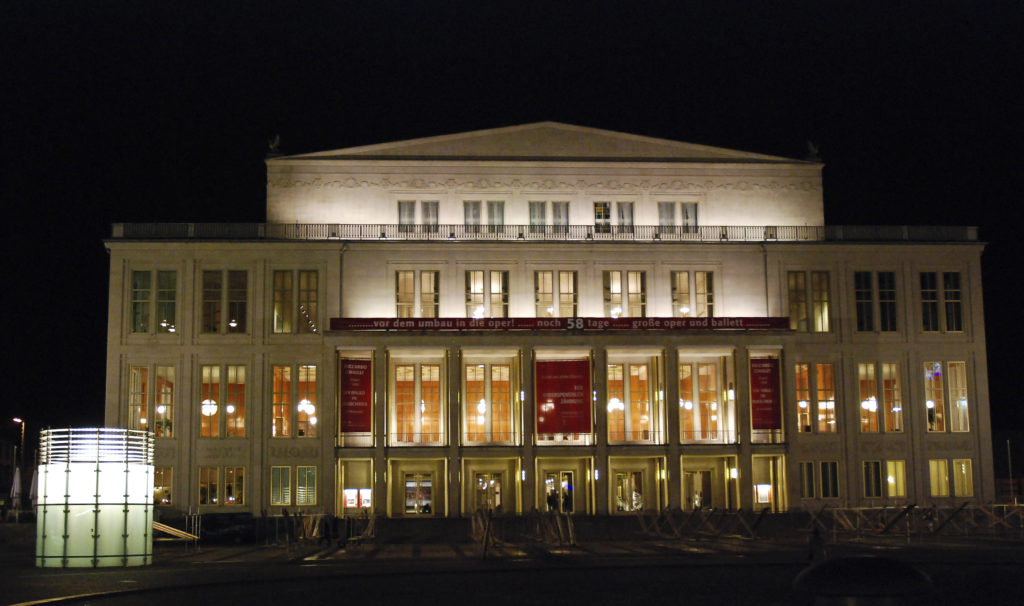
Opernhaus Leipzig

Oper Leipzig, The Ring

Wagner:The Ring of the Nibelung, Oper Leipzig, from 11th April 2018, directed by Rosamund Gilmore, conducted by Ulf Schirmer, reviewed by TONY COOPER

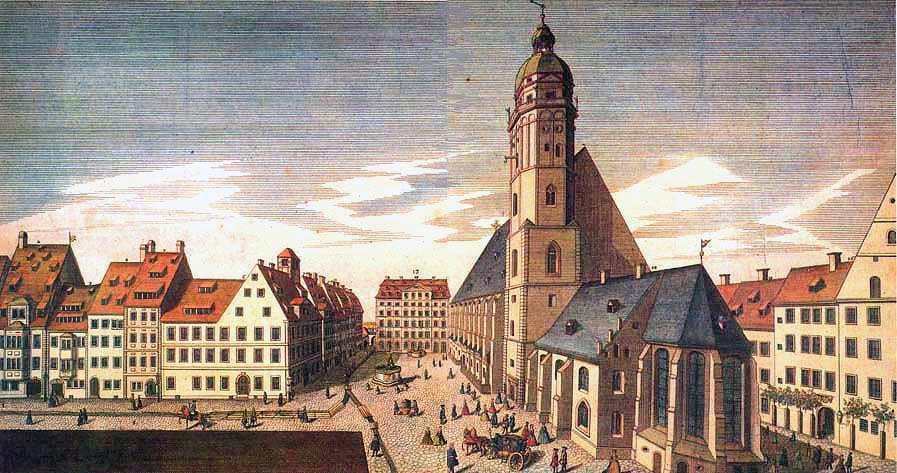
Leipzig is rich in musical history. Richard Wagner was born here, Felix Bartholdy Mendelssohn died here and Johann Sebastian Bach lived and worked here – from 1723 until his death in 1750 he was Kapellmeister at the Thomaskirche. Robert Schumann also resided in Leipzig and Georg Philipp Telemann worked there, too, while George Frideric Handel was born just up the road in Halle.

Wagner had a difficult start in his home town but Leipzig and Wagner are bound together in a common union. For one thing, the first complete performance of The Ring outside of Bayreuth took place in Leipzig in 1878.

So the return of The Ring to Leipzig for the first time in over forty years – one of the prime initiatives of Ulf Schirmer on his appointment as musical director of Oper Leipzig in the 2009/10 season – is to be applauded. Continue reading

Posted in Cultural Matters, QR Home | Tagged , , , | Leave a comment

Reflections on Opera

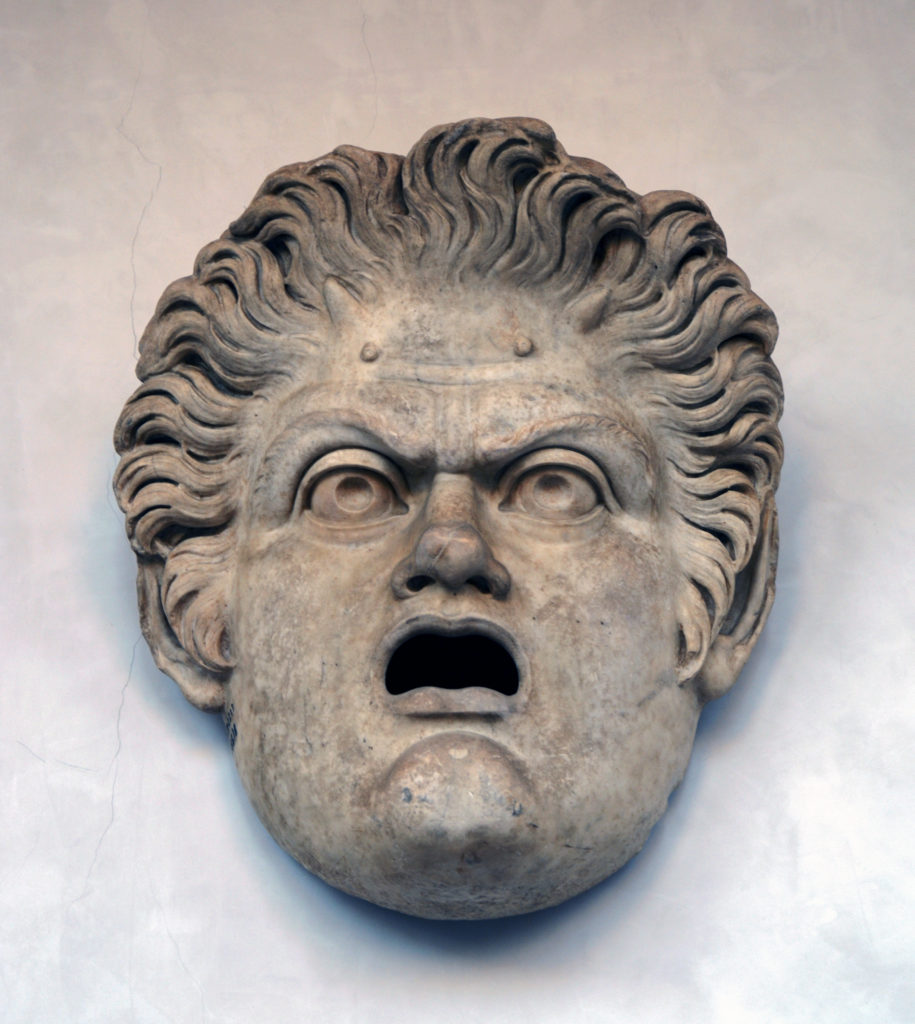
Sculptures of Roman Theatre Masks

Reflections on Opera

What Opera Means: Categories and Case-Studies, Christopher Wintle, edited by Kate Hopkins, Boydell & Brewer, 2018, 288 pp, pb., £15.99, reviewed by STODDARD MARTIN

Books on opera abound. Books on Wagner, alone, are said to be as numerous as those on Napoleon, perhaps more so. Those on Mozart rank not far behind. Verdi joined Wagner in celebration of a bicentenary in 2013, and a plethora of publications to mark that occasion included the piquant Verdi and/or Wagner by Peter Conrad, reviewed on these pages. Both figures stride like colossi through Christopher Wintle’s What Opera Means, a collection of reviews, programme essays and lectures from his distinguished career as commentator on the genre, notably at The TLS, where for a period in the early 1980s this writer was his predecessor.

Recurrent appearance of the 2013 bi-centenarians in Wintle’s book reflects their ubiquity on the boards over subsequent decades. At Covent Garden, several cycles of The Ring of the Nibelungen have been mounted, as well as a ‘festival’ to stage all of Verdi. Wintle came to write programme notes in this epoch, and the programme note – a genre of its own – is key to his style: descriptive, informative, learned. Critic gives way to guide for most of his book, conducting audiences towards a work rather than rating or slating its execution. The approach is charming, veering toward the judgemental rarely, such as when flagging admonitions about Wagner made de rigueur after World War II by the likes of Auden and Adorno. Wintle’s accommodative tone shifts in an extended last section formed of critical pieces. Several reveal a caustic awareness of the contemporary problem of ‘dogmatic’ directors or, to a lesser degree, recent composers.

Continue reading

Posted in Book Reviews, Cultural Matters, QR Home | 2 Comments

Trashing Populism

Yascha Mounk

Trashing Populism

by Ilana Mercer

To say that academic elites don’t like ordinary folks is to state the obvious.

To them, Lanford, Illinois—the fictional, archetypal, working-class town, made famous by Roseanne and Dan Conner—is not to be listened to, but tamed.

A well-functioning democracy depends on it.

Taming Fishtown—Charles Murray’s version of Landford—is the thread that seems to run through  a new book, “The People vs. Democracy,” by one Yascha Mounk.

You guessed it. Mr. Mounk is not an American from the prairies; he’s a German academic, ensconced at Harvard, and sitting in judgment on American and European populism.

If only he were capable of advancing a decent argument. Continue reading

Posted in Current Affairs and Comment, QR Home | Tagged , , , , | 1 Comment

Wrestling with Demons

Wrestling with Demons

Lady Macbeth of Mtsensk; opera in four acts, music by Dmitry Shostakovich, libretto by Shostakovich and Alexander Preys after the novella by Nikolai Leskov, conducted by Sir Antonio Pappano, revival of the 2004 production directed by Richard Jones; Royal Opera, 12th April 2018, reviewed by LESLIE JONES

All is evidently not well at the Ismailovs’. “I’m so bored I could kill myself”, Katerina, played by Eva-Maria Westbroek, confides. Her life seems meaningless and she lives as a virtual prisoner cum drudge, with little intellectual or sexual stimulation. There are echoes here of Ibsen’s A Doll’s House and also of the film The Postman Always Rings Twice.

Katerina’s lecherous and cynical father-in-law, the merchant Boris Ismailov (played with aplomb by John Tomlinson) is a larger than life character reminiscent of Fyodor Pavlovich Karamazov. He pointedly reminds his daughter-in-law that after five years of marriage she is still not pregnant. Shakespeare’s Lady Macbeth, as Melanie Marshall points out in “Quacks, hoots, growls and gasps…” (Official Programme) is famous for being childless. Both in Shakespeare’s play and in Shostakovich’s opera, the failure to re-produce arguably leads the heroine to focus on “empty goals – prestige, power, base sexual gratification”. Continue reading

Posted in Cultural Matters, QR Home | Tagged , , , , , | 1 Comment

ENDNOTES, April 2018

Birthplace of Bohuslav Martinu, Policka, martinu.cz

ENDNOTES, April 2018

In this edition: 20th-century choral music by Sir Arthur Bliss, Frank Martin and Bohuslav Martinu; piano concertos by Grieg and Delius, reviewed by STUART MILLSON

Two superbly-produced CDs of choral music have recently appeared – one, a magnificent recording and performance of Sir Arthur Bliss’s The Beatitudes, a large-scale and much-overlooked piece, originally written for the 1962 consecration of the new Coventry Cathedral; the other, a more introspective selection of music for voices by the Swiss composer, Frank Martin, and the Czech, Bohuslav Martinu.

For many years, Bliss’s music has suffered a degree of neglect – overshadowed by the brilliance of Britten and the grandeur and bitter-sweet romanticism of Walton. Yet in many of his works from the early-to-mid-20th-century, a surge of sometimes spiky, Stravinsky-like energy is to be found in abundance. A lively vocalise, suggesting spring vitality and fresh air, entitled Rout; the soaring, mercurial A Colour Symphony, and the later Metamorphic Variations, show Bliss to be a true voice of the 20th-century, and yet his choral-orchestral Beatitudes (originally billed for Coventry Cathedral) appear to have been displaced and marginalised by Britten’s War Requiem. Continue reading

Posted in ENDNOTES:Music, QR Home | Tagged , , , , , | Leave a comment

Manipulator’s Dilemma

Manipulator’s Dilemma

by Thomas Meehan

There is much talk about influence in media. We are warned to be on our guard against hard to detect suggestions delivered from all sides, as in “fake news.” Fair enough, but what happens when a campaign of influence is on the verge of failure? What are the manipulators to do?

We are about to see, perhaps in a matter of hours, as President Trump appears to have swallowed the latest Syrian gas attack allegations. So, on the verge of Assad’s victory over his various foes, one set of influencers treat us to yet another dubious, unverifiable account of his use of chemical weapons. Subtlety is out the window. This will be the last chance for the influencers to call forth what they want. It seems that they want to keep the civil war going. Continue reading

Posted in Current Affairs and Comment, QR Home | Tagged , , , , , , | 1 Comment