Full Circle

Hunslet Mills, credit Wikipedia

Full Circle

by Bill Hartley

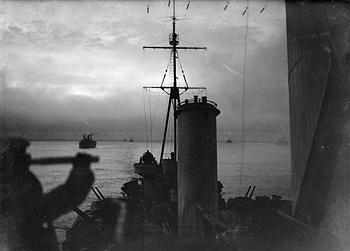
The South Leeds Stadium lies at the heart of a complex which provides a wide variety of sports facilities. Such is the range available that it may help explain why the cities’ athletes pick up so many medals at the Olympic Games. The stadium lies in Hunslet about a mile from the city centre and it is also home to Hunslet RLFC, the other rugby league club in Leeds, who returned to the district after a nomadic existence which saw them move home six times.

Hunslet itself is one of those places a motorist may hardly notice when leaving the city. Even some of the locals would find it difficult to tell you where it begins or ends. There’s a big open space where the Tetley Brewery used to stand. Tetley, a name formerly synonymous with Leeds, was a victim of rationalisation, when the brewery combine who took it over shut the place due to ‘overcapacity’. Much of its output used to go into Hunslet, a district once known as the workshop of Leeds, though it had competitors for the title. The list of enterprises which used to operate there is a long one and a snapshot of Victorian industrialisation at its height: foundries, malthouses, heavy engineering and a giant gasworks. Until the 1970s Hunslet was also overlooked by allegedly the filthiest power station in the country. It may have inspired the late Keith Waterhouse to describe his birthplace as ‘the city of dreaming cooling towers’. Continue reading

Posted in QR Home | Tagged , , , | Leave a comment

ENDNOTES, September 2021

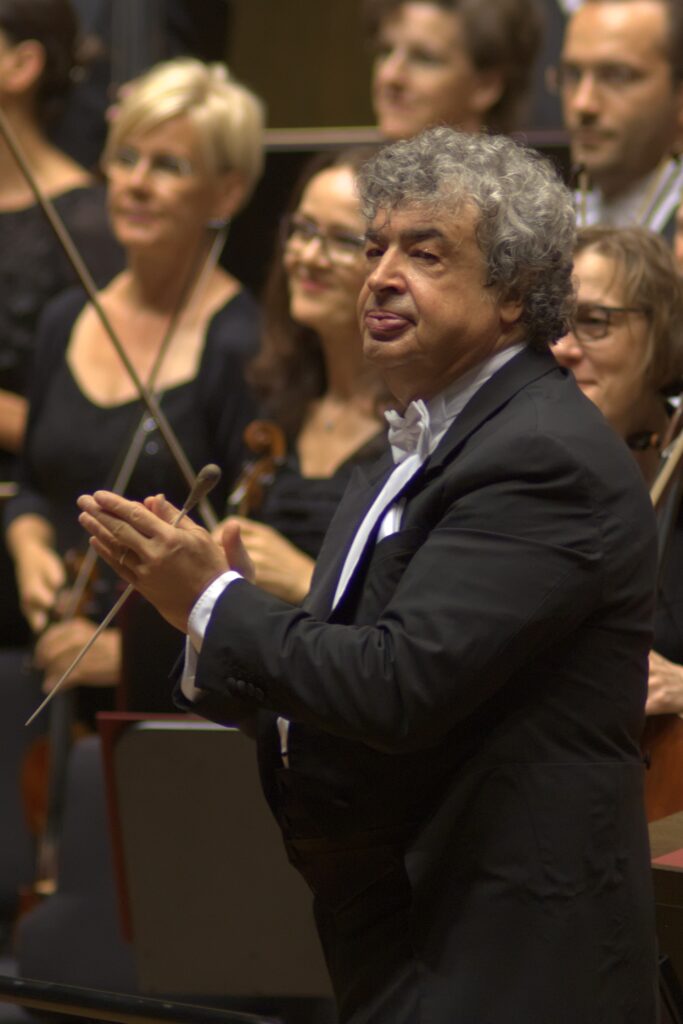
Semyon Bychkov

ENDNOTES, September 2021

In this edition: British oboe quintets, from Chandos Record; Holiday music by Elgar; reviewed by Stuart Millson; Coda, Romancing the Dome, by the Editor

The Doric String Quartet accompanies Nicholas Daniel, oboe, on the Chandos label in a new issue of quintets by Arnold Bax, Gerald Finzi, Ralph Vaughan Williams, Arthur Bliss and Frederick Delius – although in truth, only the Bax and Bliss works from the 1920s are specifically named by their composers as “quintets”. The Vaughan Williams contribution to the programme, the impressionist-in-timbre Six Studies in English Folksong from 1928, for example, appears in a 1983 arrangement for cor anglais; and there is an earlier version of the work (again on Chandos) for clarinet and piano. The Delius item is an arrangement of Two Interludes from Fennimore and Gerda, crafted by the composer’s amanuensis, Eric Fenby. The Finzi work dates from the 1930s and is entitled Interlude (Op. 21) for oboe and string quartet; a work in a single movement that carries the composer’s distinctive gift for pastoral melancholy, yet personal strength of feeling and harmonic individuality.

A melancholy mood sets the stage at the opening of Bax’s quintet, a sense of the Celtic twilight for which the composer (a lover of Irish culture) was renowned. Nicholas Daniel plays the gentle, rolling opening of the work superbly – with a wave of emotion soon appearing from the strings (a moment reminiscent of Warlock’s astringent meditation on loss, The Curlew). Folk-like fragments begin to appear in the music – more momentum develops, and then, like a tide beginning to ebb, another lull appears, with the oboe serenading us and gentle whispers from strings answering in turn. Continue reading

Posted in QR Home | Tagged , , , , , , , | Leave a comment

The Kaiserreich’s Militant Tendency

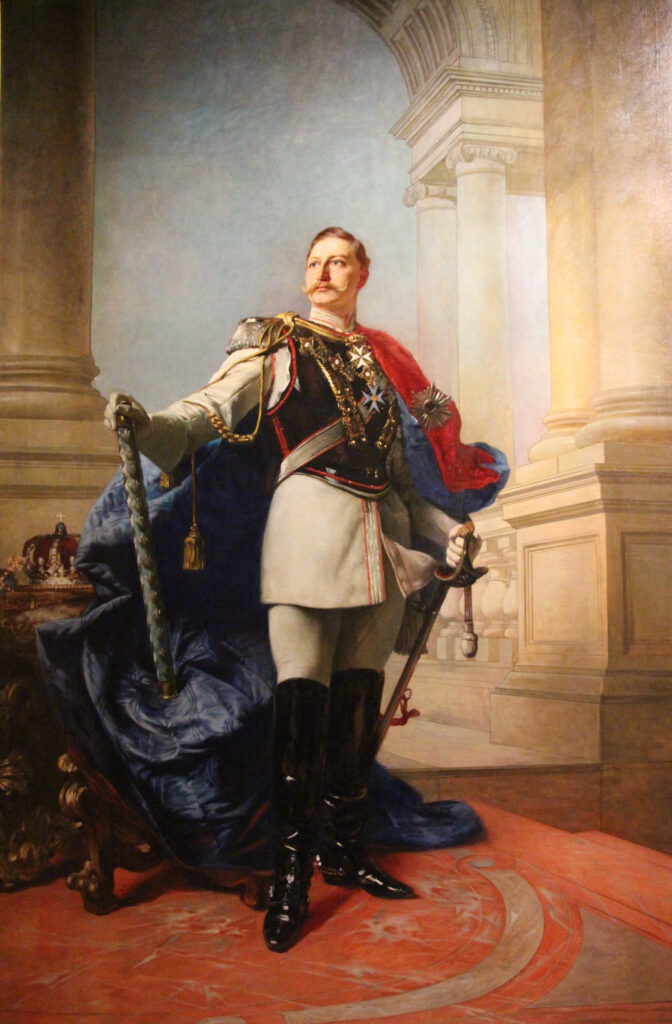
Kaiser Wilhelm II, portrait by Max Koner, credit Wikipedia

The Kaiserreich’s Militant Tendency

Werner Sombart, Traders and Heroes; Patriotic Reflections, translated with a forward by Alexander Jacob, Arktos, London 2021, 115pp, reviewed by Leslie Jones

The sociologist and economic historian Werner Sombart (1863-1941), a former student of Gustav von Schmoller, was Professor of Economics at Breslau, then at Berlin. During the earlier stages of his career, “der rote Professor” and historian of socialism was profoundly influenced by Marxism and upheld the progressive role of the English trade unions under ‘late capitalism’. But as Vitantorio Gioia observes [i], around 1911 there was a marked turn in Sombart’s thinking, an epistemological gap, signalled by the publication of The Jews and Modern Capitalism. The latter study constitutes both a critique of historical materialism and a riposte to Max Weber’s The Protestant Ethic and the Spirit of Capitalism (1904-5).

Sombart believed that without the input of the Jews, the development of capitalism would not have been possible, for they had “given certain aspects of economic life the specific features they bear”. The Jews had substituted “economic rationalism for time-honoured tradition”, pursuing business for its own sake and recognising “the supremacy of gain” over any other factor. [ii] Now that he regarded the acquisitive spirit as immoral and destructive, Sombart viewed the medieval guilds in a favourable light. And he regretted the declining significance of Christianity which had once been a counter-weight to the commercial spirit. As for the goals of the English trade unions, these were now dismissed as “nothing more than capitalism or commercialism with inverse insignia’, since their members put comfort before all else. Continue reading

Posted in QR Home | Tagged , , , , , , | 5 Comments

Bringing the Military-Industrial Complex Home

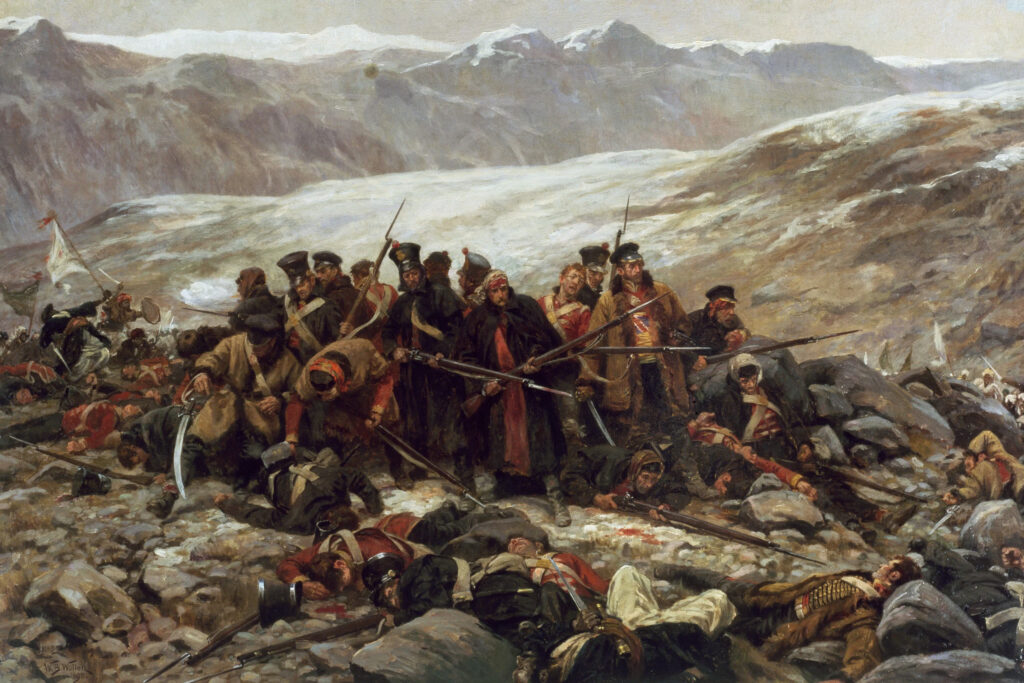
The Last Stand, by William Barnes Wollen, 1898, credit Wikipedia

Bringing the Military-Industrial
Complex Home

 by Ilana Mercer

With the American media as master of ceremonies, pundits and politicians—all partners in the neocon-neoliberal joint venture in Afghanistan—are barking mad over the images coming out of the Hamid Karzai International Airport in Kabul, and the reality these optics portend. Naturally, media “reporting” from Afghanistan is nothing but unremitting sentimental gush, aimed at creating a state of heightened emotions. “The children; the children; the translators; the translators. Americans held hostage behind enemy lines. ‘Teach the Taliban a lesson, Corn Pop,’” demanded a “macho” personality at Fox News. The same litany runs on a continuous loop.

Forbes reporters dissolved into puddles of tears at the sight of U.S. Air Force pilots bringing in plane loads of young, strong, military-aged men, unfreighted by women and children. On August 20, about 5,700 people had been flown out of Kabul. Only 169 were American. “Make no mistake,” slobbered Forbes, “lifting six times more people than an aircraft is designed to seat is a heroic achievement of logistics, skill and sheer grit.” I for see a medal of commendation for the pilot, who commandeered a U.S. Air Force C-17 to airlift 800 Afghani passengers from Kabul to Qatar. Continue reading

Posted in QR Home | Tagged , , , | 2 Comments

Biden Decamps from Afghan Hellhole

C17s support Afghanistan drawdown, 2021, credit Wikipedia

Biden Decamps from Afghan Hellhole

by Ilana Mercer, August 19, 2021

Yes, we know it was chaos, but then again there was no good way to leave that dusty “shithole,” as the much-missed Donald Trump would have put it. Joe Biden was right in his “Remarks on Afghanistan“: “… if Afghanistan is unable to mount any real resistance to the Taliban now, there is no chance that one year — one more year, five more years, or 20 more years of U.S. military boots on the ground would’ve made any difference.” Tempting as it is for right-thinking conservatives and paleolibertarians, in particular, to use the inevitable collapse of the charade in Afghanistan against Biden—honesty demands that we avoid it.

TV Republicans, no doubt, will join the shrill CNN and MSNBC females and their houseboys, who love nothing more than to export the American Nanny State, in bashing Biden for his decisive withdrawal. The president said, “I stand squarely behind my decision. After 20 years, I’ve learned the hard way that there was never a good time to withdraw U.S. forces.” Falling into the Republican line of partisan, tit-for-tat retorts is wrong. The man made the right choice—as opposed to Barack Obama’s. Indeed, Afghanistan was a war Obama had embraced . Continue reading

Posted in QR Home | Tagged , , , | 1 Comment

Verdi’s Luisa Miller

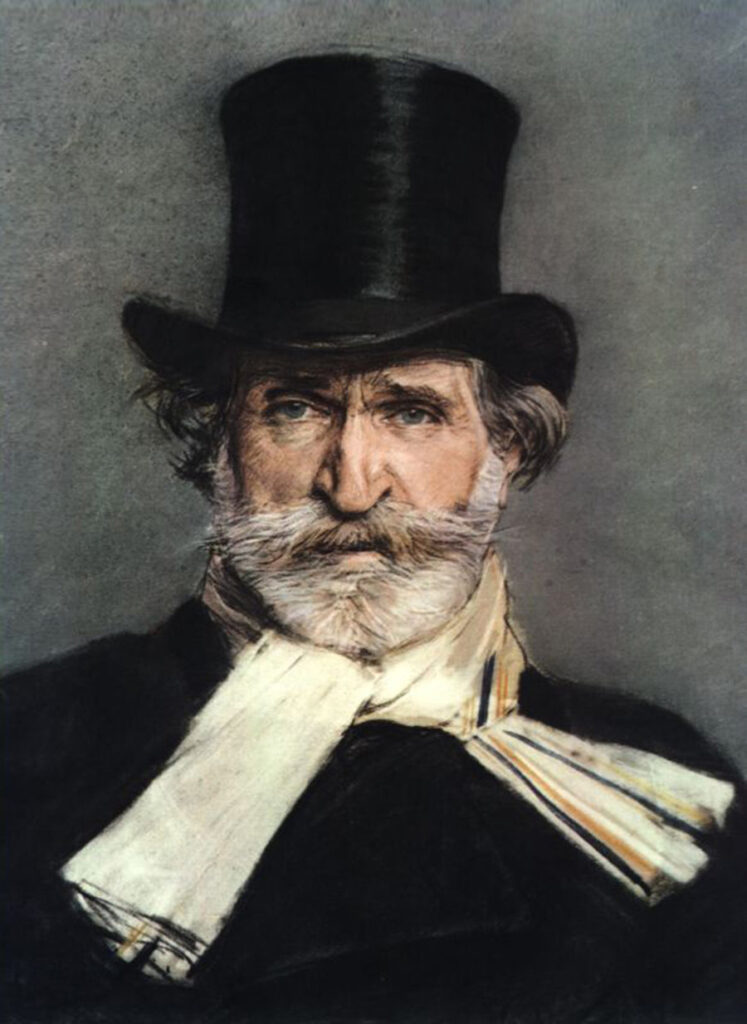
Guiseppe Verdi by Giovanni Boldini, credit Wikipedia

Verdi’s Luisa Miller

Glyndebourne, Saturday 7th August 2021, reviewed by David Truslove

Glyndebourne is in full swing this summer after reopening its doors in May with Káťa Kabanová. Since then, there’s been Il turca in Italia and Così fan tutte. Luisa Miller, Verdi’s middle period opera first performed in Naples in 1849, is currently receiving its debut at this Sussex venue. Linking all four stage works is the conflict between love and duty. Glyndebourne’s Artistic Director Stephen Langridge suggests that the “institution of marriage often represents the duty aspect, an opposing force to unruly anarchic romantic love”. This antagonism is at the heart of Luisa Miller.

Based loosely on Friedrich Schiller’s tragedy Kabale und Liebe (Conspiracy and Love), Luisa Miller is rich in human detail and powerful emotions, but it also focuses on class conflict and the corruption of power. Indeed, Verdi’s work closely follows the Year of Revolution (1848) and a period of bitterly resented despotism of King Ferdinand II. Power struggles emerge in Luisa Miller when Rodolfo, the son of the tyrannical Count Walter, challenges his father’s plans for him to marry the duchess Frederica. But Rodolfo is in love with the young country girl Luisa, the daughter of Miller, an old soldier who is one of the Count’s tenants. Abduction, blackmail and betrayal ensue and when the truth is finally disclosed the two lovers drink from a poisoned cup (Luisa unwittingly) and Rodolfo kills Count Walter’s henchman, the scheming Wurm. Continue reading

Posted in QR Home | Tagged , , , | Leave a comment

Financial Terrorism and Social Excommunication, part 2

Clarence Thomas, credit Wikipedia

Financial Terrorism and Social Excommunication, part 2

Ilana Mercer, on Justice Thomas’ Solution 

The Anti-Defamation League (ADL) is a meddlesome, shakedown operation, in the mold of the Southern Poverty Law Center, that has taken it upon itself to decide who lives and who dies socially and financially. The ADL deems people like Pat Buchanan and Tucker Carlson  to be mired in white supremacism. PAYPAL HOLDINGS, Inc, is an indispensable, American, global corporation, without whose services, financially transacting online is difficult. The company is worth $16.929 billion. The ADL and PayPal have conspired to ferret out “bigotry and extremism” from the financial industry, by which they mean ban thought crimes.

“Racism—systemic or other—remains nothing but thought crime: impolite and impolitic thoughts, spoken, written or preached. Thought crimes are nobody’s business in free societies.” In response to this particular collusion against thought crimes, Fox News personality Tucker Carlson stays chipper. But this is not sufficient a solution from so powerful a persona as Mr. Carlson. Continue reading

Posted in QR Home | Tagged , , , | 1 Comment

Letter to the Editor, Bell Curve Reverberations

Letter to the Editor, Bell Curve Reverberations

Sir,

I write in response to the review of Charles Murray’s Two Truths about Race, published in the TLS on August 6. The reviewer, Patricia J Williams, is a lawyer and a supporter of Critical Race Theory. She is the author of Giving A Damn: Racism, Romance, and Gone with the Wind. Eminently qualified, then, to address the history of eugenics, social Darwinism and race differences in IQ!

According to Professor Williams, Stephen Jay Gould’s The Mismeasure of Man is “the most well-known refutation” of Murray and Herrnstein’s The Bell Curve: Intelligence and Class Structure in American Life. But how can a book, to wit, The Mismeasure of Man, first published in 1981, be a refutation of a book, The Bell Curve, that was only published in 1994?*

When is IQ evidence acceptable, when not? Williams celebrates the “Flynn effect”, which is supposedly reducing racial gaps in IQ. But she also contends that IQ tests are “culturally specific”, i.e. when they inconveniently reveal ongoing race differences in cognitive ability.

As an exponent of Critical Race Theory (CRT), Professor Williams considers the US a bastion of white supremacy and “a majority white nation in which most crimes are committed by whites”. Your indomitable columnist Ilana Mercer is correct. CRT equals anti-white racism.

Ritortus

*Editorial note; in ‘Curveball’, New Yorker, November 1994, Gould retrospectively reviewed The Bell Curve. 

Posted in QR Home | Leave a comment

The Epistle to the Romans, Part IV

Saint Paul, Rembrandt van Rijn, credit Wikipedia

The Epistle to the Romans, Part IV

by Darrell Sutton

Literacy in the ancient Greco-Roman Republic was more widespread than in some other civilizations. Oxyrhynchus papyri-texts are extant and confirm that assertion. Depending on the writings one studied, the culture of Rome seemed refined. It was deemed by themselves to be superior to the values in other nations. Rome’s readers were aware of the sciences and philosophies in surrounding territories. A well-read people, they learned old myths, memorized legends and travelogues written by wanderers to faraway lands. Agricultural details also frequently appear in Latin through various forms of literature. And comments about Roman gods and goddesses in antiquity show up regularly in Latin poems and in prose texts. Cicero and other educated Romans could express themselves proficiently in both Latin and Greek.

Paul was an urbane and sagacious scholar. Mastery of his letter to the Christians in Rome is vital for apprehending the intricate systems of his thought and for grasping those principal doctrines pioneered by him and declared throughout the Aegean and Mediterranean provinces. In Late Antiquity, differences of opinion regarding ‘grace’ often incited disagreement. The East-West Schism of 1054 is well known. Afterwards, and during the [Counter] “Reformation” centuries, sometimes violent confrontations occurred in the battle to control how basic beliefs about this letter were to be understood within Protestant and Catholic factions. Continue reading

Posted in QR Home | Tagged , , | Leave a comment

Financial Terrorism and Social Excommunication, part one

Trump and DeSantis, credit Wikipedia

Financial Terrorism and Social Excommunication, part one 

Ilana Mercer, on Big Tech tyranny

Republican solutions to Big Tech tyranny do not begin to address financial de-platforming, the cancellation of citizen dissidents en masse, including the infringement of the right to partake in the public square and make a living. In their weak case against Deep Tech (“Deep” to denote enmeshment with The State), Republicans are still defending only some speech on the “merits,” rather than all speech, no matter how meritless.

In a sense, the statist anti-trust bills, targeting especially Apple, Amazon, Facebook and Google and currently being pushed by lawmakers are worse than useless. The anti-trust impetus is misguided as it conflates corporate size with anti-competitive practices: the larger, the more monopolistic. However, reducing the size of an entity–a corporation–doesn’t necessarily alter its nature.When a malignant cell divides, it doesn’t grow less potent. To the contrary, it innervates and enervates more spheres. Likewise breaking up Big Tech. Smaller malignancies metastasize and kill just as well.

The habitual failure of the representatives sent by “Deplorables” to D.C. to prevent cancellation en masse–the Orwellian nightmare–cannot be understated. On the line is dissidents’ ability to speak, publish, partake in society; sell our cultural products, and transact financially over the country’s major online economic and social arteries. Continue reading

Posted in QR Home | Tagged , , , | Leave a comment