Classic QR – the original 1848 review of Jane Eyre
Editor’s Note – This is the Jane Eyre segment of an 1848 15,000 word combined review of Vanity Fair and Jane Eyre. The QR’s reviewers tended to be withering toward new books and literary movements, and often they seem wrong in retrospect, but even when they are wrong they make some germane criticisms and are exquisitely sarcastic. The Vanity Fair segment of this review will be posted separately on another occasion. DT, 23 March 2012
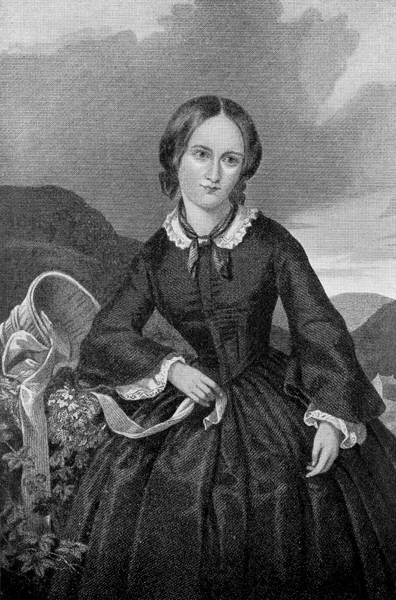
Charlotte Bronte
[Rigby, Elizabeth.] “Vanity Fair–and Jane Eyre.” Quarterly Review. 84:167 (December 1848): 153-185.
Jane Eyre; an Autobiography. Edited by Currer Bell. In 3 vols. London. 1847.
A REMARKABLE novel is a great event for English society. It is a kind of common friend, about whom people can speak the truth without fear of being compromised, and confess their emotions without being ashamed. We are a particularly shy and reserved people, and set about nothing so awkwardly as the simple art of getting really acquainted with each other. We meet over and over again in what is conventionally called ‘easy society,’ with the tacit understanding to go so far and no farther; to be as polite as we ought to be, and as intellectual as we can; but mutually and honourably to forbear lifting those veils which each spreads over his inner sentiments and sympathies. For this purpose a host of devices have been contrived by which all the forms of friendship may be gone through, without committing ourselves to one spark of the spirit. We fly with eagerness to some common ground in which each can take the liveliest interest, without taking the slightest in the world in his companion. Our various fashionable manias, for charity one season, for science the next, are only so many clever contrivances for keeping our neighbour at arm’s length. We can attend committees, and canvas for subscribers, and archaeologise, and geologise, and take ether with our fellow Christians for a twelvemonth, as we might sit cross-legged and smoke the pipe of fraternity with a Turk for the same period—and know that at the end of the time as little of the real feelings of the one as we should know about the domestic relations of the other. But there are ways and means for lifting the veil which equally favour our national idiosyncrasy; and a new and remarkable novel is one of them—especially the nearer it comes to real life. We invite our neighbour to a walk with the deliberate and malicious intent of getting thoroughly acquainted with him. We ask no impertinent questions—we proffer no indiscreet confidences—we do not even sound him, ever so delicately, as to his opinion of a common friend, for he would be sure not to say, lest we should go and tell; but we simply discuss Becky Sharp, or Jane Eyre, and our object is answered at once.
There is something about these two new and noticeable characters which especially compels everybody to speak out. They are not to be dismissed with a few commonplace moralities and sentimentalities. They do not fit any ready-made criticism. They give the most stupid something to think of, and the most reserved something to say; the most charitable too are betrayed into home comparisons which they usually condemn, and the most ingenious stumble into paradoxes which they can hardly defend. Becky and Jane also stand well side by side both in their analogies and their contrasts. Both the ladies are governesses, and both make the same move in society; in one, in Jane Eyre phraseology, marrying her ‘master,’ and the other her master’s son. Neither starts in life with more than a moderate capital of good looks—Jane Eyre hardly that—for it is the fashion now-a-days with novelists to give no encouragement to the insolence of mere beauty, but rather to prove to all whom it may concern how little a sensible woman requires to get on with in the world. Both have also an elfish kind of nature, with which they divine the secrets of other hearts, and conceal those of their own; and both rejoice in that peculiarity of feature which Mademoiselle de Luzy has not contributed to render popular, viz., green eyes. Beyond this, however, there is no similarity either in the minds, manners, or fortunes of the two heroines. They think and act upon diametrically opposed principles—at least so the author of ‘Jane Eyre’ intends us to believe—and each, were they to meet, which we should of all things enjoy to see them do, would cordially despise and abominate the other. Which of the two, however, would most successfully dupe the other is a different question, and one not so easy to decide; though we have our own ideas upon the subject.
Jane Eyre, as a work, and one of equal popularity, is, in almost every respect, a total contrast to Vanity Fair. The characters and events, though some of them masterly in conception, are coined expressly for the purpose of bringing out great effects. The hero and heroine are beings both so singularly unattractive that the reader feels they can have no vocation in the novel but to be brought together; and they do things which, though not impossible, lie utterly beyond the bounds of probability. On this account a short sketch of the plan seems requisite; not but what it is a plan familiar enough to all readers of novels—especially those of the old school and those of the lowest school of our own day. For Jane Eyre is merely another Pamela, who, by the force of her character and the strength of her principles, is carried victoriously through great trials and temptations from the man she loves. Nor is she even a Pamela adapted and refined to modern notions; for though the story is conducted without those derelictions of decorum which we are to believe had their excuse in the manners of Richardson’s time, yet it is stamped with a coarseness of language and a laxity of tone which have certainly no excuses in ours. It is a very remarkable book: we have no remembrance of another combining such genuine power with such horrid taste. Both together have equally assisted to gain the great popularity it has enjoyed; for in these days of extravagant adoration of all that bears the stamp of novelty and originality, sheer rudeness and vulgarity have come in for a most mistaken worship.
The story is written in the first person. Jane begins with her earliest recollections, and at once takes possession of the reader’s intensest interest by the masterly picture of a strange and oppressed child she raises up in a few strokes before him. She is an orphan, and a dependant in the house of a selfish, hard-hearted aunt, against whom the disposition of the little Jane chafes itself in natural antipathy, till she contrives to make the unequal struggle as intolerable to her oppressor as it is to herself. She is therefore, at eight years of age, got rid of to a sort of Dothegirls Hall, where she continues to enlist our sympathies for a time with her little pinched fingers, cropped hair, and empty stomach. But things improve: the abuses of the institution are looked into. The Puritan patron, who holds that young orphan girls are only safely brought up upon the rules of La Trappe, is superseded by an enlightened committee—the school assumes a sound English character—Jane progresses from scholar to teacher, and passes ten profitable and not unhappy years at Lowood. Then she advertises for a situation as governess, and obtains one immediately in one of the midland counties. We see her, therefore, as she leaves Lowood, to enter upon a new life—a small, plain, odd creature, who has been brought up dry upon school learning, and somewhat stunted accordingly in mind and body, and who is now thrown upon the world as ignorant of its ways, and as destitute of its friendships, as a shipwrecked mariner upon a strange coast.
Thornfield Hall is the property of Mr. Rochester—a bachelor addicted to travelling. She finds it at first in all the peaceful prestige of an English gentleman’s seat when ‘nobody is at the hall.’ The companions are an old decayed gentlewoman house-keeper—a far away cousin of the squire’s—and a young French child, Jane’s pupil, Mr. Rochester’s ward and reputed daughter. There is a pleasing monotony in the summer solitude of the old country house, with its comfort, respectability, and dulness, which Jane paints to the life; but there is one circumstance which varies the sameness and casts a mysterious feeling over the scene. A strange laugh is heard from time to time in a distant part of the house—a laugh which grates discordantly upon Jane’s ear. She listens, watches, and inquires, but can discover nothing but a plain matter of fact woman, who sits sewing somewhere in the attics, and goes up and down stairs peaceably to and from her dinner with the servants. But a mystery there is, though nothing betrays it, and it comes in with marvellous effect from the monotonous reality of all around. After awhile Mr. Rochester comes to Thornfield, and sends for the child and her governess occasionally to bear him company. He is a dark, strange-looking man—strong and large—of the brigand stamp, with fine eyes and lowering brows—blunt and sarcastic in his manners, with a kind of misanthropical frankness, which seems based upon utter contempt for his fellow-creatures, and a surly truthfulness which is more rudeness than honesty. With his arrival disappears all the prestige of the country innocence that had invested Thornfield Hall. He brings the taint of the world upon him, and none of its illusions. The queer little governess is something new to him. He talks to her at one time imperiously as to a servant, and at another recklessly as to a man. He pours into her ears disgraceful tales of his past life, connected with the birth of little Adèle, which any man with common respect for a woman, and that a mere girl of eighteen, would have spared her; but which eighteen in this case listens to as if it were nothing new, and certainly nothing distasteful. He is captious and Turk-like—she is one day his confidant, and another his unnoticed dependant. In short, by her account, Mr. Rochester is a strange brute, somewhat in the Squire Western style of absolute and capricious eccentricity, though redeemed in him by signs of a cultivated intellect, and gleams of a certain fierce justice of heart. He has a mind, and when he opens it at all, he opens it freely to her. Jane becomes attached to her ‘master,’ as Pamela-like she calls him, and it is not difficult to see that solitude and propinquity are taking effect upon him also. An odd circumstance heightens the dawning romance. Jane is awoke one night by that strange discordant laugh close to her ear—then a noise as if hands feeling along the wall. She rises—opens her door, finds the passage full of smoke, is guided by it to her master’s room, whose bed she discovers enveloped in flames, and by her timely aid saves his life. After this they meet no more for ten days, when Mr. Rochester returns from a visit to a neighbouring family, bringing with him a housefull of distinguished guests; at the head of whom is Miss Blanche Ingram, a haughty beauty of high birth, and evidently the especial object of the Squire’s attentions—upon which tumultuous irruption Miss Eyre slips back into her naturally humble position.
Our little governess is now summoned away to attend her aunt’s death-bed, who is visited by some compunctions toward her, and she is absent a month. When she returns Thornfield Hall is quit of all its guests, and Mr. Rochester and she resume their former life of captious cordiality on the one side, and diplomatic humility on the other. At the same time the bugbear of Miss Ingram and of Mr. Rochester’s engagement with her is kept up, though it is easy to see that this and all concerning that lady is only a stratagem to try Jane’s character and affection upon the most approved Griselda precedent. Accordingly an opportunity for explanation ere long offers itself, where Mr. Rochester has only to take it. Miss Eyre is desired to walk with him in shady alleys, and to sit with him on the roots of an old chestnut-tree towards the close of evening, and of course she cannot disobey her ‘master’—whereupon there ensues a scene which, as far as we remember, is new equally in art or nature; in which Miss Eyre confesses her love—whereupon Mr. Rochester drops not only his cigar (which she seems to be in the habit of lighting for him) but his mask, and finally offers not only heart, but hand. The wedding-day is soon fixed, but strange misgivings and presentiments haunt the young lady’s mind. The night but one before, her bed-room is entered by a horrid phantom, who tries on the wedding veil, sends Jane into a swoon of terror, and defeats all the favourite refuge of a bad dream by leaving the veil in two pieces. But all is ready. The bride has no friends to assist—the couple walk to church—only the clergyman and the clerk are there—but Jane’s quick eye has seen two figures lingering among the tombstones, and these two follow them into church. The ceremony commences, when at the due charge which summons any man to come forward and show just cause why they should not be joined together, a voice interposes to forbid the marriage. There is an impediment, and a serious one. The bridegroom has a wife not only living, but living under the very roof of Thornfield Hall. Hers was that discordant laugh which had so often caught Jane’s ear; but she it was who in her malice had tried to burn Mr. Rochester in his bed—who had visited Jane by night and torn her veil, and whose attendant was that same pretended sew-woman who had so strongly excited Jane’s curiosity. For Mr. Rochester’s wife is a creature, half fiend, half maniac, whom he had married in a distant part of the world, and whom now, in his self-constituted code of morality, he had thought it his right, and even his duty, to supersede by a more agreeable companion. Now follow scenes of a truly tragic power. This is the grand crisis in Jane’s life. Her whole soul is wrapt up in Mr. Rochester. He has broken her trust, but not diminished her love. He entreats her to accept all that he still can give, his heart and his home; he pleads with the agony not only of a man who has never known what it was to conquer a passion, but of one who, by that same self-constituted code, now burns to atone for a disappointed crime. There is no one to help her against him or against herself. Jane had no friends to stand by her at the altar, and she has none to support her now she is plucked away from it. There is no one to be offended or disgraced at her following him to the sunny land of Italy, as he proposes, till the maniac should die. There is no duty to any one but to herself, and this feeble reed quivers and trembles beneath the overwhelming weight of love and sophistry opposed to it. But Jane triumphs; in the middle of the night she rises—glides out of her room—takes off her shoes as she passes Mr. Rochester’s chamber;—leaves the house, and casts herself upon a world more desert than ever to her—
‘Without a shilling and without a friend.’
Thus the great deed of self-conquest is accomplished; Jane has passed through the fire of temptation from without and from within; her character is stamped from that day; we need therefore follow her no further into wanderings and sufferings which, though not unmixed with plunder from Minerva-lane, occupy some of, on the whole, the most striking chapters in the book. Virtue of course finds her reward. The maniac wife sets fire to Thornfield Hall, and perishes herself in the flames. Mr. Rochester, in endeavouring to save her, loses the sight of his eyes. Jane rejoins her blind master; they are married, after which of course the happy man recovers his sight.
Such is the outline of a tale in which, combined with great materials for power and feeling, the reader may trace gross inconsistencies and improbabilities, the chief and foremost that highest moral offence a novel writer can commit, that of making an unworthy character interesting in the eyes of the reader. Mr. Rochester is a man who deliberately and secretly seeks to violate the laws of both God and man, and yet we will be bound half our lady readers are enchanted with him for a model of generosity and honour. We would have thought that such a hero had no chance, in the purer taste of the present day; but the popularity of Jane Eyre is a proof how deeply the love for illegitimate romance is implanted in our nature. Not that the author is strictly responsible for this. Mr. Rochester’s character is tolerably consistent. He is made as coarse and as brutal as can in all conscience be required to keep our sympathies at a distance. In point of literary consistency the hero is at all evens impugnable, though we cannot say as much for the heroine.
As to Jane’s character—there is none of that harmonious unity about it which made little Becky so grateful a subject of analysis—nor are the discrepancies of that kind which have their excuse and their response in our nature. The inconsistencies of Jane’s character lie mainly not in her own imperfections, though of course she has her share, but in the author’s. There is that confusion in the relations between cause and effect, which is not so much untrue to human nature as to human art. The error in Jane Eyre is, not that her character is this or that, but that she is made one thing in the eyes of her imaginary companions, and another in that of the actual reader. There is a perpetual disparity between the account she herself gives of the effect she produces, and the means shown us by which she brings that effect about. We hear nothing but self-eulogiums on the perfect tact and wondrous penetration with which she is gifted, and yet almost every word she utters offends us, not only with the absence of these qualities, but with the positive contrasts of them, in either her pedantry, stupidity, or gross vulgarity. She is one of those ladies who put us in the unpleasant predicament of undervaluing their very virtues for dislike of the person in whom they are represented. One feels provoked as Jane Eyre stands before us—for in the wonderful reality of her thoughts and descriptions, she seems accountable for all done in her name—with principles you must approve in the main, and yet with language and manners that offend you in every particular. Even in that chef-d’oeuvre of brilliant retrospective sketching, the description of her early life, it is the childhood and not the child that interests you. The little Jane, with her sharp eyes and dogmatic speeches, is a being you neither could fondle nor love. There is a hardness in her infantine earnestness, and a spiteful precocity in her reasoning, which repulses all our sympathy. One sees that she is of a nature to dwell upon and treasure up every slight and unkindness, real or fancied, and such natures we know are surer than any others to meet with plenty of this sort of thing. As the child, so also the woman—an uninteresting, sententious, pedantic thing; with no experience of the world, and yet with no simplicity or freshness in its stead. What are her first answers to Mr. Rochester but such as would have quenched all interest, even for a prettier woman, in any man of common knowledge of what was nature—and especially in a blasé monster like him? A more affected governessy effusion we never read. The question is à propos of cadeaux.
“Who talks of cadeaux?” said he gruffly: “did you expect a present, Miss Eyre? Are you fond of presents?” and he searched my face with eyes that I saw were dark, irate, and piercing.
“I hardly know, Sir; I have little experience of them; they are generally thought pleasant things.”
“Generally thought! But what do you think?”
“I should be obliged to take time, Sir, before I could give you an answer worthy of your acceptance: a present has many faces to it, has it not? and one should consider all before pronouncing an opinion as to its nature.”
“Miss Eyre, you are not so unsophisticated as Adèle: she demands a cadeau clamorously the moment she sees me; you beat around the bush.”
“Because I have less confidence in my deserts than Adèle has; she can prefer the right of old acquaintance and the right too of custom; for she says you have always been in the habit of giving her playthings; but if I had to make out a case I should be puzzled, since I am a stranger, and have done nothing to entitle me to such an acknowledgment.”
“Oh! don’t fall back on over modesty! I have examined Adèle, and find you have taken great pains with her: she is not bright—she has no talent, yet in a short time she has made much improvement.”
“Sir, you have now given me my cadeau; I am obliged to you: it is indeed the meed teachers most covet; praise of their pupil’s progress.”
“Humph!” said Mr. Rochester.—vol. i., p. 234.
Let us now take a specimen of her again when Mr. Rochester brings home his guests to Thornfield. The fine ladies of this world are a new study to Jane, and capitally she describes her first impression of them as they leave the dinner table and return to the drawing-room—nothing can be more gracefully graphic than this.
‘There were but eight of them, yet somehow as they flocked in, they gave the impression of a much larger number. Some of them were very tall, and all had a sweeping amplitude of array that seemed to magnify their persons as a mist magnifies the moon. I rose and curtseyed to them: one or two bent their heads in return; the others only stared at me.
‘They dispersed about the room, reminding me, by the lightness and buoyancy of their movements, of a flock of white plumy birds. Some of them threw themselves in half-reclining positions on the sofas and ottomans; some bent over the tables and examined the flowers and books; the rest gathered in a group round the fire: all talked in a low but clear tone which seemed habitual to them.’ —vol. ii. p. 38.
But now for the reverse. The moment Jane Eyre sets these graceful creatures conversing, she falls into mistakes which display not so much a total ignorance of the habits of society, as a vulgarity of mind inherent in herself. They talked together by her account like parvenues trying to show off. They discuss the subject of governesses before her very face, in what Jane affects to consider the exact tone of fashionable contempt. They bully the servants in language no lady would dream of using to her own—far less to those of her host and entertainer—though certainly the ‘Sam’ of Jane Eyre’s is not precisely the head servant one is accustomed to meet with in houses of the Thornfield class. For instance, this is a conversation which occurs in her hearing. An old gypsy has come to the Hall, and the servants can’t get rid of her—
“What does she want?” asked Mrs Eshton.
“To tell the gentry their fortunes, she says, Ma’am: and she swears she must and will do it.”
“What is she like?” inquired the Misses Eshton, in a breath.
“A shockingly ugly old creature, Miss; almost as black as a crock.”
“Why, she’s a real sorceress,” cried Frederick Lynn. “Let us have her in of course.”
“My dear boys, what are you thinking about?” exclaimed Lady Lynn.
“I cannot possibly countenance any such inconsistent proceedings,” chimed in the Dowager Ingram.
“Indeed, mamma, but you can—and will,” pronounced the haughty voice of Blanche, as she turned round on the piano-stool, where till now she had sat silent, apparently examining sundry sheets of music. “I have a curiosity to hear my fortune told: therefore, Sam, order the beldame forward.”
“My darling Blanche! recollect—”
“I do—I recollect all you can suggest; and I must have my will—quick, Sam!”
“Yes—yes—yes,” cried all the juveniles, both ladies and gentlemen. “Let her come, it will be excellent sport.”
The footman still lingered. “She looks such a rough one,” said he.
“Go!” ejaculated Miss Ingram, and the man went.
Excitement instantly seized the whole party; a running fire of raillery and jests was proceeding when Sam returned.
“She won’t come now,” said he. “She says it is not her mission to appear before the ‘vulgar herd’ (them’s her words). I must show her into a room by herself, and them who wish to consult her must go to her one by one.”
“You see now, my queenly Blanche,” began Lady Ingram, “she encroaches. Be advised, my angel girl—and—”
“Show her into the library, of course,” cut in the “angel girl”. “It is not my mission to listen to her before the vulgar herd either; I mean to have her all to myself. Is there a fire in the library?”
“Yes, Ma’am; but she looks such a tinkler.”
“Cease that chatter, blockhead! and do my bidding!”—vol. ii., p. 82.
The old gypsy woman, by the way, turns out to be Mr. Rochester—whom Jane of course alone recognizes—as silly an incident as can well be contrived. But the crowning scene is the offer—governesses are said to be sly on such occasions, but Jane out-governesses them all—little Becky would have blushed for her. They are sitting together at the foot of the old chestnut tree, as we have already mentioned, towards the close of evening, and Mr. Rochester is informing her, with his usual delicacy of language, that he is engaged to Miss Ingram—’a strapper! Jane, a real strapper!’—and that as soon as he brings home his bride to Thornfield, she, the governess, must ‘trot forthwith’—but that he shall make it his duty to look out for employment and an asylum for her—indeed, that he has already heard of a charming situation in the depths of Ireland—all with a brutal jocoseness which most women of spirit, unless grievously despairing of any other lover, would have resented, and any woman of sense would have seen through. But Jane, that profound reader of the human heart, and especially Mr. Rochester’s, does neither. She meekly hopes she may be allowed to stay where she is till she has found another shelter to betake herself to—she does not fancy going to Ireland—Why?
‘It is a long way off, Sir.’ ‘No matter—a girl of your sense will not object to the voyage or the distance.’ ‘Not the voyage, but the distance, Sir; and then the sea is a barrier——’ ‘From what, Jane?’ ‘From England, and from Thornfield; and——’ ‘Well?’ ‘From you, Sir.’—vol. ii., p. 205.
and then the lady bursts into tears in the most approved fashion.
Although so clever in giving hints, how wonderfully slow she is in taking them! Even when, tired of his cat’s play, Mr. Rochester proceeds to rather indubitable demonstrations of affection—’enclosing me in his arms, gathering me to his breast, pressing his lips on my lips’—Jane has no idea what he can mean. Some ladies would have thought it high time to leave the Squire alone with his chestnut tree; or, at all events, unnecessary to keep up that tone of high-souled feminine obtusity which they are quite justified in adopting if the gentlemen will not speak out—but Jane again does neither. Not that we say she was wrong, but quite the reverse, considering the circumstances of the case—Mr. Rochester was her master, and ‘Duchess or nothing’ was her first duty—only she was not quite so artless as the author would have us suppose.
But if the manner in which she secures the prize be not inadmissible according to the rules of the art, that in which she manages it when caught, is quite without authority or precedent, except perhaps in the servants’ hall. Most lover’s play is wearisome and nonsensical to the lookers on—but the part Jane assumes is one which could only be efficiently sustained by the substitution of Sam for her master. Coarse as Mr. Rochester is, one winces for him under the infliction of this housemaid beau idéal of the arts of coquetry. A little more, and we should have flung the book aside to lie for ever among the trumpery with which such scenes ally it; but it were a pity to have halted here, for wonderful things lie beyond—scenes of suppressed feeling, more fearful to witness than the most violent tornados of passion—struggles with such intense sorrow and suffering as it is sufficient misery to know that any one should have conceived, far less passed through; and yet with that stamp of truth which takes precedence in the human heart before actual experience. The flippant, fifth-rate, plebeian actress has vanished, and only a noble, high-souled woman, bound to us by the reality of her sorrow, and yet raised above us by the strength of her will, stands in actual life before us. If this be Jane Eyre, the author has done her injustice hitherto, not we. Let us look at her in the first recognition of her sorrow after the discomfiture of the marriage. True, it is not the attitude of a Christian, who knows that all things work together for the good to those who love God, but it is a splendidly drawn picture of a natural heart, of high power, intense feeling, and fine religious instinct, falling prostrate, but not grovelling, before the tremendous blast of sudden affliction. The house is cleared of those who had come between her and a disgraceful happiness.
‘Only the clergyman stayed to exchange a few sentences of admonition or reproof with his haughty parishioner; this duty done, he too departed.
‘I heard him go as I stood at the half-open door of my own room, to which I had now withdrawn. The house cleared, I shut myself in, fastened the bolt, that none might intrude, and proceeded—not to weep, not to mourn, I was yet too calm for that, but—mechanically to take off the wedding-dress, and replace it by the stuff gown I had worn yesterday, as I thought for the last time. I then sat down: I felt weak and tired. I leaned my arms on a table, and my head dropped on them, and now I thought: till now I had only heard, seen; moved, followed up and down where I was led or dragged, watched event rushed on event, disclosure open beyond disclosure: but now, I thought.
‘The morning had been a quiet morning enough—all except the brief scene with the lunatic. The transaction in the church had not been noisy; there was no explosion of passion, no loud altercation, no dispute, no defiance or challenge, no tears, no sobs: a few words had been spoken, a calmly pronounced objection to the marriage made, some stern, short questions put by Mr Rochester; answers, explanations given, evidence adduced; an open admission of the truth had been made by my master, then the living proof had been seen, the intruders were gone, and all was over.
‘I was in my own room as usual—just myself, without obvious change: nothing had smitten me, or scathed me, or maimed me; and yet where was the Jane Eyre of yesterday? where was her life? where were her prospects?
‘Jane Eyre, who had been an ardent, expectant woman—almost a bride—was a cold, solitary girl again: her life was pale, her prospects were desolate. A Christmas frost had come at Midsummer; a white December storm had whirled over June; ice glazed the ripe apples, drifts crushed the blowing roses; on hay-field and corn-field lay a frozen shroud; lanes, which last night blushed full of flowers, to-day were pathless with untrodden snow; and the woods which, twelve hours since, waved leafy and fragrant as groves between the tropics, now spread waste, wild, and white as pine-forests in wintry Norway. My hopes were all dead—struck with a sudden doom, such as, in one night, fell on all the firstborn in the land of Egypt; I looked on my cherished wishes, yesterday so blooming and glowing—they lay stark, chill, livid corpses that could never revive. I looked at my love; that feeling which was my master’s—which he had created; it shivered in my heart, like a suffering child in a cold cradle; sickness and anguish had seized it: it could not seek Mr. Rochester’s arms—it could not derive warmth from his breast. Oh! never more could it turn to him, for faith was blighted! confidence destroyed! Mr Rochester was not to me what he had been, for he was not what I thought him. I would not ascribe vice to him; I would not say he had betrayed me: but the attribute of stainless truth was gone from his idea; and from his presence I must go: that I perceived well. When—how—whither? I could not yet discern; but he himself I doubted not would hurry me from Thornfield. Real affection, it seemed, he could not have for me; it had only been fitful passion: that was baulked—he would want me no more. I should fear even to cross his path now; my view must be hateful to him. Oh, how blind had been my eyes! How weak my conduct!
‘My eyes were covered and closed; eddying darkness seemed to swim round me, and reflection came in as black and confused a flow. Self-abandoned, relaxed, and effortless, I seemed to have laid me down in the dried-up bed of a great river; I heard a flood loosened in remote mountains, and felt the torrent come; to rise I had no will, to flee I had no strength. I lay faint, longing to be dead; one idea only throbbed lifelike within me—a remembrance of God. It begot an unuttered prayer: these words went wandering up and down in my rayless mind, as something that should be whispered; but no energy was found to express them:—”Be not far from me, for trouble is near: there is none to help.”
‘It was near; and as I had lifted no petition to Heaven to avert it—as I had neither joined my hands, nor bent my knees, nor moved my lips—it came: in full heavy swing the torrent passed over me. The whole consciousness of my life lorn, my love lost, my hope quenched, my faith death-struck, swayed full and mighty above me in one sullen mass. That bitter hour cannot be described: in truth, “the waters came into my soul; I sank in deep mire: I felt no standing; I came into deep waters; the floods overflowed me.”‘ —vol. ii., p. 300.
We have said that this was the picture of a natural heart. This, to our view, is the great and crying mischief of the book. Jane Eyre is throughout the personification of an unregenerate and undisciplined spirit, the more dangerous to exhibit from that prestige of principle and self-control which is liable to dazzle the eye too much for it to observe the inefficient and unsound foundation on which it rests. It is true Jane does right, and exerts great moral strength, but it is the strength of a mere heathen mind which is a law unto itself. No Christian grace is perceptible upon her. She has inherited in fullest measure the worst sin of our fallen nature—the sin of pride. Jane Eyre is proud, and therefore she is ungrateful too. It pleased God to make her an orphan, friendless, and penniless—yet she thanks nobody, and least of all Him, for the food and raiment, the friends, companions, and instructors of her helpless youth—for the care and education vouchsafed to her till she was capable in mind as fitted in years to provide for herself. On the contrary, she looks upon all that has been done for her not only as her undoubted right, but as falling far short of it. The doctrine of humility is not more foreign to her mind than it is repudiated by her heart. It is by her own talents, virtues, and courage that she is made to attain the summit of human happiness, and, as far as Jane Eyre’s own statement is concerned, no one would think that she owed anything either to God above or to man below. She flees from Mr. Rochester, and has not a being to turn to. Why was this? The excellence of the present institution at Casterton, which succeeded that of Cowan Bridge near Kirkby Lonsdale—these being distinctly, as we hear, the original and the reformed Lowoods of the book—is pretty generally known. Jane had lived there for eight years with 110 girls and fifteen teachers. Why had she formed no friendships among them? Other orphans have left the same and similar institutions, furnished with friends for life, and puzzled with homes to choose from. How comes it that Jane had acquired neither? Among that number of associates there was surely some exceptions to what she so presumptuously stigmatises as ‘the society of inferior minds.’ Of course, it suited the author’s end to represent the heroine as utterly destitute of the common means of assistance, in order to exhibit both her trials and her powers of self-support—the whole book rests on this assumption—but it is one which, under the circumstances, is very unnatural and very unjust.
Altogether the auto-biography of Jane Eyre is pre-eminently an anti-Christian composition. There is throughout it a murmuring against the comforts of the rich and against the privations of the poor, which, as far as each individual is concerned, is a murmuring against God’s appointment—there is a proud and perpetual assertion of the rights of man, for which we find no authority either in God’s word or in God’s providence—there is that pervading tone of ungodly discontent which is at once the most prominent and most subtle evil which the law and the pulpit, which all civilized society in fact has at the present day to contend with. We do not hesitate to say that the tone of mind and thought which has overthrown authority and violated every code human and divine abroad, and fostered Chartism and rebellion at home, is the same which has also written Jane Eyre.
Still we say again this is a very remarkable book. We are painfully alive to the moral, religious, and literary deficiencies of the picture, and such passages of beauty and power as we have quoted cannot redeem it, but it is impossible not to be spell-bound with the freedom of the touch. It would be mere hackneyed courtesy to call it ‘fine writing.’ It bears no impress of being written at all, but is poured out rather in the heat and hurry of an instinct, which flows ungovernably on to its object, indifferent by what means it reaches it, and unconscious too. As regards the author’s chief object, however, it is a failure—that, namely, of making a plain, odd woman, destitute of all the conventional features of feminine attraction, interesting in our sight. We deny that he has succeeded in this. Jane Eyre, in spite of some grand things about her, is a being totally uncongenial to our feelings from beginning to end. We acknowledge her firmness—we respect her determination—we feel for her struggles; but, for all that, and setting aside higher considerations, the impression she leaves on our mind is that of a decidedly vulgar-minded woman—one whom we should not care for as an acquaintance, whom we should not seek as a friend, whom we should not desire for a relation, and whom we should scrupulously avoid for a governess.
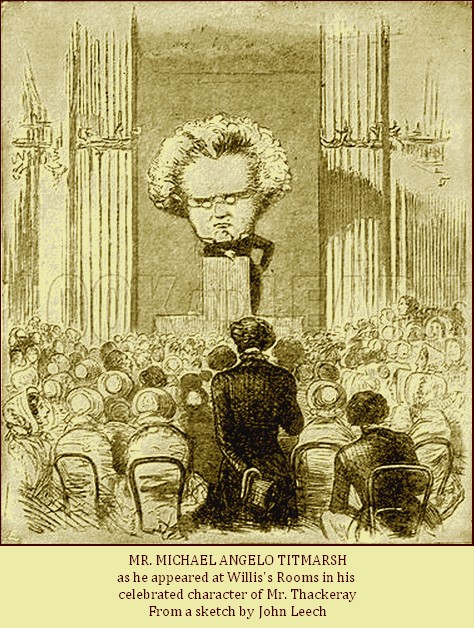
There seem to have arisen in the novel-reading world some doubts as to who really wrote this book; and various rumours, more or less romantic, have been current in Mayfair, the metropolis of gossip, as to the authorship. For example, Jane Eyre is sentimentally assumed to have proceeded from the pen of Mr. Thackeray’s governess, whom he had himself chosen as his model of Becky, and who, in mingled love and revenge, personified him in return as Mr. Rochester. In this case, it is evident that the author of ‘Vanity Fair,’ whose own pencil makes him grey-haired, has had the best of it, though his children may have had the worst, having, at all events, succeeded in hitting that vulnerable point in the Becky bosom, which it is our firm belief no man born of woman, from her Soho to her Ostend days, had ever so much as grazed. To this ingenious rumour the coincidence of the second edition of Jane Eyre being dedicated to Mr. Thackeray has probably given rise. For our parts, we see no great interest in the question at all. The first edition of Jane Eyre purports to be edited by Currer Bell, one of a trio of brothers, or sisters, or cousins, by names Currer, Acton, and Ellis Bell, already known as the joint-authors of a volume of poems. The second edition of the same—dedicated, however, ‘by the author,’ to Mr. Thackeray; and the dedication (itself an indubitable chip of Jane Eyre) signed Currer Bell. Author and editor are therefore one, and we are as much satisfied to accept this double individual under the name of ‘Currer Bell,’ as under any other, more or less euphonious. Whoever it be, it is a person who, with great mental powers, combines a total ignorance of the habits of society, a great coarseness of taste, and a heathenish doctrine of religion. And as these characteristics appear more or less in the writings of all three, Currer, Acton, and Ellis alike, for their poems differ less in degree of power than in kind, we are ready to accept the fact of their identity or of their relationship with equal satisfaction. At all events there can be no interest attached to the writer of ‘Wuthering Heights’—a novel succeeding ‘Jane Eyre,’ and purporting to be written by Ellis Bell—unless it were for the sake of more individual reprobation. For though there is a decided family likeness between the two, yet the aspect of the Jane and Rochester animals in their native state, as Catherine and Heathfield, is too odiously and abominably pagan to be palatable even to the most vitiated class of English readers. With all the unscrupulousness of the French school of novels it combines that repulsive vulgarity in the choice of its vice which supplies its own antidote. The question of authorship, therefore, can deserve a moment’s curiosity only as far as Jane Eyre is concerned, and though we cannot pronounce that it appertains to a real Mr. Currer Bell and to no other, yet that it appertains to a man, and not, as many assert, to a woman, we are strongly inclined to affirm. Without entering into the question whether the power of the writing be above her, or the vulgarity below her, there are, we believe, minutiae of circumstantial evidence which at once acquit the feminine hand. No woman—a lady friend, whom we are always happy to consult, assures us—makes mistakes in her own métier—no woman trusses game and garnishes dessert-dishes with the same hands, or talks of so doing in the same breath. Above all, no woman attires another in such fancy dresses as Jane’s ladies assume—Miss Ingram coming down, irresistible, ‘in a morning robe of sky-blue crape, a gauze azure scarf twisted in her hair!!” No lady, we understand, when suddenly roused in the night, would think of hurrying on ‘a frock.’ They have garments more convenient for such occasions, and more becoming too. This evidence seems incontrovertible. Even granting that these incongruities were purposely assumed, for the sake of disguising the female pen, there is nothing gained; for if we ascribe the book to a woman at all, we have no alternative but to ascribe it to one who has, for some sufficient reason, long forfeited the society of her own sex.
And if by no woman, it is certainly also by no artist. The Thackeray eye has had no part there. There is not more disparity between the art of drawing Jane assumes and her evident total ignorance of its first principles, than between the report she gives of her own character and the conclusions we form for ourselves. Not but what, in another sense, the author may be classed as an artist of very high grade. Let him describe the simplest things of nature—a rainy landscape, a cloudy sky, or a bare moorside, and he shows the hand of a master; but the moment he talks of art itself, it is obvious that he is a complete ignoramus.
We cannot help feeling that this work must be far from beneficial to that class of ladies whose cause it affects to advocate. Jane Eyre is not precisely the mouthpiece one would select to plead the cause of governesses, and it is therefore the greater pity that she has chosen it: for there is none we are convinced which, at the present time, more deserves and demands an earnest befriending.
Like this:
Like Loading...