Remembering Russia’s Vietnam

Remembering Russia’s Vietnam

FRANK ELLIS remembers the tortuous Soviet attempt to subjugate Afghanistan

Afgantsy: The Russians in Afghanistan 1979-89

Rodric Braithwaite, Profile Books, London, 2011

“This film is dedicated to the gallant people of Afghanistan”

(Rambo III, 1988)

Afgantsy is divided into three parts: part I (‘The Road to Kabul’) which provides the reader with the background to the internal crisis that led to the Soviet invasion; part II (‘The Disasters of War’) which speaks for itself; and part III (‘The Long Goodbye’) which deals with the attempts by Gorbachev to disentangle Soviet forces from the conflict. In an epilogue Braithwaite then examines the long term consequences of the war on the veterans. His use of sources is generally good – he makes effective use of various web sites dedicated to the veterans of the war – though some sources are surprisingly absent. There are, for example, no references to the ice-breaking essays written by veterans published in the journal Znamia in 1988 when it was edited by Grigorii Baklanov, a famous writer and himself a veteran of the Great Fatherland War. Nor is there any mention of the pioneering work of Mikhail Kozhukov, the war correspondent of Komsomol’skaia pravda, who covered the war for some three and a half years.  A more recent contribution to the study of the Soviet invasion and occupation was written by Colonel Oleg Kulakov while studying at the NATO Defence College (See Oleg Kulakov, ‘Lessons learned from the Soviet Intervention in Afghanistan: Implications for Russian Defence Reform’, Research Papers, № 26, NATO Defence College, March 2006, pp.2-7). This paper should have been part of Braithwaite’s research corpus.

For the benefit of the reader who does not speak Russian Braithwaite explains that the title of his book is derived from afgantsy, the Russian nominative plural of afganets. Afganets has a number of meanings: an inhabitant of Afghanistan (though Braithwaite does not point out that the word specifically refers to a male inhabitant, a female would be afganka); a type of wind; and the word’s most recently acquired meaning, a veteran of the Soviet war in Afghanistan. That Soviet soldiers referred to themselves as afgantsy does, I suggest, require some explanation, some speculation as to why this is so. I could not imagine Soviet soldiers returning from Germany in 1945 calling themselves nemtsy (Germans) and I have not heard of the soldiers of the Russian Federation returning from a tour in Chechnia being called chechentsy (Chechens). The use of afganets by Soviet soldiers to refer to themselves amounts to a rejection of any ideological baggage used to justify the war. It also suggests going native, an identification with the country they have invaded. This is not what one would expect from soldiers brought up in a Marxist-Leninist state. Soviet soldiers appear to be adapting to the terrain and people much in the same way that British political advisers and soldiers did when they lived in and administered the remote frontier regions of India. Kipling would have understood the psychology of these Soviet soldiers instantly.
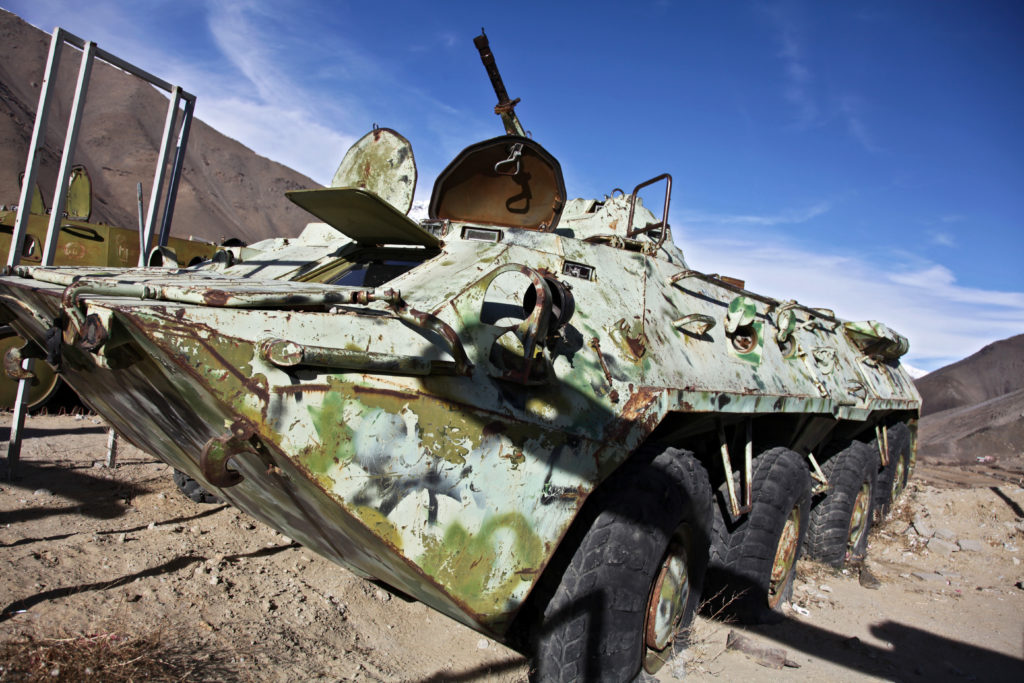
Abandoned Soviet BTR in Afghanistan (U.S. Army photo by Sgt. Teddy Wade/Released)

Braithwaite’s account of the Soviet invasion and occupation of Afghanistan begins, as it must, with the internal politics of Afghanistan.  Those of us who know our Lenin have heard it all before. Afghan communists, just like their fellow fanatics in the early days of the Soviet Union, Mao in China and Pol Pot, made all kinds of promises about modernity and the need for revolutionary change and sweeping away the old order. In Afghanistan, promises of imminent paradise on earth, if only the role of religion and ancient customs were jettisoned, could only enrage the pious and the conservative; and so they did.  The problems started with the overthrow of President Daud in April 1978 by a group calling itself the People’s Democratic Party of Afghanistan. Braithwaite says that this group’s crude Marxism was more of a liability to the Soviet Union than an asset because their Marxist theories had very little relevance for a country which lacked an urban or industrial proletariat. Well, if that was true for Afghanistan in the 1970s it was much the same for Russia between 1917 and 1939. The tenets of classical Marxism were ditched by Lenin and Stalin in order to build socialism in one country. And if the People’s Democratic Party of Afghanistan was split into two rival wings, Parcham and Khalq, and divided by a violent rivalry, the Soviet Communist Party with its internal rivalries and bloody purges provided something of a precedent.  Just how zealous was the ideologically inspired blood letting can be appreciated by what happened in Afghanistan in the period between the communist coup and the Soviet invasion. Braithwaite informs us that ‘twenty-seven thousand people may have been executed in the Pul-i Charki prison alone’.[1] For the factions of the People’s Democratic Party of Afghanistan Stalin was a surer guide to the pursuit and exercise of power than Brezhnev and his successors. However, as Braithwaite points out:

“The Afghan Communists made the fatal mistake of underestimating the power of Islam and its hold on the people”. [2]

The rebellion against the communists in Herat in March 1979 in which a handful of Soviet advisers were killed came as a shock to the Soviet leadership.  Solutions there were but they all had to be measured and assessed against the background of the Cold War. The problem for the Soviet leadership was that any action it took to restore the situation and to secure its interests, directly or indirectly in Afghanistan, might jeopardise what appeared to be the rewards of détente. On the other hand, as Braithwaite notes, the process towards ratification of the second Strategic Arms Limitation Treaty (SALT II) by the US Senate had stalled and in the Western European member states of NATO – The Federal Republic of Germany, Netherlands, Belgium and the UK – opposition to the deployment of Soviet SS 20 medium-range missiles was growing with the likelihood that the Americans would deploy Pershing II and Cruise missiles in response.

Another factor was the longevity of the relationship between the Soviet Union and Afghanistan. Abandoning Afghanistan to its fate would be seen as a huge propaganda defeat and might encourage other so-called fraternal states to rethink their relationship with the Soviet Union (the Solidarity crisis in Poland erupted in 1980-1981). The murder in October 1979 of Nur Mohamed Taraki, the Communist President on the orders of his comrade/rival the Prime Minister, Hafizullah Amin, tilted the balance in favour of intervention. Brezhnev’s reaction to the news that Amin had had Taraki murdered is hilarious: ‘What a bastard, Amin, to murder the man with whom he made the revolution…’[3] Perhaps Amin got the idea of doing away with his rival from Brezhnev’s old boss. Having been caught out by events, the Soviet authorities, in effect, Brezhnev, Andropov, Gromyko and Suslov, decided to intervene. The crucial Politburo meeting took place on 12th December 1979. The Braithwaite view is that the Soviet intervention was not totally reckless, since all the main problems had been assessed. The prevailing view was that Afghanistan could not just be abandoned: there were too many vital Soviet interests at risk. Braithwaite also argues, though not entirely convincingly, that the decision was not solely ‘taken in secret by a small clique of gerontocrats’.[4] I take a rather different view of what Braithwaite refers to as ‘the consensus-building mechanisms of Soviet power’.[5] Public displays of consensus at Soviet Communist Party meetings were political theatre for publication in Pravda, any decision having been taken earlier behind closed doors.

The formal invasion order was issued by Dmitrii Ustinov, the Soviet Defence Minister at midday (Moscow time) on 25th December 1979. In the order Ustinov specified that Afghan air space and the land border were to be crossed at 1500hrs (Moscow time) by forces of the 40th Army and the Soviet Air Force. During the night of the 24th-25th December, ahead of the formal order, Soviet transport aircraft laden with soldiers from the 103rd Guards Air Assault Division and 345th Guards Independent Parachute Assault Regiment landed in a steady stream at Bagram and Kabul airports. Critical for the success of the initial phase of the invasion was the seizure of key passes, such as the Salang Pass, which was taken by men of the 56th Guards Independent Airborne Assault Brigade.

The trickiest phase of the operation was the capture of Amin’s current residence, the Taj Bek palace, with the aim of killing Amin himself. The assault took place on 27th December 1979. Even as his world was coming to an end Amin did not grasp that the men attacking his palace were not Afghan rivals but Soviet Special Forces. Braithwaite concedes that the precise circumstances in which Amin died are not clear and that he could have been killed in crossfire. However, there is a rumour that Mohamed Gulabzoi, Minister of Communications, and a member of a group dubbed, in a nice borrowing from Comrade Chairman Mao, the Gang of Four by Amin, was given the task. This makes sense. Given that Amin’s death was essential to the whole enterprise – he would be far too dangerous left alive or even wounded – it seems improbable, I would suggest, that Amin’s death would be left to chance. Someone or some group, possibly Soviet, though ideally, and more likely, Afghan, would have been given the specific task of killing Amin inside the palace. That Amin’s five-year old little boy was also killed, shot in the chest, is a clue that Amin’s killer was an Afghan. In the world of tribal hatreds and feuds, for which communist ideology provides but a thin layer, killing the son, the potential avenger, is the vindictive, and to most Westerners, scarcely conceivable norm. Lenin, Stalin and Beria would all have approved such a course of action.

Having invaded Afghanistan, removed Amin and installed their new man, Babrak Karmal, the main Soviet force based on the 40th Army and known as The Limited Contingent of Soviet Troops in Afghanistan (Ogranichennyi Kontingent Sovetskikh Voisk v Afganistane) now had the task of consolidating its grip and achieving the necessary stability prior to a withdrawal. The first thing that went wrong, as predicted, was the condemnation of the invasion by Western states and NATO and very real damage to relations between West and East. Throughout much of the Cold War a substantial body of opinion in Western states propagated the view that American foreign policy was essentially aggressive whereas that of the Soviet Union and its satellites was defensive or to use the favoured word “progressive”. In late December 1979 this naïve, often cowardly and all too often mendacious view of the world was terminally damaged. If the Anglo-French sell out to Hitler at Munich in 1938 and its immediate aftermath brought home the real nature of the National-Socialist state and its ambitions, the Soviet invasion of Afghanistan served much the same purpose in changing perceptions, finally, among Western states and their often see-no-evil populations.

The Soviet invasion made the task of deploying Pershing II and Cruise missiles that much easier. Elected in April 1979, Margaret Thatcher was now determined to permit the deployment of Cruise missiles in the UK. The Soviet invasion also assisted the rise and election of Ronald Regan in the US in 1980 and probably helped Helmut Kohl in 1982-1983. So by the end of the first quarter of 1983 a marked political shift from left to right had taken place in the three main NATO states. While this alignment probably had more to do with the failure of state socialism and big government, foreign policy – Soviet behaviour – was also an influence. Where throughout the 1970s the Soviet Union found itself able to act more or less as it pleased by the early 1980s there was a new resolve spearheaded by Margaret Thatcher and Ronald Regan to confront the Soviet Union. That the summer Olympics were due to be held in Moscow in 1980 was a propaganda gift for Western anti-communists and the parallels between the Nazi Olympics of 1936 were freely and effectively made.

The military problems confronting the Soviet 40th Army were formidable and clearly adumbrate the same difficulties faced by NATO today. Terrain can be captured and cleared of enemy but as soon as the regular formations withdraw the insurgents reoccupy the vacated terrain and reassert their authority among the local population. This classic feature of insurgency and counterinsurgency characterised all Soviet attempts, for example, to pacify and to control the magnificent Pandsher valley. Even allowing for the strategic importance of the valley – close to the Bagram airbase, the Salang tunnel and Kabul – the nature of the struggle waged between the men of the 40th Army and the insurgents led by the outstanding guerrilla commander, Ahmad Shah Masud, to possess the Pandsher reminds me of two evenly matched rivals fighting to own an exceptionally beautiful work of art. In order to maintain a permanent presence in the valley the Soviet army established outposts, zastavas which typically consisted of a large section. The zastava would normally be in a position that was exceptionally difficult to assault and would be defended by heavy machine guns and mortars and supplied by helicopter. The supply chain was the weak link since Masud’s men had heavy machine guns and they waged a war of attrition against the Soviet helicopter units. The biggest operation against Masud took place in the spring of 1984. The force consisted of 11,000 Soviet troops with 2,600 Afghans, supported by 200 aircraft and 190 helicopters. Most of the losses in this operation came from mines and ambushes. Masud, forewarned of the Soviet assault, had withdrawn the bulk of his men and survived to fight another day.

One of the most famous battles between Soviet forces and mujahedin occurred in January 1988 when some 200-400 mujahedin fighters attacked a temporary picket defended by men of the 9th Company 345th Guards Independent Parachute Assault Regiment. The battle raged all day and into the morning by which time the Paras were running low on ammunition. Soviet casualties were 6 killed and 28 wounded. The action was made into a film, 9th Company (2005) and certainly gives Rambo III a run for its money.

Atrocities were committed by both sides. The Soviet forces wiped out whole villages when ambushed, executed prisoners indiscriminately, sowed mines and booby traps. The mujahedin returned the favour. Soviet prisoners could expect to be tortured. Beheadings were not straightforward. The head is not removed by one blow of a very large sword administered by an expert executioner: it is hacked off with a knife. Braithwaite reports that one Soviet prisoner was stripped naked and castrated. A ring was inserted in his nose and he was paraded about, presumably as a gruesome propaganda stunt. Once this cycle of atrocities starts it is very difficult, if not impossible, to break. Generals can issue orders requiring a strict code of conduct towards prisoners and civilians but soldiers who have encountered the mutilated bodies of comrades will take no notice. Junior leaders trying to enforce orders on the proper treatment of prisoners will be ignored. If they persist, they run the risk of being killed or, to use American slang from Vietnam, “fragged”, by their own men. These sorts of conflicts always arouse a primeval desire for revenge which must be propitiated and which cannot be brushed aside by appeals to common humanity. The advocates of common humanity might like to consider that common humanity would surely mandate that Soviet forces – and now NATO forces – would not be bombing and strafing people in their homelands in the first place. Once the bombing, the strafing and all the accidents start, then the path towards mutual atrocities is inevitable. Each set of participants brings its own atrocities: the insurgents will slowly and often very clumsily behead prisoners or their women will urinate in the mouths of prisoners so that they drown; the counterinsurgents will use firepower and grenades, but the lust for revenge is the same.  And in the Internet age both sides will post their slaughter porn, their electronic scalps for the world to see.

Yet among the cycle of atrocities are miracles of survival and recognition of common humanity. Take, for example, the case of Aleksei Olenin. Braithwaite notes that Olenin was kidnapped while relieving himself. A point that has some tactical relevance here and which is not immediately obvious is that Olenin had, I suspect, gone to obey a call a nature which necessitated his having to squat rather than to stand.  Like most of us he preferred some privacy, out of sight of his comrades, which served the purposes of his abductors. This is a serious point since women serving with men are at a treble disadvantage and are not going to obey the calls of nature or attend to other hygiene requirements in front of men. They will seek privacy so placing themselves at a heightened risk of being abducted or being killed. Olenin ended up in a mujahedin detachment. After two months he converted to Islam. The detachment commander who regarded his Russians as his property decided to marry them off. However before any marriage could take place Olenin returned home to a country that by now had changed beyond recognition (this was 1994). But young Olenin discovered that love is a demanding mistress: she is not easily disobeyed. After six months he returned to Afghanistan and married Nargez. Eventually, his wife, he and a daughter returned to Russia. This is a remarkable and moving story, redolent in some ways of the Book of Ruth, a small piece of fragile goodness amid so much suffering.

Another remarkable story concerns the fate of Nikolai Bystrov who was also captured by the mujahedin. After many escape attempts and death threats he was given the choice of being exchanged for prisoners or trying to make it abroad. He stayed with Masud and ended up as one of his bodyguards. He then married a woman from Masud’s tribe and acting on Masud’s advice returned to Russia with his wife in 1995. The way Masud treated this Russian soldier confirms the Afghan’s status as a wise man and leader and underlines the dreadful loss for his tribe and even Afghanistan when he was killed on 9th September 2001. Islam desperately needs men of the calibre of Masud, but then so does Britain.

Braithwaite devotes a lot of space to the way the war in Afghanistan nurtured or rather furthered opposition to the Soviet regime. Attempts to hide the truth and the losses provoked opposition especially among mothers who had lost sons. The state controlled media and the censorship regime could prevent damaging stories from being published but rumours spread and people knew mothers whose sons came home in sealed coffins or came home as invalids. There were also some senior dissenting officers – Colonel Leonid Shershnev, General Alexander Maiorov and Colonel Tsagolov – who did not pull their punches. One of the truly striking things that emerge from Afgantsy is how Soviet military failures and successes anticipate the same sort of problems faced by NATO and the failure on the part of NATO to have studied the Soviet experience until very late in the day.

Unlike Matthew Parris, who in any case lacks the background knowledge, I do not see Afgantsy as bidding fair to become the standard history on the subject of the Soviet invasion. That would require the use of a lot more material from the US, especially the CIA, our own SIS and would, above all, require access to a great deal of Soviet documents which have still to be declassified and are unlikely to be for some time. It would be very interesting to know the degree to which the KGB and other Soviet agencies were able to penetrate the mujahedin. One particular weakness of Afgantsy is the failure to provide a detailed account of Western propaganda deployed against the Soviet occupation. There is certainly no shortage of accessible source material. I remember that émigré papers such as the Paris-based Russkaia mysl’ ran exceptionally detailed articles on the occupation and clearly had access to high grade sources. This is material that Braithwaite should have used. What Braithwaite does manage to achieve in Afgantsy is a general synthesis of a lot of material such that there is a clear overall picture of what happened, a valuable contribution and one because of that which highlights for future researchers the lacunae still waiting to be filled.

Dr. FRANK ELLIS is a Sovietologist and military historian. © Frank Ellis 2013


[1] Braithwaite, Afgantsy, p.76

[2] Braithwaite, Afgantsy, p.44

[3] Braithwaite, Afgantsy, p.73

[4] Braithwaite, Afgantsy, p.81

[5] Braithwaite, Afgantsy, p.81


Posted in QR Home | Tagged , , , , , , , , | Leave a comment

Rational national limits

Rational national limits

ROBERT HENDERSON considers the case for maintaining nation states

The Significance of Borders – Why Representative Government and the Rule of Law Require Nation States

Thierry Baudet, Brill, 2012

This a frustrating book. Its subject is of the greatest interest – namely, how human beings may best organise themselves to provide security and freedom. It contains a great deal of good sense because the author understands that humans cannot exist amicably unless they have a sense of shared identity and a territory which they control. (Anyone who doubts the importance of having such a territory should reflect on the dismal history of the Jews.)

Baudet describes vividly the undermining of the nation state by the rise of supranational bodies: the loss of democratic control, the impossibility of taking very diverse national entities such as those forming the EU and making them into a coherent single society; the self-created social divisions caused by mass immigration and the rendering of the idea of citizenship based on nationality effectively null by either granting it to virtually anyone regardless of their origins or by denying the need for any concept of nationality in the modern globalised world.

Offa's Dyke, along the Welsh-English border

He also deals lucidly with the movement from the mediaeval feudal relationships of fealty to a lord to the nation state; correctly recognises representative government as uniquely European; examines the concept of sovereignty intelligently and is especially good on how supranationalism expands surreptitiously. For example, the International Criminal Court (ICT) is widely thought to only apply to the states which have signed the treaty creating it. Not so. The nationals of countries which have not signed who commit crimes on the territories of states which have signed can be brought for trial before the ICT.

That is all very encouraging for those who believe in the value of the sovereign nation state. The problem is Baudet wants to have his nationalism whilst keeping a substantial slice of the politically correct cake. Here he is laying out his definitional wares:

“I call the open nationalism that I defend multicultural nationalism – as opposed to multiculturalism on the one hand, and an intolerant, closed nationalism on the other. The international cooperation on the basis of accountable nation states that I propose, I call sovereign cosmopolitanism – as opposed to supranationalism on the one hand, and a close, isolated nationalism on the other. Both multicultural nationalism and sovereign cosmopolitianism place the nation state at the heart of political order, while recognizing the demands of the modern, internationalized world. “(p xvi).

Baudet’s “multicultural nationalism” is the idea that culturally different groups (he eschews racial difference as important) can exist within a territory and still constitute a nation which he defines as “a political loyalty stemming from an experienced collective identity…rather than a legal, credal or ethnic nature” (p62). How does Baudet think this can be arrived at? Baudet believes it is possible to produce the “pluralist society, held to together nevertheless by a monocultural core”. (p158). Therein lies the problem with the book: Baudet is trying surreptitiously to square multiculturalism with the nation state.

The concept of a monocultural core is akin to what multiculturalists are trying belatedly to introduce into their politics with their claim that a society in which each ethnic group follows its own ancestral ways can nonetheless be bound together with a shared belief in institutions and concepts such as the rule of law and representative government. This is a non-starter because a sense of group identity is not built on self-consciously created civic values and institutions – witness the dismal failure of post-colonial states in the 20th century – but on shared system of cultural beliefs and behaviours which are imbibed unwittingly through growing up in a society. Because of the multiplicity of ethnic groups from different cultures in modern Western societies, there is no overarching single identity within any of them potent enough to produce Baudet’s unifying “monocultural core”. Moreover, the continued mass immigration to those societies makes the movement from a “monocultural core” ever greater. In practice his “multicultural nationalism” offers exactly the same intractable problems as official multiculturalism.

Baudet’s idea of a “monocultural core” would be an unrealistic proposition if cultural differences were all that had to be accommodated in this “pluralist society”, but he greatly magnifies his conceptual difficulties by refusing to honestly address the question of racial difference. However incendiary the subject is these differences cannot be ignored. If human beings did not think racial difference important there would there be no animosity based purely on physical racial difference, for example, hostility to blacks wherever they come from.

The idea that assimilation can occur if it is actively pursued by governments is disproved by history. France, at the official level, has always insisted upon immigrants becoming fully assimilated: British governments since the late 1970s have embraced multiculturalism as the correct treatment of immigrants. The result has been the same in both countries; immigrant groups which are racially or radically culturally different from the population which they enter do not assimilate. The larger the immigrant group the easier it is for this lack of assimilation to be permanent, both because a large population can colonise areas and provide a means by which its members can live their own separate cultural lives and because a large group presents a government with the potential for serious violent civil unrest if attempts are made to force it to assimilate.

The USA is the best testing ground for Baudet’s idea that there could be a common unifying core of culture within a country of immense cultural diversity. Over the past two centuries it has accepted a vast kaleidoscope of peoples and cultures, but its origins were much more uniform. At independence the country had, as a consequence of the English founding and moulding of the colonies which formed the USA, a dominant language (English), her legal system was based on English common law, her political structures were adapted from the English, the dominant general culture was that of England and the free population of the territory was racially similar. Even those who did not have English ancestry almost invariably prided themselves on being English, for example, John Jay, one of the Founding Fathers, who was of Huguenot and Dutch descent, wrote:

“Providence has been pleased to give this one connected country to one united people — a people descended from the same ancestors, speaking the same language, professing the same religion, attached to the same principles of government, very similar in their manners and customs, and who, by their joint counsels, arms, and efforts, fighting side by side throughout a long and bloody war, have nobly established general liberty and independence.” (Federalist No. 2).

There was the presence of a mainly enslaved black population and the native Amerindians, but the newly formed United States at least at the level of the white population had a degree of uniformity which made the idea of a core monoculture plausible.

From the mid-sixties after US immigration law was slackened migrants arrived in ever increasing numbers and with much more racial and ethnic variety. The result has been a Balkanization of American society with a legion of minority groups all shouting for their own advantage with the original “monocultural core” diluted to the point of disappearance.

There are other weaknesses in Baudet’s thinking. He is much too keen to draw clear lines between forms of social and political organisation. For example, he considers the nation state to be an imagined community (a nation being too large for everyone to know everyone else) with a territory it controls as opposed to tribal or universal loyalty (the idea that there is simply mankind not different peoples who share moral values and status). The problem with that, as he admits, are the many tribes which are too large to allow each individual to know each other (footnote 23 p63). He tries to fudge the issue by developing a difference between ethnic loyalty and national loyalty, when of course there is no conflict between the two. Nations can be based on ethnicity.

Another example of conceptual rigidity is Baudet’s distinction between internationalism and supranationalism. He defines the former as the traditional form of international cooperation whereby nation states make agreements between themselves but retain the ultimate right to decide what policy will be implemented (thus preserving their sovereignty) while the latter, for example the EU, is an agreement between states which removes, in many areas of policy, the right of the individual contracting states to choose whether a policy will be accepted or rejected. Although that is a distinction which will appeal to academics, in practice it rarely obtains because treaties made between theoretically sovereign states often results in the weaker ones having no meaningful choice of action.

Despite the conceptual weaknesses, the strengths of the book are considerable if it is used as a primer on the subject of national sovereignty. Read it but remember from where Baudet is coming.

ROBERT HENDERSON blogs at http://livinginamadhouse.wordpress.com/


Posted in QR Home | Tagged , , , , , , | Leave a comment

The price of ambition

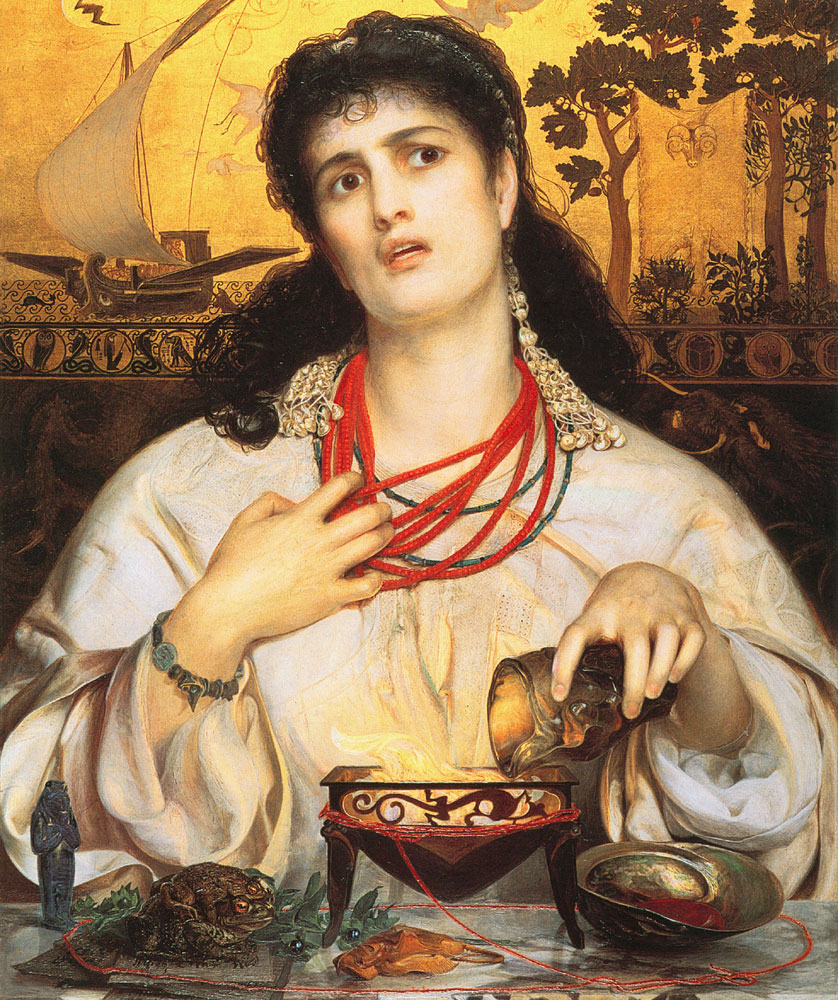
Medea, Anthony Frederick Augustus Sandys, credit Wikipedia

The price of ambition

LESLIE JONES

“Few, I ween, shall stir her hate unscathed, or lightly humble her.”

Euripides, Medea

In Euripides’ drama Medea, Jason forsakes his wife and children in order to marry the daughter of Creon, ruler of Corinth. Medea, the daughter of Aiêtês, King of Colchis, has given up everything – her country, her father and her home, all “For this man’s sake, who casteth her away”.

Jason, self-deceiving and sanctimonious, claims however to be helping Medea by providing “…young kings for brethren to…[her] sons”. Poor men, he notes, have no friends but by marrying a king’s daughter, he will henceforth dwell in a fair house. Yet every man, as an attendant observes, “…more loveth his own head than other men’s”. Jason, he infers, “…dreameth of the bed of this new bride and thinks not of his sons”.

Medea’s erstwhile nurse warns that “Her [Medea’s] heart is no light thing, and useth not to brook such wrong”. Her love for Jason is transformed into remorseless hatred – “Dire and beyond all healing is the hate, when hearts that loved are turned to enmity”. Her only wish now is to see “….him and his bride, who sought my grief when I wronged her not, broken in misery and all her house”. She acknowledges that “…there moves no bloodier spirit between heaven and hell” than a women betrayed in love.

Creon fears that Medea, “…sullen-eyed and hot with hate…”, might hurt his daughter and resolves to immediately banish both her and her children. But Medea cunningly claims to harbour no hatred for his family and asks for her banishment to be delayed by one day so that she can comfort her children. Creon, whom Medea considers a “triple fool”, accedes to her request.

Medea also feigns compliance with Jason’s selfish plans but requests that he intercede with Creon’s daughter to have the banishment of her children overturned. She then sends her sons to the bridal chamber of Jason’s new bride to present her with a splendid robe and golden crown. Enthralled by these “gifts”, she duly puts them on but they have been poisoned and she dies in agony. Creon, grief-stricken, kisses his dead daughter and is himself poisoned. Medea then slaughters her own beloved children to complete the punishment of their father.

The chorus conclude in suitably fatalistic vein, thus, “Great treasure halls hath Zeus in heaven, from whence to man strange dooms be given, past hope or fear. And the end men looked for cometh not, and a path is there where no man thought: so hath it fallen here”.

The hapless and hubristic Christopher Murray Paul-Huhne might now perhaps agree.

LESLIE JONES is the Quarterly Review‘s deputy editor. Leslie Jones © February 2013


Posted in QR Home | Tagged , , , , , | Leave a comment

Mali misadventures – are we following the French into folly?

Mali misadventures:

are we following the French into folly?

Guest article by ALASTAIR PAYNTER

“History does not repeat itself,” Mark Twain is reported to have said, “but it does rhyme.” When it comes to recent Anglo-French intervention in Africa, there is much rhyme, if little reason. On January 29th, the British government announced that 300 troops would be sent to the region in a strictly non-combat role. Of these, 40 could be deployed inside the troubled African country itself, while a further 200 are preparing to train troops from other African countries. There are already 70 military personnel there, operating a spy plane, while 20 RAF crew are aiding the transportation of French equipment.[i] Only a few weeks ago the British public was told that there was no risk of being drawn into another conflict and that our involvement was in a purely supply and transportation capacity, to help our Gallic neighbours in their effort to stanch the rise of Islamism in Mali. Now, it seems likely that British troops may be in the West African country for a year.[ii]

There is a great sense of déjà vu about this whole episode. It has only been a couple of years since Britain and France decided to intervene in the Libyan civil war and engaged in a campaign of air strikes targeting government forces. That campaign was relatively short-lived, but the consequences were not. The wiser observers of British foreign policy have already drawn attention to the salient fact that the current spate of terrorism and unrest in Africa might itself be down, in large part, to the destabilising effect of the earlier intervention in Libya. The Third World is becoming increasingly littered with the wreckage of Western intervention. It seems those in favour of military action rarely acknowledge that the problems the new intervention is supposed to counter were themselves the products of intervention.[iii]

Those who imagine that such foreign military adventures are short-lived and can be pre-determinately restricted to a short timetable by office-bound bureaucrats are deceiving themselves. The Afghanistan campaign began as a response to the atrocities of September 11th, 2001. Over a decade later, the mission still goes on, although its purpose seems to have altered over time, variously concerning itself with nation-building and preventing the resurgence of the Taliban, all the while propping up a highly corrupt and dysfunctional regime which will probably collapse soon after the eventual, inevitable Western withdrawal. The government has been warned about the likelihood of a similarly drawn-out campaign in Mali, some even suggesting that it could become “Britain’s Vietnam”.[iv]

The potential cost, both human and economic, should dissuade all but the most zealous interventionists from undergoing such a futile engagement. The British population at large has no desire to be drawn into yet another conflict, which despite the best persuasive efforts of its advocates, bears no real resemblance to recognisable British interests. The notion that perpetual peace can be obtained by engaging in perpetual war is a hard sell to voters whose faith in the wisdom of their government’s foreign policy is considerably less firm than it was little over a decade ago. In addition to this, the likely high economic cost is unthinkable, at a time of prolonged recession. There is nothing conservative about such military exertions. Indeed, as this writer has previously noted, the Conservative-led coalition’s foreign policy has been markedly un-conservative, both in its abandonment of a tangible national interest and its faith in the guidance of abstract principles.

One thing which does much to perpetuate a sense of unease about these interventions is the curious way in which pro-interventionist parties seem able to rapidly acquire intimate knowledge of an region of which most surely knew nothing previously. Ministers and shadow ministers speak gravely of the threat from Islamists in this area and that area, the need to aid fellow Western powers in their security missions and the necessity of providing support to our allies in the region. Rarely does anyone in such realms of decision-making authority seem to pause and admit with all candour that their knowledge of Mali is limited. Few people could probably even locate it on a map, let alone hope to explain its internal dynamics, and cultural and social machinery. Perhaps the most famous place in Mali, Timbuktu, is itself a byword for the exotic and mysterious. It was, after all, a place shut off to Western eyes for much of history, until 1828 when the French explorer René Caillié became the first European to enter, and then return alive.

For their part, the French appear to have embarked upon a completely different course of action to the one they chose ten years ago when their refusal to embroil themselves in the Iraqi escapade made them the brunt of a bout of neoconservative fury in the United States, when choice champagne was unceremoniously poured into the street and French fries became known as “freedom fries”.[v] Sarkozy’s elevation to power marked a change in French foreign policy. Not wanting to be seen sitting on the sidelines when there was glory to be gained in the War on Terror, his efforts helped warm the relationship between Paris and Washington. In 2011, it was France which led the calls for intervention in Libya and since pressed for action in Syria. It now falls to his successor, the Socialist François Hollande, to demonstrate his tough foreign policy credentials. It is probable that the timing of the action in Mali was useful to bolster his image as a tough leader, firmly committed to the preservation and protection of French interests. Of course, his concern for actual French interests has proven highly doubtful in the mind of many, following on the back of an attempt to introduce a spiteful 75% tax rate on France’s top earners, a move which re-emphasises the general socialistic contempt for individual achievement and its institutionalisation of collectivist greed and envy.

The transition to a more militaristic French foreign policy may have allayed the erstwhile doubts of some of their English-speaking allies. The contempt that is quite common in the Anglosphere for French military ability, manifested mostly in playful banter about white flags and dropped weapons, but more seriously in 2003 around the time of the invasion of Iraq, is misplaced. France has a very long and impressive martial record, and considerable experience in West Africa. The New Imperialism of the late 19th century witnessed France’s acquisition of a sizeable portion of Africa, its empire second only to Britain in its reach and influence. The problems of that ailing continent are surely not analysable apart from reference to the fateful Berlin Conference of 1885. The effects of that monumentally arrogant exercise in colonial diplomacy are clearly evident in a brief glance at a map of Africa – the rigid, almost mathematical boundaries drawn up by the European powers seemingly oblivious to the cultural and ethnic borders already existent.

Unfortunately, the same disregard for local realities seems to live on in the mind of the policy makers of today. The British government may imagine that by involving itself in another far-flung conflict, it can gain a glorious swift victory and bask in the resulting adulation. The reality will probably be different. It is one of the unfortunate by-products of the democratic age, that there is a complete separation between those who make the decision to go to war and those who actually fight it. Once, kings and nobles made war but they also rode off at the head of their troops, knowing well that the price of defeat could mean an untimely and unpleasant end (in the case of Richard III ending up buried underneath a council car park). In our modern age, politicians who decide to go to war, do so knowing that they will never be accountable in quite the same way, and, should the conflict endure longer than initially planned, be able to pass responsibility to their successors after the election.[vi]

Of course, at the time of committal, prolonged and costly interventions are not usually expected by the protagonists. The risk of not heeding the warnings should be too perilous not to consider. Rather than persist in this present course of action, the government should reverse its present policy and avoid an unnecessary expenditure in blood and treasure. At the very least, they should be subjected to serious, probing questioning in Parliament. Whether the French decide to persist or not is a matter for discussion in France. Britain, however, should not follow them into further folly.

ALASTAIR PAYNTER is a Masters graduate in history

NOTES 


[i] “More than 300 UK troops set for Mali mission” in Telegraph Online, January 29th, 2013 http://www.telegraph.co.uk/news/worldnews/africaandindianocean/mali/9834115/More-than-300-UK-troops-set-for-Mali-mission.html

[ii] “British troops could be in Mali for longer than a year”, in Telegraph Online, January 31st, 2013 http://www.telegraph.co.uk/news/uknews/defence/9839771/British-troops-could-be-in-Mali-for-longer-than-a-year.html

[iii] “Blair backs intervention in Mali” in FT.com, February 3rd, 2013

[iv] “Mali Mission could become Britain’s Vietnam” in Telegraph Online, January 29th, 2013 http://www.telegraph.co.uk/news/worldnews/africaandindianocean/mali/9834558/Mali-mission-could-become-Britains-Vietnam.html

[v] http://www.miquelon.org/bashers/anti-french-restaurants/

[vi] For a scholarly evaluation of the respective attitudes to war in monarchies and democracies, particularly with respect to time preference, see the extensive work of Professor Hans-Hermann Hoppe


Posted in QR Home | Tagged , , , , | Leave a comment

The enthralled Tories

The enthralled Tories

DEREK TURNER

David Cameron’s crusade to legalize “gay marriage” has been superficially successful – at least until it gets to the House of Lords – but it has alienated and puzzled many natural conservatives.

Despite many months of attempting to persuade recalcitrant Conservative MPs that the proposal would have the effect of strengthening the institution of marriage, and then imposing a three-line whip on the motion, a majority of Conservative MPs either voted against or abstained on the measure. The scale of the rebellion will have shocked the Prime Minister, and reminded him that his hold over his party is increasingly tenuous. In the not too distant future, he may remember ruefully the cruel words he once levelled at a tired and greying Tony Blair – “You were the future once!”

Many have also been mystified by the proposal – which had never featured in the Conservative manifesto. While manifestos should not be regarded in the same light as government programmes, they are nevertheless gauges of party disposition and are supposed to indicate directions of travel. Furthermore, there was no public clamour for this proposal, and many homosexuals were wholly indifferent, realizing that civil partnerships (which everyone now accepts) provide all the necessary legal rights for couples of whichever sex.

Granting Parliamentary time to this unwanted and essentially pointless measure when there are all kinds of important issues requiring urgent attention smacks of obsession. The Conservatives have traditionally been relied upon to fix the economy after every Labour government, and their (arguably overstated) reputation for unsentimental economic efficiency is their chief electoral strength. They would do better, for themselves as well as us, to concentrate their energies on trying to lift the economy out of the mire.

The Conservatives have also traditionally been regarded as the party of “commonsense” and plain speaking, and the least likely of the two main parties to engage in hysteria or gesture politics. Politics-watchers have become accustomed to seeing incoming Tory administrations quietly carrying on the politically correct policies they fiercely denounced whilst in opposition – but it is unusually disheartening to see them initiating such policies, let alone prosecuting them with inquisitorial zeal.

So what has brought on this peculiar preoccupation? Some provincial Tories still grumble about an alleged “gay mafia” dominating the “Notting Hill set”, but that is off the mark, because it means ascribing a corporate personality to a diverse and divided (and in any case tiny) group.

If it is intended as a sop to Liberal Democrats, or as a diversion to take hostile attention away from the “hardline” policies allegedly being carried on in welfare or education or on Europe, then it will not suffice. The egalitarian mindset is an irrational and insatiable one, and acceding to any part of its impossible programme merely whets activists’ appetite for yet more concessions and inversions. (We have already seen a Labour MP calling for a change in the law of succession so that a monarch can have a homosexual partner with constitutional as well as civil rights.) There has never been an egalitarian society in any period of the world’s history, or in any culture or civilization, and yet such minor details are never permitted to obtrude on this perennial mania.

The obvious, if unpalatable, answer is that this policy is merely the latest manifestation of a generic PC neurosis of the kind that for about forty years has prevented the Conservative hierarchy from rolling back leftist legislation, or taking meaningful action on such matters as Europe or immigration – notwithstanding election promises, or the sincere desire of many of their elected representatives and those who campaign to get those representatives elected. The earnest wish never to be again thought of as “the nasty party” has mutated into a psychological (and frankly sycophantic) need to be seen as always “nice”.

That ultra-Left thinking should have sunk such taproots into the top layer of the Conservative Party reveals the tragic inadequacies of Tory thinking, in particular the much-vaunted “non-ideological” approach to what has always been, after all, a war of ideas. The Conservatives have for too long borrowed the other side’s assumptions and terminology rather than formulating their own, to the extent that what is still mainstream public opinion is almost never reflected in political outcomes. It also shows how unprofessional and undisciplined traditionalists have always been as a group – if indeed, you can even call them a “group”, because they appear unable to work together in any systematic way, or over protracted periods.

This bill will get a rough handling in the Lords, and it may even get defeated or thrown out on some technical grounds (this might even be Cameron’s secret hope). And even if it is passed, it will make little or no substantive difference to society, for good or ill. Whatever happens, when all the fuss dies down one salient fact will stay – the most senior Tories in the land are in thrall to an ideology that is not only inveterately anti-Tory but also profoundly anti-society.  Derek Turner, 7th February 2013

Posted in QR Home | Tagged , , , , | Leave a comment

Roy Kerridge’s Uncollected Folk

Uncollected Folk

ROY KERRIDGE

The sleeve notes of an early Elvis Presley L.P. describe rock and roll as “commercial folk music”. This is not as far-fetched as it appears. Elvis used to be known as the Hillbilly Cat, and served a long apprenticeship of tours on the country music circuit. In its early days, country music played by hillbillies for hillbillies was sold on records billed as “folk music”. When the old songs began to feel “corny”, an extraordinary transformation of the music took place.

Bluegrass music, with frenetic banjo-playing, began to be heard in the late Thirties, to be perfected and given its name in the Forties. With a new style of extremely skilled accompaniment, the old songs all made a comeback and were recorded all over again. By the mid-Fifties bluegrass itself began to feel “corny”. The music industry kept moving at a fast pace, and rock and roll became a background for traditional songs; not mountain music this time, but Negro-influenced ditties such as “John Henry”, “Matchbox Blues” and so on. This style had come to a dead end just before the Beatles changed everything and brought in the dreaded “rock music” we now know only too well. But in the “western” part of country and western, a startling change took place. All the cowboy songs became “trucker songs”, with new words to old tunes. Overnight the outdated cowboy ceased to be the archetypal he-man American, and the trucker (or long distance lorry driver) took his place. Modern country music innovators like Garth Brooks are still playing truck driver songs. These songs are derided by folk music fans now, but wait till they become extinct!

Jimmy Rodgers

Jimmy Rodgers, the father of country music, was derided by American folk music fans in his day, and satirised by Woody Guthrie (in “Dust Pneumonia Blues”, I think). Woody Guthrie became an acclaimed “folk singer”, perhaps because he was a Communist, perhaps because his intellectual friends did not realised that he was rifling the country and western songbook. Every ditty he composed or stole was called a “folk song” automatically. A better name for this sort of music is “Americana”, but as modern music emerging from a folk background is a worldwide phenomenon, “roots music” or “half-folk” might be better terms.

What of the traditional “national” musics of the world, played by professional bands at dances? Such music, ignored by most “folk fans”, is ideal for “half-folk”. Almost any type of song, traditional or newly-composed, can be given a Latin treatment, a bluegrass treatment, reggae treatment, or even a Scottish bagpipe treatment! If, like myself, you seek for traditional music among uprooted peasants and rough, unlettered people, a rich source of songs can be found among comedians. I have heard many a gem at Scottish variety shows, and unsophisticated comics often trot out an ancient song to roars of acclaim. Even Morecambe and Wise began as clog dancers.

On record, I recommend American hillbilly singer-comedians such as Grandpa Jones, the Duke of Paducah, and anyone on the same label as Cousin Minnie Pearl. Pigmeat Markham, the Negro comedian, has a fine blues voice when he cares to use it. In Jamaica, look out for the legendary duo Bim and Bam, who used to sing old slavery-time songs to a wonderful bluebeat backing, between jokes. They revitalize the work song “Old Mother Mack” to great effect (“She wear mini-frack”).

All over the world, American country music is the music that both replaces traditional music and also preserves it in a new setting. Jamaican singers of old songs often use an assumed “hillbilly accent” on record at the start of their careers, only to grow “natural” as they gain in confidence. Australian’s unofficial national anthems, “Waltzing Matilda” and “A Pub With No Beer”, both have a Nashville flavour. “Matilda” was composed by Banjo Patterson, whose banjo originated in the American South (by way of West Africa). “A Pub With No Beer”, every Aussie’s nightmare, was composed and sung by Slim Dusty, the Australian cowboy.

In England, if Cornwall is England (which many doubt), unusual traditional music can be heard at Fowey’s Daphne du Maurier Festival, held every May. Daphne du Maurier, whose works I have never read, seems to be the Cornish Robbie Burns, an inspirer of drunken revelry.

Highbrow du Maurier goings-on take place in her old house on a hill, but down at the quayside all kinds of anarchic Celtic music-in-transition can be heard. Best of all are the so-called Cajun bands, whose fiddle and accordion style comes from the Louisiana French version of country music. On the beer-soaked quayside, Cajun becomes Cornish, and young and old dance, roar, fall over and fight.

In 2011, at Liverpool’s Food Festival in Sefton Park, the burger-scoffing fans were treated to live music in the marquee, played by a group called John O’Connell. No place for a gourmet, it ought to have been called a Fast Food Festival. Most of the patrons were youngish couples, he tall and dark-haired, she dumpy and peroxide. Here the music was country and Irish. After a great deal of steel guitar virtuosity, the fiddle player came to the fore. She was a tall blonde young lady with a humorous face, a brown cowboy hat and boots to match. First she handed all the little girls and toddlers in the audience a fancy handkerchief each, to twirl on high. Then she began to saw her fiddle and jig around at a great pace.

The song she sang was a country and Irish favourite, based on a children’s playground song.

“I’ll tell me Ma when I get home,

Then boys won’t leave the girls alone!

They pulled my hair, they stole my comb,

But that’s all right when I get home.

She is handsome, she is pretty,

She is the girl from Dublin City…”

In the Sussex version my sisters used to sing years ago, it was the Royal City, and real names of local children were used. Now a recorded song, the words are “fixed”. It was wonderful to hear it again and to see the children leave their picnic tables to hop and dance.

ROY KERRIDGE is a folklorist and author of numerous novels, including Subjects of the Queen. His autobiographical novels are available here

Posted in QR Home | Tagged , , , , , , , , , , , , , | Leave a comment

EUROGENDFOR – policing sans frontières?

EUROGENDFOR – policing sans frontières?

Guest article by Sonya Jay Porter

The organisation called the EUROGENDFOR, EGF, or more properly the European Gendarmerie Force, should be better known in Britain than it is, for its function is worrying and could affect this country in the future.

The Eurogendfor is a combined police and militia force currently formed from six EU member states, designed along the lines of the French Gendarmerie which was established a few years ago to deal rapidly with any perceived threat of increasing civil unrest and to strengthen the EU Common Security and Defence Policy. It was originally set up by the European Union in September 2004 at the suggestion of the then French defence minister, has headquarters in Vicenza north eastern Italy with a core of 800-900 members ready to deploy within 30 days, and an additional 2,300 reinforcements available on standby.

At present, membership of this Gendarmerie Force is only open to EU countries which have a police force with military status and therefore does not include the United Kingdom whose system of policing is by consent and quite different from that which operates on the Continent. Nor does Germany take part as their constitution does not permit the use of military forces for police services. To begin with, the Eurogendfor comprised forces from France, Portugal, The Netherlands, Italy and Spain but Poland and Lithuania became ‘partner countries’ in 2007 and 2009 respectively and Romania joined as a full member in 2008. In December 2011 Poland applied for full membership. At the moment, the only other EU country which has the relevant police/military ability to join the Eurogendfor is Bulgaria but as and when the EU expands, Serbia, Albania, Georgia,the Ukraine and possibly Turkey could also be accepted as full members. However, there has been a recent suggestion made by the Netherlands Institute of International Relations (Clingendael) that the rules for inclusion might be relaxed, in which case all EU member states, including the UK, might join and, in theory, operate throughout the European Union.

The organisation is managed by its High Level Interdepartmental Committee (CIMIN) that consists of representatives from member states’ foreign and defence ministries and which decides on the inclusion of other countries in the Force and also on possible Eurogendfor missions. There is also a Presidency of CIMIN which lasts for one year, circulates around the various member states and for 2013 will be held by the General Commander of the Royal Dutch Marechaussee. The EGF has a motto: Lex paciferat, which means “law will bring peace”, and in 2005 a logo for both a flag and uniform badges was decided upon, consisting of a blue shield with central grenade on a vertical sword surrounded by the twelve stars of the EU flag. However, this was changed in 2007 when the stars were removed and the website’s address was altered from .eu to .org (http://www.eurogendfor.org/ ). As Alfredo Vacca, Legal Advisor for the European Gendarmerie Force said in an e-mail to the writer dated 24th October 2012,

“Eurogendfor is at the disposal of the EU as well as of other International Organisations such as NATO, UN, OSCE and ad hoc coalitions but is not an EU asset.”

Eurogendfor was officially declared operational in 2006 but its status was not finally enshrined in law until 18th October 2007 in the Treaty of Velsen. According to Article 5 of this Treaty, the force may also be placed “at the disposal of…the UN, the Organisation for Security and Co-operation in Europe (OSCE), NATO and other international organisations or ad hoc coalitions” for various missions. Article 4 of the Treaty states that the EGF forces could be placed under either civilian authority or military command to perform security and public order missions, by supervising local police and including criminal investigation work. They could also conduct public surveillance, border policing and general intelligence work. They could also train instructors and police officers to international standards.

Torquil Dick-Erikson, a legal journalist who has lived in Rome for over 40 years and who has specialised in comparative criminal procedure, points out that Article 6.3 of the Treaty of Velsen allows the Eurogendfor to be deployed in another EU state with the simple agreement of that state. Two months after the signing of that Treaty on 18th October 2007, the Lisbon Treaty was signed on 13th December. This contained a “Solidarity Clause” (Article 222) which introduced substantial changes so that the European Gendarmerie Force can now “assist a Member State in its territory, at the request of its political authorities”. According to Hansard of 11th December 2007, David Miliband, the then Foreign Minister, was asked to “give an undertaking that [the EGF] will never be allowed to operate on British soil”, but as Mr Dick-Erikson says, this undertaking was not given and in fact Mr Miliband confirmed that the force could do so, with the mere “consent” of the government. And, as Mr Dick-Erikson has said, once the Eurogendarmerie are inside the country, no British government can ever order them to leave.

Another worrying sign, pointed out by journalist Jason Groves writing in the Sunday Express a month before the signing of the Treaty of Velsen, was that the gendarmerie-type force had been in operation even before the Treaty had been signed.

According to the Statewatch Analysis by Tim Schumacher already referenced, in 1998 during the military intervention in Bosnia, a similar force had been organised under NATO’s Stabilisation Force (SFOR) to fill the gap between the military and police and which had the powers to make arrests, to use firearms and to control civil unrest. This was followed in 1999 when a similar unit was sent to Kosovo under KFOR but here the force was also given “preventative and repressive resources for the suppression of unrest”. In 2000, seven years before the signing of the Treaty of Velsen, Statewatch points out that the European Council and all 27 EU States extended their “non-military crisis management” to include up to 5,800 officers in a Police Rapid Reaction Force consisting of police and gendarmerie units.

Since the signing of the Treaty of Velsen, the Eurogendfor has been involved in three operations. The first took place in Bosnia, starting in November 2007, shortly after the signing, when the force took charge of pre-existing Integrated Police Units (IPUs) and was sent to impose Western-style state and law enforcement. This lasted until October 2010.

During January that year, the EGF was sent to Haiti to give aid following the recent devastating earthquake (the force was formed to deal with both man-made and natural disasters). This time it did not operate in support of NATO or even of the UN but as part of a European unit called EUCO and was largely supplied by an EU’s quasi-intelligence service named the EU Situation Centre (SITCEN).

But in the third operation, which began in April 2009 and is on-going, the Eurogendfor has formed a close association between the USA and NATO forces. According to Statewatch, the creation of an Afghan police organisation was entrusted to the force by NATO and since December of that year it has been setting up a large law enforcement body in Afghanistan which now consists of 160,000 officers. This new aspect of European foreign policy fits neatly with the basic concept of the EGF, which operates outside of parliamentary control and this can be expected to determine the nature of future European interventions.

Writing in the Clingendael Report of March 2009 under “Potential of the EUROGENDFOR”, Michiel de Weger suggests that it would be beneficial for the EGF to relax the rules and include more non-gendarmerie forces. Since the EGF already sets the common training standards of the national gendarmerie forces these additions could be made more professional and so contribute to closer EU cooperation in cross-border law enforcement. It should be stressed here that the idea of a gendarmerie is as a military force designed for a state to use against its own people, not against foreign aggressors which is a totally alien concept to the British.

The Clingendael Report gives another option for the EGF which has frightening potential: the training of gendarmerie or gendarmerie-type forces across the globe

The Solidarity Clause of the Lisbon Treaty makes it clear that the force will not only be able to control a population as a police, military and intelligence unit, but it will also be able to be deployed within the EU or outside. Following the Lisbon Treaty, its operations will be subject to very little democratic control by parliaments, and the EU parliament has no say at all since, as Alfredo Vacca the EUROGENDFOR’s Legal Advisor says, it is not an EU asset.

And as Michiel de Weger says, while there is an enormous pool of over 430,000 similar paramilitary troops which currently operate in EU countries alone, there are almost 2.5 million such personnel worldwide which could be trained by the EGF to undertake global actions. These could serve a dual purpose – for example, either to support a state riven by popular protest and civil unrest or to ensure the interests of the participating countries.

There are now three EU controls over UK justice and home affairs – the European Arrest Warrant which allows UK citizens to be arrested in this country and sent to foreign jails without bail while awaiting trial – Europol, the European Intelligence Agency whose officers have diplomatic immunity – and now the Eurogendarmerie Force, a multinational police force with military status, which is now able to enter any EU member state, including the UK, at the request of the government and could also operate globally as a paramilitary force. Is this what the UK public expected when it voted in 1975 to join the Common Market?

SONYA JAY PORTER is a Surrey-based freelance writer


Posted in QR Home | Tagged , , , , , | 2 Comments

Depardieu bids French statists ‘Adieu!’

Depardieu bids French statists ‘Adieu!’

Guest article by Stephen Michael MacLean

On the roll-call of notable French laisser-faire economists, a few names trip off the tongue:  Condillac, Say, Turgot, Tracy, and Bastiat.  But can actor Gérard Depardieu be permitted now an honorary mention?

In defiance of punitive taxation laws initiated by the new Socialist president, François Hollande, the actor made plans to emigrate, telling prime minister Jean-Marc Ayrault and his erstwhile countrymen:

“I am handing over to you my passport and social security, which I have never used … We no longer have the same homeland, I am a true European, a citizen of the world, as my father always taught me to believe.”

Of course, tax exiles are a common phenomenon (most often reviled), but contemporary Gauls are rediscovering economic realities well-known to their eighteenth and nineteenth century compatriots:  prohibitive taxation will drive your wealth-creators, your successful innovators and entrepreneurs, from the land.  Libertarians across the Atlantic, in the America sympathetic to Ayn Rand’s novel Atlas Shrugged, wrote ‘Depardieu goes John Galt’, shorthand for when capital goes on strike or, as the case may be, AWOL.

Many French classical liberals had learned their economics from their Scotch colleague across the Channel, Adam Smith, who had written in The Wealth of Nations that

“Every tax ought to be so contrived as both to take out and to keep out of the pockets of the people as little as possible, over and above what it brings into the publick treasury of the state”.

To do otherwise — for the state to be profligate in its tax collections — Smith argued, could be disastrous:

“…it may obstruct the industry of the people, and discourage them from applying to certain branches of business which might give maintenance and employment to great multitudes.  While it obliges the people to pay, it may thus diminish, or perhaps destroy some of the funds, which might enable them more easily to do so” (V.ii.b.6).

Depardieu is not the first citizen to depart the Motherland in response to Hollande’s policies; France’s loss is the gain to whatever country encourages these ‘wealth tax’ protestors to its shores.  David Cameron, for one, has said,

“When France sets a 75pc top income tax rate we will roll out the red carpet and we will welcome more French businesses which will pay their taxes in Britain”.

Though we should pause before indulging in a bit of schadenfreude at France’s expense — indeed, Smith believed that the centuries-old animosity between these two rivals was a great loss, since “the very same circumstances which would have rendered an open and free commerce between the two countries so advantageous to both, have occasioned the principal obstructions to that commerce” (see IV.iii.c.12-13).

And while France’s proposed top tax rate of 75 per cent on anyone making more than €1 million a year is a decisive influence for the emigration of wealth — “Fresh data from the Banque de France show a sudden rise in outflows in October and November”, reports Ambrose Evans-Pritchard, who quotes one investment manager:  “Taken together, it is clear that there has been a major loss of confidence and funds have been pulling money out of the country” — Britain’s 45 per cent marginal tax hardly makes for an enticing tax haven.  Recall the rancorous squabbling over a mere few percentage points — from about 35 per cent to 39½ per cent at the highest rate of income tax — that was at the centre of America’s ‘fiscal cliff’ controversy late last year.

On the question of the optimum rate, it would be well to remember a sometime secretary of the U.S. Treasury in the 1920s, another student of Smith.  “It seems difficult for some to understand that high rates of taxation do not necessarily mean large revenue to the Government”, wrote Andrew Mellon in Taxation: The People’s Business (anticipating Laffer curve analysis), “and that more revenue may often be obtained by lower rates”.  If the rate of income tax is

“…too low, the Government’s revenue is not large enough; if … too high, the taxpayer, through the many means available, avoids a taxable income and the Government gets less out of a high tax than it would out of a lower one.  What the proper figure is between these extremes in not determinable with absolute accuracy.  It is the opinion of some authorities on taxation that this figure is below 15%.  None of them places it as high as 25%.”

No nation is immune from counter-productive taxation policy.  And as Smith observed — and Depardieu and his departing compatriots have given witness — human capital ‘stock’ is very mobile and susceptible to favourable foreign tax incentives:

“The proprietor of stock is properly a citizen of the world, and is not necessarily attached to any particular country.  He would be apt to abandon the country in which he was exposed to a vexation inquisition, in order to be assessed to a burdensome tax, and would remove his stock to some other country where he could, either carry on his business, or enjoy his fortune more at his ease.  By removing his stock he would put an end to all the industry which it had maintained in the country which he left” (V.ii.f.6)

Moreover, whereas Depardieu is among that class of rich with the liberty of relocating to more auspicious tax climates as ‘citizens of the world’, not all rate-payers have that luxury:  many industries may be region-centric and certain professions are tied to a local service clientele acquired and hard-won over time.  Certainly the poor and middle-class are less able to pull up stakes with such ease, left behind to take up the revenue slack — and so a cruel paradox ensues that high marginal taxes end up hurting the intended beneficiaries most.

But the French president remains unconvinced, unrepentant, and undeterred:  When France’s Constitutional Court ruled the tax measure to be ultra vires (notably remaining silent on the moral or economic consequences of the flawed bill), Hollande addressed the nation on New Year’s Eve, pledging to redraft the legislation on the justification that ‘the policy was based on a notion of “fiscal justice,” adding that, “those who have the most, will always be asked for more”.  (Were the electorate to note (or care about) this unforced error of frankness, they might remember Margaret Thatcher’s observation that “the problem with socialism is that eventually you run out of other people’s money”, a truism that GOP House members would be well to press in upcoming debt ceiling negotiations with the Obama administration.)  As Theodore Dalrymple writes, “Solidarité in France is no longer an expression of compassion, but a matter of fiscal policy mandated by the political class”.

So it’s ‘Bravo et Bon Voyage!’ to M Depardieu and, from him, ‘Adieu!’ to France’s socialist government as he enjoys Russian citizenship and settles into new lodgings in Belgium — two blows to French chauvinism! — while the rest of us remain vulnerable to the folly of economic interventionists.  Wouldn’t it be far easier to show them their walking papers instead?

________________________________________________________________________________________

In memory of D. Peter Dockwrey MA, PhD (Cantab), a student of Adam Smith’s moral and economic writings and of his influence upon French laisser-faire economic thought, who passed away in December 2012. Peter’s politics would no doubt have led him to rally against the argument above, but he would have relished the intellectual debate and the contest of wits. R.I.P.

_______________________________________________________________________________________

Stephen Michael MacLean runs the Disraeli-Macdonald Institute, a Canadian think-tank. His e-mail address is disraeli.macdonald@gmail.com


Posted in QR Home | Tagged , , , | 1 Comment

“I am native – rooted here…”

“I am native, rooted here…”

STUART MILLSON offers a centenary appreciation of the life and works of Benjamin Britten

The River Alde is one of the most beautiful river landscapes in England. From the quay at the Snape Maltings, at which an antique barge is often moored, to the wide, reed-fringed creek at Iken with its sandy shoreline, the river passes through the quiet world of East Suffolk. Curlews, gulls and waders flock to the mudflats at low tide, and as the naturalist Simon Barnes observed in a Radio 3 talk last year (on Suffolk and Britten), the waders – governed, not by day and night, but by the ebb and flow of the sea, are active at dusk, midnight and the early hours of the morning; their calls breaking the silence of the night, making these unearthly, secret times exciting and life-enhancing, and surprising to those who have never encountered such nocturnal birdlife before. On a moonlit evening when the tide is out, the Alde is truly a curlew river.

Further south from Aldeburgh (the southern extremity of the borough is marked by a martello tower, the most northerly-situated of its kind in England) the river passes by the town quay of Orford, once a busy scene, painted by J.M.W. Turner, and the lonely Orford Ness. Avocets can be spotted, a species once rare, but now more easily to be found in this coastal region of clear air and clean water. In August, combine harvesters are at work in the soft-yellow, light-brown farmscape of fields which leads away from the estuary’s causeway. Orford Castle looms in the distance: mediaeval and Civil War England never far away. The seemingly limitless, heaving breast of the North Sea is held at bay by the shingle beaches and spits of Suffolk, but in the 18th century, the town of Dunwich was swallowed whole by the waters.

This is the England of the 18th/early-19th century poet, George Crabbe, and the opera which his writings inspired – Peter Grimes, and the vast output of music by Suffolk-born composer, Benjamin Britten (1913-76), one of the most outstanding musical personalities this country has ever produced. Britten was a highly-gifted individual: musical in every way, and one of those rare human-beings (Mozart, Schubert, Beethoven had the gene) born for their art. The young musician was inspired by the partly-conservative, partly revolutionary composer, Frank Bridge (I use these terms in relation to Bridge’s approach to music) and when hearing his famous suite, The Sea, performed at Norwich, Britten confessed to being “knocked sideways”. Britten was to emerge very much as a modern composer, a genuinely avant-garde figure; a break from the Elgar-Parry-Stanford school of English music, although never entirely forsaking the inheritance of Englishness which those earlier composers (and the composers of the 16th and 17th centuries, Byrd to Purcell) represented. In fact, in post-war England, Britten became a figure of the establishment: welcoming the Queen to the Alderburgh Festival, orchestrating a particularly moving version of the National Anthem, and composing (in 1953) a coronation opera, Gloriana.

Britten’s first great masterpiece was a work for the Boyd Neel Orchestra, the Variations on a Theme of Frank Bridge, a work of breathtaking vitality and quality, and filled with the shadows, moody angularity, and fitful, febrile energy which were to become hallmarks of his writing. The piece was first performed at Salzburg in 1937 to considerable acclaim, and although radical, belonged to the general tradition of English music for strings, as established by Elgar, Vaughan Williams and Holst. But two years later, Britten was to leave England for America. A pacifist, strongly influenced by W.H. Auden, and with left-leaning political ideals, the composer was temperamentally unable to face the onslaught of war, but by 1942 had become profoundly homesick, especially after re-reading the works of George Crabbe which evoked the lost world of Suffolk and its coastline – and served as the inspiration for the 1945 opera, Peter Grimes.

It was this work that made Britten’s name and re-established English opera, which was often viewed as having disappeared as a major force following the death of Henry Purcell in 1695. The story concerns a Suffolk fisherman (Grimes) who lives as an outsider in his village, yet continues to receive the enduring sympathy of a widow, Ellen Orford. (Even the names – Grimes, Orford – root the work firmly in East Anglia.) But great suspicion surrounds the protagonist, due to his lonely, unorthodox ways, and the unexplained death of his apprentice. The orchestral writing for the opera is among the very finest ever produced by a 20th-century composer: prickling tension comes through the score’s interplay of tonality and atonality, through sea-mists, Sunday morning church-bells and searing passion, despairing cadences, and beautiful flurries of notes as sea-birds take to the air or sunlight dances on waves. Yet throughout the drama, Grimes seems like a ghost. During the court scene which begins the story, his answers to the questions put to him seem to come from someone who is floating in another dimension; and there is a scene in the tavern, when the fisherman sings, as if in a trance, of the star formations that he sees above him at night on the waters. (These sensations are certainly evoked by the incomparable 1958 recording of the opera, with Sir Peter Pears in the title-role, and Britten conducting the forces of the Royal Opera House, Covent Garden.) By the end, Grimes is on the very edge of insanity, and puts to sea for the last time, sinking his own boat and disappearing, as if he has never been there at all – the village, and life, and the tides of the sea, just continue as they have ever done.

In one memorable line, Grimes pronounces: “I am native, rooted here…” – words that could be used to summarise the entire theme of the opera. As the musicologist and Britten expert, Donald Mitchell, observed, there was a profound “Englishry” in Britten’s music; not the Englishry of pomp and circumstance, but the music of Suffolk churches, the madrigals and poetry from the age of the first Elizabeth, of sea-plants enduring the North Sea winds at the edge of fishing villages, of hobby-horses and strange festivals on local greens. Britten’s music has elements of it all, as can be heard in his short film score for Around the Village Green, and in his much greater choral-orchestral Spring Symphony, first performed in Holland in 1949. The idea for the symphony was suggested by a glorious spring day in Suffolk (a county of pink blossom, and little clusters of pink or white-painted cottages) and Britten immediately turned to poets such as Edmund Spenser, Thomas Nashe, John Milton and William Blake. Spenser’s “The merry cuckoo, messenger of spring” sets the merry, rustic tone of the early sections of the piece; but a shattering climax is to come in what is, at first, a deceptively-pastoral Auden setting, “Out on the lawn, I lie in bed/Vega conspicuous overhead… on those windless nights of June” – with all the trumpets and drums which one would find in the composer’s War Requiem of 1962, unleashed across the spring landscape.

From the late 1940s until the composer’s death in 1976, Aldeburgh was to be the composer’s domain and creative power-house. The tenor, Sir Peter Pears, was Britten’s lifelong companion as well as musical partner, and there are some very fine recordings of Schubert lieder and of English folk-song, not to mention the recording of Peter Grimes referred to earlier. The Aldeburgh Festival (and the magnificent Snape Maltings concert hall in which the main concerts continue to take place) attracted performers of the highest international calibre, and Britten exerted a huge influence as a musical ambassador for this country. He knew Shostakovich, wrote a Cello Symphony for Rostropovich, and nurtured a generation of modern composers and followers, such as Colin Matthews and Oliver Knussen. The formula of the Festival, whose foundation is his enduring legacy, was described as “a subtle blend of the local and the international”, a description which was completely true of the programme I enjoyed on the Suffolk coast during the summer of 1999: Voyage Into the Golden Screen by the contemporary Danish composer, Per Norgard (born, 1932), Knussen’s Second Symphony – with settings of Georg Trakl and Sylvia Plath – and Sibelius’s suite from his incidental music to The Tempest.

Britten was also a great conductor, his recordings (many of which were undertaken in the magnificent acoustic of the Snape Maltings) offering a reminder of the pre-authentic instrument movement in baroque music. Bach, Elgar and Purcell with the English Chamber Orchestra offer many riches to the lover of vintage stereo recordings; and there is also a dramatic version of Elgar’s The Dream of Gerontius for Decca, with the London Symphony Orchestra and Chorus. A remarkable BBC archive recording from the July of 1961 was issued some ten years ago, with Britten conducting Mahler’s nature-inspired Fourth Symphony at Blythburgh Church, a sublime setting just inland from the sands of Walberswick. And Britten also conducted his War Requiem at the Proms to immense acclaim.

Whether it was his richly romantic Tennyson setting, The Splendour Falls on Castle Walls (from the Serenade for Tenor, Horn and Strings) or in his cantata about the life of St. Nicolas, or in Curlew River, first performed at Orford Church, Britten was a composer of complete originality, able to work with amateur performers and ordinary people, or with the very greatest international soloists. His death in 1976 marked the passing of the great revival of English music which had probably begun at the turn of that century. The Britten centenary this year offers us a chance to listen again to the works of a true master, who was never happier than walking along the pathways of the Suffolk coast, the drama and beauty of the land and the sea shaping a musical language of unique power and sensitivity.

STUART MILLSON is the QR’s music editor


Posted in QR Home | Tagged , , , , , , , , , | Leave a comment

Why the quest to establish a European “national” identity will fail – guest article by Gregory Slysz

Why the quest to establish a Euro-wide “national” identity

will fail

Guest article by GREGORY SLYSZ

On 12 September 2012, in a speech to the European Parliament, the current President of the EU Commission, Jose Manuel Barroso, a former Maoist and member of Portugal’s Communist Party, called for a “European federation of nation states”. Many believe that this phrase is really a euphemism for a centralised European super-state. If so, he was not the first to suggest such a formula for Europe.[i][1] Far from it; it comes from a deep ideological conviction that was first mooted by the early fathers of European integration and which has been proclaimed ever since. The current leaders of the EU hope that their ideological pipe-dream may finally be fully implemented, using the cover of threatening global competition and the self-induced economic turmoil.

In the same way as Soviet internationalists approached their ideology, advocates of a European super-state view their idea as an inevitable historical process, a panacea for Europe’s ills. But as in the Soviet Union, the integrationist project is destined to fail – and for similar reasons. EU integrationists may have used stealth rather than revolution to further their project, but integrationist ideology simply cannot override national identity, nor can it deliver an enduring economic system across a diverse geographical and cultural area.

The task ahead

The overriding aim of the EU, which is declared in the preamble of all its treaties, is “to continue the process of creating an ever closer union among the peoples of Europe”, that seeks to transcend national boundaries and primordial theories of ‘belonging’. This new sense of belonging among Europe’s peoples was to elevate common values such as civic, social and human rights over and above national affiliations based on ethnic homogeneity, common language, race, blood ties and history. To achieve this, an intricate programme of political and cultural socialisation is supported by a comprehensive supranational European institutional framework designed to cover every aspect of cultural activity.

The Commission is certainly well aware that if the project of European integration is to have any chance of long-term success it needs to accommodate a decisive plan for the creation of a Europe-wide feeling of belonging among the peoples of the members states.[ii][2] At present, despite all the EU’s efforts, a ‘European consciousness’ is largely confined to Europe’s political and economic elites. Neo-functionalist attempts to foster a European identity from above through incremental integration of political, economic and social institutions have clearly failed. The task of generating a European identity has grown even more problematic by the EU’s enlargement towards eastern Europe, with its disparate and strong national identities.

The creation of a ‘European identity’ encounters several problems, similar to those encountered by antecedent attempts to manufacture supranational identities. Identity formation in the Soviet Union provides a good, if not exact, parallel with that of the EU. To begin with, the EU shares with the Soviet Union a multinational, multilingual character as well as an ambition to assume a supranational identity. There is, of course, much that is different in the EU: there is no formal ideology with which to justify the state, no dominant nationality with which to associate it and no (at least yet) fully developed coercive policy with which to pacify its opponents into submission. The differences, however, fail to disguise the similarities.

A European identity through ‘unity in diversity’

One way of pursuing “ever closer union” has been through the idea of “unity in diversity” based on the concept of “subsidiarity” that has been sold as bringing decision-making closer to the people. But with so few policy areas to which subsidiarity can be applied, the concept is little more than a ruse. Rather than democratising decision-making, the idea of ‘unity in diversity’ is underpinned by a hidden political agenda that desires not to further local and regional identities per se but to use them to undermine the national unity of nation-states, with the ultimate aim of transcending all identities by an supranational ‘European’ identity.

The EU’s work in implementing subsidiarity is aided by the existence, in all EU member states, of numerous regional and trans-border identities, whose assertiveness is actively encouraged by such EU agencies such as the Committee of Regions (COR) and the European Regional Development Fund (ERDF). These are used as vehicles to weaken national identities by by-passing national governments with direct regional funding. As COR’s president, Professor Manfred Dammeyer, outlined in 1998

“At the close of the twentieth century the concepts of the nation and the state are fading away…We need to pursue the process of European integration (which means) strengthening the regions…[iii][3]there is no responsible alternative to this process if European integration is to press ahead”[iv][4]

The destructive impact of the EU’s regional policy can be seen throughout Europe, from Britain to Germany, from Poland to Spain, as regions seek to acquire varying degrees of autonomy or independence.

The ‘unity in diversity’ principle of generating an identity has a familiar ring to it. In fact it was a key feature of the Soviet Union’s method of overcoming its national divisions. Governed by a mixture of beguiling ideology and brute force, the modus operandi of the so-called Soviet nationality policy was three mutually inclusive ideological concepts which, it was claimed by their architects, bore witness to the development of the ‘Soviet people’ Sovetski narod into fully conscious communists. Nations were first to “flower” (rastvet), then “grow closer together” as national animosities grew less (sblizhenie), until finally “merge” (sliyanie) into one people. The similarity between the Soviet Communist Party’s formula to create a communist society and the formula codified in the Maastricht Treaty to create cultural homogeneity is striking.

Where the Communist Party Programme of 1961, a watershed in Soviet identity politics, declared the need to construct national relations “…in which the nations will draw still closer together until complete unity is achieved”, the Maastricht Treaty, declares, as its overriding aim, “an ever closer union among the Peoples of Europe” (Article A). Although Maastricht and subsequent treaties refrained from referring to the explicitly classical Marxist concept of sliyanie it did imply that cultural fusion among the peoples of the EU is desired and ultimately achievable. Paragraph one of Article 128 (Article 151, paragraph one of the Amsterdam and Nice treaties, paragraph one Article 167of the Lisbon Treaty) on Culture notes the following: “The Community (‘Union’ in the Lisbon Treaty) shall contribute to the flowering of the Member States, while respecting their national and regional diversity and at the same time bringing the common cultural heritage to the fore” (emphasis added)

Further complicating suprantaional identity formation is the existence of a plethora of regional identities as well as the existence of a number of cultural axes – North-South, East-West and potentially an East-West-Central. Each axis in turn harbours divisions between clusters of nations and/or regions, as well as divisions based on language, territory, geopolitical factors, religion and general cultural outlook. [v][5] Such cultural diversity has been formed over centuries by historical, political and economic processes notably industrialisation, modernisation and democratisation, feudalism, the Reformation and various “negative and destructive” forces that affected different parts of Europe differently at different periods of history.[vi][6] As such, Europe’s cultural evolution has created complex overlapping interests and identities such as ‘old’ and ‘new’ EU member states, those in the Euro zone and the rest, the Mediterranean countries, big and small countries, rich and poor, countries, Catholic and Protestant countries and those with a mixture of both, and so on.[vii][7] Attempting to manufacture a single identity out of such cultural complexity illustrates that the process is driven by little more than ideological determination.

Towards a ‘Eurohistory’: new approaches to past practices

The term Europe, or Europa, as a cultural and political concept has deep historical roots.[viii][8] During this time pan-European empires – Rome, the Carolingen, the Holy Roman Empire, the Napoleonic Empire – have come and gone, all having sought to dominate Europe’s political affairs. Accordingly, Walter Hallstein, the first president of the EEC Commission, remarked,

“Europe is no creation. It is a rediscovery. (For) more than a thousand years the idea of a united Europe was never quite forgotten…”[ix][9]

In between the formal statecraft of monarchs and despots, thinkers contrived a number of blueprints for European integration that championed peace, stability or one interest against another.[x][10] During the Enlightenment, the idea received renewed impetus. In 1751, for instance, Voltaire characterised Europe as “a kind of great republic divided into several states”, all sharing a common cultural heritage.[xi][11] Some 20 years later Rousseau concurred, declaring that “there are no longer Frenchmen, Germans and Spaniards, or even English, but only Europeans”.[xii][12]Notwithstanding the fall of the 19th century imperial ‘concert’ in the wake of the First World War, as hitherto subjugated nations emerged as independent entities, European system builders sought to buck the prevailing trend by devising ever more elaborate blueprints for European integration. The many-times Prime Minister of France, Aristide Briand, for instance, drew up a blueprint for a European Federal Union while Briand’s younger contemporary, the Austrian diplomat, Count Richard Caudenhove-Kalergi, contrived a scheme for a United States of Europe.[xiii][13] Though these and other proposals met with little enthusiasm in a Europe gripped with national fervour, they did preserve the idea of European integration.

Paradoxically, the end of the Second World War, which had been fought to liberate Hitler’s conquered nations, was used by integrationists to justify the construction of a new supranational European system as a means to prevent further conflict. Nationalism, and by implication nationhood, was identified as the main cause of the war, and as such all national aspirations were to be tarnished with the same indiscriminate brush as Hitler’s extreme aspirations. In the same way as those at Versailles had believed that German nationalism could be humiliated into submission, so Europe’s new peace-makers believed that the new European order could be crafted not by accommodating nationalism but by dismantling it. Thus, instead of conceding to a pragmatic balance of national interests, Europe’s integrationists synthesised the quixotic ideas of pre-war leftist-liberal thinkers and to some extent, those of many wartime National Socialist/Fascist thinkers.[xiv][14].

Although there were influential people, notably Charles de Gaulle, who voiced opposition to the overtly supranational character of the emergent European institutions, favouring instead a Europe des patries (a Europe of nation-states), they were outmanoeuvred by a consensus that favoured a centralised Europe that was hostile to nation-statehood. Upon this ideological framework would be formed in 1951 the European Coal and Steal Community (ECSC), the first step in the process of post-war European integration. The next six decades would largely purge Europe’s political system of scope for independent national initiative.

The current manifestation of the integrationist project harbours most of the trappings of statehood: a territorial base, a permanent population, a juridical infrastructure, a monopoly of power, both over internal and external affairs, established military formations as well as embryonic coercive structures such as the European Arrest Warrant. However, one aspect that the EU cannot lay claim to is a single people, without which state-building, certainly in its democratic form, cannot exist. However, with necessity being the mother of invention European integrationists proceeded to invent one, together with a bespoke history to legitimise it.

In fact efforts to engineer a ‘Eurohistory’ have very much become part of European identity politics, the insistence by the EU Commission on the development of a European dimension in school curricula being a case in point. This aspect of the EU’s politics again invites comparison with the practices of antecedent supranational entities in the attempt to manufacture a state history. At the first Soviet Conference of Marxist historians, before the Stalinisation (Russification) of the education system, Mikhail Pokrovsky, the architect of post-revolutionary Soviet historiography, declared

“…the term Russian history is a counterrevolutionary term”, replete with nationalist and imperialist connotations.[xv][15]

As the Soviet educator, VN Shulgin proclaimed in 1927:

“Our goal is not to turn out a Russian child, a child of the Russian state, but a citizen of the world, an internationalist … We educate our children, not for the defence of the motherland but for worldwide ideology.”[xvi][16]

In 1994 Ernest Wistrich, a former director of the European Movement, noted that in

“…virtually every country the history taught in its schools has a hoary accumulation of subjective national bias, often hostile to its neighbours”[xvii][17]

Accordingly, he declared that this trend should be “weeded out” and

“… national history curricula redesigned to ensure that national history is taught within the context of its wider European and world framework’[xviii][18]

Beyond the ideological wish list lies the fact that Europe is not, and never shall be, a single historical community, harbouring, as noted above, at least as many, if not more, cultural traits that divide Europeans as unite them. AJP Taylor explained:

“European History is whatever the historian wants it to be. It is a summary of the events and ideas, political, religious, military, pacific, serious, romantic, near at hand, far way, tragic, comic, significant, meaningless, anything else you would like it to be. There is only one limiting factor. It must take place in, or derive from, the area we call Europe. But as I am not sure what exactly that area is meant to be, I am pretty well in a haze about the rest.”[xix][19]

“In the end, therefore”, as Norman Davies concluded,

“intellectual definitions raise more questions than they answer. It is the same with European history as with a camel. The practical approach is not to try and define it, but to describe it.”[xx][20]

Europe’s integrationists, however, have remained undaunted by such reality. As the leading integrationist historian Jean Baptiste le Duroselle declared,

“There are solid historic reasons for regarding Europe not only as a mosaic of cultures but as an organic whole.”[xxi][21]

Successive attempts have been made to find a definition of European history that would be acceptable to all of Europe’s nations, and to establish a method by which to teach the new ‘Eurohistory’. The one common thread of all these efforts has been to downplay national bias on the one hand and to emphasis common heritage on the other.

A highly ambitious project, supported by the Commission, commenced in the early 1990s, which sought to revise European history along the terms outlined above. Promoted as an “Adventure in Understanding”, it was designed to consist of three elements: a 500 page history book, a ten part television series and a school text book.[xxii][22] Its designers were in no doubt about its purpose, declaring that the teaching of history from a national perspective should be abandoned. Duroselle noted, in the style reminiscent of a Soviet ideologue, that

“Nationalism and the fragmentation of Europe into nation-states are relatively recent phenomena: they may be temporary, and are certainly not irreversible. The end of Empires and the destruction wrought by nationalism… have been accompanied by the defeat of totalitarianism and the triumph of liberal democracy in Western Europe…This has enabled people to begin to rise above their nationalistic instincts.”[xxiii][23]

Rather similar in tone is the Programme of the Soviet Communist Party of 1961:

“The Party [aims] to conduct a relentless struggle against manifestations and survivals of nationalism and chauvinism of all types, against trends of national narrow-mindedness and exclusiveness, idealisation of the past and the veiling of social contradictions in history of peoples, and against obsolete customs and habits which hinder communist construction.”[xxiv][24]

The EU’s project, however, for all its ambitions, was conceived in the worst traditions of European political planning. In 1992 a school text book was drafted, entitled The History of Europe. Yet despite being determined to overcome the problems of several stalled projects, this attempt continued to demonstrate the problems of engineering a ‘Eurohistory’ by committee. Written by 12 European historians, the book set itself the dual task of acquainting its readers with their neighbours’ cultures and histories, thereby hoping to reduce national prejudices and increase awareness of the putative common European identity. The historians were each given a period of history on which to focus. Their work was subsequently subjected to vigorous scrutiny, which, in itself, as one reviewer commented, “brought home some of the differences of interpretation of a common heritage”.[xxv][25] A French reference to “barbarian invasions” of France, for instance, was changed to the less ominous sounding “Germanic invasions”. A  Spanish reference to the “piracy” of Sir Francis Drake was dropped altogether. De Gaulle received merely a fleeting reference, doubtless rebuffed for his championing of a “Europe of nations”. Slavic, Magyar, ancient Greek, Byzantine and Turkish influences on European development received virtually no coverage at all, while even some key western European nations, notably the Scandinavians and the Spanish, were marginalised from the mainstream themes. The picture which the book painted was of a Europe that was profoundly west European, and that dominated by French and German issues.[xxvi][26] Replete with omissions and half-truths and confined to the broadest of frameworks, it was rendered of no practical use, so much so that even the Commission withdrew its sponsorship.

Similar problems befell a more ambitious project launched in 2006 to fanfares and self-congratulation that was hailed as an educational milestone for high school students. [xxvii][27] A two-volume Franco-German joint venture, it sought to trace the History of Europe from 1815 to the present.[xxviii][28] Two years in the making and written by ten historians, five from each country, it made scant contribution to historical understanding. It contained little European history, let alone world history, and generally found it difficult to overcome the political and cultural prejudices of the two countries. For instance, disputes arose over the portrayal of the United States, with Germany tending to assert a more pro-American stance than France or over how to analyse Communism, a major influence in France during the 1950s and 1960s while a source of Cold War division in Germany.[xxix][29] This issue, in particular, was not lost in eastern Europe, for which Communism differed little in ferocity to Nazism.

The quest for prescriptive teaching with specific curricula promoting a ‘European dimension’ continues to dominate the EU’s agenda for the teaching of history. The European Association of History Educators (Euroclio), established in 1992, is a large supranational body of teachers funded by the EU Commission, which trains professionals to encourage the teaching of what it refers to as “responsible history” that fights “the instrumentalisation of history education for petty political objectives” and   “fosters mutual understanding among Europe’s citizens, and boosts cultural and linguistic diversity”.[xxx][30] Behind the rigmarole and double-speak of its promotional literature lies Euroclio’s main aim, which is clearly to convey the values of the EU’s identity politics to students and to undermine national stories and whitewash difficult historical episodes.

The history agenda is consistent with the EU’s overall education strategy, which aims, as first codified in Maastricht, to promote supranational cooperation in education.[xxxi][31] Along with seemingly benign cultural and language programmes there are openly tendentious ventures whose sole purpose is to indoctrinate. For instance, The Raspberry Ice Cream War, subtitled “a comic for young people on a peaceful Europe without frontiers”, tells the story of a group of heroic boys in a virtual world successfully convincing a cruel though enlightened king to establish a happy borderless world where peace, harmony and democracy reign. “To Europe! And the Parliament!” hail the king’s adjutants. [xxxii][32] Although with every age group the propaganda gets more sophisticated, its message is no less tendentious and is dominated by one theme: the inevitable collapse of the nation-state and the equally inevitable creation of a European super-state.

The persistence of national identity

In the early 1920s Richard Coudenhove-Kalergi declared:

“All civilised men must work towards ensuring that tomorrow, the nation becomes a private matter for each person, as religion is today”

In the 1990s, Jean Baptiste le Duroselle claimed that people are beginning to “rise above their nationalistic instincts”. This, however, was wishful thinking. Although there are discrepancies among the member states as to levels of attachment to a ‘European identity’, attachment to national identity has continued to be overwhelmingly the strongest among all declared identities. While ‘Europe’ may harbour some common denominators delineating identity among its numerous peoples, which can provoke in some people a sentimental attachment to a geographical place called Europe, it does not harbour the emotional bonding and collective memories that only a nation seemingly can provide. Residing on the continent of Europe is not sufficient to feel a sense of belonging to a European collective identity.  Territory is an important purveyor of identity but only if it is national, and there does not appear to be an important link between supranational territory and identity, especially as European territory is ill-defined. Is Europe synonymous with the EU or does it stretch from the Atlantic to the Urals? And in rejecting the Christian value system in favour of a post-modern social model that panders to a plethora of minorities, the EU has discarded the only organic force with the potential of offering Europe a degree of cultural unity as well as moral guidance.[xxxiii][33]

The manufacture of common symbolism is a poor substitute for the cultural, emotional ties, ethnic, cultural, religious and linguistic factors and collective memories that bind a people together within the embrace of a nation. The problem for manufactured ‘unifying factors’ is that they are not habitual for most of Europe’s people as their national equivalents are but have to be taught through promotion, something which all too easily can be received as mere propaganda particularly at times when the integrationist project is unpopular, as it manifestly is at present. As Cris Shore has noted,” there is no such thing as a ‘European people”, on which to base a strong identity, nor is Europe a “community” in any meaningful sense of the word.[xxxiv][34] A lack of common cause among Europe’s peoples and emotional attachment to a country called Europe has meant that integrationists have few ‘natural’ common denominators. Individual Europeans may have an awareness of European heritage but they tend not to regard it as their own.

Dr. GREGORY SLYSZ lectures and writes on history and current affairs

NOTES

[i][1] Joshua Chaffin in Strasbourg and Peter Spiegel – Barroso calls for EU ‘federation’ – Financial Times http://www.ft.com/cms/s/0/83f2e49c-fcbe-11e1-9dd2-00144feabdc0.html#axzz29UvpF0EL, accessed on 15 October 2012

[ii][2] For a discussion of this theme see Cris Shore, Building Europe: The cultural politics of European integration, London, 2000

[iii][3] Christopher Booker, ‘Today, Europe’s’, Daily Mail, 1 April 1999

[iv][4] ‘The new President of the Committee of Regions sets out his priorities,’ Press release Committee of Regions, Brussels, February 19, 1998

[v][5] For analyses of Europe’s cultural axes see for instance ‘Perceptions of the European Union – a qualitative study of the public’s attitudes to and experiences of the European Union in the 15 Member States and in the 9 candidate countries, European Commission 2001, pp.7-8; Jeno Szucs, ‘Three Historical Regions of Europe’, in John Keane, ed – Civil Society and the state, London , 1988, pp.291-333; Ellen Comissa and Bard Gutierran, ‘Eastern Europe or Central Europe? Exploring a Distinct Regional identity’, UCIAS ed, The Politics of Knowledge: area studies and the disciplines, vol.3 University of California, San Diego, 2002; Presentation by Professor Elemer Hankiss to the East European Study Centre, at the Woodrow Wilson International Centre for Scholars, on the Question ‘The East-West Divide in Europe: does it exist’ (hereafter,  The East-West divide), October 22 2003. http://www.wilsoncenter.org/index.cfm?topic_id=1422&fuseaction=topics.publications&doc_id=54103&group_id=7427, accessed 15 October, 2012

[vi][6] Hankiss, ‘The East-West divide’

[vii][7] Ibid.

[viii][8] It was first conceived in the legends of the classical world, as a mythical figure, the Mother of Minos, Lord of Crete

[ix][9] Cited in Neill Nugent – The Government and Politics of the European Community – London 1992, p.12.

[x][10] For instance Antonio Marini’s confederation against the Turks of 1463, the Duke of Sully’s “Grand Design” of 1658, William Penn’s “General Diet” of 1692, Charles Castel de St. Pierre’s “Confederated European Congress” of 1712 and Saint Simon’s “European Parliament” of 1814

[xi][11].. Davies 1997, p.7

[xii][12] Ibid. p.8

[xiii][13] In 1922 Coudenhove-Kalergi established a “Pan-European Union”. He disseminated his ideas through a series of lectures and a succession of “European congresses”, and other organisations, His ideas attracted the support of several sympathetic statesmen of the time, notably Winston Churchill and Charles de Gaulle. In 1943 he drafted a constitution for a United States of Europe, following it up in 1947 with a European Parliamentary Union with himself as chairman. Coming on the eve of the founding in 1951 of the European Coal and Steel Community (ECSC), Coudenhove-Kalergi’s activities proved influential among politicians and intellectuals alike

[xiv][14] For an incisive survey of the Nazi-Fascist Europhile ideology and plans for a post-war united European state and the influence these bore on post-war European integrationists see John Laughland – The Tainted Source: the undemocratic origins of the European idea – London, 1998, pp. 11-80

[xv][15] Quoted in Michel Heller and Alexander Nekrich,  Utopia in Power: a history of the USSR from 1917 to the present, London, Melbourne, Auckland and Johannesburg, 1982, p.172

[xvi][16] Quoted, ibid.

[xvii][17] Ernest  Wistrich, The United States of Europe , London, New York, 1994,  p.88

[xix][19] Quoted, Norman Davies,  Europe: A History, Oxford, 1997, p.45

[xx][20]. Ibid, p.46

[xxi][21] Quoted, ibid. p.43

[xxii][22] Ibid, 1997 p.43

[xxiii][23] Quoted in, ibid. p.43

[xxiv][24] Quoted, Robert Conquest, Soviet Nationality Policy in Practice, New York, 1967, p150

[xxv][25] Julian Nundy – History leaves Britain behind – Independent on Sunday, 19 January 1992

[xxvi][26] Ibid

[xxvii][27] Bruno Waterfield, ‘Germans want EU history lessons’, Daily Telegraph, 22 February 2007, Ian Traynor, ‘Germany plans new EU-wide history book’,  The Guardian, 23 February 2007

[xxviii][28] ‘Germany, France write history together’, Deutsche Welt, 7 May 2006, http://www.dw-world.de/dw/article/0,2144,1993865,00.html , accessed, 15 October , 2012

[xxix][29] Ibid

[xxxi][31] The Treaty on European Union, (The Maastrich t Treaty), 1992, Article 126 para 2 Title II

[xxxii][32] The raspberry ice cream war A comic for young people on a peaceful Europe without frontiers, – European Commission, Secretariat-General, Directorate-General for Communication, 1998;  Daniel Hannan – Using children to sell the EU message – Daily Telegraph, 5 Aug 2006 http://www.telegraph.co.uk/comment/personal-view/3626882/Using-children-to-sell-the-EU-message.html, accessed 15 October, 2012

[xxxiii][33] For a discussion of this topic see Gregory Slysz – The New Age of Intolerance: The Value Conflict Between the EU and Christianity, London, 2006

[xxxiv][34] Cris Shore, European Union and the politics of culture, Bruges Group, 2001, p.3


Posted in QR Home | Tagged , , , , , , , , , , , , | 3 Comments