Libertarian feminists make a move on von Mises

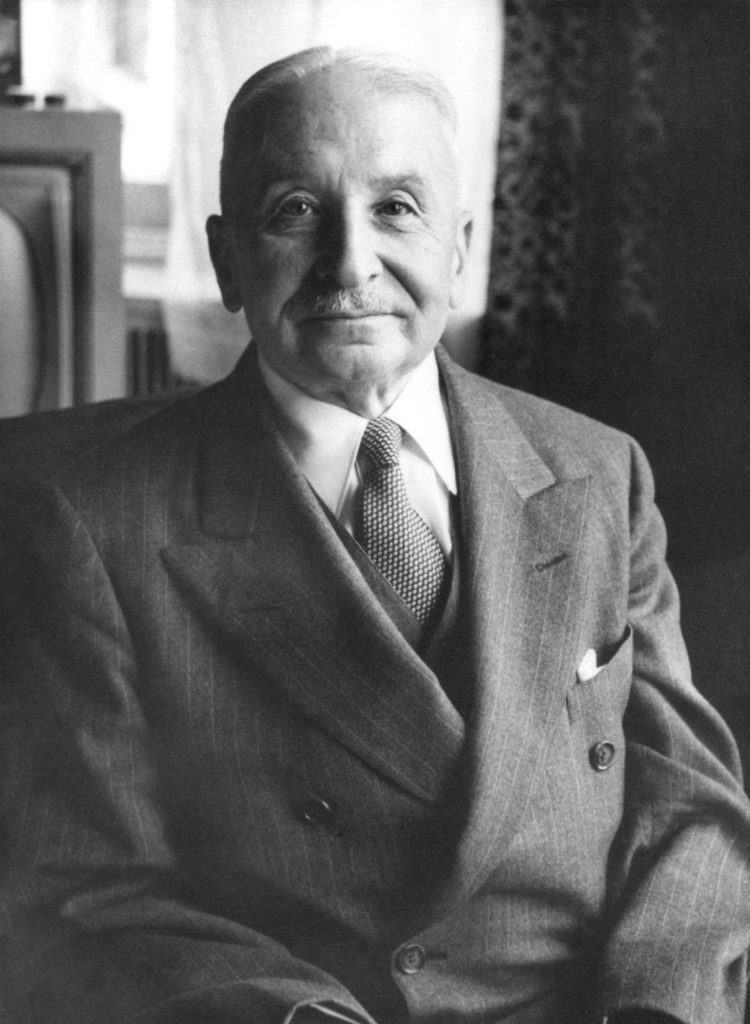
Ludwig von Mises

Libertarian feminists make a move

on von Mises

ILANA MERCER reads a misjudged essay on the feminist credentials of the great economist

As I paged through the dog’s breakfast of an essay titled The Feminism of Ludwig von Mises, I found myself wondering: What does midwifery have to do with Mises? Both find their way into the stream-of-consciousness non sequiturs that is the article. I suppose midwifery is an occupation dominated by women. Mises was an old-fashioned, European economist whose legacy women are attempting to occupy. That must be it!

Incidentally, naming the solipsistic feminists (a redundancy, I know) who’ve made a move on the Austrian School economist is unnecessary. “Avoid naming names when dealing with marginal characters,” I was once instructed by a veteran journalist, who was responding to a devastating critique I had penned in reply to some self-important, insignificant sorts. Joseph Farah e-mailed one of his lacerating missives: “Good job. But who the hell are these people? Their arguments are of a piece with Yasser Arafat’s. Next time, tackle the Arafat argument instead,” he admonished.

Alas, “The Feminism of Ludwig von Mises” is devoid of argument to tackle. From the fact that Mises taught and mentored capable lady scholars, the FEE.org* feminists have concluded that the Austrian-School economist “actively promoted the interests of women in academia” and “saw women intellectuals in Vienna as an undervalued human resource.”

As difficult as it is for a cloistered American feminist to imagine a time before Sandra Fluke and Vagina Monologues, the women Mises taught were nothing like those currently claiming him as “a feminist before it was cool.” Today, fem affirmative action infects private and state-run establishments alike. Mises, however, lived in a time before the ladies got a leg up. His circle of students would have included a highly select sample of women, of the calibre absent from academia and elsewhere nowadays. Put differently, Old World Vienna would have had no truck with the female author of “The Feminism of Ludwig von Mises.” She is a libertarian version of S. E. Cupp, who, when opening her mouth all too frequently, says nothing at all.

Mises was worldly. Our FEE.org feminists are provincial. Their world is rocked by women qua women, so they presume the world of Mises was likewise rocked. Using the illogic of mind-reading, psychologizing, and post hoc ergo propter, “The Feminism of Ludwig von Mises” arrives at yet another “conclusion”:

This experience of teaching [marginalized female students] must have had a big impact on [Mises]. He began writing his book Socialism at this time …

Socialism was written in 1921 and 1922. During those tumultuous years, the Austro-Hungarian Empire collapsed. Germany was saddled with crippling war reparations and hit by hyperinflation, which reached 1,426 percent in Austria. Adolf Hitler was nascent. The Red Army romped into Georgia. Lenin launched the Soviet Union’s New Economic Policy. Joseph Stalin rose to head the Communist Party. Libya was vanquished by Italy and Greece by Turkey. The Irish Civil War began, to mention but a few of the events that rocked the world. At the very least, could it be that socialism, and not “marginalized” women, “inspired” a book about socialism? Perish the thought.

Indeed, it takes a degree of provincialism unique to our country’s feminists to claim that a European gentleman, born in Austria-Hungary in the late 1800s, was one of them – a rib from the feminist fraternity’s ribcage. This writer grew up in Israel at a time when quite a few elderly, highly educated Austrian gentlemen were still around. Grandfather, a master chess player, hung out with these men in Tel Aviv chess clubs and cafés. Having actually encountered this creature in his natural habitat, I put this to you, gentle reader: The proposition that Ludwig von Mises was a feminist is an apodictic impossibility.

Messy, wishful thinking also leads our authors to collapse the distinction between first- and second-wave feminism. They quote Mises as saying that he approved of feminism’s quest “to adjust the legal position of woman to that of man.” Who doesn’t? That position is the position of first-wave feminists, who strove for equality under the law, demanding only that existing law be applied to women. But then, using the telltale postmodern word-salad, the writers proceed to portray Mises as one who would likely protest what today’s radical feminists term structural or institutional under-representation, “the wrongs of sexism,” “sexual objectification” and “gendered expectations.” This is the language of second-wave feminism, whose collectivists hold that to be a woman is to be part of a group that has been and still is institutionally abused.

In addition to being a flaming feminist, Ludwig von Mises, to go by the authors of “The Feminism of Ludwig von Mises,”

…sought to help the world understand that although they were discounted and pushed out of academia, if allowed, women could offer tremendous value to the study of scarcity.

Some rare individuals do just that. One such extraordinary woman was the Objectivist Ayn Rand. Mises referred to Ms. Rand as “the most courageous man in America.” If that doesn’t say it all about the economist’s man-centric frame of reference, I don’t know what does.

ILANA MERCER is a paleolibertarian writer, based in the United States. She pens WND’s longest-standing, exclusive paleolibertarian column, “Return to Reason” and is a fellow at the Jerusalem Institute for Market Studies, an award-winning, independent, non-profit, free-market economic policy think tank. Ilana’s latest book is Into the Cannibal’s Pot: Lessons For America From Post-Apartheid South Africa. Her website is www.IlanaMercer.com. She blogs at www.BarelyaBlog.com

  • Robert Wenzel, editor at Economic Policy Journal, has already illustrated how the FEE.org writers misleadingly cite tracts from Mises’ Socialism as proof of the economist’s Betty Friedan feminism. This, the authors accomplished by strategically truncating the text to support their claim that the views of Mises and “Ugly Betty” on marriage were not dissimilar. See http://www.economicpolicyjournal.com/2014/01/was-ludwig-von-mises-feminist.html


Posted in QR Home | Tagged , , , , , , , | Leave a comment

Where’s America’s right to referendum, secession?

Where’s America’s right to

referendum, secession?

ILANA MERCER smells hypocrisy hanging over Crimea

From a node in the neoconservative network, a Fox News studio, Charles Krauthammer has complained about the eviction of the Ukrainian Navy from the city of Sevastopol, where it was headquartered. Not a word did the commentator say about the city’s location: Sevastopol is on the Crimean Peninsula. It would appear that the city now falls within Crimean jurisdiction – starting on March 16, the day the people of Crimea voted to secede from Ukraine.

By most estimates, between 97 and 93 percent of Crimean voters said yes to a reunion with Russia. High too was voter turnout. McClatchy pegs it at 83 percent of registered voters in Crimea. BBC News was agreed, also reporting a ballot of “more than 80 percent.” Zerohedge.com counted a “paltry” 73 percent turnout, still “higher than every U.S. presidential election since 1900.”

As rocker Ted Nugent might say, the Russians and Crimeans are blood brothers. Nugent got into trouble for using this perfectly proper appellation to describe his affinity for a politician, of all people: Texas Republican gubernatorial hopeful Greg Abbott. Notwithstanding that in the land of the terminally stupid, linguistic flourish can land one in hot water – blood brother is a good, if colorful, turn of phrase that denotes fealty between like-minded people. Steeped in state-enforced multiculturalism, America’s deracinated, self-anointed cognoscenti have a hard time grasping the blood-brother connections between the people of Russia and Crimea.

For no apparent reason other than that it is pro-Russian, Americans have reflexively aligned themselves against the swell for secession in southern Ukraine. Separatist referenda in Kosovo, Catalonia, South Sudan and Scotland have been accepted without demur by a political and media establishment unprepared to countenance a similar referendum in Crimea.

Manifest destiny leading the way

Guided by the pack animals of politics and punditry who seldom fail to shed darkness on whatever topic they tackle, a nation that struggles to locate the disputed territories on the map has been convinced of the menace posed by Russia. According to a CNN poll, 69 percent of Americans say they see Russia as a threat. A Rasmussen Report poll indicated that 52 percent support U.S. diplomatic action against Russia over Crimea.

Helping to drive American Russophobia is the implacable logic exemplified by Bill O’Reilly of The Factor, yet another node in the network mentioned. At the suggestion that there are similarities between Russian and American military bellicosity, the TV host foams at the mouth. Fulmination is followed not by argument, but by a form of ad hominem or psychologizing.

It is absolutely verboten on this popular and powerful show to compare Russia’s “excursion” into Ukraine to America’s naturally illicit and illegal occupations of Iraq, Afghanistan and Libya. In defense of their reflexive rejection of the reasonable, if inaccurate, comparison – for decades the U.S. has been far more aggressive than Russia in its forays abroad – Bill and his gang “argued” (on March 3) as follows: President Vladimir Putin is a thug. That’s why his actions can’t be contrasted with the actions of “a good country” like the U.S. By “logical” extension, George Bush and Barack Obama are never to be fingered as thugs.

Why, Billy, some of you will inquire? Is it because these thugs are American? Precisely.

Next, Bill O’Reilly’s mind-reading gifts were galvanized to negate the juxtaposition of the actions on the ground of the Russian and American governments. Putin, it would appear, seeks the recrudescence of the Russian empire. On the other hand, the U.S., with a military presence in 148 countries and 900 bases worldwide, has neither sought nor achieved empire status.

Why, Billy, some of you will ask? Is it because the U.S. is a good country? You got it!

Be it in Belgium, Germany, Italy, Spain, Turkey, the United Kingdom, Japan, Bahrain, Djibouti, South Korea, Iraq, Kyrgyzstan, Afghanistan and Kuwait – even Aruba, Iceland, Indonesia, Kenya, Norway and Peru – wherever it plants its military boot, a “good country” is never an empire, only a force for good.

Me, O’Reilly would dismiss as “anti-American.” But what of former secretary of state Henry Kissinger? While Kissinger has condemned Russia’s annexation of Crimea, he excoriated “the demonization of Vladimir Putin.” This antipathy “is not a policy; it is an alibi for the absence of one.” “The United States needs to avoid treating Russia as an aberrant to be patiently taught rules of conduct established by Washington,” wrote the statesman in the Washington Post. Is Henry Kissinger anti-American or simply smarter than some Americans?

At least Secretary of State John Kerry hung on to his sense of humour.

Unless you are the United States of America, you just don’t invade another country on phony pretext in order to assert your interests

Kerry lectured the congenitally incurious David Gregory, of Meet the Press.

I ad-libbed. Except for the first eight words in quotation marks, Secretary Kerry did indeed say the foregoing. Given America’s military record, the missing words are implied.

The O’Reilly school of “thought” could – and does – counteract that Crimea’s vote to join Russia was tainted by fraud. This is certainly possible. Nevertheless, it is none of our business. Americans have their own tyrants to dethrone.

We’re supposed to be the freest people in the world, aren’t we? Is this claim not the moral basis for America’s we-know-best global meddling? But if we Americans are the freest people in the world, where’s our right to a referendum on, say, that “little” legislative “blip” called Obamacare? And if we’re so bleeding free, where’s our right to secede from D.C.?

ILANA MERCER is a paleolibertarian writer, based in the United States. She pens WND’s longest-standing, exclusive paleolibertarian column, “Return to Reason” and is a fellow at the Jerusalem Institute for Market Studies, an award-winning, independent, non-profit, free-market economic policy think tank. Ilana’s latest book is Into the Cannibal’s Pot: Lessons For America From Post-Apartheid South Africa. Her website is www.IlanaMercer.com. She blogs at www.BarelyaBlog.com


Posted in QR Home | Tagged , , , , , , , , | Leave a comment

ENDNOTES – Were you not entertained?

ENDNOTES – Were you not entertained?

The Royal Albert Hall, March 16, 2014, Sir Edward Elgar, The Dream of Gerontius, based on the poem by Cardinal John Henry Newman: The Royal Philharmonic Orchestra conducted by Hilary Davan Wetton, Diana Moore (mezzo-soprano), Andrew Staples (tenor), Jacques Imbrailo (bass-baritone), bass singer (unscheduled and unidentified), choirs from St Paul’s Girl’s School, City of London Choir, Guilford Choral Society, Leicester Philharmonic Choir

Leslie Jones awakes in music heaven


John Henry Newman

Judging from some of the forthcoming events – Gladiator (the film score), The Sound of Music (the film), Peter Andre, Julio Iglesias and Rick Wakeman, the “caped crusader” of rock, in concert, the Albert Hall is not always a bastion of high culture. We were also slightly put off by the description of Elgar’s The Dream (as Sir John Barbirolli always called it) as one of “The Great Classics”. Something of a statement of the obvious for a work that Elgar, arguably England’s finest composer, him-self considered “the best of me”. Yet we need not have feared. This proved to be a fine performance.

What, someone recently wondered, do you give the man, Jose Mourinho, who already has everything on his birthday? In the case of Hilary Davan Wetton, a pupil of Sir Adrian Boult, you invite him to conduct one of his favourite pieces on his 70th name day. But before he could begin, we had to endure a tiresome eulogy of the conductor by a member of one of the attendant choirs. The individual in question should be told that the G in Gerontius is muted/soft.

Unhappily, the acoustic in this immense space continues to confound. The massed ranks of the choirs high up in the auditorium were perfectly audible, likewise the fine playing of the orchestra (although the moment where Gerontius “enters into the veilèd presence of …God” was strangely anti-climactic). But at times the voices of the solo artists on the platform below, through no fault of their own, went missing in the limitless void. This was particularly regrettable in the usually moving passage where the Priest, baritone Jacques Imbrailo, pronounces the ‘Proficiscere’ (‘Go forth upon they journey, Christian soul…’). In this venue, when orchestra and solo artist compete for attention, as it were, the outcome is never in question.

We have it on good authority that soprano Diana Moore, resplendent in a red dress but cruelly characterised as a drag queen by my louche companion was nearly forced by illness to pull out of this event. Truth to tell, she performed quite admirably. Somewhere in the ether, the shade of Janet Baker was surely listening and approving.


Queen Elizabeth Hall, Southbank, London, March 17, 2014: Michael Tippett, A Child of our Time, London Concert Choir, City of London Sinfonia conducted by Mark Forkgen, Erica Eloff (soprano), Pamela Helen Stephen (mezzo-soprano), Michael Bracegirdle (tenor), David Wilson-Johnson (bass)


Kristallnacht

According to critic Clive James, referring to the five Negro spirituals in the secular oratorio A Child of our Time*, (he was writing in 1977, so it was still permissible to use the N word), “most of the substance in the music [is] second-hand”. Clive James had a point. Yet he overlooked the fact that Tippett (another Boult protégé) still had to integrate these timeless and universal songs into his composition where they perform a cathartic and redemptive function. The songs in question also break up the recitative into more digestible portions.

Tippett himself wrote the somewhat turgid libretto after his friend T S Eliot, perhaps wisely, pulled out. He (Tippett) was apparently influenced by Jungian and Trotskyist thinking at this juncture and the text has some infelicitous phrases, such as “Pogroms in the East, lynching in the West”, or “When shall the usurers’ city cease, And famine depart from the fruitful land?” or again, “I have no money for my bread; I have no gift for my love.” The passé language (the work was composed between 1939 and 1941) takes us back to the misbegotten world of the Left Book Club, the front organisation and the Peace Pledge Union.

In this performance, given in the intimate space of the Queen Elizabeth Hall (known in the music trade as the “vanity box” because of its flattering acoustic) the audience was both attentive and appreciative. It would perhaps be uncharitable to single out any of the soloists, so here goes. Only the tenor and soprano sing Steal Away to Jesus and Nobody Knows the Trouble I See, Lord and they both gave memorable performances of these beautifully orchestrated and deceptively simple songs. And South African soprano Erica Eloff was quite superb once again in O, by and by. I usually cry at some point in the piece. This evening was no exception.


Herschel Grynszpan

*The child in question was Herschel Grynszpan, a seventeen year old Polish Jew. On November 7, 1938, he assassinated the German diplomat Ernst vom Rath at the German Embassy in Paris, sparking off the Kristallnacht

Leslie Jones, March 2014

©

Dr Leslie Jones is Deputy editor of QR


Posted in QR Home | Tagged , , , , , , , | Leave a comment

Higher education is a hard row to ho

Duke University – Wikimedia Commons

Higher Education Is A Hard Row To Ho

ILANA MERCER says that making love is preferable to making war

Who’s the bigger prostitute? Sex kitten “Belle Knox”, alias Miriam Weeks, a promising porn star who is studying at Duke University, or her father, Dr. Kevin Weeks, an army doctor who recently returned from a tour of duty in Afghanistan?

“I would support porn over the adventures for the Empire, anytime” is the verdict of libertarian Robert Wenzel, editor at Economic Policy Journal. Indeed, daddy’s girl is an open book. We know what the 18-year-old does and that she does it for the love of it.

But what does papa Weeks do? Here’s an attempt to sum up his vocation in this season of rhyming against the regime:

Humpty Dumpty was sent to war

Where Humpty Dumpty had a great fall

All the king’s horses and all king Hussein’s men

Asked Dr. Weeks to put Humpty Dumpty together again

And again. And again.

Papa Weeks is in the business of patching up the peons, so as to send them back to the killing fields where they fight for nothing.

At times, the “talents” of GI Joe and GI Ho come together in the theatre of war — the Abu Ghraib porn theatre starred some sadistic and slutty servicemen and women. However, the pornography of Miriam Weeks is soft-core compared to the X-rated pornography of war, in which Dr. Weeks partakes. Furthermore, selling sex for money, in private or to audiences, is voluntary, consensual and violates no rights. As corrupt as Miriam’s morals are, better to have been a ho for sale than a mercenary for Uncle Sam.

From interviews “Belle Knox” has given, one gathers that she owes her blankness and banality to a privileged upbringing: a “religious” home-life and private schooling, secondary and tertiary.

In a chat on a porn-promoting site, Ms. Weeks pairs the sanctity of her sexuality (namely her promiscuity) with women’s rights. You can’t go wrong with that bit of cant, also an article of faith among America’s parents and pedagogues.

Face it, North American parents treat their teenage girls as though they were celestial beings around which the world orbits. Verbalizing inappropriately and misguidedly, in my judgment, about sexuality as a facet of female self-actualization and self-determination is part of this parental profile. Devout or not, any parent who has such a demigod under construction is guilty of playing a preponderant role in the development of deviance.

Next, Ms. Weeks informed informed CastingCouch-X.com that she’d “like to use [her] experience as a porn star to advocate for women’s rights.” She also noodled on about “using [her] education”—she wants to be a human rights lawyer (what else?) — to promote women’s rights.

Another sister, also from a top school, famously conflated her right to screw herself silly (or sillier) with the obligation of other Americans (insurers included) to supply her with Trojans and Trivora [Editor’s Note – drugs used to prevent pregnancy]. She is Sandra Fluke. In the addled minds of these women, language reserved for acting-out sexually, lends itself quite “logically” to the language of rights.

I’d venture further that this vulgarity is not incongruous with a Christian upbringing. No longer doctrinaire or demanding, the mishmash of pop-religion practiced in churches and transmitted in American homes is an extension of the therapeutic culture: it emphasizes feelings, fun and personal fulfillment. Our society, in fact, revolves around the pleasure principle. Unless something is pleasurable, it excites suspicion and is deemed unworthy of pursuit.

Seconds Ms. Weeks: “I love what I’m doing. I’m safe and empowered.” The porn performer is certainly safely ensconced at Duke. She has not been expelled from the Ivy League institution whose motto is “Knowledge and Faith” and whose religious affiliation is with the United Methodist Church. Perhaps the performance of pornography qualifies, at Duke University, as an extra-curricular credit?

Remarkably familiar, too, in its vacuity was the clichéd, regurgitated screed this genius unleashed in yet another interview. It, no doubt, comes straight out of the “women’s studies” curriculum in which Miriam is “majoring.” Behold:

My entire life, I have, along with millions of other girls, been told that sex is a degrading and shameful act. When I was five-years-old and beginning to discover the wonders of my body, my mother, completely horrified, told me that if I masturbated, my vagina would fall off.

The most striking view I was indoctrinated with was that sex is something women ‘have,’ but that they shouldn’t ‘give it away’ too soon – as though there’s only so much sex in any one woman, and sex is something she does for a man that necessarily requires losing something of herself, and so she should be really careful who she ‘gives’ it to.

Thankfully, this writer’s adult daughter has never delivered so imbecilic a soliloquy and has taken care to be discreet about her private life. Maybe it is because when my girl discovered what the frightful Ms. Weeks discovered at age five, her mother (me) said this:

That’s private. Only for you to see and touch. To do that, you have to go to your room and close the door.

As with all the asexual, apolitical, neutral, age-appropriate messages moms and dads were once perfectly capable of conveying, it worked. The little girl nodded and chose instead to cuddle with mom in front of the wonderfully innocent Adventures of the Gummy Bears. (Cute, innocent, Disney is long dead, but boy, was it magic!) To avoid raising a genius of genitalia is not that hard. But how do we stop dads from choosing the gore of war?

ILANA MERCER is a paleolibertarian writer, based in the United States. She pens WND’s longest-standing, exclusive paleolibertarian column, “Return to Reason” and is a fellow at the Jerusalem Institute for Market Studies, an award-winning, independent, non-profit, free-market economic policy think tank. Ilana’s latest book is Into the Cannibal’s Pot: Lessons For America From Post-Apartheid South Africa. Her website is www.IlanaMercer.com. She blogs at www.BarelyaBlog.com


Posted in QR Home | Tagged , , , , | Leave a comment

Crowning glory – royal legitimation for Scotland’s squadristi

Crowning glory: royal legitimation for Scotland’s squadristi

ROGER KERSHAW analyses the putative ideological conflict between “ethnic Scots” and “ethnic English”

The Scottish political lexicon seems to have been enriched by two “F-words” during 2013: Nigel Farage through his attempt at making an electoral pitch for UKIP, in Edinburgh on 16 May 2013, with the dramatic attempt by SNP militants to drive him off Scottish streets; and the word Fascist, with which Farage attempted, just after the event, to discountenance and countervail Salmond and these supposedly Brown- or Black-Shirts.

It might be timely to consider, first of all, whether the greatest block to conceptualising the presence of “fascism” in Great Britain may lie in a difficulty about “ethnic” as a label for subjective differences of identity between the separate “nations” of this state. Such a difficulty, if it exists, may stem from the UK’s imperial experience, which taught the British that tribal and racial divisions are what subject peoples have. Such peoples needed, and benefited from, the arrival of a coherent and unified European people to teach or impose order among them. True, the English, Welsh, Scots and Irish have from time to time been dubbed “the nations” of Britain and Ireland, yet these distinctions were always deemed (excepting, now, the Irish Republic and sections of the Northern Irish population) to be subordinate to overarching British political identity, fortified by their shared “whiteness” and English tongue.

Among other initial points to make: note that Farage was not the first to shoot the “fascist” barb in the direction of the SNP. At Westminster in June 2011, the Chair of the Scottish Affairs Select Committee had detected the tendency, and the leader of the Scottish Liberal Democrats, William Rennie, in September 2013 spoke of a disturbing, rising phenomenon of anti-English propaganda.

Meanwhile, it was not even on Farage’s agenda to expose “ethnic”, let alone “fascist”, traits in the Scottish National Party. He was caught out by the show of force, hence confined himself to hinting at “nasty elements in the nationalist wood-work”, with ne’er a murmur about Alex Salmond’s personal animus against the English. In fact his meaning of “fascist” seemed focused on the street violence as political method, not any ideology of nation or race, and he mainly condemned Salmond for not speaking out against attacks on freedom of speech by his fringe. Possibly the absence of a clear focus on definitions is connected with the fact that SNP would “not be found dead” employing the “F-word” or anything cognate as self-description, thus the new parlance resides almost exclusively in opposition rhetoric, while the SNP is, if anything, more ready to apply such a label to UKIP itself. This has the ironical consequence, however, that precious few legitimate markers of Scottish ethnicity are left to Salmond except modern English in residual dialect. Still, as suggested, Salmond’s caution also adds to the limits on Farage.

This said, a compliment is due for the way that the UKIP leader threw the protesters’ taunt of “racist scum” (leftist shorthand for a campaigner against EU legal ascendancy and uncontrolled immigration) adroitly back in their faces as “racists” in their own right, adherents of an Anglophobic ethno-fascism. At the same time, it was by a predictable reflex that Salmond called for the resignation of the Chair of the Scottish Affairs Select Committee for labelling SNP “neo-fascist”. And just to confuse us, he declared to New Statesman, 19 June 2013, that his identity is composite, both Scottish and British but also European. And his fellow Scots feel just as comfortable with E.U. membership, he averred; in fact they favour Scottish independence from UK ever more strongly as the UK’s future in Europe is questioned by the Conservative party. As statements of his earlier in 2013 elaborated, the E.U.’s open door to internal migration is welcome, not just because the Scottish economy needs “new Scots”, but because the Scots are a welcoming people. One is hard put to detect a note of chauvinism amidst such progressive virtue. Yet it is present as an anti-English sub-text, in the sense of laying down a cultural boundary marker between a “cosmopolitan and compassionate Scottish people” and a “reactionary Little England”.

This is highly reminiscent of the hymn-sheet from which Justice Secretary Kenny MacAskill intoned in 2009, when exercising the power of compassionate release in favour of the convicted Lockerbie bomber, Megrahi, as a Scottish statute allows.

Similarly, the November 2013 White Paper on Independence vaunts the “compassion” of the welfare promised to Scots if they will vote YES and not query whether Scotland is rich enough to afford the luxury. Meanwhile, in defending the hustling of Farage off the Edinburgh street, Salmond contrived to portray “the defence of free speech” as a peculiarly Scottish custom.

At any rate, both SNP and UKIP had a better opportunity to set out their stalls in a TV debate staged in Edinburgh for newly enfranchised Scottish teenagers by BBC One’s Question Time, on 13 June 2013. This was the occasion of Nigel Farage’s “second intervention”, as one might call it. More notable, perhaps, was the appearance and performance of the Respect Party leader, normally left-leaning Glaswegian George Galloway (unenfranchised, as a London resident), who was totally in tune with Farage on the cherished Union and SNP’s undemocratic urge to deny speaking rights in Scotland to parties with low representation north of the border. This had been displayed on the streets of Edinburgh in May, without condemnation or retraction from the SNP leader, Galloway pointed out, but in the TV debate itself it emerged as the SNP defence spokesman, Angus Robertson, M.P., objected both to the BBC’s selection of four pro-Union parties to appear on the panel, and the fact that two of these (UKIP and Respect) had not yet won seats in Scotland. En passant, viewers were introduced to the irredeemable alienation of Scottish nationalism from the state and nation of Britain.

Unfortunately Galloway was on weak ground in condemning the exclusion of Scots living in England from voting in the Referendum, inasmuch as under the existing electoral register that will be used except for the teenagers, the huge English diaspora in Scotland (at 7.9% the largest ethnic minority: cf Poles 1.2%, Pakistanis 1%) will not be filtered out by a criterion of ethnicity. And Scots serving in the armed forces outside Scotland are entitled, as usual, to exercise their service vote if they have one (though being required to re-register at a Scottish home address for the Referendum if while based in England they had become registered to vote there). From this debate as such it was indeed not easy to depict Salmond as Godfather of a clan of ethno-fascist, tartan camicie nere. Nevertheless, it seemed telling that a Scottish journalist, Leslie Riddoch, after declaring her support for separation, proceeded to warn that the issue had already brought Scottish society to the brink of the kind of irreparable divisions that afflict Ulster today.

Riddoch’s warning will ring very true by now to any resident of Scotland who experiences the divisive effect, on normally unified neighbourhoods, of flapping Saltires and blue YES stickers in windows. That tensions had yet to peak at the date of the White Paper, November 2013, was predictable in retrospect from Salmond’s ostentatious contempt for an English rule-book at Wimbledon, the previous July 7th, when he displayed a Saltire behind the head of David Cameron to glorify Andy Murray’s triumph in the Men’s Singles. In the view of Alistair Darling, previous Chancellor of the Exchequer and now leader of the “Better Together” campaign (The Observer, 12 January 2014), nastiness had already increased and now included cyber-bullying of celebrities, but even worse could be anticipated. The crescendo of Salmond’s  boasts that he will drag the fearie British Prime Minister in front of television cameras to attempt a defence of “rule from London” without compatible Scottish party representation in Westminster (and predictably be insulted for his pains), certainly speaks volumes about the vote-winning potential of ethnic vainglory and audacity, as also affectation of an already existing international parity (though moral asymmetry) of the two states, in the Scottish First Minister’s calculation. There is more than a symmetry between these postures and the ethnically supercharged choice, for the Independence Referendum, of the 700th anniversary year of Bannockburn: a victory over the English (on a site just up the road from Salmond’s home town, Linlithgow) which has not yet, it seems, fully avenged the execution of William Wallace in 1305.

Also significant, Scottish believers in the sanctity of established law, not least the Deputy President of the Supreme Court, Lord Hope of Craighead (one of its two Scottish judges), had been incredulous to find their constitutionalism under insurgent fire when Salmond and MacAskill rejected the legitimacy of the Court in June 2011. Lord Hope himself was particularly in their sights for disagreeable human rights rulings (too liberal, in this case!) with alleged ramifications for Scottish politics and Scots law. Voices in the legal profession called for Salmond to be arraigned for contempt of court. The attack on the British “Law Lords” (as they were before the rise of the Supreme Court) was given a class dimension to go with his ethnic separatism when “common man” Salmond mocked the Peers as holders of undeserved (by implication inherited) privilege, by quoting, on the floor of the Scottish parliament, Burns’s revolutionary-populist “A man’s a man for a’ that”.

In October 2012, tensions between the Scottish elective elite and eminent Scottish lawmen again came to the fore when Lord Wallace of Tankerness, Advocate General and one time Deputy First Minister in a Lab-Lab coalition government of Scotland, contradicted assurances by Salmond to “the Scottish people” (assurances claimed to be backed “by advice” – with stentorian amplification from his Deputy, Nicola Sturgeon, who was sent to Brussels to put the E.U. Commission in its place) that membership of the E.U. would transfer smoothly to an independent Scotland as a former component of E.U.-member U.K., not a new state applying for entry.

An un-nationalist nation

In the absence of both a unifying religion; a widely shared romantic culture (at least one capable of galvanising a twenty-first century European people for a new “conviction politics”); and a viable anti-monarchism; let alone memories of modern military glories except those achieved under the British flag, the idea of Independence is prone to fall flat with very many Scots. Particularly in an age of democracy and elections largely fought on the issues of full employment and incremental welfare, no diet of historical romance can expect to win 50% of the national popular vote in a national referendum. No, it was not perhaps completely outlandish in light of Scottish working class history that Tony Blair saw devolution as a way of heading off separatism in that stratum. But if such a latent tendency exists, why did he take the risk of fostering it further? It is in fact striking that the SNP itself is not placing its money on unearthing a substrate of historical romanticism, but prefers to make solid economic offers such as “every Scottish family will be £500 better off”! In the past two years the SNP has increasingly focused on economic issues: the alleged diversion of “Scottish oil” into British coffers, and the promise of a surge in economic growth from the mere fact of Scots “controlling the purse strings” and deciding economic priorities in Edinburgh – in place of the present decision-makers in London who “cannot represent the Scottish electorate” because their parties (not Scotland’s 59 M.P.s as such, we notice!) have gained no seats north of the border.

Increasingly the campaign has taken on the complexion of the bidding wars of those modern British  elections which pitted the appeals of a populist or socialist Labour Party against the fiscally prudent but also growth- and welfare-promoting Conservatives, though with the special, added ingredient of a sulphurous battle between two concepts of nation.

At no point was the nature of the game more manifest than in the manifesto-like Scottish White Paper of November 2013 on what Independence means. Yet precisely on these materialist terms, apart from being shot down by taunts of “fantasy economics” from Alistair Darling, the SNP faces the chronic scepticism of a modern electorate towards the economic promises of all political parties. Such scepticism is stoked, for any who listen to the news, by the warnings of think-tanks and the British Treasury about the inevitability of either higher taxes or reduced services in face of the “black hole” detected in Scottish finances for the years not far ahead. Against all this, increasingly the SNP plays the ethnic card of taunting doubters as defectors from their “patriotic duty” of self-belief, while abusing the British government for both using scare tactics (“Project Fear”) and withholding the basis of its calculations in advance of the Referendum, which could so much help “the Scottish people” (virtuous and deserving brother and sisters as they are) to make their choice! Yet in spite of the vital psychological concession by the Unionist parties in the disunited parties of the “Better Together” camp (disunited because spread across the conventional, class-related spectrum), of accepting the unwonted primacy of Scottish identity as their slogan implies, while trying under sundry modifications of Devolution to outbid SNP with alternative economic scenarios (“Britain has broader shoulders and can take the strain”), SNP cannot easily override the nervousness of a comfortable modern population that is unused to making leaps of faith or dabbling in revolution. Hence in no small part the reassurances that “your pensions will continue to be paid like before”; “you can still have a social union with England”; even “you’ll still be able to see your favourite TV programmes, such as ‘Dr Who’”. Hence, in somewhat larger part, SNP’s improbable embrace of dual British-Scottish nationality for Scots who want it (improbable not only in terms of nationalist ideals but also the British government’s explicit refusal of such a concession); the decision to stick with Sterling and Bank of England cover (that is, intend to apply for these benefits?); its embrace of NATO membership (albeit, by some ingenious alchemy, not with “nuclear status”); and (earlier, but much reiterated) the counter-intuitive, not to say counter-revolutionary, contortion of opting for Queen Elizabeth as head of state after all!

At all events, the party’s belated commitment to a British monarchy seems even more revealing of the perceived risk-aversion, or chronic British identity, of parts of the Scottish population than any round of budget promises could ever be. Little wonder that looking beyond 2014 and on the assumption of a positive Referendum outcome for the nationalists, the party will set about a programme of cultural indoctrination in, and consolidation of, Scotland’s “strong and vibrant culture”, as the Scottish Government’s White Paper puts it, to build ramparts, one would guess, against, any further “colonisation” of Scottish minds by ideas of “Scottish inferiority”. Such “colonisation” features, one would also guess, as one element in SNP theory about why Scottish listeners and viewers record less than 50% satisfaction with the BBC – as the White Paper alleges without identifying the source of the complaints against this (some would say) already quintessentially Scottish broadcaster.

Anyway, what are the terms of this bizarre, proposed partnership between the Monarch and the independent Scottish state-to-be? Do they extend any freedom of manoeuvre to the present Monarch herself, or create a condition of conspicuous royal captivity to an elective institution and ethnic ideology?

Monarchy to the rescue?

Reflection on the proposal has become particularly relevant in recent weeks with a new outbreak of controversy within the SNP over this radical departure from its tradition. The arguments seem to focus on a proposed second Referendum, not much later, on retaining or rejecting monarchy as the source for Scotland’s Heads of State. In this contretemps, the ever pragmatic and diagnostic weather-vane, Alex Salmond, has taken the side of monarchy, while avoiding the kind of pronouncements and explanation that would stir his activists into angry life yet stimulate distrust of SNP among its worrisome bugbear: the more mixed-identity, less ethnically-inclined, or less republican-minded, Scots. In the absence of helpful exposition, let us glance critically at the pro-monarchy position as spelt out in a Scottish government document (published at taxpayers’ expense) with an eye on all relevant antecedents. Each of these is in some degree burdened with disability.

Given the embarrassingly high prestige and popularity of the present incumbent of the British throne, and the unavoidable imperative of perpetuating constitutional monarchy in an independent Scotland in order to have any chance of success in the 2014 Referendum, conceivably the sixteenth century offers the least contentious model for the party’s activists and ideologues: not a democratic regime but not an Anglo-Scottish crown that was de facto united (at least strategically) either, as between 1603 and 1707.

As a matter of fact, what the party proposes may indeed conjure up exactly the “one-monarch-wearing-two-crowns” formula of the seventeenth, not the sixteenth century. Yet clearly this cannot be quite the case if the future monarch of Scotland “Her Grace Elizabeth I, Queen of Scots” (the proposed title) (a) will explicitly reign with that title in Scotland only; (b) her governments (in the nature of the case) will have been re-separated; (c) in any case she reigns today, does not rule, with absolutist potential or pretensions alongside a parliament as in earlier centuries (the “ruling” will be done by the separated governments aforesaid); (d) will have inherited this modern, Constitutional status from post-Union (of governments) Britain, not partly the Scotland of any earlier period (Walter Bagehot’s The English Constitution is a study of the British Constitution, rather); (e) Her Majesty’s sixty years on this throne have constituted a British experience and constitutional upbringing (an “English” experience, dedicated Scottish nationalists would contemptuously maintain, but they would agree it has not been “Scottish” beyond the rituals of Balmoral and occasional ceremonies at Scottish palaces to bestow British honours such as M.B.E. ). This “Elizabeth I” would be thus titled fundamentally in order to inject some Scottish authenticity into the Scottish polity redux, through the reminder that her sixteenth century namesake predated Union (of Crowns) Britain and cannot be included in Scottish regnal lists as a basis for later reckoning.

But if the sixteenth century (of the Reformation, Mary Queen of Scots, James VI “And All That”) is being suggested as a model, once again a potential for revival of old religious animosities looms large, as if the SNP either has an incurable taste for divisive conflict, or does not understand the diverse layering of identities that is Scottish society, and will thus have no compunction in resorting to measures of totalitarian aspect, as the White Paper foreshadows, to force it into a more unified mould. More critical than this (and by extension of the above list): (f) the echo of Stuart legitimacy in the title “Queen of Scots” belies or denies the fact that the last serious Stuart contender, the “Young Pretender” (Bonnie Prince Charlie), had no agenda for undoing the union of governments in the name of Scottish independence, only the restoration of his dynasty to its sovereignty over the whole of Britain. Nor (g) does personal (Hanoverian) ancestry in the present monarch create an emotional obligation to revive a Stuart past.

Less edifying still, one has not heard about an approach to Her Majesty for consent to the vital role that is proposed for her; on the contrary, planning for a separate coronation has already been announced. Arguably, our sovereign is still a perfectly free agent, not bound in advance, in this matter, by her coronation oath to be faithful to her duties as then known. She had a duty of protection towards Scotland, of course, but by this very token, duty should not be overridden by the device of a pseudo-electoral referendum, leading to irrevocable constitutional change with highly uncomfortable implications for Scots who oppose it, downright ominous meaning for English folk who have moved to Scotland. In moving north, most of the latter believed in good faith that Scotland was part of their own country of Britain, could never have foreseen or even conceived that a British population could be reclassified into distinct ethnic blocs, set off against each other in mutual distrust and hostility by ethnic categorisation, Third World-style. After separation the English residents of Scotland would find themselves to be aliens in a foreign land. In her unique position of prestige and influence, Her Majesty might like to consider her duty to the two special categories of subject and loyal British here evoked, as well as, in broader terms, to the U.K.  It is at least an agreeably piquant irony that the institution which Salmond cannot afford, referendally, to ditch – as, among other reasons, its prestige will foster myopia or disbelief in face of rising extremism – also happens to be the constitutional arbiter of last resort, enthroned in the uniquely powerful position of being able to say NO.

After the referendum

All this being said, the amorphous category of “Undecided” and “Don’t Knows”, often reckoned at around 30%, let alone those who feel “British” enough to be perturbed by the ethnic mobilisation and suspect that SNP will not abide a partnership with monarchy for long, may decide the issue in favour of the Union. “Decide”, that is, for 2014. For who will doubt but that SNP will bring its divisive agenda back to the table in due course, preceded earlier by a campaign of recrimination against “Scottish Quislings” and the “English Fifth Column” whom they blame for the referendum outcome? (Results in the Highlands and how they will be interpreted, given the astonishing 14.7% English complement up there, are a particular space to watch.) If the visit to Edinburgh of the Governor of the Bank of England, on 29th January 2014, called time on nationalist evasions over the fact that currency union implies sacrifice of aspects of sovereignty, not a gain (and Canadian Mark Carney does not even have “the courtesy” to be dismissable as a biased, ethnic foe!), a paranoid rankle may already be brewing.

A comparable dynamic can be imagined amidst persistent warnings from the E.U. that fee discrimination against English students in Scottish universities would be illegal after independence (assuming that Scotland consents to conform to E.U. procedures in order to gain membership in the first place!), because the English will be foreign, E.U. nationals – and hence entitled to equal treatment with Scots, being as foreign, in legal terms, in the new Scotland, as the SNP indeed regards all the English as being on the ethnic level. The same potential for rage (and accusations of “racism” against the NO camp) is discernible if the opposition chooses to play up the fact that under the referendum franchise (which does grant equality to E.U. nationals), a single Polish vote could tip the balance towards independence under the chosen simple-majority and no-thresholds rules. Yet another nationalist fantasy waiting to be exploded, at a heavy cost to the self-regard, liberal persona and self-restraint of those believing it, is the notion that oil-rich Norway is as eager to embrace a Scottish partner as Salmond and Riddoch themselves are keen for Scotland to join the Nordic Union.

One final, gloomy thought: even if Scottish ethnicity is an imprecise concept, a rising level of anti-English aggravation and exclusivity, amidst “Bannockburn parallels”, may yet persuade a few decisive voters that these are the keys to true Scottishness and future national greatness. On 12 February 2014, accordingly, Deputy First Ministerial vituperation reached a crescendo over the Chancellor’s and the Treasury’s firm stand against a currency union, which, she mocked, is mere bluff and bullying because Westminster will be forced to negotiate when Holyrood refuses to pay a penny of national debt.

ROGER KERSHAW is a former academic, and writes from Sutherland


Posted in QR Home | Tagged , , , , , , , , , , | Leave a comment

Hollywood: the no-good, the bad and the beastly

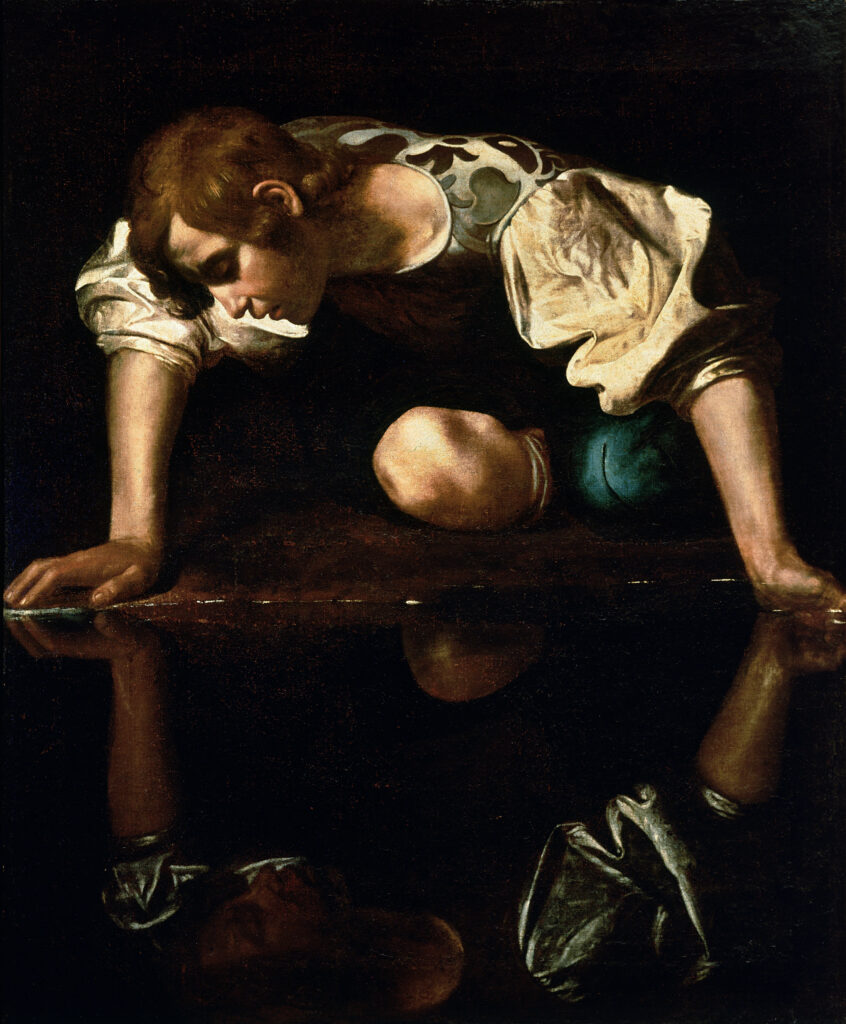
Narcissus, Caravaggio

Hollywood: the no-good,

the bad and the beastly

ILANA MERCER watches the Academy Awards

Glenn Close’s remarks at the 86th Academy Awards ceremony, captured the delusions of grandeur held by the tarts and tards of Hollywood, and helped by their fans.

The actress (or is it “actor”?) did not thank the dearly departed for merely entertaining the masses, which is all actors and directors are capable of doing. Oh no. Her deities were, instead, acknowledged for  “mentoring us, challenging us, elevating us”; “they made us want to be better, and gave us a greater understanding of the human condition and the human heart” – language that should be reserved for the likes of Ayn Rand and Aristotle.

Where a motion picture has indeed transported anyone, it is because it cleaved to a decent script, usually a good book. Gone With the Wind, Doctor Zhivago, Midnight Express, and Papillon are examples. Still, Hollywood is quite capable of reducing great literature to schmaltzy jingles, belted out by shrill starlets. This was the fate of Les Misérables last year. Lost in the din were a lot of lessons about “the human condition.” The Victor-Hugo masterpiece I read as a kid was about France’s unfathomably cruel and unjust penal system, and the prototypical obedient functionary who worked a lifetime to enforce the system’s depredations – a lot like the powers that hounded Aaron Swartz, the co-founder of Reddit.com, to death in 2013, and are intent on doing the same to the heroic Edward Snowden. Continue reading

Posted in QR Home | Tagged , , , , | Leave a comment

ENDNOTES – Northern lights, western winds

ENDNOTES – Northern lights, western winds

A Swedish symphonist  *  A Mass of the Western Wynde  *  Mendelssohn in Reformation spirit  *  Waltzes with William Alwyn

If companies such as Chandos Records had never existed, I doubt if very many people in Britain would have heard of Kurt Atterberg, the Swedish symphonist whose productive years spanned the pre-Great War to end-of-the-Second World War period. New from the Chandos presses is a magnificently recorded Gothenburg Symphony Orchestra, clearly deeply-committed to the performance of Atterberg’s Op. 6 Second Symphony of 1911-13, and the Symphony No. 8, Op. 48 of 1944. By 1944, Europe was certainly in, or on the brink of, what we might call “the modern, democratic age” – with dictators now doomed, and welfare states on the march; and yet Atterberg’s Eighth seems to be more the work of the late-romantic era, its third movement, scored molto vivo, and its Con moto finale emerging from happier, more innocent times.

Untroubled, noble thoughts come to mind in this light-footed, yet glowing and occasionally heavy-with-emotion music: music which comes from the sacred mountain sources of pure Sibelian water. (Sibelius, it must be said, provides a genetic structure to most 20th-century Scandinavian works.) Or perhaps from the drive and drama of Nielsen’s orchestral landscape: the purity, freshness, and independent spirit of Europe’s untamed northern reaches, yet framed in the mainstream, central Western symphonic tradition. It is a major omission that Atterberg’s music is never played in Britain. The truth is that we have descended into safe, easy habits with our music in this country: we seem either glued to Beethoven-Brahms-Tchaikovsky on Classic FM, or obsessed with Stravinsky-Bartok-Schoenberg on Radio 3. Striking out, adventure and radicalism, or what passes for radicalism, is defined by Stockhausen, a discordant remnant of the 1960s, which seems tired and just about as radical as inner London’s concrete high-rise flats. True radicalism, on the other hand, would be a day at the Royal Festival Hall or the Barbican, devoted to Atterberg; to striding out on the Swedish coast or lakesides, or staring into a night sky, hoping for a glimpse of strange, erratic streams and storms of light. I have played the Molto vivo movement of the Eighth some three or four times, and find myself drawn to this life-giving symphonic elixir, with folkish rhythms that come close to the sound-world of Vaughan Williams. I can only hope that conductor and Atterberg champion, Neeme Jarvi, will bring his Swedish orchestra to Britain and show us a completely new repertoire.

English choral music is well-served on disc these days, but again, most listeners tend to know only Byrd, Tallis and Gibbons. John Sheppard (1515-58) is less familiar. Chandos now brings us the sacred choral works of this obscure composer, recorded at St. John’s College Chapel, Cambridge, with the choir of the chapel conducted by Andrew Nethsingha. Even the scholarly author of the booklet notes is stumped to some extent by the dearth of information from Sheppard’s life and times. “Who was John Sheppard?” asks writer Martin Ennis. “When he was born, and where he grew up is lost to history…” he continues, but his role as Master of Music at Magdalen College, Oxford in 1543 is a fact, as is his place as one of the Gentlemen of the Chapel Royal of 1552.

The new CD is best listened to with eyes closed; and you will imagine yourself in one of our great churches, with God, or Tudor Kings (or suddenly Henry Vlll’s daughter, Mary) looking down upon you. And as you drift away, your disc will play a sequence, beginning with Gaude, gaude, gaude Maria virgo, then Sheppard’s setting of The Lord’s Prayer, Christ rising again, Spiritus Sanctus procedens (the Apostles feel the power of the Holy Spirit, causing them to speak with all manner of tongues), and the “Western Wynde” Mass – Credo, Sanctus, Benedictus, Agnus Dei – but yet, as we discover, one of the rare church works based upon a non-religious song, “Westron wynde when wyll thow blow”. Glorious sounds, English voices in sublime harmony, echoing out of history…

Somm Records is another CD label which liberates us from the ordinary and predictable. A Somm disc is an exciting thing to receive, especially when you uncover the treasure trove of William Alwyn’s Fantasy Waltzes, played by the brilliant, stylish, pianist and proponent of new, old music, Mark Bebbington. Quite simply, Mark Bebbington is a first-class, world-class performer, and educator. I was privileged to be in the front row at the opening night of the 2012 English Music Festival, at which Mark gave the world premiere performance of Vaughan Williams’s Fantasia for Piano and Orchestra, delivering not only a lucid, expansive, almost ‘easy’ rendition of this 20-minute concerto, but talking to the audience about the music and its meaning. (The soloist must forgive my use of the word ‘easy’: I really meant effortless.) So when I saw that Alwyn’s mid-1950s sequence of waltzes had the Bebbington stamp, I knew that this would be a recording to savour. And it is a record that currently occupies a pride of place in the collection, with the piano’s depths, softnesses and subtleties recorded in great intimacy, yet all within the large acoustic of Birmingham Town Hall.

I have found of late that some piano-only CDs have made me reach for the pause button on my CD player, as a dry acoustic and a dry, constant hammering of the instrument can be a little draining. Somm’s Alwyn collection has the very opposite effect, the piano becoming almost like a voice, telling a story; with the waltz wandering away from its strict structures, and creating little atmospheres and dreams of its own; lingering with the odd memory or sense of place, perhaps, but never depriving the listener of melody. Alwyn lived for much of his life in Suffolk, near Blythburgh and the sea-village of Walberswick, and wrote four symphonies, and much commercial, but high-quality film music.

He wrote a suite of Elizabethan Dances, with two or three movements existing as little tone-poems in their own right, conveying a sense of grey skies on a cool English summer’s day, or even the sound of an old folk-dance half-remembered or half-heard from far away. There is depth and a spirit of tender thought, reflection and melancholy in Alwyn’s music: and it is his simplicity (for he is never over-intellectual or deliberately atonal) which gives him that depth. The spirit at work in the Elizabethan Dances also lurks in the Fantasy Waltzes – best illustrated by the Moderato, Grazioso and Lento sections (parts three, four and five).

The CD also contains music by Alwyn’s wife, who wrote under the name Doreen Carwithen (Endnotes will feature her works later this year), and other Alwyn gems, such as The Weather Vane and Bicycle Ride. All pleasant, surprising English music, and music we just don’t hear very often, or even at all.

I mentioned that the Alwyn was recorded in Birmingham Town Hall. So, too, was my last Chandos disc for this Endnotes, Edward Gardner and the City of Birmingham Symphony Orchestra in Mendelssohn’s Fourth and Fifth Symphonies. We all know the sunny world of No. 4 – The Italian – but less well known is the Reformation, with its holy light near the beginning: the deeply-spiritual tune known as the ‟Dresden Amen”, which Wagner used in his last great opera, Parsifal. The CBSO does Mendelssohn great justice, and the recording seems to capture with exceptional clarity the very contact of the violinists’ bows and strings, a lovely fresh, zestful sound – as if you are sitting there among the front-desk players.

The British classical recording industry must surely be one of this country’s most accomplished technical enterprises, yet I wonder how many of our politicians and pundits ever think of it in their pontifications. And emerging as an important player is EM Records, the recording arm of the English Music Festival, the main event of which is underway at Dorchester Abbey, Oxfordshire from the 23rd May, with – astonishingly – two world premieres by Vaughan Williams and one by Sir Arnold Bax. In the next Endnotes, we bring you a review of their latest CD: sonatas by Bantock, Cyril Scott and Roger Sacheverell Coke. New music, some new names, and always new horizons from the Quarterly Review.

STUART MILLSON is Classical Music Editor


Posted in QR Home | Tagged , , , , , , , | 1 Comment

Russia – the un-Bearable rightness of being

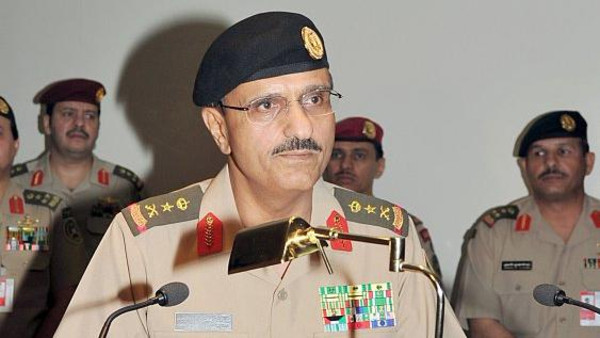
Khalid_bin_Bandar_Al_Saud, credit Wikipedia

Russia – the un-Bearable rightness of being

GREGORY SLYSZ asks what the war in Syria, the coup d’état in Ukraine and the Sochi Olympic Games have in common

The current level of Russophobia among Western governments and media has strong echoes of the frozen East-West relations of the early 1980s. Far from being spontaneous, however, it is representative of the profound frustration of Western political elites with Russia’s increasingly robust defence of its own political and military interests. By refusing to play ball with the West over Syria and by refusing to handover to Washington the National Security Agency (NSA) whistle-blower, Edward Snowden, Russia gave notice to the West that it was no longer prepared to remain passive in the face of continual Western belligerence and provocation that now manifests itself along Russia’s borders.

Old rivalries

Although the current controversies involving Russia and the West give the impression that they have recent origins, they in fact conceal a rivalry of much older roots. Since the last decade of the Cold War Western powers have been determined to destroy Russia’s geopolitical power. As the Soviet Union collapsed the West’s march on Moscow commenced with aggressive and uncompromising zeal. Collaboration between the EU and NATO has seen hostile political and military forces advance to Russia’s sphere of influence and even into former Soviet republics. NATO’s quest for an anti-ballistic missile system in Eastern Europe and the West’s engineering of the so-called “Rose”, “Orange” and “Tulip” revolutions in Georgia (2003), Ukraine (2004) and Kyrgyzstan (2005) respectively, that replaced incumbent corrupt leaders with equally corrupt West-leaning placemen, was demonstrative of the West’s aim of encircling Russia. Further afield, Russia’s geopolitical interests have also been uncompromisingly challenged, most notably in the Middle East where its former allies such as Iraq and Libya have fallen under the West’s influence following Western military intervention. Russia’s abstention in 2011 in the UN Security Council vote authorising both a “no-fly zone” and NATO air strikes in Libya “to protect civilians” trapped in the country’s civil war, was instead used by the West to topple the regime of Muammar Gaddafi. Protests by Russia’s Foreign Minister Sergey Lavrov were given short shrift by Western governments. For Moscow this confirmed beyond doubt the West’s total disregard for Russia’s security and strategic interests.

Ever since the collapse of the Soviet Union over twenty years ago Russo-Western relations have been one-way traffic, with the West demanding cooperation from Russia only on its terms and denouncing it when such cooperation was not forthcoming. Russia had expected, maybe naively, that in return for its constructive cooperation with the US over such areas like Libya it would receive assurances that political and military meddling in its security zones around its borders would cease. Instead, not only did such meddling not cease, it was dramatically increased.

The absence of reciprocity on any level has been further illustrated by Western responses to Russia’s extradition requests of a number of Russian fugitives. Since 2001, Britain has harboured the Chechen fighter, Akhmed Zakaev, refusing to submit him to Russian authorities to face trial on terrorism charges. In 2004, America granted asylum to another leading Chechen leader, Ilyas Akhmadov, foreign minister in the separatist Chechen government in the late 1990s, ignoring Moscow’s demand for his extradition on terrorism charges. It is not surprising, therefore, that from Moscow’s perspective, the West’s war on terror is duplicitous. In 2002, Moscow’s request of Britain for the extradition of the crooked Russian oligarch, Boris Berezovsky, to face charges of money-laundering, were dismissed by the British authorities, who had given him political asylum a year earlier. In 2013 in a carbon copy case, Britain granted asylum to the Russian banker Andrei Borodin who had fled Russia to escape embezzlement charges that even Interpol suspected were well grounded. Consequently Vladimir Putin’s refusal to submit to Washington Edward Snowden needs to be seen in a broader historical context to that presented by American propagandists.

Russia’s reaction to the West’s hostility in turn has attracted a torrent of Russophobia in Western political and media circles that is unprecedented even by Cold War standards. Whereas in America during the 1960s through to the 1980s there existed a fierce debate between hawks and doves over the level of belligerence that the West should adopt towards the Soviet Union, now there exists robust bi-partisanship for Russophobic political actions in both the political and media spheres. Vladimir Putin in particular has been cast as America’s bogey man, with reasoned discussion on Russo-US relations almost totally suspended from the mainstream media. Gone from the scene too are the Democrat liberals and the peace brigade so prominent during the Vietnam war, having been either “shamed” into silence during America’s successive “patriotic” wars, or drawn into the anti-Putin war drum beat by the hysteria over Russia’s recently passed law restricting promotion of non-traditional sexual relations to minors.

Protecting Syria: what’s in it for Russia

Russia’s military and political ties with Syria go back to the 1950s, which Moscow maintained after the collapse of the Soviet Union. Russia has invested billions of dollars in Syria’s civilian and military infrastructures and vastly expanded and modernised its naval base in Tartus on the Mediterranean coast. By strengthening its ties with Syria, Russia has positioned itself as a major regional mediator without whose approval little can be achieved. In so doing it has antagonised America’s key regional powers, Saudi Arabia and Qatar – who also happen to be the two main sponsors of Sunni terrorism in Syria and beyond that threatens stability not only of other powers in the region, notably Iran and even Israel, but also of Muslim areas in Russia, like Chechnya and Central Asia. The West’s plan, however, of establishing total hegemony over the region as well as its long-established agenda of regime change in Iran, which victory in Syria would facilitate, overrides any purported “war on terror”.

Saudi Arabia’s widespread involvement in sponsoring Sunni terrorism was revealed in a leak of a meeting in the summer of 2013 between Vladimir Putin and the Saudi security head, Prince Bandar, during which Bandar informed Putin that if he did not abandon Syria he could give no guarantee to protect the Winter Olympics in Sochi. “The Chechen groups that threaten the security of the games,” he added chillingly, “are controlled by us.”

The extent to which Putin’s angry rebuttal of Bandar’s blackmail compelled the Saudi prince to let loose his terrorist clients on the Russian people is not known, though at least two terrorist attacks by Islamists did occur prior to the Sochi games, both in the southern city of Volgograd over 400 miles away from Sochi, which killed and injured scores, including children. Nor is it clear how many further terrorist attacks were foiled by Russia’s security forces.

A victory of radical Islamic groups in Syria, or at least a huge increase in their influence over Syrian politics, would have been guaranteed were it not for Russia’s and China’s consistent vetoing of UN Security Council resolutions authorising a Libya-like Nato plan to bomb Syria’s president, Bashar al-Assad, into submission. With an impasse reached, an alleged chemical attack on civilians by Assad’s forces in August 2013 nearly provoked the West into launching a bombing campaign without UN authorisation, the use of such weapons said to have breached the so-called “red line” that Obama had set a year earlier. Despite the war cries from Western capitals, there was no concrete evidence linking Assad to an attack. In fact, it looked suspiciously like a rebel operation to give Western forces a pretext to attack Assad.

However, war-weary after two decades of continual warfare and with Russia threatening to provide the Assad regime with a sophisticated anti-aircraft defence shield, Western populations had no appetite for another war, as was demonstrated by a defeat in the House of Commons for the British government’s plan to use military force in Syria. Enjoying little public support himself for unilateral military action in Syria, President Obama backed off from a similar vote in the American Congress. Russia had totally outmaneuvered Western leaders, its international authority having been strengthened further when its proposal to place Syria’s chemical weapons under international control was accepted by the United States.

Meanwhile, in Ukraine…

Having its anti-Russian agenda stalled in the Middle East merely encouraged Western leaders to intensify it elsewhere. The current Ukrainian crisis, provoked by the coup d’etat that deposed Viktor Yanukovych, elected President in 2010 with 48% of the vote, has its origins in the long standing murky and corrupt politics of the country, both encouraged and exploited by the West. With Yanukovych’s election, the so-called Orange Revolution, the latest Western-backed attempt at regime change in the former Soviet world, collapsed. Yanukovych, however, was not the Moscow stooge that he was made out to be in the West. Since he became President he and the Ukrainian government pursued a balanced policy that sought to increase cooperation with the West, especially the EU, while simultaneously maintain strong economic and political ties with Moscow. What particularly incensed the EU was Yanukovych’s postponement in November 2013 of signing a trade and partnership agreement with it, given that the deal would have been a significant step for Ukraine’s economic, political, cultural, social as well as military integration with EU structures. What antagonised the EU further was Russia’s 15 billion dollar bailout package to Ukraine, considerably more generous than the EU’s politically top-heavy offer. Moscow’s offer in turn was supposed to have paved the way for Ukraine’s entry into the Moscow-led Customs Union among several former Soviet republics. Yet Yanukovych was also aware of the attractiveness of the EU’s markets and potential investment, and as such offered to start tripartite negotiations with the EU to include Russia. The outright rejection by Brussels of his proposal, however, demonstrated the political nature of the EU’s plan, to which economic considerations were merely an adjunct. Yanukovich was as unacceptable to NATO as he was to the EU. He opposed Ukrainian membership of NATO, and as such he represented a major obstacle to NATO’s ambitions of moving more bases into the post-Soviet space. As recently on 1 February at a NATO conference in Munich, the organisation’s chief Anders Fogh Rasmussen, in a barely disguised jibe against Russia, declared “Ukraine must have the freedom to choose its own path without external pressure.”

The scene was therefore set for open confrontation between the authorities and those who were opposed to Ukraine’s continuing association with Russia, mainly the radical Russophobes from the West of the country and their Western backers. The ensuing crisis was played out largely in Kiev’s Maydan Square before the world’s press and which was largely orchestrated by violent neo-fascists from various political groupings styling themselves the Right Sector. These were turn encouraged by a parade of European and American politicians including hardline Russophobes like US Senator John McCain, the leader of Poland’s opposition, Jaroslaw Kaczynski, Georgia’s former president, Mikhail Saakishvili, as well as the EU’s foreign policy chief Catherine Ashton. These, in turn, had no problem with rubbing shoulders with politicians like Svoboda Party leader, Oleh Tyahnybok, for whom Ukraine’s greatest enemy is the “Muscovite-Jewish mafia”.

Svoboda itself proudly traces its heritage to the Ukrainian Insurgent Army (UPA) of Stepan Bandera which during the Second World War ethnically cleansed parts of Ukraine, murdering thousands of Poles, Jews and Russians in the process. The extent of foreign meddling in the crisis was revealed by a leaked telephone conversation in which the Assistant Secretary of State for Europe, Victoria Nuland, and the US ambassador to Ukraine, Geoffrey Pyatt, were heard to be forming Ukraine’s future government.

Their preferred candidate for Prime Minister, the central banker Arseniy Yatsenyuk, was unsurprisingly appointed to that post following the deposal of Yanukovych in February 2014. Yatsenyuk, who leads a government which includes several Svoboda members, is a curious bed-fellow for Tyahnybok, given Yatsenyuk’s Jewish origins. Revealingly, Nuland was also keen to express her contempt for the EU’s mismanagement of the crisis, telling Pyatt to “f…k the EU” and seek a solution through the UN instead to “glue this thing together”.

On 21 February, amidst growing violence the EU, in a desperate attempt to salvage its reputation, brokered a deal between Yanukovych and the “moderate” leaders of the protests which was to see the reinstatement of the 2004 Constitution of the Orange Revolution, as well as the formation of a government of national unity and early elections. Yet no sooner was the deal signed than the Ukrainian Parliament proceeded to remove Yanukovych from office.

The new self-appointed authorities, consisting of Western placemen and fascists from both Svoboda and even from the more radical Right Sector, like Andriy Parubiy and Dmytro Yarosh, has done little to de-escalate tensions in the country. Instead of appealing to the country’s diverse communities, one of the first diktats that the new government issued was repeal a law giving regional rights to minority languages. Although it was vetoed by the acting President Oleksandr Turchynov a few days later, the parliamentary move nevertheless sent shock waves through the Russian speaking half of the country as well as other minorities such as Romanians, Greeks, Poles and Hungarians. Even more chilling was the repeal of the law penalizing Nazi propaganda. For Ukraine’s Jewish community the developing situation was so alarming that a leading Ukrainian Rabbi, Moshe Reuven Azman, appealed to Kiev’s Jews to leave the city and even the country if possible.

The corruption and incompetence of the previous order is not in doubt. But whatever its faults, it was democratically elected and acknowledged by the international community as legitimate. Presidential elections were due to take place next year and most opinion polls were indicating a defeat for Yanukovych in the second round to most of the opposition candidates. Uncertainty, however, as to the pro-Western credentials of a new president was sufficient for Western powers to orchaestrate a coup d’etat and bring in their own man on a wave of a “popular will”.

In doing so, however, they have significantly miscalculated, something which has been already made clear by Russia’s decisive actions to secure its vital strategic interests in Crimea, a territory that was ceded to the Soviet Republic of Ukraine in 1954 by the then Party boss of the Soviet Communist Party, Nikita Khrushchev, who sought to secure the support of Ukraine’s powerful regional Communist Party leaders in the post-Stalin power struggle. The irony of the current crisis is that the formal reason given for the transfer of the territory was to commemorate the tercentenary of the Pereyaslav Treaty that saw the Cossack State, the “Ukraine” of the 16th century, acknowledge the “protection” of the Russian Tsar. The thought that Crimea would ever be separated from Russia’s orbit never crossed Khrushchev’s or anyone else’s mind, in a time when the USSR was a Super Power and for Khrushchev at least, destined to rule the world. The West’s patronage and alignment with disreputable Ukrainian forces has also discredited its cause. The Maydan protests were never about a single cause but a plethora of grievances against a corrupt, albeit democratically elected administration while popular attitudes towards the protests were as divided as the country itself with about a 50-50 split for and against. What the West doesn’t realise is that tolerance by groups like Right Sector, as well as by the more “respectable” Svoboda, of Western interference in Ukrainian affairs is merely a strategic ploy to rid Ukraine of Russia’s influence. They have as much tolerance for democratic values, IMF, NATO or the EU’s gay rights agenda as they do for Russia. And yet they have now been elevated to a position completely out of proportion with their popular support and one which they will not cede voluntarily. As Yarosh stated, “we have enough guns to defend all of Ukraine from the internal occupiers”. Yarosh, together with Parubiy, now control the ministerial defence portfolios in the new government.

For Russians and Russified Ukrainians in Ukraine, which constitute about half of the population, if not more, the Western-sponsored putsch in Kiev represents an outright attack on their identity. To these people Moscow’s involvement in the affairs of Crimea and other parts of Russian Ukraine is not only justified but morally correct. The more Western leaders give succour to what they see as the illegitimate government in Kiev the more they drive these communities towards Moscow’s fold, as evidenced, for instance, by the declaration on 6 March of UDI by the Crimean Parliament.

For all the sympathy expressed for the “Ukrainian people” by Western leaders and journalists in absurd and hyperbolic dispatches about imminent World War III and their indignation towards Putin’s “Hitlerite” actions, the putsch in Ukraine was never about freeing the people of Ukraine from corrupt, oppressive governance. It was, rather, about containing a resurgent Russia which is challenging the West’s geopolitical assertiveness and long-standing regime-change agenda that commenced in Yugoslavia and was supposed to have continued in Syria. The conflict with Russia is no longer about economic ideology as it was the case, at least partly, during the Cold War, given that Russia is now more capitalist than many of the West’s highly regulated economies. It   now purely concerns power politics and a scramble for the world’s resources. Whether the West will succeed in achieving this aim in Ukraine is doubtful, given that the IMF strategy that it has proposed for Ukraine will lead to unprecedented austerity that can only provoke further unrest and greater alienation of the people of Ukraine from Kiev’s administration.

Where do the Sochi Olympic Games fit in?

Undermining Russia in its showcase event, the Winter Olympic Games in Sochi, was a major long-term aim of Western powers, which could not allow Russia to present itself to the world in a light contrary to the stereotypical caricature crafted by Western propagandists. In the run-up to the Games negative media reporting reached a scale unprecedented for any such event. Reports ranged from scare stories about terrorists secreting explosives in toothpaste on flights heading for Sochixi] to pictures of inadequate and unfinished accommodation and of  brown contaminated water oozing from taps, pictures that later were exposed as fake.

To pull the heart strings of animal lovers The New York Times carried an expose of the “systematic slaughter” of Sochi’s stray dogs in time for the Olympics, which, according to the report

…cast a gruesome specter over the traditionally cheery atmosphere of the Games [undercutting]the image of a friendlier, welcoming Russia that President Vladimir V. Putin has sought to cultivate in recent months.

But the story that generated the greatest attention was Russia’s legislation passed in June 2013 banning distribution of “propaganda of non-traditional sexual relations among minors”, making such propaganda punishable by fines and imprisonment. Mobilising international leftist, liberal and gay rights organisations, the story generated enough ire, genuine and faked, forced by political correctness, to provoke condemnation from the highest political quarters. Calls for boycotts of the Games were heeded by several Western leaders, including President Obama. Curiously missing from the indignant voices was similar condemnation of countries, like America’s close allies, notably Saudi Arabia, where sodomy is punishable by death or of many US states where homosexuality, unlike in Russia, is banned outright.

The Western media continued to do its utmost to discredit the Games as they were going on with contextually inaccurate stories of empty stadiums and outright lies about athletes’ dormitories being infested with roaming wolves.

As it happens the Games were, by common consensus, spectacular, passing without any major incident. But that, of course, was never really in doubt. The aim of Western political leaders, together with the “on message” mainstream media was to create a coalition of Russia-haters across the political spectrum to mobilise international opinion against Russia at a time when Western geopolitical strategists were plotting major anti-Russian manoeuvres.

A war of wills

The recent escalation of Russophobia in the West to almost hysterical proportions has been carefully orchestrated by Western politicians and media to disguise ulterior, foreign policy aims, behind contrived indignation about non-existent and exaggerated issues. The key to understanding what is really going on is to avoid reflexive reactions to propagandistic headlines and statements and to engage in joined-up thinking. Only then is it possible to trace the origins of the current stand-off between Russia and the West and to recognise it for what it is. It is certainly not about the promotion of democratic values and sustainable economic development. The opposite is certainly the case. Nor is it about the promotion of conservative values. If anything it is the Russia of today that has embraced the conservative and religious values that were once common in the West, in what is a complete reversal of situations that existed during the Cold War era. What is at the heart of the stand-off is a struggle of wills between the West’s ever increasing global assertiveness and Russia’s renewed intention to stop it.

Dr. GREGORY SLYSZ lectures in history, and specialises in Russian and  Eastern European affairs


Posted in QR Home | Tagged , , , , , , , , , , , | Leave a comment

Father to the Man

Father to the Man

Ethnic Map of Austria-Hungary

The Confusions of Young Master Törless

by Robert Musil, translated by Christopher Moncrieff, Alma Classics, 2014, 250pp, pb, £6.39

STODDARD MARTIN reviews a new translation of Robert Musil’s Bildungsroman

In this year of the centenary of the start of World War I, the dinner-party topic du jour is: should we have fought, and who was to blame? The consensual answer, which ‘sound’ types are meant to agree, is the conventional one: Britain was noble to have devoted blood and treasure to a just cause (technically, the inviolability of Belgium), and the villain was German militarism. In this self-serving gloss, almost no one mentions that it was Russian mobilization that set the alliance-system dominoes falling or that the cause of that sudden show of force was Austro-Hungary’s ultimatum to Serbia and its belligerent reaction when the tiny neighbour didn’t immediately click heels in abject assent.Austro-Hungary was the sick man of Europe. Presided over by the octogenarian scion of a dynasty that had reigned over the heart of the continent far too long, it could hold together a fissiparous mass only by a bureaucracy best known via Kafka and a military whose pomp was in inverse proportion to its performance, from Sadowa back to Austerlitz. Even the puny Prussia of Frederick the Great had done rather well against it in the salad days of Maria Theresa. Cultural drift reflected this long goodbye in political dominance, with the brio of the age of Mozart, Haydn, Beethoven and Schubert giving way to an era ‘when joy had become a subtle form of pain’ – Mahler, Schönberg, Berg, Webern and the decadence Richard Strauss so effectively rendered in music for the Salomé of Oscar Wilde (1906).

This pullulating period produced Secessionist artists specializing in borderline porn: the crypto-orgasmic females of Klimt, masturbatory self-images in Schiele. The prurient imaginings of Stefan Zweig reflected desires concealed behind the perfume of the bourgeoisie, so too endless discovery of sexual motivation beneath conduct recorded by Dr Freud. Vienna gave in to temptation and elected an anti-Semite mayor, mirroring its majority’s loathing for so many non-native-German speakers in its midst. Odium lurked beyond its favourite Strauss (Johann) waltzes until even the avant garde Strauss (Richard) was persuaded to change tune and glorify nostalgia in Der Rosenkavalier. This over-long swan-song for an epoch was produced in a year when Adolf Hitler was eking out his living selling painted postcards of quaint olden buildings. Vienna was rotten and Austro-Hungary already breaking up, though few would quite yet admit it. Soon all would turn worse – very much so: the ‘nation’ dismembered, its half-a-millennium-long monarchy deposed, the perverse delights of a Zweig giving way to the monstrosities of, say, Elias Canetti – Die Blendung (1935).

The greatest literary figure of this parlous place and time is seen by many as Robert Musil. His long, unfinished masterpiece Der Mann ohne Eigenschaften (The Man without Qualities) is often ranked with Proust’s À la recherche du temps perdu, Joyce’s Ulysses and Mann’s The Magic Mountain as a ‘book to go beyond all books’ of the era. Musil painted his world in intimate detail, recording its vices undauntedly, analyzing with profound curvature, using language like a master and tapping into that new-ish frontier – the inner life – with a candour that arguably surpassed that of his rivals. Like Joyce and the others his great work was preceded by a Bildungsroman exploring the young artist in embryo, or persona very like him – Proust’s Jean Santeuil, Joyce’s Stephen Dedalus, Mann’s Tonio Kröger. Der Verwirrungen des Zöglings TörlessThe Confusions of Young Master Törless as Musil’s 1906 work is entitled in its latest English translation – describes a crucial year in the life of a bureaucrat’s son at one of the empire’s élite academies. The milieu may seem familiar to English readers knowledgeable about public schools, from the playing fields of Eton on down. Yet the power struggles and sadism that Musil’s protagonist encounters will violate sensitivities of any still wedded to a roseate notion that schooldays are mainly an epoch of memorable fellowship and pastoral growth.

Schiele, Woman with Black Hair

Törless’s institution is far away in the country, an isolation meant to protect its students from urban vice. In fact, it is a perfect setting for worse. There is a village nearby, but the peasants who frequent its sole tavern are brutes; when not performing as work-beasts, they spend their time drinking themselves silly and abusing the local prostitute. The schoolboys evade these frightening males but visit the whore too, unsure of what to do with her but boasting otherwise. The most epicene of them, impecunious Basini, accumulates debts from his visits and services them by pilfering cash from his classmates’ lockers. A clique discovers his ‘crime’ and initiates a cycle of intimidation and blackmail in punishment, leading to repeated homosexual rape, beatings and torture. Törless is at first no more than an observer of these violations: he is a straight-arrow who was simply outraged by Basini’s theft. However, when the other boys are away on a long weekend, leaving him and Basini virtually alone at the school, a curious erotic attraction leads him into his own heartless liaison with the abused boy. A mixture of existential indifference and free-floating anxiety follows.

This plot is marked by graphic, occasionally lubricious descriptions that take it far beyond what the north German Mann had intimated in his homoerotic Tonio Kröger four years before or would in his more mature Tod in Venedig five years on. The latter shares in identifying temptation and downfall with the beauty of a teenage boy, an Italian penumbra behind him – Basini’s name, Mann’s novella’s location – yet revealed sex and its consummation are not even imagined. Nor are they importantly depicted in the début novel Joyce would begin in the Austro-Hungarian port of Trieste in the year of Törless’s publication. What A Portrait of the Artist as a Young Man shares with Musil’s novella – Mann’s too in its ways – is a blending of philosophy and metaphysics into the account of moral awakening. In Joyce’s book these grow out of arguments with religion and nation and assume centre-stage, proceeding to a weighing-up of aesthetics as the way forward. In Törless similar arguments and weighing-up are opaque. Religion does not figure and nation is unmentioned, possibly because the ‘nation’ in which the action takes place is no more than a theoretical amalgam.

Its mélange may be reflected in the identities of the book’s principal characters – Reitling, Germanic, given to command, oratory and manipulation; Beineberg, possibly Jewish, given to science of mind, hypnosis, the occult; a Viennese prince; a Polish count; the indeterminate Törless; Galician peasants and of course the hapless Basini. Is it indicative that abuse is doled out to an apparent non-Austrian, incomer from one of the empire’s peripheral provinces? Do we have here intimation of the roles that the subject nations of Hapsburgia would play within a decade and their disintegrative effect? Törless, through whose eyes we see, does not interpret matters so portentously; but Musil’s intentions are subtle. He arranges his dramatis personae in such a way that the reader is likely to sense it as representing larger forces. At the least, the supporting characters embody fundamental tendencies of mind around which the relatively passive protagonist must find his own path. Yet try as he vaguely does, this young man cannot achieve firm direction. Törless remains a dreamer who is happiest when observing the infinite in passing clouds; who is fascinated by imaginary mathematics and the writings of Kant, without managing much true understanding of either.

This unsettling book, revolting at turns, is sinister in its power of seduction. In a useful afterword its new translator tells us that ‘much of [its] impact derives from Musil’s poetic and incisive prose’; he describes enthusiastically a style ‘littered with idioms from French and the many different national languages of the Empire – and Kanzleisprache, the intricately formal parlance of the omnipresent Austro-Hungarian bureaucracy’. Said bureaucracy is strangely absent as the terrible plot unfolds: again and again one wishes that some prefect or master would step in to prevent downright evil; yet none appears until the end, when Törless musters the guts to tell Basini to alert them. Meanwhile, the richness of language that the translator extols is not conveyed easily in English. He may be right that ‘the narrative often resembles a combination of an epic poem and a ministerial briefing document, leading us through a maze of subordinate clauses where foreign word
and phrases suddenly explode like fireworks’; yet foreign phrases are few in his version and fireworks, epic poetry and bureaucratese hard to discern. The style of subordinate clauses as presented either leaves us groping for meaning or is broken into shorter, more comprehensible sentences. Read the book in the original German, if you can, or at least with it alongside. Otherwise, you may suffer an antipathetic experience without consolation of a redeeming aesthetic brilliance.

Dr. STODDARD MARTIN is the author of numerous books on 19th and 20th century culture

Posted in QR Home | Tagged , , , , | 8 Comments

From dinosaurs to Doric

From dinosaurs to Doric

The Making of the Middle Sea – A History of the Mediterranean from the Beginning to the Emergence of the Classical World

Cyprian Broodbank, London: Thames and Hudson, 2013, £34.95

[Greeks] live in a small part of it about the sea, like ants or frogs about a pond

Phaedo (109B), Plato

HENRY HOPWOOD-PHILLIPS reviews an erudite contribution to an overlooked subject

Cyprian Broodbank’s new book seeks to remedy four major problems plaguing an area that rarely ventures into the public sphere: Mediterranean prehistory. The first is archaeology’s fragmented (/parochial?) and myopic nature. The second is the ex oriente lux (light from the East) position, popular in the twentieth century, that simplifies the spread of civilization to a slow one-way traffic from the South East to the North Western Mediterranean. The third is a tendency to omit much of Africa, paired with a need to romanticise the Mediterranean proper (resulting in history being written backwards, through the lens of successor states). Lastly is the obsolescence of technical terms (Paleolithic, Mesolithic, Neolithic etc.), each compromised by the fact numerous locations sit at various stages of development at different times.

Broodbank (Professor of Mediterranean Archaeology at UCL) accomplishes the task with ease. His survey of an expanse of history that dates from Tethys, the primordial soup that covered the Mediterranean 250 million years ago, to Salamis (480 BC) unifies countless archaeological kingdoms and will doubtless become the standard text for at least a generation. The light shed on maritime mobility, Maltese temples that predate the pyramids, and Sardinian nuraghi, provides a welcome counterbalance to standard Egyptian and Fertile Crescent narratives. The history is written in chronological order, sometimes painfully so, with future Classical parallels avoided even when helpful. Finally, eschewing traditional archeological labels, Broodbank prefers to acknowledge his debt to Fernand Braudel and calibrate his history to climate-change, making the shape of the work schematically clearer than older works.

The breadth of knowledge on display is really quite astonishing. Geographical, paleontological, geological and meteorological disciplines all feature. It is a brilliant compendium. Who knew that Crete broke off Turkey nine million years ago, foundered, then arose again two million years ago, or that the Nile, Rhone and Po supply a meagre quarter of the Mediterranean’s water? Who knew that Majorca and Menorca were the last parts of the Mediterranean to be settled or that the first road was probably the Ways of Horus, a 150 mile tract between Egypt and the Levant?

Its key theme, the spread of civilization has a slightly wistful and academic air about it in today’s world where, thanks to globalization, a rough parity exists. It didn’t back then. Standards of living were entirely dependent on the decisions of societies. Aegean people for instance, despite being 1,850 miles away from principal sources of tin, developed bronze far before Iberians learnt to exploit supplies on their own doorstep. Life and death were held in the balance.

How civilisation spread then sits at the heart of the book, and Broodbank is unequivocal that nautical technology is crucial to the story. By the Classical period an average single day and night sail covered 60-90 miles, a huge improvement on the 10-20 miles a canoe was capable of. It took just two weeks to reach Sicily from the Aegean, while the North-South traverse of Central Europe over a similar distance remained a six week journey in the 16th century. People were often happier pushing inwards on to the sea than the hinterlands of their respective continents. Phoenicians therefore play a major part in connecting the dots that eventually create the Mediterranean.

Broodbank brings a splash of humour to the fore in some of the potentially dreary literary sources. Burniburiash II of Babylon, writing to a peer, starts with the formalities

And, as I am told, in my brother’s country everything is available and my brother needs nothing; also in my country it is so…however…

Cyprian cheekily inserting that ‘there followed a request for a large quantity of gold’.

The humour, however, cannot mitigate all of his more negative tendencies. Broodbank has clearly marinated in cloistered waters for a little too long. Prone to academese, his reference to ‘low friction highways’ for water, ‘places of liminality and promiscuity’ for coasts, and talk of things being ‘circuitously circumvented’ verges on the ridiculous. Although he escapes many of the academic dead-end debates, occasional clangers such as ‘…recommend this as a schematic way of conceptualizing one of the principal emerging vectors’ remind the reader he still marks essays that belong to the world of precocious gobbledygook.

Much of the book is a prosaic word salad. Dickensian sub-clause follows clause in an interminable trail. This has the effect of adding sawdust to oatcake. The pace taxes the enthusiasm of the reader. Slow, hesitant, halting and shuffling, it reflects its subject, the tentative creep of civilisation.

Furthermore, some significant areas of prehistory are left severely underdeveloped. The emergence of ethnicity as a building block in antiquity barely procures a paragraph. Slavery is breathlessly passed over. The spread of the Indo-European languages is given cursory attention. And Europe beyond the Alps is mentioned a handful of times in a book of almost 700 pages.

Perhaps the most glaring omission however is the failure to examine the relationship between civilised states and the barbarians. The surprising triumph of the latter in battles and the symbiotic relationship of both (often to the barbarian’s advantage) remains unprobed here. Instead Amorites, Libyans, Kaska groups and Cimmerians are left in the shade of history – gadflies who occasionally annoy. This oversight is all the more surprising given that a debate is ongoing. Ibn Khaldun, Arnold Toynbee, Peter Heather and Ian Morris have all spoken, yet Broodbank fails to contribute.

Finally, Broodbank’s attitude to civilisation is less Juvenalian (panem et circenses – bread & circuses) than Schopenhauerian (fouettes et ennuyons – coercion & boredom) and although he’s entitled to this fashionably ambivalent stance, the tone strikes the reader as somewhat incongrous when written from the privileged position that he occupies. This book is doubtless a magisterial survey of a subject that too few pay attention to, but at times one wished that the author, like J. J. Norwich before him, had written about people, ‘not [just] rocks and water’.

HENRY HOPWOOD-PHILLIPS works in publishing


Posted in QR Home | Tagged , , , | Leave a comment