The Bible and the Ancient Near East

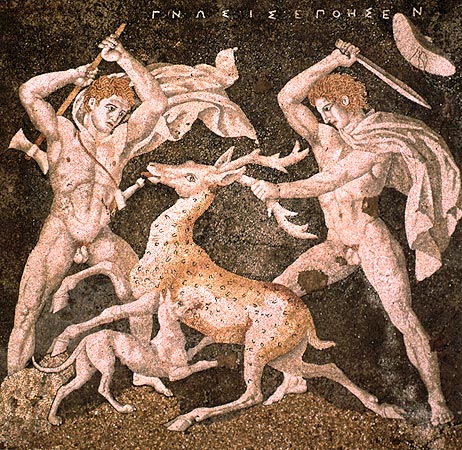
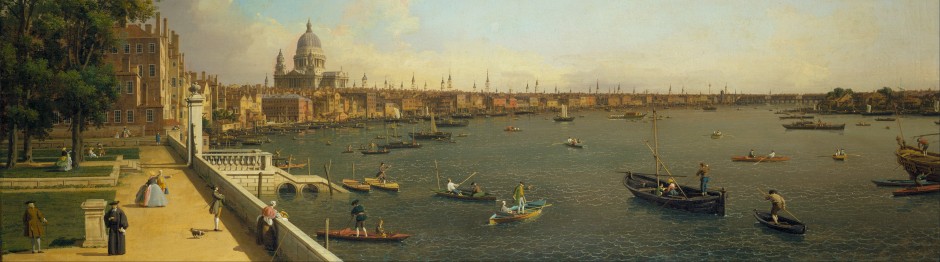
The Deer Hunt Mosaic from Pella, c.300 BC, credit Wikipedia

The Bible and the Ancient Near East

Christopher Rollston, Susanna Garfein, Neal H. Walls (Eds.), Biblical and Ancient Near Eastern Studies in Honor of P. Kyle McCarter Jnr., 2022, SBL Press, $119.00, reviewed by Darrell Sutton

The history of ‘Oriental studies’ in America was chronicled by C.W. Meade, in The Road to Babylon: Development of U.S. Assyriology (Brill; 1974). Its European foundations were broad but not unknown. Beyond the arduous efforts of the decipherers of cuneiform, the roots of Assyriology sprouted mainly from seeds sown in the research of Julius Oppert (1825-1905) and Eberhard Schrader (1836-1908). Mesopotamian investigations prompted and accelerated wider studies, some of which appeared in, among others, Beiträge zur Assyriologie and The Cuneiform Inscriptions of Western Asia, or in the pages of periodicals like The Babylonian and Oriental Record and Journal of the Society of Biblical Literature and Exegesis. The ripest fruits of Assyriology were accessible to persons proficient enough to grasp cuneiform content. Some significant and prolific figures were trained in the school of Friedrich Delitzsch (1850-1922). On the shoulders of those scholars whose scholarship today seems passé, a new generation of creative specialists have made their stand.

Collecting articles in honour of a notable scholar is hardly unusual. Original ideas in his or her areas of interest are often treated therein, although occasionally papers that would not pass the tests of an academic journal’s peer-review are submitted, accepted, then published. Technical fields of study tend to foster esoteric research. The study of Assyriology, Hebraica and Archaeology certainly illustrate this claim, offering disputable ‘scientific’ findings that are based on varied interpretations. The articles assembled here pay tribute to P. Kyle McCarter, the W.F. Albright Emeritus Professor in Biblical and Ancient Near Eastern Studies. His research is wide-ranging, as can be seen from the editors’ comments (pp.xvii-xviii) and in Christopher Rollston’s Introduction (1-2). Jonathan Rosenbaum surveys McCarter’s considerable contributions to near eastern scholarship (xix-xxv); the latter’s knowledge of Egyptology is acknowledged. At times he delved into Sumerian to supplement his explorations: e.g., see ‘The River Ordeal in Israelite Literature’, (1973), Harvard Theological Review, 66.4.
Continue reading

Posted in QR Home | Tagged , , | 1 Comment

Best Westerns

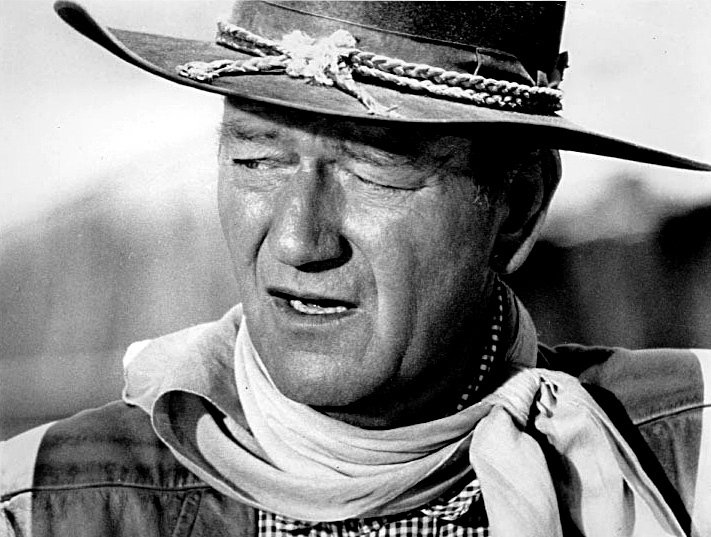
John Wayne, in The Comancheros (1961),
credit Wikipedia

Best Westerns, by Bill Hartley

In recent years the Western, once thought defunct, has undergone something of a revival. That said, recent releases shouldn’t be confused with what comes under the heading of ‘Modern Western’. This can be defined as something which takes aspects of the themes and character archetypes of the traditional Western and transplants them to a contemporary setting. Some of these have attracted positive critical attention and perhaps the key to their success is the presence of modern villains; the twenty first century versus the nineteenth, so to speak. Interestingly, some of the best come with a sound literary underpinning.

A good place to start is the multi Academy Award winning film No Country for Old Men, based on the 2005 novel of the same name by Pulitzer Prize winning author Cormac McCarthy. The picture was set in the 1980s and could be what launched the Modern Western. Filmed in the Badlands of West Texas, the story centres on Ed Tom Bell, an ageing sheriff. He is a man increasingly conscious of being out of his time. As the film progresses, Bell does an occasional narration and we discover he is a living link with the past, being the grandson of a sheriff. He tells us there was a time when some lawmen didn’t even see it as necessary to carry a firearm and whilst crime and violence have always been features of the work, its recent escalation is leaving Bell overwhelmed.

Continue reading

Posted in QR Home | Tagged , , | 2 Comments

Broken Myths, Broken Landscapes

Broken Myths, Broken Landscapes

Broken Myths; Charles Sheeler’s Industrial Landscapes, Andrea Diederichs, De Gruyter, 2023, Berlin/Boston, Pb 267pp, reviewed by Leslie Jones

By 1927, the market share of the once mighty Ford Motor Company had shrunk from 50 to 15%. Rebranding was evidently in order. If you won’t change the product, change the perception of it. The Philadelphia advertising agency N W Ayer and son, accordingly, commissioned freelance photographer Charles Sheeler to take a series of shots of the recently opened River Rouge plant in Dearborn where Ford’s ‘new’ Model A was being produced. Fashion, Firestone, cameras, typewriters – all had hitherto been grist to Sheeler’s mill. His brief now was to help Ford “regain [its] former status as market leader”. He produced 33 photos which were featured in ten issues of Ford News.

In his Principles of Scientific Management (1911), Frederick Taylor envisaged what the author terms “a perfect man-machine symbiosis”. Time and motion studies were employed by Taylor’s team to ascertain the quickest, most efficient method of performing any given task in a factory. Workers were viewed by Taylor as “predictable, machine-like objects”. His overriding goal was to reduce costs and thereby maximise profits. Work should be speeded up and the work force subject to an enhanced division of labour. In effect, the worker would be de-skilled and expertise transferred to the machine. Taylor thought that higher wages would compensate for any resulting boredom and fatigue.

Continue reading

Posted in QR Home | Tagged , , , | 5 Comments

Endnotes January 2023

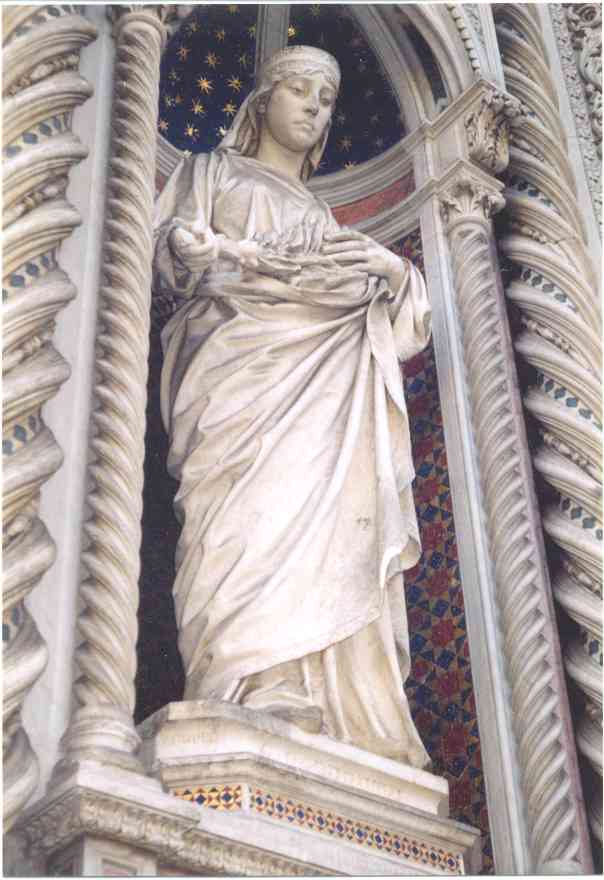
Florence Cathedral, facade, credit Wikipedia
Endnotes, January 2023

In this edition: Vaughan Williams from Midori Komachi and Simon Callaghan; orchestral fresco of Florence by Randall Svane, reviewed by Stuart Millson

In recent years, Midori Komachi has emerged as one of the most sensitive exponents of chamber music. With many impressive concert credits to her name: London, Warsaw, Tokyo ~ and even enterprising commercial relationships with airlines for in-flight musical entertainment ~ Midori effortlessly crosses national borders and musical genres. Several years ago, her sublime recording of Debussy’s Violin Sonata was characterised in this column as a performance of rare, subtle colours. Usually such an international performer of the younger generation would cultivate a cosmopolitan repertoire (i.e. not one centred on English romantic pastoral music, written by some tweed-jacketed, supposedly old-fashioned inhabitant of a Surrey country house). Not so, Midori. Here she is performing a remarkable collection on the MusiKaleido label in Vaughan Williams’s Sonata for Violin and Piano in A Minor, written, like the Debussy sonata, late in the composer’s life.

A piece from a Vaughan Williams era that includes the South Polar ice-wastelands of the Seventh Symphony and the unexpectedly spiky Eighth, the sonata is cast in three movements: FantasiaScherzo and Tema con variazioni ~ titles which themselves are reminiscent of the movements of Symphony No. 8. The sonata is a chamber work of substance, lasting the best part of half an hour; quite a muscular challenge, as well as musical, but nothing remotely insurmountable for Midori and her accompanist and fellow interpreter, the pianist Simon Callaghan ~ who emerges in this 1954 Vaughan Williams piece as a profound interpreter and exponent in his own right. (It would be good to hear Mr. Callaghan perform the Vaughan Williams Piano Concerto ~ and, incidentally, when will we hear Midori in the Elgar or Bax Violin Concertos? CD companies: please take note.)

Continue reading

Posted in QR Home | Tagged , , | Leave a comment

Silence Audible

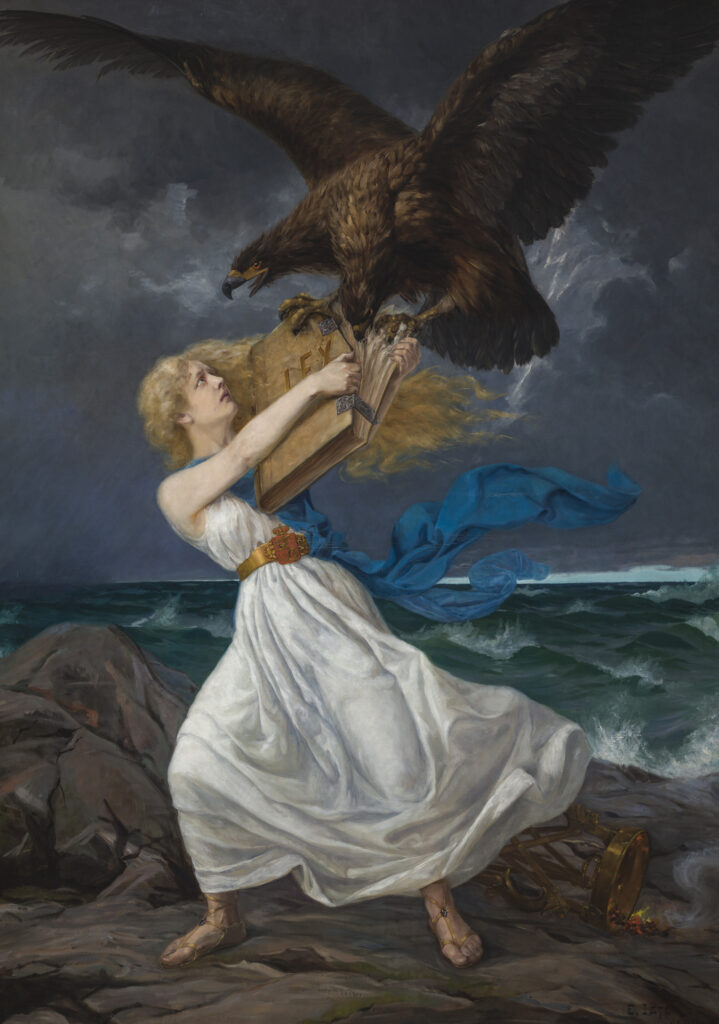
The Attack, Edvard Isto, the Finnish Maiden (Suomineito) attacked by the Russian eagle, credit Wikipedia
Silence Audible

The Northern Silence, Journeys in Nordic Music & CultureAndrew Mellor, Yale University Press, 300pp, hardback, ISBN 978-0300-25440-2, reviewed by Stuart Millson

The music critic, Andrew Mellor, now a resident of Denmark, has produced in the pages of his ‘Journeys’ a fascinating insight into the Nordic culture and institutions which have clearly captured his soul.

The author begins his story within the glass walls of Helsinki Airport – the starting point that leads to the glass and concrete concert-halls of Scandinavia. The cold, crystal air is breathed in as we leave the airport: Mellor muses on the ‘inaudible breathing’ of the ancient forests of Scandinavia; the pools and boulders of the endlessly-unfolding countryside; and the music of Sibelius, in particular, the seldom-played tone-poem, Tapiola – imbued with the spirit of the innumerable trees, through which gimlet rays of winter sunlight occasionally penetrate.

Tapiola may be the key to unlocking the secret of Nordic music: the work’s tonal strangeness, ‘the rumbling kettledrum with which it sneaks into being’, as Mellor memorably describes it; the sense of diminishing light and the evocation of the silent realm.

Continue reading

Posted in QR Home | Tagged , , , | 1 Comment

Of Human Bondage

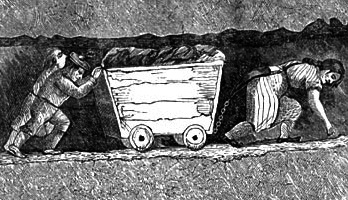
A hurrier and two thrusters, from The White Slaves of England (1853),  J. Cobden, credit Wikipedia

                     Of Human Bondage

                                By Bill Hartley          

In 2020, a group of students demanded that the David Hume tower at Edinburgh University be renamed. People will be wearily familiar with what comes next. Hume the philosopher and giant of the Enlightenment had allegedly committed the crime, in a footnote to an essay of his, of describing black Africans as inferior to white people. It has been argued that this was a misrepresentation of his work but even so the tower was duly renamed by the university authorities. Also in Edinburgh, the council has a ‘Slavery and Colonialism Review Group’. Good to know this is among the priorities of local government. North of the border they are considering changes to the school curriculum to focus on issues of slavery (Hume incidentally was against the idea of a British Empire). The Review Group reports that Scotland had one of the highest proportions of people benefiting from the ownership of slaves. Does this include Scots holding their own people in slavery? The Review Group might be surprised to learn that slavery was alive and well rather closer to home and arguably in conditions comparable to those caught up in the African trade.

Consideration is also being given to the creation of a National Museum for Slavery. This might provide an excellent opportunity for the Scots to learn what was going on in their own country, though it probably won’t happen, given the narrow definition of the term. Continue reading

Posted in QR Home | Tagged , , | 4 Comments

Letter to the Editor, 2nd December 2022


Letter to the Editor, 2nd December 2022

Sir,

It was reported recently that the Queen Consort (Camilla) intends to dispense with ladies in waiting. Presumably this is part of the project to create a thoroughly modern monarchy – slimmed down, non-racist, forward looking.

The much publicised contretemps (or storm in a tea cup), featuring lady in waiting Susan Hussey and Ngozi Fulani, was therefore timely. Or was it fabricated? Our supine, sycophantic media, as ever, remain silent.

Yours sincerely, Ritortus


Posted in QR Home | 5 Comments

Endnotes, December 2022

Dora Pejačević, credit Wikipedia

Endnotes, December 2022

In this edition: a piano concerto and a symphony by Dora Pejacevic; Rachmaninov from the Sinfonia of London; spiritual intensity from American composer, Randall Svane, reviewed by Stuart Millson

A commitment to new and overlooked music has always been at the heart of the BBC Symphony Orchestra’s artistic outlook. During the 1970s and ‘80s, the ensemble tended to perform works strongly connected with either the Second Viennese School, Stravinsky and Bartok, or the avant-garde experimentation of Boulez. Today, the repertoire has softened somewhat: contemporary composers have retuned themselves (at least, in part) to the recognisable outlines of tonality, and programmers have mined a rich reserve of late-romantic/early 20th century figures, such as the Richard Strauss-influenced Croatian, Dora Pejacevic (1885-1923).

Under the baton of Chief Conductor, Sakari Oramo, the BBC SO appears on the Chandos label in glorious depth, in Pejacevic’s Piano Concerto, written just before World War One in which Pejacevic served as a volunteer nurse and premiered in Zagreb in 1916. Despite emerging in the gloom of the European maelstrom, this Great War concerto has significant optimism in many of its great statements; a flourish in its style, and a lyricism that showed how not all art had become doom-laden. Peter Donohoe, renowned for his intense Rachmaninov cycles, is the soloist in this performance, bringing all of his knowledge and authority to bear on an unknown concerto that demands a spirited interpretation, to place it alongside the classic concertos so often heard in the concert halls of Europe.

Continue reading

Posted in QR Home | Tagged , , | Leave a comment

The Lives of Latin Texts

The Lives of Latin Texts

Terence, Hécyre, Paris, credit Wikipédia

Lauren Curtis, Irene P. Garrison, eds., The Lives of Latin Texts: Papers Presented to Richard J. TarrantHarvard University Press, Loeb Classical Monograph, 2020, pp. i-xxvii; 1-336, reviewed by Darrell Sutton

Distinguished as a textual critic, RJ Tarrant’s literary insights are combined with a knowledge of Latin syntax. To mark his retirement from the Pope Professorship of Latin Language and Literature, the department of Classics at Harvard organized a conference in 2018. The collectanea now published evidence the admiration in which he is held by students and colleagues. Select comments are due.

Kathleen Coleman remarks on his publications and contributions to classical studies in a paper entitled ‘Richard Tarrant: Scholar, Teacher, Colleague’, after which a 5-page bibliography is appended. The book includes three sections: Part I: Editing; Part II: Seneca, Ovid, and Other Incursions in Latin Literature; Part III: Music. Fourteen papers are included, all astute; some more, some less interesting [see Table of Contents below].

Rebecca Benefiel’s paper ‘Editing Ancient Graffiti’ illustrates her approach to editing ancient handwriting. Providing plenty of figures and illustrations, readers are given opportunities to grapple with expressions that are unclear, with inscriptions that defy dogmatic interpretation. On p.16 she argues that many words should not be “frequently dismissed as misspellings or mistakes”. We beg to differ. Even if we grant the omnipresence of colloquialism, Latin idiom among Romans definitely could be conveyed correctly or incorrectly. These things essentially are matters of judgement. As scholarship advances, it seems likely that rigid assertions about the character of language will go the same way as pronouncements hitherto made on the distinct characteristics of different people. Continue reading

Posted in QR Home | Tagged , , | Leave a comment

The Devil Spares Pravda

General Heinz Guderian & Brigadier Semyon Krivoshein, Sept 1939, credit Wikipedia

The Devil Spares Pravda

The Devils’ Alliance; Hitler’s Pact with Stalin, 1939-1941, Roger Moorhouse, Basic books, New York, 2014, hb, 382pp, $29.99 US, reviewed by Leslie Jones

As Roger Moorhouse observes in this compelling account, the Nazi-Soviet Non-aggression Pact of August 1939 was “one of the salient events of World War II”. It isolated Poland and thereby led directly to war. In line with the secret protocol of the treaty, Poland was then divided up by “its two malevolent neighbours”. The Soviet annexation of the Baltic states and of the Romanian province of Bessarabia was another direct result of the treaty. Hitler’s occupation of Western Poland subjected the Poles and the Jews to “a horrific regime of exploitation and persecution”. In the aforementioned territories annexed by the USSR, likewise, “class enemies” were killed, persecuted or deported. As the author remarks, Hitler ethnically cleansed Western Poland while the eastern portion was politically cleansed by the Soviets.

Some commentators considered the USSR a “worker’s paradise”, which Stalin was only trying to protect. By means of the pact, they maintained, Stalin enlisted Nazi aggression to accelerate the eventual fall of capitalism. Hitler had been turned West and become an “unwitting tool of the Soviets”. Beatrice Webb, initially appalled, took comfort from the prospect of the Western capitalist democracies being destroyed. Stalin’s policy was “a miracle of successful statesmanship”, she averred. The distinguished future Marxist historian Eric Hobsbawm, then a Cambridge graduate, had “no reservations” about the new party line. “Stalin never errs”, according to some Communists and fellow travellers. Douglas Hyde, a member of the Communist Party of Great Britain, thought that to protect communism, Stalin should, if necessary, “make an alliance with the devil himself”. But Professor Moorhouse dismisses the notion that Stalin’s motive for engineering the Molotov-Ribbentrop Pact was to buy precious time to prepare for an inevitable war with Nazi Germany. He notes that Kingsley Amis, editor of the New Statesman, suspected that the pact’s twin signatories shared something sinister in their DNA. In Le passé d’une illusion; essai sur l’idée communiste au XXe siècle (1995), François Furet subsequently explored this persuasive idea in depth. Continue reading

Posted in QR Home | Tagged , , , | 1 Comment