Bagatelles for a Massacre

2012_Egypt-Israel_border_attack_weapons

Bagatelles for a Massacre

Ilana Mercer meditates on the latest “victory” of the West

WINNING IN THE WEST. A French “documentary maker”—a title everyone with a camera assumes these days—told CNN’s Anderson Cooper that the West was winning. The docu-dude felt that the people of Europe were displaying a winning resistance to the imposition of Islamic blasphemy laws.

How was the West vanquishing the enemies of free speech? In response to the craven massacre of staff at the French satirical newspaper Charlie Hebdo, hundreds of thousands of Europeans—in Barcelona, Brussels, London, Paris, Nice, Lyon—came out en masse to plonk teddy bears on sidewalks and point pens and pencils to the heavens. “Winning,” as Charlie Sheen would say.

The winners also flaunted their feelings with placards that read: “Je Suis Charlie” and “Not Afraid.” The CNN signatories to the dhimma “pact of surrender” celebrated the triumphant “outpouring of art in response” to the executions in Paris. Meek, wishy-washy drawings popped up everywhere. An example: Patrick Chappatte’s New York Times cartoon, in which a sunken-chested white male sheds a tear, holds a flower. The caption: “Without humor we are all dead.” Fierce.

The terrorists in the midst of the winners were in for more blows. A plural option was added to the rallying cry “Je Suis Charlie”: We are Charlie Hebdo—Nous Sommes Charlie. “Say no to terrorism” was another winning slogan.

Then there was the showy and meaningless parade in Paris. The world’s leaders united against murder, an insight that was already well within the ken of leaders of the ancient world (Ten Commandments?). The charade of charlatans featured the very people responsible for legislation that authorized the round up, around them, of “54 people … for hate speech or other acts insulting religious faiths, or for cheering the men who carried out the attacks.”

THE SWORD IS MIGHTIER THAN THE PEN. No wonder author Martin Amis spoke of clichés of the mind and the heart. The orgy of sentimentality and helplessness came with its share of clichés. Particularly enveloping in its preposterousness was “the pen is mightier than the sword.”

Remember the iconic scene in the film “Raiders of the Lost Ark”? Challenged to a duel by a scimitar-wielding, keffiyeh-clad Arab, Indiana Jones draws a pistol and dispatches the swordsman without further ado.

In my (allegorical) more accurate adaptation, the roles are reversed. The Prophet Mohammad’s avenger faces his somersaulting Western offender, who comes at him with a pen, convoluting about freedom of expression, inquiry and conscience. How does Mohammad’s mercenary respond to the penman’s lofty ululations? As Indiana Jones did: he aims his automatic weapon and drops the prophet’s offender.

Before Charlie Hebdo came the 12 Danish Jyllands-Posten cartoons. In 2005, JP drew cartoons that joined Muhammad to the violence that disfigures the Muslim world. While clucking about the sanctity of free speech, countless commentators climbed into the Danes. The illustrators were called juvenile, obnoxious, Islamophobic, even immoral. They were accosted for doing nothing to advance enlightened argument; of acting in “terrifically bad taste”; and indulging in “gratuitous provocation, not worthy of publication,” to quote some of the pieties disgorged by politicians and pundits.

Having been where Charlie Hebdo finds itself today—a catalyst for eruptions across the Islamic Ummah (now innervating the West)—Flemming Rose, JP’s cultural editor and publisher, knows of what he speaks. He informed BBC’s HARDTalk that the sword is mightier than the pen. “Violence works.” The great Danes of JP will not reprint “Charlie Hebdo’s post-attack front cover.”

Winning.

FREE SPEECH FARCE. Far and away the best commentary about the Charlie Hebdo headache was that of Sean Gabb of the British Libertarian Alliance. Unable to stomach “the smug chanting of politicians and media people,” in countries where “[a]lmost every day … someone gets into trouble for opening his mouth,” Dr. Gabb wondered: “Where for them are the defenders of freedom of speech, now more fashionably than bravely holding up pencils or waving candles?

“I believe that the writers and cartoonists at Charlie Hebdo had the moral right to say whatever they pleased about Islam, or anything else,” argued Gabb. “But I also believe that Luke O’Farrell and Garron Helm should not have been sent to prison for being rude to or about Jews. Nick Griffin should not have been prosecuted for saying less against Islam than was published in Charlie Hebdo. The Reverend Alan Clifford should not have been threatened with prosecution in 2013, when he handed out leaflets at a gay pride march in Norwich.”

Indeed, just this week, a teenager was jailed in West Yorkshire, for posting a video clip of himself flushing then burning his Koran. To the north, the Scottish Police warned its charges via social media: “Please be aware that we will continue to monitor comments on social media & any offensive comments will be investigated.”

“In general,” Dr. Gabb remonstrated, “we are free to say only what the authorities want to hear. Even when the law does not cover dissent, there are administrative or economic punishments. See, for example, the UKIP members [of Britain’s rightist Independence Party] who were denied the right to foster children, or the difficulty that dissident writers have to find paid work.”

CAUSE CÉLÈBRE FOR CULTURAL LEFT. “Suppose the attack had not been on a cultural leftist magazine, but on the headquarters of the [rightist] Front National, and the victims had been Marine le Pen and the party leadership,” posited Dr. Gabb. “Would all those city squares have filled with people reciting Je suis le Front National? I hardly think so. Nor would the media have given blanket and uncritical coverage.

Dame Helen Mirren would hardly have sported a pencil brooch at the Golden Globes had Dutch lawmaker Geert Wilders fallen prey to the peaceniks who’ve threatened to take his life.

“Indeed, we had our answer before the gunmen had opened fire,” claims Gabb quite credibly.

Consider the deceased Dutch, anti-immigration activist Pim Fortuyn, Theo van Gogh, descendant of Vincent van Gogh—slaughtered like a pig on the streets of Amsterdam for a docudrama depicting the subjugation of women in Islam and in Islamic countries—and Lee Rigby, the British soldier who was carved up by a Muslim wielding a meat-cleaver, on a south-east London street.

“When Pim Fortuyn and Theo van Gogh and Lee Rigby were murdered no less barbarously, we were all urged to moderate our response. In the first two cases, we were told, with more than the occasional nod and wink, that the victims had brought things on themselves. As for the third, the protest demonstrations were broken up by the police.”

Concludes Gabb: “Cultural leftists have the same right not to be murdered as the rest of us. So far as the present lamentations indicate, they are seen by the directors of public opinion as having a greater right.”

ILANA MERCER is a paleolibertarian writer based in the United States. She pens WND’s longest-standing column, “Return to Reason” and is a Fellow at the Jerusalem Institute for Market Studies. She is a Quarterly Review Contributing Editor. Ilana’s latest book is Into the Cannibal’s Pot: Lessons for America from Post-Apartheid South Africa. Her website is www.IlanaMercer.com. She blogs at www.barelyablog.com

Posted in QR Home | Tagged , , , , , , | Leave a comment

Reisenwitz Redux

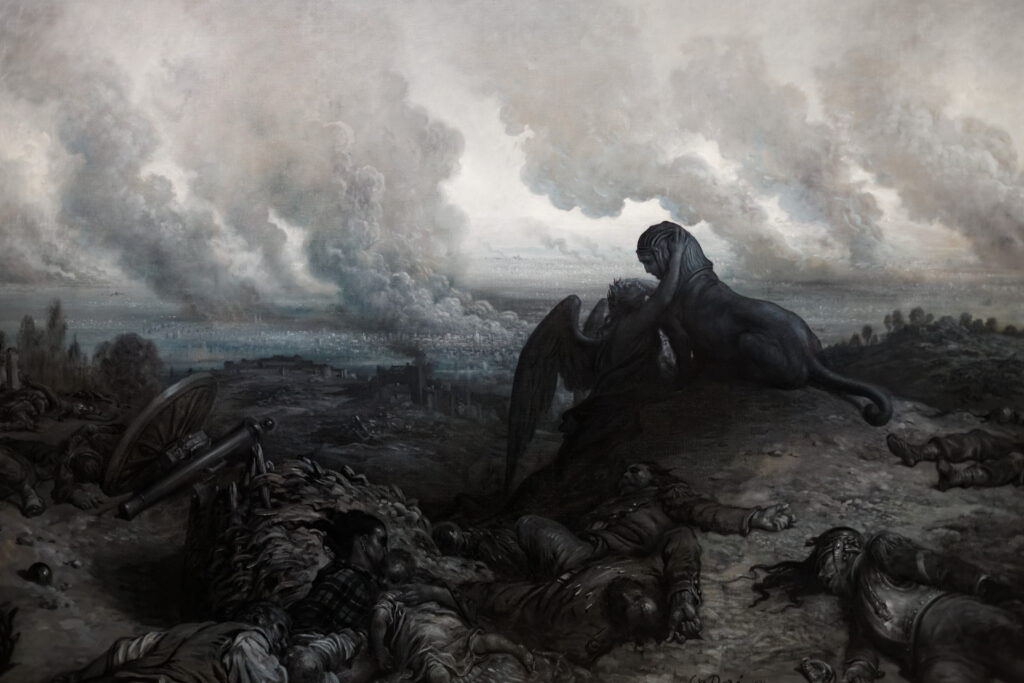
l’Enigme de Gustave Doré, credit Wikipedia

Reisenwitz Redux

Ilana Mercer reads the riot act

It used to be that Justin Raimondo was more discerning about the women he welcomed into the Antiwar.com fold. Here is how Mr. Raimondo welcomed this writer:

“A major confetti-throwing welcome on the occasion of Ilana Mercer’s first regular column for Antiwar.com. Ilana is a principled longtime libertarian and literally an international figure: she’s an ex- Israeli, ex-South African and ex-Canadian, now a permanent resident of the U.S. And it isn’t only her prose that’s beautiful. She’s opinionated, she can write, and she’s a lot of fun. Give her a warm welcome by checking out her column”.

“Respect,” as Ali G. —the creation of comedic genius Sacha Baron Cohen—would have said.

I sincerely hope Mr. Raimondo is not losing his grip on this important outfit. For no sooner had contrarian libertarians celebrated the voluntary departure of Cathy Reisenwitz —than one of Raimondo’s new columnists unleashed herself on this writer, rabbiting on about racism. Just like Reisenwitz. Continue reading

Posted in QR Home | Tagged , , , , , , | Leave a comment

The Rise of the Dominatrix

Margaret Thatcher

The Rise of the Dominatrix

 Derek Turner’s take on Charles Moore’s biography of  Margaret Thatcher

Margaret Thatcher: Not for Turning, Charles Moore, London: Allen Lane, 2013, 859 pp

When Margaret Thatcher died last April, the obsequies were at times almost drowned out by vitriolic voices celebrating her demise. There were howls of joy from old enemies, street parties, and a puerile campaign to make the Wizard of Oz song, “Ding, Dong, The Witch is Dead!” the top-selling pop single (it failed, narrowly). The extravagant hatred evinced by some shocked some, but it was in a way an entirely suitable send-off for a woman who always loathed ‘consensus’. She may be the last Conservative whose demise will evoke more than a yawn.

This is former Spectator and Daily Telegraph editor Charles Moore’s first book, but it is an assured production, steeped in its subject, judicious in its handling of history, coloured by his journalistic instinct for revealing and amusing anecdotes. In this first of two volumes, he follows his heroine from birth up to what “may well have been the happiest moment in her life” – the October 1982 victory celebrations after the recapture of the Falklands. His heroine she may have been – and this is why she approached him to be her biographer, on the understanding that publication would be posthumous, and interviewees knew she would never read what they had said – but he maintains critical distance. There are 54 pages of footnotes referring to innumerable interviews, and a seven page bibliography, assembled over 16 years of what must have been at times an all-engrossing project, whilst incidentally editing Britain’s best-selling broadsheet newspaper. We will need to wait until the companion volume, Herself Alone, to get Moore’s assessment of her legacy, but for now, Not for Turning equips us admirably to understand what she was like as person and politician, why she was the way she was, and suggest why she would succeed in many ways, yet fall short in others.

Moore’s researches were at times made more arduous by his subject, a naturally private person who was always, as he reflected in the Daily Telegraph after she died, “keen to efface the personal”. Her memoirs gloss over emotions or incidents about which we would like to know very much more, or lend “Thatcherism” greater coherence in retrospect than it possessed. But luckily she was intrinsically honest, and Moore early learned to read subtle signs – “All politicians often have to say things that conceal or avoid important facts. She certainly did this quite often; but she did it with a visible discomfort which often undermined her own subterfuge.”

This complex personage pushed into the world in 1925, and lived above a commercial premises in Grantham, Lincolnshire, a town even now a byword for provincialism (despite having been Isaac Newton’s hometown). It was one of two grocery shops run by her father Alfred Roberts, who when he wasn’t selling sausages to Midlandian burghers was Mayor and a Methodist lay preacher. “If you get it from Roberts’s – you get the BEST!” was the shops’ slogan, and her parents’ rectitude, work ethic, and attention to detail would stay with their daughter.

School was preparation for a life of application. A contemporary remembered – “She always stood out because teenage girls don’t know where they’re going. She did.” She unsurprisingly excelled in declaiming from sturdily middle-brow poets – Tennyson, Longfellow, Kipling, Whitman. Serious, too, was her sojourn in Somerville, regarded as the cleverest of the female colleges in Oxford, where she read Chemistry and thrived even under a Leftist principal.

The young Margaret Roberts, notwithstanding the pervasive progressive miasma, was already obstinately Conservative, although she had not yet refined her particular brand. She joined the Oxford Union Conservative Association (OUCA) and became its president, and co-author of a pamphlet destined to be combed over by obsessives in later years. At that time, the Conservative Party was a mass movement, and a means of social mingling, and many joined for social as much as political reasons, or simply to find a spouse of the right Right type. Moore suggests that she likewise saw OUCA as an “opening of the door”. She took elocution lessons, and met as many influential people as possible, always inveigling herself somehow onto the top table at dinners. Yet her letters to her parents and older sister Muriel are often apolitical, rarely even mentioning the War, unexpectedly spotted with spelling mistakes, full of family, clothes and rare romantic interests, the latter discussed in briskly British terms. When she first met Denis, her husband-to-be, she told Muriel that he was “a perfect gentleman. Not a very attractive creature”. (He remembered her almost equally coolly – “a nice-looking young woman, a bit overweight”.)

After graduation, she worked in industry, and in 1950 stood for Parliament for the first time, in the solid Labour seat of Dartford in Kent. She conducted a dynamic campaign, characterized by her contribution to a debate hosted by the United Nations Association, which featured her Labour opponent Norman Dodds and other speakers even further Left: “I gave them ten minutes of what I thought about their views! As a result Dodds wouldn’t speak to me afterwards and Lord and Lady S. [Strabolgi – an old Scottish title Italianized in the 16th century] went off without speaking as well.” She made an impressive 6,000 dent in the Labour majority. It is characteristic that at the count she told her activists that the next campaign would start the following morning.

She married Denis in 1951, the start of a quietly contented partnership that lasted until he died in 2003. As well as his earning capacity and a business brain useful whenever his wife needed to comprehend company documents, he brought to their alliance some social status, a large fund of commonsense, and a willingness (even now rare for men) to take a back seat. Performing household tasks – she cooked when she could, and enjoyed tidying (an everyday application of what Edward Norman called her “pre-existing sense of neatness and order in society”) – assuaged the faint guilt she clearly felt at being something of a Bluestocking.

Needing to earn more money, she trained for and practised at the Bar, and the experience added to her near-mystical respect for law of all kinds. She later systematized this passion for precedents – “As a Methodist in Grantham, I learnt the laws of God. When I read chemistry at Oxford, I learnt the laws of science, which derive from the laws of God, and when I studied for the Bar, I learnt the laws of man.” Between work and family, she politicked tirelessly, resenting even holidays as wasted time. (There is a telling photo of her in this book, on holiday in the Hebrides in 1978, walking in business clothes along a beach, staring at her watch.)

In 1958, she applied for selection in the north London constituency of Finchley, where the electorate was approximately one-fifth Jewish. This suited her, perhaps predisposed to philo-Semitism by her Nonconformist upbringing, certainly always admiring of law-abiding, hard-working people, and she impressed from the start. At one selection committee meeting, one astute member whispered to another, “We’re looking at a future Prime Minister of England”. Later, she would be strongly influenced by thinkers of Jewish extraction like Milton Friedman, Keith Joseph and Alfred Sherman (the latter a fan of this journal), and was a strong (if not uncritical) supporter of Israel. Macmillan once joked that her Cabinet contained “more Old Estonians than Old Etonians”. Yet she also came under fire from constituents for upholding Oswald Mosley’s legal right to hold a rally in Trafalgar Square. She was of course selected, then elected in the 1959 election, and in 1961 got a junior ministerial post as Parliamentary Under-Secretary at the Ministry of Pensions and National Insurance. Her anxiety to prove herself and achieve something was immediately evident, with her Minister grunting to the Department’s top civil servant “She’s trouble. What can we do to keep her busy?”

As the Kingdom lost its Empire it also lost its way, and her Party drifted directionlessly. Quite apart from the threats to order and freedom posed by different kinds of socialism, ranging from Soviet-funded Marxism to saccharine egalitarianism, the economy was dominated by sclerotic state-owned concerns, with attempts at reform usually stymied by ultra-Left trade unionists. There was a decline syndrome of spiralling spending, ballooning inflation, inbuilt inefficiency, and industrial (in)action. The Conservatives seemed powerless to act, or even to think, although monetarism was gaining ground among cleverer Conservatives. Thatcher was frustrated by the Party’s unwillingness to engage in what she could see was an ideological rather than a mere electoral battle. Emblematic of Conservative complacency was the reaction of the free-market Economic Dining Club, whose members were reluctant to let her join, fearing she would dampen their masculine conviviality, and compel them to engage in discussions before dinner.

On other matters, she was more old school – in favour of corporal and capital punishment, against pornography, drugs and easier divorce. But she was never a reflexive moralizer, voting to legalize both homosexuality and abortion (the latter because she had met a despairing disabled child). Whatever her private views on any subject, she was then (and would always be) “trapped in moderation”, to borrow the title of one of Moore’s chapters – compelled to work within a framework where the odds were always against her.

Natural allies lacked stomach – for example, businesses refused to help in the fight against the closed shop, because they wished to avoid unpleasantness, and the alternative would be too complicated. Again, in the 1960s and 1970s, even many Tories wanted comprehensive education, and although she managed to save 94 grammar schools while Education Secretary (1970-1974), she was compelled to allow 3,286 comprehensives. She hated the egalitarian educational orthodoxy, although sometimes she would have to defend it publicly. Moore cites one interview in which she claimed that primary schools were “much better…much more progressive”, while she was saying privately to aides that all those schools offered was “rag dolls and rolling on the floor”.

She had learned how to combine being a conviction politician with being a pragmatic politician – and to ensure that when she had been bounced into a course of action she should make her unhappiness known to the Right-of-centre grassroots. She was sincere, but she was also a superlative Party manager. Yet she really tried. “You came out of a meeting with her”, one Education official remembered, “feeling that you’d had three very hard sets of tennis”. But he remembered her fondly; she was unfailingly kind and generous to staff.

Good luck came to her aid when Ted Heath refused to take her leadership challenge seriously, and in 1975 she took his place as Conservative leader, the first woman to lead any major Western political party. She revelled in the attention, and did not mind being hated – “The day that I am not causing controversy, I shall not be doing very much”. She was the last Conservative leader willing to endorse inequality – “Equity is a very much better principle than equality”. She attracted contumely even from her own advisers for supporting Ian Smith’s Rhodesia. Zbigniew Brzezinski was astounded to learn that she was “inclined to favour the white position”; in one speech she even said “The whites will fight, and the whites will be right.” In the end, on Rhodesia as on so many other matters, she bowed to inevitability – but arguing fiercely as she retreated. (Moore notes laconically, “What happened much later in Zimbabwe…was to confirm Mrs. Thatcher’s pessimism”.) She attended what despairing F.C.O. officials called “disturbingly right-wing” meetings in America, building bonds that would be of material benefit during the Falklands War (although Moore is at pains not to hyperbolize the ‘special relationship’). In a famous 1978 interview, she infuriated the Party establishment by speaking on immigration, a subject on which she had said little before, saying that many Britons feared “they might be rather swamped by people with a different culture”. But she hoovered up votes that would otherwise have gone to the National Front, then on the cusp of breakthrough, and delivered huge swathes of the white working class into the Conservative camp. (She would never do anything substantive about immigration, although the numbers approved for citizenship dipped during the Eighties, from circa 72,000 a year to around 54,000.)

Last man standing

Last man standing

The incompetence of opponents also helped propel her over the Downing Street threshold in 1979, “undoubtedly”, Moore writes, “ the most truly conservative person…ever to reach No. 10 in the era of universal suffrage.” She was also almost certainly the last PM who would pay no attention to popular culture, or even the media – and who was so innocent that she once gave TV cameras the two-fingered V for victory sign the wrong way round.

Although she faced great resistance from within her own party – the so-called ‘Wets’ who regarded her as vulgar – their intellectual incoherence gave her a great advantage. At times, however, she missed opportunities, perhaps partly out of relict deference to these grandees, certainly because she often acted intuitively rather than strategically. Her intellectual influencers rarely combined political intelligence with their incandescence, so she had to rely on less ‘sound’ careerists who watered down her wishes – not that she was ever the anarcho-capitalist many wailed that she was. Little happened on the economic front until she and Geoffrey Howe pushed through the 1981 Budget, largely against her Cabinet and ‘expert’ opinion, but as this book ends the economic battles that would define her mostly lie ahead.

She was also under fire, almost literally, in Ulster. She patrolled in uniform, Boudicca-like, with the troops in South Armagh’s “Bandit Country”, and would send handwritten letters to the families of killed soldiers – her Unionism all the more impassioned because she had lost one of her closest friends and allies, Airey Neave, to an INLA bomb. She found herself having to deal with rampant terrorism, hunger strikers, the oleaginous Charles Haughey, international opinion, and her own diplomats – and one can see how just a few years later she would sign the Anglo-Irish Agreement against her own instincts.

Moore provides other portents of future failures – such as her relative lack of interest in the EU, and her reaction to the Brixton riots of 1981, a typical Thatcher combination of strong rhetoric, followed by appointing a leftwing judge to conduct the enquiry. Not just trapped in moderation, she was also becoming trapped in political correctness. She was also making enemies of many senior Tories through sheer brusquerie. The scene is being set for eight years of effort and isolation, leading to treachery, talismanic exile, finally sad dotage when she would appear only infrequently, a tiny ex-titan towered over by men who affected not to notice that her famous features had fallen on one side, and her lipstick was askew.

But for now, we close the book and the curtains on Act I with her finest hour – those 74 days between April and June 1982 when the Falklands were in global play, and the PM was thrown upon her inner resources and not found wanting – guided to victory by her personal compass, and her willingness to trust to the courage and skill of the armed forces. At the memorial service at St. Paul’s that October, she stood funereal and indomitable beneath Wren’s great dome, determined that the military, not she, should take the credit – while the Whispering Gallery within the Cathedral and outside was alive with patriotic approbation, the Iron Lady as evocation of Elizabeth I, personification of a patria both beautiful and doomed.

This article first appeared in Chronicles

DEREK TURNER is the former editor of QR

Posted in QR Home | Tagged , , , , | Leave a comment

Edward Snowden – hero of our time?


Surveillance_quevaal

Edward Snowden – hero of our time?

Robert Henderson asks some awkward questions

Citizenfour

Main appearances:

Jacob Appelbaum

Ewen MacAskill

Edward Snowden

Director: Laura Poitras

Running time: 114 minutes

This documentary about state surveillance revolves around Edward Snowden as interviewee and the journalists Glen Greenwald and Ewen MacAskill as interviewers. The interviews were primarily conducted in Hong Kong to where Snowden fled before moving to Russia.

As a man who has been much in the news since June 2013 but little seen and heard, it is naturally intriguing to see what Snowden is made of when interviewed at length with a further enticement to watch being the possibility that he might reveal some dramatic new details of state misbehaviour. Consequently, it might be thought the film would contain plenty to interest and alarm anyone worried about the imbalance between the power of the state and civil liberties. Sad to say there is little to excite the viewer because Snowden comes across as a distinctly colourless personality and there are no startling important new revelations. Worse, there is something essential missing: nowhere is there any serious attempt to test either the veracity of the information Snowden made public or his declared motivation.

Whenever someone whistle blows on a state apparatus those receiving the information are presented with what might be called the “double agent” problem. Is the whistle-blower what he seems? Is he telling the simple truth or is he working to his own or another’s agenda? Snowden could logically be in any one of these hypothetical situations:

  1. He is telling the truth about the information he provides and his motives.
  2. He is acting voluntarily as a covert agent of the US state.
  3. He is acting voluntarily as an agent of a foreign state.
  4. He is acting voluntarily on behalf of a non-state actor.
  5. He is acting under duress from any of the actors in 2-4.

Possibilities 2-5 went unexplored. They did not even ask Snowden how he was paying his way since his flight. (Always ask about the money. I once badly threw David Shayler at a public meeting simply by asking how he was funding his life). That left only possibility 1, that   Snowden was simply telling the truth. However, the film failed even there. The two interviewers simply asked Snowden questions and accepted his answers at face value.

How plausible is Snowden as the selfless idealist he portrays himself as? In the film he appears to be surprisingly little troubled by his predicament. This could be reasonably interpreted as someone who had his present position worked out in advance of his whistle blowing. All the shuffling about in Hong Kong before going to Moscow could have just been to substantiate his claim that he was acting of his own volition or, less probably, perhaps China had agreed to give him sanctuary and then changed their minds. Not convinced, then ask yourself how likely it is that anyone would have been willing to blow the gaffe on US state secrets without having the assurance that afterwards he would be in a place safe from the US authorities? After all, if Snowden is ever brought to trial in the US it would be more or less certain that he would get a massive prison sentence and, in theory at least, he might be executed for treason.

Then there is Lindsay Mills, the partner Snowden ostensibly left behind without explanation. She has joined him in Moscow. When Snowden speaks in the film of his decision to leave Mills without explanation, he tells the story with an absence of animation that would not have disgraced a marble statue. All very odd unless the story that he left her in the dark was simply a blind to both protect her and provide a veil of confusion as to his whereabouts immediately after the initial release of information.

As for Mills she made a number of entries to a blog she ran after Snowden’s flight to Hong Kong. Here’s an example: “As I type this on my tear-streaked keyboard I’m reflecting on all the faces that have graced my path. The ones I laughed with. The ones I’ve held. The one I’ve grown to love the most. And the ones I never got to bid adieu.” Would someone who is supposedly seriously traumatised produce such a studied attempt at what she doubtless sees as “fine writing”? Anyone care to bet that she was not in on the plot all along?

Snowden also engages onscreen in some very unconvincing bouts of paranoia such as covering his head with a cloth in the manner of an old time photographer to avoid a password he is putting in to his computer being read. He also reacts in an exaggerated way at a fire alarm going off repeatedly, unplugging a phone that keeps ringing on the grounds that the room could be bugged through the phone line. Well, it could be but so what? Provided Snowden only said what he was willing to have included in the film it would not matter if his conversations with the documentary makers were bugged. It all seemed very contrived and could plausibly be interpreted as Snowden self-consciously and ineptly acting out what he imagines to be the way someone in his position would behave.

Apart from the stark failure to press Snowden adequately, the questioning of Greenwald and MacAskill’s was woefully inept. Neither had any idea of how to build a line of questioning or how to play a witness. For example, one of the most difficult disciplines an investigator has to master is to allow the person being questioned to do as much of the talking as possible without being prompted. That necessitates being patient and tolerating long periods of silence when the person being questioned does not reply to a question quickly. Those who have seen the film American Hustle will remember the Christian Bale and Bradley Cooper characters. The Bale character understands the art of taking your time, letting a mark come to you rather than you going to them. Cooper’s character is forever messing up Bale’s plans by rushing in and pressing matters. Obviously in a documentary you cannot allow silence to continue for very long, but even allowing a minute’s silence can be very revealing of a person who is failing to answer. Irritatingly, Greenwald would not let Snowden stew in silence for even a moment.

Greenwald’s other major shortcoming is that he loves the sound of his own voice far too much and has an irritating habit of delivering platitudes in a manner that suggests he is offering ideas of the greatest profundity. MacAskill was palpably nervous and routinely asked innocuous questions and, after they were asked, seemed pathetically relieved that he had put a question, any question.

Apart from the interview with Snowden, there was little of interest to anyone who is seriously concerned about state surveillance because it was all widely known material bar one item. This was a recording of a remarkable court hearing in the USA which AT&T phone customers took action against the state over unwarranted surveillance which showed the US government lawyer arguing in effect that the case court had no jurisdiction over the matter and being soundly slapped down by one of the judges.

Is the film worth seeing? Probably only as a documentation of Snowden’s personality. It reveals nothing new about the extent of the misbehaviour the US state or properly examined why and how Snowden did what he did. Nor would the film be likely to educate someone who was ignorant of the subject, because the details of what the US government had been up to were offered in too piecemeal a fashion for a coherent idea of what had happened to emerge for someone starting from scratch.

ROBERT HENDERSON is QR’s film critic

Posted in QR Home | Tagged , , , , | Leave a comment

First Total War

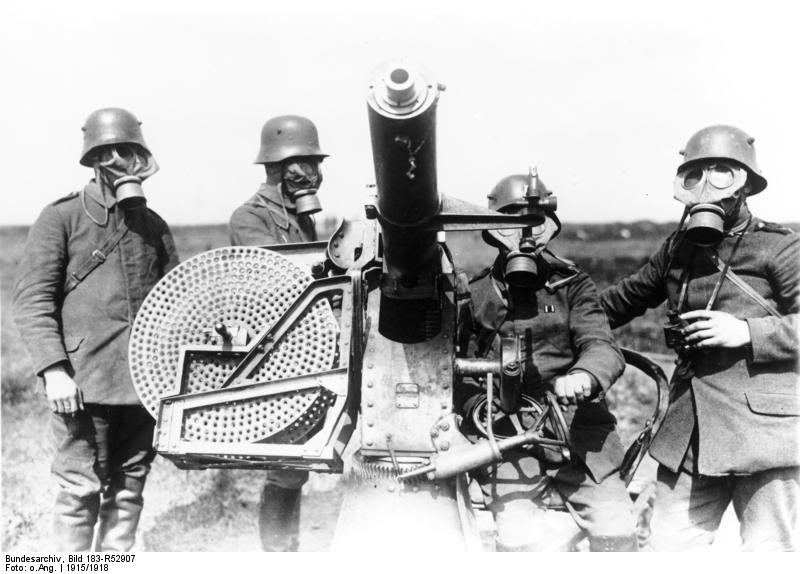
WW1 German AA Gun and Crew

 First Total War

Frank Ellis confronts the dark side of modernity

Alexander Watson, Ring of Steel: Germany and Austria-Hungary at War, 1914-1918, Allen Lane, London, 2014, with maps, photos, notes, bibliography and index. ISBN 978-1-846-14221-5

Vielleicht opfern wir auch uns für etwas Unwesentliches. Aber unseren Wert kann uns keiner nehmen. Nicht wofür wir kämpfen ist das Wesentliche, sondern wie wir kämpfen. Dem Ziel entgegen, bis wir siegen oder bleiben. Das Kämpfertum, der Einsatz der Person, und sei es für die allerkleinste Idee, wiegt schwerer als alles Grübeln über Gut und Böse.[Ernst Jünger, Der Kampf als inneres Erlebnis]

Based on some valuable source material and clearly written, Ring of Steel is a worthy project with which to mark the one hundredth anniversary of the start of the Great War, though the author’s claim, even allowing for the circumscribing effect of ‘modern’, viz that – ‘This book is the first modern history to narrate the Great War from the perspectives of the two major Central Powers, Germany and Austria-Hungary’[1] – is exaggerated. No matter, Ring of Steel is a good and serious read, with the emphasis falling on how Germany and its Austro-Hungarian ally coped with the blockade – the ring of steel – that slowly strangled them during World War I and the tactical and strategic decisions taken by the Central Powers in order to seize the initiative from their two main opponents, Britain and France, in order to avoid defeat.

Although the American Civil War and the Franco-Prussian War provided some idea of the huge technological changes that had taken place in the prosecution of war in the latter half of the nineteenth century, offering pointers to how a European-wide conflagration might develop, by 1914, the start of the Great European Civil War, the destructive power of modern armies and navies, and eventually the first air forces, had exceeded the ability and imagination of military and civilian planners fully to comprehend the nature of the violence that they were now able to unleash. In fact, 1914 marked the start of a new type of war – total war – and by 1918 it was total: mass conscription; rationing (actual starvation in parts of the Central Powers); genocide (Armenia); rampant inflation; indifference to mass slaughter; government censorship; seizure of private assets; unrestricted submarine warfare (a disastrous German move); British naval blockade (of dubious legality as Watson argues); multiracial strife; ethnic cleansing and deportations; air raids; and towards the end a hideous influenza pandemic that cut down millions. Continue reading

Posted in QR Home | Tagged , , | 1 Comment

Upwardly mobile couple

Heinrich Himmler

Heinrich Himmler

Upwardly mobile couple

Stoddard Martin sifts through the Himmlers’ correspondence

A petty bourgeois element runs through the history of National Socialism, with counterpoint from its traditional obverse – the bohemian. Himmler came from suburban Munich and had the provincial’s suspicion of the uncleanness and un-Germanness of the metropolis – Berlin. His eventual wife and later a secretary by whom he had two illegitimate children both lived there, and his early letters to the former are seasoned with disparagements of it. She, Marga Boden, responded with pleas that he be not too hard on her home town, and in course of their courtship he softened his tone about a place soon to supplant Weimar as capital in a new Reich, whose erection he tirelessly worked for. Ironically the Bavarian bourgeois grew adjusted to radical Berlin just as his spouse was acculturating to the new life on the outskirts of Munich he offered, eventually transmuted into a comfortable villa by a lake in the foothills of the Alps. Marga turned out to be better-suited to this transit than at first appeared. Having described the most prominent of Berlin Nazis, Joseph Goebbels, as ‘a Jewish type’ – this mainly because of how he combed his hair – and her (Jewish) boss at the clinic that she worked in as not paying properly (money frets were a constant theme), she seemed in general to find other people antipathetic; thus what she got could be seen as a kind of liberation – a household far from the madding crowd, with fruit trees and vegetable patches to cultivate, a dog and a few sheep and goats to husband, as well as a variety of fowl.

The bucolic retreat was also an ideal pen for the bohemian bourgeois to herd his ‘little woman’ into, especially once she had bred him a child. It was an anchor for him as he pursued peripatetic activities on behalf of the new party, a homestead to long for and return to when away on what constituted – in political terms – increasingly eccentric, sometimes dangerous missions. In fact, after a supposedly dominant Jewish bourgeoisie, the group Himmler expressed himself most as despising was the petty bourgeois – more than ironic when you consider how dutifully he marked his parents’ birthdays and fests such as Christmas plus all that went with them, purchase and giving of gifts not least. At these observances the conventional chap never failed, even while keeping a frenetic pace of building up his ruthless movement and later the apparatus of one of the most monstrous modes of governance ever seen. Sitzfleisch in the common man clearly annoyed him. Promulgation of revolution was preferable to living peaceably in one place doing small offices as a professional or perhaps civil servant. Constant travel from one end of the land to another or more – Austria for the Bavarian was of as much interest as the Prusso-Baltic northeast – intoxicated him, and the petty bourgeois virtues of sobriety, exactitude, adherence to hierarchy and love of rule could readily be set to serve the party’s ‘bohemian’ ends. Above all loomed a Führer who, with quasi-religious doctrine set down in Mein Kampf and iterated from numberless speaking pulpits, enabled the little man to exult in perhaps the most urgent of all his petty bourgeois virtues: a worshipful loyalty.

Yet one always had to take care to make the ‘right’ choices. Himmler began in the party under the wing of fellow Bavarian Gregor Strasser. Strasser and his brother Otto were close to its helm through the ‘20s, near equals to Hitler, for whom Gregor sometimes deputized, and major contributors to its advance. With Goebbels, who was neither a South German nor an Ur-party member, the Strassers had developed left-of-centre policies to compete with dominant Social Democrats and Communists in the German electorate. When these policies were slung out at the start of the 1930s, it triggered signal events. Under new and opportunistic influences, Hitler summoned Otto Strasser to a tirade famously lasting four and a half hours, after which the younger Strasser stormed out of the party, declaring its ‘socialist’ aspect dead. His brother stayed loyal, declining in 1932 an invitation by President Hindenberg’s military associate Kurt von Schleicher to split the party by entering a coalition to solve the crisis brought on by the Depression. By then the party had grown attractive to folk with names prefaced with ‘von’, both landowning and industrialist. Goebbels as ever saw how the wind was blowing; Himmler, now trusted by Hitler for his organizational skills, evidently saw too. Flattered by invitations from these aristo new party members, not least to a hunt, the petty bourgeois also saw that his wife enjoyed taking tea with Gräfins from whom she did not have to fear being sullied by low human nature. In any case, Himmler recognized that loyalty could not be divided. So on the ‘Night of Long Knives’ he demonstrated his merit by liquidating not only the old style military man who had had the temerity to discuss splitting the party with the elder Strasser but also that hapless Strasser himself, who had committed the treason of allowing any such discussion to take place.

Margarete Himmler

Margarete Himmler

This history we are reminded of not by correspondence between Himmler and his wife, but by the commentary stitching it together, forming the volume into a kind of biography. Himmler does not burden Marga with details of his political activities, nor does she appear to want to know of them. She is concerned for his digestion, he that she gets sufficient sleep. She tells him about her garden and complains about the hired help; he sends her compotes and chocolates and informs her where and when his train or car is going to deliver him and what sort of rally or meeting he must attend. (Mention is made often of tea with ‘the boss’). Himmler had studied agronomy, thus is keen to share the latest research he has discovered or commissioned on the value of this herb or that kind of animal husbandry. These are among the few matters of substance of interest to both husband and wife, but Himmler does not go on to share the implications of various breakthroughs in cod-science that he will eventually apply to what he sees as the betterment of the human species. For Marga and their daughter he is ever and mainly the provider/protector, and for her this is proper and enough. She will feel neglected in time, not least after it becomes clear that she can have no more babies. But she will make no fuss with ‘Heini’, not fractiously, not even when he comes to have offspring by another. Frau Himmler remains Frau Himmler and wifehood her job, requiring its own front and loyalty. When asked at Nuremburg if she knew of Himmler’s second family, Marga’s response was that she assumed he had fathered more children, but not by whom or how many. ‘Lebensborne’, a policy he’d helped to create, enjoined healthy SS men to ‘haveth childers everywhere’[i]: a greater German world needed good Aryan stock, especially once its new territories had been cleared of lesser inhabitants. This Marga presumably came to regard as normal. Her deliberate ignoring of her husband’s bastards seems to be shared by his great-niece and her co-editor, who do not mention their fate in an epilogue which details that of Marga, her daughter and the Himmlers’ ‘step-son’ (they ‘adopted’ the child of a murdered SS man in the ‘30s) down to the present day.

Happy families!

It is difficult to have much sympathy for Marga Himmler. Like others privileged under Nazi rule – Winifred Wagner comes to mind – she failed throughout years of de-Nazification to show much remorse for or even recognition of the hideousness that went on, notably under her husband’s aegis. England had caused the War in her view, and Himmler’s efforts on behalf of the German people were uniformly heroic. This cost her. Her home by the lake with its chattels and heirlooms was not restored and she spent much of her postwar life under supervision in an unfamiliar part of northwest Germany. A negative personality, Marga may also have been a borderline depressive, whose original draw for Himmler had been superficial: blond hair, blue eyes – the theoretically perfect ‘master race’ breeding type. Such had a kind of fatal attraction for the often stumpy, dark-haired, Celtic south Germans: a fantastic, illusory ideal. The energy of Hitler’s criminal regime was of course driven by types unlike this – Goebbels, for instance, whom Marga imagined as ‘Jewish’. Thus the whole race clap-trap may be turned topsy-turvy. Yet the often slyly intelligent Himmler seems not only to have believed in it but to have pursued it with more system and efficiency than any other of the ‘bonzos’[ii], gaining credit and advancement and in the end allegedly more trust from the nation than other remaining early party leaders and pin-ups such as the buffoonish Hermann Göring.

It makes one wonder. Significant parts of this story remain untold, at least in the confines of endless billets-doux and sweet nothings in a grit-and-intelligence-free correspondence between husband and wife. What transpired in those equally endless meetings and conferences and teas with ‘the boss’ that Himmler neglected family life to get on with? In policy-making sessions of the petty bourgeois bohemians, what was the dynamic? How much of what was decided was made on the hoof, hepped up by blood-sugar rushes or abuse of caffeine? How much was late-night competitive brainstorming the font and origin of disastrous miscalculations leading to the death of tens of millions and whole nations crushed, including Der Heimat itself? What petty rivalries, behind-the-hand snickers, rolling of eyes, histrionics, rising voices and temper and trumping male swagger were likely to carry the day? In a regime born out of bohemian audacity who or what but the most outlandishly audacious ever wins? Thus the plague of ideas-men. Give us the boring, the gradual, the careful – even those scared of their shadow. Postwar Germany right up to the ultra-circumspect Frau Merkel fills the bill. The children and children’s children have, at least until now, ‘learned the lesson’. Whatever is next?

HEINRICH HIMMLER d’après sa correspondence avec sa femme, 1927-1945. Michael Wildt and Katrin Himmler, eds., traduit de allemande par Olivier Mannoni. Paris: Plon, 2014.

[i] The phrase comes from Finnegans Wake, Joyce’s contemporary (1939) bohemian bourgeois work of excess. It is one of various sobriquets for the ‘hero‘ Earwicker, whose initials are HCE.

[ii] Slang for ‘bosses‘. Their presence in Tegernsee and environs earned it the nickname ‘Lago di Bonzos‘.

Stoddard Martin is an author and publisher

Posted in QR Home | Tagged , , , , | Leave a comment

2014 The Year of Living Racially

Seattle seahawks

2014: The Year of Living Racially

Ilana Mercer looks back in anger

My man Richard Sherman said something that kicked off the 2014, year-round, banal, racial back-and-forth that parades as debate in the U.S.

Other than that the Seattle Seahawks are my team, on account that they’re from my neck of the woods; what I know about American football is dangerous. So naturally, I was rooting for, if not watching, the Hawks, when, following their victory over the San Francisco 49ers, Sherman said That Thing. And from their citadels of stupidity, U.S. mainstream media—conservatives, liberals and libertarians—went into full St. Vitus mode.

“I’m the best corner in the game. When you try me with a sorry receiver like [Michael] Crabtree, that’s the result you gonna get. Don’t you ever talk about me!”

Sherman sounded good to me. Still does. The man was pumped, as men ought to be in a testosterone-infused game. The Seahawks’ cornerback was correct to point out that his “outburst,” following the “defensive play that sealed his team’s trip to the Super Bowl,” was an extension of “his game-time competitiveness.”

“Let’s not make thug the new N-word,” pleaded John McWhorter, a scholar of color, whose intellectual and moral authority in the culture stems primarily from the concentration of melanin in his skin cells, not from the force of his argument.

Come again?

As in January of last year, I still don’t get the reason for the fuss over what Sherman said. His boisterous bit of theatre set in motion some racial, national free-association, which no man or woman with a brain cell to rub between them can follow.

Speaking of mindlessness, in February, the president of black America launched his “My Brother’s Keeper” initiative. Barack Obama claimed “this initiative” as his “lifelong goal,” “even after he leaves office.”

To go by Charles Murray’s “Coming Apart: The State of White America, 1960-2010,” “rising inequality and declining mobility,” as well as “widespread decay in moral fiber”—these are as serious and widespread problems among “white, lower-status, less well-educated Americans,” as they are among the black and Hispanic communities. It was against this backdrop that Obama signaled his intention to deploy his signature initiative to keep at least $200 million belonging to “leading foundations and businesses,” for “programs aimed at minority youth of colour.”

“Winning” means “spinning.” In April, the media-run, Barack Obama witness-protection program got a boost: a secretly recorded, racially charged private conversation between one Donald Sterling, owner of the Los Angeles Clippers, and his mistress du jour, a dark-haired Jenna Jamison look-alike. Joy! Here was another cover for a “news” media that had refused to cover the many outrages and scandals of the Obama presidency.

CNN took a break from its non-stop, no-news vigil for missing Malaysian Airline Flight 370 to ride the Sterling racism ass. Hard. And from abroad, the president who promised to see to it that ebony and ivory would live together in perfect harmony told the world that the U.S. “continues to wrestle with the legacy of race, slavery and segregation,” a lie he would repeat throughout the year.

August saw the start of Trayvon Martin round two. The shooting death, in Ferguson, Missouri, of Michael Brown (black) by police officer Darren Wilson (white), sparked country wide unrest among the perpetually restive, when the officer was vindicated by the grand jury. It transpired that prior to being gunned down; Brown had robbed a convenience store and tackled the cop.

In their shared hatred for white America, Attorney General Eric Holder and Mr. Obama were like two peas in a pod. Both rushed to racialize what was strictly a law-and-order incident. “I am the attorney general of the United States, but I am also a black man,” declared the AG to his black constituents.

Hitherto, the president of black American had been mum about cops, soldiers or white kids coming under black attack. But he just couldn’t put a sock in it when it came to his personal affinity for Trayvon Martin and Michael Brown. True to type, Obama saddled a “deeply rooted” racism plaguing the U.S. for the mishaps between cops and the communities of color they police.

One among many pig-ignorant panels on CNN—this one comprising Marc Lamont Hill and two interchangeable females—magically coalesced around a consensus parroted widely in pixels and print across the country: there was absolutely nothing racial whatsoever about the latest attack upon whites by blacks, this time of a store keeper in Memphis, Tennessee. Only a week back, the same sort of empaneled fools were intoning in unison about the ostensible racism behind the Ferguson killing ad nauseam.

Well, of course.

Memorable to a majority marginalized was Martha MacCallum’s plainspoken, Fox News column about Brendan Tevlin. The blond, blue-eyed anchor’s words reached deeper than the convoluted fare of most: “A 19-year-old, suburban boy. Strawberry blond, athletic, bright and smiley. … When I look at this picture of Brendan Tevlin, I think, he could have been my son.” Brendan Tevlin of New Jersey was murdered by Ali Muhammad Brown, an African-American. A precious boy’s death at the hands of the detritus of humanity did not rate a mention by Big Media and its protégé.

Alas, white commentators—liberals, conservatives, even libertarians—and their fans converge on matters racial. All are constitutionally primed to convulse hysterically over race.

Take Judge Andrew Napolitano. A left-leaning, highly principled libertarian, the judge wrote a hot mess of a column,asserting that in Ferguson we saw “the error and perversion of the grand jury,” not to mention a “toxic mixture of a black underclass and a white power structure and the corrupt advantages people on the make and people on the take can exploit from it.” That’s left-libertarianism for you: In-thrall to postmodern constructs like “power structure,” “white privilege,” the left-libertarian’s tinny, rigid adherence to bogus theory is often foisted on facts that don’t fit. Thus did John Stossel mar a perfectly reasonable column on Ferguson,” with a nod to the endemic racism meme.

As far as promoting the demonstrably false racism meme—what speech is racist, which feelings are bigoted; the kind of humor that is off-color; the fears The Other that are forbidden—conservatives too are indistinguishable from liberals. Consider the witty email exchange between a Sony executive and a producer concerning Obama and his racial proclivities. Leaked as it was by hackers, these emails were ruled by Megyn Kelly of Fox News to be wrong, racist and racially insensitive: all the dumb things liberals say about risqué expression.

Lesson no. 1: When they rabbit on about race, America’s chattering classes—blacks, whites, Democrats, Republicans and libertarians alike—exhibit an unthinking habit of mind. These are individuals (for they are not individualists) who’ve been trained by their political and intellectual masters to respond in certain, politically pleasing ways.

Don’t listen to them! Americans are not racist.

Despite the mindless racial merry-go-round manufactured by American media and cognoscenti, I suspect even liberals may have internalized another important lesson of survival: Never elect a black liberal president again.

That’s lesson no. 2.

ILANA MERCER is a paleolibertarian writer based in the United States. She pens WND’s longest-standing column, “Return to Reason” and is a Fellow at the Jerusalem Institute for Market Studies. She is a Quarterly Review Contributing Editor. Ilana’s latest book is Into the Cannibal’s Pot: Lessons for America from Post-Apartheid South Africa. Her website is www.IlanaMercer.com. She blogs at www.barelyablog.com

Posted in QR Home | Tagged , , , , , , , , | Leave a comment

Safety catch off

Shankilltroubles Safety catch off

Robert Henderson is engrossed by an evocation of “The Troubles”

’71

Main cast:

Jack O’Connell as Gary Hook

Richard Dormer as Eamon

Charlie Murphy as Brigid

David Wilmot as Boyle

Sean Harris as Captain Sandy Browning

Killian Scott as James Quinn

Sam Reid as Lt. Armitage

Barry Keoghan as Sean

Paul Anderson as Sergeant Leslie Lewis

Martin McCann as Paul Haggerty

Corey McKinley as Loyalist child

Directed by Yann Demange

Running time: 100 minutes

This is the best film that I have seen for the past twelve months. Throughout 2014 the cinema goer has been besieged with new releases which variously play fast and loose with history for reasons of political correctness (for example, Belle), are saturated with gratuitous sentimentality (Interstellar), purport to be serious films but have insultingly preposterous plots (Fury) or are exercises in directorial indulgence which result in overlong and flabby films (Mr Turner). Consequently, ‘71 is a welcome respite from so much flawed film-making, including a fair amount of seriously sub-standard work from directors who should know better.

The film is unremittingly good. It is set in the Belfast of 1971 where The Troubles have already taken firm hold with Catholic and Protestant paramilitaries well established and the British army caught in the middle as they try to maintain some semblance of public order. Private Gary Hook (Jack O’Connell) is a working-class squaddie from Derbyshire who is on his first posting after undergoing basic training.

Shortly after arriving in Ulster Hook’s platoon is sent to support a police action in a nationalist area. They are confronted by a violent mob who isolate Hook and another soldier to whom they administer savage beatings. Then the other soldier is shot in the head from close range and killed. At that point Hook’s inexperienced platoon commander Lt. Armitage (Sam Reid) panics and withdraws his platoon unforgivably leaving Hook behind.

Although badly beaten Hook manages to escape in the general confusion after the shooting and the rest of the film is devoted to his attempts to rejoin his platoon. This involves many subplots, including dirty business on the part of the British army in collusion with Loyalists, factional fighting within the Provos – Haggerty (Martin McCann) and Sean (Barry Keoghan) are plotting against their own chiefs – collusion between renegade Republican terrorists and the British, all of this set against the backdrop of the rock-solid division between Protestant Loyalists and Catholic Republicans.

Hook’s journey to get back to his platoon sees him befriended by a Loyalist boy whose father is high in the ranks of Loyalist paramilitaries. The boy (played by Corey McKinley) is only on screen for around 15 minutes but in that time this gives a performance of astonishing self-assuredness and personality. He takes Hook to a pub where the boy’s father, in collusion with British intelligence operatives led by Captain Sandy Browning (Sean Harris), is arranging to plant a bomb in the Republican Divis Flats. Hook recognises the British intelligence men and sees the bomb before he is hustled away and told to wait in the bar for someone to collect him who will take him back to barracks. But Hook wanders just outside the pub and almost immediately the bomb intended for the Divis Flats explodes accidentally in the bar (incidentally killing the boy) and creates chaos which persuades Hook to go on the run again.

Hook now has two enemies: Republicans who want to kill him and the undercover British intelligence officers who want to do the same after he has seen them with the bomb and the would-be bombers.

Further injured by the bomb, Hook is then found by a couple of Catholics, a father and daughter (Richard Dormer as Eamon and Charlie Murphy as Brigid). The father has been an army medic and patches Hook up even though they know he is a British soldier. But the Republicans are still searching for him Hook and track him to the flat where he is lying up. Hook overhears one of the Republicans chasing him talking at the front door and slips out the back. This leaves Eamon and Brigit in danger from the Provos as suspected collaborators.

From there Hook is on the run until he is captured by the Republicans pursuing him. He survives because a teenaged would-be Republican hard man is asked to shoot him in cold blood but cannot do it. This delays matters just long enough for Browning and his irregulars to arrive where they engage in a very convincing and victorious gun fight with the Republicans. Browning and his men inadvertently rescue Hook whom they wish to kill to make sure he can say nothing about the criminal collusion he has witnessed between Loyalists and British intelligence, but they have to drop the idea when an attempt to strangle Hook is stopped because too many eyes of those who are not part of Browning’s crew are witnessing it.

Back in barracks Hook tries to tell his commanding officer about the bomb plot between Browning and Loyalists, but his CO refuses to listen and effectively orders him to remain silent. The film ends with Hook a disenchanted man in a morally fragile world.

Because of the episodic nature of the film only O’Connell has any chance to give a dominant performance. In fact this is not a role which allows such a performance because Hook is someone to whom things happen. But O’Connell does just what is required being neither in control nor a quivering nervous wreck. He is simply an ordinary inexperienced working-class squaddie doing his very best in difficult circumstances. Doggedness is the word for his character. The other actors are all convincing insofar as the brevity of their roles allowed, with Richard Dormer as Eamon the medic being particularly impressive with his mixture of toughness and compassion. The many and varied Northern Irish accents with their blunt and unapologetic masculinity amplify the potent combination of fear, threat, claustrophobic suspicion and anarchy which envelops the film.

The look of the film is impressive. It was filmed in Blackburn not Belfast, but the unpretentious terraced street, as stark as the action which takes place around and in them, are just right for the story. They are littered variously with ruined vehicles, damaged shops, smoke, mobs and the flickering figures of people from all quarters either up to up good or simply being swept along by the drama of an extraordinary ordinary life. The crowd scenes of Catholics called out at the drop of a hat by the Provos are particularly impressive, while the setting of much of the film in the night-time with fires burning and smoke swirling often gives it a demonic air.

Every scene has a point and the action moves at a cracking pace. This is helped by the fact that the film runs for a spare 100 minutes, so there is no temptation for the director to be self-indulgent and throw in everything including the kitchen sink simply because he has shot it.

This is a world in which no loyalties are certain and calamity waits to swallow anyone up. It is life with the safety catch off. 

ROBERT HENDERSON is QR’s film critic


Posted in QR Home | Tagged , , | Leave a comment

The Road from Tredegar

 The Road from Tredegar 

Leslie Jones enjoys the new biography of Aneurin Bevan, architect of the NHS

Nye: The Political Life of Aneurin Bevan, Nicklaus Thomas-Symonds, I.B. Tauris, London, 2015, pp 316

According to an earlier biographer, John Campbell, Aneurin Bevan was ultimately a failure because he adhered to an “erroneous dogma”, democratic socialism that eventually was emphatically rejected by the British people. At times, Bevan himself endorsed this assessment. In 1959, he complained that the British working class had spurned a historic opportunity to abolish capitalism. The masses had evidently succumbed to vulgar materialism and the “delirium of television”. And as Bevan conceded, the left wing or “Bevanite” faction in the Labour Party never exceeded more than around sixty MPs. Labour’s would-be leader signally failed to convert the rest of the parliamentary party to socialism. But other commentators, notably Neil Kinnock in his foreword to Nicklaus Thomas-Symonds new biography, Nye: the Political Life of Aneurin Bevan, demur. Kinnock contends that Bevan’s unshakeable belief in collective action and provision is justifiable, given the latter’s experience of unemployment and poverty in Tredegar in the 1920’s. According to Thomas-Symonds, likewise, millions of people still benefit from Bevan’s “greatest achievement”, the establishment of the NHS, which embodied his conception of “democratic socialism through Parliament”. Continue reading

Posted in QR Home | Tagged , , , , | Leave a comment

Wines for the season

Grapes

Em Marshall-Luck picks some Wines for the season – and some special Smoked Foods

The rich foods that grace our tables at this time of year require bold yet sophisticated wines that will stand up to and complement their full flavours, with wine and dish drawing out nuances in a melding of harmonious complexities. For this festive period, I have one sparkling recommendation, two reds and whites, a dessert wine and a cider choice, as well as options for those who may not, do not wish to, or are not allowed to drink!

Firstly, the sparkling – a 2010 sparkling rose from the family-owned Furleigh Estate vineyard in Dorset. The wine is made from Chardonnay, Pinot Noir and Pinot Meunier grapes, using the traditional method, resulting in a most superior sparkling wine with delicate pink blush and a nose that combines citrus fruit and sweeter strawberries. The bubbles are fine: tight and small, and the wine has a crisp, refreshing and elegant taste – quite dry and with predominantly citrus fruits, but grassy tones as well; very stiff competition for champagne.

The two red wines are available from the wine club 3D wines – which not only provides interesting wine selections to its members, but goes a step further in also offering tours to wine regions and vineyards and the opportunity to meet producers. They also produce a beautifully-presented newsletter and run fabulous-sounding events, such as the forthcoming truffle hunting, wine & gourmet weekend in the Rhône Valley, which includes a visit to the producers of one of my recommendations, the Saurel family at the biodynamic vineyard, Montirius. I won’t patronise readers by explaining the principles behind biodynamically-grown products; suffice it to say that the fully organic Montirius Vacqueyras 2011 reaches your glass after a gestation in harmony with nature. It is a blend of old vine Grenache and Syrah grown on classic Garrigues, chalk and clay terroir; this is reflected in its dark and intense flavours. The colour is a deep purple, and the nose is of dark berry fruits and liquorice. Blackcurrants predominate in the taste, alongside brambles and hints of leather – a black and rich flavour with goodly quantities of spice and black pepper. With quite a dry and lingering finish of black fruits, this is a good, bold, robust wine for steak or shepherd’s pie.

The La Fagotiere Chateauneuf-du-Pape 2012 comes in a beautiful bottle embossed with “Chateauneuf-du-Pape” and cross keys – quite splendid even before one reaches the beverage itself. The wine is a combination of old vine Grenache, Syrah and Mourvedre grapes and has been produced with good husbandry – hand harvested at very low yields. It is a deep, dark burgundy colour, with a nose of dark bramble fruits and, again, a hint of liquorice. The taste is smooth, rich and dark – with blackcurrants and plums but also masses of pepper and spice, and some tar. Intriguingly, as the wine breathes, odours and flavours of dark chocolate come through as well. This is a superb wine for red meats and warming stews. With its emphasis on supporting its producers, as well as the extraordinary events and tours it offers members, 3D Wines is to be commended on its breadth of vision, as well as on its products. (Visit www.3dwines.com if you’re interested in finding out more.)

To accompany gammon or turkey, you could do worse than try a Chateau de Parenchere Bordeaux Blanc Sec – a combination of the three grape varieties of Sauvignon, Semillon and Muscadelle. Its colour is surprisingly deep for a dry white; while the nose is sharp and fruity and the taste lingering and elegant – fresh citrus fruits and apples abound. All in all, a most refreshing white. Another commendable white option would be a Semillon Sauvignon from Prestige de Calvet, Bordeaux, with its rich colour; mineral nose and taste that is a combination of fruits (including grapefruit and lemon), floral tones – especially jasmine, and minerals. This impressive wine proffers a taste that is both fragrant, yet also dry and immensely crisp at the same time.

I’ve also been impressed by Sheppy’s Mulled Cider – the perfect beverage to warm one through after a long country ramble at this time of year. The drink combines Sheppy’s cider (which they have been producing for two hundred years) with spices, including nutmeg, cinnamon and cloves, creating a drink that is warm and vibrant in colour, nose and taste. Heat well and enjoy the superb combination of honeyed cider and the spices which lend the sweet drink an enticingly exotic and intriguing twist.

Meanwhile, children, drivers and non-drinkers might like to consider one of Luscombe’s ever-burgeoning range  , such as one of their Ginger Beers or a Cranberry Crush. Luscombe drinks (from Devon) are all organic and their lists of ingredients are pleasingly natural and short. Of their two ginger beers, the Cool Ginger is a gentle and refreshing ginger beer, sweet and moreish with a little fiery kick at the aftertaste. Made with root ginger, cane sugar and Sicilian lemons, the flavour of ginger sings through loud and clear making this a wonderful non-alcoholic option. The Hot Ginger Beer effervesces enthusiastically and delivers a powerful but not overwhelming gingery hit, along with mouthfuls of sweet lemon, and lingers in the mouth as a warm glow. The Cranberry Crush is made with cranberry juice, sparkling spring water, damascena rose water and Madagascan vanilla, resulting in a sweet and rich drink with strong cranberry flavour but with additional tastes kicking in from the rosewater and vanilla. Children will adore it – as will those adults with a slightly sweeter tooth – though with its sophisticated twists, it’s far from a saccharine option.

To accompany the pudding? Easy – a Chateau Filhot Sauternes. Appearance, nose and taste all come together in this rich, honeyed wine, with its aromas and flavours of sweet, sun-heated apricots, golden syrup and plump, golden raisins. Although sweet, it isn’t cloying, and its honeyed element has an elegance that dances in the mouth. This wine complements desserts without either overpowering them or being shouted out by them. What better way to conclude a festive meal?

The Black Mountains Smokery, www.smoked-foods.co.uk situated in the Brecon Beacons, offers excellent products which make superb gifts or indulgent treats for yourself alongside your festive wines. They produce a range of hampers, selections and even subscription gifts. I tried their Taste for Two hamper box, with its Welsh smoked salmon, smoked chicken and duck breasts and smoked salmon fillet – and was hugely impressed, especially by the smoked chicken. I am extremely partial to this and tend to opt for it whenever I see it on offer but can honestly say that this was probably the best I’ve ever had – ever so succulent, moist and tender; with a nice smoky flavour that was prominent but not overwhelming. The Welsh Smoked Salmon had a texture that was quite chewy – almost crunchy – though not unpleasantly so. The flavour was full and wonderfully woody and smoky, though not overpowering; a rich and luxurious product. The duck was also good – dark and quite dense; although I found it less impressive than the other products. The smoked salmon fillet, however, was again superb – tender and moist, with a delicate smoky flavour to add an extra and welcome dimension to the fish. I roasted it gently it with tarragon and a little hollandaise sauce, which worked well. The accompanying condiments are from Trackelments – cranberry and dill sauces. The latter was full-flavoured (so one only needed a little with the Welsh smoked salmon), and was nicely balanced in terms of sweetness, acidity and saltiness. On the whole, both sauces worked extremely well – bold accompaniments, but ones that complemented the smoked products perfectly.

Although the duck, darker and more robust than the smoked chicken or salmon, would prefer a light red (perhaps a pinot noir) or a more spicy white, such as a Gewürztraminer, the fish and chicken would all go superbly well with the Prestige de Calvet Semillon Sauvignon, or you could even try the salmons with the Furleigh Estate for a truly luxurious and sumptuous pairing.

Em Marshall-Luck is QR’s food and wine critic

Posted in QR Home | Leave a comment