South African Land Theft

South African Land Theft

By Ilana Mercer

Up until, or on the day, that a predictable calamity unfolds in South Africa, you still find Western Media insisting that,

* No, there’s no racial component to the butchering of thousands of white rural folks in ways that would make Shaka Zulu proud.
* No, the mutilated, tortured, white bodies of Boer and British men, women and children aren’t evidence of racial hatred, but a mere artefact of good old indigenous crime. No hatred crimes. No crimes against humanity. Move along. Let the carnage play on.

And the latest: To listen to leftist, counterfactual, ahistorical pabulum served up by most in media, a decision in South Africa’s Parliament to smooth the way for an expropriation without compensation of private property came out of … nowhere. Continue reading

Posted in Current Affairs and Comment, QR Home | Tagged , , , | Leave a comment

The Imminent Collapse of Cultural Marxism

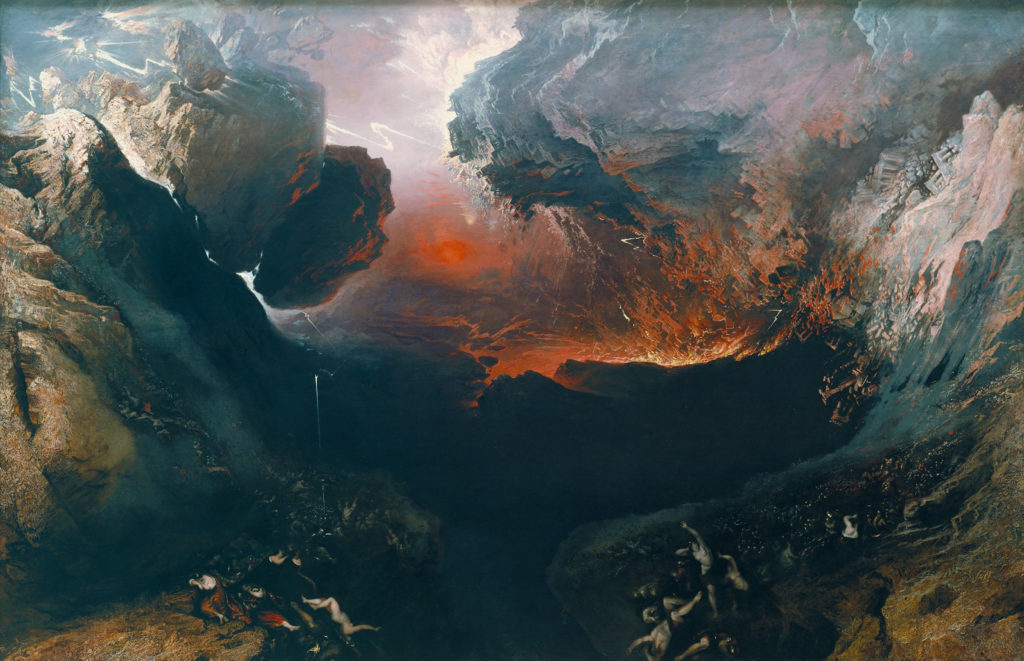
John Martin, The Great Day of His Wrath

The Imminent Collapse of Cultural Marxism,

by Gregory Slysz

The dreadful damage inflicted on Western societies by Cultural Marxism, popularly known as Political Correctness (PC), has attracted much conservative commentary, most of which focuses on the imminent death of all things Western. The eleventh hour has been reached and the last chance of salvation from a Maoist nightmare is an Arthurian counter offensive whose chances of success are slim to nothing. ‘If Trump fails in his attempt to defeat political correctness’, writes Edward J. Erler, ‘no one—certainly no Republican—is likely to try it again. It is easy to predict the First Amendment’s fate if Trump fails.’

Yet terrible as the situation has become, the time for panic is premature. Re-capturing the state from PC zealots must remain foremost for conservatives, but to view it as a make or break situation not only invests the architects of Cultural Marxism with unparalleled sagacity but also overlooks the inherent, self-destructive contradictions of their ideology. Its progressive façade is no longer adequate to disguise its moral bankruptcy – its authoritarianism, its spiritual vacuity, its cultural nihilism and its irrationality. The more extreme it gets, the more it is rejected. Continue reading

Posted in Current Affairs and Comment, QR Home | Tagged , , , , , | 3 Comments

2001, Revisited

2001, Revisited

On the fiftieth anniversary of 2001: A Space Odyssey, Mark Wegierski reassesses this epoch making film

2001: A Space Odyssey (1968) brought together Stanley Kubrick, one of the most accomplished directors of the cinema, with renowned science fiction writer Arthur Charles Clarke, who wrote the screenplay. 1968, a pivotal years of modern history, was evidently also an extremely rich year for science fiction movies, including also Planet of the Apes. Clarke, the son of a farmer, was born in Minehead, western England, on December 16, 1917. Among his main influences were H.G. Wells and Olaf Stapledon, the author of cosmic histories stretching into the far-future.

2001 remains unsurpassed. Its special effects and cinematography were groundbreaking. It was one of the first truly intellectually challenging American science fiction films – after decades of mostly b-grade schlock in that genre. A notable feature of the movie is the balletic portrayal of spaceships in flight, accompanied by stirring, classical music. Continue reading

Posted in Cultural Matters, Film Reviews, QR Home | Tagged , , , | 2 Comments

Apocalypse, When?

John Martin, The Great Day of His Wrath

Apocalypse, When?

Pentti Linkola, Can Life Prevail?, 2011, Arktos Media, 204pp. trans. Eetu Rautio, hardback, £28, ISBN 1907166637, reviewed by Ed Dutton

Every Finnish academic seems to have heard of Pentti Linkola (b. 1932), but he’s almost unknown outside the country’s borders. Linkola is a hugely controversial and original figure, an idol of some of the wackier splinter groups on the extreme right. To his opponents, he is an ‘eco-fascist’ who advocates eugenics. Even to those sympathetic to him, his ‘deep ecology’ is too extreme, even for members of the Green movement. But he has undoubtedly made a profound intellectual mark, winning the coveted Eino Leino literary prize. Indeed, he has recently been prominent in the Finnish news, with his biography winning the prestigious Finlandia Prize in November 2017. 

Those who are interested in philosophy have usually heard of two Finnish thinkers: the University of London’s Edvard Westermarck (1862–1939) and Cambridge University’s Georg von Wright (1916 – 2003). But what they might not know is that Georg von Wright was in awe of Linkola, telling him that he could not face thinking about the kind of issue that Linkola spends his life writing about – humanity causing an ecological catastrophe and its own destruction – and admired Linkola’s ability to do so. ‘I hold you in high regard as a thinker,’ wrote von Wright. Continue reading

Posted in Book Reviews, Current Affairs and Comment, QR Home | Tagged , , , , , | 1 Comment

The Teachers’ Pets of Douglas High

Ilana Mercer, exercising her Second Amendment rights

The Teachers’ Pets of Douglas High

by Ilana Mercer

“In America,” as Oscar Wilde observed, “the young are always ready to give to those who are older than themselves the full benefits of their inexperience.”

So it is with the activist kids who’ve emerged from the Parkland, Florida, school massacre of February 14th, in which 17 of their own were murdered.

Each one sounds like the proverbial teacher’s pet, groomed to take a monolithic message to the media.

Like their educators, these one-track minds “don’t impress me much.” The National Rifle Association (NRA) they invariably frame as big, bad and greedy; government as not big enough, generally good and certainly benign. Continue reading

Posted in Current Affairs and Comment, QR Home | Tagged , , , | Leave a comment

Two Tribes

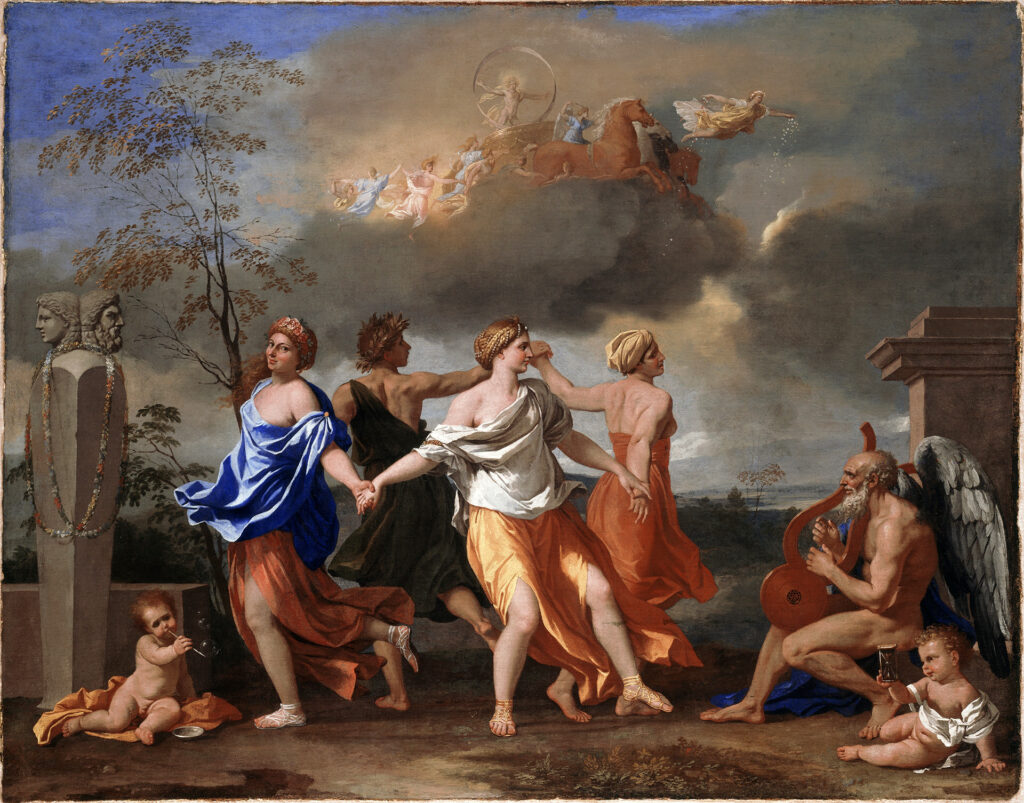
The Dance to the Music of Time, Poussin c. 1640, credit Wikipedia

Two Tribes

Mark Wegierski considers Canada’s future

An essay in two parts

Part one

The results of the provincial election in Québec, on April 7, 2014, were unexpected. It was a huge win for the Liberals led by Philippe Couillard, which won 70 seats. The Parti Québecois was crushed, winning only 30. The Coalition Avenir Québec (CAQ) won 22 seats, while the left-wing Québec Solidaire, won 3. Given this strong majority, another election was unlikely to occur for at least four years.

The 2014 election results were in marked contrast to the 2012 election results. In the provincial election in Québec, on September 4, 2012, the Parti Québécois won 54 seats; the Liberals, 50; the new, right-leaning Coalition Avenir Québec (CAQ), 19; and the left-wing Québec Solidaire won 2 seats.

CAQ is basically a successor to the ADQ (Action democratique du Québec), which largely collapsed in the December 8, 2008 provincial election. In that election, the Liberals won 66 seats; the Parti Québécois, 51; the ADQ, 6; and Québec Solidaire, 1. In the earlier, March 26, 2007 provincial election, the Liberals had won 48 seats; the ADQ, 41; and the Parti Québécois, 36. Continue reading

Posted in QR Home | Tagged , , , | Leave a comment

We Will Bury You (2)

Anne Applebaum

We Will Bury You (2) 

Anne Applebaum, Red Famine: Stalin’s War on Ukraine (2017), reviewed by Frank Ellis [i]

A destruction process is a series of administrative measures that must be aimed at a definite group.[ii]

Raul Hilberg, The Destruction of the European Jews

I. Soviet Genocide in Ukraine (Holodomor)
II. The 1921 Famine: Proto-Genocide?
III. Collectivization: Dekulakization (Raskulachivanie) → Special Deportation (Spetspereselenie) → Extirpation (Istreblenie)
IV. Statistical Reckoning and the Death Toll
V. The Soviet State’s War against the Peasantry and the Holodomor as Adumbration of the NS-Regime’s Implementation of the Holocaust
VI. A Question of Genocide

 I. Soviet Genocide in Ukraine (Holodomor)

Red Famine: Stalin’s War on Ukraine builds on Robert Conquest’s pioneering study of the genocide in Ukraine, The Harvest of Sorrow: Soviet Collectivization and the Terror-Famine (1986) but does not in any way supplant it as the definitive English-language text. Both authors provide plenty of detailed background to Stalin’s war against the peasants, but the critical difference between Conquest and Applebaum is one of numbers; just how many people perished from all causes (see below). Applebaum also maintains that Stalin’s ordering the slaughter of millions Ukrainians was not genocide (more on which below).

Holodomor, the word, is made up of holod meaning famine and mor meaning extermination. The mor component is critical since we are to be left in no doubt about the causes: this was no accident, no cyclical, natural disaster: it was extermination (genocide) pure and simple.  One might ask why, when the genocide occurred ten years before the Wannsee conference (1942), and that among Ukrainians at the time the word Holodomor was already being used, it has only very recently started to become slightly more familiar in the West. In Bloodlands: Europe between Hitler and Stalin (2010), Snyder states that the main reason he does not use the term Holodomor is ‘because it is unfamiliar to almost all readers of English’.[iii]  Well, the same could have been said of the word Holocaust when it first started to be used in the 1970s, or other additions to the English language, such as Zeitgeist, Blitzkrieg, tsunami, penne, algebra, raison d’être and pogrom. If Holodomor is never used it, too, will always be unfamiliar to all readers of English. Continue reading

Posted in QR Home | Tagged , , , , , , , , | 2 Comments

Ellis, Unchained

Lenin, 1919

Ellis, Unchained

Marxism, Multiculturalism, and Free Speech, by Frank Ellis,
Washington, D.C. : Council for Social and Economic Studies, 2006, 
paperback, price/availability: enquire at socecon@aol.com, 107 pp.
ISBN 0-930690-60-5, reviewed by Mark Wegierski

This book is published with a plain beige paper cover. The publisher, Roger Pearson, located in the U.S capital, is generally considered controversial. Nevertheless, one should surely suspend judgment as to the appearance and provenance of the book, as it could not have appeared under the auspices of a “main stream media” publisher.

Frank Ellis, a former Lecturer in Russian and Slavonic Studies at Leeds University, himself became embroiled in a “political correctness” scandal of the type which he discusses in this book. When his off-campus statements in opposition to unrestricted Third World immigration into Britain became widely circulated at his university, he was placed in an untenable situation, and was ultimately forced to negotiate an early retirement settlement. Continue reading

Posted in QR Home | Tagged , , , | Leave a comment

The Aldeburgh Festival 2018


John Wilson Orchestra

The Aldeburgh Festival 2018

Tony Cooper previews the programme

Founded by Benjamin Britten, Peter Pears and Eric Crozier in 1948, the Aldeburgh Festival goes from strength to strength and this year runs from Friday 8th to Sunday 24th June. The luminous line-up features such notable artists as Anne-Sophie von Otter and Sir Bryn Terfel and eminent ensembles like Harry Christophers’ The Sixteen and the John Wilson Orchestra. As always, there is a wealth of new music, including premières by Emily Howard, Harrison Birtwistle, Michael Hersch and Simon Holt.

A key programme strand is ‘Britten and America’, to coincide with the centenary of the inspirational composer, conductor and educator, Leonard Bernstein. His connections with and parallels to Britten are fascinating. And marking 70 years since the festival was founded, ‘The Spirit of 1948’ will reflect on a remarkable post-war period when so much of what we now regard to be the backbone of our cultural life was established.

The festival has engaged three artists-in-residence who are connected by their curatorial flair and open-minded approach to music making: John Wilson, the British conductor, arranger and musicologist; Claire Chase, the pioneering American flautist, curator and educator; and Patricia Kopatchinskaja, the outstanding Moldovan violinist.

John Wilson not only conducts the BBC Scottish Symphony Orchestra but also his own orchestra, the John Wilson Orchestra, an established favourite at the Snape Proms in August. They will be making their Aldeburgh Festival début. Claire Chase explores the radical edge of American music ranging from Edgard Varèse, French born but who lived most of his life in America, to Morton Feldman, a major figure in 20th-century American music and a new generation of composers whom she has committed to commissioning for the next twenty years through her ‘Density 2036’ project, the centenary of Edgard Varèse’s iconic piece ‘Density 21.5’ for solo flute.

The outstanding French period-instrument ensemble, Le Concert Spirituel, will give three concerts (12th, 13th and 14th June), including a performance of the spectacular baroque mass by the 17th-century, Franco-Italian composer, Orazio Benevolo, scored for eight separate choirs and ensembles, each with their own conductor. This concert marks the festival’s return to the gothic splendour of Ely Cathedral for the first time in fifty years.

The world première of Emily Howard’s new sci-fi-inspired opera, an Aldeburgh Festival commission, entitled ‘To See the Invisible’ (8th, 10th and 11th June) promises to be a highlight of this year’s festival. Ms Howard developed the work over the course of a Snape residency with her collaborators, Dan Ayling (director) and Selma Dimitrijevic (librettist). Her music is known for its connection with science (she studied mathematics and computer science) and her latest work is based on a short story by the renowned American sci-fi writer, Robert Silverberg.

John Wilson and the BBC Scottish Symphony Orchestra will undertake two concerts comprising works by Britten, Bernstein and Copland (8th and 9th June) while the John Wilson Orchestra (10th June) will deliver a programme of Bernstein’s popular and less well-known Broadway hits including excerpts from West Side Story, Wonderful Town, On the Town, Candide, Peter Pan, Trouble in Tahiti and 1600 Pennsylvania Avenue.

Claire Chase is an inspirational trailblazer for new music of all styles and in 2013 embarked on an epic commissioning and performance adventure entitled ‘Density 2036’. She will be performing a brand-new solo programme each year until 2036. A programme entitled ‘Density 2036’ will be featured on 14th June followed by ‘Feldman at Sunrise’ on 16th June. Here, Chase and her collaborators will present a performance of American composer Morton Feldman’s marathon five-hour piece ‘For Philip Guston’, starting at sunrise with the audience lying on mattresses and cushions. The music critic of The New Yorker, Alex Ross, wrote: ‘To sit through a performance of ‘For Philip Guston’ is to enter into a new consciousness.’

Patricia Kopatchinskaja’s staged concert with the Mahler Chamber Orchestra, ‘Bye-Bye Beethoven’ (22nd June) offers a voyage through the revolutionary voices that shaped and redefined music from Bach to the present day. With the remarkable violinist Kopatchinskaja at the helm, the concert will doubtless steer a fascinating and unorthodox course. Featuring orchestral performances and collaborations with video and sound designers, the audience can expect a gripping portrait of one of today’s leading performers. The following day, she returns to explore her native Moldovan roots with her violin- and cimbalom-playing parents. ‘Classical music is like a ship,’ she says, ‘and everyone’s standing at the stern and looking at how nice it was where we came from. But no one dares to go on to the bow to see what’s coming.’

A typically ambitious Aldeburgh Festival event on 18th June features the Knussen and Aldeburgh Festival Ensemble performing a host of new music including the world première (an Aldeburgh Festival commission) of Harrison Birtwistle’s ‘Keyboard Engine, Construction for Two Pianos’, performed by Tamara Stefanovich and Pierre-Laurent Aimard. And one of the world’s best-loved opera-singers, Sir Bryn Terfel, makes his first Aldeburgh Festival appearance (24th June) accompanied by Malcolm Martineau in a programme comprising English and American folk-song arrangements by Britten and Copland as well as classical songs by Brahms and Schubert.

This year’s exhibitions include ‘Suffolk Voices’ by British-Australian artist Samantha Heriz. She grew up in Suffolk and is fascinated by the transformation and dilution of the county’s accent. Following her residency at Snape Maltings last year, Ms Heriz will present her immersive sound installation at the Pond Gallery created from recordings of today’s Suffolk voices, showing the increasing diversity in accent. The voices speak the words of a bygone Suffolk fisherman’s song, creating a modern soundscape that tells of migration, globalisation and the transitory patterns of our region.

Other exhibitions include a programme of exhibitions and events at The Red House focusing on Britten in America; Tom Hammick’s ‘Lunar Voyage’, a narrative cycle of 17 woodcut prints conjuring a metaphorical escape from Earth in pursuit of freedom and isolation on another planet; Dennis Creffield’s drawings of East Anglian cathedrals and a new installation alongside other work by East Anglian-born sculptor, Kate MccGwire. Enjoy…

Snape Maltings

For the complete programme visit:
www.snapemaltings.co.uk/festival 

TONY COOPER is QR’s Opera Critic

Posted in Cultural Matters, QR Home | Tagged , , , , | 2 Comments

The Colliery Guardian at War

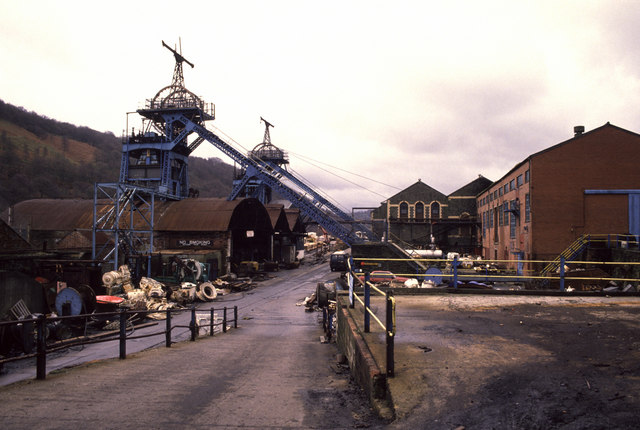
Six Bells Colliery, Abertillary

 The Colliery Guardian at War

Bill Hartley mines an invaluable source of social history 

An historian once said that by 1914 Europe had become an armed camp. Even so there was a view at the time that war was unlikely given the close ties of trade and commerce between the nations. Well, we know what happened to that theory. Even so, those ties did exist and following the outbreak of war were a cause of concern to the Colliery Guardian. The paper did however try to be upbeat suggesting that British manufacturers would benefit from gaining access to markets denied to the enemy, since it would be difficult for German goods to travel along routes now guarded by the Royal Navy. At home and in the face of anti German hysteria, one editorial in late 1914 took a surprisingly liberal view on the question of enemy aliens working in Britain. The Guardian felt that providing these people did nothing to aid Britain’s enemies then they should be allowed to continue in business. How long some managed to do so was somewhat surprising.

It is unlikely that in those early months of the war government and the military were focussed on what might today be called economic intelligence. The Guardian certainly was and 1914 editions carried detailed statistics about coal production in the German and Austrian empires plus accessible markets in neighbouring coalfields. These came via long established sources and evidently a European war didn’t interrupt the collection of such information. Only one contributor was identified. The British consul in Le Havre seemed to be the source of information about German coal imports. Continue reading

Posted in Current Affairs and Comment, QR Home | Tagged , , | Leave a comment