Mendicant Order

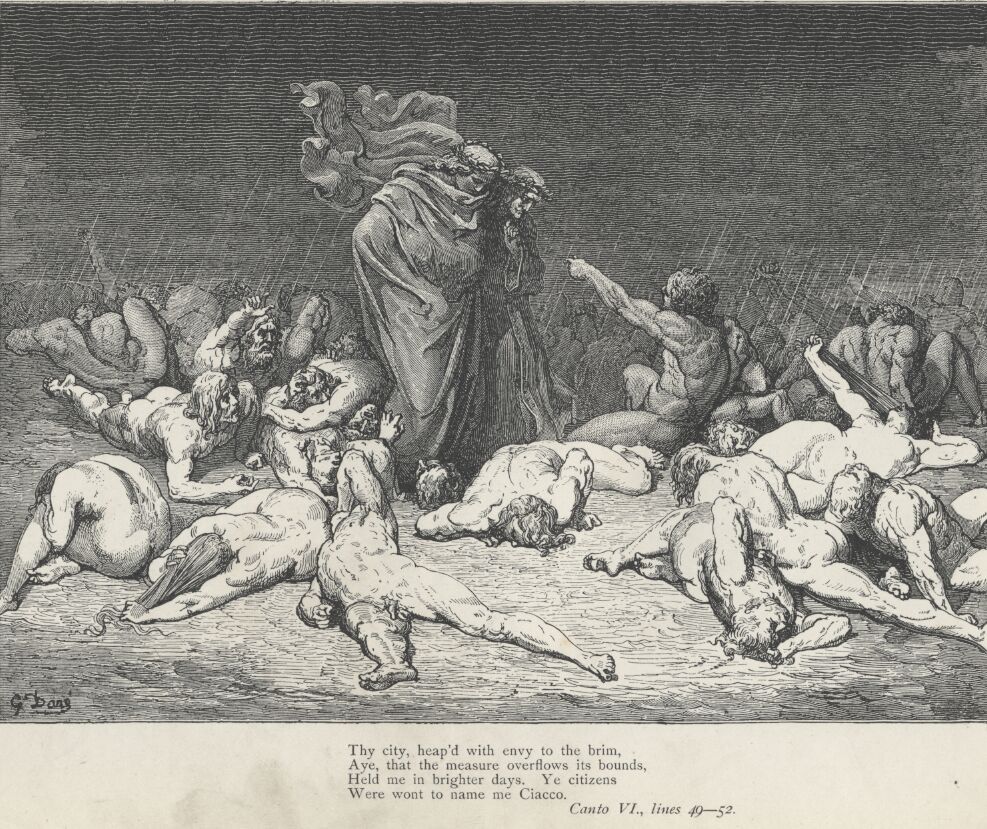
Doré, Inferno, credit Wikipedia

Mendicant Order

by Bill Hartley

There is a large restaurant in Leeds city centre and at the side of the building is a fire escape. The doors to the fire escape are blocked and given the prominent location it might be assumed that this would attract the attention of the Fire Service. After all there are penalties for blocking fire escapes.

In fact the Fire Service is aware of the situation but chooses to do nothing. The blockage consists of a tent; one of those igloo type designs commonly seen at Everest base camp. It is occupied periodically by a ‘homeless person’. A police officer who patrols the district is acquainted with this middle aged male and says he has been offered accommodation but prefers life on the streets. The officer would like to remove the tent but is forbidden from doing so because it is occupied and its removal would contravene local policy. In fact, there are various agencies in Leeds who prefer to play pass the parcel, even to the extent of ignoring a breach in fire regulations.

The sight of people begging on the streets, particularly in our larger cities, is common these days. Begging is of course illegal but it goes on and how it is dealt with varies from place to place. There is a tendency to hang the label of ‘homeless’ on those seen begging. As we shall see there are many beggars who take advantage of this. Like the man blocking the fire escape homelessness may be hard to define and officialdom finds it convenient to roll all street people into the same bundle to become a problem which is being ‘managed’. Continue reading

Posted in Current Affairs and Comment, QR Home | Tagged , , , | Leave a comment

MAGA Patriots, in the House

Donald Trump, by Gage Skidmore

MAGA Patriots, in the House

by Ilana Mercer

Why repeat hackneyed phrases about annus horribilis 2020? Recall the opening paragraph of “A Tale of Two Cities,” by Charles Dickens. Interspersed in that epical introduction are countervailing, sweetness-and-light words. Excise these—and you get 2020:

“… it was the worst of times…it was the age of foolishness, it was the epoch…of incredulity, it was…the season of darkness… it was the winter of despair. … we had nothing before us.”

MAGA men and women are just that: the best of Jah people in the worst of times. They converged on D.C., Jan. 6, to protest the certification of the Electoral College vote. They, who have “nothing before them,” had come to demand that something be done by those who had “brought [them] forth into this wilderness,” yet sit “by the fleshpots [on the Potomac] and [eat] bread to the full” (to paraphrase Exodus 16:3.) Continue reading

Posted in Current Affairs and Comment, QR Home | Tagged , , , , | 6 Comments

ENDNOTES, January 2021

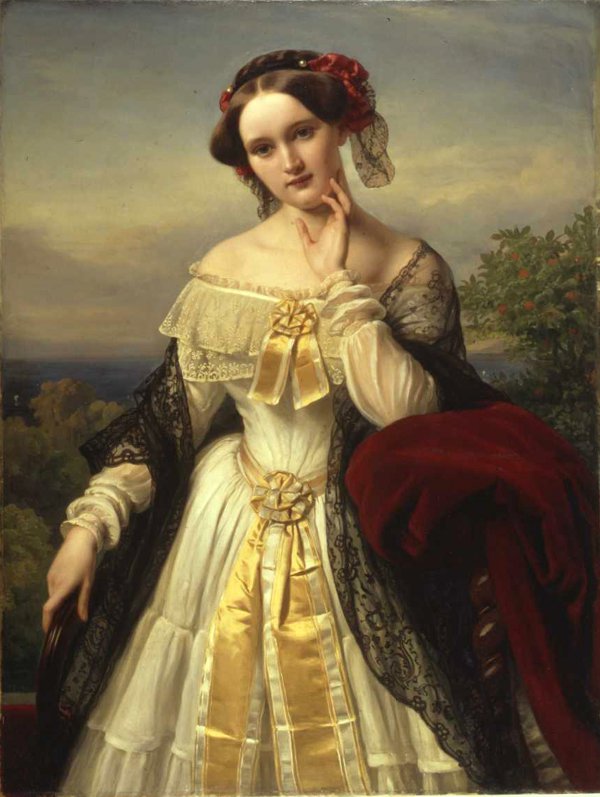
Mathilde Wesendonck, by Karl Ferdinand Sohn, 1850

ENDNOTES, January 2021

In this edition: Stuart Millson’s Wagner

The twilight of the gods, the violence and feuds of the great characters of The Ring Cycle, the exploits of knights and Die Meistersinger of mediaeval Nuremberg – these are some of the characteristic stories and settings associated with the music, chiefly operatic, of Richard Wagner (1813-83). Even when translated into the concert hall, Wagner’s contribution to the programmes of the world’s orchestras often consists of “bleeding chunks” from his music-dramas, or curtain-raising overtures – the surging Tannhauser, or The Flying Dutchmen, or the exhilarating prelude to Act lll of Lohengrin. But despite these majestic sequences and the many experiences this reviewer has had of Wagner’s operas (Bernard Haitink at the Royal Opera House in ‘Die Meistersinger’; Sir Reginald Goodall at English National Opera and the Proms in Parsifal) it is Wagner’s understated, small-in-scale, nature tone-painting which arguably constitute his most profound achievement.

Let us turn accordingly to an overlooked song-cycle, written in the late 1850s, with words by the poetess Mathilde Wesendonck, the wife of one of Wagner’s supporters. The work consists of five songs, and throughout the sequence there is an immediate sense of introspection – a surprising pre-echo, in fact, of the mysterious and melancholic orchestral songs written by Mahler at turn of the century – the Rückert-Lieder, for example, of 1901. Continue reading

Posted in Cultural Matters, ENDNOTES:Music, QR Home | Tagged , , , | 1 Comment

A Christmas Story

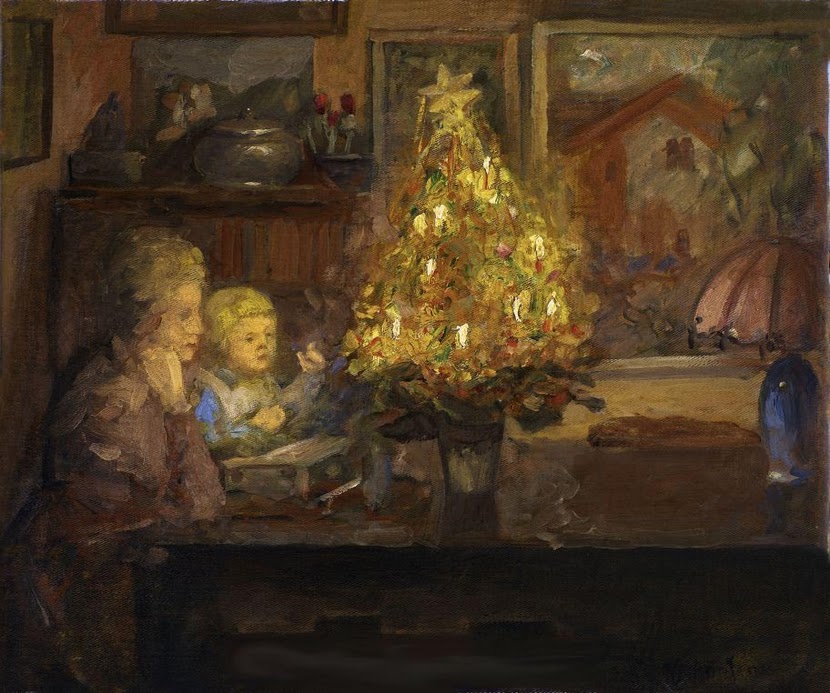
A Christmas Story, Viggo Johansen, credit Wikipedia

A Christmas Story

by ILANA MERCER

Described by one critic as “one of those rare movies you can say is perfect in every way,” “A Christmas Story,” directed by Bob Clark, debuted in 1983. Set in the 1940s, the film depicts a series of family vignettes through the eyes of 9-year-old Ralphie Parker, who yearns for that gift of gifts: the Daisy Red Ryder BB gun.

This was boyhood before the Nerf gun and “bang-bang you’re dead” were banned; family life prior to “One Dad Two Dads Brown Dad Blue Dads,” and Christmas before Saint Nicholas was denounced for his whiteness, and “Merry Christmas” condemned for its exclusiveness.

If children could choose the family into which they were born, most would opt for the kind depicted in “A Christmas Story,” where mom is a happy homemaker, dad a devoted working stiff, and between them, they have zero repertoire of progressive psychobabble.

Although clearly adored, Ralphie is not encouraged to share his feelings at every turn. Nor is he, in the spirit of gender-neutral parenting circa 2020, urged to act out like a girl if he’s feeling … girlie. Instead, Ralphie is taught restraint and self-control. And horrors: the little boy even has his mouth washed out with soap and water for uttering the “F” expletive. “My personal preference was for Lux,” reveals Ralphie, “but I found Palmolive had a nice piquant, after-dinner flavor—heady but with just a touch of mellow smoothness.” Ralphie is, of course, guilt-tripped with stories about starving Biafrans when he refuses to finish his food. Continue reading

Posted in Cultural Matters, Current Affairs and Comment, QR Home | Tagged , , , | 1 Comment

Why Israel isn’t Racist

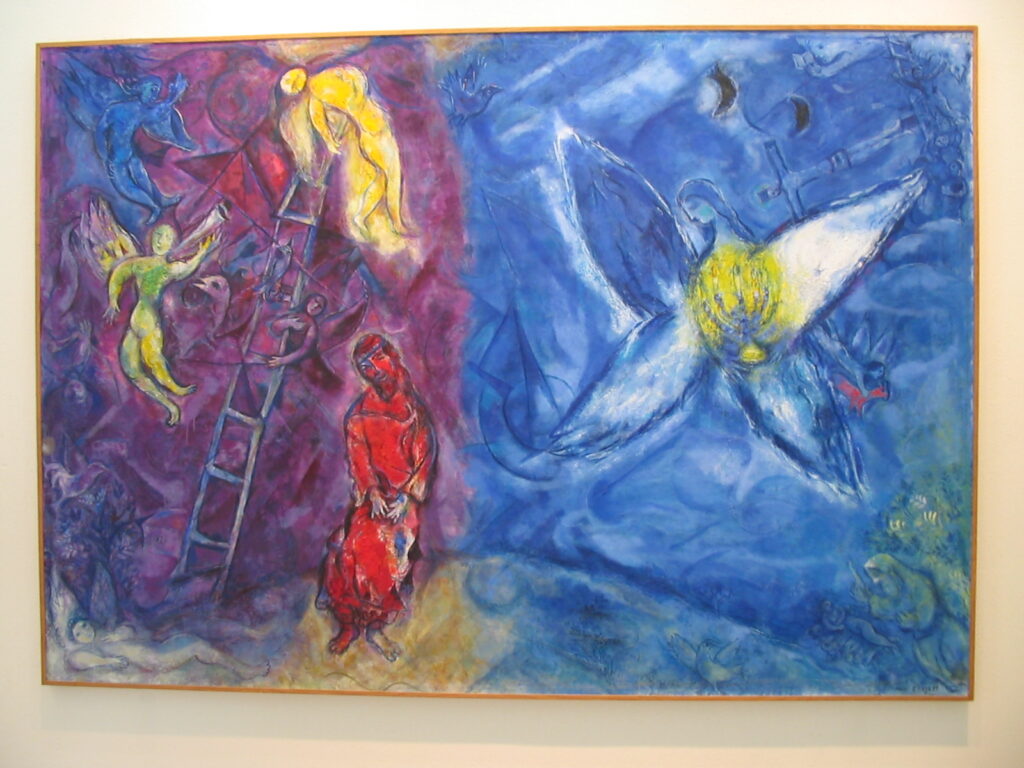
Marc Chagall, credit Wikipedia

Why Israel isn’t Racist

by Ilana Mercer

The Jewish State, by definition, rejects some and welcomes others into the fold. In “Is Israel Racist?”, a reply to an anti-Semitic interviewer (he bailed), the emphasis was on demonstrating why Israel’s particularism is an extension of the individual’s right as a sovereign, discerning human being, for the freedom to include or exclude is not racist. Rather, it is the inherent right of free individuals, living severally or collectively.

Jews are to be faulted only to the extent that they deny to other nations the rights they claim for the Jewish ethno-state. Israel’s particularism, moreover, is not race-based, it’s religious. As understood in the U.S., racism is more often concerned with discrimination based on distinct physical characteristics. It’s thus important to understand that Jews no longer constitute a race. [Editorial comment; nonetheless, “…there is a gradient of intelligence in the four [main] ethnic populations in Israel. Intelligence is highest in the European Jews (IQ=106), lower in the Orientals (IQ=90), lower still in the Arabs (IQ=84), and lowest in the Ethiopian Jews (IQ=69)”. Quotation from Richard Lynn, The Chosen People; a Study of Jewish Intelligence and Achievement] Continue reading

Posted in Current Affairs and Comment, QR Home | Tagged , , , , | 1 Comment

Of Human Bondage

Freiburg, Miner (1310), credit Wikipedia

Of Human Bondage

William Hartley mourns inconsistency

Extracts from John Watson’s Journal, April 19th/20th 1771;

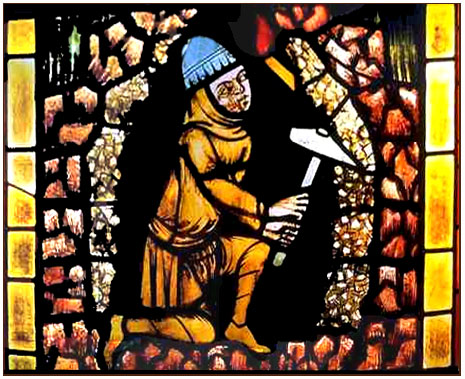
“This morning about seven o’ clock I set forward with Thomas Dodds in order to take four of the deserted men which (by information) now working at Frankland Colliery….got to Durham past ten where I got of Wilkinson the constable…took the men and set homeward”.

Newcastle: “This morning three men appeared before Mr William Locase (whereupon promise of good behaviour for the future) and also gave a promissory note for £3 jointly and separately payable to His Grace [presumably the Duke of Northumberland] on account of the expense incurred for their desertion”. Note Watson’s use of the military term ‘desertion’. These were in fact miners who were ‘bound men’ and Watson’s job was to assemble a posse and get them back and in front of a magistrate.

The British public are currently held culpable for many of the world’s ills. The Guilt Police are examining National Trust properties for associations with slavery. Places in which retired couples could once mooch harmlessly around may have a pall of slavery hanging over them. This must be exposed and confronted before people can view the property in the correct light. Even Chartwell, sometime home of Sir Winston Churchill, is under suspicion. Continue reading

Posted in Current Affairs and Comment, QR Home | Tagged , , | Leave a comment

The Gods of Ancient Greece

Oracle of Delphi, credit Wikipedia

The Gods of Ancient Greece

Albert Henrichs, Greek Myth and Religion: Collected Papers II, Ed., Harvey Yunis, De Gruyter, 2019, Pp.i-xxxvi, 1-606, reviewed by DARRELL SUTTON

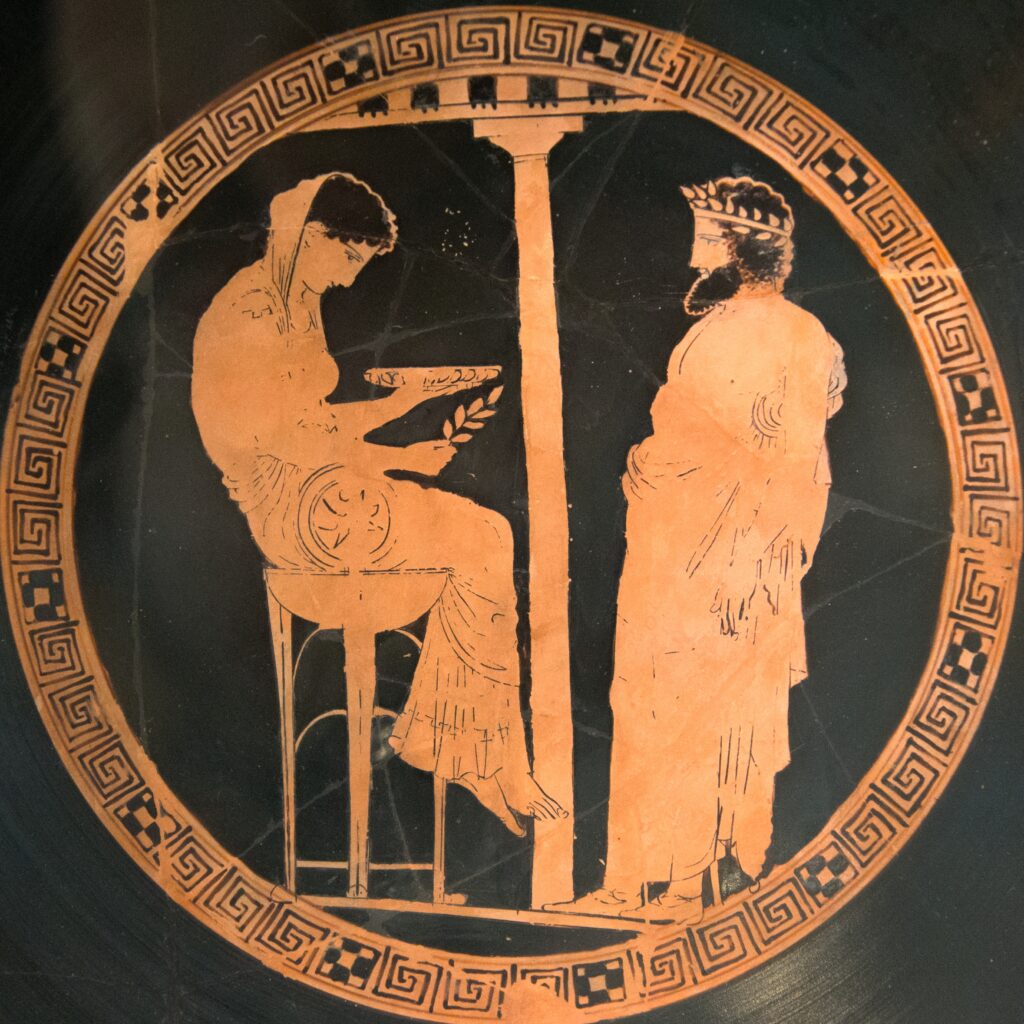
Albert Henrichs (1942-2017), Eliot Professor of Greek Literature at Harvard University, was unselfish with what he knew and over the decades he imparted his wisdom to his many pupils. He understood how powerful the positive and negative influences of religion were upon the shaping of the ancient vision. Individuals who were unable to attend his classes can now benefit from his tutelage at a distance. This volume of collected papers on Greek Myth and Religion, the second of four, encapsulates his extensive knowledge of these fields. Twenty-seven essays were selected for inclusion, all reflecting the highest standards of classical research and scholarship. Nine are in German, the remainder in English.

Owing to his erudite contribution to the study of The Cologne Mani Codex, with Ludwig Koenen, and to herculean efforts made toward the issuance of the fragments of Lollianus’ Phoinikika, he was considered a scholar of means before he reached his thirtieth birthday. A tenured academic position soon followed. Early in his career, his wide-ranging scholarly investigations led him in several directions simultaneously, one of which focused on papyrological issues. Through the ensuing years he expanded the range of his inquiries and his studies came to explore various facets of religious expression among ancient Greeks; but he also published on ancient Christian topics and reviewed modern works of biblical scholarship on ancient religious texts. Continue reading

Posted in Book Reviews, Cultural Matters, QR Home | Tagged , , , | Leave a comment

Is Israel Racist? Part 1

Marc Chagall, credit Wikimedia Commons

Is Israel Racist? Part 1

Ilana Mercer gives chapter and verse

Some months ago, a gentleman who pens anti-Semitic tracts approached me for an interview. I agreed. Being a naïve methodological individualist, I never generalize about individuals. That my interlocutor writes crude anti-Semitic boilerplate did not mean I would not give him a chance to reveal himself as someone other than a crude anti-Semite. After I had already answered his written questions in full, however, he bailed.

Here, then, is my reply to one of many loaded and leading questions I was asked and had answered in good faith. A leading question is one that suggests an answer. Since I am Jewish, I was considered a priori guilty. Of what? Well, you know: “nudge nudge, wink wink, say no more,” as goes the Monty Python skit. In his case, the fact that I married gentiles twice was not enough to clear me from charges of “Jewish supremacy.” I was pelted with uncouth, inappropriate, bias-confirming questions such as, “Do you think that marrying a non-Jew was a mistake and you should only marry another Jew?”

One of the less flighty questions was, “Do you believe Israel is a racist state?” I’ve been deconstructing the concept of racism in my latest columns, analytically showing that, at worst, racism is a worldview, a state of mind—often spoken or written, and entirely the prerogative of a free people, just so long as no corporeal aggression is committed. Continue reading

Posted in Current Affairs and Comment, QR Home | Tagged , , , | Leave a comment

ENDNOTES, December 2020

Ermonela Jaho, credit Wikipedia

ENDNOTES, December 2020

In this edition: opera arias sung by Ermonela Jaho, Art of the Mandolin, choral music from Keble College, Oxford and Clifton Cathedral. Reviewed by STUART MILLSON

We bid farewell to 2020, the year of Coronavirus in which our opera houses and concert-halls have been closed – with four CDs to inspire us over whatever can be salvaged of the yuletide season. We begin, as the curtain rises across the great opera houses of Europe, with Albanian-born soprano, Ermonela Jaho, paying tribute to a fine singer of a bygone age, Rosina Storchio – star of many Puccini and Mascagni productions. Ms Jaho is accompanied by the Orquestra de la Communitat Valenciana conducted by Andrea Battistoni, who is only in his 20s, but who already has a production of La bohème to his credit.

Despite it being a studio recording, there is a real sense of public drama to the proceedings: soloist and orchestra playing as if they are before a vast concourse – with Ms Jaho building an overwhelming tide of drama and anticipation, even though we are hearing just the famous “snippets” and arias from great operas. The album is launched with the ever-spine-tingling ‘Un bel di, vedremo’ from Madama Butterfly – “One fine day, we will see arising a strand of smoke over the far horizon of the sea… And then the ship appears… Do you see it? He’s arrived…” The anticipation that Butterfly’s husband, Pinkerton, will arrive – surely? – is brilliantly conveyed here. Verdi, Mascagni, Leoncavallo, Massenet – all feature on the bill, as well as names not quite so feted, but who deserve more distinction, and certainly receive performances of great commitment here – Boito, Giordano and Catalini. The Opera Rara label deserves acclaim for this recording. Continue reading

Posted in Cultural Matters, ENDNOTES:Music, QR Home | Tagged , , , | 1 Comment

Calling all Deplorables

Ilana Mercer

Calling all Deplorables

Ilana Mercer brings a message of hope

“Republicans and Democrats have tinkered with the country’s composition and character long enough to account for Biden’s America. You know it.”—Ilana

I had written what I thought was an inspired column about “Trump Going Into Beast Mode.” It was a post-politics column. It was meant to point disappointed voters away from the crass and crooked politics of democracy, and toward that process Trump always somehow sets in motion. And that process has been Trump’s achievement. He has blown the lid off the American political system in all its corruption, in general, and, of late, he has exposed the farce that is the “democratic” integrity of the system, in particular.

Trump’s latest, unintentional victory is to unmask raw, ripe, unfettered democracy as a travesty to all, unworkable except in a territory the size of the ancient Athenian city-state, or maybe modern-day Monaco or Estonia. Democracy is when everything is up for grabs without constitutional limits. Globalism is an extension of that. Trump has exposed globalism as democracy on a world-wide scale, funded by Americans. Democracy is toxic, from both party perspectives—especially since we no longer have a republic where the central authority has clearly limited and delimited powers. Continue reading

Posted in Current Affairs and Comment, QR Home | Tagged , , , , , | 2 Comments