ENDNOTES, November 2021

Max Bruckner (1836-1918), Walhalla, credit Wikipedia

ENDNOTES, November 2021

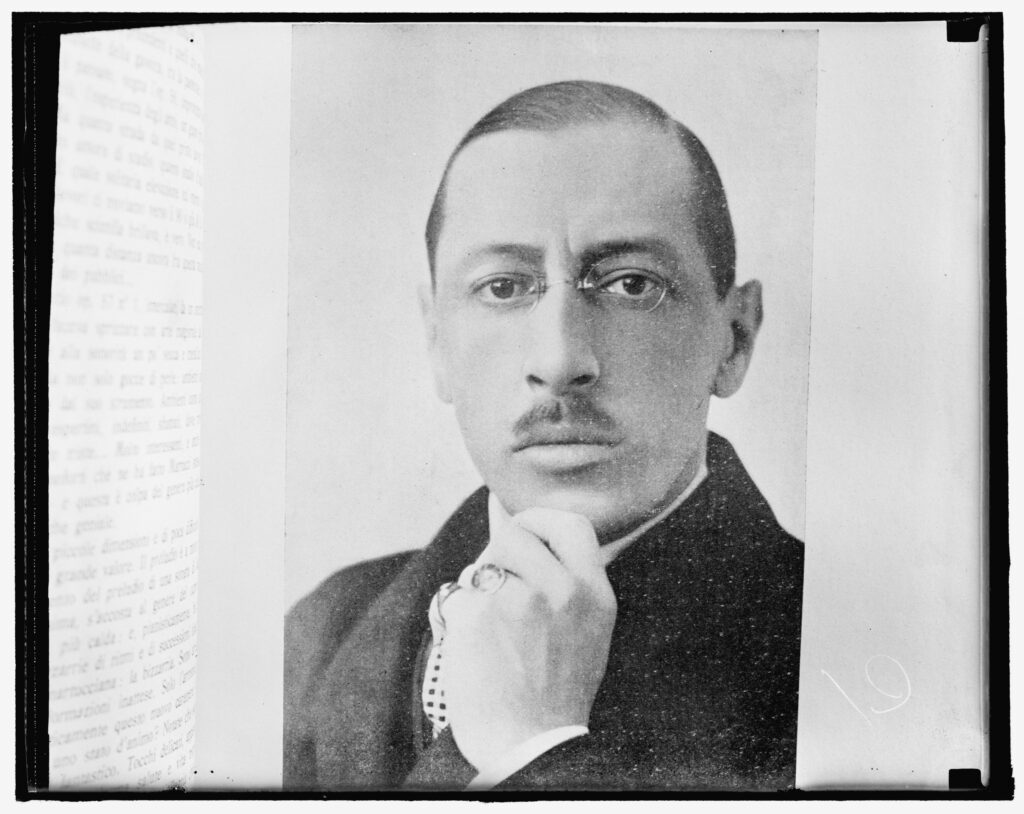
A tribute to Bernard Haitink, KBE, CH, 1929-2021. Stuart Millson on one of the great conductors of our time – a renowned interpreter of the works of Bruckner and Mahler

The recent death of Bernard Haitink – the legendary Dutch conductor, famed for his interpretations of the late-romantic repertoire – represents the passing of a generation in classical music. Haitink, although not one of the autocratic conductors of the recent past  such as Karajan or Bernstein, was part of that intensely serious, inscrutable, disciplined, white-tie-and-tails generation which produced the defining discography – Beethoven, Brahms, Bruckner, Mahler et al – dominating the record shelves of the 1970s, ‘80s and ‘90s; shaping our understanding of classical music and European high-culture.

From his earliest days with the orchestra of Netherlands Radio, through his famous years with the Concertgebouw Orchestra of Amsterdam, to a productive time in London with the LPO, Royal Opera House and the Philharmonia; then star appearances with the Chicago Symphony and Lucerne Festival orchestras in his late career, the unassuming Dutchman built up a legendary status with audiences. The wild acclamation he received from the Proms audience, although acknowledged and enjoyed, sometimes prompted a wince of embarrassment from Haitink – keen to curtail the clapping, eschew hero-worship and get on with the music. Continue reading

Posted in QR Home | Tagged , | Leave a comment

Liberty’s Identity Crisis

Stop the Steal protest, credit Wikipedia

Liberty’s Identity Crisis

by Monty Skew 

Liberty is the leading human rights advocacy group in Britain. Readers, especially those concerned for democracy, may be interested in Liberty’s briefing before the Voter ID Bill. A recent letter from a variety of civil society groups, co-ordinated by Liberty, objected to the Voter Integrity Bill currently before Parliament. The Bill would make it mandatory for photo ID to be shown before casting a vote.

There are many reasons for opposing voter ID. It is not part of the British democratic tradition and even Tory MP David Davis has opposed the proposal. If implemented, it could be used for more than voting. Northern Ireland was for many years a hotbed of electoral fraud. Sometimes more people voted than were on the electoral register. The slogan was ‘vote early vote often’. The province was the first area in Britain to be allowed PR proportional representation for European Parliamentary elections. Soon afterwards photo ID was introduced for all elections in NI. Voter fraud has virtually disappeared although there have been cases of dead individuals ‘voting’. Continue reading

Posted in QR Home | Tagged , , | 1 Comment

Madama Butterfly from WNO

Leopoldo Metlicovitz, 1904, credit Wikipedia

Madama Butterfly from WNO

A bold new Madama Butterfly by Giacomo Puccini, from WNO in Cardiff, at Wales Millennium Centre, Saturday 2nd October 2021, reviewed by David Truslove

Welsh National Opera’s return to live performance ushers in Lindy Hume’s strikingly modern Madama Butterfly. Silk screens and sliding panels associated with Joachim Hertz’s traditional staging, in place since 1978, now move aside for Isabelle Bywater’s dazzlingly white cubes set on a revolve. This neon-lit slice of minimalism does for Butterfly’s executive suite. Bedroom and shower loom over kitchen and utility room, a deliberately misshapen apartment conjuring not so much comfortable domesticity, but chilling alienation. Its strong visual impact artfully situates the audience as voyeurs to Butterfly’s naivety and disintegration which Hume likens to an “exquisite sadism”.

Given the heated discussions whether much-loved operas should be jettisoned if they affront modern sensibilities, Hume has removed specific Japanese references and historically contentious imperialism. Everything is rerouted to engage with contemporary obsessions on coercion, sexual exploitation and human trafficking. She has ditchedNagasaki for a more culturally neutral space, creating what she loftily claims is an alternatively “imagined biosphere”, an unspecific location in a “dystopic near-future version of our own society”. By these means she smooths away cultural stereotypes that have enraged those who, like the musicologist Susan Clary, want to “pin this opera up in the museum of strange cultural practices of the past”. Continue reading

Posted in QR Home | Tagged , , | 2 Comments

Spart Lad Wanted

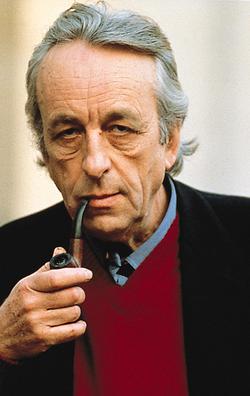
Louis Althusser, R.I.P. credit Wikipedia

Spart Lad Wanted

Paul Mason, How to Stop Fascism; History, Ideology, Resistance,
Allen Lane, 2021, 298 pp, h.b., reviewed by Leslie Jones

“Fascism is back”, according to Paul Mason. He flatly rejects Ernst Nolte’s conclusion that it was contingent on now superseded social structures and historically contingent economic factors. For Mason, a former activist in the Anti-Nazi League and a one time member of the Trotskyist groupuscule Anti-Fascist Action, fascism “is a recurrent symptom of system-failure under capitalism”. We may therefore have to go on defeating it “over and over” until capitalism itself is abolished. But to be replaced with what? Mason pointedly tells us that his mother was the daughter of a Polish Jew (introduction p xviii). But he rarely mentions the crimes committed by the Soviet Union, including those at the expense of the Polish people. How to Stop Totalitarianism would have been a preferable title.

As an avowed Marxist and historical materialist, Mason needs to explain how fascism could return with a vengeance in the absence of any palpable threat of a socialist revolution. For he demonstrates that it was worker and peasant uprisings in Italy and Germany that “triggered a new form of violent, ultra-nationalist, right-wing politics”. This begs the question. Is there today any comparable threat to the power of the elites? The right, admittedly, despise cultural Marxists, feminists, people of colour, refugees, BLM, human rights lawyers and LGBTQ+ people. But, unlike the workers councils in Russia in 1917, or the peasants who seized the land in post-war Italy, or the workers who occupied factories in Turin, Milan and Bologna in 1920, this hardly constitutes an imminent threat to the ruling order. Indeed, Nike, Pepsi Cola, the Premier League etc support BLM and feminism as a marketing strategy. Continue reading

Posted in QR Home | Tagged , , | 1 Comment

Two Poems by Robert Heard

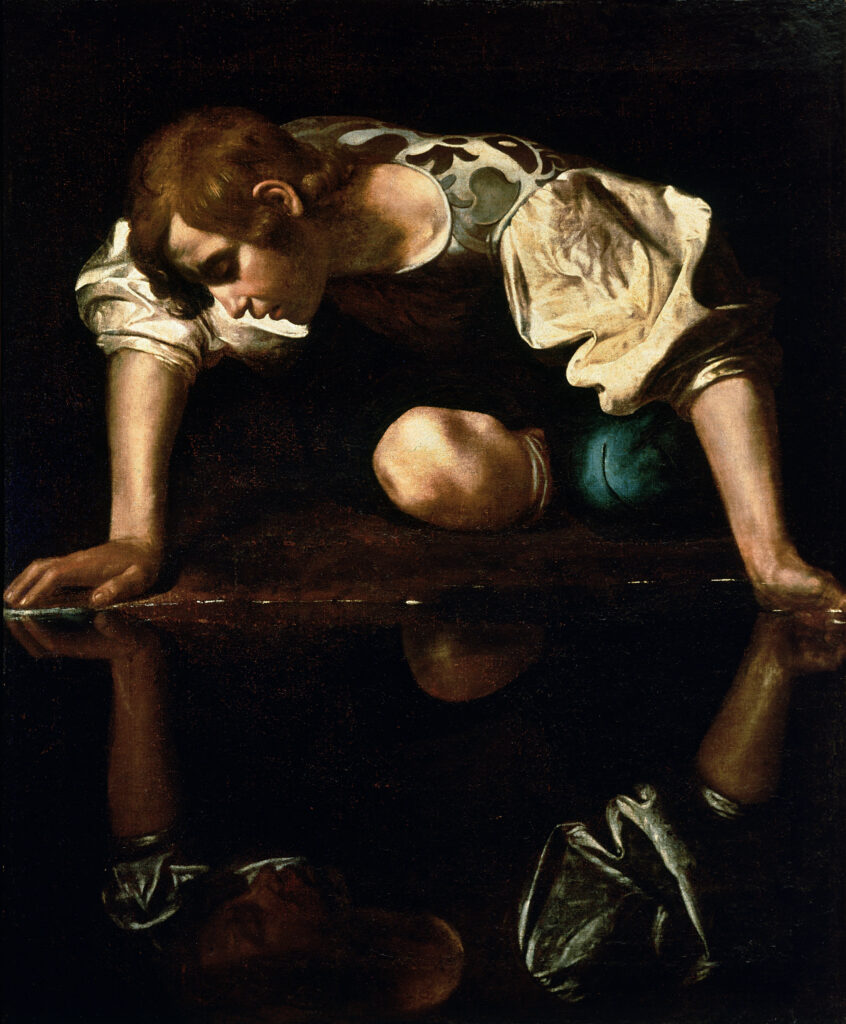
Caravaggio, Narcissus, credit Wikipedia

Two Poems by Robert Heard

I

Echo and the Narcissists

Deep in her cave,
Is Echo, distracted,
Helplessly watching
Narcissists in flower;

Who toward her are stalking,
In her direction are pointing
Up the bright road,
Where are voices in caves;

By herself unheard,
But always answered,
Drowned in the test
Of who loudest can shout.

Continue reading

Posted in QR Home | Tagged , | Leave a comment

ENDNOTES, October 2021

ENDNOTES, October 2021

In this edition – Legends from the Bohemian Forest; Symphony No. 3, by Sibelius, reviewed by Stuart Millson; Alchymia by Thomas Adès, reviewed by Leslie Jones

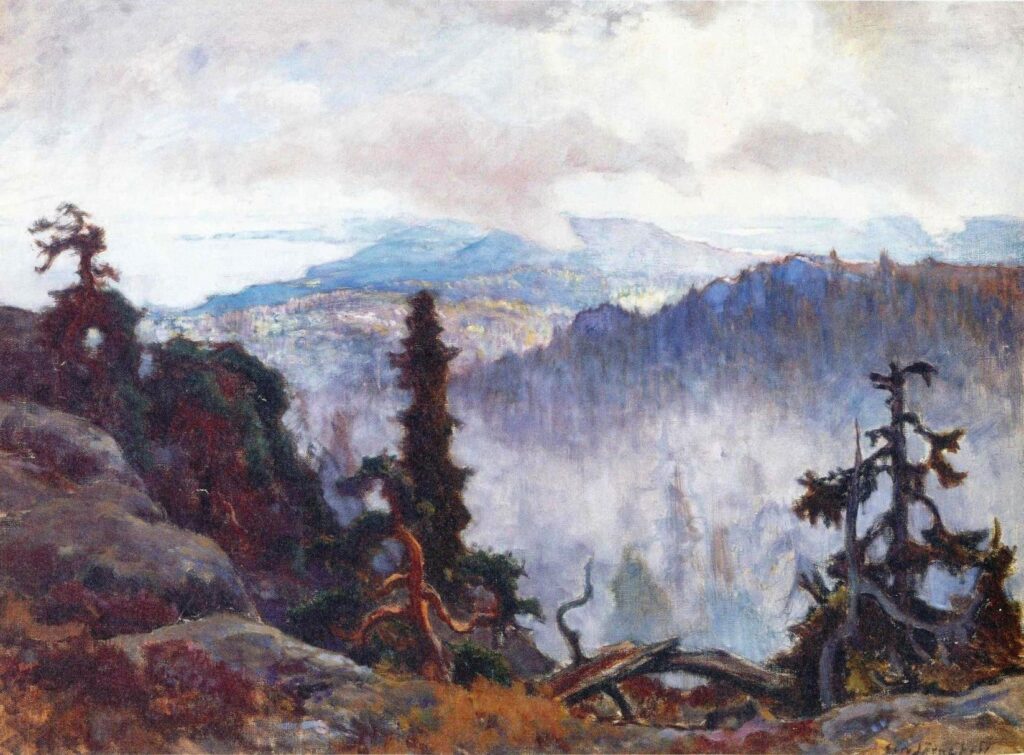
Eero Järnefelt, Iltausva Kolilla, Wikimedia Commons

Dvorak was one of the 19th-century’s greatest masters of melody: his Cello Concerto, Slavonic Dances and Seventh and Ninth Symphonies standing as timeless testaments to the romantic tradition in music. Everything that the composer turned his hand to produced that same natural flow of feeling – as if the music had just drifted from the fields, villages and folk-festivals of Bohemia.

A perfect example of Dvorak’s genius has recently arrived from the Melism label, a recording for piano duet of the Op. 59 Legends and the Op. 68, From the Bohemian Forest. The pianists Anna Zassimova and Christophe Sirodeau conjure a magical mood of fairytale innocence; delighting in the composer’s simple scene-painting and love of local airs and memories from the countryside and hills. The sense of rural atmosphere – contemplation, wandering, the beauty of the seasons, love of the open air – is truly infectious.

The booklet which accompanies the disc contains an interesting insight into Anna Zassimova, who is a talented landscape artist in her own right – and there must be, in her playing of Dvorak, an instinctive sympathy and understanding for this most scenic music. The sequence on disc begins with In The Spinning Room (Op. 68, B.33, No. 1) – an effortless, gentle evocation of the folk-past, highly reminiscent of Dvorak’s tone poems. There is also the more sinister portrayal of Walpurgis Night, but the tension and air clears for Silent Woods. Anna Zassimova’s fellow pianist here is Christophe Sirodeau – an artist trained at the Tchaikovsky Conservatoire in Moscow, a great campaigner for neglected repertoire, and one who has achieved great acclaim from many prestigious artistic bodies, including the French equivalent of Radio 3, France-Culture radio

Continue reading

Posted in QR Home | Tagged , , , , , | Leave a comment

The Ideology of Failure

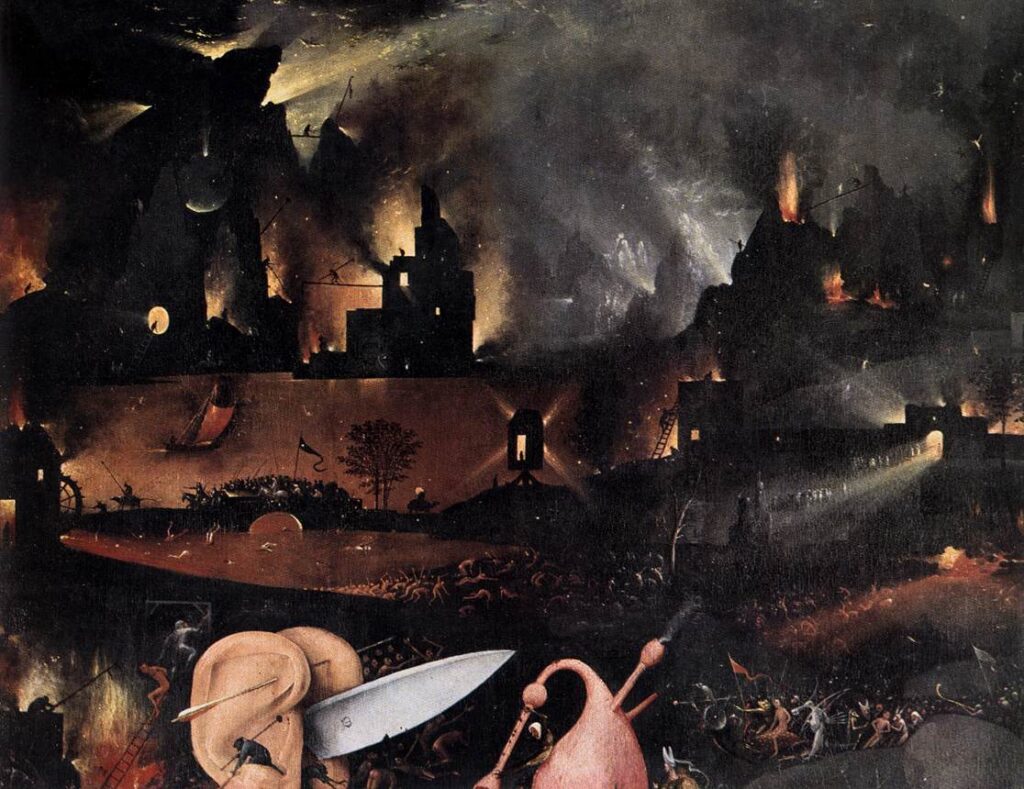
Hieronymus Bosch, The Garden of Earthly Delights, detail, credit Wikipedia

The Ideology of Failure

Stephen Pax Leonard, The Ideology of Failure: How Europe Bought into Ideas that Will Weaken and Divide It, Arktos, London, 2018, ISBN 978-1-912079-5 (softcover), xxi + 266 pp, reviewed by Mark Wegierski

This book has been published by Arktos, a publishing company that is considered alt-right but this isn’t really an alt-right book. The reviewer would doubtless say that he is traditionalist conservative, or even classical liberal. Dr. Stephen Pax Leonard was a Senior Research Fellow at St. Chad’s College, Durham. A linguist and anthropologist, he has published five other books and held positions at the Universities of Oxford and Cambridge.

The frontispiece of the book features a poem by Rudyard Kipling “Norman and Saxon (A.D. 1100).” The poem is a compliment to the honest, fair-dealing Saxons, and how they are to be approached with honesty and fair-dealing by their Norman overlords for the sake of social peace. This is followed by the “Acknowledgements” (pp. viii – ix). Dr. Leonard evidently established a rapport with a number of British university students in putting together the book. Two prominent names in the acknowledgements are the late Sir Roger Scruton, and Professor Jonathan Haidt. The book has a Bibliography, pp. 243 – 248, in a small typeface, and Index (pp. 249 – 262). Continue reading

Posted in QR Home | Tagged , , , , | 8 Comments

Ancient Greek Dialects

Bust of Alexander the Great, credit Wikipedia

Ancient Greek Dialects

Heinrich von Siebenthal, Ancient Greek Grammar for the Study of the Greek New Testament (2019), Peter Lang Pp. x-xxii; 1-738, reviewed by Darrell Sutton

The study of ancient Greek grammar is a specialism requiring particular powers of observation. An acquaintance with Greek dialects and their syntax, proficiency in sorting and classifying data, along with familiarity with various inscriptions and the ability to elucidate it all, are skills that are needed too. Delineating the formal structures of a Hellenic language that it is no longer spoken, and one that was modified through the centuries by individuals who used it for oral and literary purposes, is a complicated matter. The Greek of Homer’s tales was the original criterion, and in consonance with their style, Grecians of succeeding generations engraved their own ideas, imparting their thoughts orally, and where possible recording them. Ancient inscriptions were composed with the knowledge that future readers – and readers from other regions – would construe those texts devoid of further clarification from the original author. People of similar and dissimilar backgrounds expressed themselves in divergent ways. Analyses of these literary expressions are pivotal to parsing and clarifying what an ancient Greek person intended to say. As a consequence, assessments of words and language-rules are important.

Heinrich von Siebenthal’s (henceforth, HvS) project was ambitious. Progressive in his approach to the mechanism of language, in his own way he reacted to dull trends that still draw semantic distinctions from insufficient data. A product of decades of research, HvS’s book [AGG] is divided into four sections: (1) Writing System and Phonology, (2) Structure of Words – Morphology (3) Syntax and (4) Textgrammar. Two appendices follow: one on ‘Classical and New Testament Greek: Differences’; the other on ‘Word-Formation’. Indices, of References, Subjects  and Greek, are included. It is a comparative analysis. The Greek of the Septuagint/LXX is not neglected. Continue reading

Posted in QR Home | Tagged , , | 1 Comment

Stalin’s War

HMS Sheffield escorting an Arctic convoy, credit Wikipedia

Stalin’s War

Sean McMeekin, Stalin’s War, Allen Lane, Penguin Books, London, 2021, pp.666, + Notes, Bibliography, Maps &  Photos, Index,
ISBN 978-0-241-36643-1, review essay by Frank Ellis

  1. Western Indifference to Soviet Crimes of Genocide, Mass Terror and Deportations
  2. Soviet Exploitation of the US and the Critical Role Played by Western Aid in Soviet Survival
  3. Poland Betrayed: The Nazi-Soviet Invasion
  4. The Katyn Massacre and the Commissar Order
  5. 22nd June 1941 and Stalin’s Responsibility for the Impending Disaster
  6. In Search of a Separate Peace with Hitler
  7. The Triumph of Strategic Blood Sacrifice
  8. Stalin’s War against Ethnic Minorities and  Western Complicity
  9. The Ideological Legacy of WWII and its Impact on American Life
  10. A Note on Transliteration and Translation in Stalin’s War

1. Western Indifference to Soviet Crimes of Genocide, Mass Terror and Deportations

Holodomor

In any examination of Stalin’s many wars and monstrous vendettas a fundamental question is whether the ideological core and practice of Marxism-Leninism-Stalinism constituted a greater catastrophe for the world than National Socialism. McMeekin does not explicitly address this question in Stalin’s War but it is intrusive and ever present, along with the millions of Stalin’s victims, the executed, the tortured, the starved, the betrayed, the imprisoned, those deported and worked to death, and the raped, all crying out to be heard, demanding to be heard. Continue reading

Posted in QR Home | Tagged , , , , | 2 Comments

Sex, Lies and Audiotape

7, James Street, Cardiff, credit Wikipedia

Sex, Lies and Audiotape

A Killing in Tiger Bay, 3 Episodes, BBC Two, reviewed by Leslie Jones

In 1988, prostitute Lynette White was brutally murdered in Butetown, Cardiff. The prime suspect, identified on Crimewatch, was a bloodied and confused white individual, seen near the location of the murder, 7 James Street. But as time passed with no arrests ensuing, South Wales Police came under increasing media and public pressure. The search for the perpetrator was superseded by the need to convict someone. In due course, five black and mixed race men, namely John Actie, Tony Paris, Yusef Abdullahi, Ronnie Actie and Stephen Miller, Lynette’s ‘boyfriend’, were accused of White’s murder. All of the defendants were known to the police. All had alibis.

The trial was switched from Cardiff to Swansea, where convictions seemed more likely, as there was no black community there. One of the key witnesses for the prosecution was prostitute Leanne Vilday, who, like the ‘Cardiff Five’, had been subjected to remorseless police pressure. Another witness, Angela Psaila, reportedly had an IQ of 55. The judge in the trial died of a heart attack, necessitating a re-trial. Three of the defendants, Tony Paris, Yusef Abdullahi and Stephen Miller, were eventually found guilty and sentenced to life imprisonment. Continue reading

Posted in QR Home | Tagged , , | 1 Comment