No Change Please

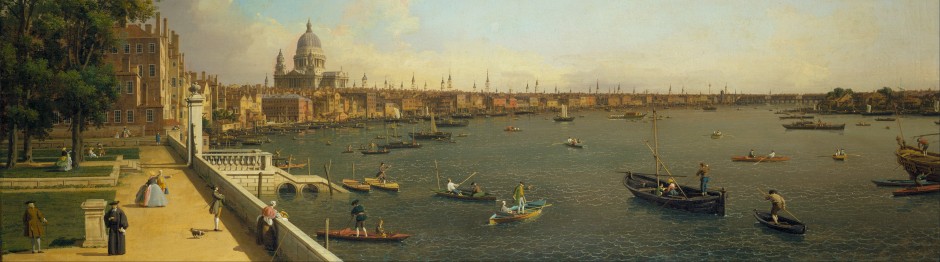
Bob Barron, Galactic centre 1

Bob Barron*, Galactic centre 1

No Change Please

Peter King makes a timely defence of inertia

As the author of recently written books with titles such as Keeping Things Close and Here and Now[i] it is perhaps clear that what interests me is change, or more properly, the lack of it. I really do wish to accept things as they are without continually having to fight for them.

When we fight we introduce risk and we might well end up breaking the very things we wish to protect. This risk exists just as much if we seek to move backwards as forwards. The type of conservatism I espouse is one that is static. It does not seek to go any way and this is applies equally to the past as the future. This is because there is as much risk involved in trying to return to a former more desirable state as there is in seeking a future utopia. In trying to go back the traditionalist is doing exactly the same as the progressive, and the potential effects of change are just the same.

Both progressive and traditionalist may recognise that there is a cost involved in change for both themselves and others, but they gauge that this cost will be worthwhile. They are able to discount the negative consequences of their actions and count on the benefits at the end. They can take this view because they are certain of the superiority of their particular worldview, whether it be looking forwards or back. They believe that they have access to the truth and so know what is best for us. The sacrifices, they would suggest, are worthwhile.

I have no reason to stop someone from believing what they will. However, I have no wish to allow myself and those people and institutions that I love to be to be used to further those beliefs. I know that I only have one life and I do not wish it to be sacrificed to fulfil the dreams of others. What I wish to do is simply to be allowed to live in the here and now, with what I have and with whom I love and not be forced to move either forwards or back. In this regard, going back to someone else’s golden age is as bad as any proposed utopia.

This is often a rather difficult position to argue for. By asserting the need to accept the world as it is, one can be accused of trying to justify the dominance of a particular class, of protecting existing privilege, or even of maintaining one’s own position at the expense of others. I am saying I am all right and the rest of the world can go hang.

My view, however, is not based on being comfortable (although I do not dislike my life). It is rather based on the fact that I have no idea how it might be made better than it is actually now is. Those who advocate change always assume that it will make things better for everyone, or at least for a far greater number than the current dispensation. But why should this be case, and does not the fact that many disagree on what changes are necessary lead us to a healthy scepticism? Simply stated, how can we possibly know that any change will leave us better off than we are now, and accordingly how can we assert that the risk is worthwhile? What if the toppling of one ruling class merely leads to the dominance of another? What if the losses suffered by me and mine outweigh the gains made by others? And why should I place my life in the hands of others whose judgement and motives I cannot be sure of?

It might be argued that this attitude towards change is relativistic or even nihilistic. It might seem to imply that any form of government is as good as another: monarchy, aristocracy and democracy are all alike. And that it does not matter if we live under tyranny, or if others suffer as long as I am comfortable. But this critique can only sustained if we refuse to look around us. I know that where I am now is a product of the inertia of others. I am here now because others have made it by their inaction as much as anything positive they might have done. Like most people most of the time, I live within a society that allows me to sustain many of the things that I enjoy. I know that these things are sustainable through no action other than the continued inertia of others and my self.

It is precisely by focussing on the familiar rather than on the best that we are likely to retain what is the most benign for us. It will not be perfect, it might not always be comfortable and it is certainly not the best we can possibly conceive. But it will be familiar and it will be within reach. So we should accept it.

[i] Both books have been published by Arktos (www.arktos.com) in 2015. See a review of Keeping Things Close at http://www.quarterly-review.org/homespun-conservatism/.

PETER KING is Reader in Social Thought at De Montfort University. His most recent books are Keeping Things Close: An Essay on the Conservative Disposition and Here and Now: Some Thoughts on the World and How We Find it, both published by Arktos in 2015

*See more of Bob Barron’s art work at – http://www.bob-barron.com 

Posted in Current Affairs and Comment, QR Home | Tagged , , , , , | 2 Comments

“Mummy” Merkel Murders Germany

Thilo Sarrazin

Thilo Sarrazin, author of Germany Abolishes Itself

“Mummy” Merkel Murders Germany

Ilana Mercer unmasks the chancellor’s evil plan

Angela Merkel, elected for life, or for what seems like an eternity, squints at ordinary Germans from behind the parapets of her usurped authority. The German chancellor has signaled her express intention to foist a new identity on the German people, whether they like it or not, and without the broad consent of her citizens (or subjects). This Merkel has done by absorbing “an unprecedented influx of immigrants who will fundamentally change the country.”

The quest to engineer a single European identity is at the heart of the European refugee crisis. (That, and the foreign policy of George W Bush, Barack Hussein Obama and Hillary Clinton, who decided to pulverize Iraq, Libya and Afghanistan and thus destabilized the region.) “It remains unmistakably true,” wrote British patriot and classical liberal philosopher David Conway, that “from its postwar beginnings to the present, the principal advocates and architects of European union have been uniformly animated by collectivist objectives that are deeply anti-liberal in spirit and form.”

Indeed, her tyrannical power to overthrow the German people and import another in their place, Merkel derives from the EU Constitution. To wit, “The EU already has rights to legislate over external trade and customs policy, the internal market, the monetary policy of countries in the Eurozone, agriculture and fisheries, many areas of domestic law including the environment and health and safety at work…” The supra-state has also extended its rights into what it calls “justice policy,” especially “asylum and immigration.”

This illiberal impetus has allowed the like-minded Merkel, operating with legal imprimatur from Brussels, to assume the authority once reserved to the sovereign people of Germany. Were it not for the rigid controls the EU exerts over its satellite states—each European member country would be free to respond to the (mostly) Muslim influx in a manner consistent with the wishes of their citizens, and not those of the Bismarckian bureaucracy, with which Merkel identifies, and its many crooked beneficiaries.

To quote the words of another patriot, American southerner Clyde Wilson, PhD., “True union is a process of consent, not of conquest.”

It’s a little late in the game, but the shell-shocked German giant is awakening from its oppressive conformity. German activists have pursued charges of treason against Chancellor Merkel. The “citizen’s initiative” entails writing letters with legal standing to the chancellor and her prosecutors, accusing this cabal of “using mass migration to change the German Republic.” The “petitioners claimed the right under Article 20 of the German Constitution ‘to resist any person seeking to abolish this constitutional order, if no other remedy is available’ in order to ‘safeguard our identity.’”

For their part, the patriots of the Freedom Party of Austria have been forced to resort to legal technicalities to try and halt their government’s resolve to swamp the people of Austria.

Ingeniously, as tracked by the Breitbart News Network, FPÖ leader Heinz Christian Strache has charged the Austrian state prosecutor for what amounts to human trafficking. Strache has put said prosecutor “on notice for ‘breaches of the law,’” specifically, for a “willful failure to enforce the Policing of Aliens act [2005],” by transporting “hundreds of thousands of people” across the border into Austria in “an uncontrolled manner,” “since early September,” in effect acting as people smuggler in chief.

The Merkel Media (Der Spiegel, in this case), in the mold of their American friends across the pond, has glibly asserted that the chancellor’s “historic decision” to throw open Germany’s borders to armies of predominantly Muslim refugees “was morally unassailable.”

If the chancellor were using her privately owned land on which to accommodate these refugees, and her own funds to transport and sustain them; and provided she prevented her charges from venturing onto public property or accessing taxpayer-funded resources—Merkel’s plot to swamp Germany with indigent illegal aliens would indeed be moral.

But this is not the case. Moreover, when a government orchestrates the unfettered movement of people into a state in which the native population’s rights to property, free association and self-defense are already heavily circumscribed by the same authority—that government is guilty of unadulterated social engineering, and worse.

Judging from her treacherous conduct, Merkel’s fellow-feelings reside exclusively with the refugees she intends to import. Her sympathies do not extend to the people at whose pleasure she serves and to whom she owes her flinty heart.

Angela Merkel is thus not unimpeachably moral, as Der Spiegel claimed; she is plain impeachable.

Germans must dethrone Angela Merkel before this dictator puts another people in their place and renders them aliens in their homelands.

Ilana Mercer is a paleolibertarian writer, based in the U.S.  She pens WND’s longest-standing, exclusive paleolibertarian column, “Return to Reason.” She is a fellow at the Jerusalem Institute for Market Studies. Her latest book is “Into the Cannibal’s Pot: Lessons For America From Post-Apartheid South Africa.” Her website is www.IlanaMercer.com.  She blogs at  www.barelyablog.com   Follow her on Twitter:  https://twitter.com/IlanaMercer “Friend” her on Facebook: https://www.facebook.com/ilanamercer.libertarian

Posted in Cultural Matters, Current Affairs and Comment, QR Home | Tagged , , , , , | Leave a comment

Herodotus, in the Eye of the Beholder

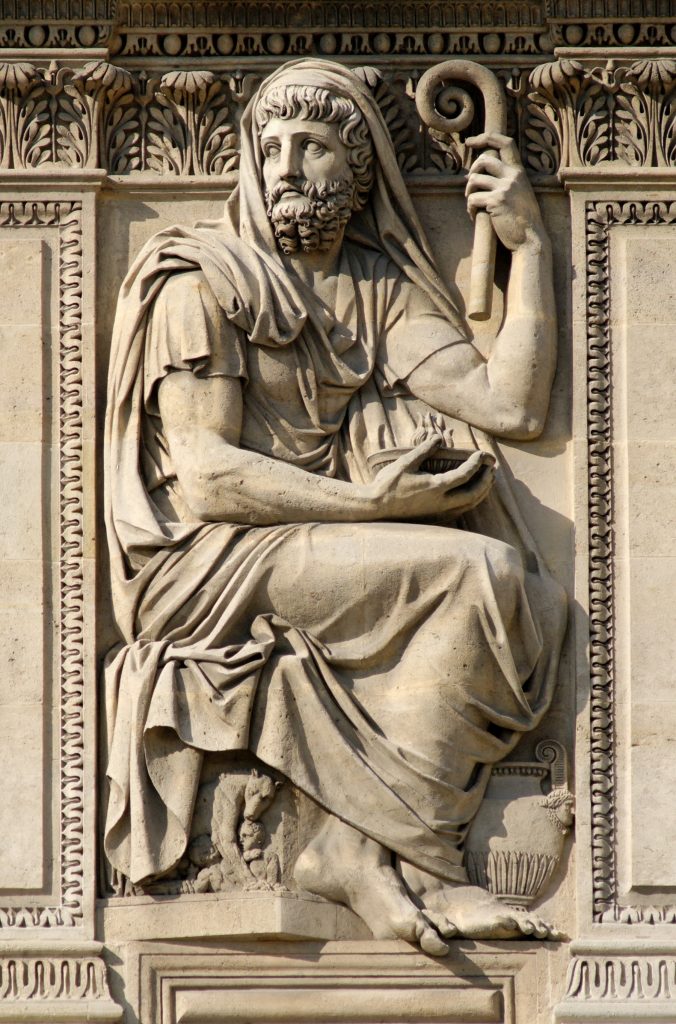
Relief Herodotus, Cour Carré, Louvre

Herodotus, in the Eye of the Beholder

Darrell Sutton salutes the latest edition of The Histories

Herodotus: The Histories, 2013, Translation by Tom Holland, Introduction and Notes by Paul Cartledge. Paperback edition, Penguin, 2015, ISBN 978-0143107545, Pp.834

Herodotus (c.484 BC – c. 420 BC) was not a writer of poetry; he wrote prose, and for this act of kindness students of classical Greek should be grateful. Was he the world’s first historian? One individual maintained this view. Cicero’s (106 BC-43 BC) influence in late Republican Rome was immense, in the centuries which followed his death he became a literary icon, the standard for judging what was proper and improper in the writing of Latin. Still, he did not know that his designation of Herodotus, as ‘The Father of History,’ would become a timeless ascription. Herodotus’ account of the Graeco-Persian Wars supports the credit traditionally attributed to him. The Western world is indebted to him. He taught successive generations that all wars have causes and consequences. This is good news for folks who are trying to come to terms with tribal genocides in Africa, global jihadism, political murders, and other hostilities in the newspapers each day.

Some good, and not so good, scholars took time through the years to give Herodotus’ texts an English appearance. He has spoken through many voices. Quite naturally, through all of them Herodotus speaks with an accent. Of late, Tom Holland joined with Paul Cartledge to take up this task, and their joint venture culminated in the issuance of Herodotus: The Histories (2013). The book itself is beautiful. Since it now is in the marketplace in 2015 as a paperback, thousands of readers can pose new questions while reading through this translation of a ‘classic’ text. Herodotus’ historical researches are foundational to Western Civilization. His comparative studies of ancient societies in the environs of Mediterranean districts were original. But post-Enlightenment historians have not been too kind to his type of history writing. Continue reading

Posted in Book Reviews, QR Home | Tagged , , , | Leave a comment

The Jetty, Christchurch

download (2)

The Jetty, Christchurch

Over recent years I had become rather familiar with Christchurch Harbour Hotel’s The Jetty restaurant, with long, lazy lunchtimes sitting outside in the sun with my border collie and a glass of chilled, aromatic Gewürztraminer, watching the swans among the reeds and sunlight glinting on the water. Now, I was experiencing the restaurant – Christchurch Harbour Hotel’s offering for more discerning customers – for an evening meal. The restaurant is located right by the sea, with the outside decking area where Krishna the collie and I used to sit shaded by heavily pollarded trees, directly overlooking the gently lapping waves of the bay, a lamentation of swans, boats and the beach huts of Mudeford. It is an immensely peaceful setting; contrasting with the bustling interior. The building itself is modern, but not unattractive – predominantly glass and wood, surrounded by brushed steel railings.

The interior continues the theme with dark wooden tables, a lighter wooden floor and wooden chairs with comfortable patterned seats. Almost three sides of the parallelogram-planned building are windows (which can be slided back in hot weather, thus completely opening the restaurant up to the fresh air), overlooking the water. The far end houses the facilities, with shimmering beige mosaic tiles and round windows imitating portholes. The ceiling is comprised of swirling wave-like layers and patterns. Lighting is by means of recessed angled downlighters at the room’s edge and recessed halogen lights in the centre. The bar is constructed of fairly light wood (matching the floor) with a darker glossed top. A selection of spirits is on view behind the bar, with wine racks completing the bar furniture.

download

Bread and butter is placed on the table for nibbling whilst one peruses the menu – this is served on shells, continuing the marine theme; I was delighted by the addition of extra virgin olive oil on the table. The bread – a white with caraway seeds (with a deliciously salty taste) and a wholegrain brown – were superb: a good contrast of textures and excellent combination of chewiness and softness.

The menu itself is rather splendid: a nice choice of nibbles “while you choose”; starters – from pigeon breast to scallops; mains from a trio of pork through to duck and shrimps. There is a tasting menu and fresh catches of the day – several different types of fish, including bream, sea bass, rock oysters and a mixed fish grill. All of these are from the Dorset coastline but many are caught on right on this spot. There is also an immensely inventive selection of side orders, all of which sound delicious, such as chorizo cassoulet and bacon salad.

The wine list is also very good, offering an excellent range of wine types and prices (though the Gewürztraminer had gone from their list, I noted with sadness). However, there are no descriptions so those who don’t know their wines will be left floundering a bit. Two glass sizes are offered and many wines are available by the glass. There is also a good range of sparkling wines, some roses too, and some local Dorset wines – top marks for all of these.

We chose the Bernadi Prosecco, which was perfect – very light indeed, but sophisticated with a tight bead and lemony tang without being too citric. In fact, it was probably the best prosecco I’ve had (and given the number of bottles of this delicious beverage I have consumed over this years, this is quite an accolade!).

Jetty bites are served first – taramousalata, smoked salmon and caviar roulettes, smoked fish mini quiches, and octopus. All of these were excellent – the octopus quite unexpectedly so – delicately flavoured and pleasantly meaty in texture. The quiches were light and flavoursome – not at all heavy; the taramousalata was, again, very light yet evocatively flavoured; whilst the delicately flavoured salmon roulettes worked extremely well with caviar and sprig of dill on top.

An amuse bouche followed, of tomato and basil velouté (it tasted as if there might be some red pepper in there too), and this kept up the high standards already delivered, with a good balance of sweetness from the tomato and savouriness. So far, everything we had been presented with was guaranteed to whet the appetite without in any sense destroying it.

On to the starters – I went for Alex’s Twice-Cooked Cheese Soufflé (an old favourite!), which I found not quite as flavoursome as usual but still feather-light – very delicate, and with the cheesy sauce very tasty. My husband’s asparagus was cooked to perfection: in fact, the word ‘cooked’ is somewhat misplaced, as the spears were very lightly steamed, leaving them slightly crunchy and firm. As such, the accompanying egg and salmon were ideal foils, providing excellent contrasts of textures and flavours, whilst the sauce added richness and depth.

For mains, I chose the lemon sole, which was served on a bed of spinach with a butter sauce. I was very impressed to be offered the option of filleted or whole (I’ve never encountered this choice before – it’s always come either one or t’other in my experience). I went for filleted, and was brought an immensely delicate fish, but with a wonderfully mildly salty taste. It was superbly cooked – just very lightly, leaving the fish tender whilst not at all underdone. To accompany it I chose mashed potato, which was good and creamy albeit possibly slightly too salty.

Mr Marshall-Luck’s steak was also very good indeed – it perhaps did not have the intensity of flavour it might have had, but, on the other hand, it wasn’t at all gamey, as steaks so often are, and was pleasantly lean. The chips were crisp and crunchy but fluffy in the middle – proper chips – clearly cooked in something delicious such as duck fat or beef dripping.

For desserts, the mascarpone tiramisu with cappuccino ice-cream was pleasantly light but with a very intense flavour. Although a seemingly small helping, it was exactly right in terms of “flavour loading” (to adapt a term from acoustic and sonic measurement). The accompanying ice-cream was also excellent: a similar intensity of flavour ensured balance; but the coffee was not at all bitter or dry. The vanilla panacotta with rhubarb was also wonderfully light on a by-now full stomach. The sweetness of the panacotta was admirably balanced by the tartness of the rhubarb, which was, however, so perfectly judged that sweetening was unnecessary.

I was unable to resist a dessert wine with the tiramisu, and was delighted to find an ice-wine on the list. The Pellers Estate wine had a wonderful golden-orange colour, and a nose that was quite citrusy but also had sweetness – quite a complex nose, and with a matching complexity on the palate. There was a wonderful mixture of well-layered flavours – the sweetness of caramel, then the high flavours of Satsuma, with some burnt toffee adding darkness and depth: exquisite. Altogether a very smooth and beautifully balanced wine.

At the end of the meal came good, freshly-made coffee and plate of petit fours – fudge, a pleasantly bitter chocolate truffle, a Florentine, and very light meringue with lemon curd on the top. All very civilised.

The service we also found extremely professional and polite; and we were impressed by the odd touch, such as a waiter assisting my reaching of a glass when I would otherwise have had to lean over the table to reach it – laptop (for this review!) in the way. However, we did occasionally find it slightly difficult to catch a waiter’s eye and there was a bit of a delay between visits to the table (occasionally we were left with empty plates in front of us and empty glasses for too long).

We were overjoyed by the fact that there was no piped music in the restaurant, except some inoffensive Spanish guitar music towards the end of the meal. I was subjected to some rather ghastly popular music in the ladies, whilst my lucky husband experienced Frank Sinatra informing him that he filled his heart with song.

In fact, the only downside of the entire experience was the party of noisy nouveau-riche on the adjacent table, who seemingly delighted in chewing with their mouths open and shouting at each other at volume, in order to inform the rest of the restaurant about their petty lives.

A few weeks prior to this visit, we had tried the Upper Deck restaurant, actually sited inside the Christchurch Harbour Hotel, but had been more disappointed with this experience. Our first impressions had not been particularly positive – a mass of humanity crammed into a rather small space, the most awful “music” booming out offensive beats and waiters carrying trays bearing prawn cocktails that looked as if they had stepped right out of the 1980s.

download (1)

The restaurant here is divided by a wall with large aperture in it into eating and waiting areas; the palette is grey, brown and off-white – brown wooden tables and flooring; pale grey walls and chairs, off-white ceiling and surrounds. Lighting is by art deco-type chandeliers and industrial-looking metal desk lamps affixed to the walls. Walls are adorned with an eclectic collection of wooden-framed black and white photographs, mainly of old beach scenes, along with the occasional barometer and luggage rack. At the far end is the bar in the same colour scheme: all glass, mirrors, metal and pale grey / off-white wood. French windows with beige curtains look out onto the deck and, beyond, the sea. The room felt rather unnaturally warm, especially given that it was a cold, rainy day.

We were seated after just a short delay. Staff are very friendly but a little on the gawky or gauche side, exemplified by the chef coming up and placing his hand very familiarly on first my shoulder and then later my lower back. On another occasion, when I went to take our wine out of the ice bucket to read the label, it was snatched up by a passing waitress who then hovered, pointedly, whilst the main courses were placed on the table; then the wine glasses were ostentatiously topped up (without asking whether either of us desired such a top-up) accompanied by the statement “I’ll fill the wine glasses, madam”.

Water was brought speedily and menus also, which sported blank pages patterned to resemble the wooden deck of a ship but with no explanation as to why they were blank; one has to persevere with turning these over to reach the wine list. Featured dishes included starters of tiger prawns, goats cheese, salads, scallops, boards and platters (meat, fish or fried fish), and mains which offered good, inventive vegetarian options (braised leeks or wild garlic risotto), a rather delicious-sounding lamb, liver and onions, lots of fish, and more unusual dishes such as monktail fish curry. There was also a good selection of side dishes. The oddness of the menu, however, was exacerbated by the fact that it abounded with hilarious typos and a lack of punctuation. Our favourites – which at least delivered intense amusement value, leaving us clutching our sides in merriment were: “The perfect apertif [sic] for every occasion from our house Champagne to my favourite Billecart-Salmon or evendom [sic] Perignon by the glass………”; and “We are currently working on a wine list befitting of [sic] the menu watch the constant evolution as we add more and more gems this list of contents gives you a sneak preview of whats [sic] to come!”. One hopes that as patrons watch the constant evolution they witness a correction of errors, typos and grammatical mistakes!

The wines were broken down by regions and offered a decent range of different types of wines at reasonable prices (and a particularly good range of wines by the glass) – but no descriptions. We were rather bemused by the appellation “Whites Wines” and slightly disappointed by the not especially grown-up reference to “Pinks and stickies”. I was also a little surprised that, when I ordered the wine by its name, I was immediately asked for the number, showing a lack of familiarity with the wines available. We ordered a Martin Zahn 2011 Gewurztraminer – although we were brought (with no word of explanation or apology) a different vintage. The wine was a pale straw colour and had a nose that was at once floral and spicy. On the palate were minerals, a bite of white pepper, sweetness and richness. The wine itself was very fine indeed, although it was not quite cool enough, despite being served in an ice bucket. The bottle also had its cap screwed back on as soon as our glasses had been poured, throttling the poor wine!

The food was generally good, but a far cry from the superlative fare of The Jetty – an amuse bouche of gazpacho that was served neither hot nor chilled but vaguely coolish was rather watery, whilst my cheese soufflé was a pale imitation of The Jetty’s airy creation: very eggy and quite heavy. My husband’s asparagus tasted fine, but he pronounced his steak rather flavourless (I, however, enjoyed his chips). My lemon sole was a slightly greyish colour and rather salty, but otherwise delicate and fine. It was accompanied by new potatoes, and the fish was topped by crunchy buttery Savoy cabbage that, despite being far more al dente than I’d usually like, was thinly enough shredded and buttery enough to be really rather delicious. For desserts, the tiramisu was covered in a slightly odd sauce that wasn’t part of a traditional recipe and I’m not sure worked. It was also accompanied by a blob of raspberry coulis and a nice shortbread biscuit. Mr M-L wasn’t quite bowled over by his sticky toffee pudding, either, which had a rather rubbery sponge and a toffee sauce that was sadly lacking in luxury.

I had, as so often, decided that the meal wouldn’t be a meal without a dessert wine and so asked the waiter to describe the differences between the two dessert wines on offer. I received the expertly succinct response: “Well, one is sweeter than the other and they come from different parts”. This was not particularly illuminating, as the description of one quite clearly stated that it was Chilean, whilst the Sauternes was obviously French. I went for the latter, which was slightly sharper than I was used to, but otherwise nicely light and with a rather delicious nose.

If you enjoy the hustle and bustle of people, have yearnings for Cunard cruise-style surroundings, or perhaps want a less formal and expensive meal, then the Upper Deck restaurant may be the place for you; if you want the very finest cuisine, with the freshest ingredients, in a meal that is at once refined, elegant and sophisticated, then I cannot recommend The Jetty highly enough. I could only make one suggestion for improving The Jetty, and that would be for a bird spotting document on the table for identification of all the waders and ducks!

Em Marshall-Luck is QR’s food and wine critic


Posted in EpiQR, QR Home | Tagged , , | Leave a comment

A Collection of Visions

visions 4

A Collection of Visions

by Drew Nathaniel Keane


Is that a deer?

 Is that a deer upon the hill?  I froze
And watched her grazing while a little fawn,
Like gods around the Godhead circling on,
Around her danced—A vision of the Rose
That round the seat of Heaven ever grows
(Espied by Dante and Divine St. John
On Patmos as God’s Day began to dawn).
So danc’d the happy fawn, until the foes
Of peace, these yapping dogs, came bounding in,
And doe and fawn and vision sped away.
A trumpet blaring yanked me back to earth,
Where I stood frozen in a cross-walk—men
Assured their just revenge for my delay—
I mouthed, “I’m sorry,” then, for what it’s worth.


Three ghosts.

 Within a dream, three ghosts appeared to me–
Dante, Sartre, and Milton. I asked the three:
“Where is the gate on which these words appear:
‘Abandon hope all ye who enter here.’?
Is hell the place our enemies will go?
Or, is it other people? Do you know?
Or, worst of all, is hell within the mind–
The place from which no refuge I can find?”
They looked, they turned, and into shadows fled;
I woke to found myself yet safe within my bed.


The crickets and the kine.

 A farmer sat upon his porch along
With his two sons. As evening fell the sound
Of crickets and their endless chirping grew.
Those insects of the hour, though few, can buzz
With such ferocity that even thought
Is caught within their powerful control.
Tonight their songs of discontent arose
As one united voice, a restless force,
Commanding both the farmer and his sons.
The chirping burrowed in their brains this one
Incessant whine:
Kill the kine; kill the kine!

According to the ancient custom, so
Before the sun our farmer rose to work.
He said a prayer for daily bread and then
Without a second thought continued to
The duties of the day. No more was heard
Hypnotic chirping from the pastureland;
Morning left no memory of the demon
Voice obeyed the night before. Terror robbed
His vital air when he beheld the scene:
The bleeding cattle on a thousand hills!
Not since Ulysses’ sailors sacrificed
The Sun-God’s herd has such a sight been seen.
Returning to the farmhouse where his two
Boys met him for their breakfast meal, their dad
Was mumbling all his tortured mind could think:
No milk to drink, my boys, no milk to drink.


Strolling past St. Anne’s
.

Strolling past St. Anne’s, I heard a sudden
Crack of stone ‘gainst stone and whoops of laughter
From little ones, whose mothers in the church,
Sorted through old coats and clothes collected
For Somali refugees. Mothers, with
Their scarves drawn ‘cross their faces, ey’d the piles
Of other people’s leftovers to find
Their children’s sizes and to search for holes.
I passed the boys outside, the boys with stones
And stains of pizza sauce around their lips.
And then I turned to see what target met
Their practice. I turned and met Our Lady’s
Stony eyes just as another pellet
Was hurled towards her, shattering her hand.


There’s no Such thing as monsters
.

“There’s no such thing as monsters.” So our parents said:
Then kissed with lying lips, and tucked us into bed.

I’ve read somewhere our enmity with them—
With monsters—came just six short hours behind
Our first, naive, but bright and happy, smile
Met the approving smile of the goddesses—
Then young, though beautiful and awful still—
The smile of Nature and the Blue-Eyed Maid.
Yet six hours later they seemed old and dark
And warned us: “Watch for dragons everywhere.”
The first, a dress of thorns and thistles donned;
The second, made to wander, flies disguised,
To urge the fight or pull the hero’s hair.

Once—nearer to the time when shadows fell
Upon our bright and solid world—we had
A better time remembering the way
Things were and what was real.  But now we say,
“There’s no such thing as dragons” to ourselves,
And curl-up closely to the scaly things.

Drew Nathaniel Keane is a lecturer in the Department of Writing & Linguistics at Georgia Southern University

Posted in Poetry, QR Home | Leave a comment

ENDNOTES, 9th November 2015

Herbert von Karajan

Herbert von Karajan

ENDNOTES, 9th November 2015

In this edition:

Wilhelm Furtwängler conducts Brahms and Bruckner; Paul Spicer directs the choral music of Samuel Barber; Chandos issues new CD of Ligeti, Nielsen and Hindemith

Anyone who has listened to and marvelled at the disciplined, razor-sharp yet sumptuous sound of the Berlin Philharmonic Orchestra on the Deutsche Grammophon label will know that the ensemble is often regarded as the benchmark for all major symphony orchestras. When buying DG recordings in the 1970s and ‘80s, the name of Herbert von Karajan appeared to sweep all before it: his were seen as definitive recordings, especially of the central European classics. (As an incidental point, Karajan, when in London during the 1950s and recording on EMI with Walter Legge’s Philharmonia Orchestra, may have assisted with this British orchestra’s reputation as the home version of the Berlin Philharmonic.*) Today, Sir Simon Rattle carries the torch in Berlin, bringing his own style to performances, but perhaps bringing to mind not the era of Karajan, but the era that preceded him: that of the great romantic and classicist, Wilhelm Furtwängler (1886-1954).

This conductor’s recordings date from the mono era, but it is clear that German sound engineers were ahead of their time, and that the Berlin Philharmonic of the 1940s (vividly captured even on the more constricted “scratchy” pressings of the day) was very much the full-sounding, modern orchestra which we – the listeners of the stereo era – know and love. Available on the budget-price Naxos label in its vintage ‘Great Conductors’ series, is a CD devoted to two fine recordings: a Brahms Second Symphony (D major, Op. 73) and the slow movement of Bruckner’s Symphony No. 7 in E major. Although the Berlin Philharmonic is Furtwängler’s vehicle for the Bruckner (which was recorded on the 1st April 1942 – a year when the tide was most definitely turning against Germany in the war), the Brahms dates from 1948 – from a recording made at Kingsway Hall with Sir Thomas Beecham’s old orchestra, the London Philharmonic. Again – to digress just slightly, Furtwängler had remained loyal – not to the Nazis, but to Germany, remaining in his country right up to its Wagnerian immolation and defeat of 1945. Following many interviews by the conquering United States authorities, the post-war world was satisfied that Furtwängler was not a party to what had come to pass in his country during the Third Reich – instead, merely an old-fashioned German patriot, and an aristocrat and elitist of the spirit.

Let me say immediately that the Brahms performance is one of true majesty – the Second being, perhaps, the less well-known of the four symphonies (it certainly doesn’t seem to played as much as Nos. 1 and 4, although the Third also remains a little elusive in our concert halls). Furtwängler brings his whole heritage of German thought and romanticism to the work, and one can imagine the conductor’s furrowed brow in the Adagio, his clear, emphatic – but never overblown – direction and baton technique in the Allegro con spirito which brings the symphony to its blazing, sunlit, deluge of a finale. Listen to the slow, deliberate, hushed, dark beginning to this movement under the master’s direction – before he seems to change speed entirely, bringing the LPO fully into this joyful piece of music.

The Bruckner Seventh – the war recording from the disc – conveys a different mood entirely: a heavy, heaving, Gothic elegy in orchestral slow-motion, reaching its great climax after much sorrow and reflection, and achieving not exactly a blaze of light, but a blaze of reflected light and older glory: the affirmation of a German culture of the past, and a sense of the tension of the time in which Furtwängler conducted it. For any enthusiast of late-romantic music, this has to be an essential disc. And if you are, perhaps, more interested in tracing the development of 20th-century recordings and performance styles, once again, you will find this purchase irresistible. (Naxos Historical, catalogue number: 8.111000.)

In complete contrast, the choral music of Samuel Barber (1910-81) takes us to the composer’s native America – Sure on this shining night, Under the willow tree, A Stopwatch and an Ordnance Map (written for the Curtis Institute, but a memorial to the Spanish Civil War) all performed with immaculate commitment by the excellent Birmingham Conservatoire Chamber Choir under that well-known choral conductor, teacher and impressive recording artist, Paul Spicer. Barber’s music combines a tonality and bitter-sweet romanticism, which is often tinged, and sometimes shot through with a 20th-century intensity – yet exuding an equally characterful American pastoralism. The latter quality comes to the fore in the Easter Chorale, part 4 of the Op. 16 sequence, Reincarnations. God’s Grandeur – part 5 – is also highly-memorable. Best known is the final item on the disc, the Agnus Dei, a choral version of the Adagio for Strings – a work played by every American orchestra as a memorial to deceased Presidents or at moments of national reflection. Recorded at the Adrian Boult Hall, Birmingham Conservatoire on the 26th and 27th June, 2014, listeners can expect the finely-captured sound quality, clarity and out of-the-ordinary repertoire for which Somm is celebrated. (Somm CD 0152.)

Finally, more Samuel Barber – his Summer Music, Op. 31 (from 1956) – on a Chandos compilation entitled: Twentieth-Century Chamber Works for Winds. Performed by those polished professionals of London Winds (Philippa Davies, flute-piccolo; Gareth Hulse, oboe and cor-anglais; Michael Collins, clarinet; Richard Watkins, French horn, Robin O’Neill, bassoon; Peter Sparks, bass clarinet), the CD provides an adventurous salon for those who love more contemporary music. Yet strangely, one of the most contemporary voices on the recording – that of the sometimes macabre György Ligeti (1923-2006) – offers an unexpected lightness of touch in Sechs Bagatellen – the Six Bagatelles (1953).

Nielsen’s Quintet, Op. 43, offers a pleasant respite from the stormy Jutland seas and Nordic landscapes of his six symphonies – although the work, at 26 minutes, is almost symphonic in length; and Hindemith’s 1922 Kleine Kammermusic, Op. 24 No. 2 takes us into the sound-world of the Weimar Republic – Hindemith, like Brecht and Weill, often showing a lurid, yet astringent, merciless modernism. However, the Kammermusic is not unpleasant to the ear – although certainly challenging and requiring a great deal from the players. The collection ends in 1924, with Janacek’s Mladi – or Youth, some 17 minutes in length, and a fine example of the Czech symphonic and opera composer’s mastery of chamber music.

Wilhelm Furtwangler

Wilhelm Furtwangler

Stuart Millson, Classical Music Editor  

*During his London sojourn, Karajan recorded Vaughan Williams’s Fantasia on a Theme by Thomas Tallis, and Britten’s Variations on a Theme of Frank Bridge – an unusual side to a conductor known chiefly for Beethoven, Brahms, Wagner and Bruckner

Posted in ENDNOTES:Music, QR Home | Tagged , , , , , , , , , | 1 Comment

Only The Donald can defeat Democrat Dames

Dr Mary Gatter

Dr Mary Gatter

Only The Donald can Defeat Democrat Dames

Libertarian Ilana Mercer lambasts the stupid party

It has to be said. Hillary Clinton did her side proud at the Benghazi hearing, held by the Select Committee on Benghazi in October. This predictable outcome came about because the Stupid Party, the Republicans, focused on posturing and self-aggrandizement.

A clever bunch of people would have arrived at the House Benghazi committee hearing with a surprisingly focused and unanimous mandate. First, they would have disavowed the secretary’s energetic intervention in Libya. Predicated on the first, the second move would be a terse proposition to Hillary. As follows:

“You were the one, Madam Secretary, who cracked the whip at Foggy Bottom. It is our informed opinion that you had resolved to run the U.S. mission in Benghazi, Libya, as one would an open community center. In contravention of the safety of our people at the Benghazi post, you meant above all to telegraph to the world that the war you and war-lords Samantha Power and Susan Rice launched was a success, when in fact, Madam Secretary, your gunpoint democracy in Libya has been as fruitful as George Bush’s faith-based forays into Iraq and Afghanistan.”

“Having said that, Madam Secretary, let us trace the ‘stand down’ orders that issued from your office due to the mindset described. This will take an hour, maybe two. We Republicans don’t expect to squeeze much from you, but let us do those dead men our due diligence.”

And pigs will fly.

Instead, Republican puffery allowed Hillary to come off as a master bureaucrat. Slightly rehearsed, but speaking in a calm, surprisingly sonorous voice, Hillary demonstrated she is in command and able to memorize the ins-and-outs of her office, when the focus ought to have been on the steps that led to the death of those poor American men, who waited for something much simpler and much more humane: Hillary’s help.

GOP media spin notwithstanding, Mrs. Clinton gave a masterful performance. The Republicans failed Hillary’s victims: Ambassador Christopher Stevens, Information Officer Sean Smith, and Navy SEALs Glen Doherty and Tyron Woods.

Likewise, it takes a special kind of stupid to lose the moral high-ground to the taxpayer-funded abortion provider Planned Parenthood. This Republicans managed, too.

A special kind of ugly are Deborah Nucatola and Mary Gatter who’re in the sheltered employ of the Planned Parenthood Federation of America, on the taxpayer’s payroll. Gob agape, Nucatola held forth on the harvesting of fetal body parts, while gorging on salad and gulping down wine.

Reams of footage taken by an anti-abortion organization, the Centre for Medical Progress, show that, for base, crass and cruel nothing beats a left-liberal woman.

Except for another left-liberal woman.

California ghoul Mary Gatter promised the Center for Medical Progress a less-crunchy abortion technique, in order to better preserve tiny body parts. Gutter [sic], medical director at Planned Parenthood Pasadena and San Gabriel Valley, joked with “the buyers” with whom she was dining that she was working toward a Lamborghini [presumably one little limb at a time].

These women are ugly inside and out—from the affectatious tart tones emitted by Nucatola, down to Gatter’s nauseating habit of swooshing her gums with her tongue.

Yes, one has to be a special kind of moron to lose more moral high-ground to the two’s boss: 500,000 dollars-a-year babe Cecile Richards and her congressional harpies, who were out in full force, last month, to plump for ongoing public funding for Planned Parenthood.

Cecile Richards is the president of Planned Parenthood. Like Hillary, Cecile came out on top at the House Committee on Oversight and Government Reform, in October.

Because they’re so obtuse, it’s hard to see what Republicans and their supporters mean, politically, when they declare in opposition to abortion. One can reasonably infer that, since abortion is legal, Republicans are indicating they would like to outlaw the procedure.

A feasible, ethical political position this is not.

Woman or man: as most Americans see it, an adult owns his body and all that’s in it. To outlaw the removal of a body part, however precious to you and me, is to invade and aggress against a woman and her provider for the dominion she has asserted over what is indisputably her private property: her body.

Republicans are hopeless. But as this ineffectual lot keeps repeating, Donald Trump is not one of them. Mr. Trump can and has to be able to say what his Republican rivals have proven incapable of articulating.

When questioned about abortion, Trump needs to tell his detractors the following:

Women have the right to screw and scrape out their insides to their heart’s content.

Trojans, Trivora or a termination: an Americans woman has the right to purchase contraception, abortifacients and abortions, provided … she pays for them.

For like herself, America is packed with many other sovereign individuals. Some of these individuals do not approve of the products and procedures mentioned. Americans who oppose contraception, abortifacients and abortion must be similarly respected in their rights of self-ownership.

Taxpayers who oppose these products and procedures have an equal right to dispense what is theirs—their property—in accordance with the dictates of their conscience.

America’s adult women may terminate their pregnancies (to the exclusion of late-term infanticide). What America’s manifestly silly sex does not have the right to do is to rope other, presumably free Americans into supplying them with or paying for their reproductive choices.

The rights of self-ownership and freedom of conscience apply to all Americans.

No Republican has ever come close to articulating the ethical elegance of a libertarian argument.

It’s time for Mr. Trump, the anti-Republican, to so do.

Ilana Mercer is a paleolibertarian writer, based in the U.S.  She pens WND’s longest-standing, exclusive paleolibertarian column, “Return to Reason.” She is a fellow at the Jerusalem Institute for Market Studies. Her latest book is “Into the Cannibal’s Pot: Lessons For America From Post-Apartheid South Africa.” Her website is www.IlanaMercer.com.  She blogs at  www.barelyablog.com   Follow her on Twitter:  https://twitter.com/IlanaMercer “Friend” her on Facebook: https://www.facebook.com/ilanamercer.libertarian


Posted in Current Affairs and Comment, QR Home | Tagged , , , , | Leave a comment

An Opaque Ideology?

abstract_mural_xiii_by_atheosemanon

An Opaque Ideology?

Peter King identifies the timeless essence of conservatism

When God finally spoke in English he did so in tones of moderation and quietness. After the violence and turmoil of the Reformation, the Civil War and the Restoration, the authors of the 1662 Book of Common Prayer sought to ease religious tension and to find a middle way between the extremes of Catholics and Protestants. The aim of the Church of England was to disarm and prevent conflict:

“It hath been the wisdom of the Church of England, ever since the first compiling of her publick Liturgy, to keep the mean between the two extremes, of too much stiffness in refusing, and of too much easiness in admitting any variation from it.”

The Church is presented here as the middle way between the Catholic and Reformed traditions that had, in their turns, dominated public life since the Reformation. The Church of England was now not to be seen as a vehicle for any particular extreme, but was rather as holding a middle path between the excessive enthusiasm of either side. The Church exists to hold the balance between competing forms of devotion which ask for complete and total allegiance and for the denial of any other path.

Later, in the Order for Holy Communion, during the Prayers of Intercession, the Priest prays that God save and defend the Queen, but also that ‘we may be godly and quietly governed’. We are to fear God and worship Him, but we are expected to be able to live quietly, undisturbed by the extremes of religious and political dispute.

This view of religion, by putting an emphasis on the middle way and avoiding dispute, can be seen as empty, and as being more concerned with maintaining the peace than proselytising and declaring the Gospel. There was certainly a sense, as writers such as Trollope have shown, that it was conformity rather than belief that held the Church together. Indeed, some might suggest that the Church was a mere instrument of the state, intent on maintaining the social order, the true opium of the masses.

But this is to misunderstand the role that the Church had undertaken. As Roger Scruton[1] has argued, the Church became a focus of unity, of holding a community together. But it did this not by enforcing a rigid conformity, but by creating a common sense of identity. It was the Church of England. It was for the English and by the English. What mattered was not what was believed in Church but what it represented. Hence it is important to note that the form of worship authorised for use in churches from 1662 onwards was titled The Book of Common Prayer. This was what the English did together and demonstrated what was shared by all.

Of course, there was dissent and controversy within the Church of England, and religious toleration was by no means complete until several centuries after 1662. The Church was not always able to maintain its unity, but it did largely succeed well into the 20th century in presenting a unifying force. And what mattered was not what the Church believed in, but rather what it did not insist upon. It could accommodate a range of views and do this because of what it was seen to represent.

The view represented in The Book of Common Prayer, of keeping the mean between two extremes, is demonstrative of a particular view within political and social thought (and we should see The Book of Common Prayer as much as a political achievement as a religious one). Instead of the modern view that it is possible to reach a consensus between competing views, the view exhibited by the Church was one of contending visions of the good that could not be reconciled. The Book of Common Prayer did not so much seek to find a way of bringing Catholics and Protestants together as to find a means of keeping them apart, of holding the balance between them. The antagonism and differences did not go away. They were rather held in place and each allowed to operate without adversely affecting the other.

This essentially conservative view, which we find in the work of writers such as Michael Oakeshott[2], is that the role of government and public institutions is to ensure that irreconcilable differences do not develop into violence and conflict. It does not seek to find the consensus, because this does not exist, and indeed cannot exist without imposing one view on another. This would not avoid conflict and division but rather institutionalise it. Instead the aim is to find some means of commonality within which differing conceptions of the good can co-exist. The authors of The Book of Common Prayer achieved this by ensuring that members of the Church of England were not forced to believe in much at all. After over a century of religious controversy the way to avoid conflict was to empty out the Church of much of its content and to focus instead on it as an institution. One was expected to believe in the Church of England as a commonly held entity rather than in any particular doctrine.

To put this another way, the Church of England sought to hold the middle way by avoiding being relevant. It did not seek to pronounce on every issue and to involve itself in controversy. Rather it sought to locate the issues of the day within the timeless nature of God’s Church. We might say that this largely held until relatively recent times when the Church seemed to feel the need to make itself relevant. This meant that the Church now sought to locate itself in relation to the key controversies of the day. The Church is no longer holding the balance but allying itself to one side.

I have no wish here to develop a critique of the current leadership of the Church of England. I am not even particularly concerned with whether this is a particularly complete picture of the Church’s history. We could indeed just as readily point to figures such as Wesley and Newman, and see the history of the Church as one of conflict and division. My aim is rather to point to what was the particular principle that was placed at the very heart of the Church. This is the idea of the middle way, of steering a way between extremes. In other words, it is the deliberate rejection of radicalism in all its forms. It is where we take seriously the notion of conserving, of keeping things as they are in order to hold the balance between equally compelling views of the good. It is where we do not seek to take sides but maintain a position where all sides can be accommodated.

It seems to me that this view is the very essence of conservatism, particularly (but not exclusively) in its English form. However, it is one that has fallen out of favour: there no longer seems to be any necessary connection between conservatives and the desire to conserve. It has become increasingly common for conservatives of various stripes to call for radical change and even for some to call for a ‘conservative revolution’. What seems to motivate many contemporary conservatives is not the need to conserve or to hold a middle way, but rather to achieve a particular end state in politics. This applies to traditionalists as well as modern conservatives. There are traditional conservatives who seek to return Britain to some earlier state. This might mean Britain leaving the European Union, or rejecting multiculturalism and egalitarian. They might seek to end non-white immigration and even to repatriate those they consider do not ‘belong’. What is important to us here is that they see themselves as radical, perhaps even revolutionary, in their intent. They are not prepared to accept the old ways of politics, which they consider have failed, but wish a more direct approach to achieving what they take to be widely held aims.

But is it really tenable to be a conservative and a radical or a revolutionary? Is not the nature of conservatism to preserve and therefore to limit the possibility for change? Indeed why would conservatives – people who explicitly label themselves as wishing to conserve – want to wrap themselves in the banner of radicalism?

Some might point to the etymological meaning of the word ‘radical’ as getting to the roots of the matter, and reaching a full and complete understanding of it. True conservatives, they argue, should readily wish to do this. So for a conservative to be radical, it would only mean that they are trying to gain a full understanding of an issue and so get right to the heart of the matter. But as Roger Scruton[3] has argued, conservatives are concerned with the surface of things and do not subscribe to hidden meanings. Conservatism is not an analytical position or one based on a clear rationality. Conservatives do not wish to explore the underneath of things, as they know they can only do so by destroying what they seek to examine. We can get to the roots only by pulling up the plant and examining them, perhaps by cutting them up and then discarding them once we have discovered what we wish to know about them. But why would conservatives wish to destroy that which they are party to? They wish to be rooted, to stay in place and not to be dug up. We should therefore be distinctly non-radical: to be anything else would mean destroying the traditions we seek to preserve.

Radicalism means to uproot rather than being rooted; it means to pull up and destroy what is living and sustaining in order to pursue an end beyond what is rooted. It is based on a refusal to accept the world as it currently is. The radical cannot accept his place in the world. Instead he believes he can remake the world in a different image, and this applies even to those attempts to ‘take back’ the country or to return to a golden age rather than to create something entirely new. But this is based on an illusion, that there can be a way back and that there was indeed a golden age that the radical can recreate. But, whatever they might claim, radicals are in fact trying to build something new. Even if a conservative golden age did once exist, there is no conceivable means of remaking it.

For a conservative the present can be all there is. It has been made by the past and it can be no other that what is here and now. The present is therefore unconditional and we have no choice but to start from here and to accept it. To do anything else would be to gamble, to risk the only life we will have for a hope of something better. We can only have any certainty about the present, where we are, rather than where we are going. This rather banal statement – ‘this is the only life we have’ – is crucial for understanding the significance of conservatism. Radicalism and extremism involve sacrifice, of oneself and of others, in order to achieve some uncertain gain. The costs of that sacrifice can be known, for we can lose all we have now, while the benefits can only be guessed at. What we sacrifice is all we have. Some might see the cost as worth it, but most of us might not.

The Book of Common Prayer is the result of the rejection of extremism. Extremism had torn the country apart over successive generations as different religious groups fought to gain supremacy. What was lost was a sense of commonality and in its place was a hatred of the other. The views of the other could not be allowed to persist, but had to be stopped were the perfect future to be obtained. The Book of Common Prayer does not seek to support one side against another, but to reject the very idea of a conflict. Implicit in the work is the idea that we should accept that we can never fully agree with each other. Accordingly, we should all limit our actions to accommodate others and so try to hold a balance. This involved establishing an institution – the Church of England – that could accommodate difference and allow most to settle within it without having to justify themselves to anyone but their God.

If conservatives recognise anything it is that we all have roots. To say we are rooted is to suggest we are connected, that we are placed. It is an awful cliché to say that ‘we are rooted in the soil’, but then, to coin another one, clichés become clichés because they have some truth in them. We have a sense of place and we feel located. This may be a small space, like a village or even our own dwelling, or it may be a community or a nation. But we can identify with that place. We are rooted into that place. This is another way of suggesting that we gain meaning from what is around us.

Yet this sense of rootedness is not merely about meaning. It is also about obligation. As Simone Weil[4] suggested, being in a community – being tied to a people in a place – brings with it an obligation. We are committed to something and this is a two-way process: that something is committed to us. We gain from our connection with others and with an ideal, but that also means that we too must work to protect and to nurture that connection and that ideal. Being rooted in the soil brings with it an obligation to maintain it, to sustain it and to put back more than we have taken out. Our use of the soil is a form of trust, held by us for those gone and those yet to come. But it is also about the way we can trust our surroundings, in their regularities, their assuring qualities, and their certainty. This place then is very much what we are stuck in.

But there is more to ‘place’ than that. Places are often substantial things that can stand up to the elements and resist their buffeting. Our dwelling covers us and protects us. It allows us to be intimate with those we love and share with; it helps us to feel secure by offering us privacy. But to do this it must be grounded. A house is built on foundations. These foundations go down into the ground and remain there as solid embodiments of our need for roots. They stay where they are, and for this we are grateful. Foundations are anchors; they hold the house tight to the ground. They form the sustaining link with a place.

We put down roots, but this is not always or ever of our own choosing. Often it is where we fell and ‘took’ in the ground, or we were planted there by others. We are located here for reasons that are unclear to us, even as we realise the importance of our being here. But we need not understand our rootedness for it to work for us. We have fallen already on made ground that has ruts carved into it by those who preceded us with their traffic and commerce. So, as we put down roots, we find that there are paths already leading to us. It is often only because we are connected to well-trodden path – that we can say our roots go back generations – that we will be accepted in a place and feel able, and are allowed, to call it ours. It is only once we have shown our obligations and commitment to a place that our roots are acknowledged. It is important precisely because it will guard us against false idols and the pernicious belief that we can take up our roots and walk. We cannot simply disengage in the hope of finding something new and better.

The root holds the plant up, so that it can reach up to the light. It takes its energy from both above and below. The root is a source of nutrition from close by. It is within the soil, taking up sustenance from around it. But it also supports the plant as it takes its energy from a source that is distant, seemingly eternal and certainly universal. So we link into that which is near: we take the shelter offered by our rooted dwelling, but we are nurtured also by more distant, impersonal and long-lived entities like a community and traditions and customs.

The root is grounded in something that is solid and permanent, which supports it physically, just as the root gives physical support to the plant. Plants, of course, can be pulled up, transplanted, re-potted. The root needs space and may need to be moved if the space is insufficient. Yet it cannot be in continual motion. It needs to be put back into something solid. Roots need to be settled.

The root, indeed, is the main supporting element for the plant. But it is not the reason for the plant. The root is as it is because it has a purpose to fulfil, and it can fulfil this purpose. It is the plant’s response to the demand for life. The root is what seeks out the nutrients needed for life. It is therefore active and purposeful, but it is not an entity in itself. In this way, the root is the main conduit to the external world. It is the only point of direct and regular contact with the world outside.

We are rooted in what is around us. We have settled into it. We have become, as it were, anchored into the soil, into that place which is ours, with its particular rhythms and the sense that flows from it. This rootedness is found in institutions such as family, community, class and nation, as well as in particular places that we have come to love.

The idea of the root offers a sense of certainty and integrity. It is a symbol of continuity, of a located fulfilment of our plans. It is by staying still and remaining constant that we grow. Roots nurture us. And so, despite having the same derivation, roots and radical are conflicting ideas: one is about being settled and the other is about tearing up; one is about accepting what we are and where we are, and the other is about questioning. And in the questioning, the radical destroys the root.

ENDNOTES

[1] Scruton, R (2012): Our Church: A Personal History of the Church of England (Atlantic Books)
[2] See in particular Oakeshott, M (1991): Rationalism in Politics and Other Essays (Liberty Fund)
[3] Scruton, R (2001): The Meaning of Conservatism (Palgrave Macmillan)
[4] Weil, S (1952): The Need for Roots (Ark)

PETER KING is Reader in Social Thought at De Montfort University. His most recent books are Keeping Things Close: An Essay on the Conservative Disposition and Here and Now: Some Thoughts on the World and How We Find it, both published by Arktos in 2015

Posted in Current Affairs and Comment, QR Home | Tagged , , , , | Leave a comment

Vaulting Ambition, Thwarted

William Waldegrave in 1981

William Waldegrave in 1981

Vaulting Ambition, Thwarted

ANGELA ELLIS-JONES reviews a timely political memoir

A Different Kind of Weather, WILLIAM WALDEGRAVE, 2015, Constable, ISBN 978-1-4721-1975-9, £20

As an undergraduate at Oxford in the late 1970s, on visits to the Union I enjoyed looking at the photographs on the wall of past Presidents and their committees. One in particular caught my attention: Trinity Term, 1968. The President was a handsome young man, the Hon. William Waldegrave, who was flanked by the Queen (on her one and only visit to the Union) and Sir Harold Macmillan. After Waldegrave had been elected to Parliament as MP for Bristol West in 1979, he came to speak to the University Conservative Association. I assumed that he would become the next Conservative leader but one (he is a generation younger than Thatcher), and then Prime Minister. Never could I have imagined how things would turn out!

And neither could he. Published eighteen years after the author retired from politics (coincidentally the same amount of time he spent as an MP), this book is ‘an attempt to explain how things felt, to describe the weather of a life’. How it felt to have held the ambition to be Prime Minister for so long, then to be bitterly disappointed.

The memoir begins with an evocation of the Christmases of William’s very happy childhood at Chewton House in the village of Chewton Mendip in Somerset, ‘a world we have lost’. He was born in 1946, the youngest of seven children of the twelfth Earl and Countess Waldegrave. His mother, who had won a scholarship to read History at Somerville College, Oxford, had left before graduating, to get married in 1930.The Waldegraves had five daughters, followed by two sons. Much is made by psychologists of birth order as an influence on character. Did being the youngest (by six years) give William a burning determination to make his mark on the world, to be noticed? ‘And what better way than by becoming the most famous person in the world, applauded by all?’ At the age of fifteen, his free-floating ambition crystallised: he decided that he would be Prime Minister.

In the early Sixties, this appeared to be a perfectly realistic ambition. The patricians were still in charge of the Conservative party. The Waldegraves had been part of the ruling class for eight centuries. Walpole was an ancestor. William’s maternal grandmother, Hilda Lyttelton, was related to ‘half the intellectual and governmental elite of Victorian and Edwardian England’. And William himself evidently had a brilliant mind. As a child he read voraciously, excelled at Classics at his Prep School, and entered Eton as an Oppidan Scholar. After an intellectually omnivorous time at Eton, ranging over arts and sciences, a scholarship to Corpus Christi College Oxford followed. He was aware that he was living in a world that was on the cusp of change: ‘I arrived at the end of a culture and a social system that would not have been wholly unrecognisable in 1555, 1655, 1755, let alone 1855….No sooner had I mastered Virgil, Horace, Homer, Herodotus, Thucydides than they disappeared as the central reference points for educated discourse that they had been since the Renaissance’. His attitude to these changes was schizophrenic: ‘On the one hand, I loved the old culture; on the other I celebrated the radicalism of those who set out to destroy it’.

After taking an uncharacteristic Second in Mods, he made up for it with a congratulated First in Greats. He overcame his shyness to become President of the Union. He was also President of the Conservative Association. Waldegrave won most of the glittering prizes at Oxford, although he doesn’t appear to have captained a University Challenge team. After Oxford, he went to Harvard as a Kennedy Scholar to study political philosophy, a subject which was moribund at Oxford at that time, obsessed as it was with dry-as-dust linguistic philosophy. The following year, in 1971, he won a prize fellowship at All Souls’ College, the very acme of academic distinction.

By this time, he had embarked on his first job, in Lord Rothschild’s Central Policy Review Staff or ‘Think Tank’. Although he obtained this employment through his father’s connections in the House of Lords, he certainly deserved it on the basis of his academic record. Association with Rothschild enabled him to meet some of the most interesting people of the time – Nobel Prize winners, heads of Oxbridge colleges, inter al – and he soon became engaged to Rothschild’s daughter, Victoria. For Waldegrave, ‘Rothschild provided a dramatic embodiment of the perpetual search that partly drove my ambition: here was the romance of the mystery at the heart of the state; here were the people who knew the meanings of the nods and the winks which signalled that the world was not what it seemed’. However, having (via the Rothschilds) the likes of the hard–left Barbara Wootton, who exercised a very malign influence on postwar Britain (she should have been included in Quentin Letts’ ‘Fifty People Who Buggered Up Britain’) as ‘my tutor in penal policy’ doesn’t seem to have been an entirely suitable preparation for a Conservative MP!

In autumn 1973 Waldegrave left the civil service to become political secretary to Edward Heath, succeeding Douglas Hurd who had been selected to fight Mid-Oxfordshire (which became Witney in 1983). He remained in post until Margaret Thatcher became Conservative leader in January 1975. Rejecting Henry Keswick’s offer of the political editorship of The Spectator, he went to work for Arnold Weinstock, MD of GEC, then the largest private sector company in Britain. This would ‘allow my princely education to continue: I needed to know about industry and the real world’. In his spare time he wrote The Binding of Leviathan, which was published to great acclaim in 1978. Described on the dust-jacket as ‘an attempt to restate the fundamental moral and intellectual basis of Conservatism’, it predicted the imminent collapse of the Soviet Union. The following year he was elected to Parliament for Bristol West, twelve miles away from Chewton Mendip.

Anyone who is in any doubt as to the relative merits of Thatcher and Heath as people should consider this: whereas Waldegrave’s close association with Heath did not deter Thatcher from appointing him a Minister in 1981 (parliamentary secretary for higher education) upon this appointment, Heath refused to speak to him for several years! Waldegrave remained in office continuously in a variety of Ministries until the accession of the Blair government in 1997. The job he most enjoyed was that of Minister of State at the Foreign Office from 1988 to 1990.This coincided with the world-historical event of the fall of the Berlin Wall and the liberation of Eastern Europe. For his work in this area, Pope John Paul 11 wished to make him a Papal Knight; Waldegrave was furious when the Foreign Office refused the honour without consulting him. But this fascinating job nearly ended in fatality. In September 1990 he was scheduled to address a meeting of senior counter-terrorism experts from Britain and its main allies at the Royal Overseas League: ‘The IRA had hidden a large Semtex bomb in the lectern from which I was to have spoken. It was discovered by accident. If it had gone off, it would certainly have killed me as well as many others in the audience’.

He cannot have been the only politician at this time to have had such a lucky escape. In 1979 and 1990 two Conservative MPs were murdered, and five people lost their lives in the Brighton hotel bomb, designed to assassinate Margaret Thatcher, in 1984. Whatever else one may think of the politicians of this era, they were brave people: death was an omnipresent threat.

Shortly after this, Thatcher appointed Waldegrave to the Cabinet as Secretary of State for Health; he turned out to be her last appointment before her fall. Unlike some others, Waldegrave emerges honourably from an event which he describes as a ‘tragedy’ and a ‘shameful period’: ‘Such a figure should only ever be defeated by the electorate…there was something unfitting, wrong, about a party that owed one person so much, disposing of her in such a callous way’. Although he was initially not much in sympathy with Thatcherism, the proven success of her policies made him rethink some of his earlier views, and he records his pride at having served in her governments.

One can only sympathise with how Waldegrave must have felt when John Major became Prime Minister. For a former President of the Oxford Union, and Fellow of All Souls, the scion of a distinguished family, to have been put in the shade by a nonentity who left school with three O Levels must have been both painful and infuriating. The cruel bouleversement of what many people would consider to be the two men’s rightful positions was doubtless understood by Private Eye when they lampooned Waldegrave as ‘the man who makes the tea’. His comment on the situation is terse: ‘I had become used to Chris Patten beating me in our generation, but John Major?’

Major was only in a position to run for the leadership because of Thatcher’s spectacularly bad judgment of people, a characteristic which has become more plainly apparent since her death, with the revelations about her appointment of the pederast Peter Morrison MP to be Deputy Chairman of the Party and later her PPS, and her insistence on a knighthood for Jimmy Savile, despite strong warnings in both cases. (A more competent man than Morrison as campaign manager would have ensured that Thatcher remained leader in 1990). Thatcher, inexplicably thinking that Major was ‘one of us’, appointed him in quick succession Foreign Secretary, then Chancellor in 1989; clear evidence that her premiership was in its death-throes. She could so easily have appointed the FCO’s highly-regarded Minister of State to the top job; he would then have been in a position to stand for the leadership in1990. Instead, the Foreign Office was lumbered with a man to whom officials had to point out places on maps! And Treasury officials were doubtless shocked to discover that the custodian of the nation’s finances had left school having failed O Level Maths! As Chancellor, Major insisted on joining the ERM; the Treasury estimated the cost to the taxpayer of the ensuing debacle at £3.5 billion.

The 1990 contest was one of the most dispiriting Conservative leadership contests I can remember. Douglas Hurd, by a long way the ablest candidate, was considered unsuitable precisely because he had attended the best school in the country. Major, the epitome of ordinariness, was considered to be the ‘meritocratic’ candidate; one wondered why Hurd’s First from Cambridge and first place in the Foreign Office entrance examination were not considered strong evidence of merit. The fact that Hurd’s father had been a life peer (after a career as a Conservative MP) was also held against him. The son of a hereditary peer would have been persona even more non grata.

From the 1990 leadership contest, it looked as if nobody in the traditional Tory leader mould – upper-class background, top public school, Oxbridge – would ever again have a chance of leading the party. But would Waldegrave have been any more successful as PM than Major?

He certainly wouldn’t have been the international laughing-stock that Major became – perhaps the only good thing about the Major years was that they showed how important a good education is for a Premier. It would have been uplifting for Britain to have a Prime Minister in the tradition of the great scholar-statesmen of the Victorian and Edwardian era: Gladstone, Salisbury, Balfour, Rosebery, Asquith, Haldane, Curzon, and many others. (Waldegrave is even distantly related to Gladstone: his grandmother, Hilda Lyttelton, was the grand-daughter of Mrs Gladstone’s sister, and several of her Lyttelton aunts and uncles were close friends of Balfour.) And Waldegrave would not have presided over the polytechnics becoming ‘universities’, one of Major’s worst policy mistakes. But from the time of the Falklands War, when he saw Thatcher’s ‘capacity to withstand the relentless pressure that never leaves the holder of the highest office’, he ‘had to recognise that I could not have done what she did’.

Not that Major was any tougher. But one of the worst things about Major, together with his obvious inadequacy and unsuitability for the role, was his social liberalism. Waldegrave would have been happy to lead a socially liberal party: ‘In general, I shared the views of Chris Patten, Ian Gilmour, Roy Jenkins and Jo Grimond on how to live’. How to live? John Campbell’s recent biography of Jenkins, the godfather of the permissive society, has confirmed what many suspected: that the well-lunched Welshman helped himself liberally to the baronet’s wife, too. Jaded Whigs, with a hole in their heads where a moral sense should be! Nowhere in these memoirs is there any recognition of the cost, both social and financial, of amoral, nonjudgmental liberalism. The annual bill for family breakdown is estimated at £46 billion. Add many millions more for the cost of drug addiction. Waldegrave’s judgement, usually so sound, is woefully deficient in this area.

From the time he entered Parliament in 1979, Waldegrave was identified with the ‘Wets’, the name Thatcher gave to the Heathite liberal Conservatives. Their slogan was ‘One Nation’ and their hero was the unprincipled adventurer Disraeli. How an outlook first popularised in the 1830s could be useful 150 years later in a vastly changed society was never explained. ‘One Nation’ conservatism was devised for a society in which the Christian ethic was still widespread, and in which noblesse oblige and deference bound the different strata of society in mutual obligation. In a society from which deference had disappeared and in which the lower classes stridently insisted on their rights, fresh thinking was required. But the Wets’ judgment was distorted by upper-class guilt, which even Wets who came from a lower social stratum, like Heath, seemed to share. Middle class people resented the fact that, whereas the working classes had the Labour party to fight their corner, the ‘Conservative’ party under Macmillan and Heath and their cronies refused to champion middle-class interests. They also resented the Wets’ patronising attitude to anyone who disagreed with them.

The ‘depressed and depressing country’ (Waldegrave’s phrase) that Britain was in the 1970s was the world the Wets made (with some help from Harold Wilson). J S Mill referred to the Tory party of his day as the ‘stupid party’. Later, this would be a richly-deserved epithet for a party in which the Wets were in charge. What strikes one above all about the Wets is how wrong they were on just about every issue. Firstly, they were wrong on economics. They rejected the free market in favour of corporatism. In 1973 Lord Rothschild predicted that Britain would be half as rich per capita as France and Germany by 2000. Waldegrave acknowledges that without the intervention of Thatcher, this would indeed have happened. Secondly, they were wrong on Europe. Many Wets didn’t understand the constitutional issues, and those who did sought to deceive the British people into thinking that massive transfers of sovereignty were nothing to worry about at all. Waldegrave saw the constitutional issues far more clearly than many of his Wet friends did: pooled ‘sovereignty was a meaningless slogan’. To his credit, he refused to campaign for a ‘Yes’ vote in the 1975 Referendum. Thirdly, they were wrong on the Euro. Arch-Wets Heseltine and Clarke made complete fools of themselves advocating British entry, a position which no reputable economist could be found to endorse. Fourthly, they were wrong on the trade unions. The Wets couldn’t countenance alienating the unions, which were seen as part of Britain’s corporatist settlement. The Wet Jim Prior, Thatcher’s first employment secretary, introduced very limited legislation to bring the unions within the law in 1980. It required Norman Tebbit to finish the job, thus ushering in decades of peaceful industrial relations. Finally, they were wrong on immigration. The Wets expressed dismay about restricting immigration in response to pressure from voters who, unlike the Wets, were actually affected by competition for jobs and housing.

On all of these issues, except possibly for the last, Waldegrave was on the side of the Thatcherites. Yet he gives the impression that although he inclined to Thatcher with his head – how could he not? – his heart is still with the Wets. Nowhere does he mount a sustained critique of their errors.

One of the most depressing aspects of the Major years was the plummeting of standards in state schools, ably documented by Melanie Phillips in All Must Have Prizes (1996). Things must have been pretty bad for Blair to make ‘Education, Education, Education’ his mantra. The main reason for this situation was comprehensive education, and in particular, mixed ability teaching – two forms of social liberalism that no proper conservative could ever endorse. Yet a leading Wet of the Heath era, Old Etonian Edward Boyle (another candidate for Letts’s ‘Fifty People…’) campaigned for the Conservatives to commit themselves to a policy of replacing grammar and secondary modern schools with comprehensives.

It is surprising that nowhere in this memoir does this very academically-oriented politician tell us where he stood on the issue of grammar schools versus comprehensives. Nor does he make any observation on the parlous quality of the education which the great majority of his constituents’ children had to endure in the 1990s – and what he might have done about it if he had become PM. Indeed, surprisingly for someone who was consumed since his teens with the ambition to be Prime Minister, he doesn’t say much about what he would have done in any policy area if he had become PM. One would have expected a sustained critique of Major’s failings, but Waldegrave is silent. Although he was grateful to Major for keeping him in the Cabinet after he had made disparaging remarks about him when he became PM, surely at a distance of over twenty years he should now feel free to speak his mind? It would also be interesting to know what he thinks about the way Britain has developed over the past half-century – what, in his view, are the gains and the losses?

In a chapter entitled ‘Falling off a Precipice’, Waldegrave describes the trauma of losing Bristol West – which had never been anything other than Conservative, and which he had won in 1979 with over 50% of the vote – in the 1997 Labour landslide. Unlike some ‘retread’ MPs who re-enter the House of Commons at a subsequent General Election, he did not try again; he could see now that he would never achieve his cherished ambition. He was still only fifty, and accepted alternative employment in the City, becoming a Vice-Chairman of a major bank. He has some harsh criticisms of the way many individuals and institutions in the City operated: ‘The new ethos was totally fee driven, ruthlessly selfish, disloyal to employers’. Concurrently with his work in the City, he became Chairman of the Science Museum, and Chairman of the Rhodes Trust, both for nearly a decade. In 2009, he became Provost of Eton College. A life peer, Baron Waldegrave of North Hill, since 1999, he has not, on the evidence of this memoir, been a particularly active member of the upper House. He modestly refrains from mentioning all the outfits of which he has been a director or a trustee.

Whatever the disappointments of his career, Waldegrave has been very fortunate in his personal life. Since 1977, he has been very happily married to Caroline, and they have four children. In the last paragraph he writes movingly of his love for his family, who are mentioned at several other points in the memoir.

This is an interesting autobiography by one of the more impressive politicians of the Thatcher-Major years. It prompts the following reflections: that outstanding ability and determination to succeed are not enough, for it is patronage, or the lack of it, that can make or break a career. But even patronage is not enough if the times are out of joint. If Thatcher had made Waldegrave Foreign Secretary in 1989, then he would have been able to contest the leadership in 1990. But if he had, the result unfortunately would have been the same. It is indicative of how fast social change proceeded that, less than thirty years from the time Waldegrave conceived his ambition, perfectly achievable in the hierarchical society that Britain then still was, it had become totally unachievable by 1990. If he had been born fifty years earlier, his background and intellect would have been considered assets (as they should be in any well-ordered society) rather than the liabilities that they became in the dreary, downmarket and democratic world of the late twentieth century. Future historians may well see the importance of this memoir in the fact that Waldegrave is almost certain to be the last aristocrat who aspired to be Prime Minister.

*****

Angela Ellis-Jones is a freelance writer and the author of Conservative Thinkers (1988). She addressed the Traditional Britain Group’s 2013 conference on ‘The Forces Destroying Britain from Within’

Posted in Book Reviews, Current Affairs and Comment, QR Home | Tagged , , , , , , | Leave a comment

A Halloween Horror Story in the House

A Halloween Horror Story in the House

Ilana Mercer notes how vampiric Republican regimists and their zombie media work against the insurgent

Washington is moving aggressively to inoculate itself against The Insurgents. By the looks of it, there will be no Republican insurgency.

The series of political eruptions begun when Donald Trump appeared on the scene is losing momentum.

The Republican Comitatus, to use Cullen Murphy’s description of Rome on the Potomac —”the sprawling apparatus that encompasses” political party leaders, pseudo-intellectuals, media, donors and kingmakers—has sprung into action to restore the status quo.

Insider Paul Ryan has secured himself the position of House Speaker.

Ask neoconservative kingpins William Kristol, John McCain, Roger Ailes and the Koch Brothers who they’d tap for the position, any position—and the Ryan/Marco Rubio duo would be the reply.

Sen. Marco Rubio, however, is just where the vampiric Republican regimists want him: running his mouth off in the presidential debates. Paul Ryan is thus the right young blood to rein in a rebellion dominated by an older and wiser America.

Incidentally, neoconservative tool Rubio brought up some bad memories, during a September, Fox News broadcast, when he called for a “new American century,” an impetus that elicited a Halloween shudder.

The Project for the New American Century (PNAC) consisted of a group of prominent global interventionists close to or in the administration of Bush II. This group—among whom were neoconservatives Dick Cheney, Donald Rumsfeld and Paul Wolfowitz—had formulated a scheme for a post-Hussein Iraq well before September 11. By the early summer of 2001, Bush had assembled his neocon posse whose plan to go global could, at the time, be found on the Project for the New American Century’s website.

But I digress (or maybe not). Continue reading

Posted in Current Affairs and Comment, QR Home | Tagged , , , , , , , | Leave a comment