Pleasure

Divine David

Divine David

Pleasure

Pleasure, Mark Simpson, Britten Studio, Snape Maltings, Aldeburgh Music, Suffolk, May 2016. Director Tim Albery, Psappha conducted by Nicholas Kok, reviewed by Tony Cooper

A co-commission and co-production between Aldeburgh Music, Opera North and the Royal Opera, this well-constructed and entertaining 75-minute chamber opera, Pleasure, sees Mark Simpson make his first foray into the genre in a compelling and intensive piece unfolding over ten fast-moving scenes. The work has sealed the credentials of this young Liverpudlian composer at the beginning of his opera career. What will come next? Perhaps an opera based on the life of Madame Blavatsky, a co-founder of the Theosophical Society.

Followers of the BBC’s Young Musician Competition will recall that in 2006 Simpson won the BBC Young Musician of the Year Competition playing Nielsen’s Clarinet Concerto with the Northern Sinfonia under Yan Pascal Tortelier at The Sage, Gateshead. He also won the BBC Young Composer of the Year Competition, thus becoming the only person in history to have ever won both competitions – and in the same year. Continue reading

Posted in Cultural Matters, QR Home | Tagged , , , , | 2 Comments

Ellenborough Park, Cheltenham

Ellenborough Park Terrace

Ellenborough Park Terrace

Ellenborough Park, Cheltenham

Ellenborough Park was a surprise – albeit one of the nicest possible: a great rambling old pile in Cheltenham; the original Tudor house (which dates from the early fifteenth century) presenting a glorious step back in time, but with less attractive modern accretions. The first impressions – once we found the car park and battled the biting wind to walk up to the reception – were good. A very professional but not unfriendly greeting met us from the main desk, and we were then taken through to a fabulous wooden-panelled room with glorious old stone work, a blazing log fire and spectacular minstrel’s gallery. Continue reading

Posted in EpiQR, QR Home | Tagged , , | Leave a comment

Jerusalem’s Russian Quarter

jerusalem mosqueJerusalem’s Russian Quarter

The peripatetic Bill Hartley reports

During the nineteenth century various European powers set out to establish a presence in Jerusalem. For example, Austro Hungary managed to squeeze a post office into the old city just opposite the Jaffa Gate. It didn’t prosper. Presumably non citizens of the empire saw no advantage in having their mail routed through Vienna.

Russia created a much larger presence and even today the district where they established themselves is still known as the Russian Quarter. Continue reading

Posted in Cultural Matters, Current Affairs and Comment, QR Home | Tagged , , , | 1 Comment

Government Greed Axes the Golden Goose

Laffer Curve

Laffer Curve

Government Greed Axes the Golden Goose

Stephen Michael MacLean condemns economic illiteracy

President Barack Obama mounted the bully pulpit last month, to decry the practice of ‘tax inversion’ and those corporations with the effrontery to believe in private property and the profit motive, thus escaping exorbitant tax bills by moving operations out of the United States for the welcoming low-tax jurisdictions of foreign lands.

According to an AP News report:

“Obama called it ‘one of the most insidious tax loopholes out there’ because it shortchanges the country. He said less tax revenue means the government can’t fully spend on schools, transportation networks and other things to keep the economy strong. He said the practice also hurts middle-class Americans because ‘that lost revenue has to be made up somewhere.'”

Oh, dear! Where does one begin to enumerate President Obama’s recurring penchant for economic (and constitutional) illiteracy? Continue reading

Posted in Current Affairs and Comment, QR Home | Tagged , , , | 1 Comment

America First, by Ilana Mercer

Donald-Trump

America First, by Ilana Mercer

 The Donald puts flesh on his foreign policy

“Unsophisticated rambling,” “simplistic,” “reckless.” The verdict on Donald J. Trump’s foreign policy, unveiled after his five-for-five victory in Pennsylvania, Maryland, Delaware, Rhode Island and Connecticut, was handed down by vested interests: members of the military-media-think-tank complex.

People like Former Secretary of State Madeleine Albright. People that Dwight D. Eisenhower counseled against, in his farewell address to the nation.

“In the councils of government, we must guard against the acquisition of unwarranted influence, whether sought or unsought, by the military-industrial complex.” Continue reading

Posted in Current Affairs and Comment, QR Home | Tagged , , , | 2 Comments

Strange Bedfellows in Canada

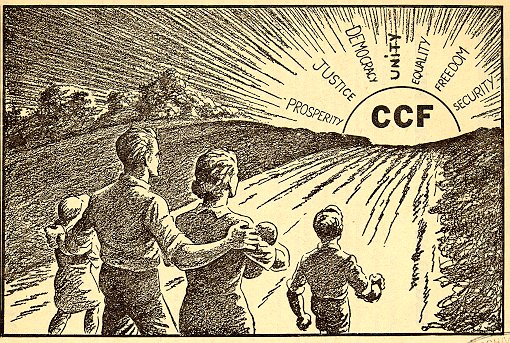
CCF (Saskatchewan Section), Towards the Dawn

Strange Bedfellows in Canada

Mark Wegierski detects a convergence of the “Old” Left and Right

One can look at the New Democratic Party (NDP) in Canada – and its precursor, the Co-operative Commonwealth Federation (CCF) – to highlight the differences between the so-called “Old Left” and the new Left-Liberal consensus.

In the May 2, 2011, federal election in Canada, the New Democratic Party – Canada’s social democratic party – won 103 seats, thus displacing the Liberal Party, and becoming the Official Opposition. However, in the October 19, 2015 election, they were swept away by the Justin Trudeau tide, falling to 44 seats. Some blamed Tom Mulcair’s centrist-tending campaign (especially the promise to keep the federal budget balanced) for this loss.

Tommy Douglas, revered today by many in Canada as the founder of the Canadian Medicare System, was a longtime leader of the Co-operative Commonwealth Federation. Like many on the “Old Left”, Tommy Douglas was surprisingly conservative on cultural and social issues. For example, medicare was initially adopted in the province of Saskatchewan as part of a pro-natalist, pro-family policy. Tommy Douglas also advocated what later became called “workfare” – appalled by the idea that able-bodied men should receive government money without rendering some kind of constructive labor. And he hated deficits, arguing that fiscal prudence was necessary “to keep the bankers off the government’s back”.

While ferociously fighting for equality for the working majority, much of the “Old Left” had no wish to challenge religion, family, and nation. They were thus social-democratic in economics, but socially conservative. Indeed, most of the “Old Left” would have found the concerns of the post-Sixties’ Left as highly questionable, if not repugnant.

One could therefore ask the question – do the genuine Left and the genuine Right converge today as an “anti-system opposition”? A number of social critics across the spectrum, such as U.S. paleoconservative theorist Paul Edward Gottfried, and Frankfurt School-inspired Paul Piccone, the late editor of the eclectic, New York-based, independent scholarly journal, Telos, have perceived the ruling structures of current-day society in terms of a “managerial Right” and a “therapeutic Left”. Piccone’s interpretation of the Frankfurt School was unusual as he saw its members as critics of the managerial-therapeutic regime – as opposed to a more common view that they had in fact significantly aided in the institution of the system.

According to Gottfried and Piccone, there currently exists a pseudo-conflict between the officially-approved Right and Left which in reality represents little more than a debate between managerial styles. The “managerial Right,” typified by soulless multinational or transnational corporations (including the big banks and financial firms that a few years ago received over a trillion dollars of U.S. taxpayers’ money) represents the consumerist, business, economic side of the system. The “therapeutic Left,” typified by arrogant social engineers, advocates redistribution of resources along politically-correct lines, and “sensitivity-training” for recalcitrants. Traditionalists and some eclectic left-wingers oppose both the “managerial Right” and the “therapeutic Left,” as together constituting today’s “new Establishment,” or “New Class.”

The Left is also identified today, by some traditionalist and eclectic critics, such as Michael Medved (author of Hollywood vs. America) and Daniel Bell (author of The Cultural Contradictions of Capitalism), with the rougher edges of the pop-culture, which similarly seeks to negate traditional social norms. The profit motive of the corporations, and the rebelliousness of the cultural Left and of late modern culture in general, feed off each other. The pop-culture in America and Canada (including certain reckless and irresponsible academic and art trends) and the consumer culture, are tightly intertwined. But the sense of an integrated self and society, where people can hold a meaningful identity, and in which real public and political discourse can take place, is fundamentally in atrophy.

The real division in both the U.S. and Canada, then, is between supporters and critics of the managerial-therapeutic regime. The critics include genuine traditionalists – people who respect religion and concrete, rooted locality, and are able to perceive the assaults of both capitalists and therapeutic experts against them – as well as the communitarian tendency (that was especially prominent in the early to mid-1990s) which emphasizes “real communities” as against corporate and therapeutic manipulations. While some leftists denounce Christopher Lasch as a reactionary, he continued to identify himself as a social democrat to the end of his life.

The possibility of a coalition of the authentic Right and Left against the ersatz Right and Left Establishment conglomerate was anticipated by John Ruskin, the nineteenth-century art critic and social commentator, who – in an age of a pre-totalitarian and pre-politically-correct Left – could confidently say, “I am a Tory of the sternest sort, a socialist, a communist.” G. K. Chesterton, likewise, made pointed criticisms of managerialist and consumerist capitalism, which he presciently noted was based on the premise of unending economic growth which must ultimately destroy nature and thoroughly undermine social mores and human dignity. He defended the broader lower-middle- and working-classes and called for more local and human-scale systems of economy.

In the wake of the financial and economic crises that engulf the planet today, both Right and Left should look to some of their more unconventional thinkers for guidance on how we can emerge in better condition from these troubled times.

Mark Wegierski is a Toronto-based writer and historical researcher

Posted in Current Affairs and Comment, QR Home | Tagged , , , , , , , , , | Leave a comment

Everything and more

Thatcher

Everything and more

Margaret Thatcher, the Authorised Biography, Everything she Wants, by Charles Moore, Allen Lane, ISBN 978-0-713-99288-5

Angela Ellis-Jones reviews the second volume of the definitive biography of Margaret Thatcher

This is the second volume of Charles Moore’s projected three volume biography of Margaret Thatcher – ‘the first woman, in the whole of western democratic history, who truly came to dominate her country in her time’. It covers the zenith of her power, from the aftermath of the Falklands War in 1982 – and her subsequent (and consequent) victory in the general election of 1983 – to her third election victory in 1987. The title, taken from a contemporary pop song, is perhaps rather strange given that the author states at the outset ‘only by writing this book did I come to understand just how insecure Mrs Thatcher’s position often felt in these years – not least to her’. Continue reading

Posted in Book Reviews, QR Home | Tagged , , , | 1 Comment

Der Rosenkavalier

Richard Strauss, Max Liebermann Bildnis

Der Rosenkavalier

Der Rosenkavalier, Richard Strauss, Deutsche Oper Berlin, April 2016. Director Götz Friedrich, Das Orchester der Deutschen Oper Berlin conducted by Ulf Schirmer. Reviewed by Tony Cooper

First performed in January 1911 at the Königliches Opernhaus (predecessor of Semperoper), Der Rosenkavalier (The Knight of the Rose) was conducted at its première by the maestro of the day, Ernst Edler von Schuch, who also found himself in the pit for the premières of Strauss’ Feuersnot, Salomé and Elektra. And a maestro of eminent importance today, Ulf Schirmer, general music director of Oper Leipzig, spun his magic in the pit controlling a wonderfully-entertaining production featuring a stellar cast that marked the end of a very successful mini-Strauss festival mounted by Deutsche Oper with packed houses every night.

Der Rosenkavalier actually played to a packed house on its première. It was an overnight success but the Dresden authorities were concerned that audiences would find it offensive no doubt worried about the amorous adventures of Baron Ochs who manages to get himself in all kinds of trouble. In this well-directed production by Götz Friedrich (first seen in February 1993) he was up to his old tricks. Albert Pesendorfer portrayed Ochs in the usual coarse and vulgar manner in keeping with his bullish and arrogant character. But gladly he didn’t over-act the role, as so often is the case, and together with his lackeys they made an effective comedy team.

The opera’s working title was, in fact, Ochs von Lerchenau, appropriate enough for in German ‘ochs’ translates as ‘ox’, a word which correctly depicts the strong-minded character of the Baron. Continue reading

Posted in Cultural Matters, QR Home | Tagged , , , , | Leave a comment

Testosterone, Going, Going, Almost Gone…

4_lioness-hunting_l

Testosterone, Going, Going, Almost Gone…

Ilana Mercer celebrates the she male

There are only two men in the 2016 presidential race: Hillary Clinton and Donald Trump.

Like or dislike her, there’s no questioning Hillary’s manly bona fides. Mrs. Clinton is as tough as she’s philosophically misguided.

At the first Democratic debate, on October 14, 2015, Bernie Sanders, Martin O’Malley and Lincoln Chafee shuffled meekly to their respective podiums.

Only Jim Webb and Mrs. Clinton strode onto that stage like soldiers. Continue reading

Posted in Current Affairs and Comment, QR Home | Tagged , , | 1 Comment

Traditionalism and Ecology

Ayers Rock

Ayers Rock

Traditionalism and Ecology 

Timely reflections from Mark Wegierski, on Earth Day, 2016

This is a sketch of a synthesis of ecological issues with notions of culture and tradition. What are some of the affinities between traditionalist and ecological thinking?

The United States and Canada participate today in the worldwide trends to technology (sci-tech); urbanization and migration; media; tribalism; and violence.

These trends constitute the ongoing crisis of national sovereignty and meaningful democracy. Continue reading

Posted in Current Affairs and Comment, QR Home | Tagged , , , , | 3 Comments