Judge not, lest thou be judged

Brett Kavanaugh

Judge not, lest thou be judged

By Ilana Mercer

By the time this column goes to press, Christine Blah-Blah Ford will have appeared before the coven once considered the greatest deliberative body in the world: The United States Senate.

At the time of writing, however—on the eve of a hearing conducted by the Senate Judiciary Committee to ascertain the veracity of Blasey Ford’s sexual assault claim against Judge Brett Kavanaugh—I hazard that voter distrust in the Republicans will prove justified.

True to type, Republicans will deliver a disaster to their supporters—to those banking on the confirmation of another conservative to the Supreme Court bench.

To question the two adversaries, the psychology professor versus the Supreme Court nominee, the Republicans chose an unknown, unremarkable quantity—a Phoenix-based prosecutor named Rachel Mitchell. Mitchell heads the Special Victims Division of Maricopa County, which consists of “sex-crimes and family-violence bureaus.” Continue reading

Posted in Current Affairs and Comment, QR Home | Tagged , , | 1 Comment

Presenting Powell and Pressburger

Still from Peeping Tom

Presenting Powell and Pressburger

 by Stuart Millson

During the 1940s and ‘50s, cinema in this country was revolutionised by the work of two film-makers, the Kent-born Michael Powell, and his friend and colleague, the Hungarian-born émigré and veteran of continental and German cinema, Emeric Pressburger. It might seem, at first sight, as if these two cultural forces were contradictory, but in some of their finest films – A Canterbury Tale, The Life and Death of Colonel Blimp and A Matter of Life and Death – the English vision of Michael Powell was intensified, and made more mysterious, more atmospheric, by Pressburger’s heritage as an “outsider”. It was said that Pressburger never lost his sense of middle-Europe – and even his retirement home in the Suffolk countryside, Shoemaker’s Cottage, was compared to a fairy tale dwelling from a Brothers Grimm story. Yet, just like the Czech writer Karel Capek, he saw the heart of England. Michael Powell’s cinematography lifted the films which they made together to the level of art, but it was Emeric’s screenplays and stories, with their riddles and unexpected twists and outcomes, which gave each production its stamp of uniqueness. Continue reading

Posted in Cultural Matters, QR Home | Tagged , , | 1 Comment

On the Road

Albert Finney as Arthur Seaton, in Saturday Night and Sunday Morning

On the Road                                                                           

by Bill Hartley

Last Saturday, a friend and I went to the Pop Up theatre at the Leeds Playhouse to see a revival of Jim Cartwright’s play Road, which originally appeared in 1986. We sat down amidst a largely middle class audience: the working classes evidently have better things to do on a Saturday night in Leeds than to see themselves depicted on stage. For about two hours, we were treated to an unceasing festival of misery as the able and energetic cast went through a series of vignettes depicting despairing, hopeless, pathetic people, too drunk to even have sex.

We should have read the reviews first. Use of phrases such as ‘a simmering undercurrent of rage’ is a giveaway. More of the same followed: this ‘searing play’ about the misery inflicted by the brutal Thatcher regime is as ‘relevant in today’s austerity Britain as it was thirty years ago’. My friend and I, who were both around at the time that Cartwright’s play was first aired, shared a sense of bewilderment and a stiff gin during the interval. Neither of us remembered things the way that Cartwright did. Continue reading

Posted in Cultural Matters, Current Affairs and Comment, QR Home | Tagged , , , | Leave a comment

U.S. Business Itching to Import Cheap Labor

Ilana Mercer

U.S. Business Itching to Import Cheap Labor

By Ilana Mercer

Adroitly, President Trump has optimized outcomes for the American Worker. His is a labor market like no other.

Long overdue in the U.S., a labor market should be one in which firms compete for workers, rather than workers competing for jobs.

“For the first time since data began to be collected in 2000, there are more job openings than there are unemployed workers.” By the Economist’s telling (July 12th, 2018), “Fully 5.8 million more Americans are in work than in December of 2015.”

Best of all, workers are happier than they’ve been for a long time. Continue reading

Posted in Current Affairs and Comment, QR Home | Tagged , , , | Leave a comment

The English Civil War, part 2

Oliver Cromwell, by Robert Walker

The English Civil War, part 2

By Mark Wegierski

All the aforementioned religious, dynastic, political, social, economic and ethnic tensions flared into armed conflict in the English Civil War. The term “English” is, however, misleading: although the primary focus of operations was England proper (as well as Wales and Cornwall), Scotland was also critical and Cromwell, of course, extended fighting to Ireland in the aftermath of the Civil War itself. The personalities of the two main protagonists were very different. Charles I was “a mild and placid King”, genuinely concerned about the shedding of brotherly blood, with a somewhat quixotic aspect, and a strong streak of pessimism. (Even in his time, the Stuarts were often considered an ill-starred or unlucky dynasty.) This made him a poor politician and military leader. He went to his execution believing that the revulsion it would cause would result in the almost-instantaneous restoration of the monarchy in the person of his son, Charles II. Cromwell, by contrast, was generally able to see to the essence of the matter, utterly convinced of his rightness, never wavering and ruthless in political struggle. He understood the need for a well-drilled, professional force to win the war, and formed the New Model Army as his personal instrument. The heroic but impetuous Cavaliers were no match for its iron drill and discipline. There has been some debate about the character of the New Model Army: were they really “true believers”, fanatically-enthused Puritans, or rather well-drilled and disciplined professional mercenaries, assured of more regular pay than any other force in the war? Continue reading

Posted in Current Affairs and Comment, QR Home | Tagged , , , | Leave a comment

Bob Woodward’s Yellow Journalism

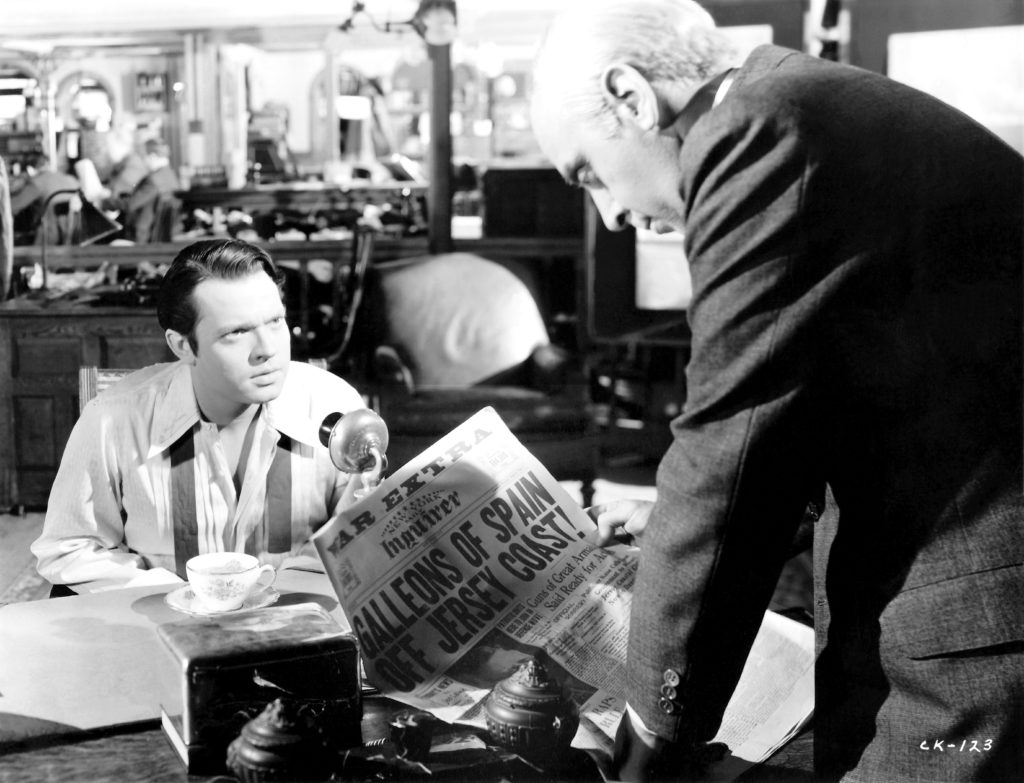
Still from Citizen Kane

Bob Woodward’s Yellow Journalism 

By Ilana Mercer

It takes no time at all. You listen to Bob Woodward’s halting speech. You read his lumpen prose, and you get right away what undergirds his Trump-phobic tome, Fear: Trump in the White House.

Naively, the president expected to fulfill his revolutionary campaign promises to the American voters, an assumption that threw Woodward and the D.C. elites for a loop.

If past is prologue, voters don’t—and should not—get their way. After all, the views of Trump voters on American power are polar opposites from those held by the permanent state.

What does “Boobus Americanus” know? Nothing! Continue reading

Posted in Current Affairs and Comment, QR Home | Tagged , , , | Leave a comment

Apartheid, in Perspective, 2

Dr Hendrik Verwoerd

Apartheid, in Perspective, 2

By Ilana Mercer

Monomaniacal Westerners—they have one thing on their minds: it begins with an “R”—have come to think and speak of apartheid as a theory of white supremacy.

It was not.

The policy of “separate development,” as it was admittedly euphemized, was not a theory of racial supremacy, but a strategy for survival.

But first: to understand the fundamental way in which the Afrikaner and American creeds differed early on we must first examine the former’s ideas of what constitutes a nation and a state, respectively.

America, a rib from the British Adam, was built on liberal individualism; but Afrikaner culture was first and foremost grounded in the survival of the Volk. Continue reading

Posted in Current Affairs and Comment, QR Home | Tagged , , , , | 1 Comment

Afua-centrism

Afua Hirsch

Afua-centrism 

Brit(ish): On Race, Identity and Belonging, Afua Hirsch, Jonathan Cape, 2018, pp 318, reviewed by Bill Hartley

What is it like to be the descendant of immigrants to Great Britain? Such a person may never have visited the home country of their parents but is made aware on a regular basis that they are different to the majority. Skin colour is of course the great identifier but one can only the imagine the reaction of people like Afua Hirsch, a child of mixed English, German Jewish and Ghanaian ancestry, when asked by some well meaning person; ‘where are you from?’ Or, indeed, when  government departments, prodded by their ‘race relations advisors’, produce forms asking about one’s ethnicity, lumping the descendants of Africans and a host of other nations into a handful of categories such as ‘Black British’. Hirsch shows us the complexities of race and identity from her own perspective, augmented by research into the history of black migration. Continue reading

Posted in Book Reviews, Current Affairs and Comment, QR Home | Tagged , , , | Leave a comment

ENDNOTES September 2018: Commemorating Debussy

ENDNOTES, September 2018
Commemorating Debussy

 by Stuart Millson

Claude Debussy – often referred to as the founder of Impressionism in music – is being commemorated extensively, in the concert hall and on record, in this, the centenary of his death. Born at St. Germain-en-Laye on the 22ndAugust 1862, Debussy was described by The New Oxford Companion to Music as: “… one of the most influential figures of his generation”. He brought to life a new, spell-like style or “timbre” of music – works for orchestra, piano, the opera house, and for odd combinations of chamber instruments (a Sonata for Flute, Viola and Harp, for example) which combined a sensuous mysticism, with a sense of fleeting, delicate colour. And in works such as the slow movement of his String Quartet (1893) and Cello Sonata from 1915, a sense of melancholia and regret pervade his astringent sound-world.

His most famous work is, perhaps, the “three symphonic sketches”, La Mer, written between 1903 and 1905, with its famous Jeux de vagues middle-movement, in which maritime light, wave movements and sudden changes of tide and tempo create an atmosphere both exciting and almost supernatural. Yet for all of the work’s haze of colour and intoxicating feeling, Debussy himself did not see himself as the Impressionist of the orchestra. When describing his large-scale Images (brilliantly recorded, incidentally, on the Naxos label some 25 years ago by the Belgian Radio and Television Philharmonic Orchestra under Alexander Rahbari), Debussy stated that he was attempting “…something different, in a sense, realities.Continue reading

Posted in Cultural Matters, QR Home | Tagged , | Leave a comment

Lament for a Nation

Poussin, Landscape with a Man Killed by a Snake, credit Wikimedia Commons

Lament for a Nation

By Mark Wegierski

George Parkin Grant (1918-1988) was Canada’s leading traditionalist philosopher. The main expression of George Grant’s thought occurs in four major books: Lament for a Nation: The Defeat of Canadian Nationalism (1965), Technology and Empire: Perspectives on North America (1969), English-Speaking Justice (1974/1985), and Technology and Justice (1986). Philosophy in the Mass Age (1959), and Time as History (1969), are his two major earlier works. Grant was a complex philosophical critic of technology and of America.

Lament for a Nation is one of Grant’s more accessible books and it has remained almost continuously in print in Canada. It expresses a profound pessimism, and certainly does not offer any pat answers in regard to what is to be done to redeem Canada. Lament for a Nation mourns what George Grant sees as the end of real Canadian independence in the 1960s. As Grant tells the story, Canadian Tory Prime Minister John Diefenbaker refused to accept U.S. nuclear weapons on Canadian soil. In the 1963 Canadian federal election, accordingly, all the instrumentalities of the North American managerial capitalist classes were turned against him. Diefenbaker’s lost campaign is characterized in the book as “the last strangled cry of his pre-modern Loyalist ancestors”. Liberal Lester B. Pearson won the election. Continue reading

Posted in Current Affairs and Comment, QR Home | Tagged , , , , | Leave a comment