Child dancer – a poem by Peter Stark

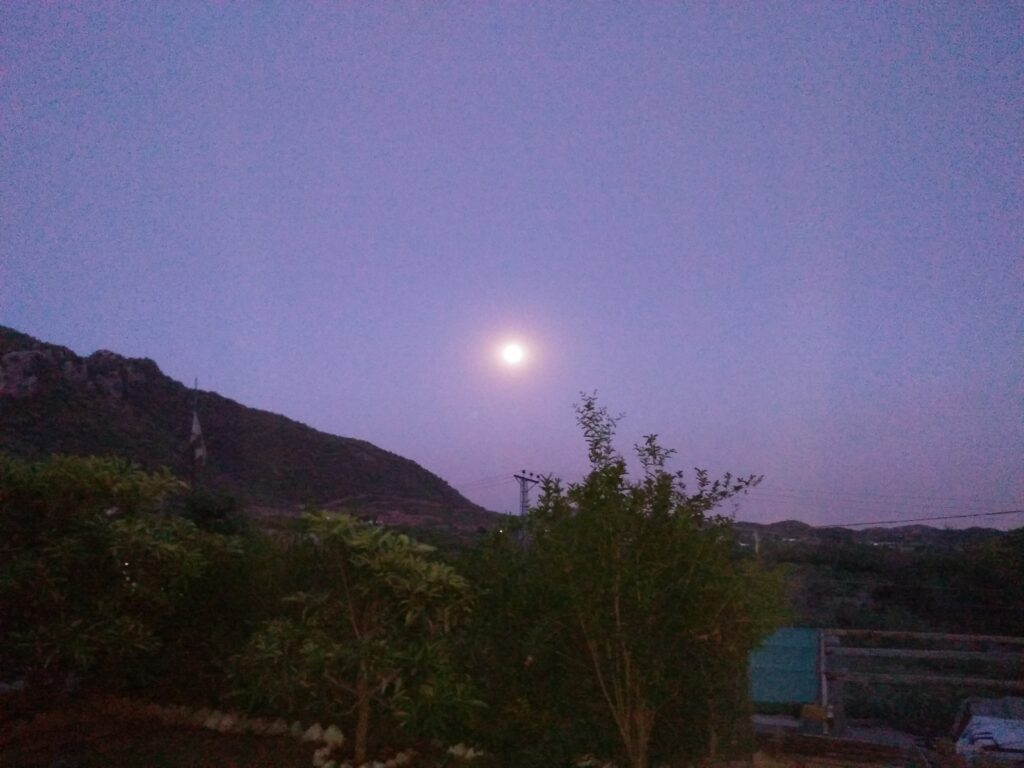
Full Moon Scene, credit Wikimedia

Child Dancer

by Peter Stark

(For KJS)

So strangely proud

She steps so light

By private cloud

Conveyed secretly across the night

So easily she moves in carefree grace

She sails invisible in plain sight,

Conceding nothing to the Spring,

Making her own moonlight

PETER STARK is a London-based poet and writer


Posted in QR Home | Tagged , | Leave a comment

Leslie Jones’ latest review for “History Today”

Leslie Jones’ latest review for History Today

QR Deputy Editor Leslie Jones reviews Tim Grady’s The German-Jewish Soldiers of the First World War in History and Memory for History Today

www.historytoday.com/blog/2013/06/german-jewish-soldiers-first-world-war

Posted in QR Home | Tagged , , , | Leave a comment

The liberal lies we live by

The liberal lies we live by

ROBERT HENDERSON finds that a wise and salutary debunking of liberal myths is itself partly infected

The Liberal Delusion

John Marsh, Arena Books, £12.99

“Is Western society based on a mistake?” asks John Marsh in his introduction. The possible mistake he considers is whether liberals have a disastrously wrong concept of what human beings are and what determines their behaviour  which leads them to favour policies that are radically out of kilter with the way human beings are equipped by their biology to live.

It is not that liberals do not believe in human nature as is often claimed. It can seem that they do  because they insist that nurture not nature is the entire font of human behaviour and consequently it is just a matter of creating the right social conditions to produce the type of people and society the liberal has as their ideal. But liberals balance this rationale on a belief that humans are naturally good, an idea which itself assumes innate qualities. Hence, they believe in an innate human nature but not one which bears any resemblance to reality.

The belief that disagreeable aspects of human nature do not exist and that all human beings are innately good is a product of the Enlightenment, where it took its most extreme and ridiculous  form in the concept of the ‘noble savage’. Marsh will have none of it. He debunks the idea thoroughly. He sees human beings as not naturally wholly good or bad but the product of natural selection working on the basic behaviours of humans. In this opinion he leans heavily on the Canadian-born evolutionary biologist Steven Pinker who in his The Blank Slate dismisses the idea of the noble savage with a robust

A thoroughly noble anything is an unlikely product of natural selection, because noble guys tend to finish last. Nice guys get eaten

If there is no rational reason why anyone should  think that human beings are innately good , why do so many, especially of amongst the elite, fall for the idea? Marsh attributes the phenomenon to the idea being emotionally attractive. There is plentiful evidence for this. One of the pleasures of the book is its first rate line in quotes, many of which are staggering in their naivety. He cites the grand  panjandrum of atheism and a fervent believer  in innate human goodness Richard Dawkins as writing in The God Delusion

I dearly want to believe we don’t need policing – whether by God or each other – in order to stop us behaving in a selfish or criminal manner

So much for Dawkins’ scientific rationality.

Or take the case of A. S. Neill, founder of  the famous or infamous (depending on your politics) Summerhill School, which did not require anything in particular from its pupils:

I cannot believe that evil is inborn or that there is original sin…. We set out to make a school where children were free to be themselves. In order to do this we had to renounce all discipline, all direction, all suggestion, all moral training, all religious instruction…We had a complete belief in the child as a good, not an evil being. For over forty years this belief in the goodness of the child has not wavered

That is a quasi-religious statement no different from a Catholic saying they believe in the Trinity.

In the first half of the book Marsh questions and finds wanting in varying degrees just about everything the modern liberal holds dear: that human nature is good and rational and formed by nurture alone, that freedom is the primary end sought by humans, that morality is a set of shackles rather than a safety catch on human behaviour, that science is an unalloyed good, that religion is no more than harmful fairy stories; that a county’s history and customs are at best unimportant and at worst a malevolent means of maintaining an undesirable status quo, that economics should be determined by the market, that universalism and multiculturalism are unquestionably desirable, equality is always beneficial, and the idea that the individual has primacy over the group.

Some of these liberal ‘goods’ are contradictory, for example, the clash between equality and the individual. To enforce equality inevitably means impinging on the wishes of individuals. Doubtless a liberal would argue that the individual should only have their wishes met insofar as they do not impinge upon the wishes of others. In practice that means a great deal of coercion to prevent individuals satisfying their own wishes, and often such coercion occurs where individuals have perfectly reasonable and moral wishes which cannot be satisfied at the same time. For example, two sets of parents may want to send their children to the same school where there is only room for one child.

There are also heavy question marks over whether modern liberals actually believe in individual freedom. The idea that human beings should and can be manipulated into behaving in a certain way by producing social circumstances which engender the desired behaviour is determinist. Where is the freedom if human beings are seen merely as automata responding to the stimuli of their circumstances? Nor is the ‘freedom’ liberals are supposed to espouse a general freedom. The individual in modern Britain may be free to drink what they can afford to buy, or be as sexually promiscuous as they choose, but they are not allowed any freedom of speech which attacks the core values of political correctness. Who would have thought even twenty years ago that English men and women would be appearing in the dock for saying things which went against the politically correct ethos, but that is precisely what is happening with increasing frequency.

It is also arguable that the modern liberal is interested not in individuals but groups. It is true that human ‘rights’ are exalted by liberals, but these are not really individual rights but communal ones. For example, a law which grants free expression or insists on due process is an individual right because it applies in principle to all. Conversely, if (for instance) ‘hate speech’ is made illegal, this is a de facto communal right given to particular groups, because in practice certain groups enjoy much greater protection than others, for the police and prosecuting authorities are not even-handed in their application of the law.

The second part of the book is devoted to the morally disreputable means by which liberals have propagated their beliefs. Marsh is unforgiving about this aspect of liberalism. It involves persistent dishonesty when dealing with evidence which contradicts their world view. The dishonesty consists of both calling black white and conscientiously ignoring and suppressing that which contradicts the liberal world view. In the case of Britain he singles out the BBC as being hopelessly biased towards the liberal left world view, with a particularly strong line in Anglophobia, something he illustrates by citing the BBC’s After Rome, a programme which painted Dark Ages Islam as a vibrant civilisation and Dark Ages England as primitive and barbaric (p152).

The author laments the fact that liberals have generally been silent on the abuses of Communist regimes whilst engaged in a never ending raking over of Nazi malevolence. He cites as a rare and most honourable leftist exception Malcolm Muggeridge, who exposed the Stalin-inspired Ukrainian famine and searingly described the all too many useful idiots of the British liberal left at the time:

Travelling with radiant optimism through a famished countryside, wandering in happy bands about squalid overcrowded towns, listening with unshaken faith to the fatuous patter of carefully indoctrinated guides, repeating the bogus statistics and mindless slogans – all chanting the praises of Stalin and the Dictatorship of the Proletariat (p138)

There is a further problem which Marsh spends a good deal of time examining. It is not clear exactly what constitutes the modern liberal. Many of the most enthusiastic enforcers of what we now call  political correctness do not call themselves liberals, but are members of the hard left or  representatives of ethnic and racial minorities who see political correctness not as a moral corrective but as an instrument to promote their individual and ethnic group advantage, often with the greatest cruelty. Nor is this simply a modern phenomenon for it has been happening since the 18th century.

Marsh patiently records atrocities in gruesome detail generated by those following secular and rationalistic systems of thought deriving from the ideas of Enlightenment, from the grotesque slaughter of the French Revolution to the insanities of various communist and fascist regimes in the 20th century. This is a truly depressing catalogue not merely of murder on a colossal scale but murder committed with atrocious cruelty. His tale of atrocity begins with the suppression of the Vendée rebellion by Republicans during the French Revolution, where men were castrated before death and women killed by explosives detonated within their vaginas, to the madness of Mao’s “Cultural Revolution” which rode on slogans such as “smash the old culture“ and the terrible promise of the Red  Guards that “We will be brutal”.

Marsh’s judgement of liberalism both in its beliefs and the practical consequences of its implementation verges on the despairing:

To sum up: in the past there were positive aspects to liberalism, but at its core lies a deeply flawed attempt to impose a romantic, but unrealistic, view of human nature on society. Because it is fundamentally untrue, lies, bullying and coercion are needed to impose it, and opponents must be silenced. Because its view of mankind is idealistic, its devotees think it must be true, and are strongly committed to it. It is congenial to people who are well-meaning and who have a naïve rose-tinted view of the world, which avoids dwelling too much on the ugly side of life, like the single mum in a tower block in Tottenham, trying to keep her children safe and worrying about gangs and knife crime. It is in denial of the fact that many aspects of life are worse today than in the past. Liberals cling to their views, ignoring the evidence of science, psychology, anthropology, history and social workers. It is a blind faith in a Utopian project , which blithely dismisses reality and regards its opponents as prejudiced. There is nothing to discuss because we are right. Sadly, for its devotees, truth will out in the end. The experiment was foredoomed from the start (p171)

Damning as that judgement is, I think Marsh is being rather too generous to liberals (especially the modern ones) when he credits them with being generally well-meaning. They are ideologues. That makes them dangerous, because any ideology removes personal choice in moral decision making as the mind becomes concentrated on fitting the ideology to circumstance rather than addressing each circumstance pragmatically. As Marsh points out, it also gives the individuals captured by the ideology an excuse to behave immorally in the enforcement of the ideology on the principle that ends justify means. That is particularly so with ideologies which are what might be called millenarian in their psychology, with a promised land at the end of the ideological road. Political correctness is of this type.

Once someone has accepted the validity of ends justifying means and they know or even suspect  that the means will cause harm, that removes any claim to being well intentioned because their final end good intentions are swallowed by the immoral means. Nor can any ideologue, liberals included, rationally have any confidence that a great upheaval of a society will result in their desired ideological ends. What history tells us is that tyranny or chaos are invariably the results of such attempts.

There is also a tremendous arrogance in assuming that it is possible to define what is desirable human behaviour and what is a good society. Liberals may imagine that what they purport to be the ultimate human goods – non-discrimination, equality and the primacy of any individual are objectively what they claim – but in reality they are both no more than value judgements and highly questionable in terms of their outcomes. Modern liberals, or at least the true believers, are really just another set of self-serving egotists who think they know how others should live.

There is a looming leviathan throughout the book that is largely ignored, namely mass immigration and its consequences. Marsh to his credit does mention immigration as a problem, both in terms of weakening British identity and causing resentment amongst the native white population, but it does not feature in more than a peripheral way. Marsh never really asks the question “how much of the change in general British behaviour and the nature of British society in the past fifty years is due to mass immigration?” The answer is arguably a great deal, because multiculturalism and ‘anti-racism’ have been used as levers to promote the ‘anti-discrimination’ and ‘equality’ agendas across the board.

In the end Marsh stumbles in his task of debunking modern liberalism, because he is reluctant to face the full implications of what he is saying. In his introduction he writes,

So is this book a straight-forward attack on liberalism? No. It is not as simple as that. There are some areas in which I believe liberals are right. I acknowledge that some liberalism is necessary and beneficial. Few would want to go back to the restrictions of the Victorian era or live under a despot. There was also a need to free us from a negative attitude towards sex. Liberals are right to be concerned about inequality and to fight for social justice. There still remain great inequalities and their campaign for greater fairness deserves support. I welcome the undermining of the class system, the greater opportunities open to women and the improved treatment of racial and sexual minorities – the decriminalisation of homosexuality

He cannot quite bring himself to go all the way and see modern liberalism for what it is, a pernicious system increasingly aimed at suppressing the resentment and anger of the native British population as the consequences of mass immigration become ever more obvious and pressing. Clearly he agrees with much of the central politically correct agenda, but it is precisely that agenda which has created the present situation and it is difficult to see how such an ideology could ever have resulted in any other outcome once it became the guiding ideology of the elite – because the ends of political correctness run directly against human nature and can only be enforced.

Marsh’s sympathy with political correctness leads him wittingly or unwittingly to risk having his  argument distorted by concentrating not on the whole but a part of British society and treating that part as representative of Britain. Take the question of liberalism undermining the poor by making them dependent on the state and denying them moral guidance at home and in school. Marsh uses an interview with the youth worker Shaun Bailey (chapter 11) who works in a poor area of  London. The problem is that Bailey is black and this colours his interpretation of what is happening. He looks at the experience of blacks and treats that experience as representative of the poor generally, which it is not. For example, poor white Britons may have a greater incidence of one-parent homes and fathers deserting mothers now than previously, but the incidence of these behaviours amongst poor whites is much lower than it is amongst poor blacks, whether British born or  immigrants. Yet Bailey’s views are represented as being generally applicable to British society.

Despite these caveats, I strongly urge people to read the book. The Liberal Delusion is important because it succinctly performs the task of pointing out that the liberal emperor has no clothes or at least very tattered and insufficient ones. That is something which is sorely needed. The book’s value is enhanced by being  written in a lively and easily accessible style. Just read it with an understanding of the limitations imposed by Marsh’s residual, almost subliminal, hankering after the core values of political correctness.

ROBERT HENDERSON blogs at livinginamadhouse.wordpress.com


Posted in QR Home | Tagged , , , , , | 2 Comments

A rose for Edmund

A Rose for Edmund

STEPHEN M. BORTHWICK wonders what exactly today’s conservatives have left to conserve

The effigy of Robert de Tattershall (d.1225) in Kirkstead church, Lincolnshire

There’s something perennially fascinating about Southern Gothic – it has something to do with the accuracy and elegance of the metaphors authors like Faulkner and O’Connor use in their stories. It is true that these authors have often been accused of being grotesque – but it rather points to a tendency in their art towards the true that earns them this. Of course, Flannery O’Connor has herself anticipated this argument – commenting that

Anything that comes out of the South is going to be called grotesque by the northern reader, unless it is grotesque, in which case it is going to be called realistic.

I like to think I have enough appreciation for the South not to fall into this trap, but the truth is that I am condemned to die a Copperhead – never a true Southerner. Nevertheless, I think there is a universal genius to be observed among the great Southern authors. Faulkner, especially, hit upon a wonderful metaphor in A Rose for Emily – the story of an elderly patrician who has murdered and then slept next to the decaying corpse of a man she fell in love with as a girl. It was written as a sort of critique of the Lost Cause mythos, and the Southrons who stubbornly clung to the Antebellum age in the face of radical change – change which would have come regardless of who won the War. There is, though, a more eternal quality of the metaphor that I think speaks to the whole of the contemporary Western world, and in particular to the immobile conservatives still clinging to the corpse of Edmund Burke.

The problem with Anglo-American (indeed, Western) conservatives is that they confuse institutions with the principles that produce them. I am not the first commentator to level this accusation – in his book Conservatism: An Anthology of Social and Political Thought from David Hume to the Present (Princeton University Press, 1997), Jerry Muller goes as far as to say that the institution is a fundamental part of the conservative ideology. If he is right, then there is a flaw in conservative thinking that must be put right if the stated goal of the Right is ever to be achieved.

The Scouts offer a wonderful example of all this: Scouting is an institution that arose out of a massive social movement that dominated the so-called “Gilded Age”. The progressive spirit drove the formation of civic-minded youth groups that were militant and formative – the primary goal being to manufacture, en masse, generation after generation of men bred in the Anglo-American conception of the world – that is to say liberal (capitalist, Protestant, and parliamentary) – willing to die for it, and able to kill for it. Over time, the killing part faded away, and with it the dying part and it became a civilian organisation that merely clung to the old civic principles of the progressive era, bent on manufacturing a certain kind of man.

Conservatives in America cling to the Scouts as an institution that represents the world-view they inhabit – that is to say, Christian and civic-minded, with a bit of “classical” liberalism to flavour. They think of it as a sort of bulwark against change, not realising that in fact the very idea of manufacturing a certain kind of man is part-and-parcel of the so-called “social engineering” they so thoroughly denounce, and the “rugged individual”, the masculine hero they romanticise out of history, is in reality the alienated individual that so thoroughly differs from the human person of tradition. The Scouts were what they were solely because they arose at a certain time and out of a certain milieu – one far more tolerable to the conservative mind but no less dangerous to traditional society.

It is perhaps worth noting now that the man with whom young Emily fell in love with in Faulkner’s story was a northern contractor who had come South. The metaphor now becomes clear: an agent of change becomes the focus of the affections of the conservative because of the age in which those affections grew. The drive, then, is to preserve the corpse, the dead institution, not realising that to survive it must change, it must go back North (as Emily refuses to allow her lover to do), because that is its nature. To preserve it, to conserve it, does not mean merely refusing to change, but to recognise the inherently transient nature of these institutions, and if (or perhaps when) they become corrupted, leaving them aside.

Medieval quarter-jacks in Sighisoara, Transylvania

The Boy Scout Association and its acceptance of homosexuality is a small example, but the reality is that conservatives are doing the same thing with Western civilisation at large. It is becoming increasingly clear to the historically aware that what was so valued at the heart of Western Civilisation – that is to say, Christendom, honour, hierarchy, natural law, etc. – no longer resides within the purview of what we have grown accustomed to call “the West”. There is no turning back the clock – to return to “classical” liberalism merely means pining for an earlier stage of decay; to reverse the ideology of liberalism, abandoning it altogether, is no more possible, for it has ceased to be an ideology, and has become the West itself. Wrapped up in the language of rights, equality, freedom, civic responsibility, even support for monarchy – arguing how it benefits “the people” – all of this is modernity, all of it liberalism, all of it entropy in which conservatives actively participate when they use this language. They need not even be liberals at heart – they may be speaking of rights and freedoms in a very Christian sense, they may even appeal to natural law and use arguments of ages past, but the meaning of words – and the reality they therefore not only represent, but create – is not in the control of the speaker, but in the control of the audience, and the audience is saturated in the reality of modernity.  An attempt to deny these things – to speak and believe, as Julius Evola put it, in a way that

…before the French Revolution, every well-bred person considered sane and normal

is to enter a sort of self-exile, not only because that way of thinking and belief is abhorrent to modern man, but, far more importantly, because it is incomprehensible. Oswald Spengler offers a most appropriate quotation:

…the age has itself become vulgar, and many are unaware of the extent to which they have been tainted.

The fact of the matter is, the West is dead, and conservatives are only very slowly waking up to that reality. No greater illustration of this can be found than a recent Newsmax article, relating with mournful impotency the situation of monuments dedicated to the First World War in Hawaii, North Carolina, and Michigan. These monuments are crumbling, and while some voices are calling for their repair and renovation, the reality is that the antiquarians are outnumbered by the apathy of the society around them, and government (which is a practical institution) cannot brook the costs of restoration. In Michigan, the Memorial Hall dedicated to the war has already been knocked down. The Newsmax article captures the situation wonderfully:

For many residents, the structure’s architectural and historic significance pales in comparison to more immediate needs. ‘The war was a long time ago”, Wharton said. “I don’t think it’s meaningful for most people.”

War memorials once united people behind a common cause and ideology; as the ideology becomes permeating, facing no real competitors, and the civilisation reaches its old age and dies, the memorials and monuments built to that worldview and ideology will collapse and crumble, held up by a few interested antiquarians far removed from the living concerns and devotions that drove the architects of those great edifices. The sad, but undeniable, truth is that the Vestal Flame has been extinguished in the West, and there are few, if any, alive who remember why it was lit in the first place. Others are coming to inherit and inhabit the cultural ruins left behind by the West – as well as the very real ruins, like these war memorials. As Arthur Moeller van den Bruck remarked,

…to be a conservative means creating something worth conserving

a recognition that not the institution, but the spirit that drives it, is at the heart of a living tradition. It is this living tradition to which conservatives, or, rather, those who seek the goals of the traditionalist and conservative, must look, rather than the shell in which that tradition dwells here or there, now and again.

The West has had the good fortune to inherit much of the cultural heritage of classical civilisation, to reinterpret and re-appropriate this heritage. Pagan learning became Christian learning, forums became marketplaces which likewise became headquarters for confraternities. The circuses were replaced by jousting lists. The Byzantines, last remnants of a dead civilisation, looked to the West as their protector and future – much better than the future they faced under the Saracen. The West sacked Constantinople, slew and raped, and did other unspeakable things, but the ruins of classical civilisation endured in the West even to its own demise. What civilisation will inherit the West? What heritage does the West leave – is it worth preserving and conserving? Certainly there were things derived historically from the classical civilisations that made our own civilisation unique – but the wheel of history is turning about again. It is left to conservatives, who refuse to actively participate in the liberalism and suicidal progressivism that defines the last phases of the West, to determine what they shall build that is worth conserving, or if they shall prefer to lie next to a corpse until they themselves pass away. It falls to us, to embrace or to deny history; in the words of Seneca, ducunt fata volentem; nolentem trahunt.

STEPHEN M. BORTHWICK is a traditionalist Orthodox Christian writer and PhD student at Catholic University of America in Modern European History


Posted in QR Home | Tagged , , , , , | Leave a comment

ENDNOTES – Letter from Aldeburgh

ENDNOTES

Letter from Aldeburgh

STUART MILLSON reports on Peter Grimes at the Aldeburgh Festival

Dear Ben,

I can feel the special magic that the Festival instils into music, country side, sea side and people! And it is all because Peter and you bring to it very special qualities and perception and talents and skills – and concern. Love, Joyce

Letter from Joyce Grenfell to Benjamin Britten, founder of the Aldeburgh Festival, 29 June 1970

Every year, from 1962 until 1979, the celebrated entertainer and writer, Joyce Grenfell, attended Benjamin Britten’s Aldeburgh Festival; delighting not just in this annual gathering of musicians from all over the world, but in the anticipation and ever-fresh excitement of travelling to the East Anglian coast in the company of her husband. Mrs. Grenfell kept a diary of delightful observations of those Aldeburgh outings, writing:

England at its perfect best. Suffolk is so pleasing to me; those little villages with pink and pale yellow washed houses standing in gardens with peonies bursting into ruby red and pink and white, and wisteria and laburnum drips… And not a cloud in the sky. Today to the Maltings to see the Queen and hear Ben conduct his concert. It is lovely to be here again. We both start beaming as we get into East Anglia and particularly in June for the Festival.

On Sunday 9th June, following the route which our well-loved diarist would undoubtedly have taken, I drove to the Snape Maltings – the 800-seat concert hall, created by Britten and his lifelong collaborator, Peter Pears – to hear a performance of the 1945 opera, Peter Grimes. Leaving the main A12 highway near Woodbridge, I drove along lanes made more beautiful by Queen Anne’s lace, and constellations of daisies – edging closer to Snape and the River Alde, to the sound-world and the stage for the artistic life of one of the greatest of English composers.

The Snape Maltings Concert Hall

The QR's Stuart Millson on duty

The Festival (the sixty-sixth) had opened on Friday night with a concert performance of the work (broadcast live on Radio 3) conducted by the Britten specialist, Steuart Bedford, and with Alan Oke, tenor, in the title role. Sunday night – my night – would see a repeat, with the same forces – the Britten-Pears Orchestra, with the Chorus of Opera North and the Chorus of the Guildhall School of Music and Drama.

The story of Peter Grimes, a fisherman with a tortured soul, living at the margins of society, was inspired by the writings and unromantic realism of the Suffolk clergyman, chronicler and poet, George Crabbe (1754-1832) – many commentators sensing a resemblance between Grimes and Britten’s own personal separation from and moral contentions with conventional society (Britten being both a pacifist and a homosexual). There is some truth in this view, although Britten’s artistic and material success, and the cultural attraction which he had for so many people – from Rostropovich to Joyce Grenfell! – undermines, to some extent, the comparison between composer and his most famous character. If anything, the composer was something of a child of his time – the 1930s, from whose cultural milieu he arose, containing many leading thinkers and artists of similar dispositions; and we can also see many dozens of photographs of “Ben” (in sandals and fisherman’s pullover), out and about in Aldeburgh and every bit the informal celebrity, chatting with great ease to local people. When his affection for the monarchy is also considered – the Queen visiting the Snape Maltings; the Royal box decorated with summer flowers; the audience standing for Britten’s realisation of God Save the Queen (“so terribly loving” and “everyone ashiver with pleasure” said Joyce Grenfell in her diary) it is difficult to paint the man as a complete outsider.

What one can say, with complete certainty, is that the three Acts of Peter Grimes (known to a wider audience for their famous “Four Sea Interludes”) revolutionised music in this country – re-casting an operatic tradition that had already been well-served by Dame Ethel Smyth and Ralph Vaughan Williams, but suddenly injecting the language of English music with a distinctive, prickling 20th-century tension and a clear, brutal honesty. The arts in this country were at once steered into new, raging, unsettling waters by Britten – and the sinister, dreamy, half-not-in-this-world fisherman of the Suffolk coast, Grimes, still lurks at the eye of the storm.

To most people, an opera begins with a grand overture… not so with this work. A salty-flavoured, dotted, hesitant tune leads us into a court hearing, in which the local worthies are trying to discover the truth about the death (at sea) of a boy, apprenticed to Grimes. In the end, the coroner, Mr. Swallow (played at the Snape Maltings by Henry Waddington) concludes that the apprentice has died in accidental circumstances, but it is strongly suggested that the strange fisherman employs no further assistants. The scene brilliantly evokes all the gossip, suspicion and clipped, official language of a legal hearing in a provincial place, yet Grimes comes away, brooding and disliking the local establishment and people – determined that he will, one day, be a success. His only two friends in the village are Ellen Orford (the schoolteacher, sung by Giselle Allen who is almost as tormented as the man she has befriended and tried to help – tormented, that is, by her inability to reason with him and to drag him from the unrelenting misery of his lonely life) and Captain Balstrode, whose portrayal by baritone, David Kempster, was another outstanding feature of the production.

On the platform at the Snape Maltings, the twelve soloists were lined up in front of the orchestra, and despite it being a concert performance, played their parts with as much of an operatic sense of acting as the full-to-the-brim platform space would allow. The entire cast distinguished itself, and made this a truly memorable production – but throughout the evening, my eye was continually drawn to the face and movements of Alan Oke – Grimes. Oke has an intensity of expression anyway (I remember this from a performance of Britten’s Spring Symphony at the Proms, two years ago) but for Sunday night’s opera, he was in character for the entire duration of the drama. Frowning, nervous, defiant, and in the end, driven and contorted by the persecution of the villagers (they are made to think that he has murdered his apprentices), the tenor lead-character made us believe that we were on the beach with him – sharing in the collapse of reason and sanity, and waiting for the end. And the final scene, in which Ellen and Balstrode, no longer with any power to help Grimes, stand with him for the last time, a shocked silence lingered in the auditorium. Balstrode’s gentle, but deathly instruction to Peter – to sail out, beyond sight of land, and sink the boat – resembled the switching off of the life-support machine, the end of the nightmare, the last rites. Earlier in the proceedings, the audience listened to the storm music – timpani and brass, and a hellish, torrent of strings screaming and battering against the brickwork walls of the Snape Concert Hall – but somehow, the ghostly desolation of Grimes’s end made for the moment of greater power.

Yet there are tender, melancholy moments in the opera, such as the scene in which Grimes dreams of a comfortable home, and of a time when there will be no fear; a time when he has confronted and confounded his critics, with the ever-loyal Ellen at his side, as his wife. Ellen, too, and other female members of the cast sing, in the second act, of the hopelessness of loving men; and a scene in the inn sees Grimes – as if caught up in some strange hallucination – remembering the stars that he sees in the heavens when drifting on the ocean.

The orchestral score (and Steuart Bedford and his players gave their all, through every turn of the tide) also brings to life the call of sea-birds, and – just like a view from the Snape Maltings itself – opens a window to the sky, the reeds and the Alde estuary beyond; to the very Borough which made Britten a Freeman in 1951 and whose characters and civic life continue, despite the storms, sea-erosion, collapse of sandy cliffs… and the just-visible boat, sinking far out toward the horizon…

STUART MILLSON is the QR‘s Classical Music Editor

A recording of the opera, drawn from this year’s two Aldeburgh Festival performances will be issued on the 17th June. To order the CD, contact either 01728 687110, or www.aldeburgh.co.uk

Britten, Peter Grimes – Britten-Pears Orchestra, Chorus of Opera North, Chorus of the Guildhall School of Music and Drama conducted by Steuart Bedford. Alan Oke [Peter Grimes], Giselle Allen [Ellen Orford], David Kempster [Captain Balstrode], Gaynor Keeble [Auntie], Alexandra Hutton [First Niece], Charmian Bedford [Second Niece], Robert Murray [Bob Boles], Henry Waddington [Swallow], Catherine Wyn-Rogers [Mrs Sedley], Christopher Gillett [Rev. Horace Adams], Charles Rice [Ned Keene], Stephen Richardson [Hobson]

The Quarterly Review would like to thank Anne White of Macbeth Media Relations Ltd., and Shoel Stadlen, Head of Communications, Aldeburgh Music, for enabling us to visit the Festival


Posted in QR Home | Tagged , , , , | Leave a comment

How to make a slum by Bill Hartley

How To Make A Slum

BILL HARTLEY sees the shabby reality of social housing

The welfare state - England's New Jerusalem

Of late, thanks to my involvement with a friend’s company I have been able to acquire a close acquaintance with public housing in the North East of England. These days it is known as ‘social housing’ but the public being generally behind in official speak still refer to them as council houses. My friend makes a good living at what might be described as ‘clearing up the mess’. Generally he is called in as the first step in the process of making a council house habitable once more.

As a preliminary to his arrival a council official will have visited the property to bolt a burglar alarm to a bedroom floor. This is intended as a deterrent to squatters. He will then hang net curtains at windows to give the illusion to passers by that the property is still occupied. Finally he will fasten a small safe to an outside wall and place the keys inside. My friend has the combination and takes possession of the property until the place is rendered fit for workmen to enter. Thus begins the process of returning the house back to the council as fit for habitation once more.

The first stage is to remove furniture and other belongings. It might be supposed that the departing tenant would clear the property. Not so. Abandoning what is no longer wanted is standard procedure when vacating and of course passes the cost of disposal on to the council. The council however cannot be sure that everything in the house is actually no longer wanted. Hence they have a rule that items must remain in situ for twenty eight days just in case the former tenant has second thoughts. This is despite the fact that the tenant has effectively trashed the house and the council is going to have to spend a lot of money making it habitable once more.

At a typical property a ton of rubbish is not considered unusual. This is verified when we take a trailer load to the tip. And of course disposing of rubbish costs money;  further expenditure added to the month’s loss of rent whilst the council waited to see if the tenant wished to recover any of it.

With the property empty, we can begin the clear up.  Generally the worst room in the house is the kitchen. Cooking in such households appears to focus on the chip pan and it is extraordinary how far along the ceiling fat can travel before settling into brown rivet shaped globules. The best way of dealing with this is to use a pungent and effective coverall paint (£53 per tin for the trade, £73 to you and I ).

Once the neighbourhood notices that work is going on we begin to receive callers. Despite being quite obviously contractors we are viewed as part of the small army of officialdom who visit the estate district commissioner fashion, to generally think and make decisions for them. We are often asked to dispose of their rubbish, give an opinion about when ‘someone’ will be round to view a problem associated with their home, or do something about a mess which the locals themselves have created. Rebuffed, they wander away with a mild air of bewilderment. Help is generally at hand though and I became quite adept at spotting official visitors. Great care being taken to lock and secure their car is the first clue.

The bathroom can be relied upon to be the second worst room in the house.  Some tenants would appear to have a horror of ventilation and like the chip fat downstairs, black mould thrives in such conditions. Most houses are fitted with UPVC windows which provides an excellent launch platform for the fungi  and if it has colonised the ceiling then out comes another tin of the coverall paint. Toilets can be rendered uncleanable by a failure to flush. Eventually the ceramic bowl is penetrated and no chemical can undo the damage.  This is reported to the council who will have to replace. And if it is one of those designs in peach or avocado then probably the sink and bath will have to go too.

The council will of course wish to pay for the bare minimum to be done before the house is ready to be reoccupied. However sometimes they cannot avoid instructing us to clean up the garden.  Superficially this would seem to be little more than getting rid of decomposing soft furnishings and the odd mattress. We however know better. That undulating mound of uncut grass hides layers of rubbish going back decades. Much of it is plastic and therefore destined to otherwise lie there for all time. Once we begin to collect then more and more of the stuff is uncovered. Fashionable children’s toys from decades ago together with a spectrum of broken glass and house ware are mixed in with rusting metal. The garden is the modern equivalent of the medieval habit of just chucking it out of the window. In really extreme cases we utilise machinery. Archaeologists of the future will be pleased to discover that beneath the six inches disturbed by a Rotavator machine lie layers of still unearthed domestic evidence.

The other rooms in the house can generally be dealt with by cleaning all of the surfaces such as skirting boards and cupboards. What we dread most though is an occupant who was a smoker. It is the reluctance to let in ventilation which causes the problem. Nicotine is bad enough but attached to dust and dirt becomes almost impossible to eradicate, leaving surfaces with a permanent sepia tint. A living room can resemble a Victorian photograph. When a cocktail of cleaning substances have failed then the last resort is the coverall paint.

It might be asked how is it that a council allows properties to get into such a state and what happens to the tenants? In fairness people living in poverty are not all like that. It’s not unusual among our trickle of visitors to meet neighbours who will express their disgust at having had to live in proximity to the former tenant. Some will even wish to let us know that they are in work and self supporting. The reason is that councils have dropped inspection as an easy way to save money. It isn’t of course since they fail to spot what is happening to some properties until it is too late. Inspection is a predictable and quantifiable cost, clearing up the mess isn’t.  Also the tenant will be rendering the house uninhabitable by neglect rather than by deliberate vandalism. So for example when the black mould has done its work and replicated the conditions of a Victorian slum and the children come down with respiratory problems then it’s on to the council for rehousing. It is highly unlikely that a junior official will be prepared to get confrontational with tenants of this sort and suggest they do something about the squalor they have created. It is easier to make a brief visit, ignore the cause of the squalor, note the complaints and make a recommendation. So when my friend is called into clear up the mess, it’s reasonable to assume another just like it is being created elsewhere.

BILL HARTLEY is a Yorkshire-based freelance writer


Posted in QR Home | Tagged , , , | Leave a comment

ENDNOTES – Italian radiance and English glories

Italian radiance and English glories

STUART MILLSON enjoys a lavish orchestral tapestry of Italian life and landscape, and the sounds of The Solent at The English Music Festival

The Leopard (Il Gattopardo), by Giuseppe di Lampedusa, is a slow, sunlit, yet uneasy story of Sicily, and the life of one of its noblemen as he surveys a changing, increasingly unfamiliar society at the time of the Risorgimento. The novel, and the film which it inspired, evoke a world of crumbling country estates, distant and dusty fields, the shadow of history and the ties of blood. I have often wondered which Italian composer might best suit this landscape, but somehow Respighi (with his magnificent Roman pines and festivals) and Puccini (fragrant arias and operatic correctness) were not entirely right. It was, therefore, with some excitement that I opened the new Chandos CD of orchestral music by Alfredo Casella (1883-1947), a composer who scarcely features in the concert programmes of this country. It is doubtful if Casella is even that well-known in his native Italy, although it appears that during his lifetime, he played an important role in the nation’s life, not least as an ardent advocate of modernist developments in the Corporazione delle Nuove Musiche.

Casella was a musical nationalist, and, like Respighi, wanted to express the atmosphere of seductive places and scenery, the passions and energies of his land. But in order to perfect his art, the young Turin-born composer sought the cosmopolitan influences of Parisian life, attending the city’s Conservatoire and studying with Gabriel Fauré, whose understated, delicate, highly-classical style possibly provided important musical foundations for the fiery romantics of the younger generation. Casella graduated from the Paris Conservatoire in 1902, and continued to live in the French capital until the second year of the Great War. Beckoned by an important position offered by the Accademia di Santa Cecilia (where he later gave piano masterclasses), the composer used his growing influence to bring Italian music into the European mainstream; Debussy, Stravinsky, and the world of the Central European late-romantics, such as Gustav Mahler. However, Casella’s admiration for the potent Mahler brew of the spectral, the occasionally discordant, and the Wagnerian-Brucknerian style did not prevent him from using the high spirits of Funiculi funicula in his Op. 11, Italia, a substantial, 20-minute tone-poem in four sections. With phrases that also bring to mind Tchaikovsky, the BBC Philharmonic Orchestra under the baton of Gianandrea Noseda perform the work with great conviction and colour. Italia draws upon the folk music of Sicily, suggestions of a hard, elemental life: the world, once again, as seen by Lampedusa’s characters.

An early 20th century corpse in Palermo's Catacombs

The longest work on the BBC Philharmonic’s disc is the Sinfonia, Op. 63 (Casella’s Third Symphony), commissioned by the Chicago Symphony Orchestra and written during the Second World War. The work is characterised by its large-scale gestures, and there is plenty of resounding brass and march-like themes to enjoy, but great poise and late Romantic reflection, too. Casella can be seen as both a nationalist and internationalist; a man who was open to so many influences, and if you buy this disc, as I hope you will, listen for touches of Shostakovich and Stravinsky; all of which add to the quality of what remains deeply Italian music, of and belonging to the European mainstream.

From the romance of Italy, to the glories of England at the end of May. We are in Oxfordshire, on the Henley to Dorchester-on-Thames road, with its verge-side cow-parsley and avenues of trees; the destination, an ancient abbey where an audience will rise to sing Parry’s Jerusalem… It is the evening of the 24th May and the English Music Festival’s opening night has attracted a capacity audience for three world premieres, not by modern composers of our day, but by the sometimes neglected masters of a bygone time.

To many concertgoers, the image of Ralph Vaughan Williams comes from the famous portrait by Sir Gerald Kelly, in which the composer appears as a slightly crumpled, but nonetheless noble, elderly, benign figure: the magus, the elder statesman of a hallowed English tradition. It does seem, in the minds of some, that RVW was perpetually old; and that English music has a certain conservative, inflexible, pastoral core. The historian David Cannadine may have helped to engender this image, especially in his most amusing essay on Sir Edward Elgar: Cannadine posing the question as to whether Elgar was a “musical Colonel Blimp dreaming of a celestial Eastbourne” or a European visionary on the edge of eternity…! So we tend to forget that both Vaughan Williams and Elgar were once young men; that Vaughan Williams wrote an almost atonal Fourth Symphony (full of the tempers and conflicts of the inter-war period); that he was often considered daring and radical; and that many English composers followed equally radical paths, which took some, such as Holst and John Foulds, into the cosmic spheres of Eastern mysticism. English music has, I am proud to say, its celestial Eastbournes, but it also has a much wider and surprising aspect, and that is what the English Music Festival tries to display.

Mrs. Em Marshall-Luck, founder of the EMF, is one of the most ambitious programme-planners of our day. She is not content simply to present the well-known classics, such as The Lark Ascending, but instead, to find the early or lost works of Vaughan Williams, and those of other leading members of the movement known as the English Musical Renascence. And so it was, with a sense of true wonder and discovery, that the audience at Dorchester listened to a “lost” symphonic impression by Vaughan Williams: The Solent.

Dating from about 1902 (the composer was then 30 years old), the work slowly unfolded, almost like a mist rising from the waters; creating a feeling that is often found in RVW’s writing, a strange, inner peace, not exactly a melancholy feeling, but a lonely, drifting, mysterious sense of being on a pilgrimage or voyage of some kind. And as the evening light filtered through the windows of Dorchester Abbey, it was difficult not to feel close to an idealised English heaven. The following words, by the Victorian poet, Philip Marston, which appear on the composer’s original manuscript, describe the essence of the work:

Passion and sorrow in the deep sea’s voice

A mighty mystery saddening all the wind.

Conducted by the excellent Martin Yates, the BBC Concert Orchestra produced a tenderness of tone, and a depth of playing which did full justice to a beautiful piece, which, had it not been for the belief and scholarship of the Festival’s musicologists and organisers, might simply have passed from all memory. How is it possible, acceptable, that so much of our musical heritage has been consigned to such a fate? But not content with one world premiere, the BBC CO also performed Vaughan Williams’ Serenade in A minor, and the Symphony No. 2 in G Major, Op. 32 by Sir Walford Davies, a composer best-known today for his RAF March Past. With its parade-ground bravura, the march is one of England’s best, yet Sir Walford’s “serious” works are undiscovered and unplayed – at least until now! Cast in four movements, and with marvellous passages for the whole orchestra, it felt as if you were striding out with the composer, enjoying fresh air, and views across country; clouds gathering on the Downland horizons, only to be dispelled by sunshine. The bracing quality of this 1910 symphony certainly endeared itself to the players, and as I met friends in the famous inn, The George, situated just opposite the abbey, I was pleased to hear musicians from the BBC CO talking enthusiastically about their discovery of the piece, and how enjoyable and exciting it was to play. Lewis Foreman’s observations in the highly informative programme notes were quite correct: there was, in the opening of the Walford Davies, certainly an echo, a memory of the “pulse” of Brahms’ First Symphony (first movement).

Britten’s Canadian Carnival and Holst’s A Winter Idyll gave yet more pleasure and interest to a concert that must rank as one of the most important of the year. I hope you will agree with me… as the performance, which was recorded by BBC Radio 3, will be broadcast by the network at 2pm on the 26th June. And I wonder if the BBC could be prevailed upon to issue the EMF opening night as a CD…?

STUART MILLSON is the QR’s Classical Music Editor

CD details:  Casella, Italia, Introduzione, Corale e Marcia; Sinfonia. BBC Philharmonic/Noseda, CHAN 10768.

For further details of The English Music Festival and EM Records, visit www.englishmusicfestival.org.uk


Posted in QR Home | Tagged , , , , | 1 Comment

The half-hearted “wars” on terror by Frank Ellis

The half-hearted “wars” on terror

FRANK ELLIS finds a chronicle of post-9/11 confrontations marred by postmodernism and wishful thinking

The 9/11 Wars

Jason Burke, Allen Lane, London, 2011, xxi + pp.506 + Illustrations, Maps, Notes, Bibliography & Index

What Jason Burke calls the 9/11 wars, with their prehistory of terror attacks in the 1990s, begin in the immediate aftermath of the spectacular assault against the USA on Tuesday 11th September 2001. The invasion of Iraq, the NATO mission in Afghanistan and the Islamic terror attacks mounted against the West are just part of what falls under the rubric of the 9/11 wars. Burke covers a lot of ground.

He begins with Afghanistan before and after the attacks carried out on Tuesday 11th September 2001 (Part One). From there he tackles the invasion of Iraq and the insurgency (Part Two). In Part Three he examines Islam and the 9/11 wars in Europe. He then returns to Iraq and the American surge (Part Four) and Afghanistan in Part Five, concluding with Part Six, what he calls Endgames.

In those parts of his book where Burke confines himself to historical facts and background information that can be verified, The 9/11 Wars provides a useful overview of the rise of aggressive Islam and the rejection of the West across a spectrum ranging from verbal denunciation, immigrant violence directed at the host nations of Western Europe to terrorism. Far less satisfactory is the way Burke constantly tries his very best to play down the threat posed to the West by Islamic terrorism, mass immigration and overpopulation. As an author, Burke is fully committed to the New Left’s assumptions about the nation state and its ideological narrative of multiculturalism.

All kinds of factors nourished the growth of al-Qaeda and its hatred of the West: the aftermath of the first Gulf War; sanctions against Iraq; the collapse of the Yugoslav federation; hatred of Israel; and a drive for religious-ideological purity. One of the major failings of this book is that Burke attempts to show what he calls the 9/11 wars as having many sources and strands so, according to him, resisting any simplification. The trouble is that beyond a certain level of complexity, invented or real, it is pointless to talk of 9/11 wars. If there is no central core the use of the term 9/11 wars is meaningless since we are then dealing with a whole series of wars unrelated to 9/11.

One element of the 9/11 wars is clearly not new in historical terms. Burke does not make the connection, but the destruction of the Buddhas in Bamiyan by the Taliban in Afghanistan is part of the same cultural war and physical war of destruction waged by the Taliban against those deemed to be unbelievers and heretics, adumbrating the attack on the twin towers in New York. There are clear precedents for these attacks on cultural artefacts in other political movements: Soviet destruction of churches; Nazi students burning books; and the middle-class Marxists that undermined Western universities in the 1960s and 1970s and who, in the 1990s, were screaming “Hey ho, hey ho, Western culture has got to go”.

I wonder whether I am the sole observer to detect something disproportionate and unbalanced in the US reaction to the terrorist attacks of 11th September 2001. It is almost as if the US was not aware of the fact that terrorism had been a major global problem well before 11th September 2001. What had changed was that the US had been attacked. My first reaction was that this marked the end of IRA/Sinn Fein. No US president could call for a global war on terror and ignore IRA/Sinn Fein. American hypocrisy was glaring: compare the US government’s response to al-Qaeda with the way it responded to minor abuses inflicted on IRA/Sinn Fein terrorists by the British Army in the early 1970s. US politicians accused Britain of state terrorism and openly supported IRA/Sinn Fein. Yet major abuses and torture of Iraqi prisoners were encouraged in Afghanistan and tolerated in Iraq after the invasion.  Not only is this grossly inconsistent with the US’s berating, say, the Russians and the Chinese over human rights violations but also wholly inconsistent with all the endless propaganda celebrating diversity.

One possible cause of the extreme violence and torture handed out to al-Qaeda suspects and Iraqi prisoners may well have been the ideological imposition of multiculturalism in the US. Soldiers recruited from a society in which the citizens are endlessly brainwashed about the joys of diversity – and bitterly, and for the most part, silently resent it – then find themselves in Afghanistan with the opportunity physically to attack non-whites, and under the pretext of a so-called “war on terror”.

Even if one factors out the revenge motive for multiculturalism, massive abuses are inevitable if the opportunity to exercise unfettered power and control over others is granted to soldiers. That this fed the insurgency hardly needs to be stated.  Interestingly, Burke, who pulls no punches when describing American behaviour in Afghanistan and in Iraq, is somewhat reticent when confronted with the sadistic violence inflicted on individuals by gangs controlled by Abu Musab al-Zarqawi. Victims were tortured and killed by being tied to burning tyres, boiled alive and having their limbs drilled full of holes. Inhibited by his politically correct relativism and presumably because terrorist movements like Mandela’s African National Congress (ANC) also liked killing people with burning tyres, Burke cannot bring himself to characterise this sort of behaviour as barbaric, savage, sub-human, degenerate or, God forbid, medieval. No, according to Burke this sort of violence is to be seen as merely and innocently as ‘baroque’.

The US Army's 82nd Aviation Regiment in action in Afghanistan in 2010

Turning to the presence of Islamic terror front organisations in London which led to London’s being dubbed Londonistan, Burke makes the point that MI5, too focused on Irish terrorism, failed to realise what was happening in the UK. It seems to me that the case for believing that some kind of deal was done between Islamic groups in London and MI5 is strong and convincing. To quote Burke:

British officials and politicians have always denied coming to any arrangement with any activist [sic]. “They were told their rights and the legal position was explained, nothing more”, said one senior British police officer.

Bear in mind that this is the same police force whose police officers, even those such as now ex-Detective and incarcerated Chief Inspector April Casburn working in counterterrorism, were subsequently found to have colluded with tabloid papers and passed on information for money. The assurances of the source cited by Burke are worthless. The other problem that would have inhibited a firm response was the outcome of the Macpherson Report in 1999. Islamic terror suspects and their lawyers could now, in response to any countermeasures taken by the security services, cite Recommendation 12 and secure protected-species status.

A great deal of The 9/11 Wars is devoted to the author’s attempts to talk down the threat posed by radical Islam, and to highlight Western attempts to impose democracy. Here, for example, is what Burke has to say about the Coalition Provisional Authority (CPA) in Iraq:

The mission statement of the CPA was a wish-list drawn up by people who were absolutely certain that their values and models were applicable and attractive to other societies and cultures whatever the circumstances. The latter qualification is of critical importance as it traces a path between essentialist arguments that ‘Muslims’ or ‘Arabs’ cannot ever be receptive to ‘Western’ ideas of democracy, free-market capitalism, human rights and so forth and the equally problematic argument, favoured by so many in the Bush administration, that such ideas were a universally applicable panacea. In fact, as the 9/11 Wars were to demonstrate again and again, any culture, taken to mean the totality of values, norms, learned behaviours and worldviews of any community, is infinitely flexible and dynamic all while evolving within inherited boundaries set over time.

Having denounced the undoubted democratic fundamentalism inherent in the CPA mission statement, Burke then reveals his fanatical belief in the Marxist notion that nations are social and political constructs that can be endlessly moulded to suit some multicultural agenda. The obvious absentee from Burke’s list of factors comprising culture is race. Race is not a social and political construct: it is biological. Cultures created by people with a different genetic and evolutionary past will not only, not be identical or infinitely transposable from culture to another, but will also set limits to what can be imposed upon them by politicians in a hurry. The Taliban resent Western notions of human rights, feminism and democracy because they correctly identify these things as alien and as posing a direct threat to Afghanistan. In a country which is based on tribal loyalties abstract notions of the rule of law, intellectual freedom and democracy are meaningless. Tribal societies, be they in Afghanistan or Africa, are inherently unsuited to liberal democracy, never mind feminism.

Afghanistan confirms that racial and cultural homogeneity are valuable assets. As Robert Putnam has demonstrated, trust and cohesion fall as racial and cultural diversity increase. For Western multiculturalists and NGOs, trying to impose liberal democracy on a country long accustomed to tribal diversity and difference is a doomed task. Such are the racial and cultural diversity in Afghanistan that one has to ask whether it is meaningful to talk of a nation called Afghanistan. Racial and cultural diversity in the same country also explain the scale of corruption and nepotism. Loyalty to one’s own tribe or racial group trumps loyalty to some Western abstract ideal according to which an official must treat people the same regardless of their tribe. In conditions of tribal and racial diversity, stealing money given by gullible aid donors is not corruption but sensible and consistent with the norms of that group of people. Moreover, where is the evidence that Arabs and Muslims are capable of achieving democracy? Where is the belief in free speech and intellectual freedom? Burke is too frightened to acknowledge the obvious: that Islamic fundamentalism which recognises no lay principle is the problem. Islam, like Marxism-Leninism, arrogates to itself the final and supreme authority in all matters, temporal, secular and spiritual.

When he examines the terrorist attacks in Europe – Madrid (2004) and London (2005) – Burke would have us believe that Europe, or as he prefers ‘Europe’, is some kind of political fiction. Thus he claims:

…there exists no consensus among its infinitely diverse communities as to what being a ‘European’ actually entails.

That this is a ploy adopted by Burke is clear from the following:

Equally, though the ‘Islamic world’ is supposedly defined by faith, the definition of ‘Islamic’ varies so fundamentally as to almost invalidate the very concept of a global community of Muslims.

Burke’s assertions about Europe are based on the ideology of militant relativism. Note here that at no stage does Burke ever demote Afghanistan, India or Pakistan to the degrading and insulting use of inverted commas.

If Burke has no understanding of whence he came he is in no position fully to understand what he calls the 9/11 wars. Europe is defined by terrain, climate, geography, languages, art, music, genes, biology, evolutionary history, religion and wars. As an Englishman, I am conscious that I have far more in common with the people that gave the world Galileo and Goethe than I do with the cultures that have arisen in the Land of the Two Rivers.

By pretending that Europe does not exist because it is so ‘infinitely diverse’ and then trying to have us believe that the very concept of a global community of Muslims is almost invalidated Burke is purveying the idea that Europe, Muslims and the Islamic world are interchangeable. In other words, what we are being sold here is the same old neo-Marxist evasion and distortion that races and cultures are social and political constructs that can be infinitely moulded.

Burke provides further evidence of his evasive and relativist agenda when he writes:

It is thus also inevitable that readings of the last 1,300 years of relations between these two already poorly defined and largely imaginary blocs are so often highly subjective and politicised.

The Spanish and Charles Martel understood all too clearly the nature of the threat posed by Islam, and so did the southern Europeans who experienced the piratical raiding and slave trading of Islam. Showing still further historical ignorance and lack of understanding, Burke would have us believe that instances in which Western Christian rulers have sought the assistance of Muslim rulers in their struggles against Christian rivals is evidence that any differences between Europe and Islam are of no consequence. This betrays a woeful and grossly superficial understanding of the way states behave and pursue their interests. That Francis I of France concluded an alliance with Sultan Solemn the Magnificent to fight Charles V, and that Queen Elizabeth I of England sought assistance from one of his successors to combat the Spanish Armada tells us nothing at all about the fundamental differences between Christian Europe and Islam. What it does tell us is that, whatever their religious allegiances, states have no permanent friends, just permanent interests, and that all states will seek temporary alliances when expedient. Burke’s naïve attempt to make something of the fact that Britain and France allied themselves with the Ottomans to defend Constantinople against Orthodox Russia also reveals that he does not grasp the nature of Realpolitik. In the 19th century Britain viewed Russia as a threat to her imperial possessions and an alliance with the Ottomans was just one way to thwart Tsarist Russian ambitions. It tells us absolutely nothing about the state of religion in Britain or anywhere else. The twentieth century provides us with examples of alliances which are driven by brutal expediency: the Soviet-Nazi Non-Aggression Pact; the alliance of two capitalist, liberal democracies in alliance with Stalin’s totalitarian and monstrous Soviet Union against National Socialist Germany; and Nixon’s rapprochement with China.

A turning point in the US response to the insurgency in Iraq was the adoption of a counterinsurgency manual, Field Manual 3-24, largely inspired by General Petraeus. In the manual it is stated that culturally specific differences have to be recognised and taken into account in operations if success is to be achieved. This is not, as Burke claims, any evidence of a culturally relativist approach being adopted but evidence that the democratic fundamentalism, feminism and free markets cannot be imposed on, in this case, Iraq; that fundamental cultural differences have to be recognised; that there are limits to what can be achieved.

There was some British input into the new thinking that eventually gave rise to Field Manual 3-24. Burke points out that a British officer, Brigadier Nigel Aylwin-Foster, in an article on counterinsurgency which was published in a US military journal accused the US military – wait for it – of institutional racism! This was picked up by the Guardian and gloatingly reported. Here is the original passage from the Aylwin-Foster article:

Many personnel seemed to struggle to understand the nuances of the OIF [Operation Iraqi Freedom] Phase 4 environment. Moreover, whilst they were almost unfailingly courteous and considerate, at times their cultural insensitivity, almost certainly inadvertent, arguably amounted to institutional racism. To balance that apparent litany of criticisms, the U.S. Army was instrumental in a string of tactical and operational successes through the second half of 2004; so any blanket verdict would be grossly misleading.

In the Guardian article which is Burke’s source, the accusation of institutional racism is presented as follows:

A senior British officer has criticised the US army for its conduct in Iraq, accusing it of institutional racism, moral righteousness, misplaced optimism, and of being ill-suited to engage in counter-insurgency operations.

Having separated the accusation of institutional racism from the primary source and used it for headline-grabbing propaganda effect in the article title and introductory paragraph, the journalists then, in the fourth paragraph, present further extracts:

American soldiers, says Brig Aylwin-Foster, were “almost unfailingly courteous and considerate”. But he says “at times their cultural insensitivity, almost certainly inadvertent, arguably amounted to institutional racism”.

This whole citation process clearly calls into question the reliability of Guardian journalists with their obvious anti-Western platform. Furthermore, by his illogical and incoherent application of such Marxist terms as ‘institutional racism’, derived from the fallout of the publication of the Macpherson Report, Aylwin-Foster has perversely and gratuitously slandered the US Army, even if he rather disingenuously claims that ‘any blanket verdict would be grossly misleading’ (← thoughtfully omitted by the Guardian duo). Aylwin-Foster adds to the confusion by stating that the US soldiers were “almost unfailingly courteous and considerate”, providing no explanation of how it is possible to be “almost unfailingly courteous and considerate” and guilty of ‘institutional racism’ at the same time. Furthermore, he then concedes that “the U.S. Army was instrumental in a string of tactical and operational successes through the second half of 2004”. So, in the scheme of things what really matters?

It is far too soon to say whether the risk of Islamist terrorism in Europe has been avoided. MI5 has achieved some major successes but the weak link in Western defences, certainly one of them, is uncontrolled mass immigration from the Second, Third and Fourth Worlds. During the Cold War the mass expulsion of Soviet diplomats in 1970 made the task of MI5 surveillance of Soviet agents that much easier. Mass immigration will overwhelm the ability of MI5 to monitor Islamic terrorism in the United Kingdom. There are signs of resurgence. That al-Qaeda in the Maghreb (AQIM), more or less written off by Burke, was responsible for the terrorist attack on the gas plant in January 2013 shows that the threat can subside and then reappear.

Despite the disastrous outcome of the invasion of Iraq and the multiple failures in Afghanistan and the ongoing chaos in Egypt and Syria, Burke remains full of optimism:

As stressed previously, there is nothing in the norms, customs and values of Muslim majority countries that is essentially incompatible with any given political system.

This is pure, unadulterated and dangerous wishful thinking. Democracy is essentially incompatible with Muslim majority states because there is no lay principle. Everything comes under the control of Islam. (Ask the remaining Christians in Egypt, Pakistan and Iraq what it is like). The popular will cannot trump the interpretation of the holy texts. In the Soviet Union the will of the people was at all times subject to the will of the party and its leading role. All the talk of democracy was a sham. It may well be that in another thousand years Islam will have been demoted to the margins and that some form of democracy can emerge but there are absolutely no signs that this is happening. When Burke says that democracy does not mean Westernisation “but simply the freedom to chose [sic]  one’s own government”, he merely confirms his complete lack of understanding (and naïveté).  Given that democracy is a uniquely Western political concept, democracy is inherently Westernising with all that that entails. It is a Trojan horse. The hard core Islamic leadership and the Taliban understand all too clearly that the Western import of democracy poses a direct threat to Islamic rule since with democratisation will come all the other manifestations of the West which is why they resist the imposition of democracy. Westerners like Burke who cannot see the threat to the ancient way of life are either useful idiots or the worst kind of imperialists who wish to impose democracy or a version of it on Islamic states in the name of equal opportunities, women’s rights and other politically correct causes.

Naïve wishful thinking is compounded by more of Burke’s by now familiar relativism. On the elections in Egypt he notes:

Given the choice between the ‘flat’ globalised pan-Islamism of the extremists, with its almost total lack of local specificity, and the ‘nation’, the choice of the vast majority was clear. The Muslim Brotherhood, Jamaat Islami and other ‘classic’ or ‘moderate’ political Islamists had long recognised this and junked – or at least postponed – the universalizing ‘pan-Islamic’ project in favour of nationally based political and social activity.

Here we see further evidence of Burke’s ideologically duplicitous presentation and confusion regarding the interaction of nationalism, Islam and democracy. Events in Egypt clearly compel Burke to recognise that Egyptian nationalism was decisive yet as a person committed to the notion that nations are endlessly malleable and do not, in effect, matter he cannot bring himself to grant this brute political fact full recognition. So instead of nation we get ‘nation’. His use of ‘nation’ is meant to imply that there is no such thing as a nation but since the deluded Egyptian majority actually do believe in their nation (not ‘nation’) he has to use the word nation but used in such a way that it conforms to the postmodernist, relativist narrative: ‘nation’ not the delusion of the ignorant and deluded Egyptian masses. Burke uses the same verbal disarming when he tries to confront the problem of the differences between moderate and fanatical Muslims. Clearly, if he uses moderate without the obligatory, relativist inverted commas he is conceding that some Muslims are indeed moderate and that others are not. In other words, there are differences: people are not the same.

References to moderate and extreme Muslims pose the question of how to respond to the threat of extreme Muslims. The obvious and apparently logical solution would be to target the sources from which extremists arise: their radical leaders, non-existent immigration controls from Third World states such as Pakistan, terror cells and literature. Unfortunately, this fails to take into account that moderate Islam provides the breeding ground and sanctuary for the extremists. Without moderate Muslims there can be no extremists and indeed all talk of extremists is meaningless. Moderate Muslims not only provide something against which the nascent extremists can react on the way to becoming complete extremists but also provide the necessary day-to-day cover to hide their activities. Moderate Muslims might not like the violence but only because it attracts the hostile attention of the indigenous population, so making them feel insecure and threatened. Publicly, their self-appointed leaders will condemn it but psychologically they approve. Moreover, the very existence of so-called moderate Muslims implies a tacit threat of extremism since if the government takes certain actions which the moderates do not like, they can move towards the extreme end of the spectrum.

It seems to me that the significance of The 9/11 Wars lies not in the assembly of factual information about the rise of al-Qaeda and the demise of Osama bin Laden and the grand narrative of the 9/11 wars but in Burke’s own attitude to what has happened since Tuesday 11th September 2001.

My reading of the evidence tells me three things. First, the invasion of Iraq was illegal and has turned out to be a disaster for all concerned, especially for the Iraqi people. When I think of Iraq I think of stick-thin little Iraqi boys and girls suffering from malnutrition. What is worse for these children, to be denied parental love because their parents have been turned into collateral damage or constantly to suffer the cruel, unforgiving pangs of hunger? Who knows how this misery and mayhem will eventually end. Second, the NATO mission in Afghanistan has nothing whatsoever to do with making the streets of Britain safe (or streets in the USA, Germany, Canada, Estonia, France, Poland and Denmark for that matter). A rational and firmly applied population and immigration policy would take care of that. Afghanistan has turned out to be a ghastly laboratory in which every possible opportunity has been given to dangerously deluded, Western do-gooders, NGOs, security guards, mercenaries, unscrupulous soldiers and politicians, above all Blair and Bush, to ply their megalomania at the expense of the Afghan tribes. All the undoubted insight that has gone into the making of Field Manual 3-24 counts for nothing if the reasons for being in Afghanistan are not explicit and just: the reasons for being there are not explicit and just, so they are surrounded with lies and evasions to hide the illegality: keeping the streets of Britain or Boston safe. Again, what the future holds for Afghanistan is anybody’s guess. Third, for me, as a person who is concerned with England, The 9/11 Wars confirms that the main threat to England is not Islamic terrorism whether brought about by Muslims legally or illegally resident in Britain or directed from the Maghreb or Swart valley. It is the ideology of multiculturalism and globalisation being inflicted on the indigenous populations of Europe.

© Frank Ellis 2013. Dr. FRANK ELLIS is a former soldier and academic, and a military historian. His latest book is The Stalingrad Cauldron: Inside the Encirclement and Destruction of the 6th Army, pp.544, 44 photos, 50 tables, and appendices, University Press of Kansas, June 2013, ISBN 978-0-7006-1901-6, $39.95

Posted in QR Home | Tagged , , , , , , , | 1 Comment

Endnotes – Rare British chamber works, Vivaldi arranged by Bach, and a trip to Lochnagar

ENDNOTES

Rare British chamber works, Vivaldi arranged by Bach, and a trip to Lochnagar

STUART MILLSON

If there is one musical initiative in this country that has revealed a hitherto unseen, unknown and unappreciated dimension to our cultural understanding, it has to be the English Music Festival, held each year at Dorchester in Oxfordshire. The name, Norman O’Neill, is virtually forgotten today, and even for aficionados, he is little more than a footnote in specialist appreciations of English music, such as Michael Trend’s indispensable survey of our artistic renascence at the turn of the 19th and 20th centuries. In the pages of Trend’s book, The Music Makers, O’Neill is simply mentioned as a member of the “Frankfurt Gang”, a group of English composers, which included Percy Grainger and Cyril Scott, who studied in Germany in the 1890s. But he enjoyed a fruitful later career as Musical Director of the Haymarket Theatre, composing dozens of scores of incidental music, and as a leading light of The Royal Philharmonic Society in which he served as Treasurer. O’Neill also championed the music of Delius, and it is quite possible that he could also have become a significant name in film music, his work attracting the attention of Alfred Hitchcock. But this sensitive, unassuming administrator and composer lost his life following a street accident in 1934 (the same year as both Delius and Elgar) – a great loss for our cultural life.

Norman O'Neill

In 2011, O’Neill’s Piano Quintet in E minor (1904) was programmed at a Sunday morning concert at Dorchester Abbey, the work appearing alongside Elgar’s sublime and much better-known quintet for the same combination of instruments. On that memorable occasion, pianist Michael Dussek and the Bridge String Quartet gave the audience a truly beautiful performance of both works; the four-movement O’Neill piece complementing the Elgar entirely, and showing, once again, the wealth of intricate inventiveness, sunlit melody and English melancholia to be found in the writing of musicians other than the pre-eminent Elgar.

Michael Dussek and the Bridge Quartet have now committed their interpretation of the O’Neill to disc; a crystal-clear recording by EM Records, made in the fine acoustic of Wyastone Leys, Monmouthshire (the old recording home of the Nimbus label). The recording arm of the English Music Festival, the technical team of Richard Bland (Engineer) and Producer, Matthew Dilley, and Executive Producer, Em Marshall-Luck, have ensured not just the survival of Norman O’Neill’s output, but have given a spur to a wider and much-needed rediscovery of this neglected figure. The CD also features the String Quartet in C Major, the Piano Trio (written in 1909) and the Theme and Variations for Piano Trio (1895). All the performances here are world premiere recordings.

Vivaldi


Chandos Records, too, has been as industrious as ever, issuing (in its Chaconne series of baroque and early music) a most enjoyable collection of eight concerti by Antonio Vivaldi (1678-1741) and the brothers Alessandro and Benedetto Marcello, his contemporaries – but in arrangements for solo harpsichord, made by J.S. Bach. It is said that Bach may have simply enjoyed the act of transcribing music for its own sake, or that he derived educational and intellectual stimulation from such work. Whatever the reason, the range of music on this new disc, performed by Sophie Yates (an expert in early English keyboard music, and a national and international performer) is refreshing and interesting; a world of movements and sequences that dance along, or which slowly reside into a thoughtful languor, suggesting an imaginary (or actual!) walk through a Venetian square or church, or a stately hall of some kind. The recording venue was St. George’s Church, Brandon Hill in Bristol, a notable venue for chamber music, and a place long associated with BBC Radio 3 lunchtime concerts. Great care is now invested in the execution of baroque music, and followers of the authentic instrument movement may enjoy the following note from the CD booklet:

Double manual harpsichord by Andrew Garlick, Buckland St. Mary (Somerset) 1996, copy of Jean-Claude Goujon, Paris 1748, in the collection of the Musee de la Musique of the Conservatoire of Paris. Harpsichord tuned by Andrew Garlick. Temperament: Vallotti. Pitch: A = 415 Hz.

Recording producer, Gary Cole, deserves to be mentioned (with Rachel Smith, supervising all matters relating to Mastering).

Finally from Chandos, we move very much into the 21st century, with vivid music for the modern age from composer, Nigel Hess (b. 1953). Hess is a wonderfully versatile musician, writing for the wider audiences of television and films (Ladies in Lavender), and in specially-commissioned works for the Royal Family – a Piano Concerto in honour of the Queen Mother; for bands and orchestras of all kinds, and on this CD, the Central Band of the Royal Air Force.

Looming into view (the first item on the collection) is the Millennium Bridge (movement no. 1 in the 2003 suite, New London Pictures). Eric Coates, of course, was the great “London” composer, his Knightsbridge and London Bridge marches taking us back to a capital city of inter-war elegance and romance. But Nigel Hess now steps forward in that Coates spirit and tradition, for an updated tapestry of London life. The second and third movements of the work are London Eye and Congestion Charge, respectively; and in the latter – a possible signature tune for a modern “Carry-On London!” – you wish that you had opted for public transport. But in The Lochnagar Suite, we are very much in the fresh air and freedom of the Highlands – Scottish dances, circling eagles, and great, craggy landscapes, in which the old man revisits his memories and youth.

Commissioned by the Coldstream Guards eleven years ago, Monck’s March (the eighth work on the record) brings out Nigel Hess at his picture-painting best – the 7,000 men under General Monck’s command, marching to London from the wintry North; Northumbrian bagpipes, folk-tune laments from the Borders, swashbuckling brass, and catchy, thwacking martial drums set the scene, with the long road south ending at the gates of the City, and a burst of oranges and lemons to show that we have truly arrived.

An out-of-the-blue discovery. An excellent cocktail of bandsmanship and bravura, in the spirit of good-quality lighter listening.

STUART MILLSON is the QR’s Music Editor

CD details

Norman O’Neill, Chamber works for strings and piano. Bridge Quartet/Michael Dussek, piano. EMR CD005

J. S. Bach, The Transcriptions of Concertos by Vivaldi. Sophie Yates, harpsichord. CHAN 0799

Nigel Hess, Works for Symphonic Wind Orchestra, including New London Pictures, The Lochnagar Suite, and Monck’s March. The Central Band of The Royal Air Force, conducted by the composer. CHAN 10767


Posted in QR Home | Tagged , , , , , , , , , , , | Leave a comment

Making the going good for getting Out

Making the going good for getting Out

ROBERT HENDERSON suggests some ways in which the No side can maximize its chances of winning the referendum on EU membership

Amidst all the confusion and excitement of bringing about a referendum on Britain’s membership of the EU, it is easy to forget that there are considerable risks associated with the vote. The government will almost certainly campaign to stay in, as will Labour and the Liberal Democrats, and many institutions, lobby groups, media groups, foreign governments, and influential individuals. Public opinion, although hardening towards leaving, is fickle and cannot be relied upon. A decision to stay in would probably destroy the UKIP, and would also seriously undermine Conservative Eurosceptics. It is therefore essential that we should think about the likely shape of the campaign, and how we who believe in leaving can improve the odds.

A) How to leave

Article 50 of the Lisbon Treaty states:

1. Any Member State may decide to withdraw from the Union in accordance with its own constitutional requirements.

2. A Member State which decides to withdraw shall notify the European Council of its intention. In the light of the guidelines provided by the European Council, the Union shall negotiate and conclude an agreement with that State, setting out the arrangements for its withdrawal, taking account of the framework for its future relationship with the Union. That agreement shall be negotiated in accordance with Article 218(3) of the Treaty on the Functioning of the European Union. It shall be concluded on behalf of the Union by the Council, acting by a qualified majority, after obtaining the consent of the European Parliament.

3. The Treaties shall cease to apply to the State in question from the date of entry into force of the withdrawal agreement or, failing that, two years after the notification referred to in Paragraph 2, unless the European Council, in agreement with the Member State concerned, unanimously decides to extend this period.

4. For the purposes of Paragraphs 2 and 3, the member of the European Council or of the Council representing the withdrawing Member State shall not participate in the discussions of the European Council or Council or in decisions concerning it.

A qualified majority shall be defined in accordance with Article 238(3)(b) of the Treaty on the Functioning of the European Union.

5. If a State which has withdrawn from the Union asks to rejoin, its request shall be subject to the procedure referred to in Article 49 (1)

It is strongly implied in in Para 3 of the Article that unilateral withdrawal is possible:

The Treaties shall cease to apply to the State in question from the date of entry into force of the withdrawal agreement or, failing that, two years after the notification referred to in Paragraph 2.

However, the clause does not explicitly give the right of unilateral secession, and could be interpreted as merely referring to how any agreement might be scheduled to take effect. The other EU members could adopt this interpretation to thwart the UK leaving without declaring UDI.

The Vienna Convention on the Law of Treaties cites two legitimate instances where a party wants to withdraw unilaterally from a treaty which does not make any provision for withdrawal – where all parties recognise an informal right to do so, or the situation has changed so substantially  that the obligations of a signatory are radically different from that which was originally agreed.

The informal right patently does not apply in the case of the EU. As for radical changes to the obligations of a signatory, that would be difficult to sustain. It is true that the organisation (the EU) the UK belongs to now is radically different from that which they originally joined in 1973 (the EEC), but the UK has signed  new treaties to agree to the new circumstances as they have arisen. Hence, there would be no radically changed obligations which had not been taken on formally by the UK.

The only precedent of any sort for withdrawal is Greenland’s secession in 1985 from the European Economic Community (EEC). This was facilitated by the Greenland Treaty. However, it is not an obviously relevant precedent because Greenlanders retain Danish citizenship – for  Greenland has home rule, not full independence from Denmark. They are consequently full  EU citizens. Because Greenland is also one of the Overseas Countries and Territories of the EU it is also subject to some EU law and regulations, mainly those relating to the Single Market. Even if it was accepted by the other EU members  that there is a unilateral right of secession,  the fact that it could only  take place legally after two years would give the remainder of the EU the opportunity to run the UK ragged before the UK left.

As for getting an agreement which would allow the UK to generally re-establish its sovereignty, especially over the control of its borders, this is most improbable. A qualified majority in the European Council is required, and even if such a majority is obtained the European Parliament can block the secession. The potential for delay and blackmail by the EU of the UK is considerable.

In any event it is likely is that the EU would drive a bargain which is greatly to the UK’s disadvantage, because the Eurofederalists would be terrified of creating a precedent for any other EU member which might wish to radically change its relationship with the EU. That would make them demand conditions of the UK which were so unappealing it would deter other member states from following suit. There is also the danger that the Europhile UK political elite would take the opportunity to agree to disadvantageous terms for the UK simply to keep the UK attached to the EU as Norway and Switzerland are attached.

The treaty arrangements of Norway and Switzerland are routinely portrayed by supposed  Eurosceptics as purely trade relationships. They are not. Both countries are firmly within the EU straitjacket. The Europhile BBC  ran a story in 2012 entitled “Non-EU Norway ‘almost as integrated in union as UK’” (2).  As for Switzerland, a glance at their treaty arrangements will show their close EU embrace (3). Most importantly, they have no control of immigration from the EU. If the UK signed up to the Single Market after formally leaving the EU we should be in the same boat.

The OUT camp must make it clear that  it would be both damaging and unnecessary for the UK to abide by this Treaty requirement. Even if the UK did not try to sign up to the Single Market, it would allow the EU to inflict considerable damage on the UK both during the period prior to leaving formally and afterwards, if  the price of leaving with the EU’s agreement was for  UK to sign up to various obligations – for example, to continue paying a large annual sum to the EU for ten years.

There is also the danger that the stay-in camp could use Article 50 to argue that whether the British people want to be in or out, the cost of leaving would be too heavy because of this treaty requirement.

The Gordian knot of Article 50 can be cut simply by passing an Act of Parliament repealing all the treaties that refer to the EU from the Treaty of Rome onwards. No major UK party could  object to this because all three have, at one time or another, declared that Parliament remains supreme and can repudiate anything the EU does if it so chooses.

If the stay-in camp argue that would be illegal because of the treaty obligation, the OUT camp should simply emphasise (1) that international law is no law because there is no means of enforcing it within its jurisdiction if a state rejects it and (2) that treaties which do not allow for contracting parties to simply withdraw are profoundly undemocratic because they bind future governments.

The OUT camp should press the major political parties to commit themselves to ignoring Article 50. If a party refuses that can be used against them because it will make them look suspicious.

B) The parties’ plans of action if there is a vote to leave

It is important that all the parties likely to have seats in the Commons after the next election are publicly and relentlessly pressed to give at least a broad outline of what action they would adopt in the event of a vote to leave. Left with a free hand, there is a serious danger that whatever British  government is in charge after a vote to leave would attempt to bind the UK back into the EU by stealth by signing the UK up to agreements such as those the EU has with Norway and Switzerland which mean that they have to:

  • pay a fee to the EU annually
  • adopt the social legislation which comes from the EU and
  • agree to the four “freedoms” of the EU – the free movement of goods, services, capital and labour throughout not merely the EU but the wider European Economic Area (EEA).

It is probable that the Westminster parties will all resist this, but that would present them with two problems. First, a refusal to do so would make them seem untrustworthy. Secondly, if one party laid out their position but the others did not, that would potentially give the party which did say what it would do a considerable advantage over the others which did not. If no party puts its plans before the public before the referendum, there should be demands from those who want the UK to leave the EU that any new treaties with the EU must be put to a referendum and, if they are rejected, the UK will simply trade with the EU under the WTO rules.

C) Repudiate re-negotiation before the referendum

Supporting the negotiation of a new relationship between the UK and the EU before a referendum is mistaken, because it would seem to many to be giving tacit approval for renegotiation and legitimize the possibility of the UK remaining within the EU. It is also rash, because the likelihood of the EU giving nothing is very small. Indeed, they might well give something substantial, because the UK leaving the EU would be a very great blow to the organisation. The UK is the country with the second largest population within the EU with, depending on how it is measured, the second or third largest  economy and the country which pays the second largest contribution to the EU budget. For the EU to lose the UK would not only be a blow in itself, it would also create a very strong precedent for every other EU state, especially the largest ones. If  the UK left and prospered, the temptation would be for other EU states to leave.

If the EU offered  a big carrot, such as the abolition of benefits for migrants to the UK from the rest of the EU until they had lived in Britain for ten years, that could seriously undermine the resolve of those wanting the UK to leave the EU because it would dovetail with British fears of mass immigration from the EU and the mainstream media representation of the immigration problem as being essentially a welfare problem. The Europhiles would then be able to represent the immigration threat as no longer a threat as they bleated their  mantra “the only immigrants will be those who are working and paying their taxes”. That would be difficult for any mainstream British politician or party to counter because they have all be peddling for years the line of welcoming “hard working immigrants”.

But even if negotiation produced nothing of substance, as happened with Harold Wilson’s “renegotiation” of 1975, it would be a mistake to imagine that it would not influence the referendum result. The electorate is divided between the resolute come outs, the resolute stay-ins and the wavering middle. A claim by the stay-in campaigners that something had been conceded by the EU, however  insignificant, would provide the waverers with an excuse to vote to stay in because they could convince themselves they were voting for change. If the EU were to offer nothing, waverers might see this as evidence that the EU was too powerful to oppose.

Those who want the UK to leave should unambiguously put the case for no renegotiation. Dismiss anything Cameron (or any other PM) brings back from the EU by way of altered terms as being irrelevant, because the EU has a long record of agreeing things with  the UK and then finding ways of sabotaging what was agreed. In addition, a future British government may agree to alter any terms offered at the time of the referendum. The classic example of this changing of agreed terms happening in the past is Tony Blair’s giving up of a substantial amount of the Thatcher rebate in return for a promised reform of the Common Agricultural Policy (CAP), a promise which was never met. That episode produced my all-time favourite amongst Blair’s penchant for lying. Two days before he went to the EU meeting at which he  gave away a substantial part of the rebate he declared during Prime Minister’s Questions that the rebate was “non-negotiable – period”.

It is difficult to envisage any British prime minister not trying to negotiate with the EU before a referendum, but it might just  happen if whoever is in power when the referendum is announced were to be told privately by the  major EU players that nothing will be given and the prime minister of the day concludes it would be best to pretend that a decision had been made not to negotiate rather than risk the humiliation of getting nothing, perhaps not even a pretence of negotiation before nothing is given. The EU might calculate that it would be a gamble worth taking to send a British PM away with nothing, whilst hoping the referendum vote would be to stay in, because then the power of the UK to resist further integration would be shot.

If the EU offers nothing, the OUT camp should welcome the fact and stress to the public that if the referendum is to stay in, the EU could force any federalist measure through because not only would any British government be much weakened in its opposition to more federalism, the UK political class as a whole would more than willing to go along with it because of their ideological commitment to the EU.

D) After the vote

Ideally, the government which deals with the EU after a vote to leave will have committed itself to a plan of action before the referendum vote. However, as described above, it is quite possible that this will not happen because the UK’s overwhelmingly Europhile political class will try to re-entangle the UK with the EU. To prevent them doing so, there should be a concerted campaign after the vote to ensure that the British public understands what is being done on their behalf with a demand for a further referendum to agree any new treaty.

The terms of the debate

It is essential that the Europhiles are not allowed to make the debate revolve around economics. If they do it will effectively stifle meaningful debate. As anyone who has ever tried to present economic ideas to an audience of the general public will know it is a soul-destroying experience.

Take the question of how much of UK trade is with the EU. The debate will begin with the stay-in camp saying something like 45% of UK trade is with the EU. Those wanting to leave the EU will respond by saying it is probably less than 40% because of the Rotterdam/Antwerp effect. They will then be forced to explain what the Rotterdam/Amsterdam effect is. That is the point where the general public’s concentration is lost and the debate ends up proving nothing to most of the audience.

But although nothing is proved to the general audience by detailed economic argument, the audience will remember  certain phrases which have considerable traction. In amongst the serious debating on the issue of trade there will be phrases such as three million jobs in Britain rely on the EU and dire threats about how the EU will simply not buy British goods and services any more. This is nonsense, but fear is not rational, and many of those who vote will enter the voting chamber with fear of losing their jobs in their heads regardless of what the OUT camp says, if the debate is predominantly about economics. Shift the debate away from economics and the fear-inducing phrases will be heard less often.

National sovereignty

How should those wanting to leave the EU shift the focus of debate? They should put the matter which is really at the core of the UK’s relationship with the EU – national sovereignty – at the front of the OUT camp’s referendum campaign. Campaign under a slogan such as Are we to be masters in our own house?

Making national sovereignty the primary campaigning issue has the great advantage of  it being something that anyone can understand because it is both a simple concept and speaks directly to the natural tribal instincts of  human beings. Being a simple concept readily  and naturally understood, it is a far more potent debating tool than arguments attempting to refute the economic arguments beloved of the stay-in camp.  The fact that the natural tribal instincts have been suppressed for so long in the UK will increase its potency because most people will feel a sense of release when it begins to be catered for in public debate.

The appeal to national sovereignty has a further advantage. Those who support the EU are unused to debating on that ground. That is because uncritical support for the EU has long been the position of both the British mainstream political class as a class and of the mass media. That has meant that the contrary voice – that which wishes Britain to be independent – has been largely unheard in public debate for thirty years or more. Where it has been heard, the response of the pro-EU majority has not been rational argument but abuse, ranging from patronising dismissal of a wish for sovereignty as an outmoded nationalism to accusations that national sovereignty amounts to xenophobia or even racism. These tactics – of excluding those who want to leave the EU from public debate and substituting abuse for argument – will no longer be available to the  pro EU lobby.

Immigration

The most threatening and energising subject relating to the EU for the general public is immigration. The public are right to identify this as the most important aspect of our membership of the EU because immigration touches every important part of British life: jobs, housing, education, welfare, healthcare, transport, free expression  and crime besides radically changing the nature of parts of the UK which now have large populations of immigrants and their descendants.

The public rhetoric of mainstream politicians and the media is changing fast as they begin to realise both what an electoral liability a de facto open door immigration policy is, as the effects of mass immigration become ever more glaring. The argument is shifting from the economic to the cultural. For example, here is the Daily Telegraph in a leader of 25 March:

The fact is that, for many in Britain (especially those outside the middle classes), it is not just a matter of jobs being taken or public services being stretched, but of changes in the very character of communities. Those changes may not necessarily be for the worse: as the Prime Minister says, Britain’s culture has long been enriched by the contributions of new arrivals. But as long as ministers treat immigration as a matter of profit and loss, rather than the cause of often wrenching social change, they will never be able fully to address the grievances it causes. (4)

This new frankness in public debate means that the OUT camp can use the immigration argument freely, provided they keep the language within the confines of formal politeness. The subject will naturally dovetail with the emphasis on national sovereignty because the most important aspect of sovereignty is the ability to control the borders of the territory of a state. Judged by their increasing willingness to talk publicly about immigration, it is probable that the mainstream UK parties will be content to go along with ever more frank discussion about immigration.

It will not be possible to avoid economic arguments entirely, but the economic argument must be kept simple. The OUT camp should concentrate on repeating these two facts:

  • The disadvantageous balance of payments deficit the UK has with the EU
  • The amount the UK pays to the EU.

Those are the most solid economic figures relating to the EU. There is some fuzziness around the edges of the balance of payments deficit because of the question of where all the imports end up (whether in the EU or outside the EU through re-exporting), while the amount the EU receives is solid, but has to be broken down into the money which returns to the UK and the amount retained by Brussels. Nonetheless these are the most certain  figures and the least susceptible to obfuscation by the stay-in side. The best way of presenting the money paid to the EU is simply to say that outside the EU we can decide how all of it is spent in this country and to illustrate what the money saved by not paying it to the EU would pay for.

It will also be necessary to address the question of protectionist measures the EU might take against the UK if the vote was to leave. It is improbable that the EU would place heavy protectionist barriers on UK exports because:

  • The massive balance of payment deficit between the UK and the rest of the EU, which is massively in the EU’s favour.
  • Although the rest of the EU dwarfs the UK economy, much UK trade with the EU is heavily concentrated in certain regions of the EU. The effect of protectionist barriers would bear very heavily on these places.
  • There are strategically and economically important joint projects of which the UK is a major part, like Airbus and the Joint-Strike Fighter.
  • The Republic of Ireland would be a massive bargaining chip for the UK. If the UK left and the EU rump attempted to impose sanctions against Britain this would cripple the RoI because so much of their trade is with the UK. The EU would be forced to subsidise the RoI massively if protectionist barriers against the UK were imposed. The EU could not exempt the RoI from the sanctions because that would leave the EU open to British exports being funnelled through the Republic.
  • The EU would be bound by the World Trade Organisation’s restrictions on protectionist measures.

The economic issues which are not worth pursuing in detail are those relating to how much the EU costs Britain in terms of EU-inspired legislation. It may well be that these load billions a year of extra costs onto the UK, but they are not certain or easily evaluated costs, not least because we cannot in the nature of things know what burdens an independent UK would impose off its own bat. Getting into detailed discussions about such things will simply play into the hands of the stay-in camp because it will eat up the time and space available to those promoting the OUT cause.

Other issues

Apart from the economic questions, the stay-in camp will use these reasons:

1. That the EU has prevented war in Western Europe since 1945. This can be simply refuted by pointing out that the EU was not formed until  twelve years after WW2; that until 1973 the EU consisted of only six countries, three of them small, and of only nine countries until the 1980s. Consequently it would be reasonable to look for other reasons for the lack of war. The two causes of the peace in Western Europe have been the NATO alliance and the invention of nuclear weapons which make the price of war extraordinarily high.

2. That nation states such as the UK are too small to carry any real diplomatic weight in modern world. That begs the question of whether it is an advantageous thing to carry such weight – it can get a country into disastrous foreign entanglements such as Iraq and Afghanistan – but even assuming it is advantageous, many much smaller countries than the UK survive very nicely, making their own bilateral agreements with other states large and small. It is also worth remembering that the UK has such levers as a permanent seat on the UN Security  Council (which allows the UK to veto any proposed move by the UN) and considerable influence in institutions such as the IMF and World Bank.

ROBERT HENDERSON is a London-based freelance writer

NOTES

  1. http://www.lisbon-treaty.org/wcm/the-lisbon-treaty/treaty-on-european-union-and-comments/title-6-final-provisions/137-article-50.html
  2. http://www.bbc.co.uk/news/world-europe-16594370
  3. http://www.europa.admin.ch/themen/00500/index.html?lang=en.
  4. http://www.telegraph.co.uk/comment/telegraph-view/9952717/Immigration-and-the-limits-of-the-possible.html


Posted in QR Home | Tagged , , , , , | Leave a comment