The Monster Ants

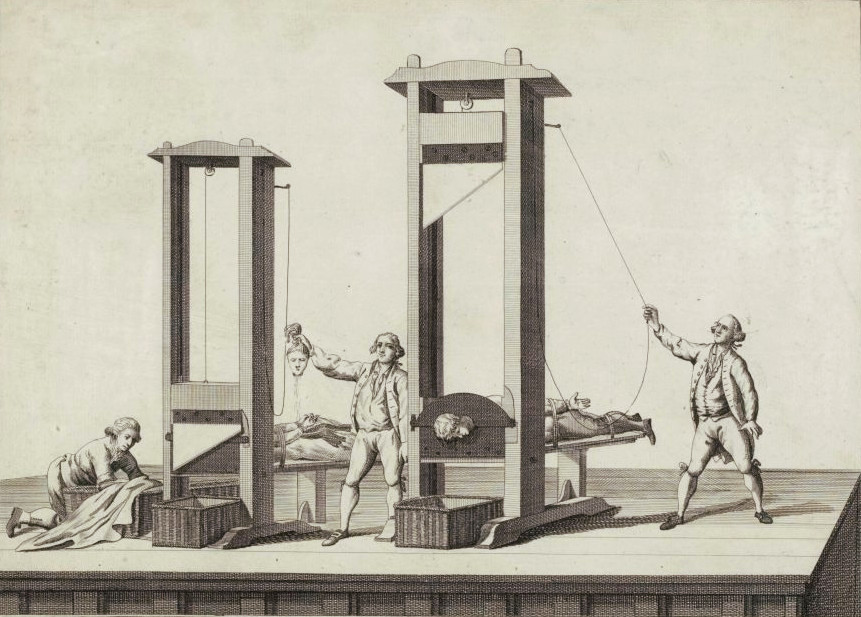
Guillotine, Musée de la Révolution Française

 The Monster Ants

Niels Hav wonders about ISIL and life on our planet

“I have the feeling that we small
monster ants are alone at home
on this mystical planet.”

The universe consists of 100 billion galaxies; our galaxy is just sea spray in the cosmos. If there are sentient civilizations on just a millionth of those planets we are far from alone. But what is going on here on Earth right now?

Recently I attended a demonstration in Copenhagen against ISIL. It was raining, as it always does in Denmark when something important is happening, but there was a decent attendance even so. Without flags or proclamations, we walked soberly beneath our umbrellas through the city while the rain poured down – walked in solidarity with the victims of these benighted fanatics. On our way I talked with a pair of Danish women of Turkish background. “We are against what is happening,” they said. “To behead people is against Islam, it is a French invention.”

True enough, during the French Revolution the guillotine was industriously employed. Executions developed into public entertainment, hysteria took over, and the revolution was drowned in blood. Continue reading

Posted in QR Home | Tagged , , , | Leave a comment

Pretending Wall

crumbling-wall

     Pretending Wall

He made a show of spitting on his hands;

he had a trowel, a hammer, and a tape,

and eyed the ground as one who understands

the way a wall might possibly take shape.

He didn’t dig a trench or fill with stone,

he didn’t even stake a line with string;

but while he talked to someone on the phone

he scuffed a crooked boot-wide path-like thing.

He kicked them into rows then, brick by brick —

it looked like he had never heard of math —

he’d sometimes give the dirt another kick

along his crooked and unlevel path.

It might have been his girlfriend or his bank,

but on he talked as back and forth he walked:

He’d move one brick, then give his hat a yank,

or wipe his face, or gesture as he talked.

And then the mortar – one place way too wet

another dry as if it were unmixed.

He tells me not to worry — it’ll set

as well as all the others he has fixed.

Unconsoled, I watch it as it grows:

he jams in legos, rocks, and broken wood

to try to even out the ragged rows,

but it’s not even close to being good.

“Being any good?” He gave a stare,

surprised to be confronted with such gall.

“Whatever structure that I may declare

to be a wall, it thus becomes a wall!”

At least two follies stand there, his and mine,

along that ugly length of anti-art:

There’s his incompetence’s little shrine,

and how I could have ever let him start.

Poem by MARCUS BALES who lives and works in Cleveland, Ohio

Posted in QR Home | Leave a comment

America, Your Benefactor is Never the State

Leviathan_livre

America, Your Benefactor is Never the State

Ilana Mercer sides with the market

The market place brings plenty; the state does the opposite. Yet not a day goes by when consumers, ignorant of the forces that feed, clothe, cure, employ, entertain them and innovate for them, don’t demand that those who’ve done nothing of the kind – the McCains, Obamas, Bushes, Clintons of the world – proceed with force against those who do nothing but.

Expect the anti-Walmart jousting to begin, because Walmart has done it again. To fill the need created by the Obamacare wrecking ball, Walmart Stores, Inc., is venturing into the business of providing primary health care. For $40, the price of a copay (in an Obama-mandated, subpar, healthcare plan), “you can walk into a Walmart clinic and see a doctor.” It’s “just $4 for Walmart U.S. employees and family members.”

Via Market Watch:

“On Friday, a Walmart Care Clinic opened in Dalton, Ga., six months after Walmart U.S., the retailer’s biggest unit, entered the business of providing primary health care. It now operates a dozen of clinics in rural Texas, South Carolina and Georgia and has increased its target for openings this year to 17. … A typical retail clinic offers acute care only. But a Walmart Care Clinic also treats chronic conditions such as diabetes. (Walmart U.S. also leases space in its stores to 94 clinics owned by others that set their own pricing.)”

“It was very important to us that we establish a retail price in the health-care industry because price leadership matters to us,” said Jennifer LaPerre, a Walmart U.S. senior director responsible for health and wellness, in an interview. Hear, hear!

The argument against Walmart presses its case with an impressive array of economic fallacies. Typically, the critic – an example is “The High Cost of Low Prices,” in The American Conservative – does nothing to trace the mysterious mechanism by which Walmart is said to impoverish. By offering “the lowest possible prices all the time, not just during sales”? What precisely is the economic process that accounts for Walmart’s ability to “expel jobs and technology from our own country”? Competition? Offering a product people choose to buy?

“Protecting the home market,” which is what The American Conservative’s writer advocates, is to the detriment of consumers. It forces them to subsidize less efficient local industries, making them the poorer for it. To keep inefficient industries in the lap of luxury, hundreds of others are doomed to shrink or go under.

The writer also froths at the mouth over “the teenage girl in Bangladesh … forced to sew pocket flaps onto 120 pairs of pants per hour for 13 cents per hour.” It sounds dreadful. However, the economic reality is this: Walmart is either offering higher, the same or lower wages than the wages workers were earning before its arrival in Bangladesh. The company would find it hard to attract workers if it was paying less, or the same as other companies. Ergo, Walmart is a benefactor that pays the kind of wage unavailable prior to its arrival. More materially, if the entrepreneur were forced to pay workers in excess of their productivity, he would eventually have to disinvest. What will the Bangladeshi teenage girl do once Walmart departs?

Even the Hollywood “Idiocracy” is hip to the spontaneously synchronized order that is the free market. Just for a change, the feminist lobby is moaning about the movies and its members’ representation therein. By Variety Magazine’s telling, “[Female] characters are still significantly under-represented on the big screen. … The numbers for minority females are even lower. African-American female representation on screen [has] climbed to 14 percent, from 8 percent in 2011, but [is] down from 15 percent in 2012.”

The presence of minorities in movies often signals a two-hour long, oppressive racial lecture. Most movie-goers are no more inclined to turn to “12 Years A Slave” for fun, than they are to subject themselves to Oprah Winfrey and her M.O.P.E. (Most Oppressed Person Ever) “Butler.”

Anti-man moaning notwithstanding, the general public must be on to this, because it is quite clear that Hollywood is giving viewers what they want to see: men in lead roles. If film executives listened to the feminist lobby, rather than to the demands of consumers – the industry would go under.

Alas, most liberals (and that includes “conservatives” aplenty) are foolish enough to lump business with government as an eternal source of disappointment to Americans. Noodles Ron Fournier of National Journal:

“Steadily, over the past four decades, the nation has lost faith in virtually every American institution: banks, schools, colleges, charities, unions, police departments, organized religion, big businesses, small businesses and, of course, politics and government.”

As I type, I consume a plate of seven different fruits topped with nuts. Many of the ingredients on my plate are organic. These used to be exorbitantly priced; out of reach. But as demand for organic produce has grown, production has increased and prices have dropped dramatically.

Each day I give thanks to the businessmen who, against all odds, bring such abundance to market and provide such plenty. There is nothing in my home that comes courtesy of the blessings of bureaucrats. I guarantee that it’s the same in your home.

If you, like Fournier, fail to distinguish the blessings of the private economy from the blight of government – you deserve none of the former and all of the latter.


ILANA MERCER is a paleolibertarian writer based in the United States. She pens WND’s longest-standing column, “Return to Reason” and is a Fellow at the Jerusalem Institute for Market Studies. She is a Quarterly Review Contributing Editor. Ilana’s latest book is Into the Cannibal’s Pot: Lessons for America from Post-Apartheid South Africa. Her website is www.IlanaMercer.com. She blogs at www.barelyablog.com


Posted in QR Home | Tagged , , | Leave a comment

Our friends in the North

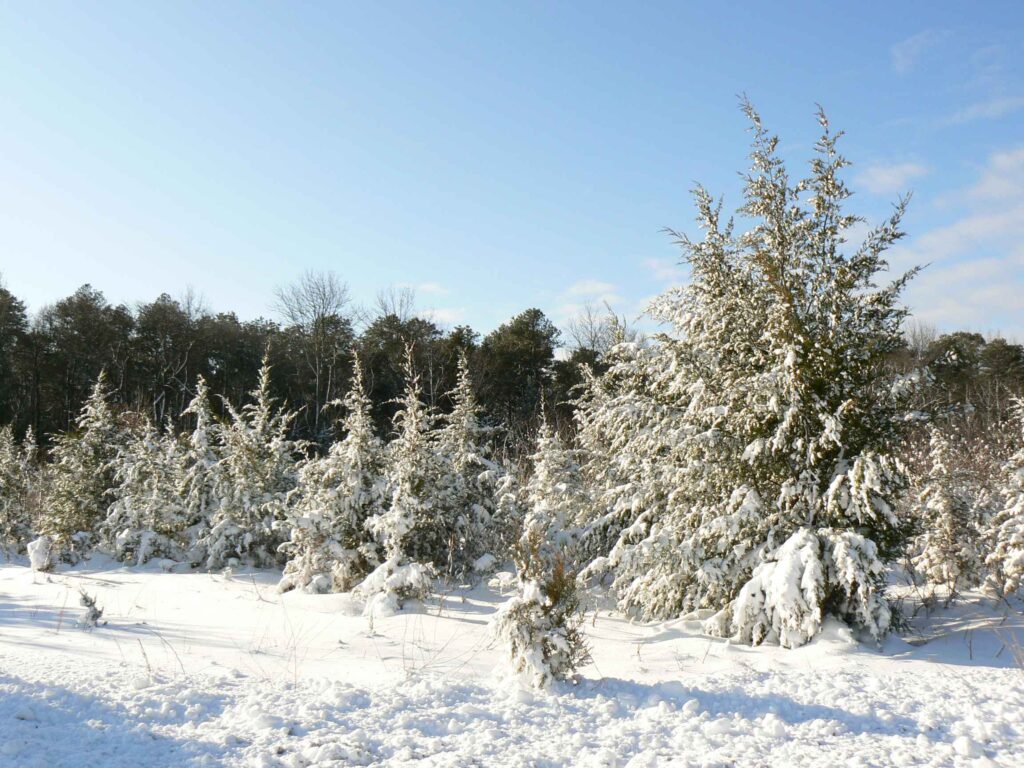
Snow covered pine trees, Wikipedia

 Our friends in the North

Endnotes, November 2014. A vision of Norway – the music of Johann Halvorsen * Remembrance – and the spirit of King Arthur from Elgar * A Bach pilgrimage in Kent.

The Estonian conductor Neeme Jarvi must be one of the busiest recording artists in contemporary classical music. Endnotes has covered many of the fine recordings he has made for the Chandos label – everything from Parry, Wagner and Johann Svendsen, to the symphonies of the 20th-century Swede, Kurt Atterberg. Returning to Scandinavian territory, Jarvi brings the Bergen Philharmonic Orchestra (one of Europe’s emerging ensembles) into the recording studio – in this instance, the Grieghallen in Bergen – for a cornucopia of fascinating, enjoyable, colourful pieces by the Norwegian, Johann Halvorsen (1864-1935). Halvorsen was a true romantic in music, a member of Grieg’s circle, and – in so many ways – a sort of alternative Grieg: offering us a Bryllupsmarsch (Wedding March), a Brudefolget drager forbid (Bridal Procession), Sorte Svaner (Black Swans – although swans are more associated with Sibelius), a Wedding of the Ravens, ancient Norwegian dances, rhapsodies, ‘Fairy Tale Pictures’ (Eventyrbillder, Op. 37), snowy scenes from the Nordic imagination and melancholy melodies of great touching tenderness. Continue reading

Posted in QR Home | Tagged , , , | 1 Comment

Replay – Last Orders – The desolation of quiet desperation

Bar-P1030319

Replay – Last Orders – The desolation of quiet desperation

Robert Henderson discovers that more may not be less

Last orders, main cast – Michael Caine as Jack Dodds, Tom Courtenay as Vic Tucker, David Hemmings as Lenny, Bob Hoskins as Ray Johnson, Helen Mirren as Amy Dodds, Ray Winstone as Vince Dodds: Director: Fred Schepisi

Last orders (released 2001) is centred around as starry a cast of British actors as you are likely to find in a film, namely, Michael Caine, Tom Courtenay, David Hemmings, Bob Hoskins, Helen Mirren and Ray Winstone. Often when a cast has so many heavyweight actors it just does not work either because the actors’ egos clash or the roles they have are too small for them. Not here. Probably because they are all actors brought up in the English repertory tradition they know how to play as a team.

Vic, Lenny, Ray and Vince are on a sentimental journey to scatter the ashes of their old friend Jack Dodds (Michael Caine) in Margate. The film is notable for being a story with solid English working class roots which does not involve crime, something of a rarity in modern British cinema. Jack was an East End butcher, Ray (Bob Hoskins) is a professional gambler and Jack’s best friend since they fought together in the second world war; Lenny (David Hemmings) is a still belligerent former boxer; Vic (Tom Courtenay) a quiet character who is an undertaker and Jack’s adopted son Vince (Ray Winstone), a car dealer whose real family perished in a wartime bombing.

Counterpoised to the four on the trip is Jack’s wife Amy on a journey of her own. For fifty years she has unfailingly visited her mentally retarded daughter June (Laura Morelli) in a home, while her husband could barely acknowledge the daughter’s existence, a fact which has tainted their marriage. The daughter is so severely handicapped she does not even recognise her mother. At the end of the film Amy decides that 50 years of visiting is enough and sees June one last time. The visit means nothing to her daughter but is part relief and part shame at the desertion for Amy.

On the journey to Margate, Vic, Lenny, Ray and Vince stop at various places which were significant in Jack’s life. They reminisce about Jack and the times they had together. This leads to flashbacks to various times in their lives and in the lives of Jack and his wife Amy. We see the characters in their vigorous hopeful youth before the Second World War and their subsequent messy way through their lives, lives full of disappointments and betrayals as well as friendship, love and loyalty. Whether intentionally or not, the depiction of England over the 60 years or so of the film’s span seems to be come greyer as time passes, the shabbiness and existential exhaustion of the four men as they are now mirrored in the England they live in.

As they travel they drink at various pubs old tensions gradually emerge and arguments break out, but these are superficially smoothed over and Jack’s ashes are scattered amongst a painfully forced sentimentality. By the time they have scattered Jack’s ashes Vic, Lenny, Ray and Vince are all diminished. The journey has not been about Jack but themselves. They have tried to fill their lives with significance but either circumstances or their own weaknesses and limitations have prevented it. The trip has shown them what they are. They are left only with a sense of unfocused regret, a sense that not only has their friend Jack gone but something from themselves.

Little needs to be said about the acting other than it is uniformly first rate with Caine producing one of his very best performances and Helen Mirren wonderfully sympathetic as Jack’s wife.

More than a century and a half ago, the American idealist Henry Thoreau said “Most men lead lives of quiet desperation and go to the grave with the song still in them.” That is as true today as it was when Thoreau said it, although the desperation will have different causes and effects in different times and places. Last Orders is a study in such desperation, of people living lives which are not in their control or even worse potentially within their control but not controlled.

ROBERT HENDERSON is QR’s film critic

Posted in QR Home | Tagged , , , | 1 Comment

A drama of the everyday

Locke

A drama of the everyday

Robert Henderson relishes the return of the real

Film review – Locke, 2014. Locke, main cast – Tom Hardy as Ivan Locke, Ruth Wilson as Katrina (voice), Olivia Colman as Bethan (voice), Andrew Scott as Donal (voice), Ben Daniels as Gareth (voice), Tom Holland as Eddie (voice), Director: Steven Knight

Perhaps the rarest of films are those which make gripping dramas out of ordinary life. This is somewhat surprising because everyday existence does not obviously lend itself to drama. Locke is a film which shows how wrongheaded this idea is as a general rule by producing a truly gripping film from the everyday.

The film depicts a few hours in someone’s life filled with the sort of things which could happen to anyone. Apart from a minute or two at the beginning and end of the film the entire on screen action consists of the eponymous character Ivan Locke (Tom Hardy) in his car driving and making and receiving phone calls about his work and personal life. It is just a hideously bad day at the office with a messy private life looming over it. There is no disaster to keep up the tension, just the net of circumstances remorselessly closing.

Sounds tedious and limited in dramatic scope with precious little opportunity for character development? Don’t you believe it. Locke is in circumstance hell. Everything conspires to put pressure on him. Worst of all he knows in his heart of hearts that he is the author of his misfortunes. He is a foreman in charge of a building site. The next day he is due to supervise a huge concrete “pour”, that is huge amounts of wet concrete poured on site to create a large structure, a very demanding technical task. But Locke will not be at the “pour” because he is headed for a hospital where a woman (Bethan) with whom he had a one-night-stand is about to give birth to his child. To add to these worries his wife Katrina knows nothing of the other woman or impending child and she and their son are expecting him home where Locke and his son are supposed to watch a football match together.

So far so traumatic, but it gets far worse. Locke rings one of his workers at the site to get him to do the last minute checking he should have done and to prepare him to oversee the “concrete pour” in Locke’s place. But the worker Donal has a drink inside him and does not feel confident of taking Locke’s place. Locke rings Bethan to say he is on the way. He speaks to his son and wife saying he will not be home in time for the match. He discovers that a road he needed closed to allow the concrete to be delivered has not been closed. Locke sorts it out. He speaks to his boss who pleads with him to be there to supervise the concrete “pour” and eventually fires him when he realises that Locke will not be at the site to supervise the “pour”.

As Locke drives he also has the stress of breaking the news to his wife that he is going to see a woman who is having his child and tries desperately to explain to his son why he will not be home. After several phone calls his wife decides to throw him out of the house.

Why has he sacrificed so much for a woman he barely knows and a child he has not wanted?  It transpires that Locke was abandoned by his father soon after his birth and did not meet him until he had reached adulthood and with whom he never came to terms when they did meet as adults. This provides the impetus for Locke behaving in this quixotic way because he does he does not want this child to be deserted by its father. His uneasy relationship with his father also provides a hook for Locke to have imaginary conversations with his father while he drives. These are the only weak and sentimental things in the film. They would have been better left out and the circumstances left to speak for themselves. But they are a small blemish.

As the seeming never ending barrage of stress hits Locke he keeps his cool and provides solutions to the practical difficulties he faces but fails with his relationships. By the end of the film Locke has lost his wife, his home and his job but gained a son and a resolution in his mind of his relationship with his father.

The role of Locke is as demanding a part as could be imagined because the character is centre stage throughout and has to carry the film utterly for the rest of the cast, which includes some fine actors, cannot in the nature of things make much impact because they are simply disembodied voices who appear only in short bursts. Hardy carries it off immaculately. In fact, this film is made for him because he has great screen presence and exudes self-possession.

This is a film which shows that a silk purse can be made out of what looks like a sow’s ear when the basic premise is baldly stated – highly recommended.

 ROBERT HENDERSON is QR’s film critic


Posted in QR Home | Tagged , , | 1 Comment

History for Sale

Rag and Bone Man

Rag and Bone Man

History for Sale 

Bill Hartley salvages some buried heritage

A community may lose its sense of place and cohesion for various reasons. Economic decline or changes to the built environment are two of the most obvious. Sometimes though it can be brought about by the destruction of history: physical symbols that should connect people to their past.

In West Yorkshire there is a former mill town in what was once known as the Heavy Woollen District. This was far from being the quality end of wool textiles production since the town specialised in shoddy; the recovery of waste cloth which could be stripped and then rewoven. People old enough to remember the Rag and Bone man will have witnessed the first stage in the process of creating cloth made this way.

This business at the bottom of the wool textiles hierarchy helped the town to expand during the nineteenth century leaving former farm buildings marooned among houses built for textiles workers. Inevitably there was a coal mine, spilling its waste down a slope which created a barrier to further expansion. Then in the early 1880s came a peculiar twist in an otherwise standard tale of Victorian industrial expansion. Despite the best efforts of the colliery to wreck local drainage a mineral spring was discovered and bizarrely an entrepreneur decided this would be the ideal location for a spa.

Unsurprisingly New Harrogate was a failure. It would have been difficult for those taking the waters to avert their gaze from a colliery rapidly gobbling up the remaining farm land for waste disposal. Plus shoddy is the only raw material in weaving which stinks and lots of it was stored close by courtesy of the Victorian Rag and Bone men.

Weaving and coal mining attracted religious non conformism and it was this not the eventual disappearance of the two local trades, which delivered a blow to the community. The county is still littered with large structures which remind us of the size of the congregations these places used to attract and the Baptist church opened in the 1870s was no exception. Next to it a school was built to serve the growing population and so two of the focal points for an industrial community were established. Eventually the school moved to new premises but the Baptist church remained, becoming harder to maintain as the congregation shrank.

The Baptists were on the lookout for smaller and more convenient premises which eventually they found. The old church stood empty for a while until the demolition men moved in. Such buildings are rich in what is called architectural salvage: dressed sandstone, aged brick and of course well seasoned pews polished by generations of worshippers. Bits of it are probably in barn conversions and the like all over the county. A shrewd operator can negotiate a decent deal with the demolition people in exchange for all this salvage and several businesses in West Yorkshire operate to this day on what came out of such buildings.

Baptist Chapel

There was a problem though before the Baptists could finally shut up shop: the churchyard next door. It started to be filled during the high water mark of Victoria’s reign when there was the most money to be made from shoddy and coal. This was reflected in the size and grandeur of some funerary monuments. Lofty obelisks topped by huge urns, box tombs of quasi medieval design and crosses made from silvery granite rather than the local gritstone. Crowded in among these were the family plots with large oblong tombstones designed to be filled by the epitaphs of future generations. And making up the numbers so to speak were the humbler memorials of the other ranks, not just the elderly deceased but victims of industrial accidents and those sad records of infant mortality.

The story came to an end in the 1970s when the last interments were made. Recently enough one might think to ensure the churchyard retained its link with the living. Today however it is gone. Even more strangely the site is covered by housing; dull ‘executive’ designs, monuments in their own way to the last building boom before the crash.

The question is how can a churchyard still in use so recently be obliterated? Under the Disused Burial Grounds Act (1884) which was amended in 1981 it is a requirement that notices be displayed where human remains have been buried in the last fifty years, so that relatives of the deceased may object to any change of use. Interestingly the chief ally in getting round this requirement seems to have been our old friend Health & Safety. The church authorities whilst declaring that no-one ever visited the place (vehemently denied by local people) decided that the churchyard needed to be ‘made safe’ in case one of those massive Victorian monuments might suddenly topple over onto a non existent visitor. However they went further and images are to be found on the internet showing how even modest markers were levelled and smashed. It is a pitiful sight which under different circumstances would have been described as vandalism. What it achieved was the elimination of markers; focal points for the relatives of the deceased, so it was hard to say with certainty where a grave was actually situated. In effect those with an emotional link to the churchyard were defeated at the outset. Without posting a notice of intent the law could be it seems be broken and relatives of the deceased presented with a fait accompli. Articles in the local press told poignant stories of grandparent’s whose graves had now gone, local worthies including a former mayor and even war graves, markers commemorating those who had made it home only to die from wounds.

Following a sale to developers the final act was presumably to clear the remains which could then be disposed of like agricultural waste. A church with a mission to look after the spiritual and moral welfare of local people took this dishonest approach to removing an inconvenience and with it the history of a community.

The story ends with a final horrible irony. Destroy a churchyard and the boundaries go too. The developers were less than thorough and missed a bit. According to another report in the local press there are still 43 bodies down there, with houses and gardens on top.

WILLIAM HARTLEY writes from Yorkshire

Posted in QR Home | Tagged , , | Leave a comment

Dying for the President’s Deadly Dogma

Ebola Virus

Ebola Virus

Dying for the President’s Deadly Dogma

Ebola – Ilana Mercer barracks Obama

Africa, like Trayvon Martin, is extremely important to Barack Obama. “If I had a son, he’d look like Trayvon,” the president said famously about the slain teenager.

The president expressed his fellow-feelings about the continent, during the August 4-6 U.S.-Africa Summit, this year: “I do not see the countries and peoples of Africa as a world apart; I see Africa as a fundamental part of our interconnected world – partners with America,” he said.

With the wealth of the most industrious, generous and gullible taxpayer at his disposal, the president believes that it is his duty, first, to stop the Ebola epidemic in West Africa, when, in fact, the duty of the president of the United States is to those who pay the piper.

America’s governing elites habitually betray their constitutional and fiduciary obligations to their constituents. The head of the Centers for Disease Control and Prevention, Tom Frieden, and the director of the National Institute of Allergy and Infectious Diseases, Anthony Fauci, claim that restricting entry into the U.S. from the Ebola ground zero is without merit “from a public health standpoint,” and will only worsen matters.

For whom, pray tell, Dr. Fauci, for American nurses? Cui bono Dr. Frieden?

Contrary to the Frieden-Fauci-Obama obfuscations, it is quite possible to both stop at-risk individuals from entering the U.S., as well as assist in curbing the contagion in the hot-spot countries of Sierra Leone, Guinea and Liberia. The two are not mutually exclusive. While the U.S. welcomes, on average, 150 daily travelers from West Africa, dozens of infection-free African nations have done the sensible thing to contain the spread of the dread disease. The most economically advanced of them, South Africa, has “restricted entry for all non-citizens traveling from Guinea, Liberia and Sierra Leone.”

OBAMA’S OBFUSCATIONS ABOUT EBOLA

Back in South Africa of the mid 1990s, I trained and volunteered as an HIV/AIDS counselor. My last client, before I decamped to North America, was a lovely gay man who had just been diagnosed HIV positive and whose CD4-cell count was already low. He wept in my arms for hours.

My point: comparing HIV/AIDS to Ebola, as the Frieden-Fauci duo has repeatedly done, amounts to politically correct theatre. For one thing, it is not easy to contract the human immunodeficiency virus. For another, the virus is relatively fragile outside the host. Viral load (or titer) factors into the chances of transmission. It is both easy and cheap to prevent infection. HIV infection rates in Africa have little to do with a lack of resources. Rather, they are associated with unprotected sex irrespective of ample outreach and education.

Ebola is the opposite. It is not difficult to get. The virus doesn’t easily destruct outside the body. And it is hard to stop an Ebola epidemic in West Africa because of the magical thinking that pervades the culture and a lack of infrastructure.

Front men for the CDC and offshoots have obfuscated aplenty about Ebola. However, Dr. Barack “Obola” takes the cake. The president has managed to dispense Ebola prescriptions in direct contradiction to even the CDC’s breezy platitudes: “You cannot get it through casual contact like sitting next to someone on a bus. … Ebola is not spread through the air like the flu. … You cannot get it from another person until they start showing symptoms of the disease, like fever. … You cannot get it from someone who’s asymptomatic.”

In fact, “casual transmission in close quarters, in public spaces is quite possible.” Spending a protracted time within three feet of an infected person is not without risk. Flecks of “viremic” spittle sprayed in your direction from a coughing or animated interlocutor on a bus ride could result in transmission.

CONSPIRACY OR JUST GOVERNMENT SOP?

Be it for Jihad or germs, the government prohibits what I’ve termed rational profiling. As to Jihad, airport personnel screen everybody alike, grandma from Nebraska and Abdullah from Mecca. As to germs, the CDC advises screening for symptoms of the Ebola disease. If a traveler is “asymptomatic,” CDC guidelines, given with government imprimatur, prohibit the detention or quarantine of nationals or residents from the “hot zone” countries.

All this is in the service of the deadly dogma of political correctness.

As a Liberian living in the devastated capital of Monrovia, Patient Zero (Thomas Eric Duncan), who brought Ebola to the U.S., posed a grave risk to Americans – as do all residents and nationals of countries at the epicenter of the outbreak.

Writing for the Canadian Centre for Research on Globalization, Dr. Jason Kissner hypothesized that the U.S. government refused to isolate Duncan on the basis of his Liberian and Monrovian origins, because it doesn’t want Americans to associate country of origin with an Ebola risk factor, as this could “conceivably completely destroy the One Party State’s immigration reform goals – especially given psychological associations with mystery viruses and other illnesses believed to have arrived from south of the border.”

While I am no conspiracy theorist – never have been – the theory proffered by Kissner seems plausible, if not by design at least by default. Reflexively if not intentionally, government operatives work to retain their positions and increase their sphere of influence. To that end, justifying their mission – open borders and multiculturalism, always – is necessary at all costs.

GRATITUDE BREEDS CONTEMPT

The index patient aforementioned received exorbitantly expensive, tax-funded care from the dedicated healthcare providers of Dallas’ Presbyterian Hospital, two of whom are fighting for their lives. Nevertheless, the family of the late Mr. Duncan has accused his benefactors of racism. Had he survived, Duncan’s own government, promised the Liberian ambassador to the U.S, intended to sue him for lying to Liberian authorities about his exposure to Ebola on a perfunctory screening questionnaire.

Those of us who hail from Africa proper know how conservative Africans truly are. Most Africans would find American moral relativism repugnant. Ambassador Jeremiah Sulunteh has condemned Duncan’s deception. “Our hearts are broken to witness this reckless behavior on the part of Duncan,” lamented the Liberian diplomat, who had nothing but praise for “a country that has been there for Liberia all the way.”

Let’s see, in the capital Monrovia, American marines are mounting a heroic response to the Ebola outbreak. Stateside, in Maryland, our scientists are developing a vaccine. The Brits will soon land in Sierra Leone with men and medical materiel of their own. Germany, too, is galvanizing its formidable resources. Founded by French physicians, Doctors Without Borders is second to none in alleviating Third World misery.

Yes, Ebola will be defeated by a munificent West. That’s whom Africans must thank.

Come to think of it, Obama owes a lot to the same, much-maligned “system.” From financial aid (for foreign students) to an affirmative-action placement in Harvard Law School, Barry Soetoro* is a beneficiary of America’s largesse. Obama didn’t build what he has; he got it by grant of government privilege.

But like the family of Thomas Eric Duncan, Barack Obama repeatedly demonstrates that gratitude breeds contempt.

*EDITOR’S NOTE: Lolo Soetoro was Barack Obama’s sometime step-father

October 17, 2014

ILANA MERCER is a paleolibertarian writer based in the United States. She pens WND’s longest-standing column, “Return to Reason” and is a Fellow at the Jerusalem Institute for Market Studies. She is a Quarterly Review Contributing Editor. Ilana’s latest book is Into the Cannibal’s Pot: Lessons for America from Post-Apartheid South Africa. Her website is www.IlanaMercer.com. She blogs at www.barelyablog.com


Posted in QR Home | Tagged , , , , | Leave a comment

EpiQR – Summer Lodge Hotel and Restaurant, Evershot

EpiQR

Epicurean expeditions

… with Em Marshall-Luck

Exterior1-1

Summer Lodge Hotel and Restaurant

Evershot

There are few establishments that I have regretting leaving as much as Summer Lodge Hotel and Restaurant, an unassuming and cosy gem tucked away in rural Dorset, which combines a relaxed atmosphere with charming surroundings and the finest of foods.

The hotel is set in Evershot (a traditional village which has the blessing of having been able to cling on to all its amenities including pub, school, church and post office), and is approached by a short drive lined with flowering hydrangeas. The cream buildings that form the hotel, with climbers trained up the walls, have quite a homely feel about them – the fact that they are slightly less than pristine adds an appeal. The initial welcome is very warm, and the reception area itself is more informal and inviting than polished and swanky, most likely better suiting a hotel that has such a laid-back air. We were taken to our room – actually a house at the edge of the gardens with sitting area, filled mainly in our case by a cot (there was also a baby gate at the top of the staircase so this is clearly a child-friendly house); small bedroom; double bedroom; and bathroom. The bathroom was probably the largest room and provided quite a stark contrast to the other rooms. All modern, pristine and smart, with huge monsoon shower, free-standing bath, modern beige-coloured tiling and mirrors everywhere (including on the slopes of the ceiling), the bathroom was let down only by the linoleum fake-tiled floor and the exposed pipework under the sinks. The other rooms on the other hand are not sleek, swish and modern, but old-fashioned, homely and just very slightly worn – a fraying carpet here; an obvious stain there. Fabric wallpaper in either a traditional tweedy green, as in the small sitting area, or dark red, in the bedrooms, lends a further (not unwelcome) antiquated atmosphere. The furniture is dark wood antiques – including a large desk in the bedroom and plenty of drawer and wardrobe space, although the room itself is quite small and there is otherwise not a great deal of space. All that one would expect from a top quality hotel is also present – iron and ironing board, safe, dressing gown, slippers and rather lovely aromatic toiletries (and, unfortunately, televisions – one in the bedroom and one in the sitting area). The overall sensation of being stationed in this house is definitely of being cloistered, but with a slightly exciting sense of a cosy isolation – as if in a treehouse padded with comfortable cushions and duvets far away from any other being.

The dining room also has a rather old-fashioned, refined feel – smart but comfortable and familiar, with its fabric floral and bird-themed wallpaper in beige, red and pinks; pink and red patterned carpet; red chair coverings over dark wood chairs; and ribbons forming a cross on the white tablecloths. The floral theme is continued above one with paintings of individual flowers pasted onto the white ceiling. Giant terracotta horses are mounted on the low wall dividing the two sections of the dining room, and the tables are dressed with silver ornamental pheasants as well as plates bearing a pheasant and the hotel name. There are old paintings of cockerels on one wall; botanical line drawings of fish and fungi on others. Large windows look out over the gently landscaped gardens, carefully tended to provide bursts of colour, and with rather appealing hammocks and swinging benches. Mirrors also abound (rather tarnished), and lighting is provided by wall-mounted pairs of lights with dark red shades set on bronze moulded lozenges. The service is polished – formal and attentive. We were pleased and touched by the great and friendly care provided with regard to young master Tristan, who was carefully buckled in to the high chair by the French waiter and then surrounded by cushions for comfort. The menus were provided and explanations of them offered at the same time.

SL_Restaurant_039_S

There are four different menus that one can choose between – the “surprise”, where one is surprised by six mystery courses; the tasting menu of six courses (accompanied by selected wines if one desires); the à la carte and the set menus. The set menu provides good value, with a choice of one of four dishes per course, while the à la carte offers a choice of around six dishes per course – including a fair amount of fish and seafood as well as a vegetarian option. My starter came from the set menu; the rest of our choices from the à la carte, although we were severely tempted by the tasting menu.

Amuse-bouches appeared shortly – roasted tomato and goats cheese soup, which was rich and creamy if not particularly intensely flavoured; rather moreish cheese straws, hummous on toast, and a delicious feta and pea concoction on a spoon. These were nicely presented, and offered a very pleasant range of different textures and flavours: pleasing. A second amuse-bouche, following soon after and comprising a flavoursome salmon mousse accompanied by celeriac, was a very pleasant surprise.

There was a good choice of bread rolls – granary, onion, goats’ cheese and olive – all fresh, and with two types of butter.

Wines were being chosen for us from the extremely extensive and highly impressive wine list; proper red wine glasses were brought, and we were offered a 2012 Bouchard Finlayson “Galpin Peak” Pinot Noir from the Western Cape, South Africa. It was cherry-coloured and boasted a nose which spoke of a maturity that it had not gained in physical years. Dark notes predominated – ash and oak and a little tar. The taste was also impressive – an initial burst of red and dark berry fruits including red currant and cherry, followed by a lingering aftertaste of the more mineral elements, including ash, tar and leather. The wine was rich and smooth, its taste also indicating the maturity initially gauged by the nose. Quite heavy-bodied for a pinot noir, it was altogether a pleasant, rounded and enjoyable wine.

I then commenced with a ham hock terrine, which was appropriately meaty and full-flavoured – its innate saltiness tempered by the accompanying apricot. My husband’s slow cooked beef rib was exquisite – melting and immensely flavoursome, with a marbling of succulent fat. It was served with fluffy potato balls and a pesto sauce, both of which complemented the beef well.

Main courses were equally good – my Dorset lamb loin was very tender and with a full and characterful taste. It was served with a minced vegetable accompaniment of cabbage, carrot and bacon – although the bacon didn’t add the extra kick I was hoping for. The second lamb element of the dish was a mini shepherd’s pie. With a base of wonderfully intense, melting braised lamb shoulder and a deep and thick topping of immensely creamy potato, this was a dish that worked superbly well; and although the individual items on the plate didn’t look particularly generously-portioned, the whole left one more than replete. Mr Marshall-Luck’s duck was served medium and the tender and rich breast slices shared the plate with crunchy spring rolls and mange tout, with a slightly Chinese-inspired sauce.

A pre-dessert followed the main courses – a crème brulée with very silky, creamy texture, with wineberries. This was a pleasingly different and unusual way to cleanse the palate – a far more delicious and appealing option than the traditional sorbet!

I had felt that the dessert choices were slightly limited in range, and there was nothing particularly intense or chocolate-orientated (the available options were mostly fruity – soufflés and cakes and suchlike) so I opted for the cheese board instead. And, gosh, I was pleased I did so, as I thereby encountered probably the best cheese board I have ever experienced outside of top London restaurants: a choice of 27 cheeses, 26 of which come from south west England, and only the Stilton from outside that area (very impressive). I chose a selection of five goats’ cheeses ranging in flavour from lemony and peppery, through intensely-flavoured and crumbly to grey and gooey. They were served with a traditional choice of accompaniments, from grapes and celery (de-stringed for convenience) through to walnuts and biscuits. So satisfying were these cheeses that I even managed to forgo a dessert wine from their superb list!

Although my husband rather regretted not joining me in the cheese board when he saw the gloriously extensive selection being wheeled over, he nevertheless pronounced his strawberries and cream very good: fresh and an appropriately light ending to a very satisfying meal.

Very good leaf tea and decent filter coffee of a good strength and rather moreish petit fours were taken back to our room, as we had already over-stayed by well over an hour the cut-off time by which children need to have absented themselves from the restaurant. (It should be noted that the staff were very good about this and we never once felt that there was any pressure upon us to leave – probably helped by the fact that Tristan, though then only all of five months, is already used to restaurants and behaves as perfectly as a young gentleman should.)

Breakfast is served in the dining room again, but spills out into the conservatory and even to the wrought-iron tables outside in the garden, surrounded by roses. Two minor slips were made by the staff, firstly by failing to bring hot water to warm up Tristan’s bottle when requested and secondly by omitting the mushrooms with my husband’s sausage, bacon and eggs – yet these were only tiny blemishes in an otherwise gratifying breakfast. A buffet offers a choice of cereals, smoked salmon, fruit salads, fresh juices (including a rather lovely pressed local apple juice), and meats and cheeses (including a spectacular air-dried ham), whilst the menu then presents hot choices, from the traditional English, through smoked fish and Eggs Benedict to sweet options such as pancakes, waffles and even peanut butter and jam French toast with crème fraiche. The food itself was very good – my scrambled eggs were light, fluffy and properly cooked; the bacon was wonderfully flavoursome (one was offered a choice of back or streaky), and the roasted tomatoes were also worthy of particular mention.

Breakfast was followed, by me, for a trip to the spa, while my husband and Tristan enjoyed the verdant gardens. The spa is housed in a glasshouse in the substantial vegetable garden, with its main feature an almost irresistibly inviting swimming pool – elegant and sunny and a deep blue. The spa is on boutique-y side (rather small yet intimate) and staff are friendly and professional, although the treatments rooms feel more clinical than cosy. I tried a hot stone massage which left me feeling deeply relaxed and unknotted.

We were enjoying ourselves so much that we failed to drag ourselves away at the appointed time and just happened to have to stay on for lunch – a leisurely affair taken outside surrounded by flowers. We commenced by admiring the tremendously impressive bar list (with literally hundreds of spirits from all over the world – from Japan through to the Czech Republic, with particularly extensive single malt and cognac lists) in the elegant drawing room , with its duck egg blue theme, large portraits and mirrors, comfortable and slightly faded armchairs and settees and open fireplace. Then we moved outside into the late summer sun for a substantial ham sandwich, and an excellent goats’ cheese salad along with delicious chips and a pint of local cider for me. It was the perfect conclusion to one of the most relaxing stays I’ve had the good fortune to experience for many a year.

Em Marshall-Luck

Posted in QR Home | Tagged , | Leave a comment

Elmore’s Farm

abandoned-farm-building-rural-decay

Elmore’s Farm

By Luke Torrisi

 The dogs’ chorus draws me to the night sky,

I look up to see the crushed quartz underfoot

Mirrored in the clear black. A ring of onlookers

From the heavens, like an ancient audience.

They surround this earthen altar,

Faintly verdant, streaked with rust,

In the blue light of Mani.

Stepping out from the void, as if disturbed,

Are the gnarled joints and split limbs

Of the oldest residents. Wind sculpt effigies.

What backs have they seen broken?

How many men have they measured?

Whose remains do they shade from the merciless

Beat of Sunna’s drum?

Quiet, now so quiet. And in the still crisp air,

I ask myself – did I hear a calling?

Was that a voice whispered from the earth itself?

I stoop to pick up a glinting shard – the tittering earth-crunch

Incessant. My every move – even a pivot – announced.

Sharp yet smooth – catching the slightest of light

It’s small but ancient curves amuse my thumb.

Words not hushed but echoed,

Strong, indeed determined to be heard

Reverberating through the ages, refuse to leave me.

Is my place in this sliver of vastness? Should my hands

Loosen the crumbling bronze? Splinters, spurs, stings-

Not even housemaid’s taunts out here. The rain furrowed

Driveway carries my eye to its craters.

A barely standing shed of discarded wood sighs.

A breeze, a rusted clang. Winged specks are cast like grain.

Will the dendrite watchers of the land oversee my passing?

The cluttered silhouettes of lives past hang from the distant

Roof of an unwalled lean-to, too precious to discard.

Dented iron, pitted brown metal, flaky ash-grey handles.

Dangling remnants – the inheritance I leave?

The dry-wind brushed fences of picket and wire,

Encompass the testing paddocks. A tough bronze skin

That only gives way to wilful heaving of diesel coughing iron.

What mercy will Freyr grant to any channel hewn

Into this parched firmament so divided from the sky’s tears?

The children’s window, tapped by the fluttering flecks.

I feel them sleeping.

In the common good of this soil I shall sow their strength.

In the bright solar spirit of tomorrow these fields,

Shall receive new life, as new life from old springs in me.

To acquiesce is not to lose one’s self, to fail one’s being,

It is to become, to return to one’s essence.

In this ochre and dusty green I have found my polis

A citizen returned from his Odyssey.

The dogs snap me back to the present moment.

Are the sirens calling me to the rocks once more?

Roused from my reverie, the dark shades of doubt

Whisk about me. Loki’s bag of tricks,

Once loosed an enchanting promise of perfection,

So many dance intoxicated to its tune – perhaps me?

My fate lies now in this ghost-soaked land.


Luke Torrisi is a legal practitioner and the host of Carpe Diem, Sydney’s only explicitly Traditionalist radio programme

Posted in QR Home | Tagged , | Leave a comment