The Categorical Imperative


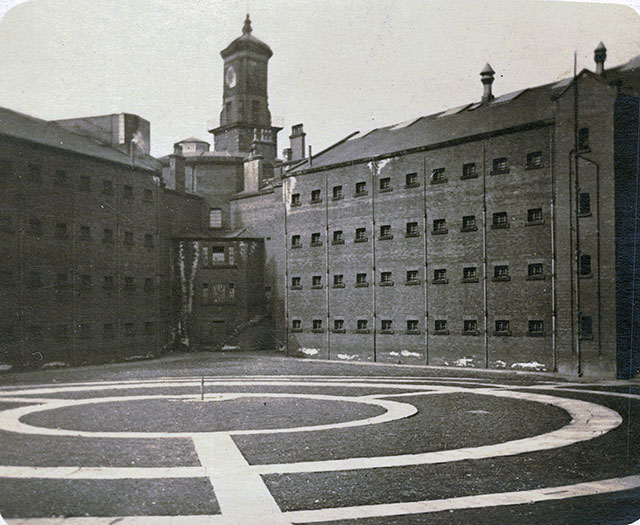
HM Prison Wakefield, sometime home of prisoner Charles Bronson, credit Wikipedia

       The Categorical Imperative,

by Bill Hartley

For many years our prison system has operated on the basis of incentives. A prisoner who behaves himself can expect to earn remission on his sentence. For those serving longer periods of imprisonment, parole, also known as Release on Licence, may also be available. Part of this process involves engaging with the regime and actively preparing for release. If progress is made then during the course of the sentence the initial security category may be reviewed and downgraded. In turn, this may affect the type of prison to which the prisoner is sent. The majority of prisoners eventually move on to what are called Category C prisons; places not requiring the highest levels of security. What happens though, when an individual chooses custody as a career?

Periodically we are treated to a television documentary about some infamous criminal. These days those with real notoriety are thin on the ground or safely dead. There are a few left and the latest to get this treatment is Michael Peterson, better known to the wider world as Charles Bronson, though he has since changed his name once more. Peterson/Bronson wasn’t a particularly successful criminal since he was soon caught and imprisoned. The offences which actually got him into prison occurred decades ago. What makes him unusual is most of his subsequent crimes were committed whilst in custody. He is an institutional criminal, something that no prison system is designed to deal with.

Continue reading

Posted in QR Home | Tagged , | Leave a comment

The Pauline Corpus in Early Christianity

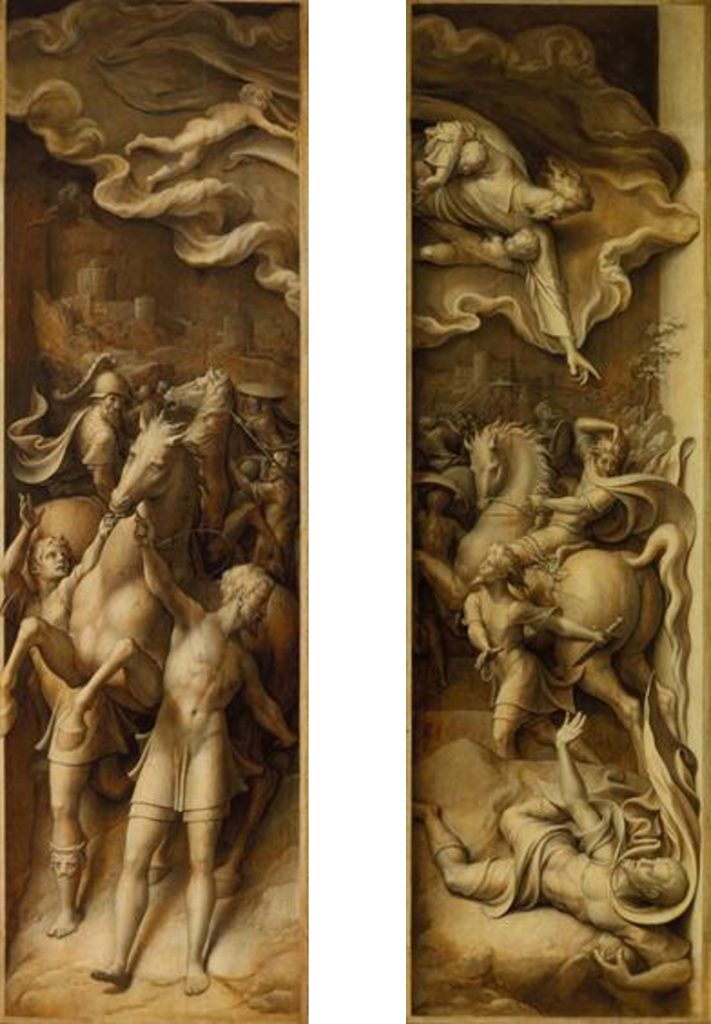
Work by Pieter Coecke van Aelst, credit Wikipedia

Benjamin P. Laird, The Pauline Corpus in Early Christianity: its Formation, Publication and Circulation. Hendrickson Academic (2022). Pp. i-xx, 1-371. $59.95. Reviewed by Darrell Sutton

Revisions of doctoral dissertations are not necessarily a pleasure to read. In this case, however, B.P. Laird (henceforth BPL) has published a useful contribution to Pauline studies. After an introduction that surveys what will follow, there are six chapters and three appendices. His writing is clear, although at times he contradicts himself, as he subtly does in the below quotation. Even so, his research in this book is founded upon a set of well-studied beliefs:

‘I will consider a large body of internal and external evidence which together supports the conclusion that at least three major archetypal editions of the corpus—those containing ten, thirteen, and fourteen letters—were formed and designed as early as the first century and certainly no later than the mid-second century. It will further be suggested that these major archetypal editions circulated simultaneously for many years until collections containing fourteen writings became widely recognized no later than the fourth century. Although it is unlikely that the most primitive edition of the Pauline corpus contained all fourteen of the writings traditionally associated with Paul, it will be suggested that each of the fourteen writings originated either with Paul or with those who were members of the early Pauline circle, and that many of these writings were likely composed much earlier than is often assumed in modern scholarship’ (p.4 my italics)

The book follows a circuitous orbit around the above statements. If three different editions were extant in the earliest era of Christianity, and if real proof shows that they were utilized, it proves that equal standing should be given to the three reading traditions. Therefore it is unnecessary to doubt the prevalence of the fourteen writings in the most primitive edition ascribed to Paul. Continue reading

Posted in QR Home | Tagged , , , | 1 Comment

Special Review

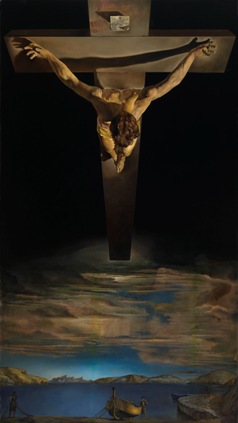
Salvador Dali, Christ of Saint John of the Cross, credit Wikimedia

Special Review by Stuart Millson of Handel’s Messiah, at the Church of St. James the Great, East Malling, Kent

The Bach B minor Mass, Haydn’s The Creation and Handel’s Messiah are probably the best-known choral works of the 18th century: towering pieces, whose religious certainty matches the very stone arches and stained-glass glory of the cathedrals and churches for which they were composed. Yet Messiah received its first performance (13th April, 1742) not in Westminster Abbey but in the Great Music Hall in Fishamble Street, Dublin; a secular setting for a work of exalted valleys, highways through deserts, the glory of the Lord, the Prince of Peace. However, 281 years later ~ this time in mid-Kent ~ Handel’s masterpiece echoed through the impressive space and acoustic of the Norman/early-mediaeval church of St. James the Great, East Malling; performed by the nearly-80-strong village choral society, the East Malling Singers ~ buttressed by a superb array of top-rate visiting soloists, plus a trumpeter and organist.

For months prior to the concert, intensive rehearsals were held under the baton of Music Director, Ciara Considine, with piano accompanist, John Hayden, helping to keep the choral singing together ~ John (with his stylish, characterful playing) being the next best thing to a baroque orchestra. Ciara Considine is a musician of great imagination, who sees her ensemble not just as budding amateurs, but as true, fellow-musicians who are capable of entering into the territory of professional choirs and the great works by the old masters. To this end, Ciara brought to the East Malling rehearsals interpretive touches associated with some of the finest baroque recordings of Messiah: for example, an emphatic staccato effect in the great chorus And the glory of the Lord ~ at the point where the words, ‘The Prince of peace’ conclude a particularly moving, cumulative flow of Handelian authority. Continue reading

Posted in QR Home | Tagged , , | Leave a comment

ENDNOTES, APRIL 2023

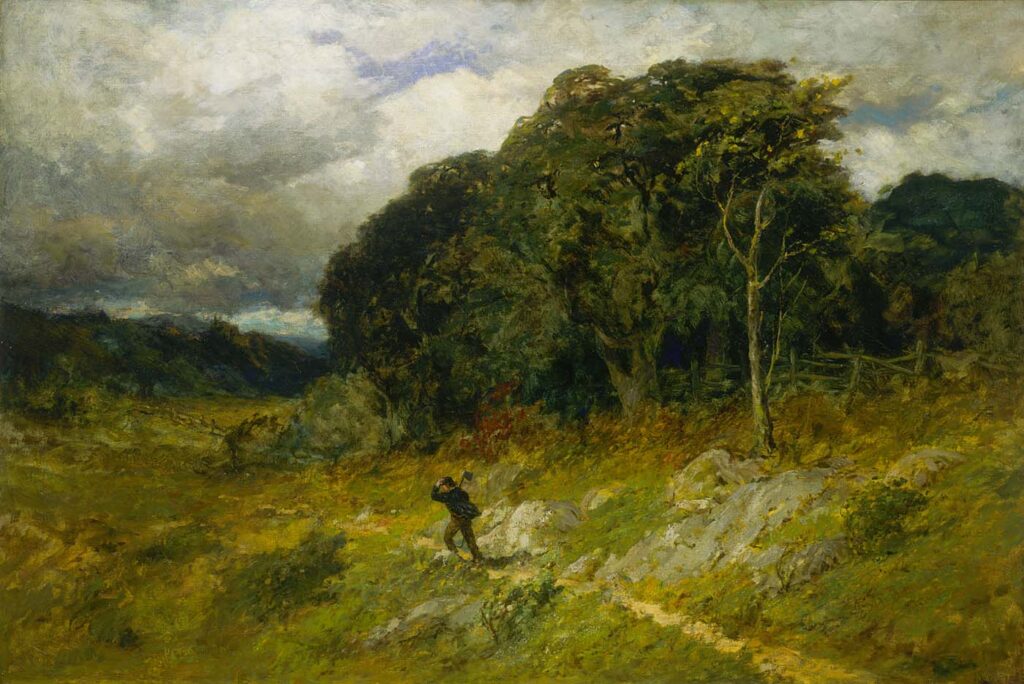
Approaching Storm, Edward Mitchell Bannister, credit Wikipedia

Endnotes, April 2023

In this edition: review of the music of John Ireland; an interview with composer Nimrod Borenstein, both prepared by Stuart Millson   

Throughout the flowering of the English musical renaissance (the period from about 1890 to the mid-1930s), composers have returned, again and again, to the idea of a lost English Eden: a time just out of reach, a landscape or village somewhere over yonder, where youth, mirth, renewal, beauty, love provide an endless solace. From the time just after the First World War when John Ireland wrote his song-cycle for tenor and piano, The Land of Lost Content, to the Cold War period when Britten’s Suite on English Folk Tunes, ‘A Time There Was’ appeared; the sense of a composer dreaming of ‘blue-remembered hills’ remained constant.

Attracted to the poetry of A.E. Housman, John Ireland started work on the poet’s 1896 collection, A Shropshire Lad, in 1920, conceiving a song-cycle that would span the many moods of Housman’s rural idyll. But was it a rural paradise, or instead, a place where sorrow and loss could be sensed in every woodland shadow? The Lent Lily, the first song of The Land of Lost Content, opens with a gentle, dreamy piano introduction embracing springtime and the yellow flowers of the woodland ‘that have no time to stay’; that die ‘on Easter Day’. Here, everything suddenly seems transient; the life of man (even that of the son of God) is but a moment in time. Interpreted by tenor Sir Peter Pears, accompanied by Benjamin Britten on the piano, their vintage recording on the Decca label of the mid-1960s has never been bettered: the voice of Pears – remote, even ghostly – pitched  as if singing from the edge of morning mist, intoning a pagan ritual, yet perfectly entwined with the Schubert-like classicism and purity of Britten’s piano-playing.

Continue reading

Posted in QR Home | Tagged , , | 1 Comment

Pauline Conversion

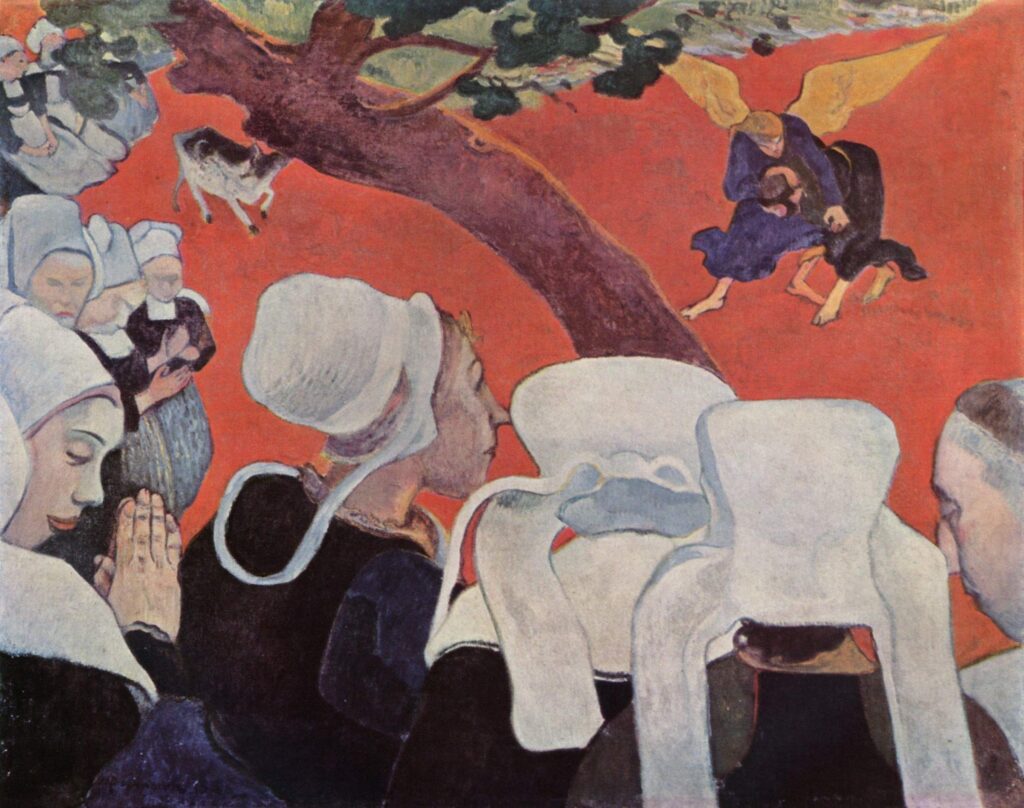
Paul Gauguin, The Vision of the Sermon, Jacob Wrestling with the Angel, 1888
credit Wikipedia

Pauline Conversion

 After Impressionism: Inventing Modern Art, National Gallery, 22nd March 2023, curated by MaryAnne Stevens; After Impressionism: Inventing Modern Art, Catalogue of the Exhibition, National Gallery Global, 2023, reviewed by Leslie Jones

After Impressionism covers the supposedly pivotal period from 1886 (the date of the eighth and last Impressionist Exhibition in Paris) to 1914. The curator MaryAnne Stevens maintains that modern art was invented in this era and that a key factor here was the transition to “…non-naturalism, albeit expressed in various degrees from a modest distortion of reality to pure abstraction”. New painting techniques were developed and the artistic ideals of Greece and Rome that had informed the French academic tradition took a battering. Contemporaneously, there was what historian of ideas H Stuart Hughes called “the revolt against Positivism” (see his Consciousness and Society, 1958).

Paul Gauguin was emblematic in this context. Like Thomas Carlyle, author of On Heroes, Hero-Worship, and the Heroic in History (1841), Gauguin thought that “artists, like priests, were individuals with special powers…”, who gave “physical form to great ideas”. The Vision of the SermonJacob Wrestling with the Angel (1888) symbolises a man, possibly Gauguin himself, fighting with his inner demons. Abandoning perspective, Gauguin believed that the aesthetic quality of a painting should “…no longer be measured by the accuracy of its representation of the natural world” (Stevens, Catalogue). In the still life Fête Gloanec, (1888), an assemblage of objects “appears to float rather than sit on the round table”. In The Wave (1888), the horizon is eliminated and the genre of the landscape painting thereby subverted. In Paul Cézanne’s Mont Sainte-Victoire (1902-6), likewise, recession is negated “through horizontal bands of colour”. And, in his portrait of his wife Madame Cézanne in a Red Dress (1888-90), there is an emphasis on the “rectangular forms of the chair back, fireplace and mirror frame”. The dress itself, on closer inspection, seems “insubstantial, not solid”.

Continue reading

Posted in QR Home | Tagged , , , , , | Leave a comment

Atlas Woke

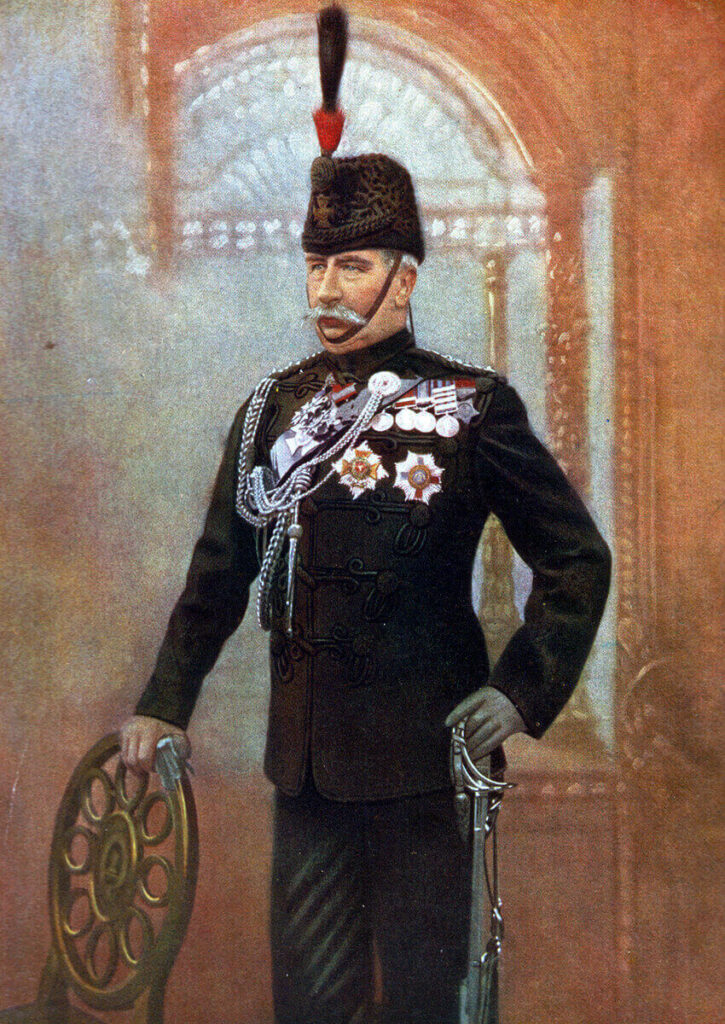
VC Redvers Henry Buller, credit Wikipedia

Atlas Woke, by Bill Hartley

Historical geography has been defined as ‘the branch of geography that studies the ways in which geographical phenomena have changed over time’. There used to be a more succinct definition: ‘the study of past landscapes’ but perhaps the newer version is more appropriate, given the way the subject has evolved in recent years.

At one time it was the place to go for anyone interested in, say, Domesday woodland, or patterns of agricultural change. Something then of a minority field within the wider community of academic geographers and perhaps why the scholarship always seemed so rigorous. Those working in the field such as the late Professor GRJ Jones of Leeds University weren’t widely known but they produced material that contributed to a deeper understanding of history.

Continue reading

Posted in QR Home | Tagged , , | 4 Comments

Nymphomania – Rusalka, at Royal Opera

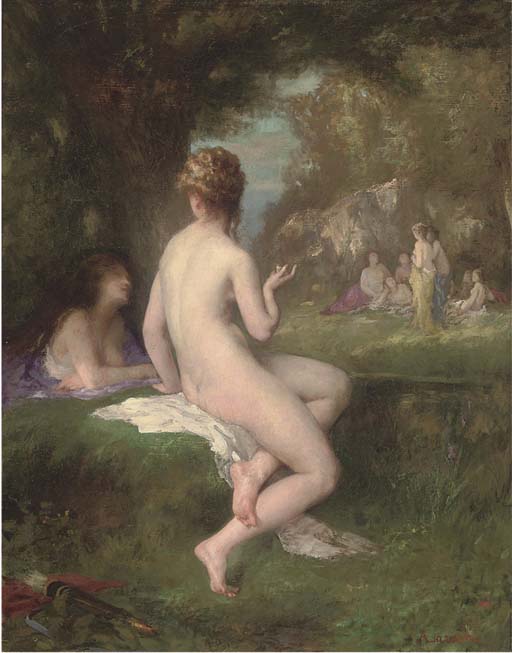
Armand Laroche, Diana bathing with the nymphs, credit Wikipedia

Nymphomania – Rusalka, at Royal Opera

Rusalka, lyric fairy tale in three acts, music by Antonin Dvorák, libretto by Jaroslav Kvapil, Orchestra of the Royal Opera House conducted by Semyon Bychkov, created and directed by Natalie Abrahami and Ann Yee, Royal Opera 21st February 2023, reviewed by Leslie Jones

Rusalka, as music journalist Kate Molleson has pithily remarked, is “a blend of folk song, luscious nature evocation and Wagnerian epic”. As such, it lends itself to diverse interpretations, including that of feminism. On Radio 3, Freethinking, Feb 1st, the subject up for discussion was Mélusine, another mythic water spirit (nymph), as depicted by the 14th writer Jean d’Arras in the Roman de Mélusine. Doctoral candidate Olivia Colquitt referred pointedly therein to the “male gaze”. For as the story goes, only if Mélusine can find a man who won’t look at her on Saturday, can she live as a human and go to heaven. The Freethinking panel agreed that this represents a demand for women’s space and that it also bespeaks men’s concern about what women get up to in private. A mermaid, we were reminded, can be a temptress and a voracious sexual being.

That “wise, eternal spirit” Ježibaba, played in this new production by Sarah Connolly, tells Rusalka that: “Man is an abomination of nature who has turned his back on Mother Earth”. In a 2022 staging of the work by Jack Furness for Garsington Opera, the set in Act 2 (at the Prince’s palace) was reminiscent of an abattoir. The Prince, evidently obsessed with killing animals, disemboweled a deer and presented its heart to Rusalka’s rival, the Foreign Princess (see Tim Ashley, The Guardian, 19 June 2022; Dominic Lowe, Bachtrack, 20 June 2022; Robert Hugill, Opera Today, June 2022).

Continue reading

Posted in QR Home | Tagged , , | 1 Comment

Endnotes, March 2023

Henri Rousseau, Sevres Bridge, credit Wikipedia

Endnotes, March 2023

In this edition: premieres for the composer, Randall Svane; orchestral music by Francis Poulenc; reviewed by Stuart Millson

The Quarterly Review is always keen to champion new music that bucks the trend. In today’s terms, this means compositions that confront, not support, the modernist brutalism and iconoclasm that takes pleasure in turning accepted norms on their head. It is for this reason (and after sampling his work) that we have come to regard the contemporary United States composer, Randall Svane (born 1955) as a standard-bearer for the composition and art that takes us back to the world of the symphonic poem, to the unashamedly idealistic and patriotic occasional statement (his American Fanfare) and to the concerto, the chamber sonata and the liturgical works that celebrate Western spirituality.

Although Svane’s oeuvre has not yet achieved worldwide attention, we believe that a new Debussy or Vaughan Williams has come into being – such is the composer’s embrace of emotional warmth, tonality and, occasionally, a tincture of Impressionism. But warmth and tonality – scorned by extreme modernists – do not mean that the composer has decided to insulate himself from the anxieties of our time. In fact, the reverse is true: the resurrection of tonal music allows us to find our way again; to make sense of the world in a language that we can all understand. Art is collective and offers us all a revelation: thanks to this new American master, music becomes truly relevant.

Continue reading

Posted in QR Home | Tagged , | Leave a comment

The Prisoner of Text

Norman Mailer in 1948, credit Wikipedia

The Prisoner of Text

Tough Guy: The Life of Norman Mailer, Richard Bradford, Bloomsbury Caravel, pp 304, £18, reviewed by Bill Hartley                           

The title may well be ironic, given Mailer’s wife beating habits. This biography has been published to coincide with the centenary of his birth and mercilessly examines his reputation both personal and professional. Born in New York to a Jewish family, Mailer was found to have an extraordinarily high IQ. At sixteen, he was considered ready for Harvard where he studied engineering sciences.

The author doesn’t waste time on Mailer’s childhood, indeed the only thing of lasting importance to note is that his mother was convinced she had given birth to a genius and retained this belief throughout her life. To her, Norman could do no wrong. Given subsequent events this stretches credulity beyond breaking point, not that it seems to have bothered her. On one occasion, Mailer slammed his wife’s head against a cupboard leaving her stunned. His mother arrived on the scene and asked him: ‘Are you alright?’

Mailer saw service in the Pacific theatre during the Second World War. During his induction the Army was astonished at his mathematical skills. As author Richard Bradford notes, it was certainly puzzling that he never sought a commission or a role in signals or intelligence. If he had a preference for infantry combat then this was hardly realised, since he spent most of his time on what the US Army calls rear echelon duties. However, out of this experience came one of the great novels of the Second World War, The Naked and the Dead. The book broke through the clutter of war stories which were appearing in the late forties and for Mailer it was, to paraphrase Lord Byron, a case of ‘I awoke one morning and found myself famous’. The book even drew comparisons with Tolstoy from some reviewers. From this point onwards the real Norman Mailer emerges and it is probably safe to say that the author has no liking for his subject. Indeed it makes one wonder who could, save for his mother. Despite this he had no difficulty in attracting women.

Continue reading

Posted in QR Home | Tagged , , | Leave a comment

ENDNOTES, February 2023

Ken Russell, Song of Summer; Christopher Gable as Eric Fenby, Max Adrian as Delius, credit Wikipedia

Endnotes, February 2023

In this edition: a new Piano Concerto by Nimrod Borenstein; the spiritual intensity of Herbert Howells; music for a Prince, all reviewed by Stuart Millson

The imposing name Nimrod Borenstein immediately caught our attention during this month’s rummage through the many CDs sent to The QR for review. A British-Israeli musician (born 1969), Borenstein is an Associate of the Royal Academy of Music and has amassed a catalogue of nearly one hundred works. His compositions are increasingly appearing in the repertoire of the Philharmonia, Royal, BBC and Oxford Philharmonic orchestras; they have already earned good notices at such international venues as the Salle Gaveau, Paris, and Carnegie Hall, New York.

Written in 2021 especially for international soloist, Clelia Iruzun, and premiered a year later in São Paulo, Brazil, Borenstein’s Piano Concerto has now been recorded for the SOMM label by its dedicatee, accompanied by the Royal Philharmonic Orchestra conducted by the composer. Lasting nearly half an hour, this engrossing and exciting piece is grounded strongly in tonality ~ the composer commenting on how important the concerto form is for him; how vital it is to make the piano sound both “beautiful and complex”; and to place contrasts inside each movement, to avoid any trace of “monotony”.

Continue reading

Posted in QR Home | Tagged , , | Leave a comment