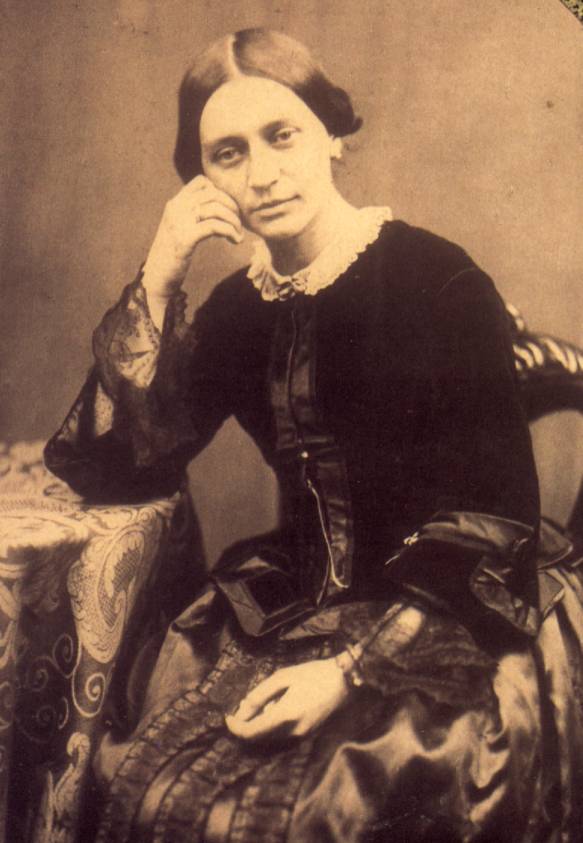
Clara Schumann, credit Wikipedia
Endnotes, January-February 2026
In this edition: Brahms from Bergen, Overtures from the British Isles. Reviewed by Stuart Millson
Recent releases from the Chandos label dominate the first classical column of the New Year – three CDs which exemplify the company’s winning formula of the great classics, mixed with unfamiliar repertoire, but all presented in dazzling sound-quality, with each disc offering richly-informative booklets and impressive cover artwork. British conductor Edward Gardner’s fruitful association with Norway’s Bergen Philharmonic continues with the second and fourth symphonies of Johannes Brahms.
The Symphony No. 2, Op. 73, of 1877 perpetuates all the expansive, sturdy and lyrical qualities so masterfully delivered in the composer’s First Symphony – possibly the most-often-performed of the four, and well known for its Beethoven-like opening, with heavy timpani setting the scene for the struggles to come. Yet Brahms’s ‘Second’ seems to dwell more on inward-looking ideas: more melancholic reflection, with passages that eddy and fade, and reappear, leading into the sunlit space of the joyous finale. Whereas Symphony No. 1 ends in a triumphant outburst – hewn from the hard terrain and tempestuous tides of the first movement – the Op. 73 seems to be running with a light heart and laughter, just for the joy of it, through summer fields. And there is no sign of a thick, orchestral Brahmsian stodginess, perhaps associated with performances of this repertoire from a generation or two ago. Instead, the Bergen Philharmonic seems to embrace all the traditional sonorities of Brahms yet mixed with an agility and sharpness that makes the recording sparkle from the speakers.
The Fourth Symphony is a much darker affair – more the autumnal Brahms – or in the desolate slow movement, an orchestral winterreise in which the music seems to look back over a year that has passed by, or a lifetime; one of those late-romantic orchestral moments when the listener is alone with his or her thoughts, contemplating not just the tragedies and regrets of life, but the passage of time which we must all accept. Brahms, though, has a surprise up his sleeve: the winter idyll is broken by the third movement, marked Allegro giocoso, as if the composer wants to brush away mournful thoughts and return us to the happy uplands at the conclusion of the Symphony No. 2. Again, full marks to the Bergen ensemble for making the heft of Brahms a force which somehow no longer seems daunting or too heavy to bear.
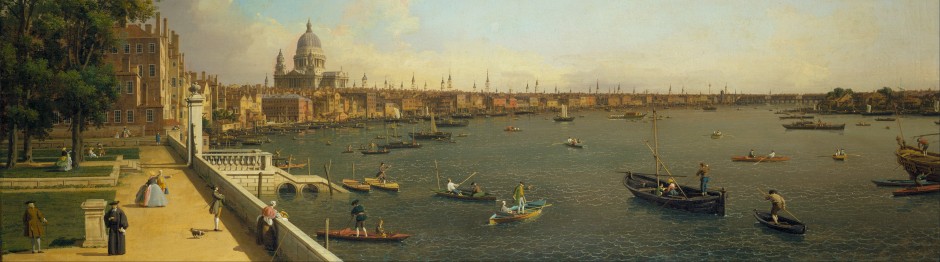
Volume 3 of the Chandos series, Overtures from the British Isles, sees Rumon Gamba bringing into the limelight a whole host of curtain-raisers and mini-tone poems that have, for whatever reason, faded from view. How often, these days, do we hear Havergal Brian, Richard Arnell, Alan Rawsthorne or Daniel Jones? Repackaged by the technology of modern recordings and with new life breathed into them by a sure, suave, sophisticated orchestral sound, we begin to wonder this music does not feature as a normal part of the concert or Radio 3 output. The BBC Philharmonic in its Salford studio pulls out all the stops in Havergal Brian’s The Tinker’s Wedding Overture, relishing Brian’s often eccentric compositional style – humorous, magical, Gothic all rolled into one. From the England of 1944 comes Alan Rawsthorne’s Street Corner, a piece that does in fact obtain the very occasional airing on an oldish Lyrita record, made by the London Philharmonic and John Pritchard – a lively performance; yet it is good to hear the work in full digital detail courtesy of Chandos. The action and atmosphere (for me) suggest one of those great old 1940s or ‘50s films, set in Soho, or some other risky part of the metropolis; and a scene filled with actors such as Sidney James or Sydney Tafler, with the rumbustious life of London played out to the full. Four years later, Robin Orr’s overture, The Prospect of Whitby, conjured an olde worlde dockside London, and the famous pub that witnessed the river traffic and trade of the Thames – and the execution at the beginning of the 18th century of the pirate, Captain Kidd. Kidd’s Scottish heritage undoubtedly appealed to the Angus-born composer, who went on to play a leading role in music education in Britain; and with conductor, Sir Alexander Gibson (Scottish National Orchestra, Scottish Opera), an initiative to champion contemporary music north of the border.
Richard Arnell’s overture, The New Age, was performed about ten years ago at the English Music Festival. The inclusion of the work in this collection is therefore welcome, and sheds some light on a man who, just before World War Two, believed that there was no hope for Britain or the Old World, and made his home in the United States. The overture was played at Carnegie Hall two years before America entered the war and seemed to show the radical new side of English music. Arnell, however, seemed to have a touch of fondness for this motherland across the ocean, and dedicated the work to his “friends in England”.
The music of Welsh composer, Daniel Jones, was last heard at the Proms in 1982, the (then) BBC Welsh Symphony Orchestra performing his Dance Fantasy. Jones, a friend of Dylan Thomas, was present for the performance, but despite his extensive symphonic and chamber output – Chandos recorded a landmark set of his String Quartets – his name is not well known to audiences. Again, this needs to be remedied, and what better way to give the Pembroke-born composer the recognition he deserves than by playing the 1942 Comedy Overture, so expertly handled here on the new disc by Rumon Gamba. Yet this is no raucous romp, or harlequinade, but a surprisingly understated work: wry humour and observation, very much to the fore, with a Welsh sea-breeze gently filling the sails of this six-minute-long miniature delight.
With the Proms now including commercial pop – a segment in the programme that should, of course, be given to classicalmusic; and Radio 3 playing excerpt after excerpt from the output of the little-known American composer, Florence Price – pleasant enough pastiche-music, but hardly warranting such exposure on the network – we need to ask why our country seems to set so little store in its own native musical heritage? The BBC’s own Philharmonic Orchestra has been employed to perform the Chandos selection of British overtures. Surely the orchestra’s management and programme-makers must now use the opportunity to bring such neglected pieces into the mainstream repertoire.
Stuart Millson is the Classical Music Editor of The Quarterly Review.
CD details: Brahms, Second and Fourth Symphonies, Bergen Philharmonic/Gardner, CHSA 5248; Overtures from the British Isles, BBC Philharmonic/Gamba, CHAN 20351.


!! Now She has been with out artwork for five months however final month her charge emerge as $11747 really on foot on the internet for some hours. study greater on this net internet site…..
checking this page…. Goo.su/hgWE